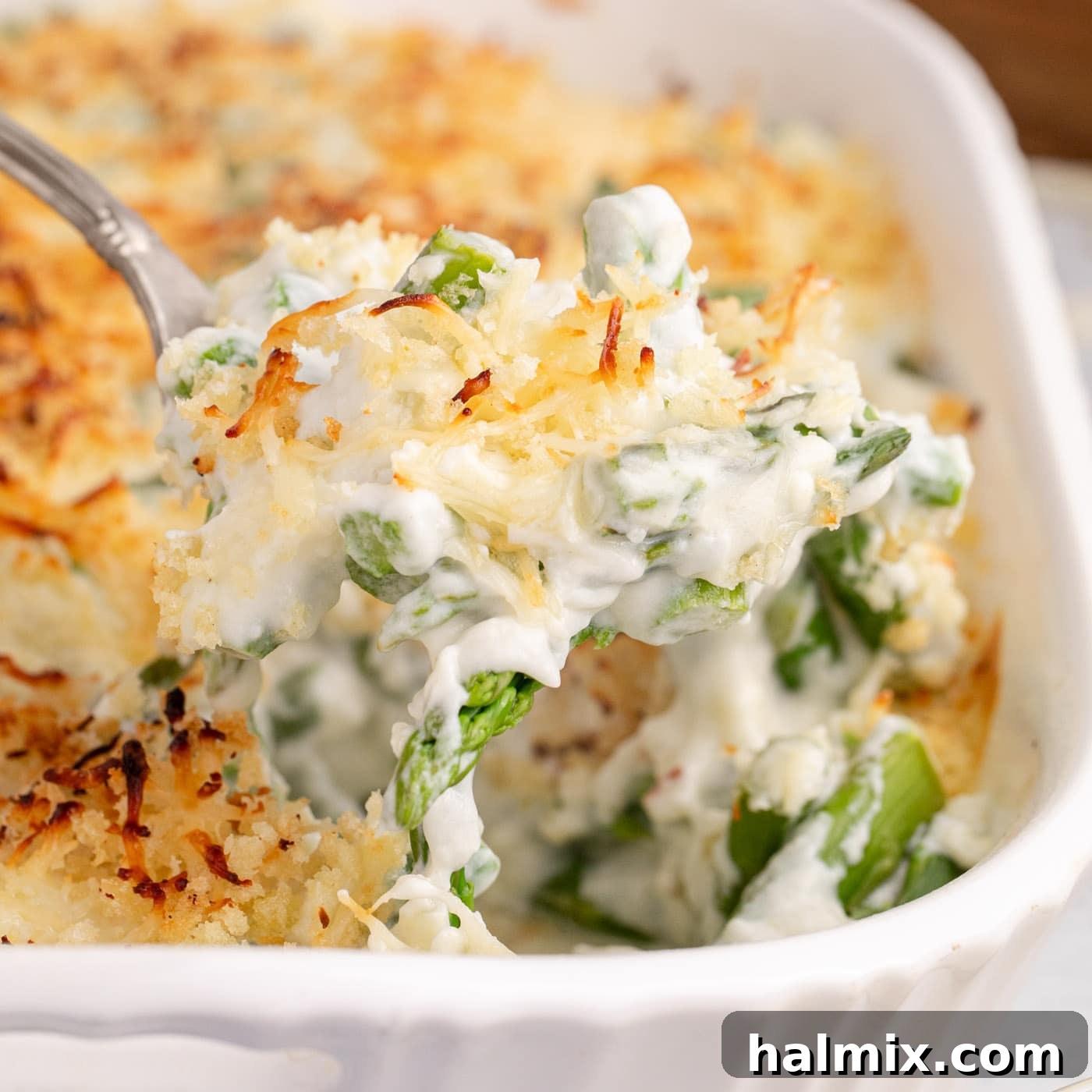
Welcome to the ultimate guide for creating a truly delectable Asparagus Casserole, a dish that effortlessly marries tender asparagus spears with a rich, creamy cheese sauce and a perfectly golden, buttery panko breadcrumb topping. This isn’t just a side dish; it’s a comforting culinary experience designed to impress at any gathering, from festive holiday feasts to cozy weeknight dinners. What makes this recipe a true standout? Its incredible flavor, satisfying texture, and surprising ease of preparation, coming together in approximately 25 minutes of active time.
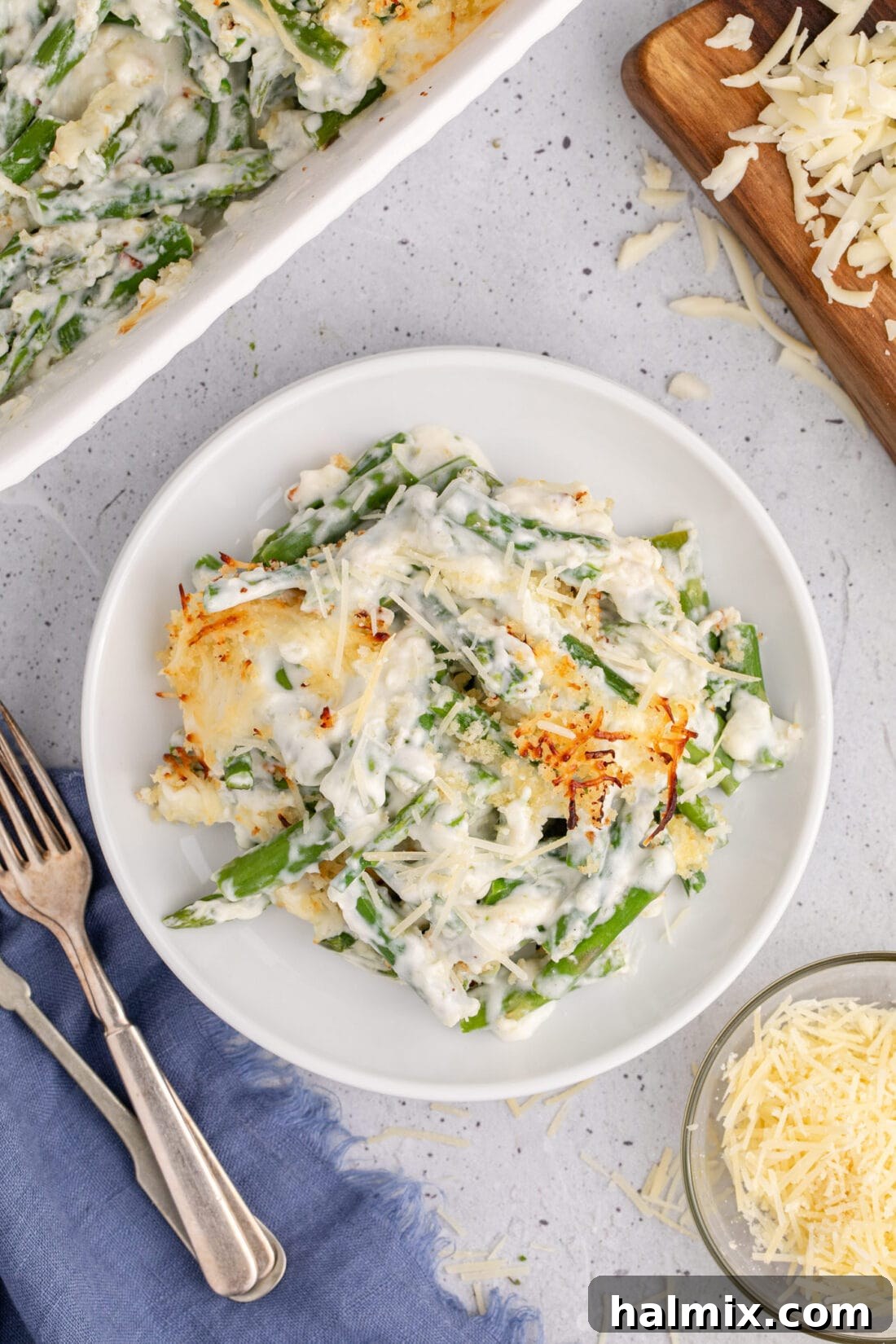
Why This Asparagus Casserole Recipe is a Must-Try
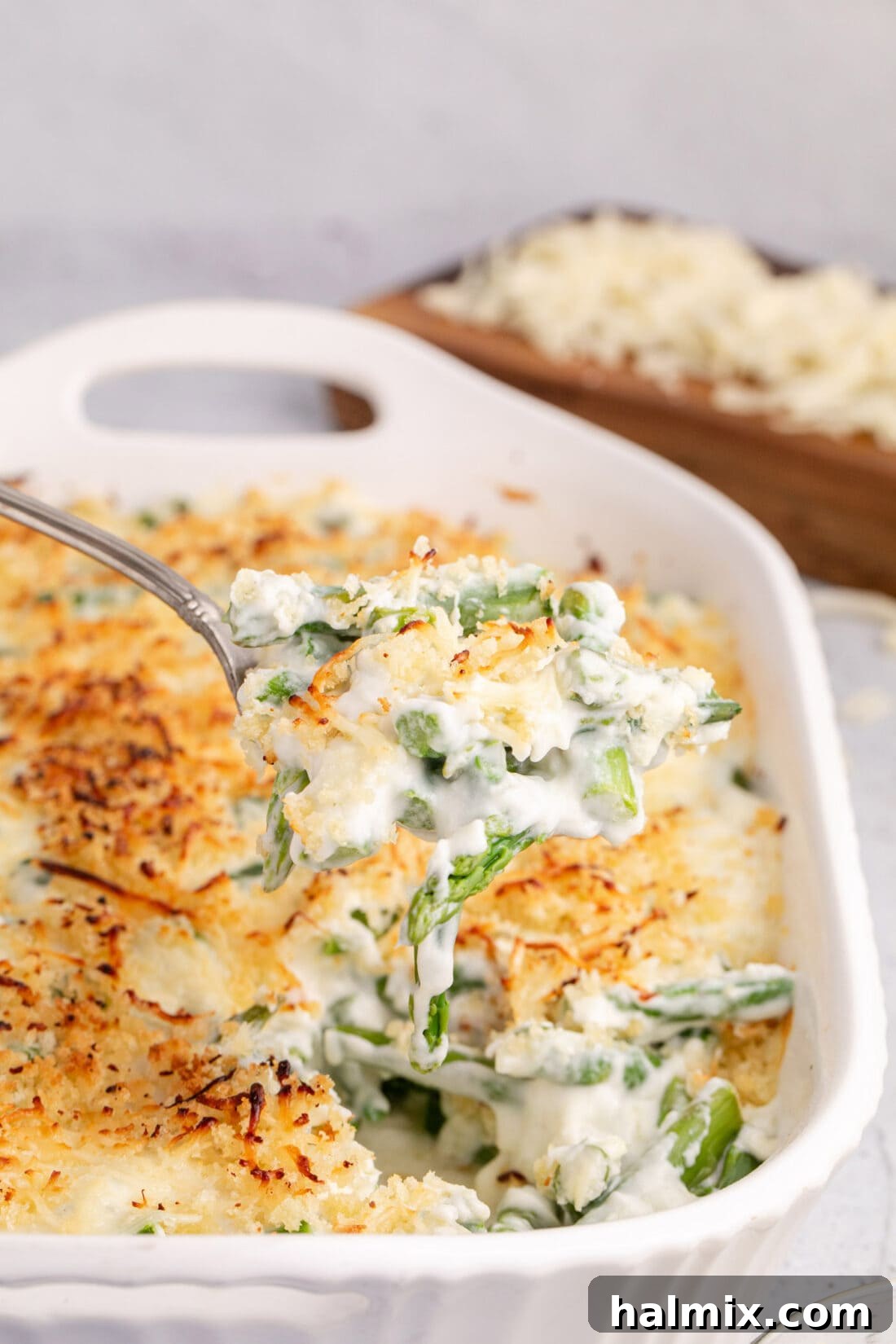
This asparagus casserole isn’t just another vegetable side; it’s a celebration of comfort food. At its heart lies a luxuriously creamy sauce, a harmonious blend of tangy cream cheese, wholesome milk, and gooey mozzarella, creating a velvety embrace for every asparagus spear. But the magic doesn’t stop there. The dish is crowned with a crunchy, golden panko topping, expertly infused with melted butter and savory Parmesan cheese. This delightful contrast of creamy and crisp textures elevates the casserole from simple to sublime, ensuring a memorable bite every time.
While often associated with indulgent holiday spreads like Thanksgiving, Christmas, or Easter, this recipe is remarkably versatile. Its straightforward preparation makes it an ideal accompaniment for everyday meals, adding a touch of elegance without extensive effort. Asparagus, known for its vibrant green color and distinct flavor, also brings a host of nutritional benefits, including vitamins A, C, E, K, and folate, along with dietary fiber. So, while we certainly embrace the comfort of a cheesy casserole, you’re still enjoying the goodness of fresh vegetables. This perfect balance of wholesome ingredients and comforting flavors is precisely what makes this asparagus bake a solid keeper, ready to earn its place alongside your favorite green bean casserole.
Key Ingredients for Your Perfect Casserole
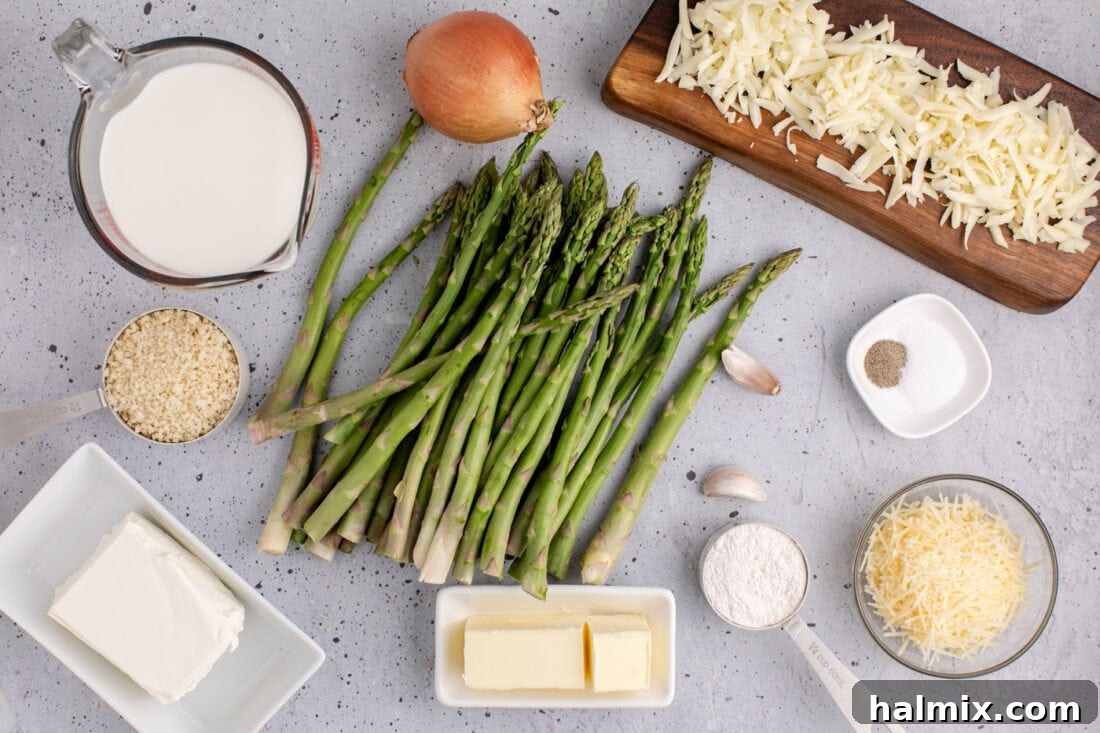
Crafting this delightful asparagus casserole requires a thoughtful selection of fresh ingredients. Below, we delve into the core components that make this dish so special, offering tips for selection and potential substitutions to ensure success in your kitchen. For precise measurements and step-by-step instructions, please refer to the comprehensive recipe card at the conclusion of this article.
Ingredient Spotlight and Smart Substitutions
Every great recipe begins with quality ingredients. Here’s a closer look at what you’ll need and how to make the best choices for your asparagus casserole:
Asparagus: The Star of the Show
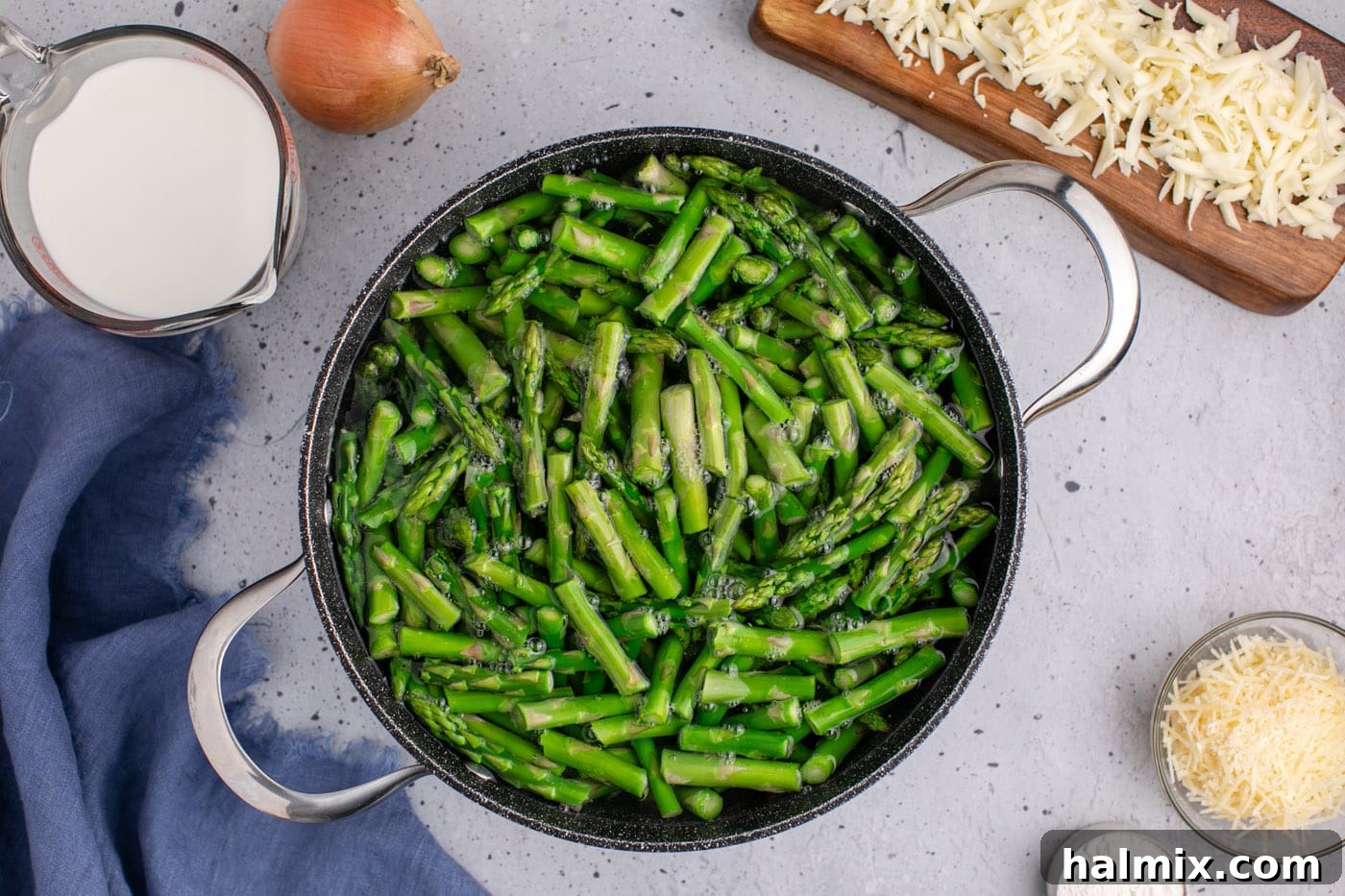
When selecting asparagus, look for spears that are firm, vibrant green, and have tightly closed, compact tips. Avoid any that appear limp, withered, or have open, flowering tips, as these indicate older asparagus. For this casserole, thicker spears are often preferred as they hold up well to baking and offer a satisfying bite. However, thinner spears work equally well, though they may require a slightly shorter baking time to prevent them from becoming too soft. Before cooking, snap off the woody ends of the asparagus by gently bending each spear until it breaks naturally. This ensures you’re only using the tender, edible portion. Then, cut the remaining stalks into uniform 2-inch pieces. We initiate the cooking process with blanching – a quick dip in boiling water followed by an ice bath. This technique is crucial for tenderizing the asparagus slightly, locking in its vibrant green color, and preserving its essential nutrients.
The Creamy Cheese Sauce: A Symphony of Flavors
The luscious sauce forms the comforting backbone of this casserole. It’s built upon a classic roux made with rich unsalted butter and all-purpose flour, creating a smooth, thick base. Whole milk contributes to the sauce’s body and creamy texture, while cream cheese adds a wonderful tang and velvety consistency. Finally, shredded mozzarella cheese melts beautifully, imparting that irresistible cheesy stretch. For a slightly lighter option, you can substitute whole milk with 2% milk without significantly compromising the creaminess. Feel free to experiment with other melting cheeses like cheddar, Gruyere, or a blend of Italian cheeses to customize the flavor profile to your liking.
The Golden, Crispy Topping: The Perfect Finish
The topping is elegantly simple yet powerfully impactful. Panko breadcrumbs, renowned for their extra-crispy texture, are tossed with melted unsalted butter, creating a golden, crunchy crust that contrasts beautifully with the soft interior of the casserole. A final sprinkle of shredded Parmesan cheese adds another layer of savory depth and a delightful crispness when baked. If panko isn’t available, or if you’re looking for an alternative, crushed Ritz crackers or even crispy fried onions make fantastic substitutes, each offering a unique flavor and texture. For a homemade touch, you can toast regular breadcrumbs with butter and herbs.
Crafting Your Asparagus Casserole: A Step-by-Step Guide
Follow these detailed steps to create a show-stopping asparagus casserole that will become a staple in your recipe collection. The process is straightforward, ensuring a delicious result even for novice cooks.
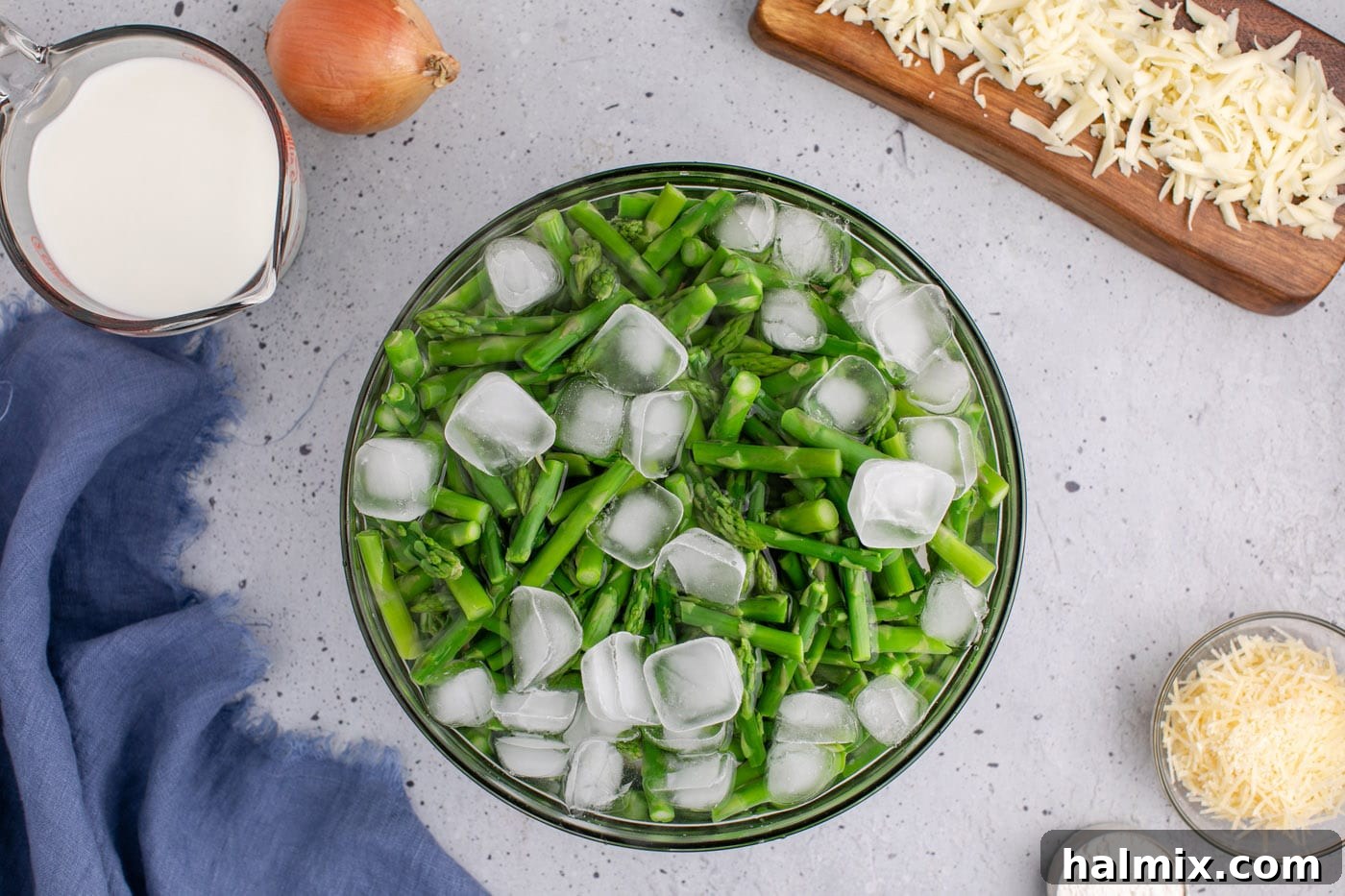
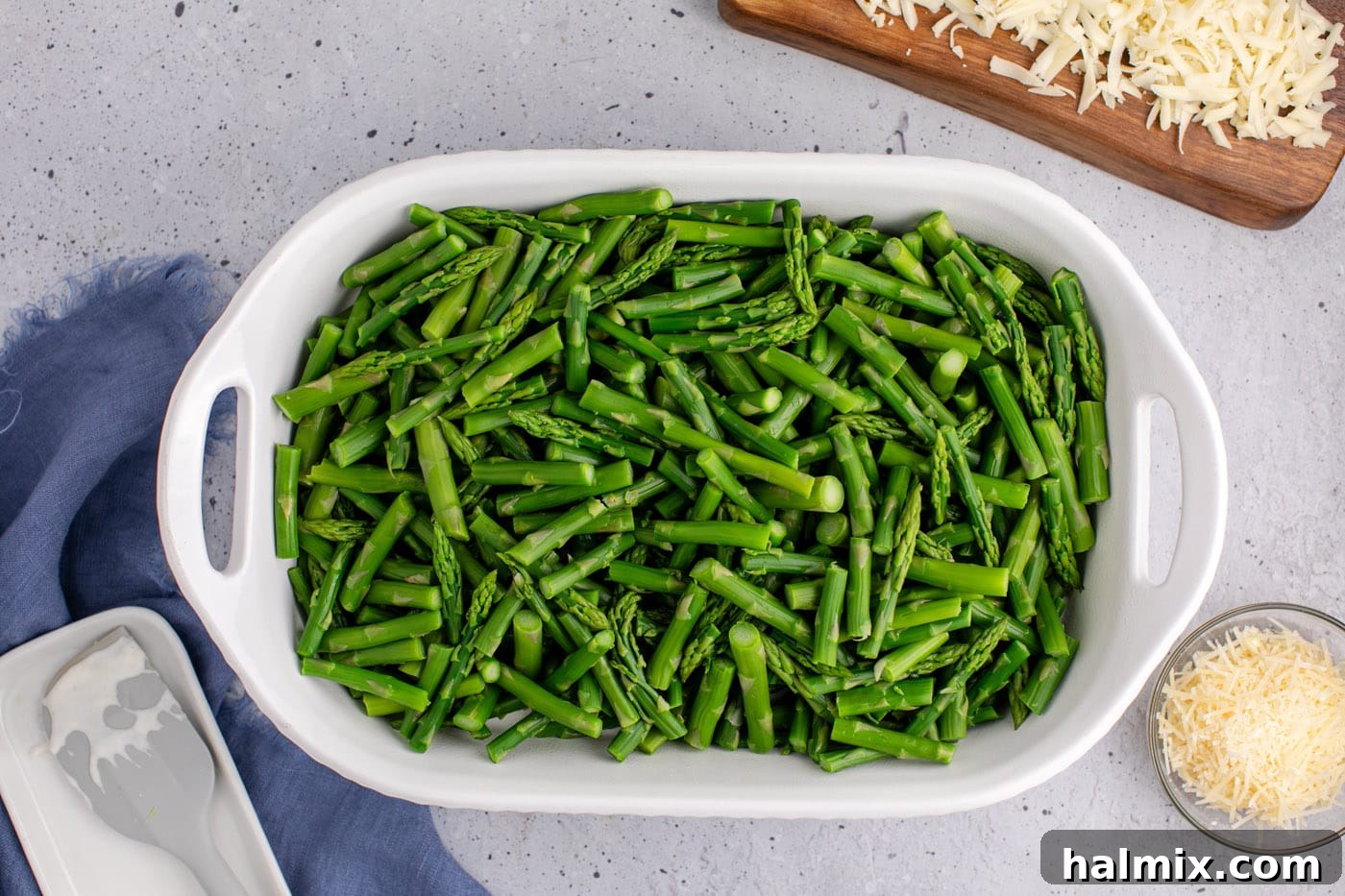
- Prepare Your Oven and Asparagus: Begin by preheating your oven to 400°F (200°C). This ensures your casserole bakes evenly and the topping crisps beautifully. Next, prepare your asparagus. Once snapped and cut into 2-inch pieces, blanch the asparagus in boiling water for precisely 1 minute. This brief cooking step helps retain their vibrant color and slight crispness. Immediately transfer the blanched asparagus to an ice bath (a bowl of cold water with ice cubes) for 2 minutes. This stops the cooking process and preserves their bright green hue. Drain the asparagus thoroughly and pat them dry. Arrange the dried asparagus pieces evenly in a lightly sprayed 9×13-inch glass baking dish. Set aside.

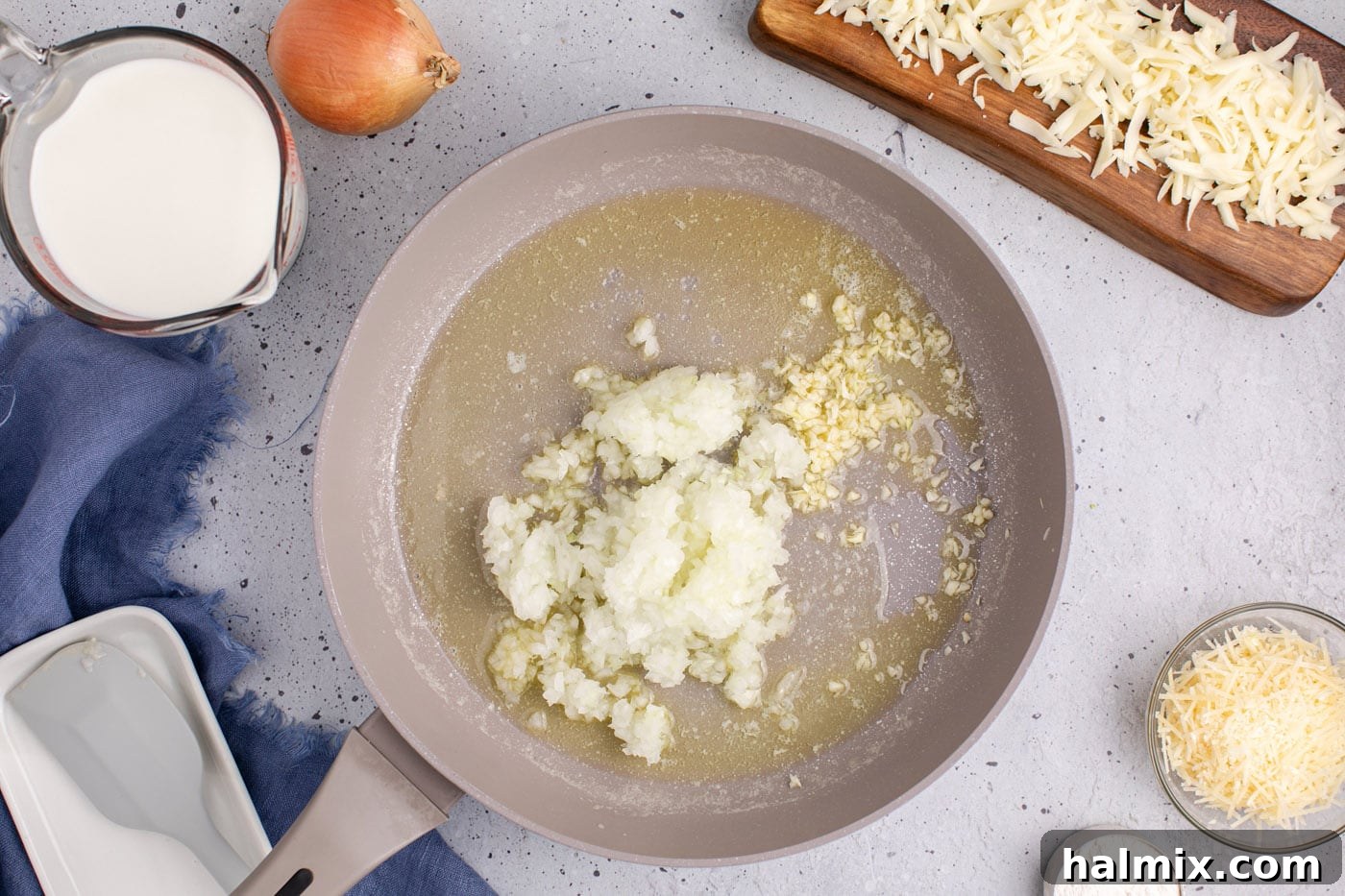
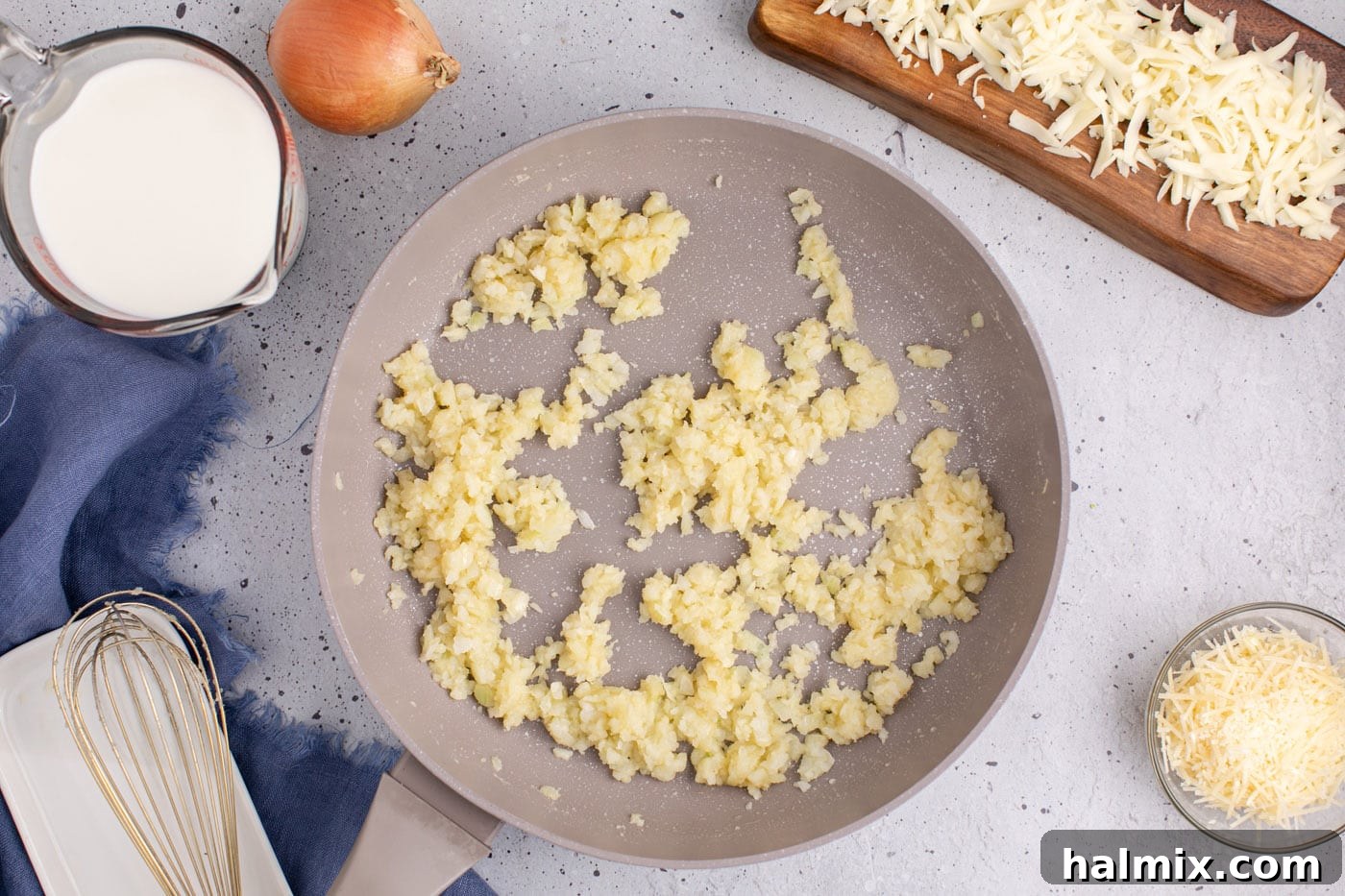
- Sauté Aromatics: In a medium saucepan, melt 1/2 stick (4 tablespoons) of unsalted butter over medium heat. Once the butter is shimmering, add the finely diced onion and minced garlic. Sauté for about 3 minutes, stirring occasionally, until the onion is translucent and fragrant. Be careful not to brown the garlic, as it can turn bitter.
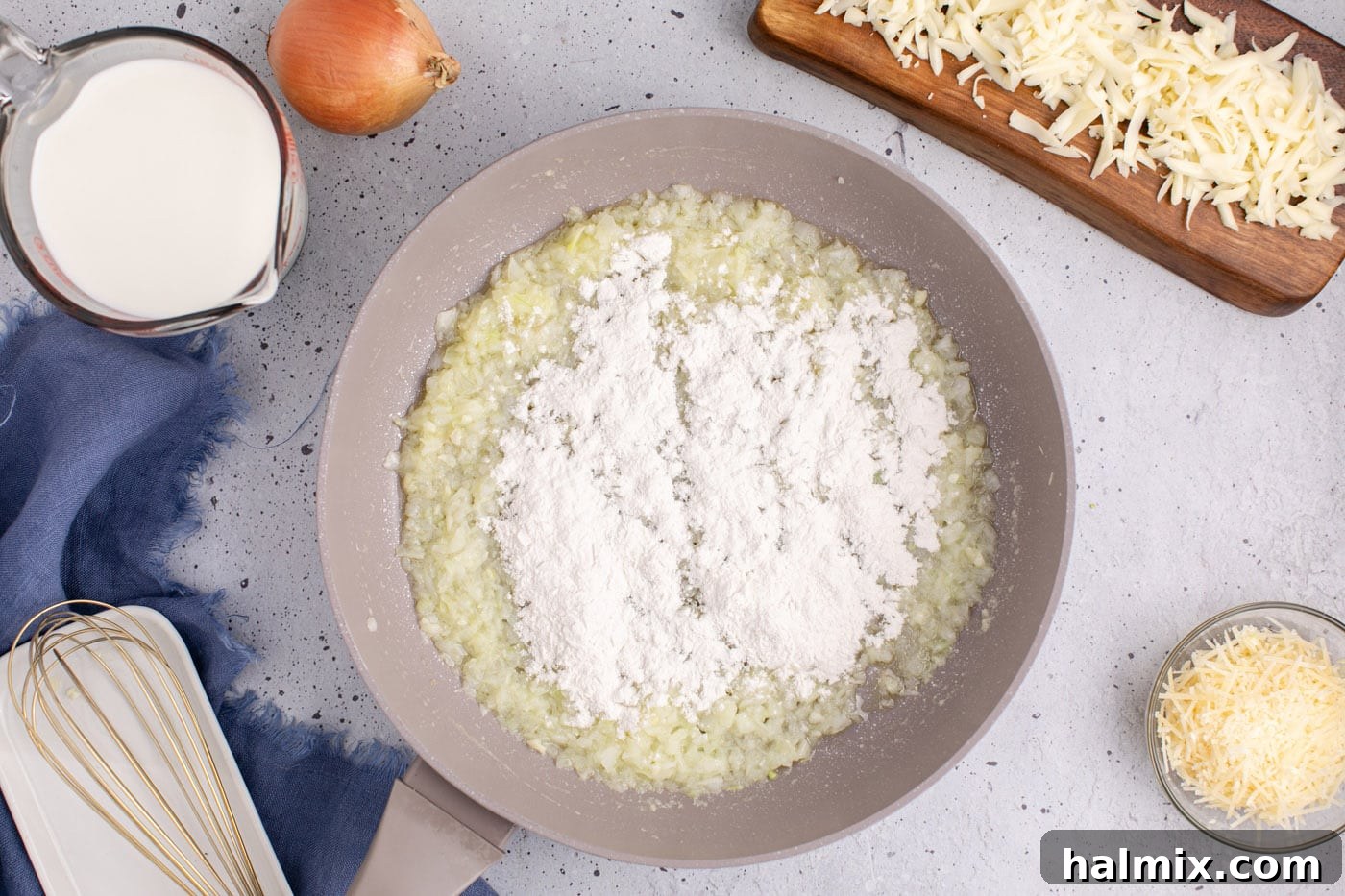
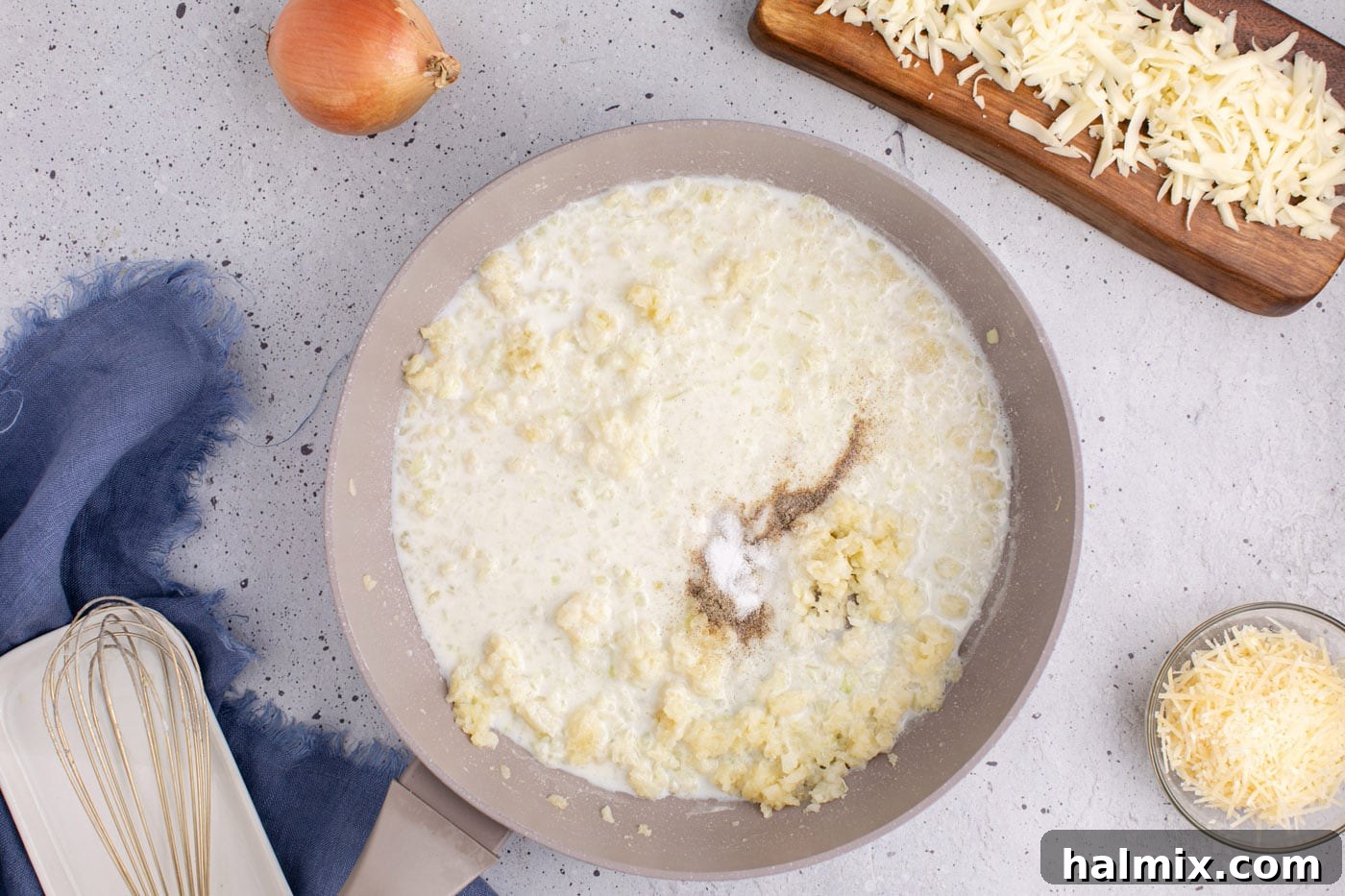
- Prepare the Roux and Thicken the Sauce: Whisk in 3 tablespoons of all-purpose flour with the butter, onion, and garlic mixture. Continue to stir consistently for about 2 minutes to cook out the raw flour taste. This creates a roux, the thickening agent for your sauce. Gradually pour in the 3 1/2 cups of whole milk, whisking continuously to prevent lumps. Add 1 teaspoon of sea salt and 1/4 teaspoon of ground black pepper. Continue to stir the mixture over medium heat until it begins to thicken. If the sauce thickens too quickly, reduce the heat to low to prevent scorching.
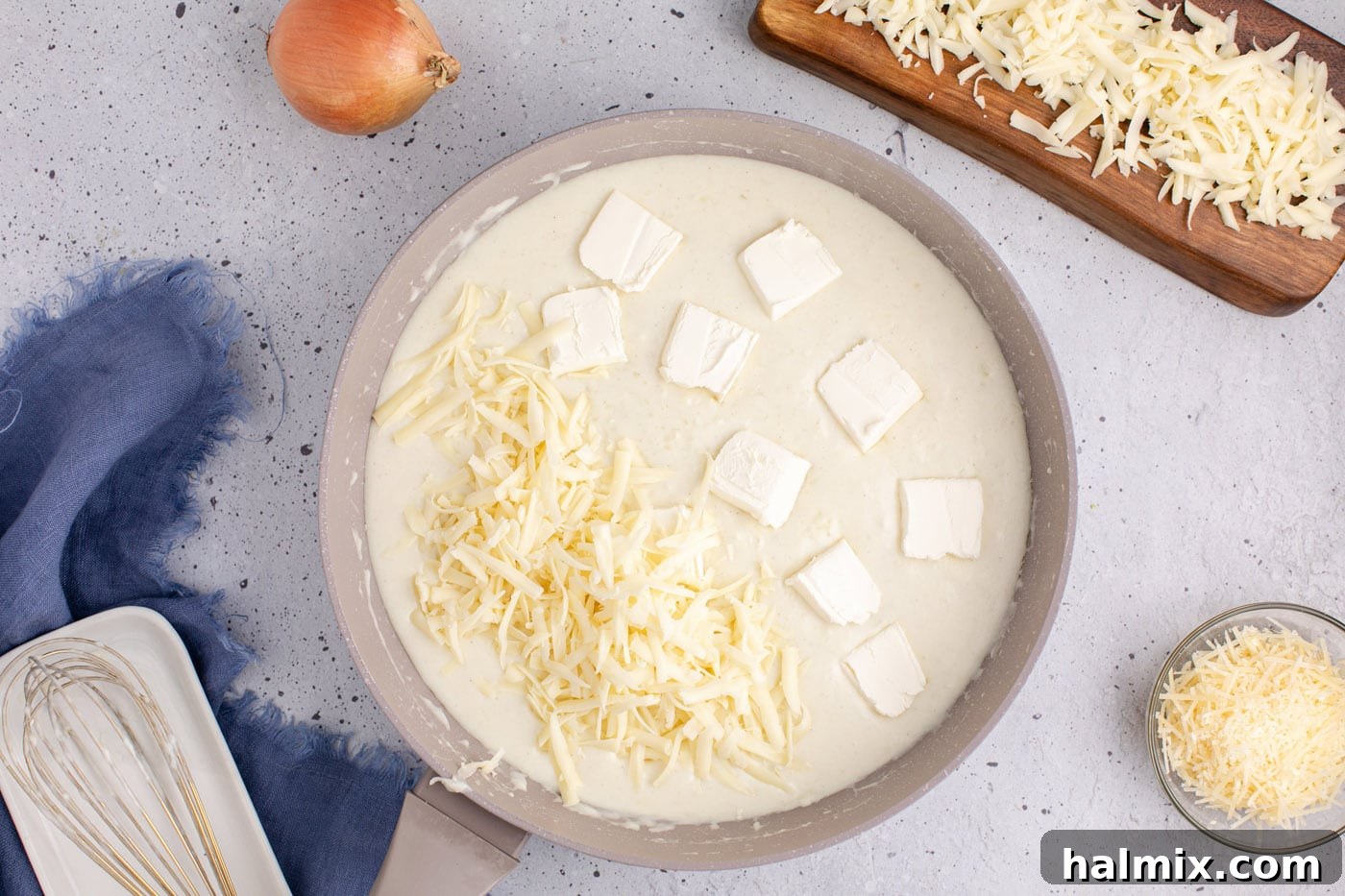
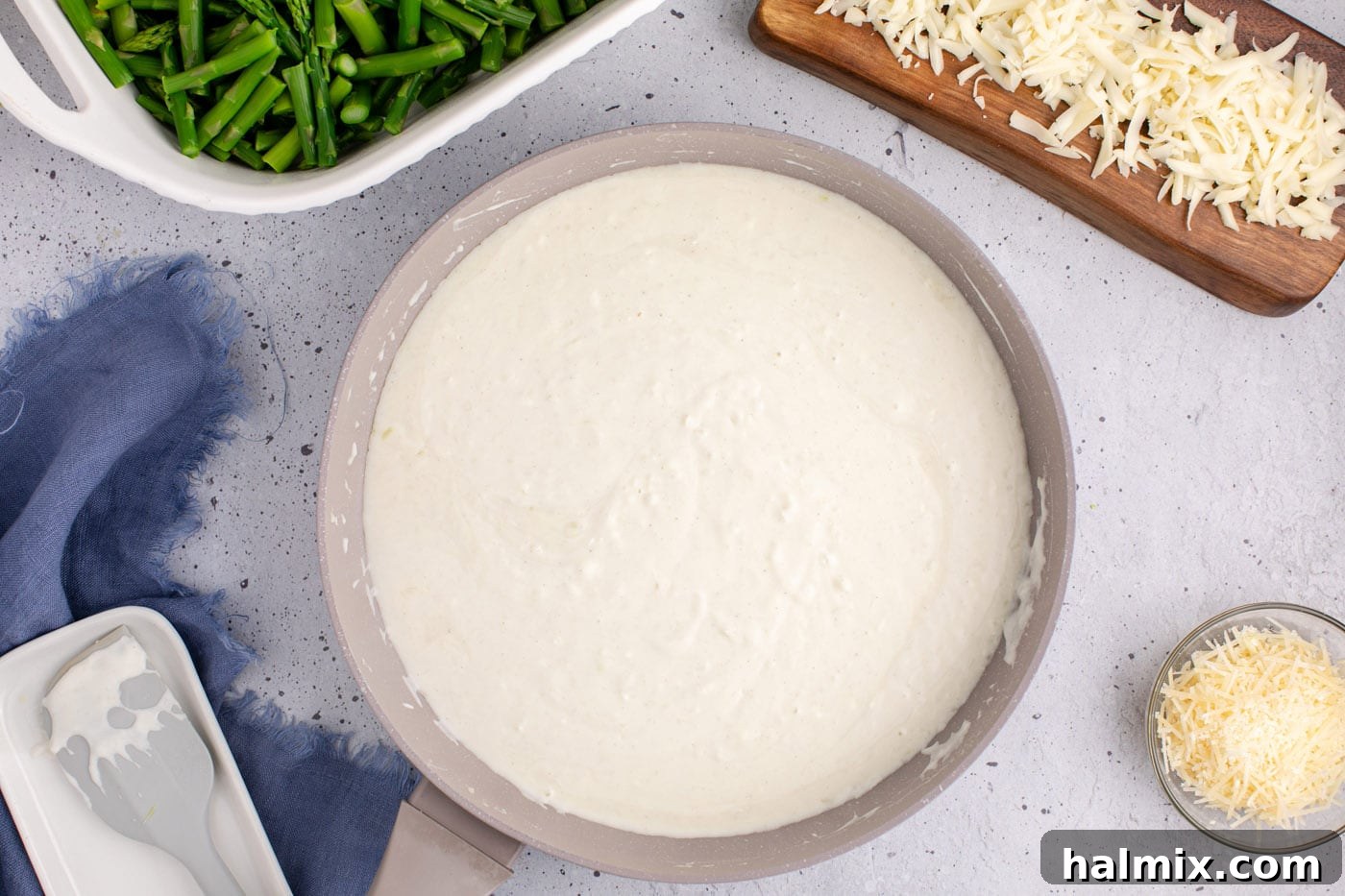
- Melt in the Cheeses: Remove the saucepan from the heat. This prevents the cheeses from seizing or becoming oily. Add the 5 ounces of cubed full-fat cream cheese and 1 cup of shredded mozzarella cheese. Stir vigorously until both cheeses are completely melted and incorporated, forming a smooth, creamy sauce.
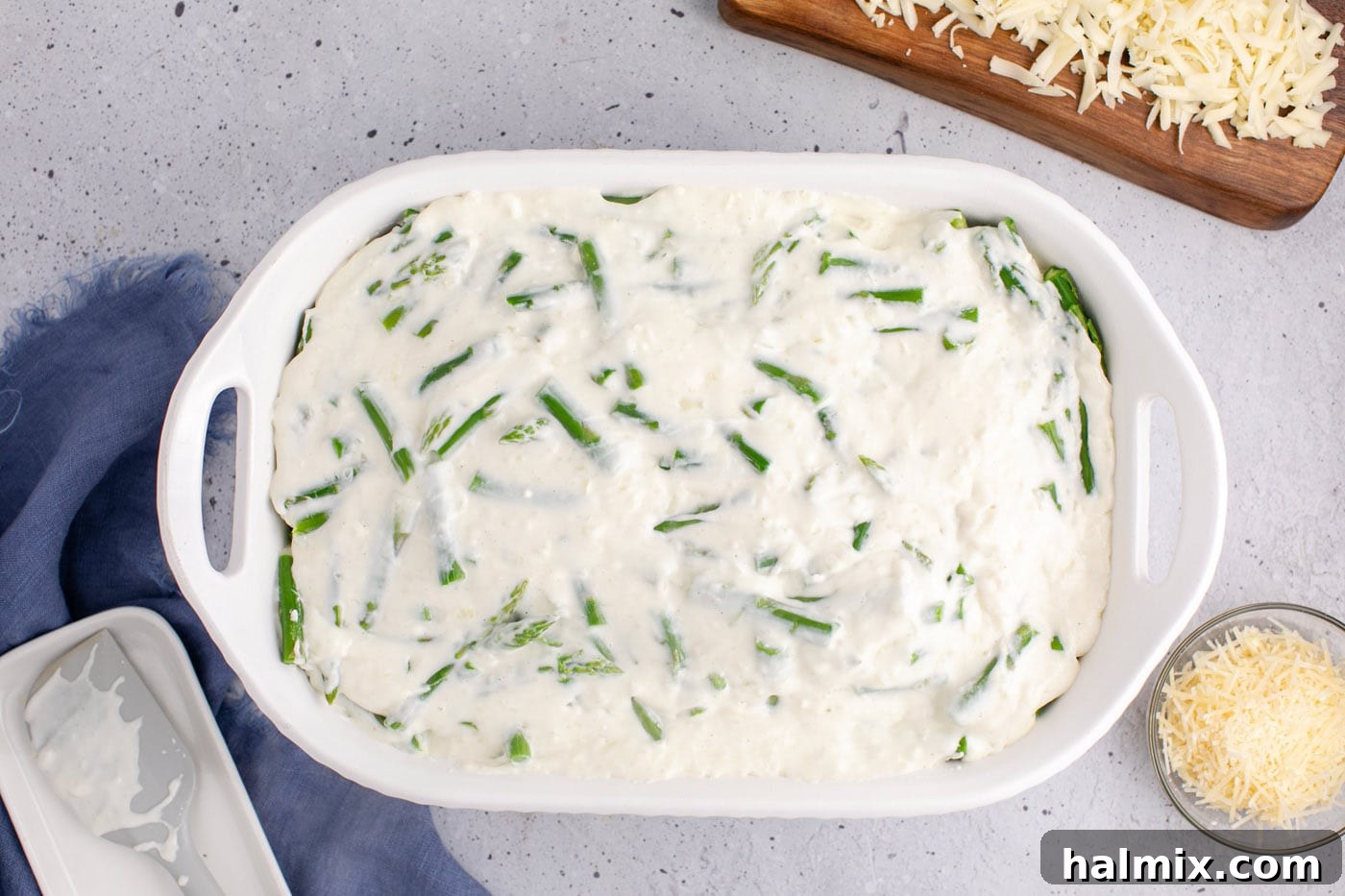
- Assemble and Initial Bake: Pour the warm, cheesy sauce evenly over the blanched asparagus in the prepared baking dish. Gently toss to ensure all asparagus pieces are coated. Place the casserole in the preheated oven and bake for approximately 15 minutes. This allows the asparagus to reach your desired tenderness and the flavors to meld beautifully. You can test for tenderness by piercing a spear with a fork.
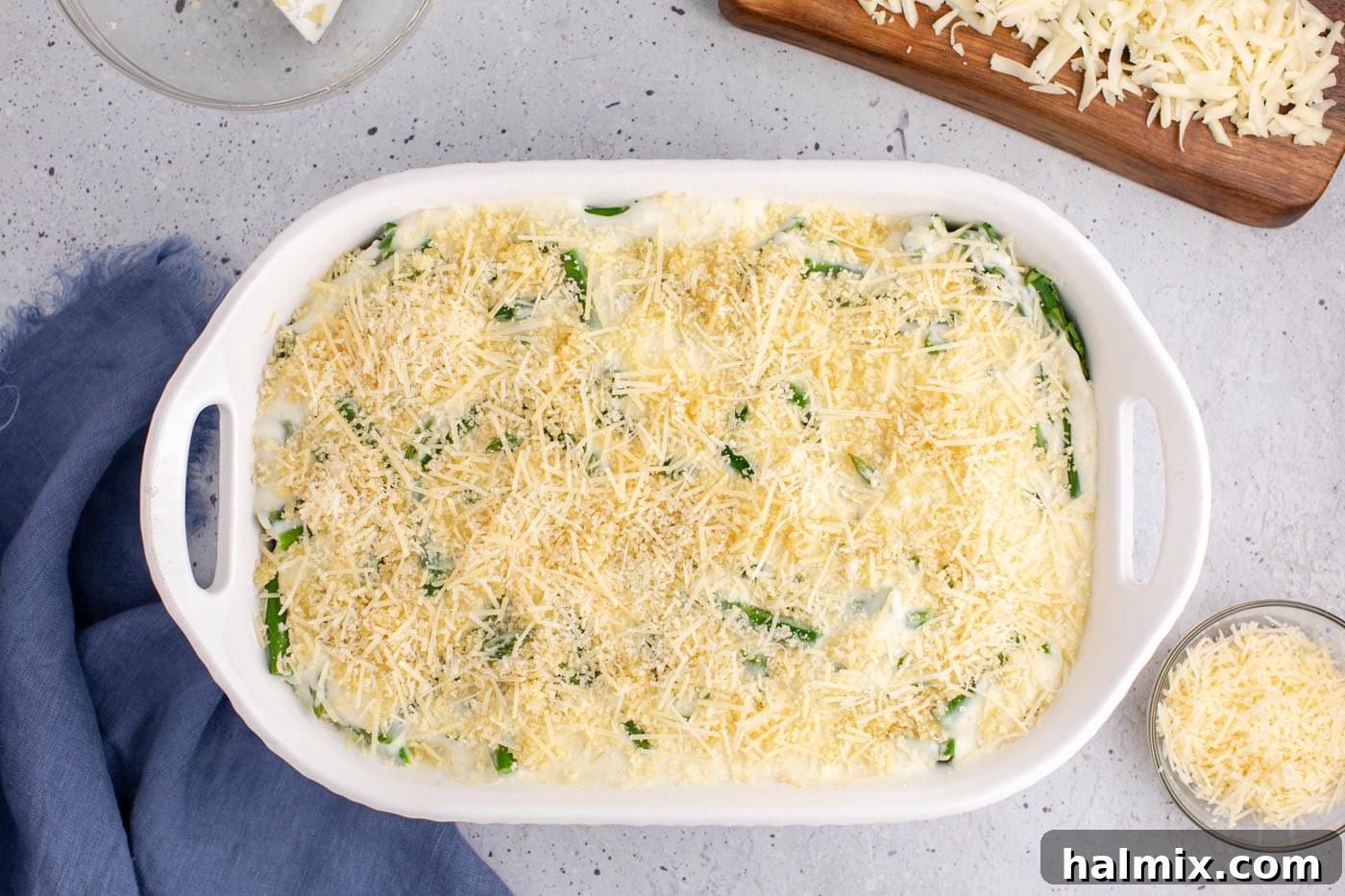
- Add the Crispy Topping: While the casserole is baking, about halfway through its 15-minute cook time, prepare your crispy topping. In a small bowl, combine 2 tablespoons of melted unsalted butter with 1/2 cup of panko breadcrumbs. Mix until the panko is evenly coated. Carefully remove the casserole from the oven. Evenly sprinkle the buttery panko mixture over the top of the casserole, then add a final layer of 1/2 cup of shredded Parmesan cheese. Return the casserole to the oven for the remaining bake time. The topping should turn golden brown and delightfully crisp.
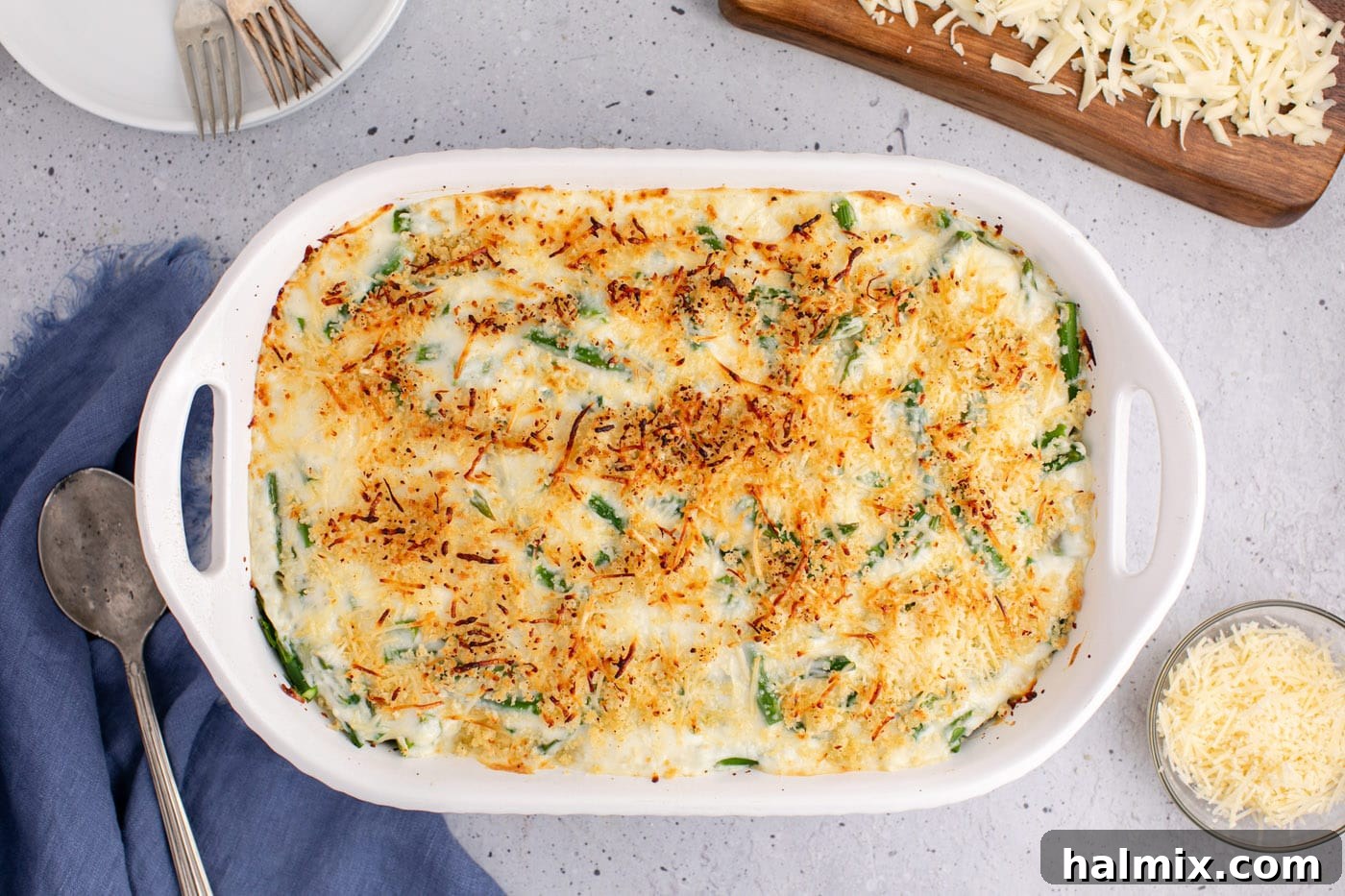
- Serve Warm: Once the casserole is bubbly and the topping is golden, remove it from the oven. Allow it to rest for a few minutes before serving. This brief resting period helps the sauce set slightly, making it easier to serve. Enjoy your homemade asparagus casserole warm!
Frequently Asked Questions & Expert Tips for Success
To help you perfect your Asparagus Casserole, here are answers to common questions and some expert advice:
Once cooled, cover any leftover asparagus casserole tightly with plastic wrap or an airtight lid and store it in the refrigerator for up to 3 days. To reheat, place the casserole (covered with foil to prevent the topping from over-browning) in a 350°F (175°C) oven until it’s warmed through, typically 20-30 minutes. You can remove the foil for the last 5-10 minutes if you want to re-crisp the topping.
Absolutely! This casserole is a fantastic make-ahead dish, perfect for busy holidays or meal prepping. Prepare the dish completely through step 5, pouring the cheese sauce over the blanched asparagus in the baking dish. Allow the casserole to cool completely to room temperature. Once cool, cover it tightly with plastic wrap or an airtight lid and refrigerate for up to 24 hours. When you’re ready to bake, remove the casserole from the refrigerator and let it sit at room temperature for about 30 minutes (especially if using a glass dish) to take the chill off. Then, proceed with step 6 (adding the panko topping) and bake according to the recipe instructions, possibly adding an extra 5-10 minutes to the initial baking time to ensure it heats through.
Yes, you can use frozen asparagus, but there are a few considerations. Thaw the frozen asparagus completely and pat it very dry to remove excess moisture, which can make your casserole watery. You may skip the blanching step if using frozen, as it’s typically already blanched before freezing. Adjust baking time as needed, as frozen asparagus tends to cook faster.
To make this asparagus casserole gluten-free, simply substitute the all-purpose flour with a gluten-free all-purpose flour blend (ensure it contains xanthan gum for thickening). For the panko topping, use gluten-free panko breadcrumbs, which are widely available in most grocery stores.
The key to a lump-free cheese sauce is patience and continuous whisking. When adding flour to the melted butter, cook it for at least 1-2 minutes to form a proper roux. When adding milk, pour it in slowly while whisking vigorously, ensuring it’s fully incorporated before adding more. Once the sauce thickens, remove it from the heat before adding the cheeses; this prevents the cheese from separating or becoming grainy.
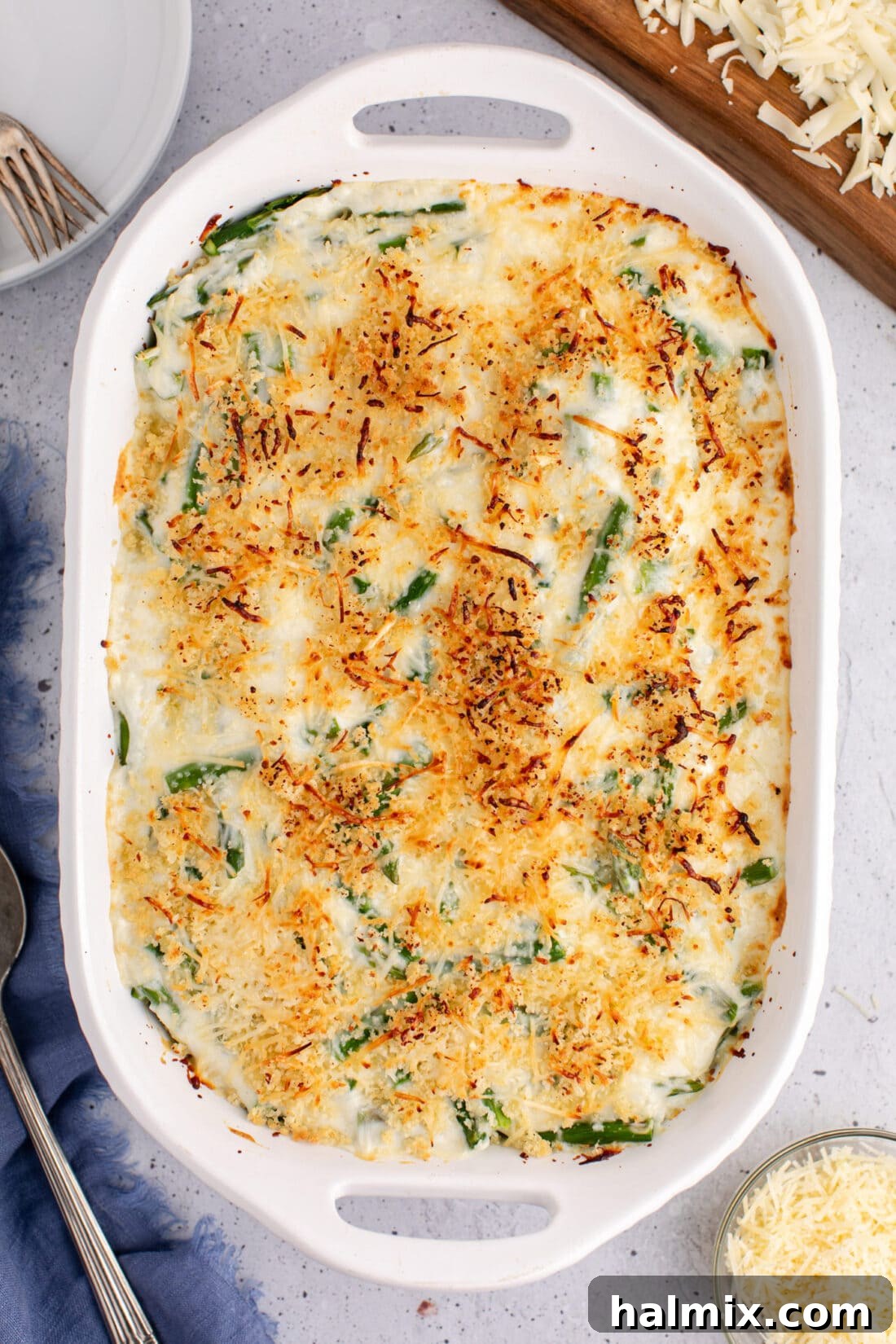
Delightful Serving Suggestions
This creamy asparagus casserole is incredibly versatile and pairs beautifully with a wide array of main dishes. It’s the perfect complement to classic holiday proteins like roasted ham, turkey, or a prime rib. For everyday meals, consider serving it alongside a hearty oven Swiss steak, a succulent roasted chicken, or a quick and flavorful air fryer pork tenderloin. It also makes a wonderful addition to Sunday brunch spreads or as a comforting side for a simple grilled fish. Serve it warm directly from the oven for the best experience, allowing the rich aromas to fill your kitchen.
Explore More Comforting Casserole Recipes
If you’re a fan of the comforting goodness of casseroles, we have plenty more recipes that you’ll love to add to your repertoire. These dishes are perfect for feeding a crowd, potlucks, or simply enjoying a hearty meal at home:
- Creamy Corn Casserole: A sweet and savory classic, perfect for holidays.
- Cheesy Broccoli Casserole: Another crowd-pleasing vegetable bake with a rich sauce.
- Savory Zucchini Casserole: A lighter, yet equally flavorful option for summer produce.
- Roasted Cauliflower Casserole: A delicious way to enjoy cauliflower, especially with a cheesy twist.
- Loaded Mashed Potato Casserole: The ultimate comfort food, packed with all your favorite potato toppings.
I’m passionate about baking and cooking, and I love sharing my culinary journey with all of you! To make sure you never miss a new recipe, I offer a convenient newsletter delivered straight to your inbox every time a new dish is posted. Simply subscribe here and start receiving your free daily recipes!
Asparagus Casserole
This comforting asparagus casserole makes the perfect holiday side dish or a delicious companion to weeknight dinners. Enjoy its creamy texture, crisp topping, and tender asparagus all in one delightful dish.
IMPORTANT – Find helpful Frequently Asked Questions and expert tips throughout the blog post by scrolling up!
Print Recipe | Pin Recipe
Ingredients
- 3 pounds asparagus (approx. 4 bunches), cut into 2-inch pieces
- ¼ cup unsalted butter (1/2 stick or 4 Tablespoons)
- 1 medium onion, finely diced
- 2 cloves garlic, minced
- 3 Tablespoons all-purpose flour
- 3 ½ cups whole milk
- 1 teaspoon sea salt
- ¼ teaspoon ground black pepper
- 5 ounces cream cheese, full fat, cut into cubes
- 1 cup shredded mozzarella cheese, packed
Topping
- 2 Tablespoons unsalted butter, melted
- ½ cup panko bread crumbs
- ½ cup shredded parmesan cheese
Equipment You’ll Need
-
Saucepan
-
13×9 baking dish
-
Skillet
-
Whisk
Before You Begin & Expert Notes
- Asparagus Selection & Prep: Choose rich green asparagus with closed, compact tips. Thicker spears are generally preferred for this recipe, but thinner ones work too—just monitor baking time closely. Snap off woody ends and cut into 2-inch pieces. Blanching the asparagus first helps it cook quicker and maintain its vibrant color and nutrients.
- Sauce Customization: The creamy sauce features whole milk, cream cheese, and mozzarella, thickened with all-purpose flour. You can use 2% milk as a substitute for whole milk if desired.
- Topping Variations: For the crispy topping, panko breadcrumbs are mixed with melted butter. Alternatively, you can use crushed Ritz crackers or crispy fried onions for a different flavor profile.
- Storage & Reheating: Store cooled asparagus casserole, covered, in the refrigerator for up to 3 days. Reheat in a 350°F (175°C) oven until thoroughly warmed.
- Make-Ahead Instructions: Prepare the casserole up to the point of adding the cheese sauce over the asparagus. Let it cool, then cover and refrigerate for up to a day. Before baking, let it sit at room temperature to remove the chill, then add the topping and bake as directed.
Instructions
- Preheat oven to 400°F (200°C).
- Blanch asparagus for 1 minute, then immediately transfer to an ice bath for 2 minutes. Strain and pat dry, then place in a lightly sprayed 9×13-inch glass baking dish. Set aside.
- Melt ½ stick (4 Tablespoons) of butter in a medium saucepan. Sauté finely diced onion and minced garlic for about 3 minutes over medium heat.
- Whisk in 3 Tablespoons all-purpose flour and stir consistently for about 2 minutes to cook the roux. Slowly pour in 3 ½ cups whole milk, along with 1 teaspoon sea salt and ¼ teaspoon ground black pepper. Continue to stir until the sauce thickens, lowering heat if necessary to prevent scorching.
- Remove the saucepan from the heat. Add 5 ounces cubed cream cheese and 1 cup shredded mozzarella cheese. Mix until both cheeses are fully melted and the sauce is smooth.
- Pour the creamy cheese mixture evenly over the asparagus in the baking dish. Bake for about 15 minutes, or until asparagus reaches desired tenderness (test with a fork).
- Halfway through the baking time, prepare the topping: In a small bowl, mix 2 Tablespoons melted unsalted butter with ½ cup panko bread crumbs. Remove the casserole from the oven, sprinkle the panko mixture evenly over top, then add a final layer of ½ cup shredded Parmesan cheese. Return to the oven for the remainder of the cook time until golden and crispy.
Nutrition
Calories: 336 cal |
Carbohydrates: 20 g |
Protein: 14 g |
Fat: 23 g |
Saturated Fat: 14 g |
Polyunsaturated Fat: 1 g |
Monounsaturated Fat: 6 g |
Trans Fat: 0.3 g |
Cholesterol: 70 mg |
Sodium: 617 mg |
Potassium: 586 mg |
Fiber: 4 g |
Sugar: 10 g |
Vitamin A: 2111 IU |
Vitamin C: 11 mg |
Calcium: 330 mg |
Iron: 4 mg
Tried this Recipe? Pin it for Later!
Follow on Pinterest @AmandasCookin or tag #AmandasCookin!
The recipes on this blog are meticulously tested with a conventional gas oven and gas stovetop. Please note that oven performance can vary, especially with older models; using an inexpensive oven thermometer can confirm your oven’s true temperature. If you use a toaster oven or countertop oven, be aware that heat distribution may differ, and cooking/baking times might need adjustment. For recipes made with specialized appliances like pressure cookers, air fryers, or slow cookers, links to the specific appliances used are provided within each recipe. For baking recipes where measurements are given by weight, converting to cups may alter the results, and success with that method cannot be guaranteed.