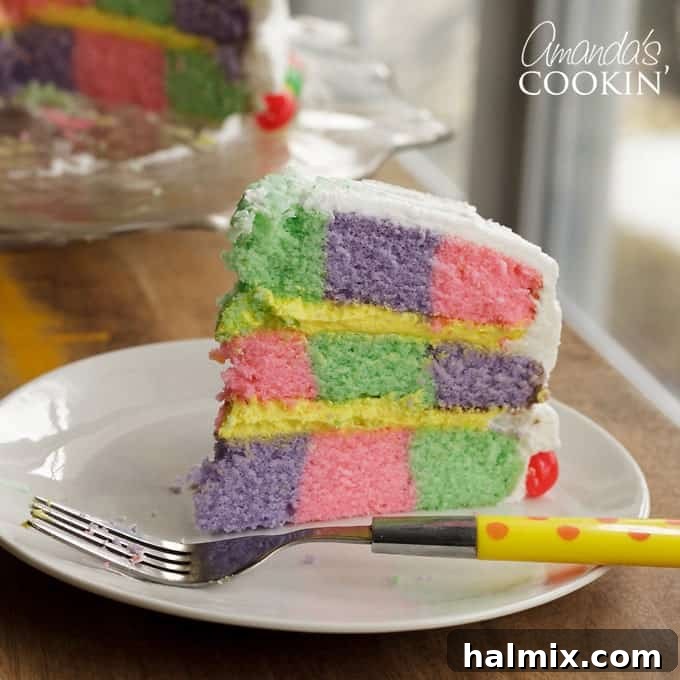
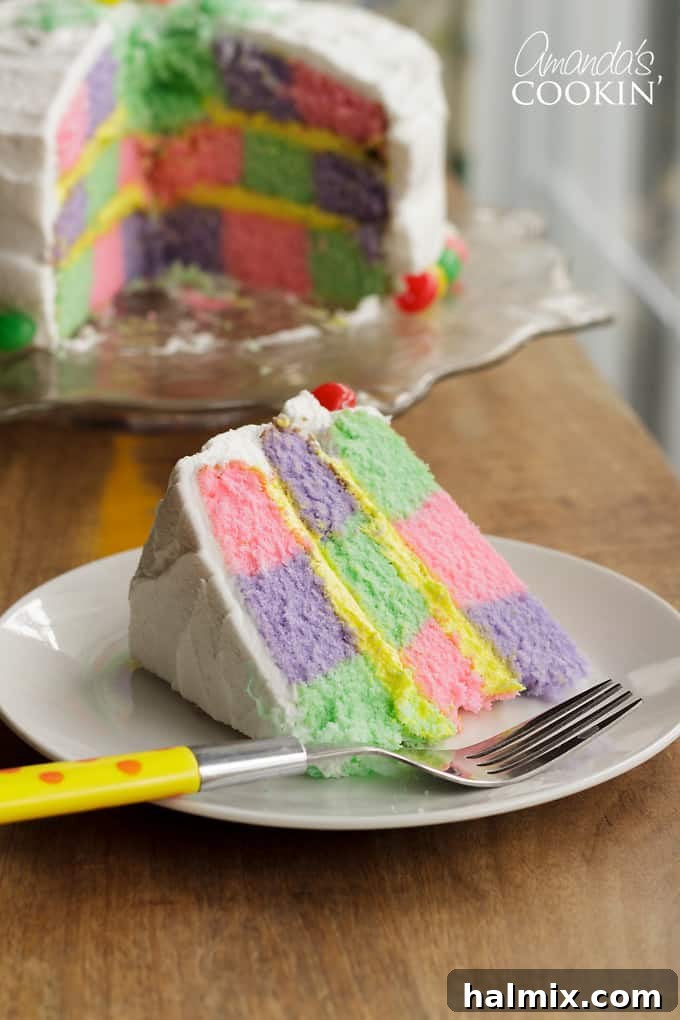
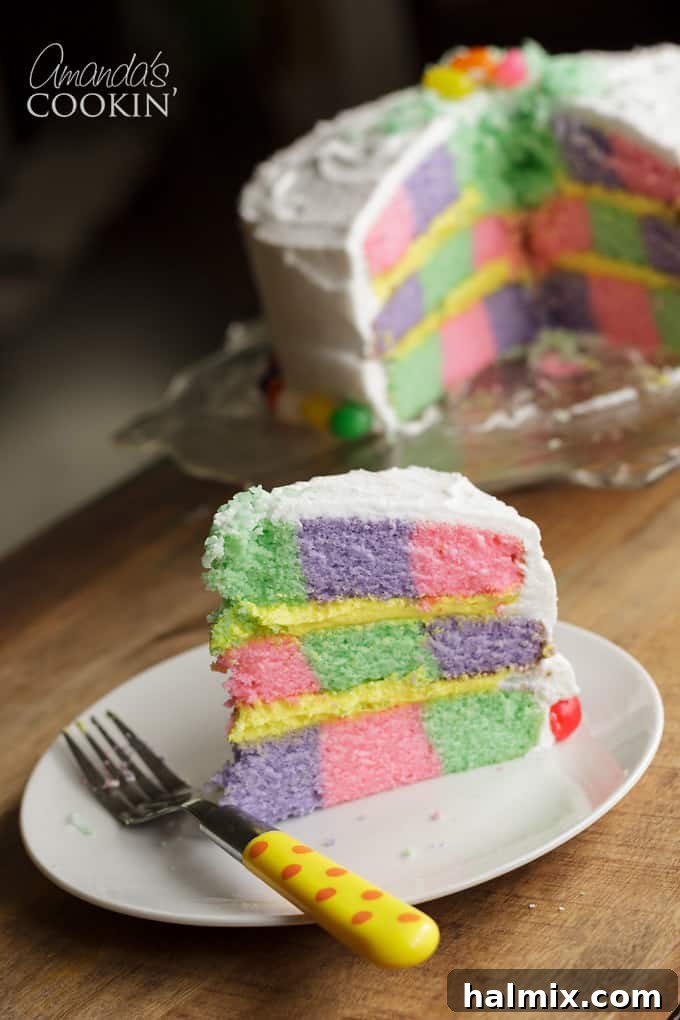
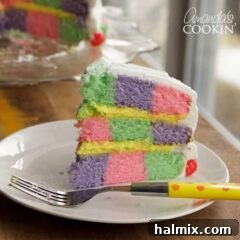
There’s something truly magical about a checkerboard cake. Its striking visual appeal, traditionally achieved with layers of yellow and chocolate cake, always captivates. This Easter, however, we’re taking a delightful detour from the classic to create something even more enchanting: a vibrant pastel checkerboard cake! Imagine cutting into a slice and revealing a stunning pattern of soft, springtime hues – it’s guaranteed to be the centerpiece of your Easter dessert table. This recipe not only promises a show-stopping result but is also incredibly fun to make. And if you find yourself with a little extra batter, why not transform it into some adorable Easter Bunny Cupcakes?
Create a Show-Stopping Pastel Checkerboard Cake for Easter
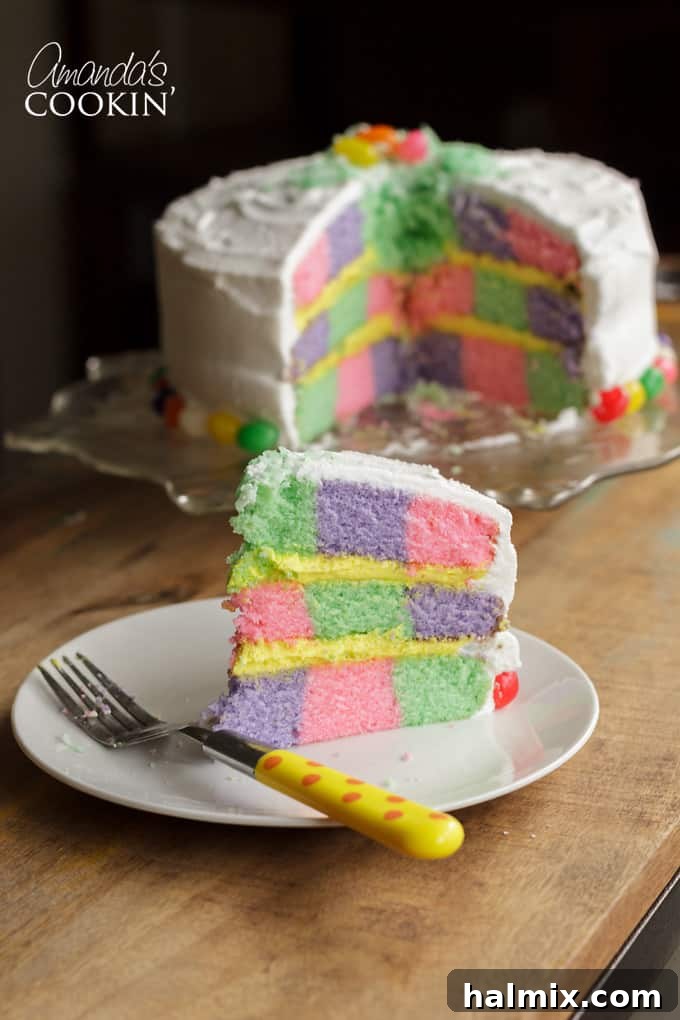
Easter is a time for celebration, renewal, and of course, indulging in delicious, beautifully crafted treats. This pastel checkerboard cake recipe is an adaptation of Dorie Greenspan’s renowned Perfect Party Cake, elevated with a touch of seasonal charm. Instead of the conventional yellow and chocolate, we’ll be using soft, Easter-inspired colors to create an unexpected and delightful pattern within each slice. The surprise doesn’t stop there! For the frosting, we’re opting for a silky smooth white icing made with shortening instead of butter. While some might hesitate, this particular shortening-based frosting delivers an incredibly light, fluffy, and smooth texture that’s truly delicious and holds its shape beautifully – perfect for showcasing those vibrant cake layers. If you prefer, however, feel free to use your go-to white icing or buttercream recipe. The magic of this cake lies not just in its taste, but in the sheer joy of revealing its hidden design.
The Art of the Checkerboard: Essential Baking Tips for a Flawless Cake
Achieving that perfect checkerboard pattern might seem daunting, but with a few insider tips, you’ll be baking like a pro. This section covers crucial advice to ensure your Easter checkerboard cake turns out beautifully, from preparing the batter to handling those colorful layers.
Choosing Your Cake Base for Vibrant Hues
While this recipe provides a fantastic white cake base that takes color wonderfully, feel free to use your favorite reliable white cake recipe. The key is to select a batter that is sturdy enough to hold its shape during baking and cooling, yet delicate and moist to eat. A good white cake recipe will ensure your pastel colors truly pop.
Mastering the Batter: Volume and Consistency
This recipe calls for a double batch of cake batter, which is essential for creating the three distinct colored layers required for the checkerboard effect. Be mindful that combining such a large quantity of ingredients might push the limits of smaller stand mixers. If you have a standard KitchenAid, it should manage, but the bowl will be quite full. If you’re concerned, or if your mixer is on the smaller side, consider splitting the cake recipe in half and preparing it in two separate batches. This precaution prevents overworking your mixer and ensures the batter maintains its ideal consistency.
Even with a double batch, you’ll likely have some leftover batter after filling your three checkerboard pans. Don’t let it go to waste! You can pour it into a 9-inch square pan for a simple sheet cake, or even swirl the different pastel colors together to create a charming marble cake. Another fantastic option is to bake cupcakes with the remaining batter. They make for delightful individual treats or a lovely addition to your Easter spread, perhaps even decorated as Easter Bunny Cupcakes as mentioned earlier.
Coloring Your Batter for Perfect Pastels
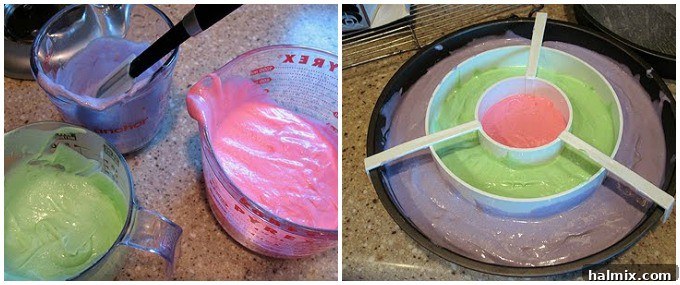
When it comes to coloring, paste food coloring is highly recommended. Unlike liquid food coloring, a tiny amount of paste delivers intense color without altering the batter’s consistency. Start with a quantity smaller than a pea on a toothpick and gradually add more until you achieve your desired soft pastel shade. For ease of distribution into the checkerboard pans, many bakers find liquid measuring cups with pour spouts invaluable. Alternatively, decorator bags offer excellent control and precision.
The Checkerboard Pan: An Essential Tool
A specialized checkerboard pan set simplifies the creation of this intricate design immensely. This set typically includes three round cake pans and a removable insert that guides your colored batter into perfect concentric rings. If you don’t own one of these sets, don’t worry! There are clever techniques to create a checkerboard pattern without the specialized pan. You can find excellent tutorials online that walk you through how to achieve this stunning effect using standard round cake pans and a simple DIY method.
Baking and Cooling Perfection
Proper baking and cooling are crucial for the integrity of your cake layers. Keep a close eye on your cakes as they bake, as oven temperatures can vary. Once baked, allow them to cool sufficiently on racks before attempting to unmold and peel off the parchment paper. This prevents breakage and ensures your layers are firm enough for assembly. Cooled cake layers can be wrapped airtight and stored at room temperature overnight, or even frozen for up to two months, making this a great make-ahead option.
A Savvy Tip: Don’t Waste Those Yolks!
Since this recipe primarily uses egg whites for a light and airy cake texture, you’ll be left with several egg yolks. Don’t discard them! Egg yolks are a fantastic ingredient for enriching many recipes. Consider saving them for homemade ice cream, custard, or even a batch of rich hollandaise sauce. Check out our ice cream and frozen treats recipes for inspiration!
Gathering Your Ingredients for this Easter Masterpiece
Carefully measuring your ingredients is the first step to a successful bake. Here’s everything you’ll need for your delightful pastel checkerboard cake and its luscious frosting.
For the Light and Fluffy Pastel Cake:
- 4 ½ cups cake flour: Essential for a tender crumb.
- 2 tablespoons baking powder: Provides the perfect lift.
- 1 teaspoon salt: Balances the sweetness and enhances flavor.
- 2 ½ cups buttermilk: Adds moisture and a delicate tang, reacting with baking powder for extra rise.
- 8 large egg whites: Contributes to the cake’s light, airy texture and bright white base for coloring.
- 3 cups granulated sugar: Sweetens and tenderizes the cake.
- 4 teaspoons grated lemon zest: Infuses the cake with a bright, fresh aroma.
- 2 sticks (16 tablespoons) unsalted butter, at room temperature: Provides richness and structure.
- 1 teaspoon pure lemon extract: Enhances the citrus notes.
- Paste food coloring (e.g., pink, purple, green): For those beautiful pastel layers.
For the Silky Smooth White Frosting:
- 1 cup vegetable shortening (not butter flavored): The secret to its incredibly smooth and stable texture.
- 4 ½ cups sifted powdered sugar: For sweetness and structure.
- 4 tablespoons milk: Adjusts consistency to perfect spreadability.
- 1 ½ teaspoons clear vanilla extract: For a clean vanilla flavor without altering the white color.
- ½ teaspoon lemon extract: A subtle tang to complement the cake.
- Optional: Small amount of yellow paste food coloring for one frosting layer.
Optional Garnishes for a Festive Touch:
- 1 cup jelly beans: Colorful and fun for decoration.
- ½ cup shredded coconut: Can be tinted green for a “grass” effect.
- 1 drop green food coloring: To tint the coconut.
Essential Tools for Your Baking Adventure
Having the right tools makes all the difference when tackling a project like a checkerboard cake. Here are the items that will help you achieve baking success:
- Checkerboard Pan Set: Highly recommended for effortless pattern creation.
- Stand Mixer or Hand Mixer: Essential for creaming butter and sugar and aerating the batter.
- Mixing Bowls: Several are needed for separating and coloring batter.
- Measuring Cups and Spoons: For precise ingredient measurement.
- Round parchment paper or wax paper: To line the cake pans and prevent sticking.
- Rubber spatulas: For scraping down bowls and folding ingredients.
- Wire cooling racks: For proper air circulation around the baked cake layers.
Step-by-Step Guide to Your Easter Checkerboard Cake
Follow these detailed instructions to bake and assemble your stunning pastel checkerboard cake.
Preparing Your Pans and Oven:
- Center a rack in your oven and preheat the oven to 350°F (175°C).
- Lightly butter three 9-inch round cake pans. If using a checkerboard pan set, these pans will come with it.
- Line the bottom of each pan with a round of parchment paper or wax paper. This prevents sticking and makes unmolding easier.
- Place the checkerboard cake insert into one of the prepared pans and set it aside.
Mixing the Cake Batter:
- In a large bowl, whisk together the cake flour, baking powder, and salt until thoroughly combined. Set aside.
- In a separate medium bowl, whisk together the buttermilk and egg whites until just combined. Set aside.
- In the bowl of your stand mixer (or a large bowl if using a hand mixer), combine the granulated sugar and grated lemon zest. Use your fingers to rub them together until the sugar is moist and fragrant, releasing the lemon oils.
- Add the softened unsalted butter to the sugar-lemon zest mixture. Using the paddle attachment of your stand mixer (or a hand mixer), beat at medium speed for a full 3 minutes. The mixture should become very light, fluffy, and pale in color. This creaming process incorporates air, which is vital for a tender cake.
- Beat in the pure lemon extract.
- Gradually add one-third of the dry flour mixture to the butter-sugar mixture, beating on medium speed until just incorporated.
- Next, beat in half of the buttermilk-egg white mixture.
- Beat in half of the remaining dry ingredients until just combined.
- Add the rest of the milk and egg mixture, beating until the batter appears homogeneous.
- Finally, add the last of the dry ingredients, mixing until just incorporated.
- Give the entire batter a final good beating for 2 minutes on medium speed. This ensures everything is thoroughly mixed and well-aerated, leading to a lighter cake crumb.
Coloring and Assembling the Layers:
- Divide the batter evenly into three separate bowls.
- To color each batch, take a very small amount of paste food coloring (less than a pea-sized dot on a toothpick is usually enough) and whisk it into one of the white batter portions. Repeat for the other two batches, selecting your desired pastel colors. For this recipe, we used soft pink, green, and purple. Mix until the color is uniform.
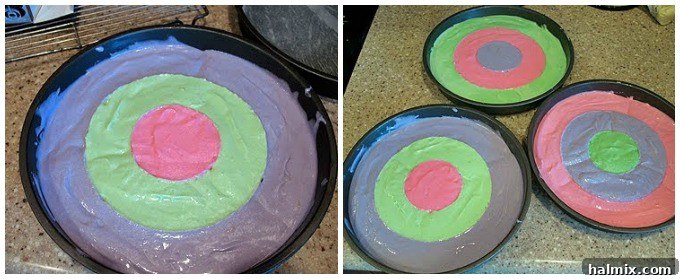
- Now, let’s create the checkerboard pattern. Start with the pan that has the checkerboard insert already in place. Carefully fill the center hole halfway with the pink batter. Then, fill the middle ring halfway with the green batter. Complete the first layer by filling the outer ring halfway with the purple batter.
- Gently loosen the insert’s “legs” from the side of the pan and lift the insert straight up and out of the pan. Rinse and dry the insert thoroughly before placing it into the second prepared cake pan. This prevents colors from bleeding into subsequent layers.
- For the second pan, continue your pattern flow. If the first pan had pink in the center, green in the middle, and purple on the outside, then for the second pan, fill the center hole halfway with green batter, the middle ring with purple, and the outer ring with pink.
- For the third and final pan, following the continuing pattern, fill the center with purple batter, the middle ring with pink, and the outer ring with green. This alternating pattern is what creates the vibrant checkerboard effect when the cake is sliced.
Baking to Perfection:
- Bake the cake layers for approximately 25-35 minutes. Begin checking for doneness after 25 minutes. The cakes are ready when they are springy to the touch and a thin knife or toothpick inserted into the center of each comes out clean.
- Once baked, transfer the cake pans to wire cooling racks and allow them to cool for about 5 minutes.
- After 5 minutes, run a thin knife around the sides of each cake layer to loosen it from the pan. Invert the cakes onto the cooling racks, carefully remove the pans, and peel off the parchment paper liners.
- Invert the cakes again so they are right side up on the cooling racks and allow them to cool completely to room temperature. This step is crucial before frosting to prevent the frosting from melting.
- (Pro tip: Cooled cake layers can be wrapped airtight in plastic wrap and stored at room temperature overnight, or frozen for up to 2 months for future use.)
Creating the Fluffy Frosting:
This shortening-based frosting is wonderfully smooth and stable, perfect for a layered cake.
- In the bowl of your stand mixer (or a large bowl with a hand mixer), beat the vegetable shortening and both lemon and clear vanilla extracts together until creamy and well combined, about 1-2 minutes on medium speed.
- Gradually add 2 cups of the sifted powdered sugar to the shortening mixture, beating on low speed until incorporated.
- Add 2 tablespoons of milk and beat until smooth.
- Slowly add the remaining 2 ½ cups of powdered sugar, then the remaining 2 tablespoons of milk. Continue beating until the frosting is light, fluffy, and smooth. If the frosting is too thick, add a tiny bit more milk (half a teaspoon at a time) until it reaches a spreadable consistency. If it’s too thin, add a tablespoon more sifted powdered sugar.
Assembling and Decorating Your Masterpiece:
- Take about one-third of the prepared white frosting and transfer it to a separate small bowl. Tint this portion with a tiny amount of yellow paste food coloring, mixing until you achieve a soft yellow hue. This will be used as the filling between the cake layers.
- Place one of your completely cooled cake layers on your serving plate or cake stand. Spread an even layer of the yellow-tinted frosting over the top.
- Carefully place the second cake layer on top, aligning it. Apply another even layer of the yellow frosting.
- Place the third and final cake layer on top.
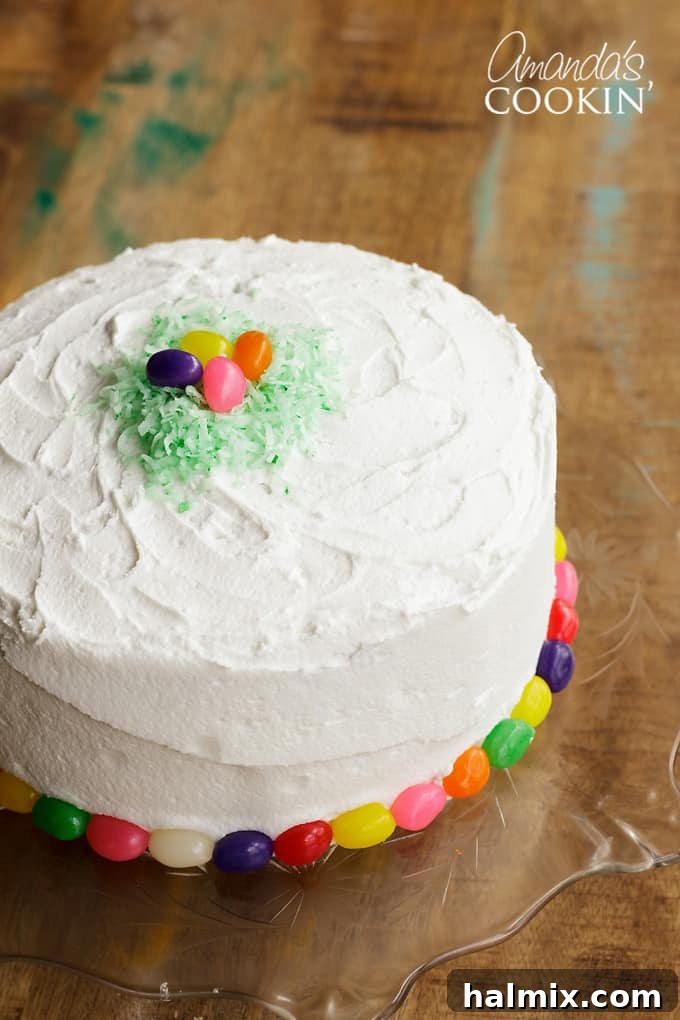
- Using the remaining white frosting, generously frost the sides and the top of the entire cake, aiming for a smooth finish. You can use an offset spatula or a bench scraper for perfectly smooth sides.
- For a charming Easter decoration, place the ½ cup of shredded coconut in a small bowl. Add just one drop of green food coloring and mix with a fork until the coconut resembles green “grass.”
- Sprinkle the green-tinted coconut on top of the frosted cake. Arrange a few colorful jelly beans artfully on the coconut “grass” to mimic Easter eggs.
- Finally, decorate the outside bottom edge of the cake by gently pressing a line of colorful jelly beans around it.
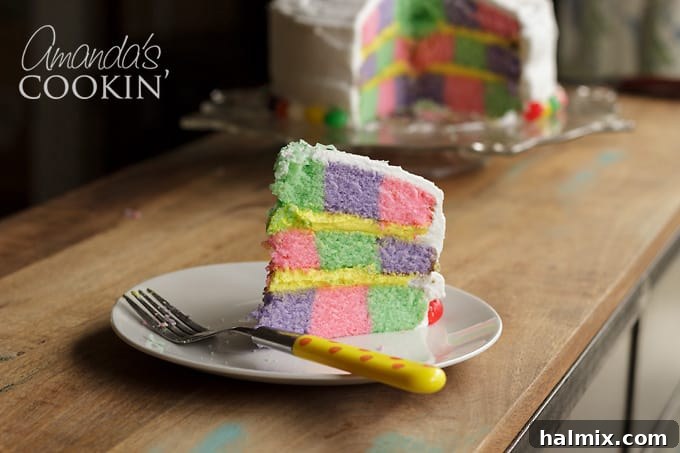
Wasn’t that a rewarding baking experience? The end result is truly spectacular and worth every moment you invested in creating this recipe! This stunning pastel checkerboard cake is sure to impress your friends and family, making your Easter celebration even more memorable. Enjoy the delight of sharing your beautifully crafted masterpiece!
Beyond the Checkerboard: More Delicious Easter Treats
Looking for more ways to sweeten your Easter holiday? We have a collection of delectable Easter dessert recipes that are perfect for any celebration. Explore these festive ideas:
- Indulge in our vibrant Frosted Sugar Cookie Bars, which taste just like your favorite Lofthouse cookies!
- Don’t miss these adorable and easy-to-make Rice Krispie Nests, perfect for little hands to help decorate.
- For a truly impressive yet simple dessert, try this elegant Carrot Cake Trifle, an ideal choice for your Easter dessert spread.
- We have countless other inspiring ideas, so be sure to check out all of our Easter recipe ideas for more delicious inspiration!
Pastel Checkerboard Cake for Easter
Print It
Pin It
Rate It
Ingredients
For the Cake:
- 4 ½ cups cake flour
- 2 tablespoons baking powder
- 1 teaspoon salt
- 2 ½ cups buttermilk
- 8 large egg whites
- 3 cups sugar
- 4 teaspoons grated lemon zest
- 16 tbsp unsalted butter (2 sticks, at room temperature)
- 1 teaspoon pure lemon extract
- Paste food coloring (pink, green, purple)
For the White Frosting:
- 1 cup vegetable shortening (not butter flavored)
- 4 ½ cups powdered sugar (sifted)
- 4 tablespoons milk
- 1 ½ teaspoons clear vanilla extract
- ½ teaspoon lemon extract
Optional Garnish:
- 1 cup Jelly beans
- ½ cup shredded coconut
- 1 drop green food coloring
Before You Begin
Instructions
-
Preheat oven to 350°F (175°C).
-
Butter three 9-inch round cake pans (these are included in the Checkerboard Pan Set) and line the bottom of each with a round of parchment paper. Place the checkerboard cake insert into one of the pans and set aside.
Making the Cake:
-
In a large bowl, whisk together the flour, baking powder, and salt.
-
In a separate bowl, whisk together the buttermilk and egg whites.
-
Put the sugar and lemon zest into your mixer’s bowl or another large bowl and rub them together with your fingers until the sugar is moist and fragrant. Add the butter, and working with the paddle attachment, or with a hand mixer, beat at medium speed for a full 3 minutes, until the butter and sugar are very light.
-
Beat in the extract, then add one-third of the flour mixture, still beating on medium speed. Beat in half of the milk-egg mixture, then beat in half of the remaining dry ingredients until incorporated. Add the rest of the milk and eggs, beating until the batter is homogeneous, then add the last of the dry ingredients. Finally, give the batter a good 2-minute beating to ensure that it is thoroughly mixed and well aerated.
-
Separate the batter evenly into three separate bowls. To add paste food coloring, take a small amount (smaller than a pea, it doesn’t take much!) and whisk it into the white batter. Repeat for the other two batches. We used pink, purple, and green.
-
Starting with the pan that has the checkerboard insert, fill the center hole halfway with pink batter. Fill the center ring halfway with green and the outer ring halfway with purple. Carefully loosen the insert’s “legs” from the side of the pan and lift the insert straight up into the air. Rinse and dry the insert and place it into the next pan.
-
In keeping with your pattern flow (pink, green, purple, etc.) fill the center hole halfway with green, the second ring with purple, and the outer ring with pink. For the last pan, continuing the pattern, purple in the center, then pink, then green.
-
Bake for 25-35 minutes, checking after 25, or until the cakes are springy to the touch—a thin knife inserted into the centers should come out clean. Transfer the cakes to cooling racks and cool for about 5 minutes, then run a knife around the sides of the cakes, unmold them, and peel off the paper liners. Invert and cool to room temperature right side up. (The cooled cake layers can be wrapped airtight and stored at room temperature overnight or frozen for up to 2 months.)
To Make the Frosting:
-
Beat shortening and extracts until creamy, about 1-2 minutes on medium speed. Slowly add 2 cups of the powdered sugar, then 2 tablespoons of milk, 2 more cups of powdered sugar, then the remaining milk and any additional powdered sugar that may be needed until smooth and spreadable.
-
Put 1/3 of the frosting into a separate bowl and tint it with a small amount of yellow paste food coloring. Frost in between the layers with this yellow frosting, and use the remaining white frosting for the sides and top of the cake.
-
Mix coconut with one drop of green food coloring to create “grass.” Place tinted coconut on top of the cake and add a few jelly beans. Decorate the outside bottom edge of the cake with jelly beans for a festive border.
Nutrition
Tried this Recipe? Pin it for Later!Follow on Pinterest @AmandasCookin or tag #AmandasCookin!
The recipes on this blog are tested with a conventional gas oven and gas stovetop. It’s important to note that some ovens, especially as they age, can cook and bake inconsistently. Using an inexpensive oven thermometer can assure you that your oven is truly heating to the proper temperature. If you use a toaster oven or countertop oven, please keep in mind that they may not distribute heat the same as a conventional full-sized oven, and you may need to adjust your cooking/baking times. In the case of recipes made with a pressure cooker, air fryer, slow cooker, or other appliance, a link to the appliances we use is listed within each respective recipe. For baking recipes where measurements are given by weight, please note that results may not be the same if cups are used instead, and we can’t guarantee success with that method.
This post was originally published on March 23, 2010.