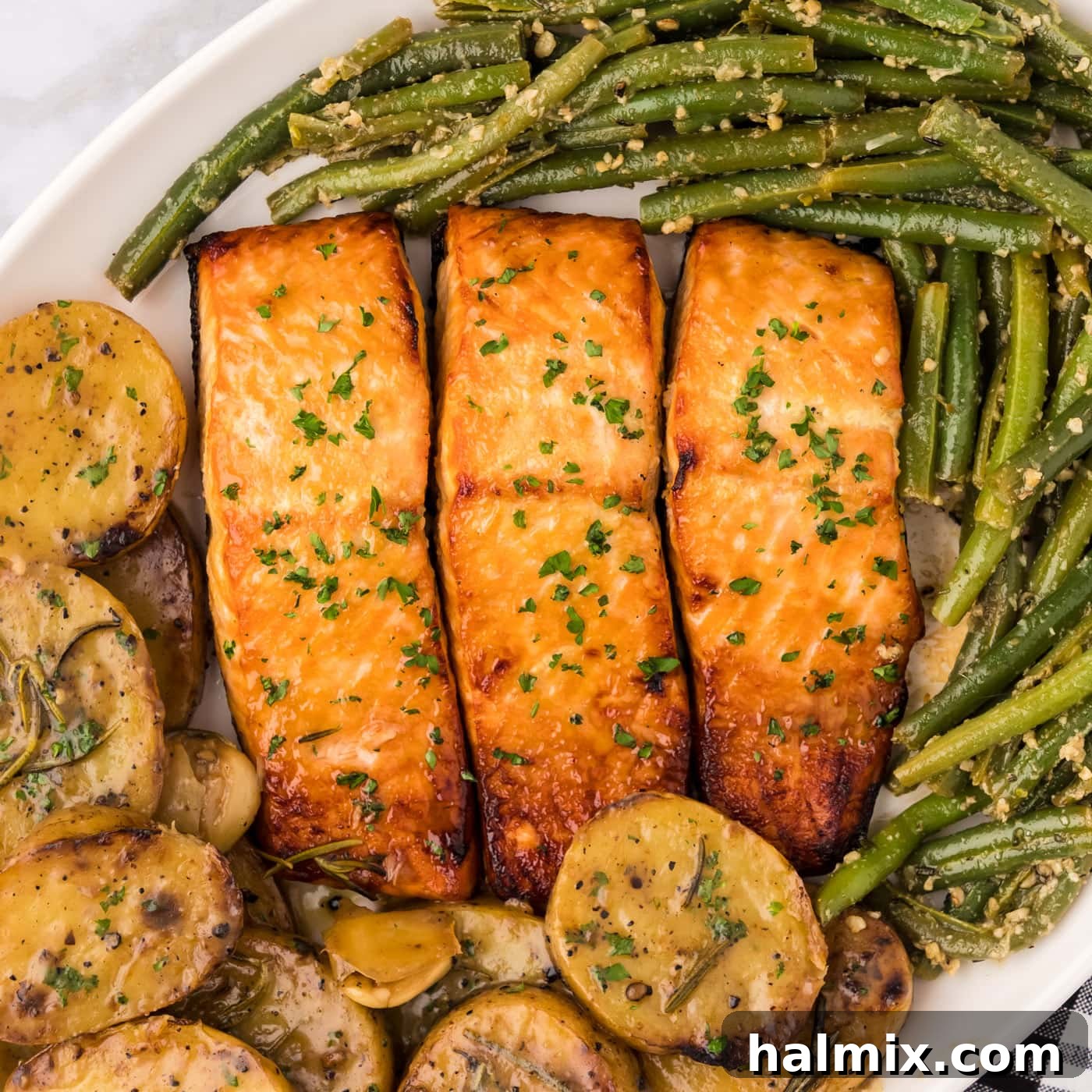
Irresistible Brown Sugar Salmon: Your New Favorite 4-Ingredient Meal
Prepare to be amazed by this incredibly simple yet profoundly flavorful brown sugar salmon recipe. Featuring a mouthwatering glaze crafted from just four essential ingredients – Dijon mustard and brown sugar – this dish transforms ordinary salmon into a culinary masterpiece. As it bakes, the topping caramelizes to form a sticky, sweet, and savory crust that perfectly complements the flaky, juicy fish beneath. This isn’t just a meal; it’s an experience that will tantalize your taste buds and leave you craving more, all while being unbelievably easy to prepare.
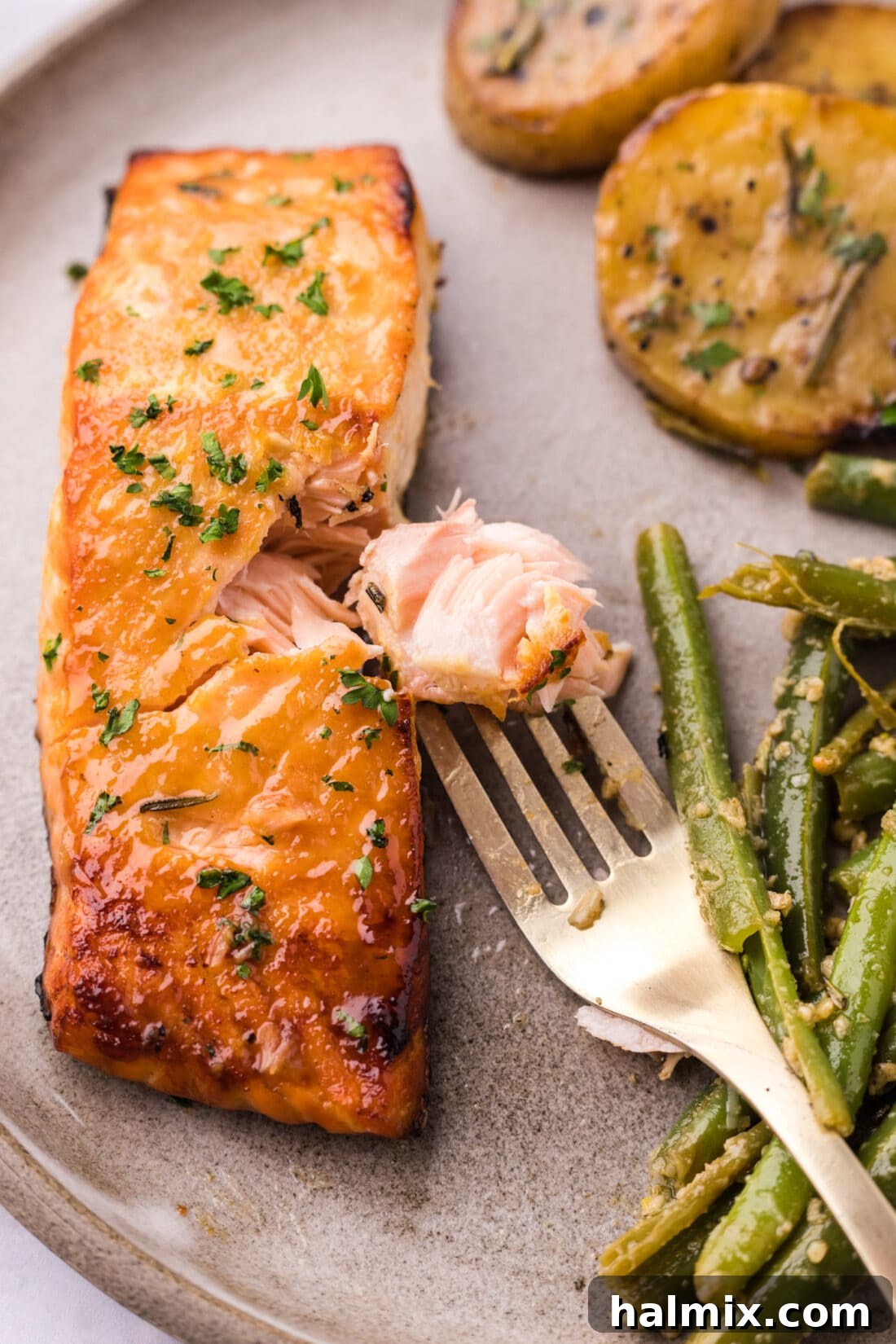
Why This Brown Sugar Salmon Recipe is a Must-Try
Salmon is renowned for its mild yet distinctive flavor, making it an exceptional canvas for a wide array of seasonings and glazes. This versatility is precisely why we adore it, from zesty dill salmon to spicy Cajun salmon, and now, this delightful brown sugar rendition. Beyond its adaptability, salmon is a nutritional powerhouse, brimming with omega-3 fatty acids, crucial for heart health and brain function, and a rich source of Vitamin B12, all while remaining low in saturated fats. It’s a healthy choice that never sacrifices on taste.
What truly sets this brown sugar salmon apart is the exquisite glaze. A simple combination of tangy Dijon mustard and sweet brown sugar creates a magical crust that caramelizes beautifully during baking. This process locks in the salmon’s natural moisture, resulting in incredibly tender, flaky, and juicy fillets every time. The sweet-savory balance, coupled with a hint of piquant mustard, elevates the salmon to new heights, making this recipe an absolute winner for busy weeknights or special occasions alike. It’s a gorgeous flavor profile that’s both sophisticated and approachable, proving that simple ingredients can yield extraordinary results.
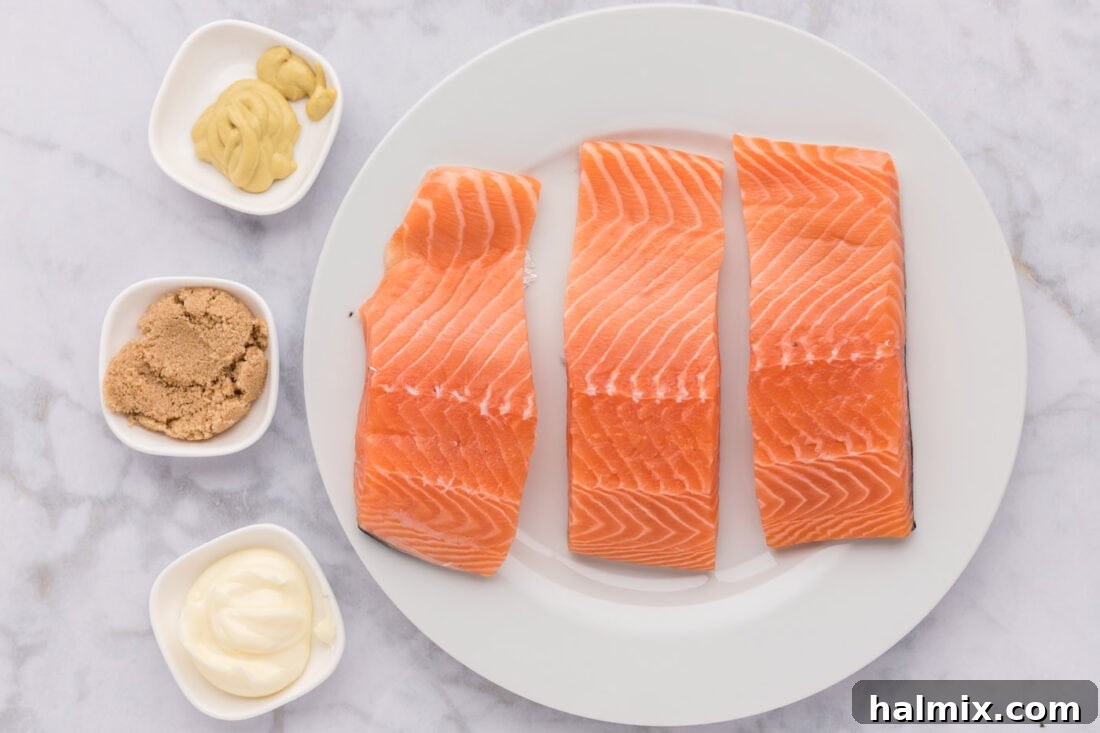
Gather Your Simple Ingredients
One of the many charms of this brown sugar salmon recipe is its minimalist ingredient list. You only need four items to create a truly memorable meal! For precise measurements and detailed instructions, refer to the printable recipe card located at the conclusion of this post. While the list is short, selecting quality ingredients will undoubtedly enhance the final flavor profile.
Ingredient Spotlight & Expert Tips
Let’s take a closer look at the stars of this dish and explore how to make the most of each one, along with any useful substitutions or preparation tips.
SALMON: For this recipe, we highly recommend using center-cut salmon fillets. These portions typically offer a more uniform thickness across the entire fillet, which is crucial for even cooking. Uneven pieces can lead to some parts being overcooked and dry while others are still perfectly tender. If you have a larger fillet, use a sharp chef’s knife to slice it into 3 smaller, individual portions. When selecting salmon, always prioritize fresh over frozen if possible, as fresh salmon often yields superior texture and flavor. If using frozen salmon, ensure it is completely thawed overnight in the refrigerator before proceeding with the recipe. This prevents a watery outcome and ensures the glaze adheres properly. Always cook salmon with the skin side down. This serves multiple purposes: the skin acts as a protective barrier, keeping the delicate flesh moist and preventing it from sticking to the baking sheet. It also helps the fillet maintain its shape. If you cook it skin side up, the fish will cook and begin to flake, making it difficult to lift and potentially causing it to fall apart.
BROWN SUGAR: This is the hero of our sweet and savory glaze. Brown sugar not only provides a rich, molasses-like sweetness but also contributes significantly to the caramelization process. As it bakes, the sugar melts and creates that desirable sticky, slightly crisp crust that makes this salmon so irresistible. You can use light or dark brown sugar, with dark brown sugar offering a slightly deeper, more intense molasses flavor.
DIJON MUSTARD: Don’t underestimate the power of Dijon! It brings a delightful tanginess and a subtle, complex heat that beautifully balances the sweetness of the brown sugar. More than just flavor, Dijon mustard also acts as an emulsifier, helping to bind the glaze ingredients together and ensuring it adheres perfectly to the salmon. It creates a flavorful crust without overpowering the delicate fish.
BUTTER: Softened butter is key to achieving a smooth, spreadable glaze. It adds richness and a luxurious mouthfeel to the sauce, helping it to caramelize and become deeply golden. Ensure your butter is very soft, almost like pudding, for easy incorporation with the other ingredients.
Optional Additions: A pinch of salt and freshly ground black pepper can enhance the flavors without altering the core recipe. For a touch of garlic, a quarter teaspoon of garlic powder can be mixed into the glaze.
Effortless Steps to Perfect Brown Sugar Salmon
These step-by-step photos and instructions are designed to guide you visually through the process of making this delicious recipe. For a convenient printable version, complete with precise measurements and comprehensive instructions, simply Jump to Recipe at the bottom of this page.
- Preheat Your Oven: Begin by preheating your oven to 400°F (200°C). This ensures the oven is at the optimal temperature for even cooking and perfect caramelization as soon as your salmon goes in.
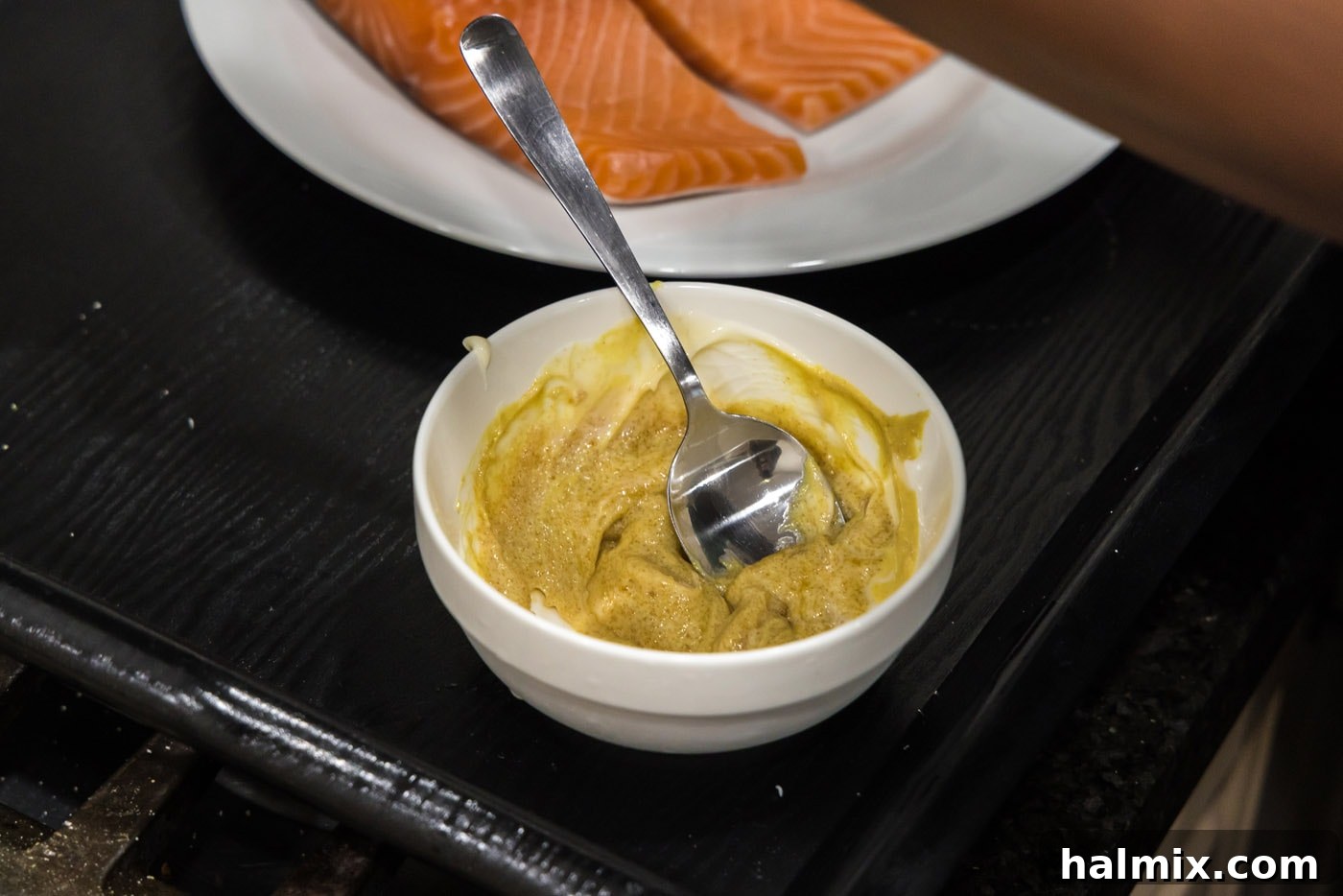
- Prepare the Signature Glaze: In a small mixing bowl, combine the brown sugar, Dijon mustard, and very soft butter. Stir these ingredients thoroughly until they are fully incorporated and form a smooth, homogenous mixture. The consistency should be easily spreadable.

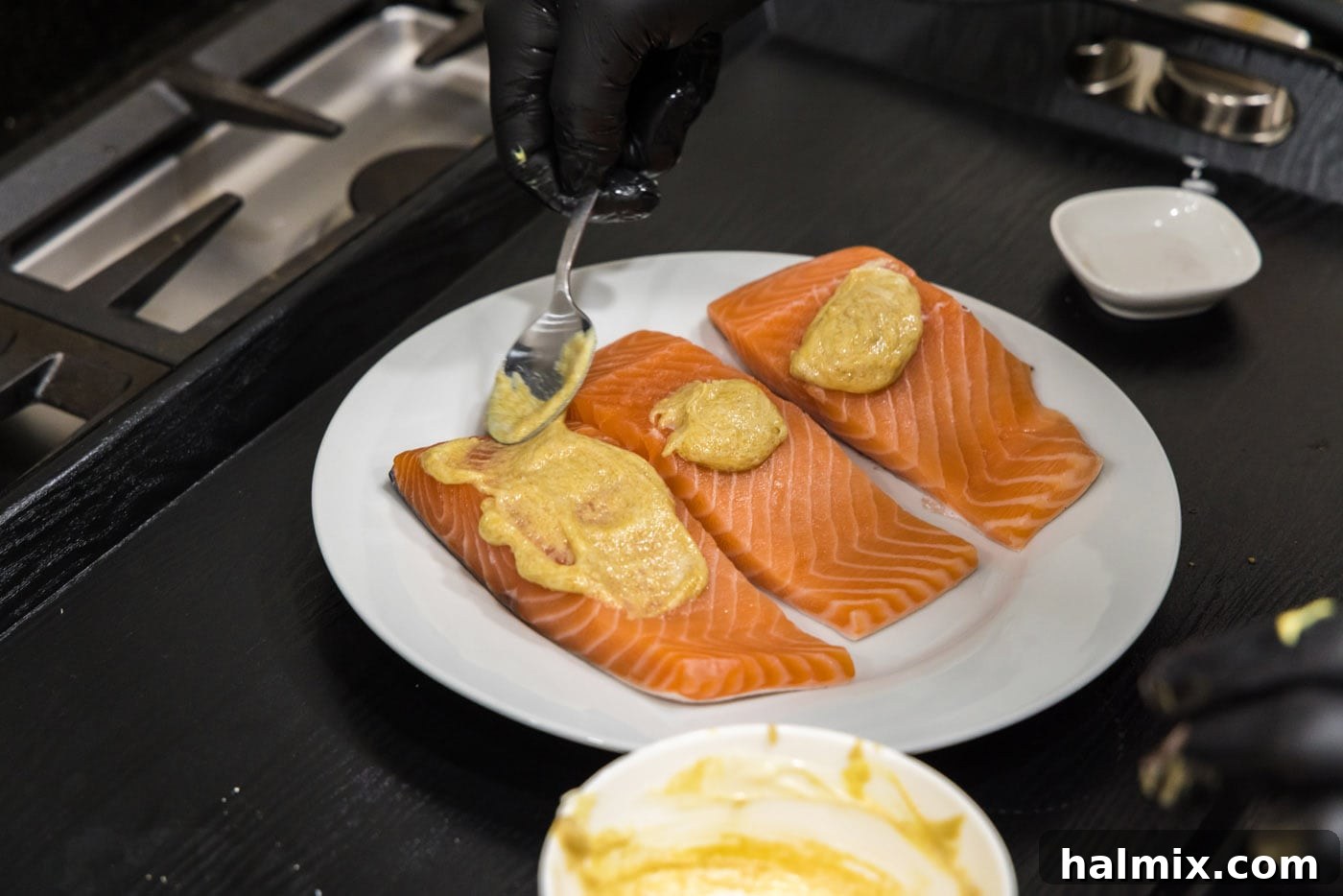
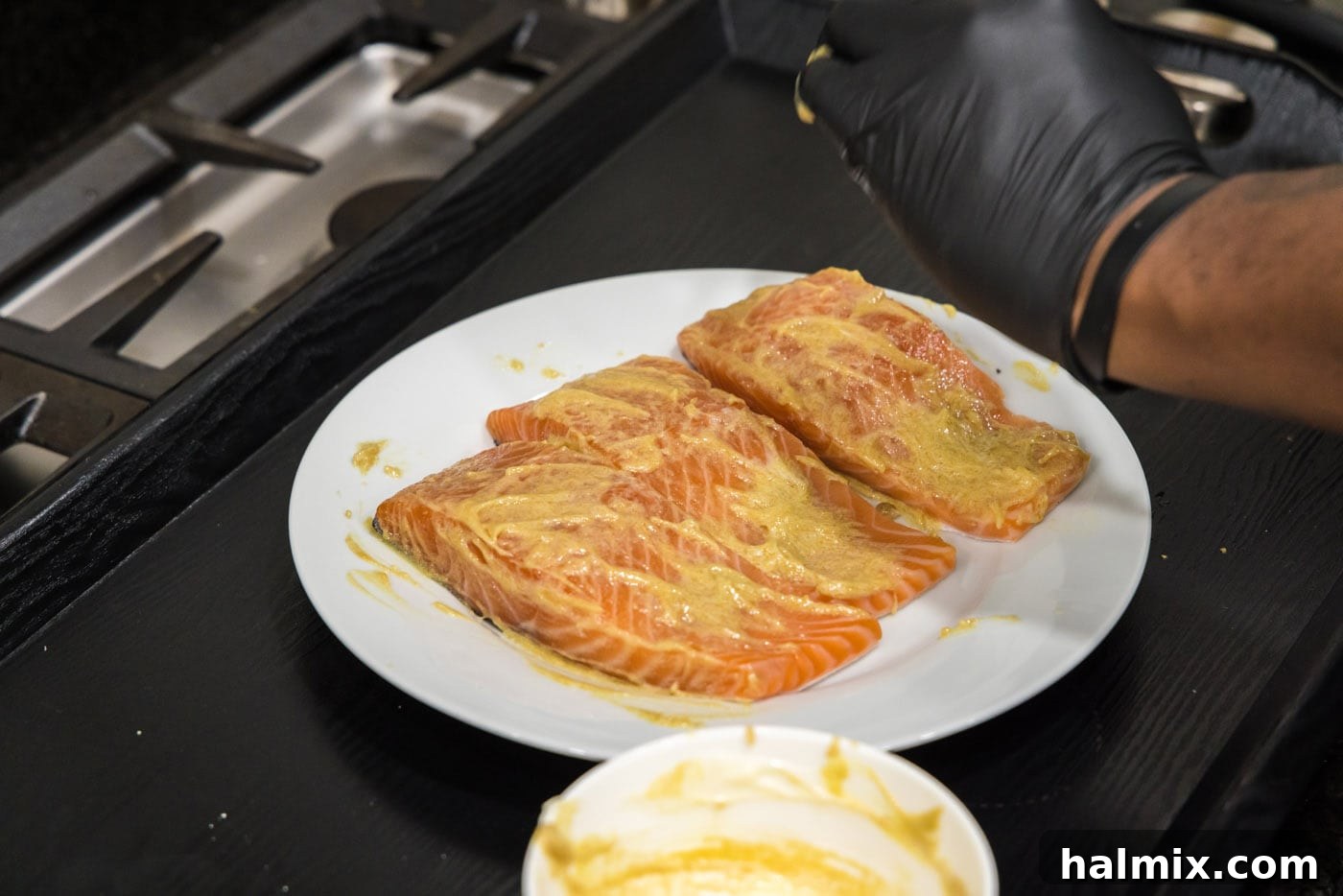
- Apply the Flavorful Glaze: Generously spread the prepared mustard mixture over the flesh side of each salmon fillet. Ensure an even coating, as this glaze will transform into that irresistible sticky, sweet-savory crust. Don’t be shy; every part of the fillet should be covered.
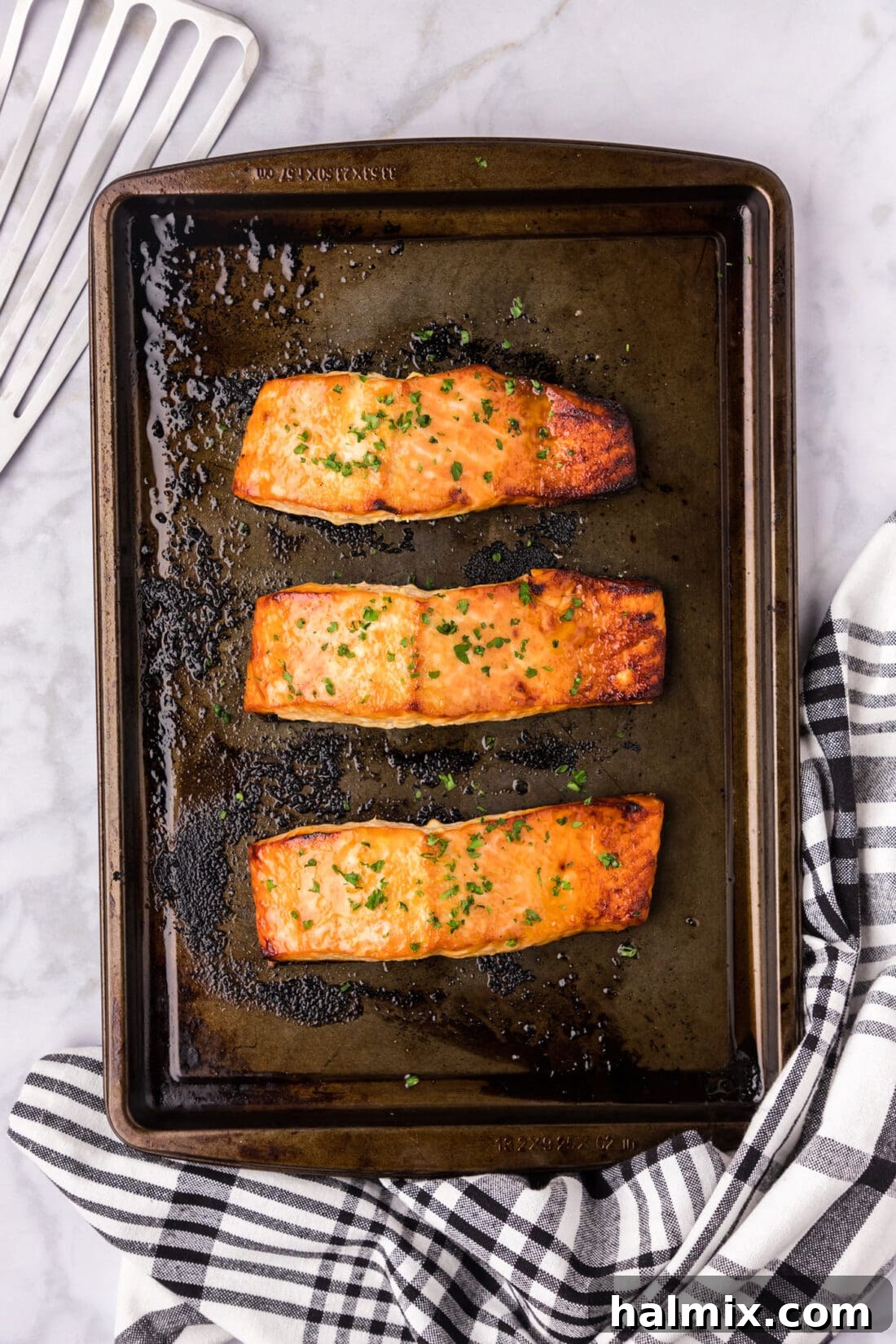
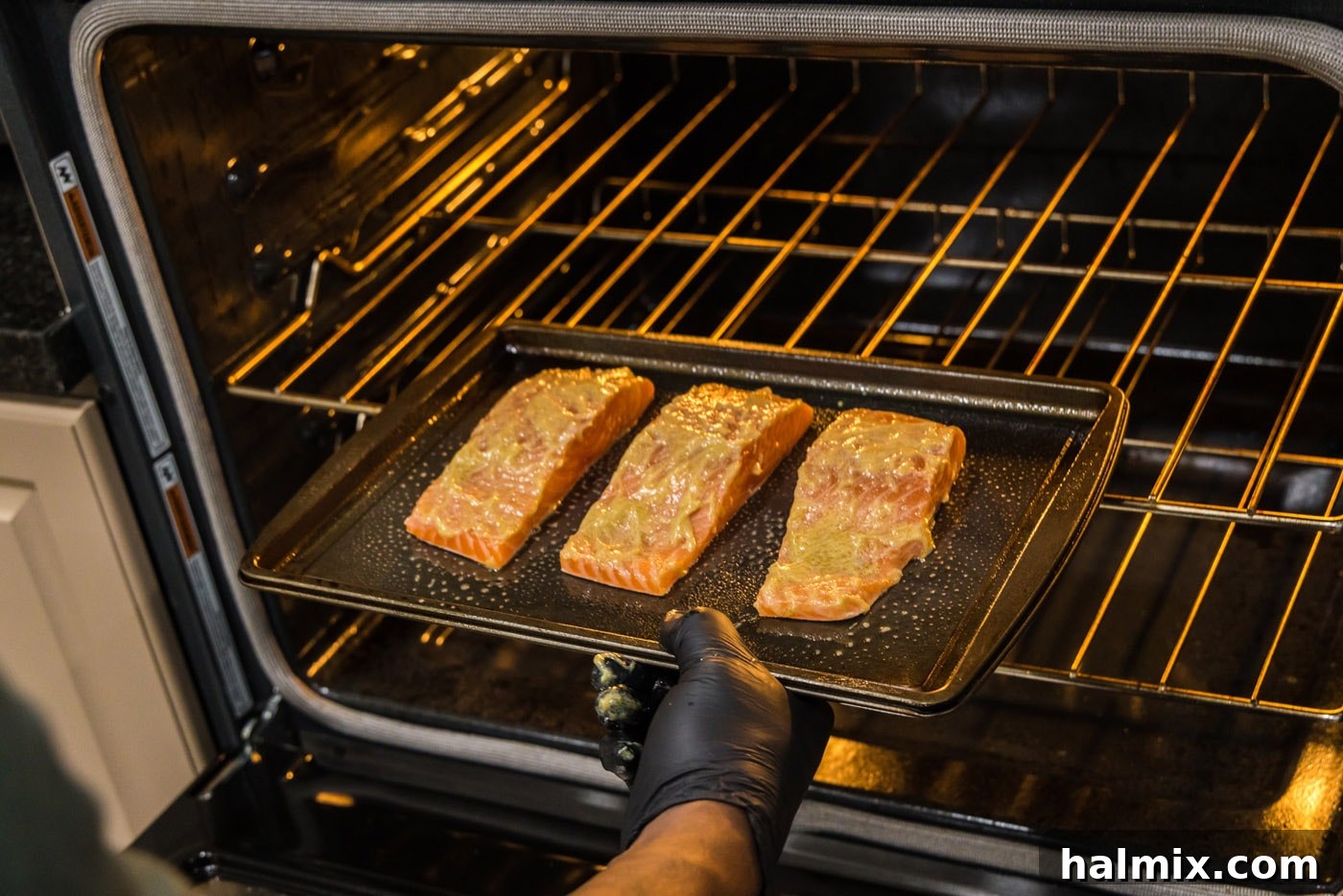
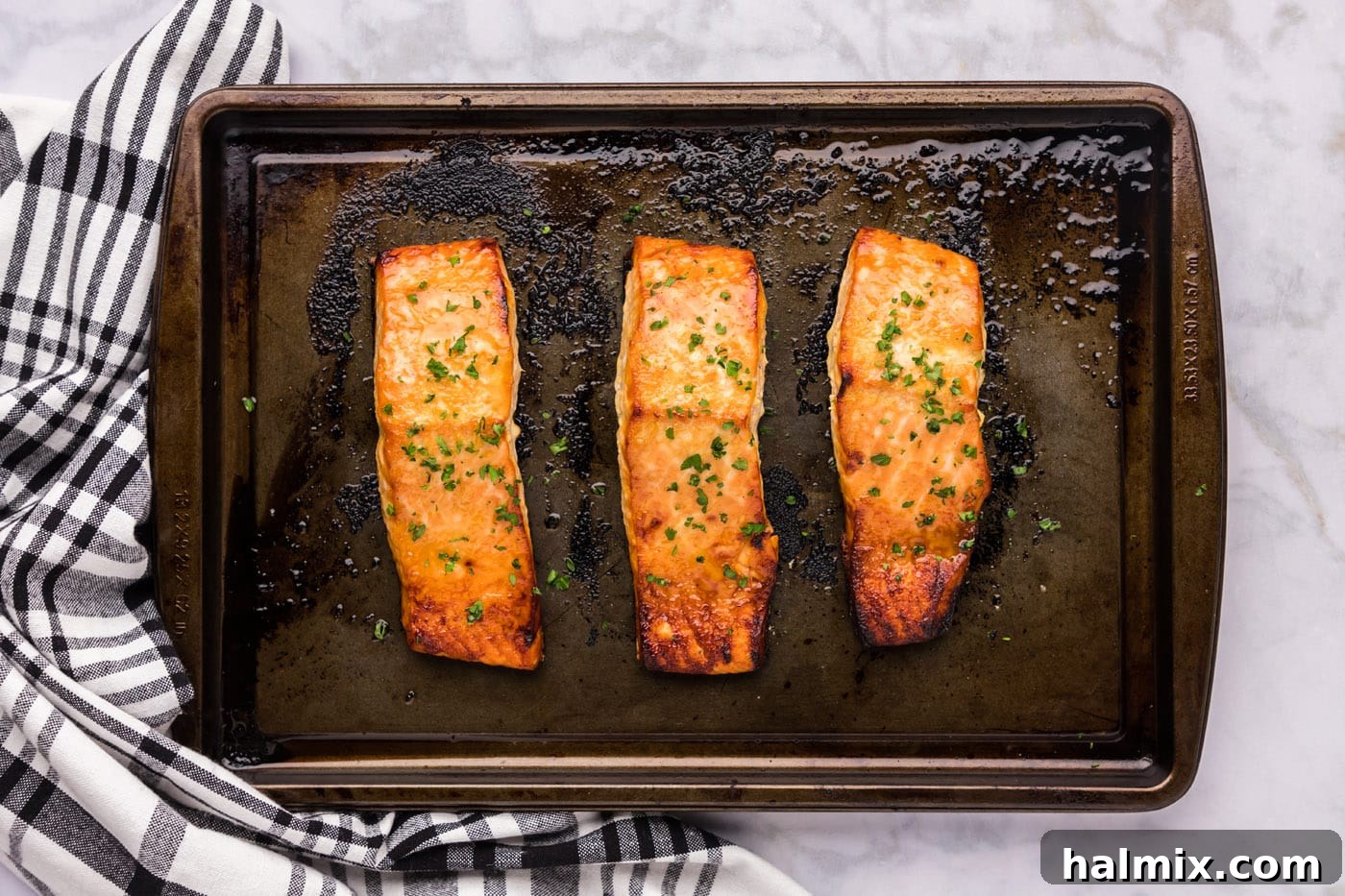
- Bake to Perfection: Carefully place the glazed salmon fillets, skin side down, onto a baking sheet. Bake for approximately 25 minutes, or until the salmon is cooked through and flakes easily with a fork. The exact baking time may vary slightly depending on the thickness of your fillets and your oven’s calibration.
EXPERT TIP: For effortless cleanup, line your baking sheet with parchment paper. This creates a non-stick surface, preventing the delicious sugary glaze from adhering to the pan. We advise against using aluminum foil directly under the salmon, as the acidic and sugary glaze can react with the foil and potentially cause the fish skin to stick or impart a metallic taste. If foil is your only option, be sure to spray it thoroughly with a non-stick cooking spray before placing the salmon. Watch the salmon carefully during the last few minutes of baking; the glaze should be beautifully caramelized but not burnt.
Frequently Asked Questions & Expert Tips
The best way to determine if salmon is perfectly cooked is by gently pressing your finger or the tip of a knife onto the thickest part of the fillet. If the flesh begins to flake easily and separate, it is done. The color of the salmon should also transition from translucent to opaque throughout. For the most accurate result, use an instant-read meat thermometer inserted into the thickest part of the fish. Salmon is considered safely cooked when it reaches an internal temperature of 145°F (63°C). Be careful not to overcook salmon, as it will become dry, tough, and excessively flaky, losing its desirable moist texture.
To ensure freshness and safety, store any leftover brown sugar salmon in an airtight container in the refrigerator for 2-3 days. This helps maintain its quality and prevents flavor transfer from other foods. When you’re ready to enjoy your leftovers, the best way to reheat salmon without drying it out is in the oven. Preheat your oven to a gentle 275°F (135°C). Place the salmon on a foil-lined baking sheet (to prevent sticking and aid cleanup) and reheat for about 10 minutes, or until it is warmed through. Avoid high heat or microwave reheating if possible, as these methods can quickly dry out the delicate fish.
While the recipe calls for center-cut fillets for their uniform thickness, other types of salmon can also be used. Wild-caught varieties like Sockeye or Coho salmon offer a richer flavor and firmer texture, while farmed Atlantic salmon is typically fattier and more readily available, resulting in a very moist fillet. Always look for salmon with bright, moist flesh and no strong fishy odor. Whether you choose skin-on or skin-off is a personal preference, though cooking with the skin on helps protect the fish from drying out and can be easily removed after cooking if desired.
Absolutely! The brown sugar and Dijon glaze can be prepared up to 24 hours in advance. Simply mix the brown sugar, Dijon mustard, and softened butter in a small bowl, cover it, and refrigerate. When you’re ready to cook, allow the glaze to come back to room temperature for about 15-20 minutes, or gently warm it slightly, to ensure it’s soft enough to spread easily onto the salmon fillets. This makes meal prep even quicker on a busy day.
While this recipe is designed for oven baking to achieve that perfect caramelized crust, it can be adapted for grilling or pan-searing. For grilling, preheat your grill to medium-high heat and oil the grates well. Grill the salmon skin-side down first for 5-7 minutes, then flip and cook for another 3-5 minutes, or until cooked through, brushing with any remaining glaze during the last few minutes. For pan-searing, heat a cast-iron skillet over medium-high heat with a little oil. Sear the salmon skin-side down for 4-6 minutes until crispy, then flip and cook for another 2-4 minutes, reducing the heat if the glaze starts to burn. Keep an eye on the glaze to prevent burning due to the direct heat.
Delightful Serving Suggestions
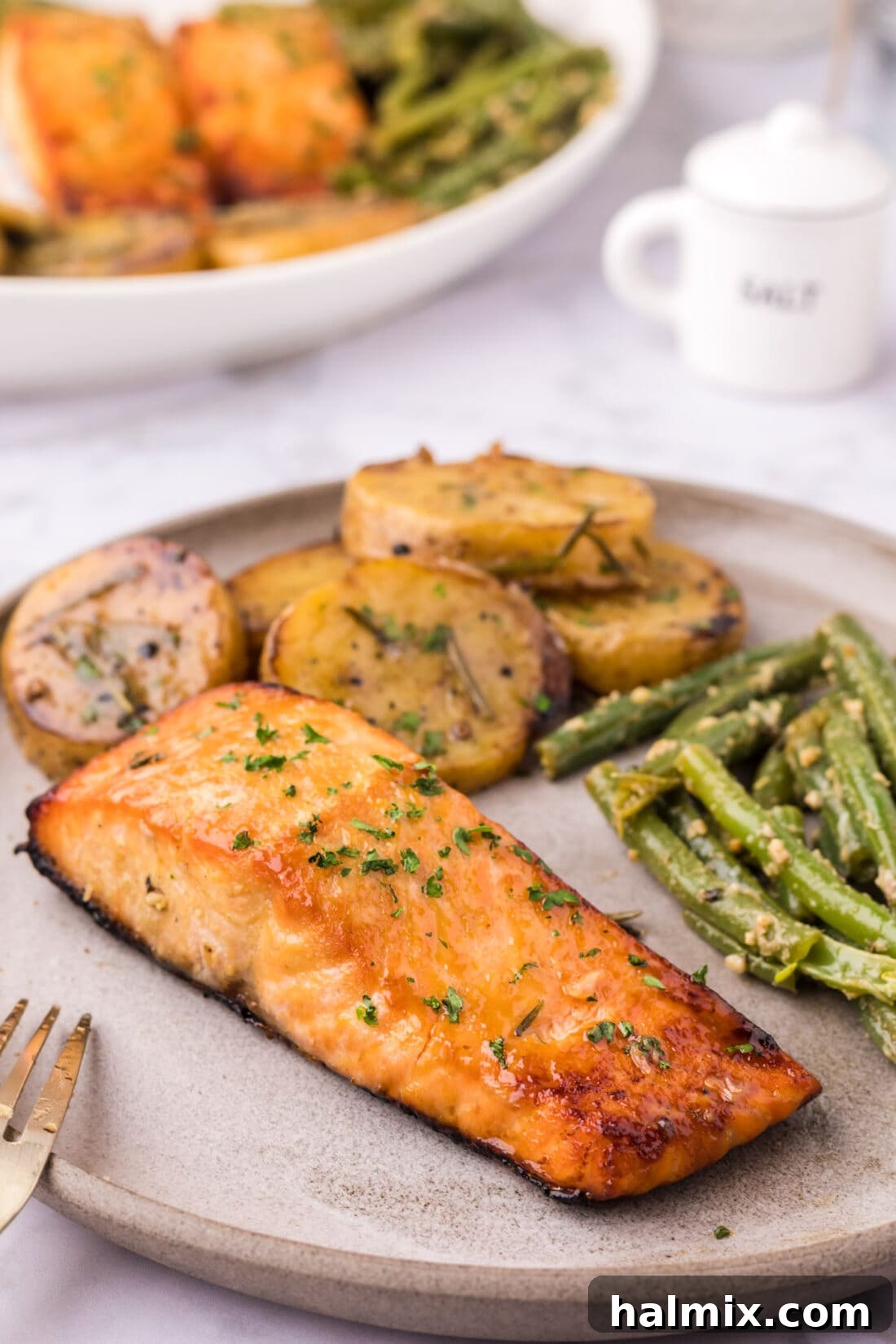
This versatile brown sugar salmon pairs beautifully with a wide variety of side dishes, making it easy to create a complete and satisfying meal. For a classic combination, serve it alongside fluffy white or brown rice, which perfectly soaks up any extra glaze. Hearty vegetable options include garlic roasted potatoes, simple steamed or sautéed green beans, or tender roasted broccoli. For something a little different, consider parmesan potatoes, quinoa, couscous, or a fresh, crisp tossed dinner salad with a light vinaigrette.
If you crave a little extra kick, don’t hesitate to sprinkle some red pepper flakes over the cooked salmon for a dash of heat that complements the sweet and savory notes. A squeeze of fresh lemon juice just before serving can also brighten the flavors. Enjoy this delicious brown sugar salmon warm, straight from the oven, for the best taste and texture. Consider pairing it with a crisp white wine like Sauvignon Blanc or Pinot Grigio, or for a non-alcoholic option, a sparkling cider or infused water with lemon and mint.
Explore More Delicious Salmon Recipes
If you’re a fan of salmon, you’ll love exploring these other fantastic recipes from our collection:
- Lemon Salmon
- Teriyaki Salmon
- Blackened Salmon
- Maple Soy Salmon
- Dijon Lemon Caper Salmon
I love to bake and cook and share my kitchen experience with all of you! Remembering to come back each day can be tough, that’s why I offer a convenient newsletter every time a new recipe posts. Simply subscribe and start receiving your free daily recipes!
Brown Sugar Salmon
Brown sugar salmon boasts a tangy sweet crust from both the Dijon and brown sugar that caramelizes as it bakes. This one is a winner and really adds a gorgeous flavor to these flaky, juicy fillets.
IMPORTANT – There are often Frequently Asked Questions within the blog post that you may find helpful. Simply scroll back up to read them!
Print Recipe
Ingredients
- 2 ½ Tablespoons brown sugar
- 1 Tablespoon Dijon mustard
- 2 ½ Tablespoons butter should be very soft, like pudding
- 1 pound center cut salmon cut into 3 filets
Things You’ll Need
-
Baking sheet
-
Vinyl gloves
Before You Begin
- Center cut salmon provides uniform thickness between your fillets. Use a sharp chef’s knife to slice the fillet into 3 smaller fillets. We highly recommend using fresh salmon over frozen. If you do have frozen salmon, allow it to fully thaw overnight in the refrigerator before using. Always cook fish with the skin side down. If you place the fish skin side up, the fish will cook and begin to flake, making it fall apart as you lift it.
- To test for doneness, gently press your finger (or the tip of a knife if it’s too hot) onto the top center or thickest part of the salmon – if it begins to flake or separate then it is done cooking. If you overcook the salmon, it will be dry and overly flaky.
- Store leftovers in an air-tight container kept in the refrigerator for 2-3 days. Reheat in the oven set to 275F on a foil-lined baking sheet for 10 minutes or until warmed through.
Instructions
-
Preheat oven to 400 F.
-
Combine brown sugar, Dijon mustard, and butter in a small bowl. Stir together until incorporated.
-
Spread mustard mixture over the flesh of each salmon fillet.
-
Place fillets on baking sheet and bake for 25 minutes.
TIP – You can line your baking sheet with parchment paper if you want less cleanup. However, we don’t recommend foil as the sugary coating drips off and may make the skin of the fish stick. If you use foil, be sure to spray it with non-stick cooking spray.
Nutrition
The recipes on this blog are tested with a conventional gas oven and gas stovetop. It’s important to note that some ovens, especially as they age, can cook and bake inconsistently. Using an inexpensive oven thermometer can assure you that your oven is truly heating to the proper temperature. If you use a toaster oven or countertop oven, please keep in mind that they may not distribute heat the same as a conventional full-sized oven and you may need to adjust your cooking/baking times. In the case of recipes made with a pressure cooker, air fryer, slow cooker, or other appliance, a link to the appliances we use is listed within each respective recipe. For baking recipes where measurements are given by weight, please note that results may not be the same if cups are used instead, and we can’t guarantee success with that method.