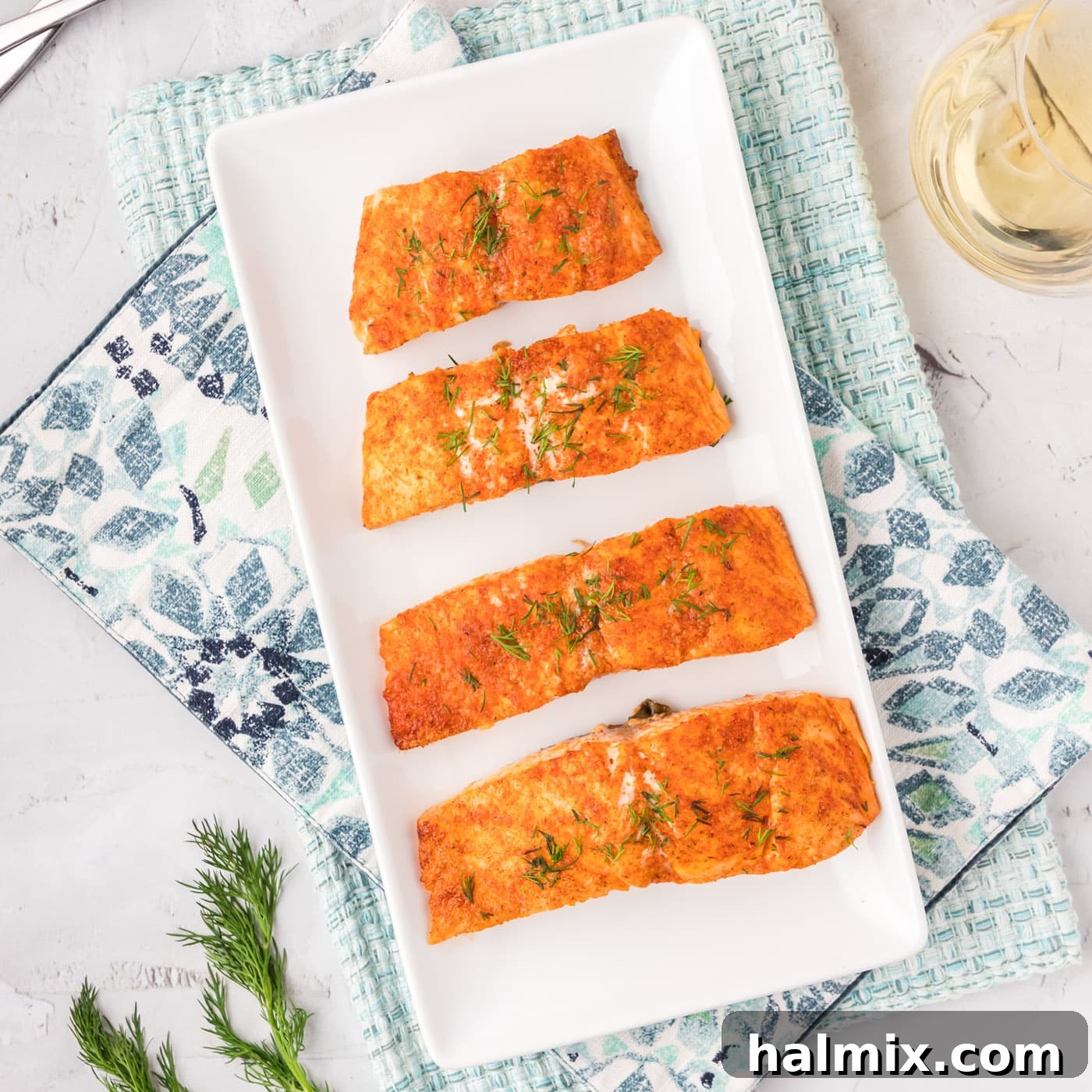
Welcome to the ultimate guide for preparing perfectly roasted salmon! This incredibly simple recipe proves that you don’t need a pantry full of ingredients or hours in the kitchen to create a restaurant-quality meal. With just a handful of staple ingredients and the warmth of your oven, you can achieve succulent, flaky salmon fillets every time. Whether you’re a seasoned chef or a kitchen novice, this recipe is designed for effortless success, promising a delicious and healthy dinner solution that fits seamlessly into any busy schedule.
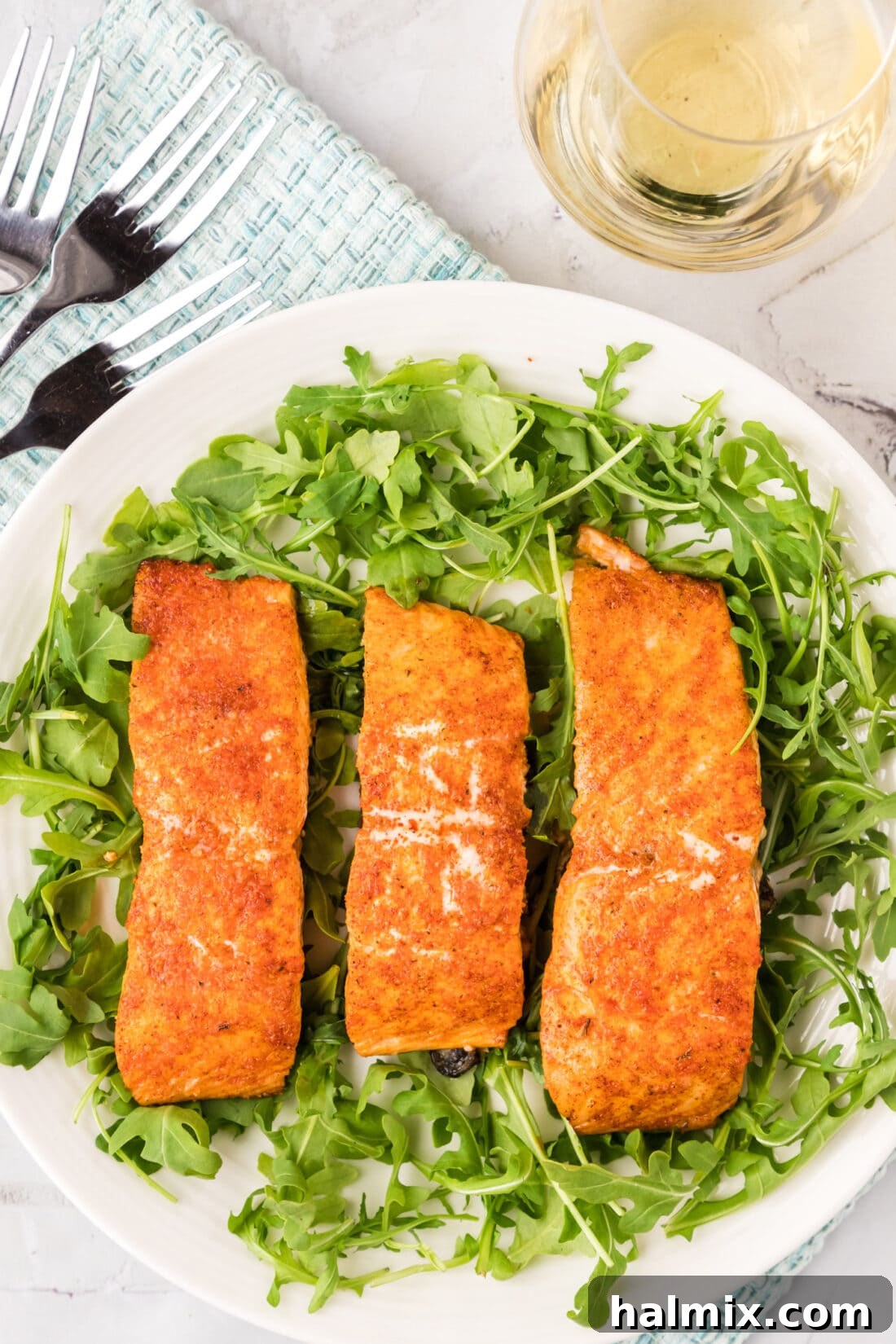
The Magic Behind This Easy Roasted Salmon Recipe
What makes this roasted salmon recipe stand out is its remarkable simplicity without compromising on flavor or texture. We believe that truly delicious food doesn’t require complexity. Our approach focuses on enhancing the natural richness of salmon with a straightforward, yet incredibly effective, seasoning blend. By utilizing a simple trio of olive oil, garlic salt, and paprika, we create a “wet rub” that adheres beautifully to the fish, infusing it with aromatic depth and a subtle smoky warmth as it roasts.
This minimalist ingredient list is not just about ease; it’s also about versatility. The basic wet rub provides a robust foundation of flavor that is perfectly satisfying on its own. However, it also acts as an ideal canvas for culinary creativity. Feel free to incorporate fresh herbs like dill, parsley, or thyme for an extra layer of freshness. A squeeze of lemon juice after cooking brightens the flavors, or you can elevate your meal further by pairing the salmon with a homemade salmon sauce. The beauty of this recipe lies in its adaptability, allowing you to tailor it to your personal preferences or what you have on hand. Sometimes, the simplest methods yield the most profound and delicious results.
Essential Ingredients for Your Roasted Salmon
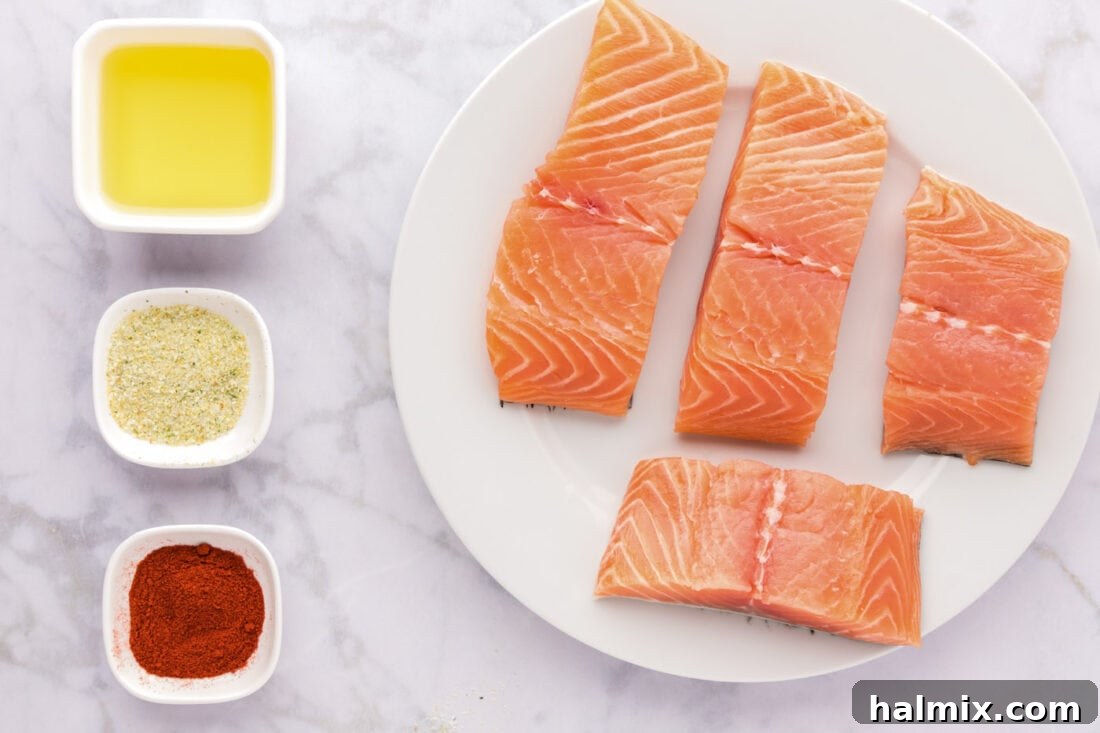
Crafting this quick and delightful roasted salmon requires only a few key components. Below, we’ll dive into the specifics of each ingredient and offer some helpful tips to ensure your salmon turns out perfectly flaky and flavorful every single time. For precise measurements and detailed instructions, refer to the printable recipe card at the conclusion of this article.
Ingredient Spotlight & Expert Substitution Tips
Choosing and preparing your ingredients correctly is the first step to a truly outstanding roasted salmon. Here’s what you need to know:
SALMON – For optimal results, we highly recommend using a center-cut salmon fillet. This cut ensures a more uniform thickness across your filets, leading to even cooking and perfectly tender results. When purchasing, look for fresh salmon with firm, moist flesh and a vibrant color – avoid any with a strong “fishy” odor or dull appearance. Use a sharp chef’s knife to slice the larger fillet into 4 individual portions, typically around 4-6 ounces each. While fresh salmon is always preferred for its superior texture and flavor, you can certainly use frozen salmon. If opting for frozen, remember to allow it to fully thaw overnight in the refrigerator before proceeding with the recipe. This ensures proper seasoning adherence and consistent cooking. A critical tip for roasting fish is to always cook it with the skin side down. The skin acts as a natural barrier, protecting the delicate flesh from drying out and helping to keep it intact. If you were to place the fish skin side up, the cooked fish would begin to flake and potentially fall apart as you attempt to lift it from the baking sheet.
SEASONING – Our recipe utilizes a wonderfully balanced yet simple seasoning blend: a dash of garlic salt, some paprika, and a bit of olive oil to create that delightful wet rub. This combination creates a savory and slightly smoky profile that complements the rich flavor of salmon beautifully. However, don’t hesitate to customize the seasoning to match your personal taste or dietary needs. For a brighter flavor, add a squeeze of fresh lemon juice or lemon zest to the rub. A pinch of black pepper, onion powder, or a dash of cayenne pepper can also add an extra kick. Fresh herbs like finely chopped dill, parsley, or chives are excellent additions that can be mixed into the rub or sprinkled over the top before roasting. The goal is to enhance, not overpower, the natural taste of the salmon.
Step-by-Step Guide to Perfect Roasted Salmon
These step-by-step photos and detailed instructions are here to guide you through each stage of making this delicious recipe. For a convenient printable version, complete with precise measurements and full instructions, please jump to the recipe card at the bottom of this post.
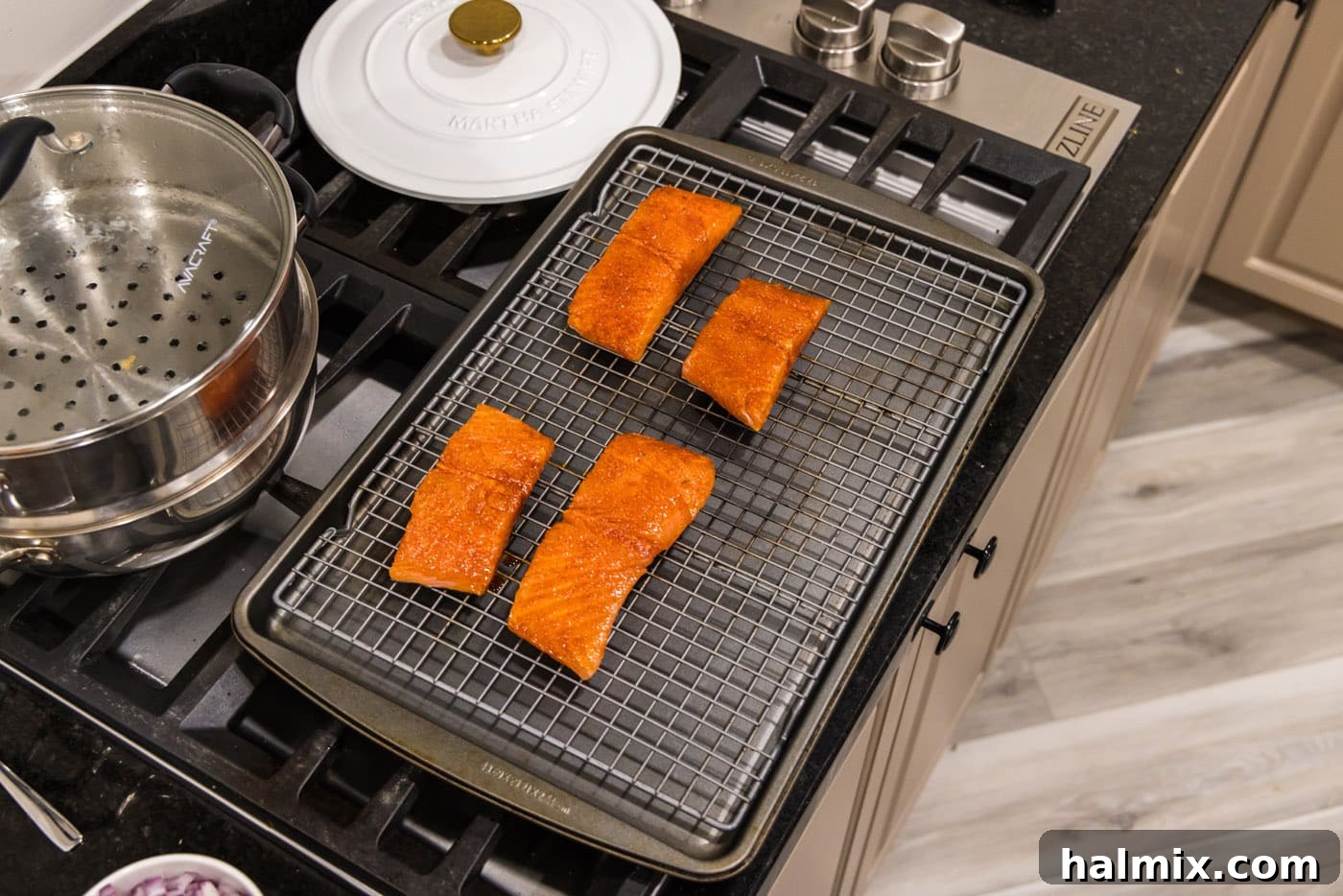
- Preheat Your Oven: Begin by preheating your oven to a precise 425°F (218°C). This high temperature is crucial for achieving that desirable crispy exterior and flaky interior quickly. While the oven heats, prepare your baking equipment. Lightly spray a wire rack with cooking spray to prevent sticking. Place this wire rack on a large baking sheet. Using a wire rack is key for allowing air to circulate around the salmon, promoting even cooking and helping the skin crisp up beautifully without steaming.
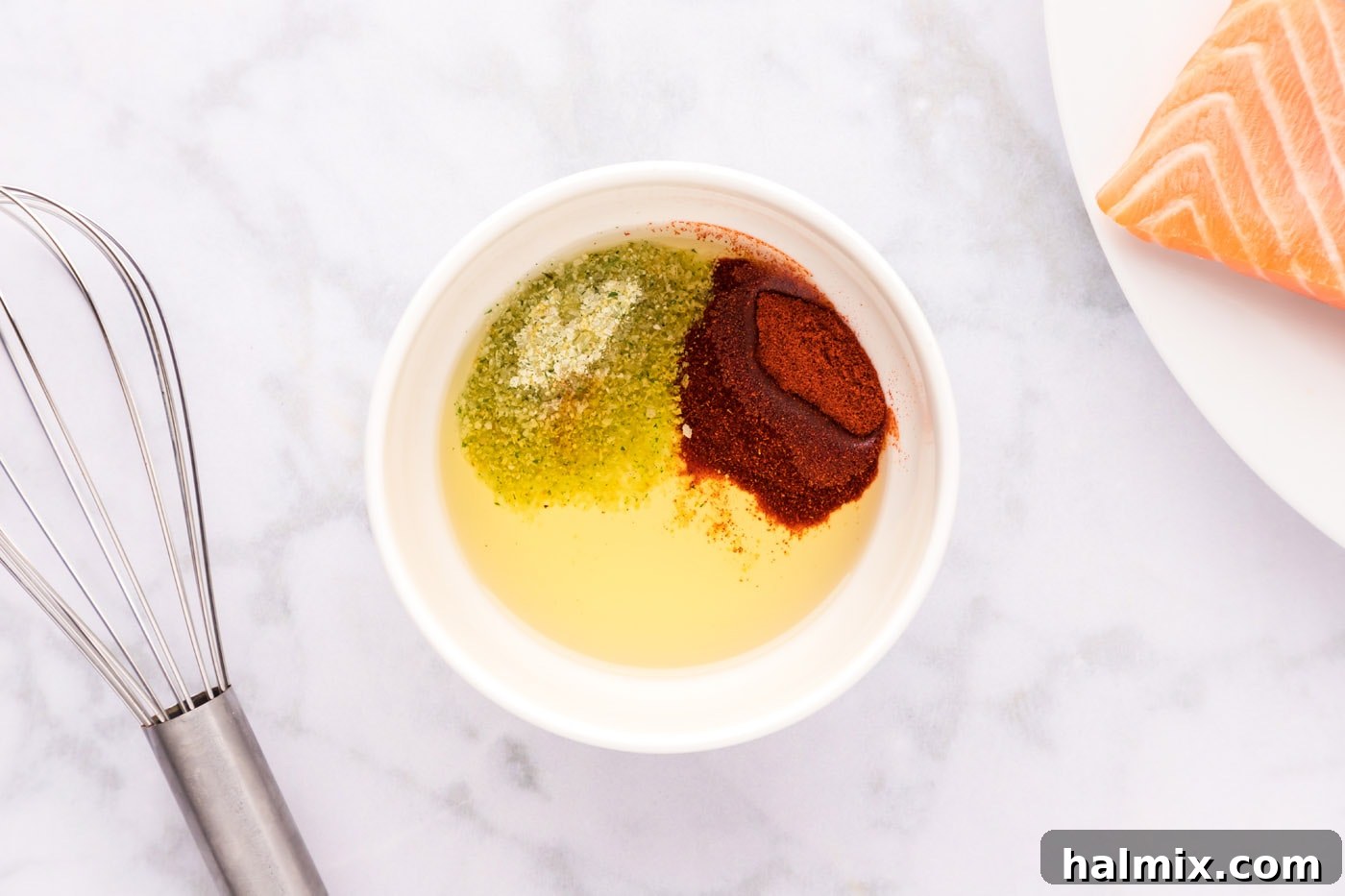
- Prepare the Flavorful Rub: In a small bowl, combine your wet rub ingredients. Whisk together the olive oil, garlic salt, and paprika until thoroughly combined. The olive oil will create a smooth paste that evenly coats the salmon, while the garlic salt provides savory depth and the paprika adds color and a gentle, earthy spice.

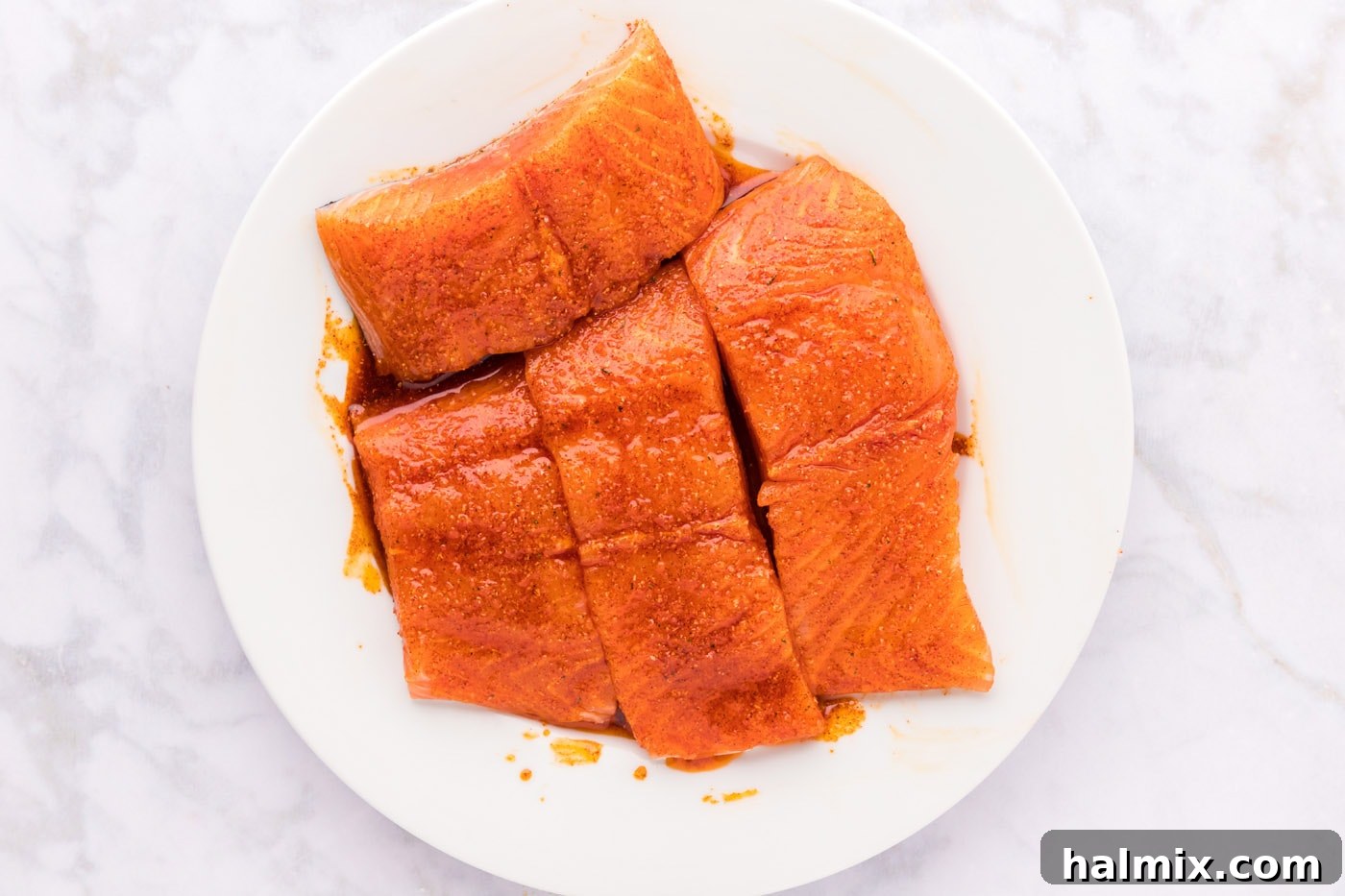
- Season the Salmon: With clean hands (gloves optional, but recommended for mess-free application), gently rub the oil mixture all over both sides of the salmon fillets. Ensure each piece is thoroughly coated, as this is where all the wonderful flavor comes from. Don’t be shy about getting a good, even layer. This ensures that every bite is infused with the seasoning.
- Arrange on the Rack: Carefully place the seasoned salmon fillets onto the prepared wire rack, ensuring they are skin-side down. This orientation is vital for preventing the delicate fish from sticking to the rack and for allowing the skin to become wonderfully crispy during roasting.
EXPERT TIP – Always cook fish with the skin side down. This provides a protective layer against the direct heat of the baking sheet, preventing the fish from drying out and ensuring it remains moist and tender. If you place the fish skin side up, the flesh will cook directly on the hot surface, causing it to flake and potentially fall apart as you try to remove it after cooking.
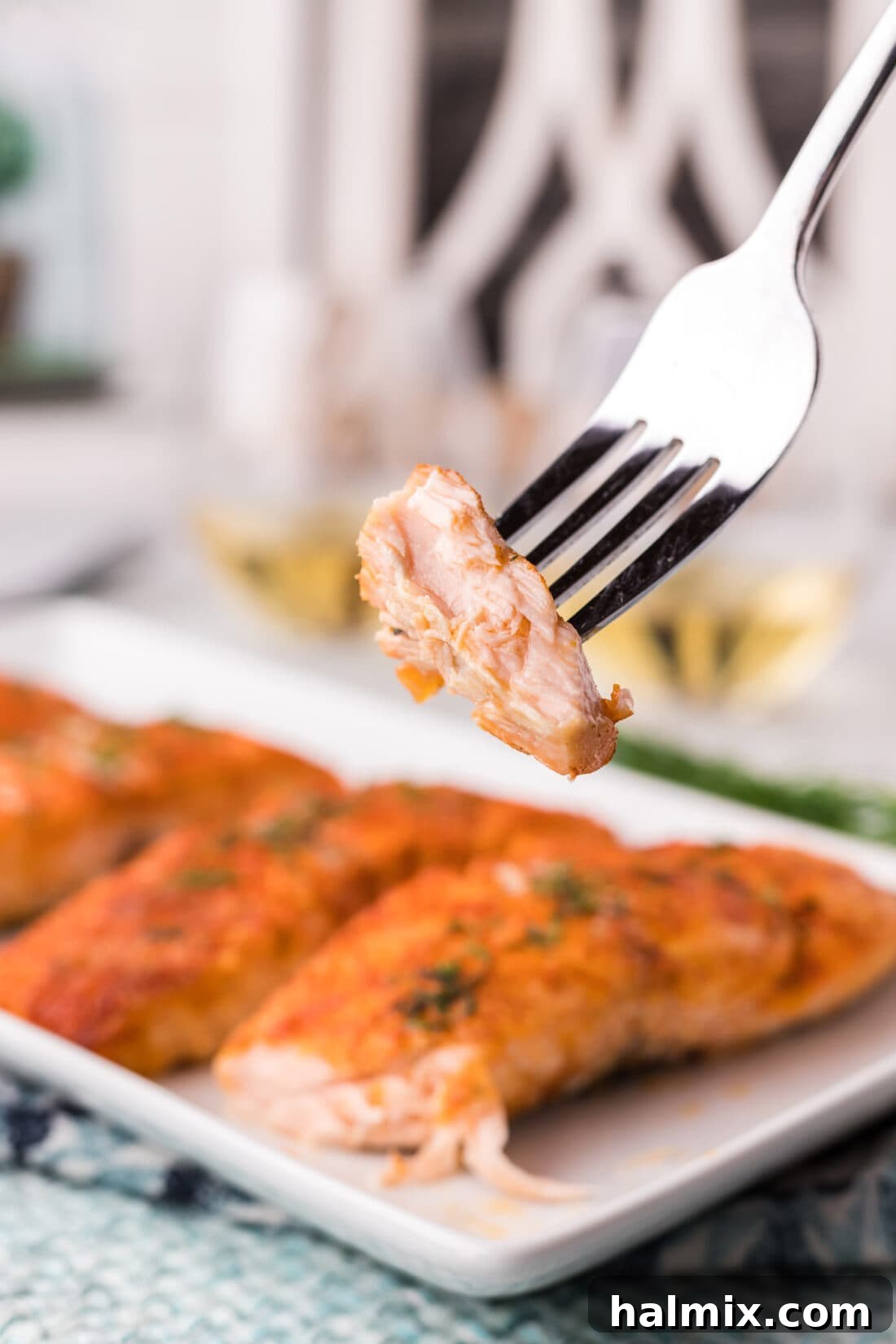
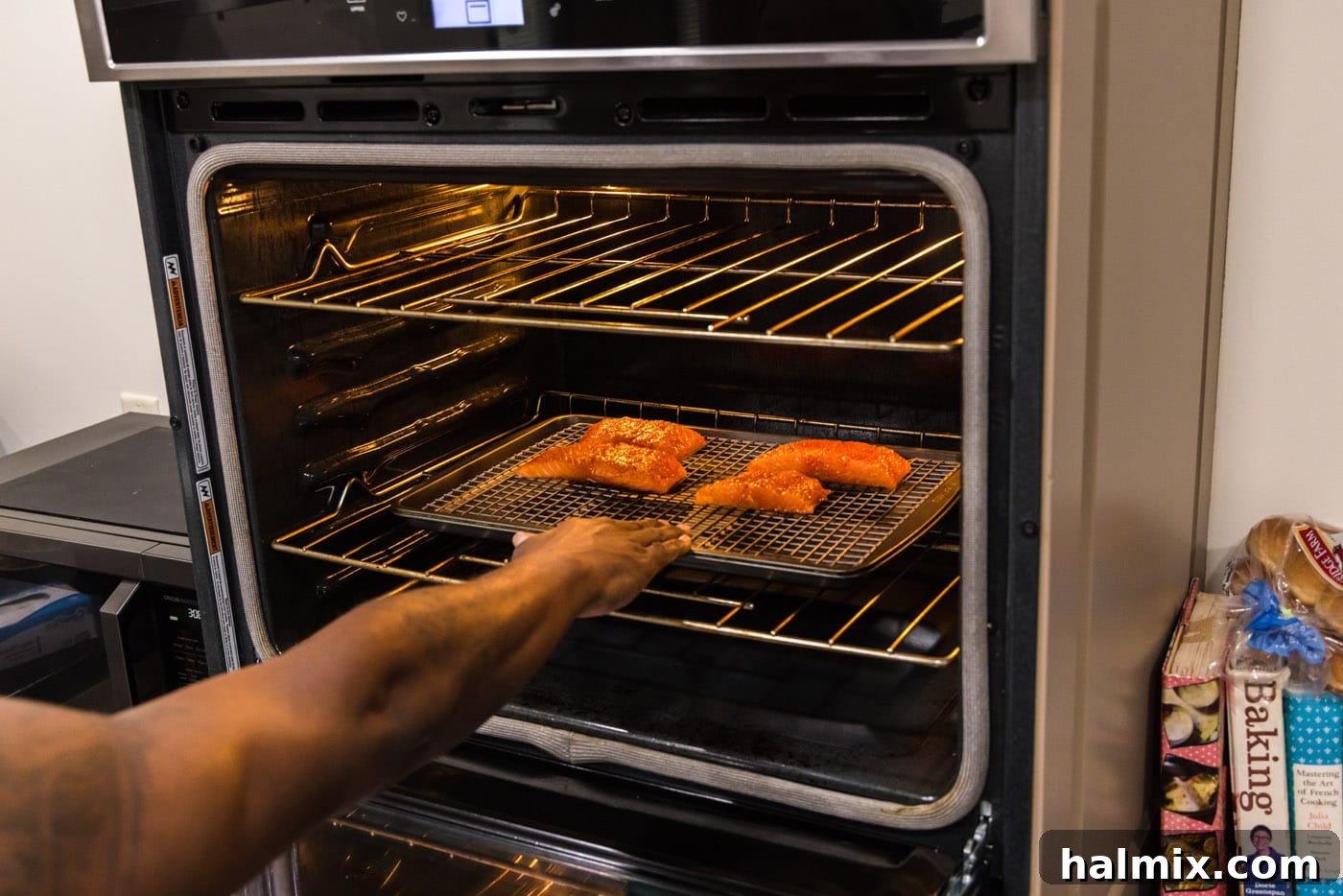
- Roast to Perfection: Transfer the baking sheet with the salmon to your preheated oven. Roast for 5-7 minutes. The exact cooking time can vary based on the thickness of your salmon fillets and the accuracy of your oven. For a 1 ½-inch thick fillet, 6-7 minutes is usually ideal. Thinner fillets may cook in 5 minutes. The salmon is done when it easily flakes with a fork and reaches an internal temperature of 135°F (57°C) for medium-rare, or up to 145°F (63°C) for well-done.
Frequently Asked Questions & Expert Tips for Roasted Salmon
Achieving the perfect internal temperature is paramount for moist, flaky salmon fillets. Overcooked salmon can quickly become dry and unappetizing. For ideal doneness, we recommend using an instant-read thermometer. Insert the thermometer into the thickest part of the fillet. Salmon is perfectly cooked when it reaches an internal temperature of 135°F (57°C) for medium-rare, which will continue to rise slightly after removal from the oven due to carryover cooking. If you prefer your salmon well-done, aim for 145°F (63°C). Remember, thicker fillets will naturally require more time in the oven. Visual cues include the flesh turning opaque and easily flaking with a fork, but a thermometer offers the most accurate results.
Yes, you absolutely can use frozen salmon, but for the best results, it’s crucial to thaw it completely first. When salmon is frozen, its surface can be icy, which prevents the seasoning rub from adhering properly. Attempting to season frozen fish can result in the rub sliding off as it thaws and cooks, leading to less flavorful fillets. To ensure optimal seasoning and even cooking, transfer your frozen salmon to the refrigerator overnight to allow it to thaw slowly and thoroughly before cooking. If you’re short on time, you can thaw it in a sealed bag under cold running water, but never use hot water, as this can start to cook the fish prematurely.
Proper storage is key to enjoying your delicious leftovers safely. Once your roasted salmon has cooled to room temperature, transfer it to an airtight container. Store the container in the refrigerator, where it will remain fresh for 2-3 days. While salmon is best enjoyed fresh, leftovers make fantastic additions to salads, wraps, or can be gently reheated. To reheat, warm in a preheated oven at a low temperature (around 275°F / 135°C) for 10-15 minutes, or until just warmed through, to avoid drying it out. Microwaving is an option, but do so carefully in short bursts to prevent overcooking and preserve moisture.
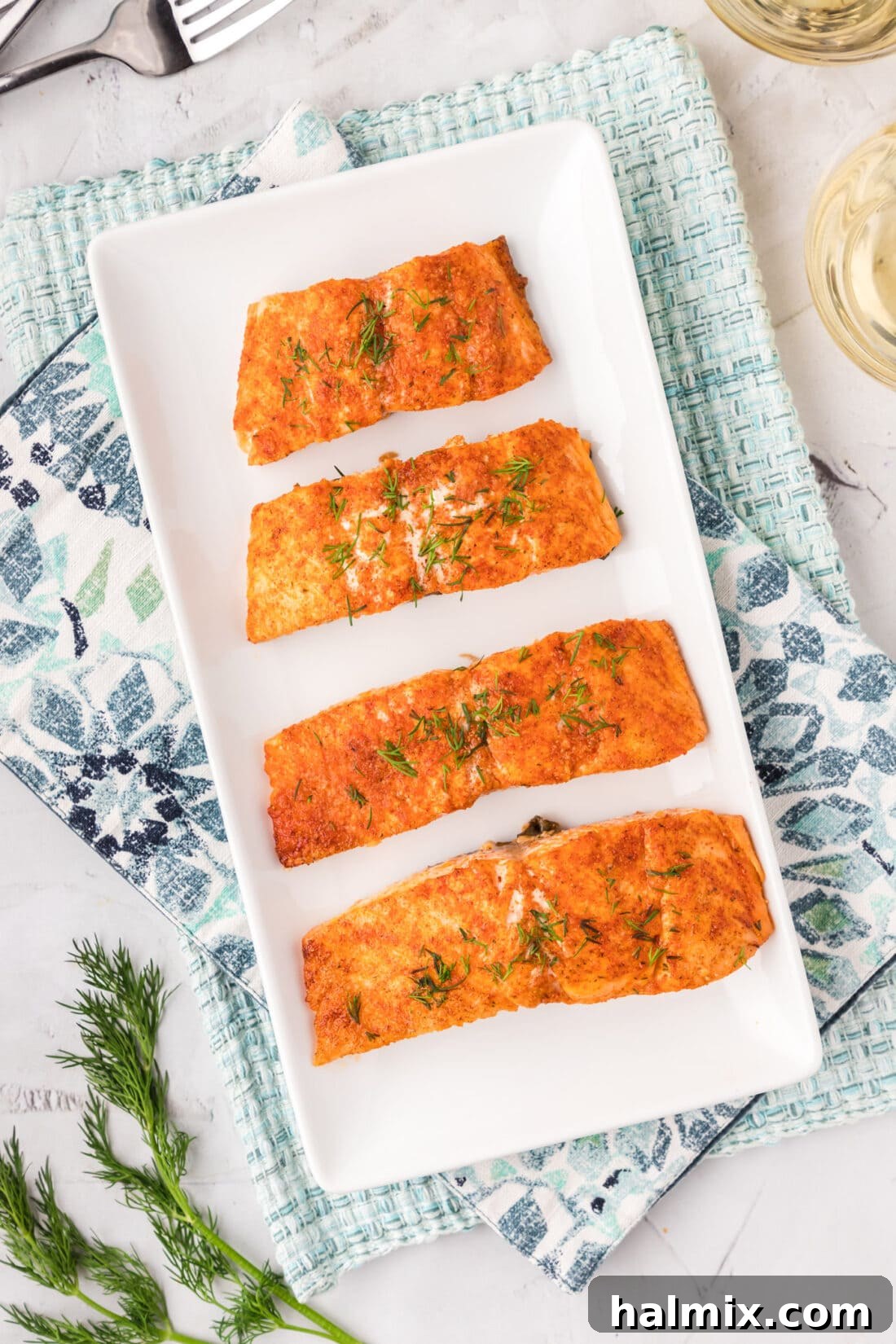
Delightful Serving Suggestions for Roasted Salmon
Roasted salmon is incredibly versatile and pairs beautifully with a wide array of side dishes, making it a perfect center-piece for any meal. Its rich, buttery flavor and flaky texture complement both light and hearty accompaniments. For a classic and healthy pairing, consider serving your salmon with a medley of roasted vegetables such as tender broccoli, crisp asparagus, vibrant green beans, sweet carrots, or hearty potatoes. A fresh, crisp dinner salad with a light vinaigrette is also an excellent choice, offering a refreshing contrast to the richness of the fish. For a more substantial meal, consider sides like fluffy quinoa, a savory rice pilaf, or even creamy mashed potatoes. Don’t forget a wedge of lemon on the side for a bright, acidic finish that really makes the flavors pop!
The Abundant Health Benefits of Salmon
Beyond its delicious taste and ease of preparation, salmon is a nutritional powerhouse, making it an excellent addition to a balanced diet. It’s renowned for being one of the best sources of Omega-3 fatty acids, particularly EPA and DHA. These essential fats are vital for heart health, brain function, and reducing inflammation throughout the body. Regular consumption of Omega-3s has been linked to a reduced risk of heart disease, improved cognitive function, and better joint health. Furthermore, salmon is an exceptional source of high-quality protein, which is essential for muscle growth, repair, and overall bodily function. A single serving provides a significant portion of your daily protein needs. It’s also rich in several important vitamins and minerals, including Vitamin D (crucial for bone health and immune function), Vitamin B12 (important for energy production and nerve function), and selenium (an antioxidant that helps protect cells from damage). Incorporating roasted salmon into your weekly meal plan is a delicious way to boost your intake of these vital nutrients and support your overall well-being.
Explore More Delicious Ways to Cook Salmon
While oven roasting is a fantastic and easy method, salmon’s versatility allows for many other delicious preparations. Each method brings out different textures and flavors of this incredible fish. Here are a few more ways to enjoy salmon:
- Baked Salmon: A gentle and moist cooking method, often involving a flavorful marinade or sauce.
- Stuffed Salmon: Elevate your salmon by filling it with delicious ingredients like spinach, cheese, or crab meat.
- Poached Salmon: A delicate cooking technique that results in incredibly tender and moist fish, perfect for salads or chilled dishes.
- Sous Vide Salmon: For ultimate precision and perfectly cooked salmon every time, sous vide ensures even doneness and tenderness.
- Pan-Seared Salmon: Achieves a beautiful, crispy skin and a tender interior on the stovetop.
- Instant Pot Salmon: A quick and convenient method for cooking salmon under pressure, ideal for busy weeknights.
I love to bake and cook and share my kitchen experience with all of you! Remembering to come back each day can be tough, that’s why I offer a convenient newsletter every time a new recipe posts. Simply subscribe and start receiving your free daily recipes!
Easy Oven Roasted Salmon
IMPORTANT – Find more expert tips and answers to Frequently Asked Questions within the blog post above!
Print Recipe
Pin Recipe
Rate It
Save It
Ingredients
- 1 ½ pounds center cut salmon (cut into 4 fillets)
- 3 Tablespoons olive oil
- 1 Tablespoon garlic salt
- ½ Tablespoon paprika
Equipment You’ll Need
-
Baking sheet
-
Wire cooling rack
-
Vinyl gloves (optional, for seasoning)
Before You Begin
- Center-cut salmon provides uniform thickness for even cooking. Slice into 4 smaller fillets using a sharp chef’s knife.
- Fresh salmon is recommended. If using frozen, ensure it is fully thawed overnight in the refrigerator before seasoning and cooking.
- Adjust seasoning to your taste. Our blend of olive oil, paprika, and garlic salt creates a simple yet flavorful wet rub.
Instructions
-
Preheat your oven to 425°F (218°C). Lightly spray a wire rack with cooking spray and place it on a large baking sheet. This setup ensures even cooking and promotes crispy skin.
-
In a small bowl, whisk together the olive oil, garlic salt, and paprika until a smooth wet rub forms.
-
Using gloved hands or clean hands, gently rub the oil mixture all over both sides of the salmon fillets, ensuring they are evenly coated.
-
Place the seasoned salmon fillets, skin side down, onto the prepared wire rack.
Tip: Always cook fish with the skin side down. This helps protect the delicate flesh from direct heat, keeps it moist, and prevents it from falling apart when lifted.
-
Roast the salmon in the preheated oven for 5-7 minutes, or until the internal temperature reaches 135°F (57°C) for medium-rare, or 145°F (63°C) for well-done. The fish should flake easily with a fork.
Nutrition Facts
Calories: 337cal |
Carbohydrates: 0.5g |
Protein: 34g |
Fat: 21g |
Saturated Fat: 3g |
Polyunsaturated Fat: 5g |
Monounsaturated Fat: 11g |
Cholesterol: 94mg |
Sodium: 1820mg |
Potassium: 854mg |
Fiber: 0.3g |
Sugar: 0.1g |
Vitamin A: 499IU |
Vitamin C: 0.01mg |
Calcium: 24mg |
Iron: 2mg
Tried this Recipe? Pin it for Later!
Follow on Pinterest @AmandasCookin or tag #AmandasCookin!
The recipes on this blog are tested with a conventional gas oven and gas stovetop. It’s important to note that some ovens, especially as they age, can cook and bake inconsistently. Using an inexpensive oven thermometer can assure you that your oven is truly heating to the proper temperature. If you use a toaster oven or countertop oven, please keep in mind that they may not distribute heat the same as a conventional full-sized oven and you may need to adjust your cooking/baking times. In the case of recipes made with a pressure cooker, air fryer, slow cooker, or other appliance, a link to the appliances we use is listed within each respective recipe. For baking recipes where measurements are given by weight, please note that results may not be the same if cups are used instead, and we can’t guarantee success with that method.