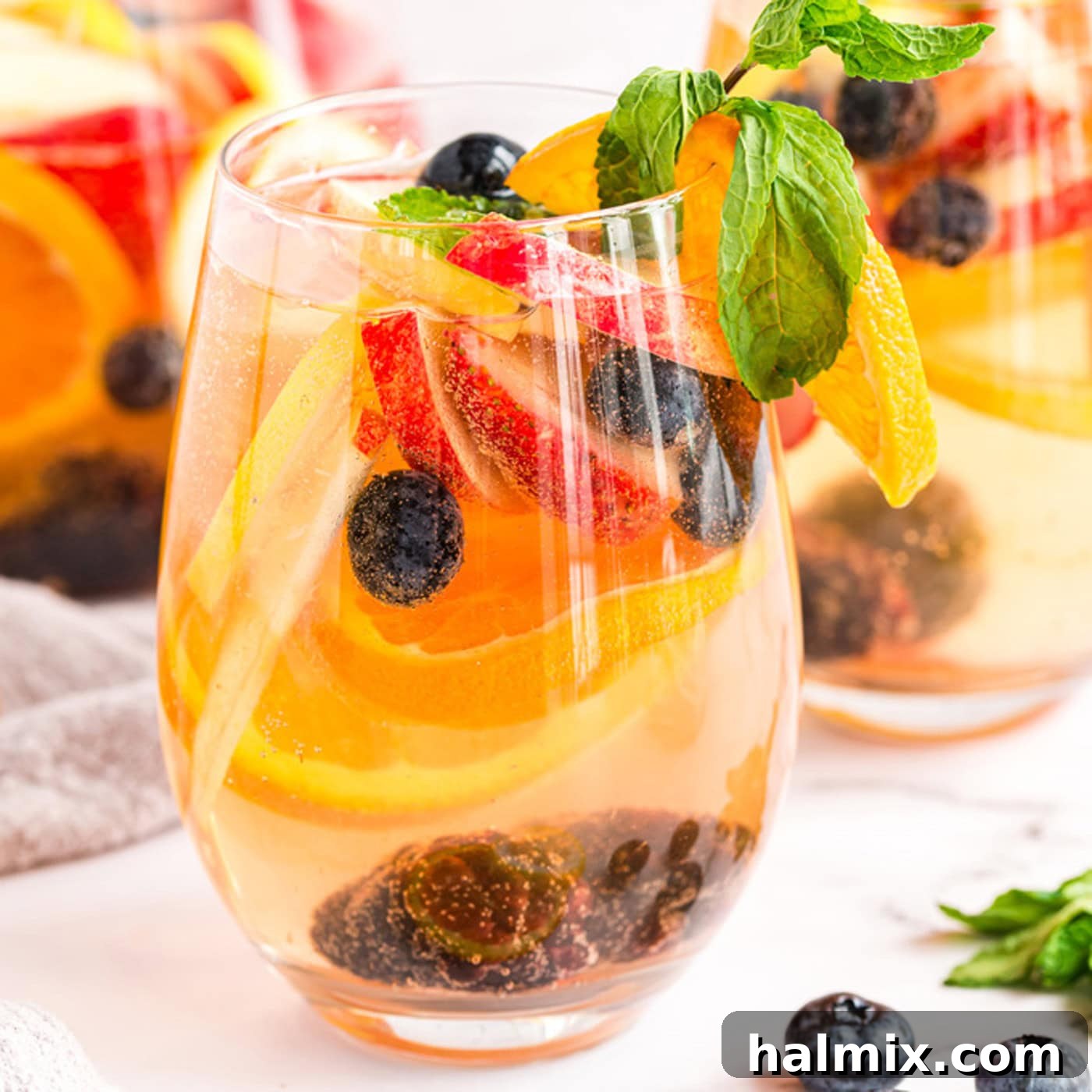
Easy & Refreshing White Sangria Recipe: Your Perfect Party Drink
Searching for a delightful, crowd-pleasing cocktail that’s both sweet and wonderfully fruity? Look no further! This Easy White Sangria recipe is a guaranteed party favorite, perfect for any gathering, especially as the weather warms up. It’s my go-to drink recipe, and I find myself whipping up a batch multiple times a year. Its vibrant flavors and beautiful presentation make it an absolute hit!
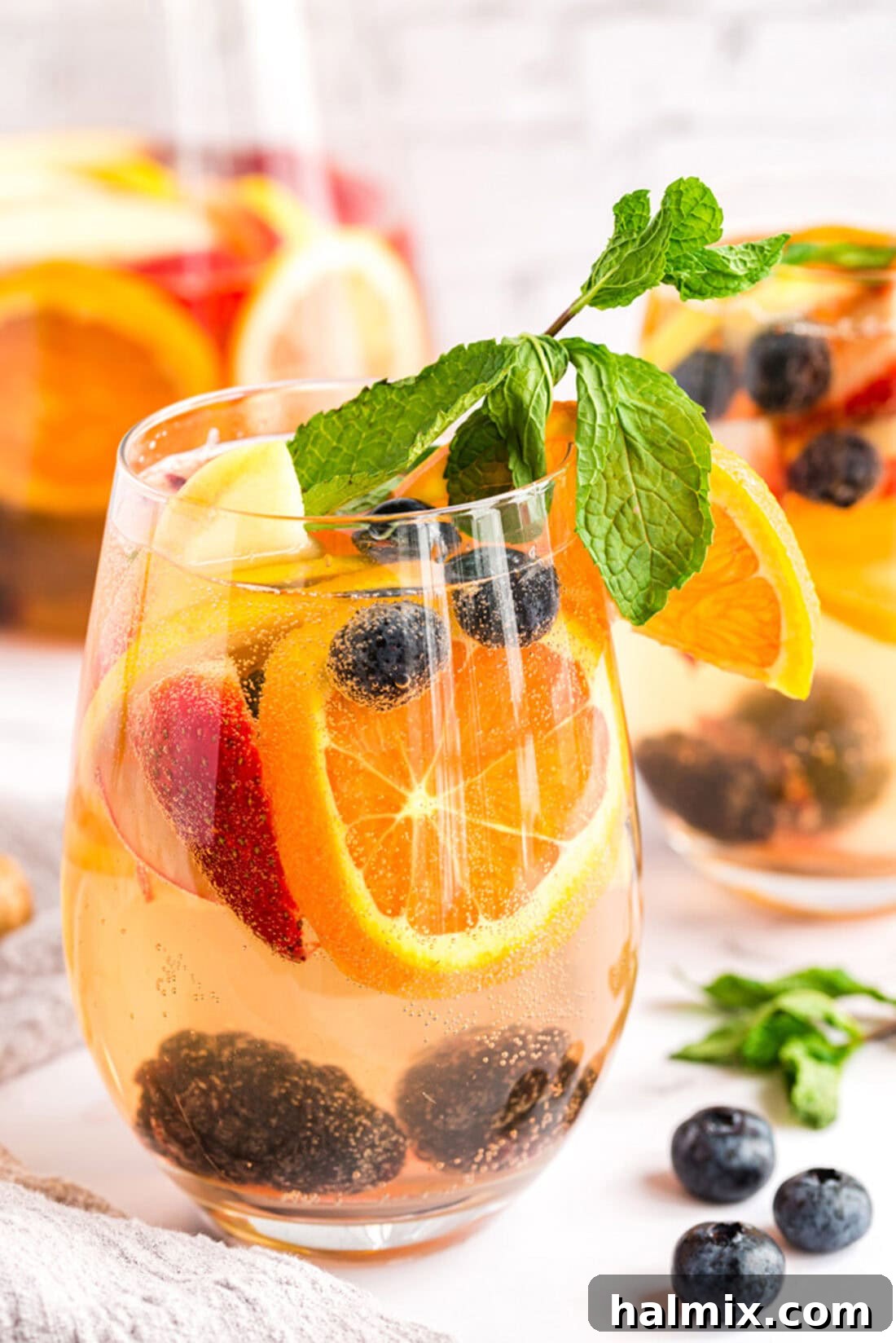
Why This White Sangria Recipe is an Absolute Winner
This white sangria has truly earned its place as a staple for all my family events and social gatherings. It’s more than just a drink; it’s an experience that consistently brings smiles and compliments. In fact, its popularity is so widespread that my daughter’s friends frequently request the recipe, making her the star of any get-together! I can confidently promise you that this refreshing white sangria will be a resounding success at your next event. Its vibrant, fruity profile makes it an ideal choice for virtually any celebration, whether it’s a festive holiday gathering, a laid-back backyard BBQ, or a joyful birthday bash.
What sets this recipe apart is its incredible simplicity combined with stunning visual appeal. The medley of fresh, colorful fruit infusing the crisp white wine creates a gorgeous spectacle, instantly elevating any backyard party or elegant brunch. It’s light, bright, and perfectly balanced, offering a delightful escape with every sip. This isn’t just another sangria; it’s *the* sangria you’ll want to make again and again, becoming your signature drink for effortlessly chic entertaining.
Essential Ingredients for Your Perfect White Sangria
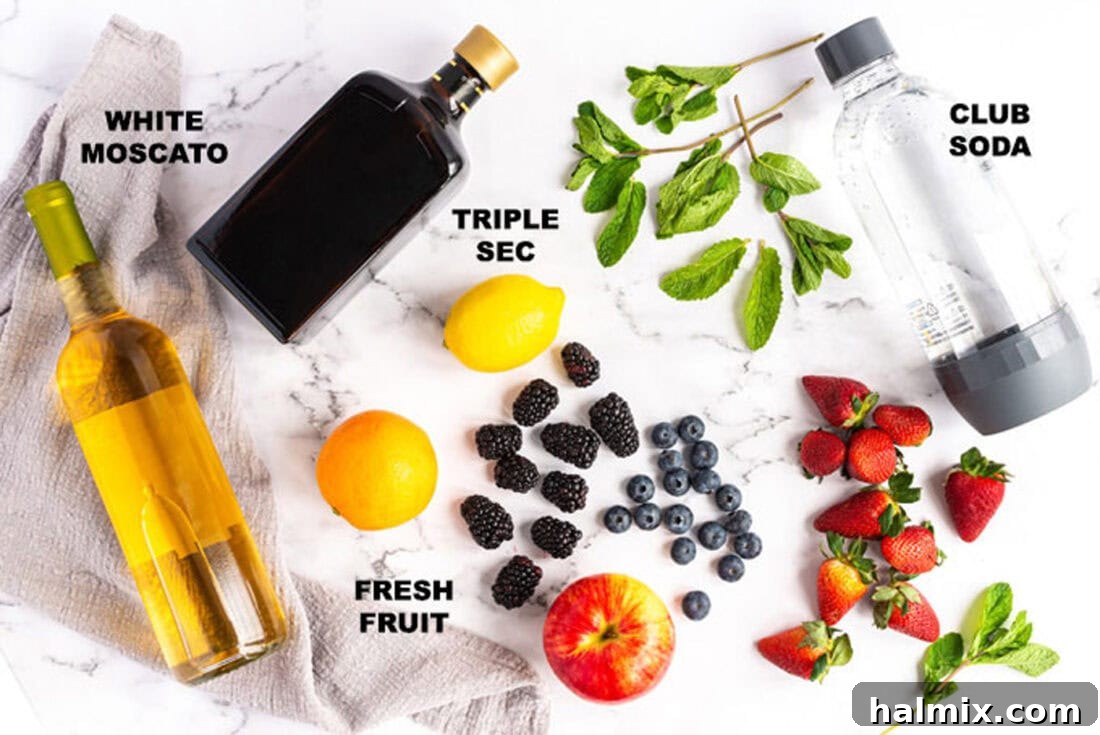
Crafting this delightful white sangria requires just a few simple, readily available ingredients. The beauty lies in the combination of a good white wine, a touch of orange liqueur, a splash of effervescence, and an abundance of fresh, juicy fruits. Here’s a closer look at what you’ll need to create this incredibly refreshing drink. Remember, precise measurements and detailed instructions are provided in the full printable recipe card at the end of this post.
The White Wine Base: Sweet and Inviting
- Moscato (750 ml bottle): This sweet, slightly fizzy white wine is my top recommendation for sangria. Its natural fruity notes of peach, orange blossom, and honeysuckle perfectly complement the fresh fruit we add. Moscato contributes a wonderful sweetness that makes this sangria so approachable and delicious.
- Alternatives: If Moscato isn’t your preference, or you’re looking for something drier, Riesling (can range from sweet to dry, choose a semi-dry or sweet one for sangria), White Zinfandel (for a slightly pink hue and more berry notes), Pinot Grigio (a drier, crisp option), or even a light, unoaked Chardonnay can work beautifully. The key is to select a wine you enjoy drinking on its own, as its flavor will form the foundation of your sangria.
The Liqueur: A Hint of Citrus Complexity
- Orange Liqueur (½ cup, e.g., Triple-Sec): This provides a lovely citrusy depth and a touch of warmth to the sangria. Triple-Sec is a popular choice, adding sweet orange notes.
- Alternatives: Feel free to experiment with other orange liqueurs like Cointreau (drier, more refined orange flavor) or Grand Marnier (a blend of Cognac and orange essence, offering more complexity). For a different flavor profile, consider peach schnapps for an extra peachy kick, or even a splash of brandy for a richer taste.
The Fizz: Adding Lightness and Sparkle
- Club Soda (1 liter): A generous amount of club soda adds the perfect effervescence, making the sangria light, bubbly, and incredibly refreshing. It also helps to cut through the sweetness slightly.
- Alternatives: If you prefer a sweeter, more flavorful fizz, you can use lemon-lime soda (like Sprite or 7-Up) or even ginger ale. For an extra boost of wine flavor and more sophisticated bubbles, consider using sparkling wine or prosecco instead of club soda, but be mindful that this will increase the alcohol content.
The Fresh Fruit Medley: Color, Flavor, and Aroma
The fresh fruit is not just for garnish; it infuses the wine with its natural sugars and aromas, making each sip more delightful. Aim for a variety of colors and textures.
- 1 medium peach, sliced: Peaches add a beautiful sweetness and aromatic depth that pairs wonderfully with Moscato.
- 1 medium apple, sliced: Crisp apples contribute a refreshing crunch and subtle tartness. Granny Smith or Fuji apples are great choices.
- 1 medium orange, unpeeled and sliced: The orange slices provide a bright citrus flavor and stunning visual appeal. Leaving the peel on adds a touch of bitterness and aromatic oils.
- 1 small lemon, unpeeled and sliced: Lemon slices offer a tangy counterpoint, balancing the sweetness and adding a zesty kick.
- 10 medium strawberries, stems removed and halved: Sweet strawberries lend a lovely berry flavor and a gorgeous red hue to the mix.
- 16 medium blueberries: These small berries burst with flavor and add a beautiful deep color.
- 16 medium blackberries: Blackberries contribute a deeper, slightly tarter berry note, enhancing the complexity.
- Fresh mint for garnish (optional): A sprig of fresh mint adds a vibrant pop of color and an invigorating aroma, elevating the drink’s presentation.
Choosing ripe, in-season fruits will always yield the best flavor. Don’t be afraid to customize the fruit selection based on your preferences or what’s available seasonally!
Effortless Steps to Crafting Your Delicious White Sangria
These step-by-step photos and detailed instructions are designed to help you visualize each stage of making this fantastic white sangria. For the complete, printable version of this recipe, including exact measurements and a comprehensive ingredient list, simply scroll down to the dedicated recipe card at the bottom of this page.
-
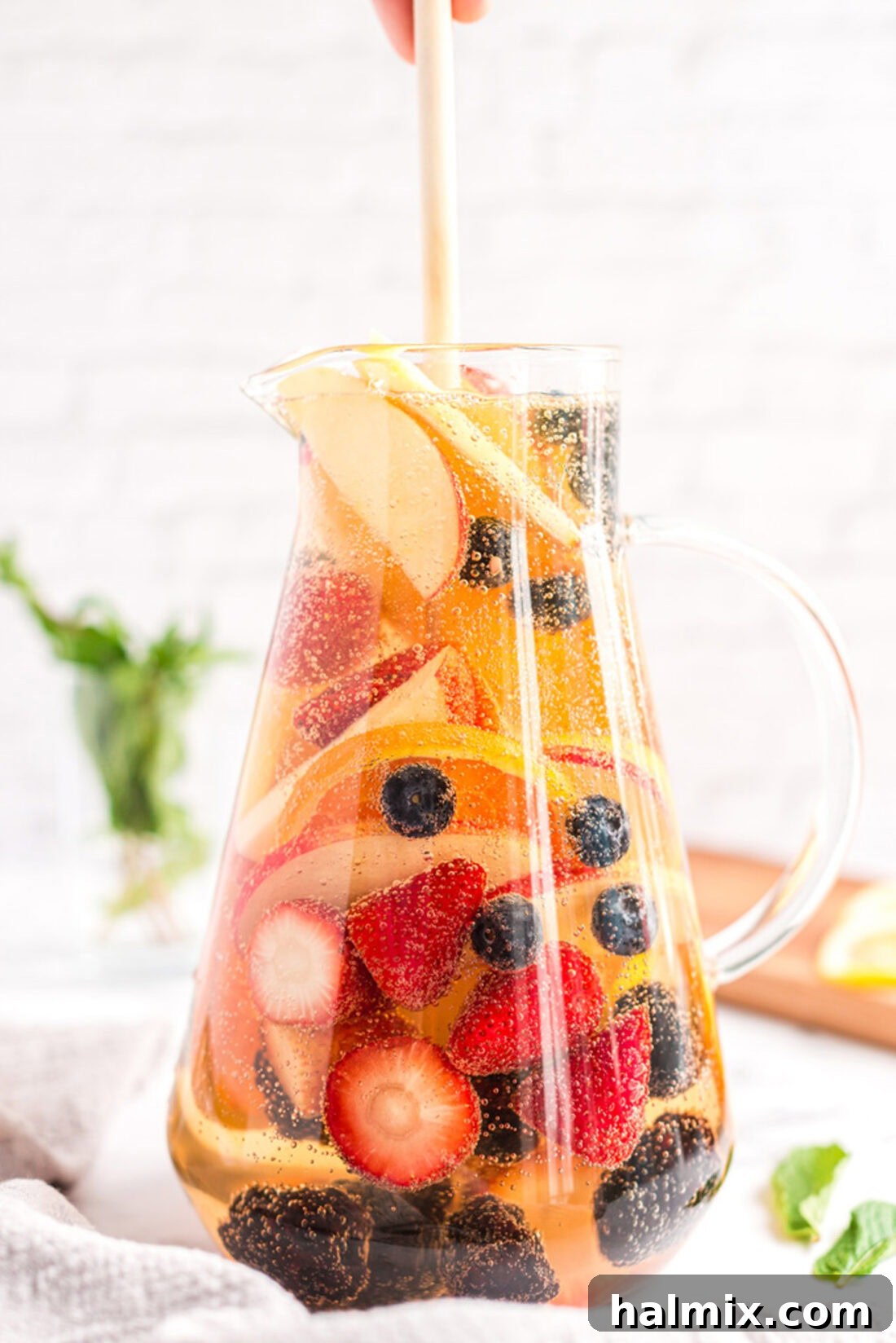
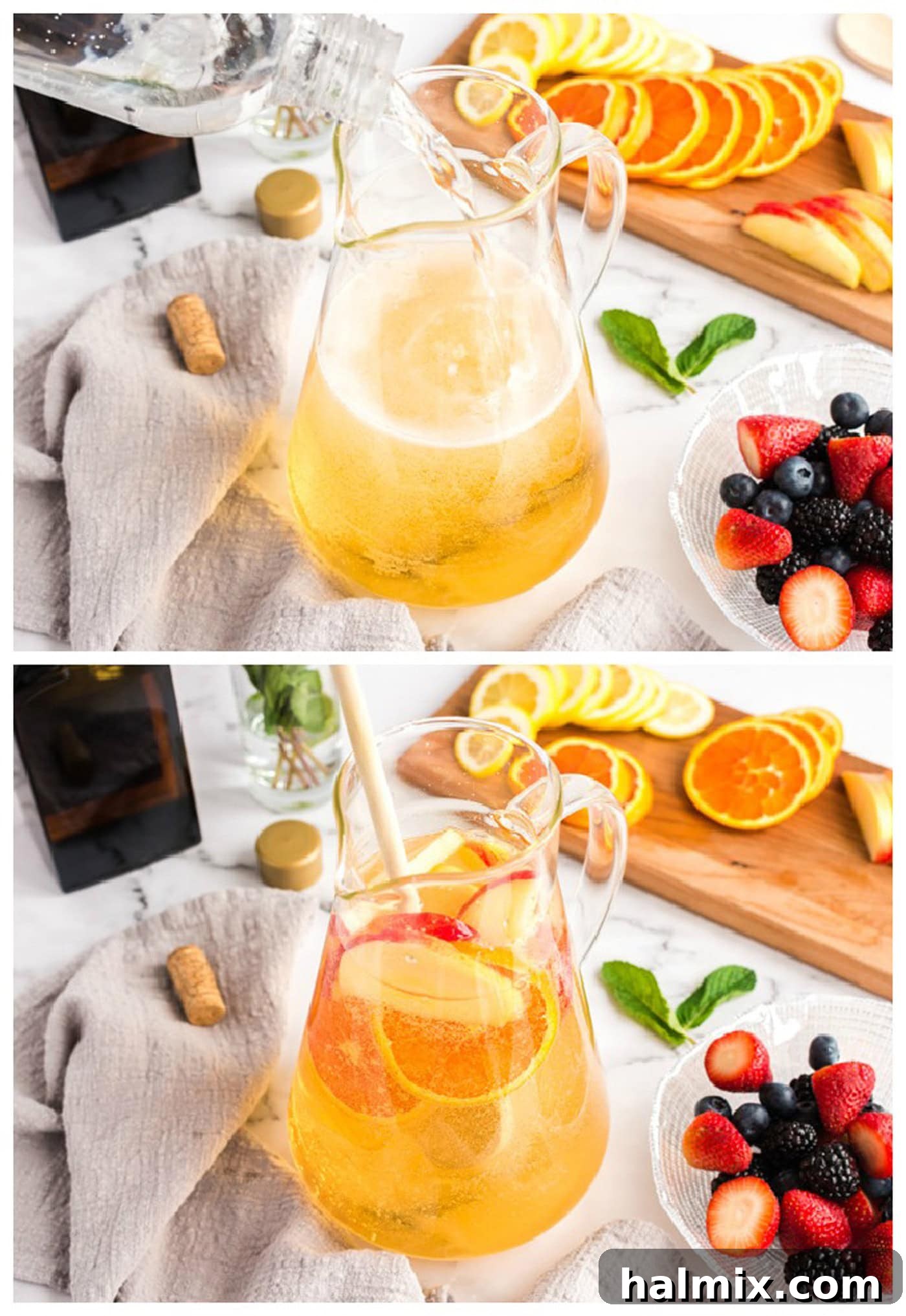
Combine the Liquids: Begin by pouring your chosen white wine (Moscato, Riesling, etc.) into a large, sturdy pitcher. Next, add the orange liqueur and the club soda. Stir everything gently until all the liquids are well combined. This forms the foundational liquid blend for your sangria.

- Prepare and Add the Fresh Fruit: Wash all your fruits thoroughly. Then, using a sharp chef’s knife and a sturdy cutting board, carefully chop or slice the peaches, apples, oranges, and lemons. Remember to remove the stems from the strawberries and halve them. Add all the prepared fruit into the pitcher with the liquid mixture. Give it another gentle stir with a wooden spoon to ensure the fruit is submerged and evenly distributed.
- Chill for Flavor Infusion: This step is crucial for developing the best flavor. Place the pitcher in the refrigerator and allow the sangria to sit and “mingle” for at least a few hours, ideally 3-4 hours, or even overnight. This chilling time allows the fruits to release their juices and aromas, infusing the wine with their delightful essence, creating a harmonious and complex flavor profile. The longer it chills, the more pronounced the fruit flavors will be.
- Serve and Garnish: When you’re ready to enjoy, serve the white sangria chilled over ice. For an extra touch of elegance and freshness, garnish each glass with a sprig of fresh mint if desired. Sit back, relax, and savor the refreshing taste!
While patience is a virtue and allowing the flavors to meld in the fridge truly makes a difference, I absolutely won’t judge if you can’t resist a sneaky taste right away! Enjoy your freshly made white sangria.
Frequently Asked Questions & Expert Tips for White Sangria
Absolutely! While Moscato provides a wonderfully sweet and aromatic base, you can definitely explore other white wines. For a drier sangria, excellent choices include Pinot Grigio or a light, unoaked Chardonnay. If you prefer something in between, a semi-dry Riesling works beautifully. The best choice ultimately depends on your personal flavor preferences and how sweet or dry you want your final sangria to be. Remember, choose a wine you genuinely enjoy drinking on its own, as it will be the star of your sangria.
For optimal flavor infusion, it’s best to prepare your white sangria at least 3-4 hours before serving. However, you can make it up to 24 hours in advance. If making it ahead, I recommend adding the club soda just before serving to maintain maximum fizziness. The fruit will also continue to soften over time, which some people enjoy, but others prefer firmer fruit. For longer storage, you can keep the wine and liqueur mixture with fruit for up to 2 days, adding the soda just before serving.
White sangria is incredibly versatile when it comes to fruit. Beyond the peaches, apples, oranges, lemons, strawberries, blueberries, and blackberries used in this recipe, consider adding:
- Kiwi: For a vibrant green color and tangy flavor.
- Pineapple: Adds a tropical sweetness.
- Grapes: Especially green grapes, for a crisp bite.
- Raspberries: For a tart berry punch.
- Melon (cantaloupe, honeydew): Cut into small balls for a beautiful presentation and subtle sweetness.
- Pears: For a softer texture and delicate sweetness.
Always choose ripe, fresh fruit for the best results.
If you find your sangria isn’t sweet enough for your liking, you can add a tablespoon or two of granulated sugar, simple syrup, or a touch of honey or agave nectar to the liquid mixture before chilling. Stir well to dissolve. If it’s too sweet, you can always dilute it with more club soda, sparkling water, or a drier white wine. Adjusting the sweetness of the fruit you choose can also impact the final taste.
Absolutely! To make a delicious non-alcoholic “mock sangria,” simply replace the Moscato with white grape juice or a non-alcoholic sparkling white wine. Omit the orange liqueur or replace it with orange juice or a non-alcoholic orange syrup. Then proceed with the club soda and all the fresh fruits. It’s a wonderful, family-friendly option that’s just as refreshing!
Expert Tips for the Best White Sangria:
- Chill Thoroughly: The longer the sangria chills, the more the flavors will meld and deepen. Don’t rush this step!
- Use Ripe Fruit: Ripe, seasonal fruits will impart the most flavor and natural sweetness to your sangria.
- Slice Fruit Uniformly: Aim for similar-sized slices or chunks so they infuse evenly and are easy to eat when serving.
- Taste and Adjust: Before serving, always taste your sangria. You might want to add a bit more liqueur, a splash more soda, or a touch of sweetener depending on your preference and the sweetness of your fruit and wine.
- Add Soda Just Before Serving: If preparing a large batch, it’s best to add the club soda (or any other carbonated mixer) right before serving to keep the fizz at its peak.
- Consider Frozen Fruit: If fresh fruit isn’t perfectly in season, frozen fruit can be a good alternative, especially berries. They also act as natural ice cubes without diluting the drink!
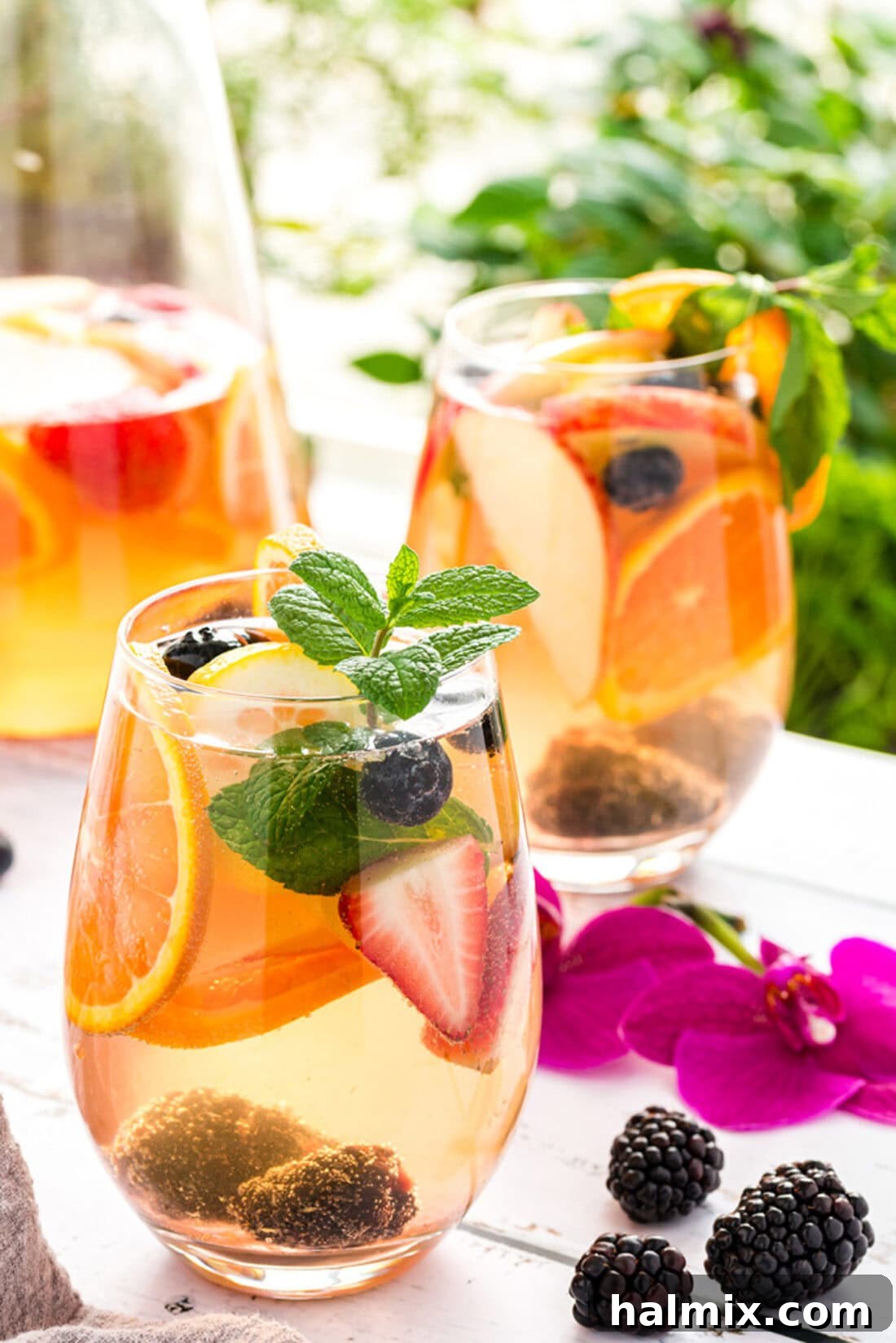
Perfect Pairings & Presentation for Your White Sangria
This easy-drinking white sangria is incredibly versatile and pairs wonderfully with a variety of dishes, making it an excellent choice for almost any occasion. Its light and fruity profile makes it a stellar companion for grilled chicken, flaky seafood dishes like grilled salmon or shrimp skewers, and fresh, crisp salads with vinaigrette dressings. These pairings make it an ideal beverage for outdoor dining, picnics, and al fresco brunches.
Beyond main courses, white sangria also shines alongside light appetizers. Think bruschetta, fruit platters, cheese boards with mild cheeses, or even mini caprese skewers. Its refreshing qualities can cut through richer flavors and cleanse the palate beautifully. As for holidays, it’s a wonderfully festive option for spring and summer celebrations such as Mother’s Day brunch, Memorial Day BBQs, or vibrant 4th of July gatherings. The colorful fruit makes it inherently celebratory.
Whether you’re hosting a large crowd and need a go-to pitcher drink, or simply enjoying a quiet, relaxing evening on the patio, a chilled pitcher of homemade White Sangria always feels like an ode to sunshine, good company, and effortless enjoyment. Don’t forget a beautiful glass pitcher and some elegant stemware to truly showcase its beauty!
Explore More Delightful Cocktail Recipes
If you’ve enjoyed this white sangria, you’re sure to love some of my other popular cocktail creations. Perfect for any mood or occasion, these recipes are designed to be easy to make and even easier to enjoy:
- Pina Colada Recipe: A tropical classic that transports you to paradise with every sip.
- Easy Bourbon Slush: A frosty, spirited drink perfect for a warm evening.
- Sex on the Beach: A colorful and fruity cocktail that’s always a hit.
- Cranberry Sangria: A festive, tart, and sweet sangria ideal for cooler months or holiday gatherings.
I truly love sharing my passion for baking and cooking with all of you, along with my tested kitchen experiences! To ensure you never miss out on a new recipe, I offer a convenient newsletter delivered right to your inbox. Simply subscribe here and start receiving your free daily recipes, inspiration, and tips!

White Sangria
IMPORTANT – There are often Frequently Asked Questions within the blog post that you may find helpful. Simply scroll back up to read them!
Print It
Pin It
Rate It
Course:
Cocktails, Drinks
Cuisine:
American, Global
8
4-ounce glasses
3
20
161
Amanda Davis
Ingredients
- 750 ml Moscato (1 bottle, or use Riesling or White Zinfandel)
- ½ cup orange liqueur (like Triple-Sec or Cointreau)
- 1 liter club soda (or lemon-lime soda for sweeter)
- 1 medium peach sliced
- 1 medium apple sliced
- 1 medium orange unpeeled and sliced
- 1 small lemon unpeeled and sliced
- 10 medium strawberries stems removed and halved
- 16 medium blueberries
- 16 medium blackberries
- Fresh mint for garnish optional
Recipe Notes & Variations
- Sangria typically combines red or white wine, a liqueur, and often soda water for a refreshing fizz. Then, it’s generously filled with beautiful fresh fruit, allowed to sit and mingle for hours.
- For this recipe, I chose a sweet Moscato, complemented by Triple-Sec orange liqueur and bubbly club soda. However, other white wine choices like a semi-dry Riesling or a crisp White Zinfandel are excellent alternatives, depending on your sweetness and flavor preference.
- Get Creative with Wine: Don’t hesitate to change up the wine! You can use a pink or red Moscato for a different hue and flavor profile. Many fun flavored Moscato varieties are available now, with peach and apple being particularly delicious choices that would enhance this sangria.
- Fruit Flexibility: While the specified fruits are fantastic, feel free to substitute or add other seasonal favorites like kiwi, pineapple chunks, or green grapes.
- Sweetness Adjustment: If you prefer a sweeter drink, add 1-2 tablespoons of simple syrup or honey. For a less sweet option, use a drier wine or increase the club soda amount.
Instructions
-
Combine Liquids: Pour the entire bottle of Moscato into a large pitcher. Add the orange liqueur and the club soda. Stir gently with a long spoon until all ingredients are well combined.750 ml Moscato,
1/2 cup orange liqueur,
1 liter club soda -
Add Fresh Fruit: Add all the sliced peaches, apples, oranges, and lemons, along with the halved strawberries, blueberries, and blackberries into the pitcher. Stir again gently to distribute the fruit throughout the liquid.1 medium peach,
1 medium apple,
1 medium orange,
1 small lemon,
10 medium strawberries,
16 medium blueberries,
16 medium blackberries -
Chill and Infuse: Cover the pitcher and refrigerate for at least 3-4 hours to allow the flavors to fully meld. For the best infusion, chilling overnight is highly recommended.
-
Serve Chilled: Serve the sangria cold over ice. For a beautiful presentation and an added aromatic touch, garnish each glass with a few pieces of the infused fruit and a sprig of fresh mint.Fresh mint for garnish
Nutrition Information
Serving: 1 (4 ounce glass)
|
Calories: 161 cal
|
Carbohydrates: 20g
|
Protein: 1g
|
Fat: 1g
|
Saturated Fat: 1g
|
Sodium: 28mg
|
Potassium: 142mg
|
Fiber: 2g
|
Sugar: 12g
|
Vitamin A: 119IU
|
Vitamin C: 28mg
|
Calcium: 20mg
|
Iron: 1mg
Tried this Recipe? Pin it for Later!
Follow on Pinterest @AmandasCookin or tag #AmandasCookin!
The recipes on this blog are tested with a conventional gas oven and gas stovetop. It’s important to note that some ovens, especially as they age, can cook and bake inconsistently. Using an inexpensive oven thermometer can assure you that your oven is truly heating to the proper temperature. If you use a toaster oven or countertop oven, please keep in mind that they may not distribute heat the same as a conventional full sized oven and you may need to adjust your cooking/baking times. In the case of recipes made with a pressure cooker, air fryer, slow cooker, or other appliance, a link to the appliances we use is listed within each respective recipe. For baking recipes where measurements are given by weight, please note that results may not be the same if cups are used instead, and we can’t guarantee success with that method.
This post originally appeared here on May 8, 2013.