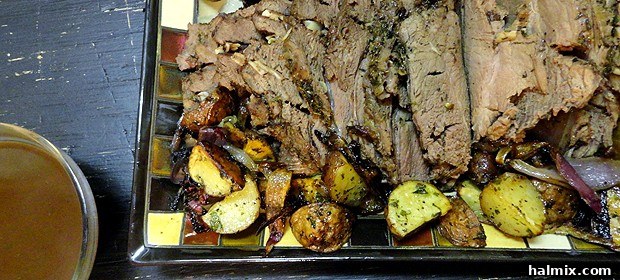
There are some culinary experiences that etch themselves into your memory, becoming a benchmark for future meals. For me, one such experience dates back to my early twenties, when I occasionally had dinner at a friend’s parents’ house. It was there that I first tasted a sirloin roast beef so incredibly tender and juicy, served alongside perfectly roasted potatoes, a crisp salad, crusty rolls, and rich pan juice. This meal wasn’t just food; it was an event, a celebration of flavor and comfort that left an indelible impression.
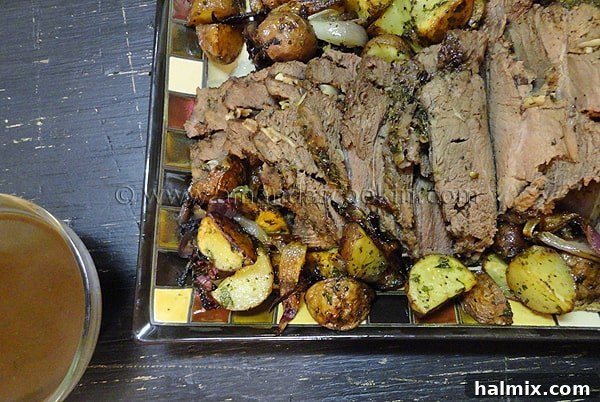
For years, I attempted to recreate that magical sirloin roast beef. I cooked countless roasts for my own family, chasing that elusive flavor, that perfect texture. While many were delicious, none quite hit the mark of my cherished memory – until now. If you’ve been on a quest for the ultimate Sunday roast, the kind that promises both succulent flavor and effortless preparation, your search ends here. This recipe for a juicy sirloin roast isn’t just a meal; it’s a culinary triumph, ready to become a cherished tradition in your home. And if you have a fondness for roasts in general, you’ll also adore my equally flavorful sirloin pork roast recipe!
The Quest for the Perfect Roast: A Culinary Journey
The journey to mastering the perfect roast beef is often a long one, filled with trial and error. It requires an understanding of meat cuts, seasoning, cooking temperatures, and the crucial art of resting the meat. For many, a Sunday roast isn’t just dinner; it’s a centerpiece of family gatherings, a symbol of comfort and togetherness. Achieving that ideal balance of tenderness, juiciness, and a rich, savory crust is the hallmark of a truly memorable roast.
My own quest took a significant turn when I stumbled upon the cookbook Sunday Roasts by Betty Rosbottom. As soon as I got my hands on it, I eagerly thumbed through its pages, instantly captivated by the promise of mouthwatering, old-fashioned recipes. I found myself jotting down page numbers, marking countless dishes I couldn’t wait to try. There was the Old Fashioned Pot Roast on page 18, utilizing a chuck or arm roast, which is definitely on my list. The Rolled Flank recipe on page 30 and the Bistro Roast Chicken on page 92 also piqued my interest. However, for my initial foray into this treasure trove of recipes, I decided to tackle the cover recipe: a glorious sirloin tip roast. Conveniently, I already had a sirloin tip roast waiting in my freezer, making it the perfect starting point for my culinary experiment. This book is an absolute must-have for anyone who appreciates the art of roasting.
Unveiling the Secret: Why Sirloin is Your Best Bet for a Quick & Tender Roast
Let me unequivocally state: this sirloin roast recipe is truly extraordinary. It has ascended to the ranks of my all-time favorite dishes, standing proudly alongside my “To Die For” Pot Roast, which is perfect for the slow cooker. This sirloin roast is melt-in-your-mouth tender, bursting with flavor, and incredibly juicy – everything you dream of in a classic roast. What makes it even more appealing is its surprising efficiency. Because sirloin is naturally a more tender cut of beef, it requires significantly less time in the oven compared to tougher cuts. You can expect it to be perfectly cooked in about an hour, making it an ideal choice even for busy days or impromptu gatherings.
However, while the active cooking time is short, planning is key. Allocate a couple of hours from start to finish. This includes about 20-30 minutes for preparation and seasoning, the hour of cooking, and, crucially, a minimum of 20 minutes for the roast to rest after it comes out of the oven. This resting period is non-negotiable for a truly juicy roast, allowing the meat fibers to relax and redistribute the savory juices throughout the cut. Rushing this step will result in a dry roast, no matter how perfectly it was cooked. So, embrace the wait, and your patience will be richly rewarded.
Beyond the Roast: Crafting Perfect Accompaniments
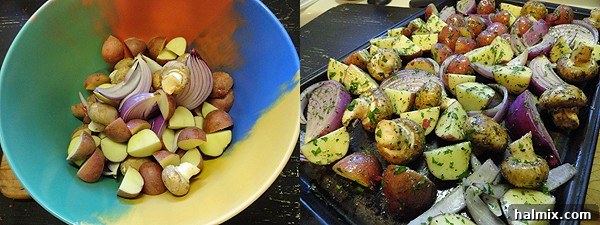
A magnificent roast beef deserves equally magnificent side dishes. While the original recipe in Sunday Roasts suggested roasted red onions and mushrooms, topped with blue cheese, I’ve made some delightful adaptations to suit my family’s preferences and to provide a more complete meal. I opted to incorporate wholesome potatoes into the mix, making them an integral part of the printable recipe you’ll find below. The combination of tender red onions, earthy mushrooms, and creamy quartered red potatoes creates a symphony of textures and flavors that beautifully complements the rich beef.
The preparation is wonderfully simple: just toss these vibrant vegetables with a generous drizzle of high-quality olive oil and a medley of fresh herbs. The aroma that fills your kitchen as these roast is utterly intoxicating, promising a delectable feast. The herbs infuse the vegetables with an aromatic warmth, while the olive oil helps them achieve that coveted golden-brown crispness around the edges, soft and tender within. The addition of potatoes not only adds substance but also acts as a natural sponge, soaking up all the delicious pan juices and herb flavors during roasting. This ensures every bite is packed with goodness.
The Power of Precision: Convection Roasting for Superior Results
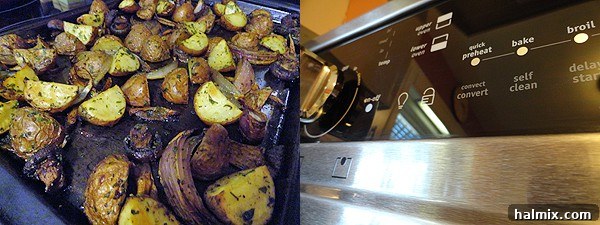
For this particular roast, I had the pleasure of utilizing my new Frigidaire Symmetry Double Oven, specifically taking advantage of its True Convection option. This oven boasts both a convection bake and a convection roast setting, which is an absolute dream for any home cook. Having not had a convection oven since my days living in Vegas, it’s been a truly welcome return to more efficient and superior cooking results.
Convection technology works by circulating hot air evenly throughout the oven cavity using a fan. This consistent airflow ensures that food cooks more uniformly and often much faster than in a conventional oven. For roasting, this means a more beautifully browned exterior and a consistently cooked interior, without hot spots. It creates that desirable crisp crust on your roast and vegetables while keeping the inside moist and tender. When converting a traditional recipe to convection, a good rule of thumb is to reduce the suggested temperature by about 25°F or decrease the cooking time by 25%. My Frigidaire oven made this easy with its handy “convect convert pad,” which automatically adjusts the recipe temperature for convection cooking. It truly worked like a dream, producing a flawlessly roasted sirloin.
If you don’t have a convection oven, don’t worry! You can still achieve fantastic results. Simply follow the temperature and time guidelines in the recipe and monitor your roast with a meat thermometer to ensure it reaches your desired doneness. The key to any great roast, regardless of your oven type, is starting with your meat at room temperature. This allows for more even cooking throughout. If your roast goes into the oven cold, the outer layers will cook much faster than the center, leading to an unevenly cooked result. So, pull your sirloin out of the refrigerator about 1-2 hours before you plan to cook it.
Speaking of cooking time, I left my sirloin roast in for exactly one hour, as the center was still a bit cool. Always trust your meat thermometer over strict timing; it’s the most reliable way to ensure perfection. Aim for an internal temperature of 130-135°F for medium-rare, keeping in mind that the temperature will rise a few degrees while resting. As mentioned, the original recipe also included sliced blue cheese as a topping, but not being a fan, I happily omitted it. The beauty of cooking lies in its adaptability, allowing you to tailor dishes to your palate. Enjoy this wonderfully customizable and incredibly satisfying meal!
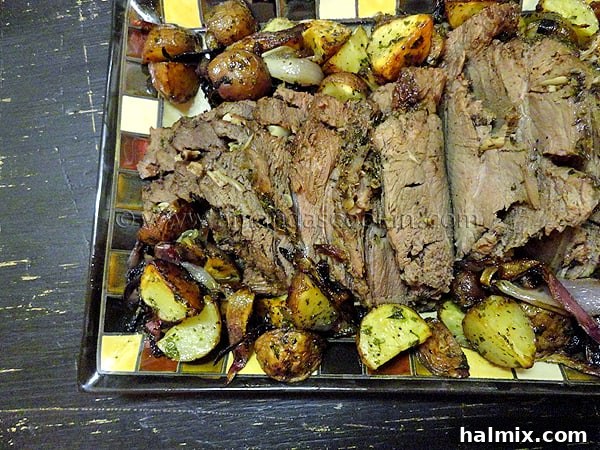
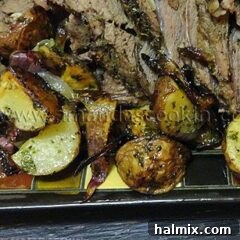
Perfect Sunday Roast
IMPORTANT – There are often Frequently Asked Questions within the blog post that you may find helpful. Simply scroll back up to read them!
Print It
Pin It
Rate It
Ingredients
- 1 4- lb boneless top sirloin roast
- 5 cloves garlic peeled and slivered
- 1 teaspoon dried thyme leaves
- 1 teaspoon fresh winter savory minced
- 1 teaspoon fresh oregano minced
- Kosher salt
- Freshly ground black pepper
- 3 tablespoons + 1/2 cup olive oil
- 1 medium red onion
- 1 cup whole white mushrooms
- 3 cups quartered small red potatoes
- 1 ½ cups beef broth
- ¾ cup Shariz or other dry red wine
- 1 ½ tablespoons unsalted butter
Before You Begin
Also, I used winter savory and oregano because I still have it growing outside. You can just use 2 teaspoons of dried thyme or substitute your own favorite herbs.
Instructions
-
Rinse and dry the roast; the meat should be at room temperature. Use a sharp paring knife to make slits over the entire surface of the roast and insert garlic slivers.
-
In a small bowl, mix together the thyme leaves, savory, oregano, 1 1/2 teaspoons of salt, 1/2 teaspoon pepper, and 3 tablespoons of the olive oil. Brush this aromatic mixture generously on all sides of the roast.
-
Place the oven rack in the center position and preheat your oven to 450°F (232°C).
-
Lightly oil or spray the bottom of a sturdy roasting pan. Place the roast in the center of the pan, fat side up. Roast in the preheated oven for 15 minutes to achieve a beautiful sear.
-
While the meat is initially roasting, prepare your delicious vegetables. Lightly oil or spray a large, rimmed baking sheet. Peel the red onion and cut it into wedges, ensuring the root end remains intact to hold the layers together. Toss the onion wedges, quartered potatoes, and whole mushrooms in a large bowl with the remaining 1/2 cup of olive oil. Season generously with fresh ground pepper and Kosher salt, toss again to coat evenly, then spread them out on the prepared baking sheet.
-
After the meat has roasted for 15 minutes at the higher temperature, reduce the oven heat to 350°F (175°C). Carefully place the baking sheet of vegetables on the lower rack of the oven. Continue to roast the meat for an additional 50-60 minutes, or until a meat thermometer inserted into the thickest part of the roast registers 130-135°F (54-57°C) for medium-rare. Remember to stir the vegetables every 15 minutes during this time, allowing them to brown and char slightly around the edges, becoming wonderfully tender.
-
Once the roast reaches your desired internal temperature, transfer it to a cutting board and tent it loosely with foil. Allow it to rest for a crucial 20 minutes; this helps redistribute the juices, ensuring a tender and moist final product. At this point, check the vegetables. If they are not yet fork-tender and beautifully browned, continue roasting them until they are perfect. Once done, remove the vegetables and tent them with foil to keep warm.
-
While the roast is resting, prepare the pan gravy. Skim off and discard any excess fat from the roasting pan. Place the pan over medium heat on your stovetop. Add the beef broth and red wine to deglaze the pan, scraping up all the flavorful browned bits from the bottom. Bring the mixture to a gentle simmer and reduce by half, allowing the flavors to concentrate. Swirl in the unsalted butter until melted and emulsified, then season with salt and pepper to taste.
-
After resting, cut the roast crosswise against the grain into 1/4-inch slices. Arrange the beautifully sliced meat on a warm platter and surround it with the roasted vegetables. Drizzle a small amount of the luscious pan gravy over the sliced meat, and serve the remainder in a gravy boat for guests to pass around.
The recipes on this blog are primarily tested with a conventional gas oven and gas stovetop. It’s important to note that oven performance, especially in older models, can vary significantly. To ensure accurate temperatures, we highly recommend using an inexpensive oven thermometer. For those utilizing toaster ovens or countertop ovens, please be aware that heat distribution might differ from a full-sized conventional oven, potentially requiring adjustments to cooking and baking times. In cases where recipes feature pressure cookers, air fryers, slow cookers, or other specialized appliances, a link to the specific models we use is often provided within the respective recipe. Additionally, for baking recipes where measurements are given by weight, substituting cup measurements may lead to different results, and we cannot guarantee success with alternative measuring methods.