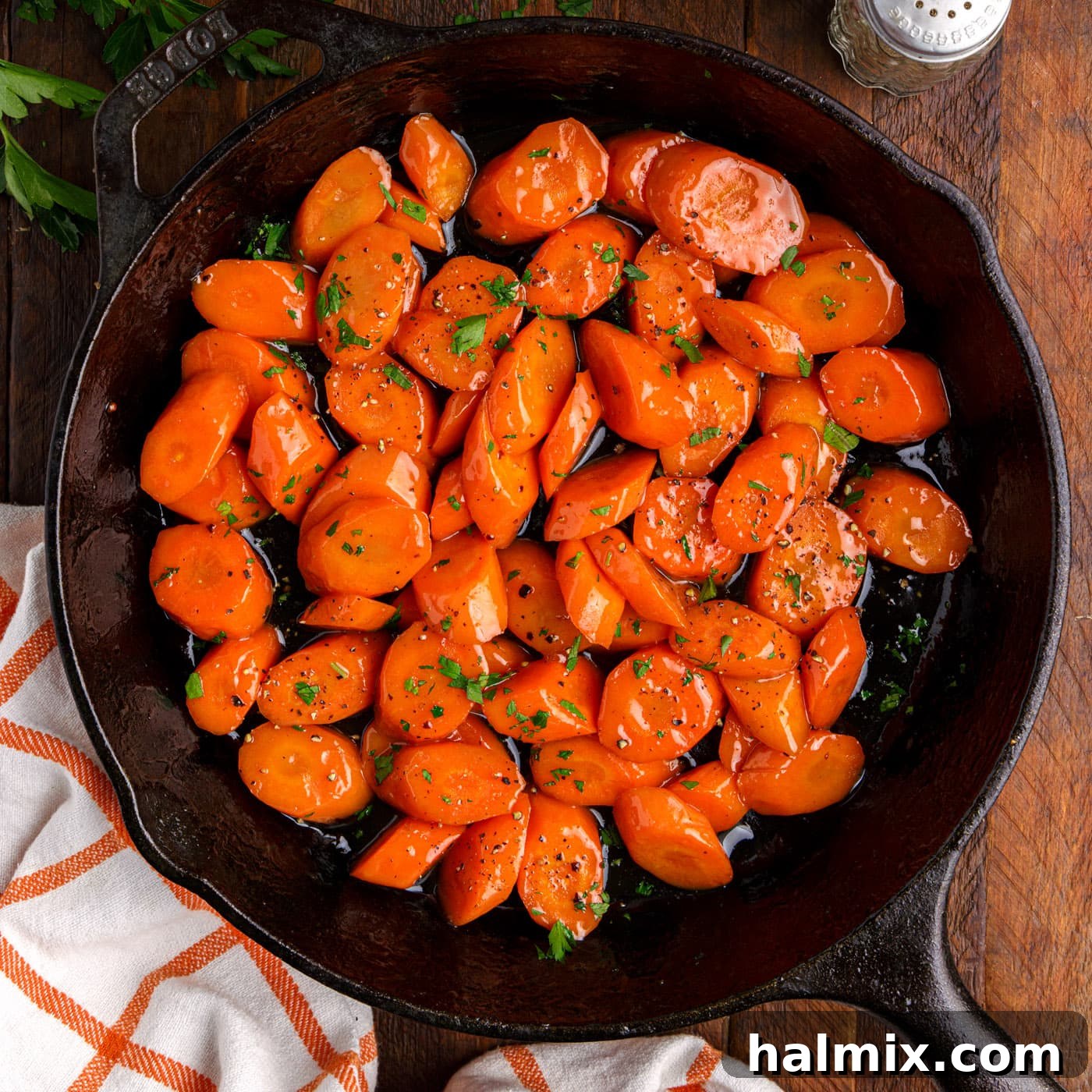
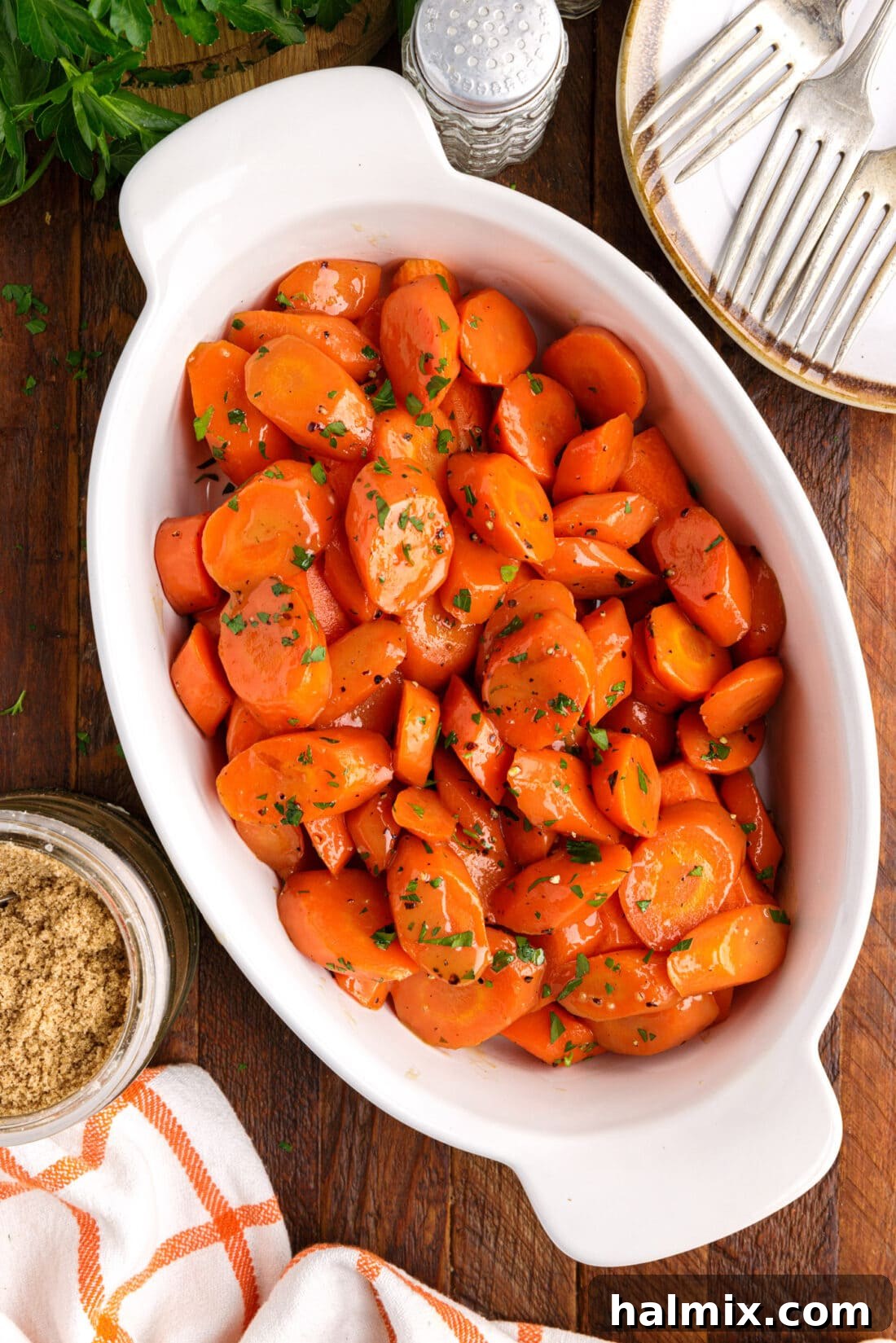
Transform your dinner table with a truly effortless and incredibly flavorful side dish: homemade brown sugar glazed carrots. This timeless recipe is a cherished favorite, praised for its simplicity, vibrant color, and irresistibly sweet-savory flavor profile. In just about 20 minutes, using only four core ingredients you likely already have on hand, you can create perfectly tender carrots bathed in a rich, glistening glaze. These aren’t just any carrots; they’re delicately crisp yet melt-in-your-mouth tender, simmered to perfection in a luscious brown sugar and butter sauce that caramelizes beautifully.
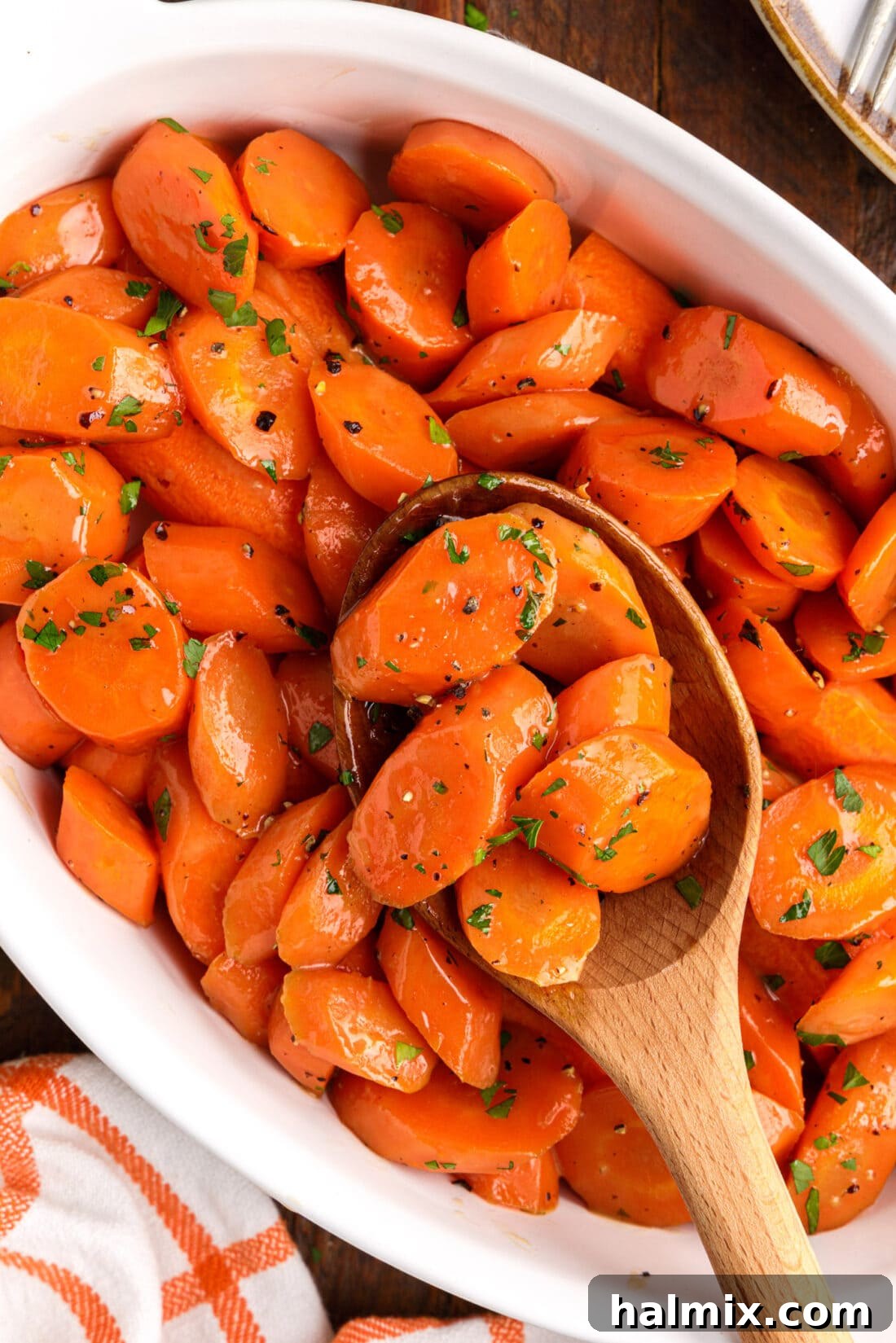
Why This Simple Glazed Carrot Recipe Is a Must-Try
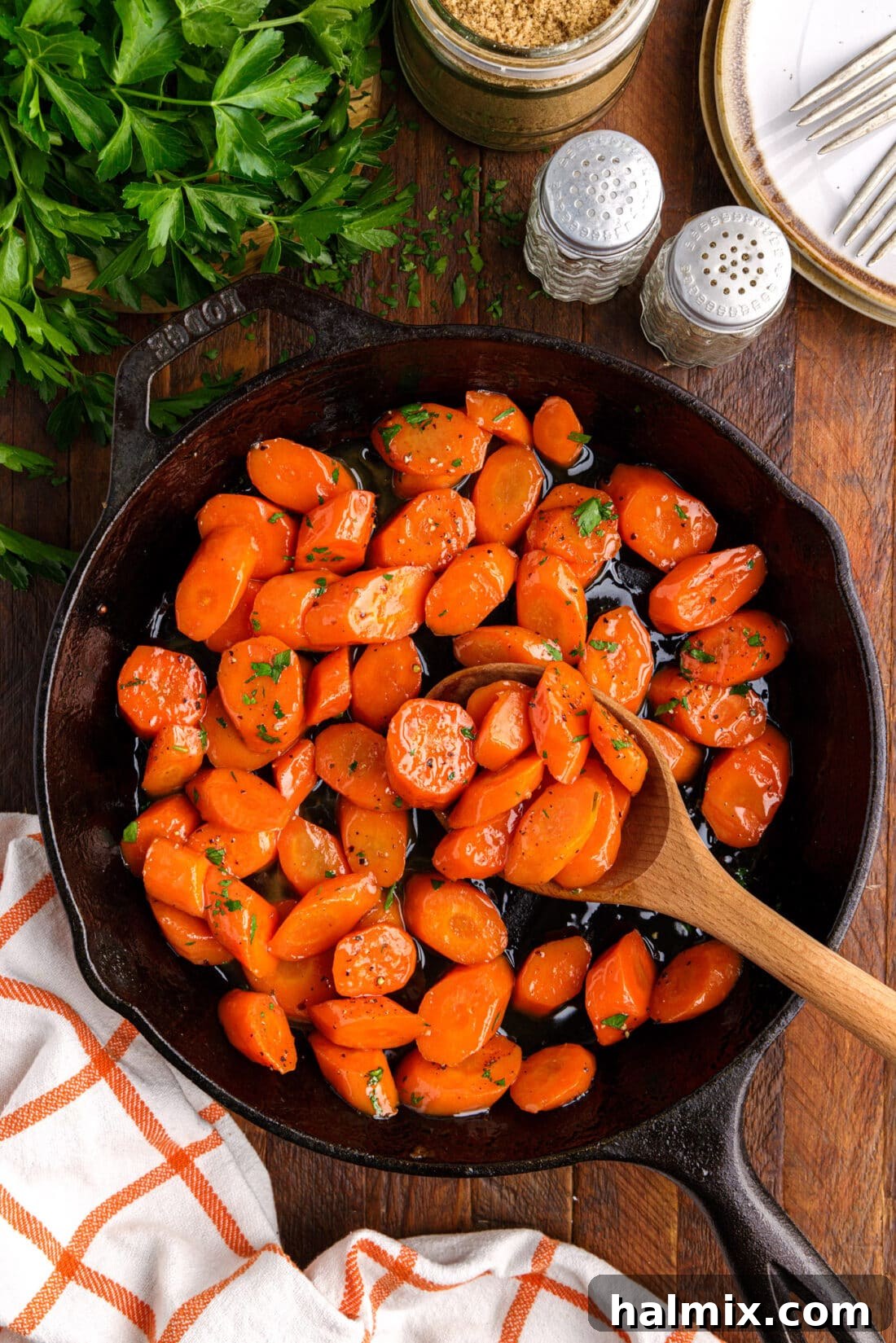
Brown sugar glazed carrots hold a special place on many dinner tables, particularly during festive occasions like Thanksgiving, Christmas, and Easter. However, their appeal extends far beyond the holidays, making them a fantastic accompaniment to a wide variety of main courses year-round. What makes this recipe an absolute winner?
Firstly, it’s astonishingly easy to prepare. You don’t need exotic ingredients or complex culinary techniques. Chances are, you already have carrots, butter, brown sugar, and water in your pantry and fridge. This makes it a go-to option for busy weeknights when you want something homemade and delicious without spending hours in the kitchen.
Secondly, the flavor and texture combination is simply divine. Often referred to as “candied carrots” due to their irresistible sweetness, these carrots strike a perfect balance. They are simmered until they achieve a delicate crisp-tender texture, never mushy, yet soft enough to melt in your mouth. The magic happens when they are coated and caramelized in a rich glaze made from brown sugar and butter. This glaze isn’t just sweet; it develops a subtle depth and nutty undertone as it cooks, transforming ordinary carrots into an extraordinary treat. The butter adds a luxurious creaminess, while the brown sugar provides that quintessential warm, molasses-rich sweetness.
Compared to other carrot preparations, such as roasted carrots that bring out their earthy sweetness, bacon-wrapped carrots for a savory twist, or even slow cooker balsamic carrots for a tangier profile, classic brown sugar glazed carrots consistently emerge as a crowd favorite. They offer that delightful touch of sweetness that beautifully complements savory dishes, making them feel like a semi-healthy indulgence that everyone, from children to adults, will happily devour. It’s a versatile side that adds both nutrition and a burst of flavor to any meal.
Essential Ingredients for Perfect Brown Sugar Glazed Carrots
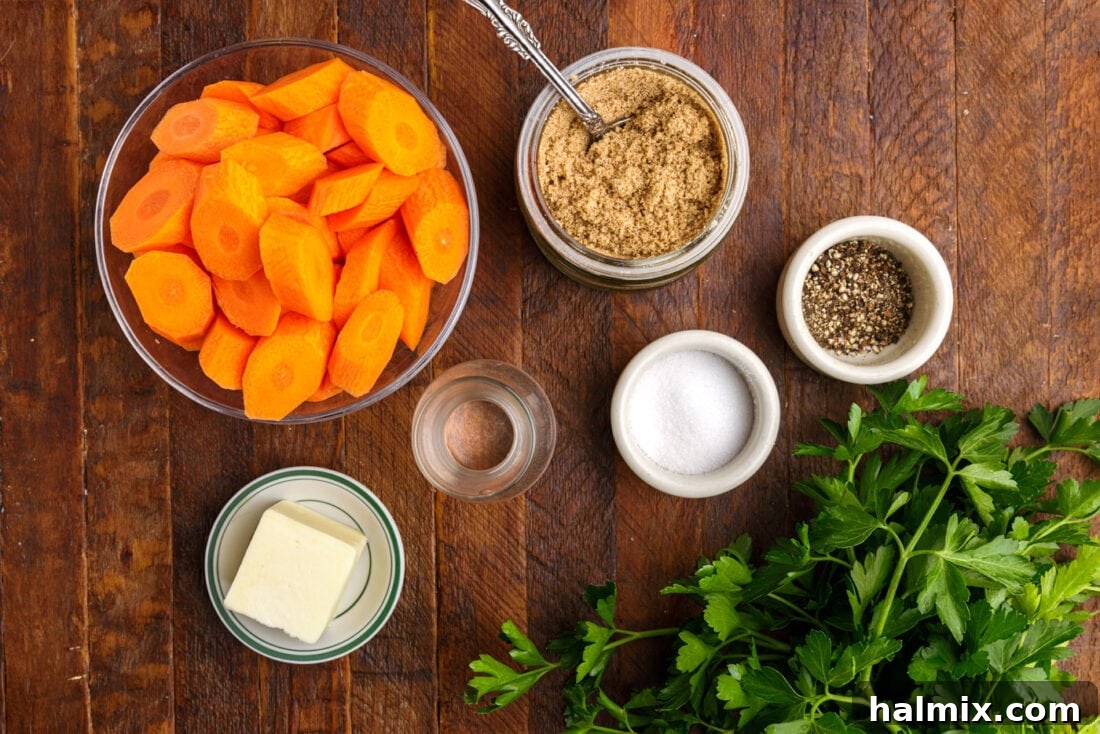
Creating these delightful glazed carrots requires only a handful of pantry staples. The beauty of this recipe lies in its simplicity, allowing the natural sweetness of the carrots and the rich glaze to truly shine. Here’s a detailed look at the core ingredients and some helpful substitution suggestions:
Ingredient Spotlight & Substitution Tips
CARROTS: For this recipe, we recommend using about 2 pounds of fresh carrots. Start by peeling them to remove the outer skin, then slice them diagonally into uniform pieces, roughly 1/4 to 1/2 inch thick. This diagonal cut not only looks appealing but also provides more surface area for the glaze to adhere to. If you’re looking to cut down on prep time, feel free to use pre-peeled baby carrots instead. The key to evenly cooked carrots is ensuring all your pieces are roughly the same size, regardless of their shape. If your carrots are cut thicker or larger than suggested, they will simply need a bit more simmering time in the water to reach the desired tenderness. Remember to monitor them closely and add a splash more water if the liquid evaporates too quickly during extended simmering.
BROWN SUGAR: This is the star of our sweet glaze! Light brown sugar imparts a lovely, mild molasses flavor that is characteristic of classic glazed carrots. If you prefer a deeper, richer caramel note, you can opt for dark brown sugar. For those seeking alternative sweeteners, an equal amount of honey or maple syrup can be substituted for the brown sugar. Keep in mind that honey and maple syrup will create a slightly different flavor profile and may alter the glaze’s consistency, so adjust to your taste. If you’re out of brown sugar but have granulated sugar and molasses, you can easily make your own brown sugar substitute by combining them.
BUTTER: We specify unsalted butter for a reason – it gives you complete control over the saltiness of your dish. If you only have salted butter on hand, that’s perfectly fine, but be mindful when adding extra salt later in the recipe. The butter is crucial for creating a rich, smooth, and glossy glaze that beautifully coats each carrot piece, contributing to both flavor and texture.
WATER: Plain water is used as the initial simmering liquid. It helps to tenderize the carrots before the glaze is added, ensuring they are cooked through without being overly soft. The water eventually evaporates, leaving the carrots ready to absorb the rich butter and sugar mixture.
SALT & PEPPER: These basic seasonings are essential for enhancing the natural flavors of the carrots and balancing the sweetness of the glaze. A dash of both brings out the best in the dish.
FINELY CHOPPED PARSLEY (Optional Garnish): While optional, a sprinkle of fresh, finely chopped parsley adds a vibrant pop of color and a touch of herbaceous freshness that beautifully contrasts with the sweetness of the carrots. It elevates the presentation and adds a subtle aromatic lift.
Step-by-Step Guide: How to Make Irresistible Glazed Carrots
These step-by-step photos and instructions are here to help you visualize how to make this recipe perfectly. Follow these simple steps to create a show-stopping side dish with ease.
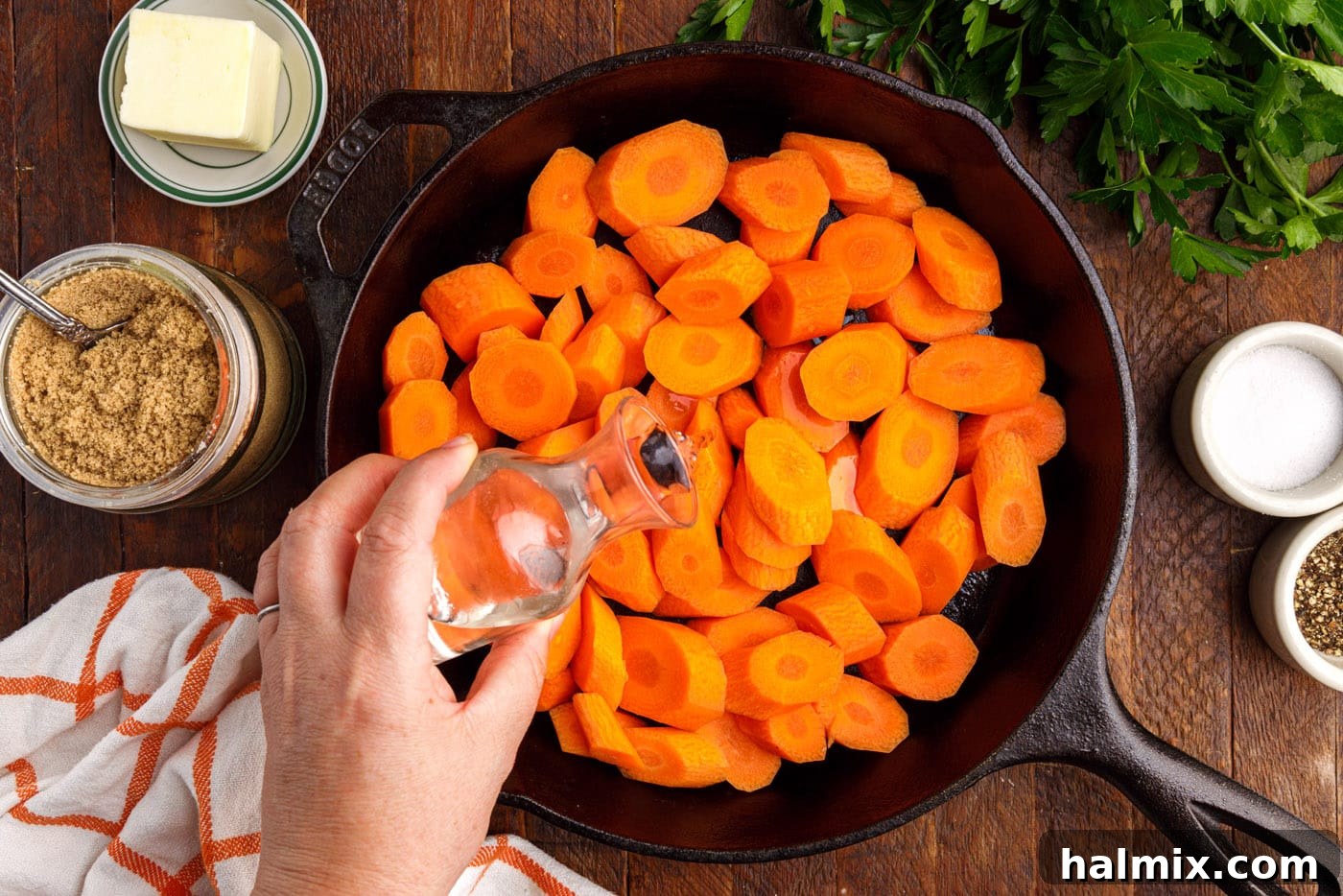
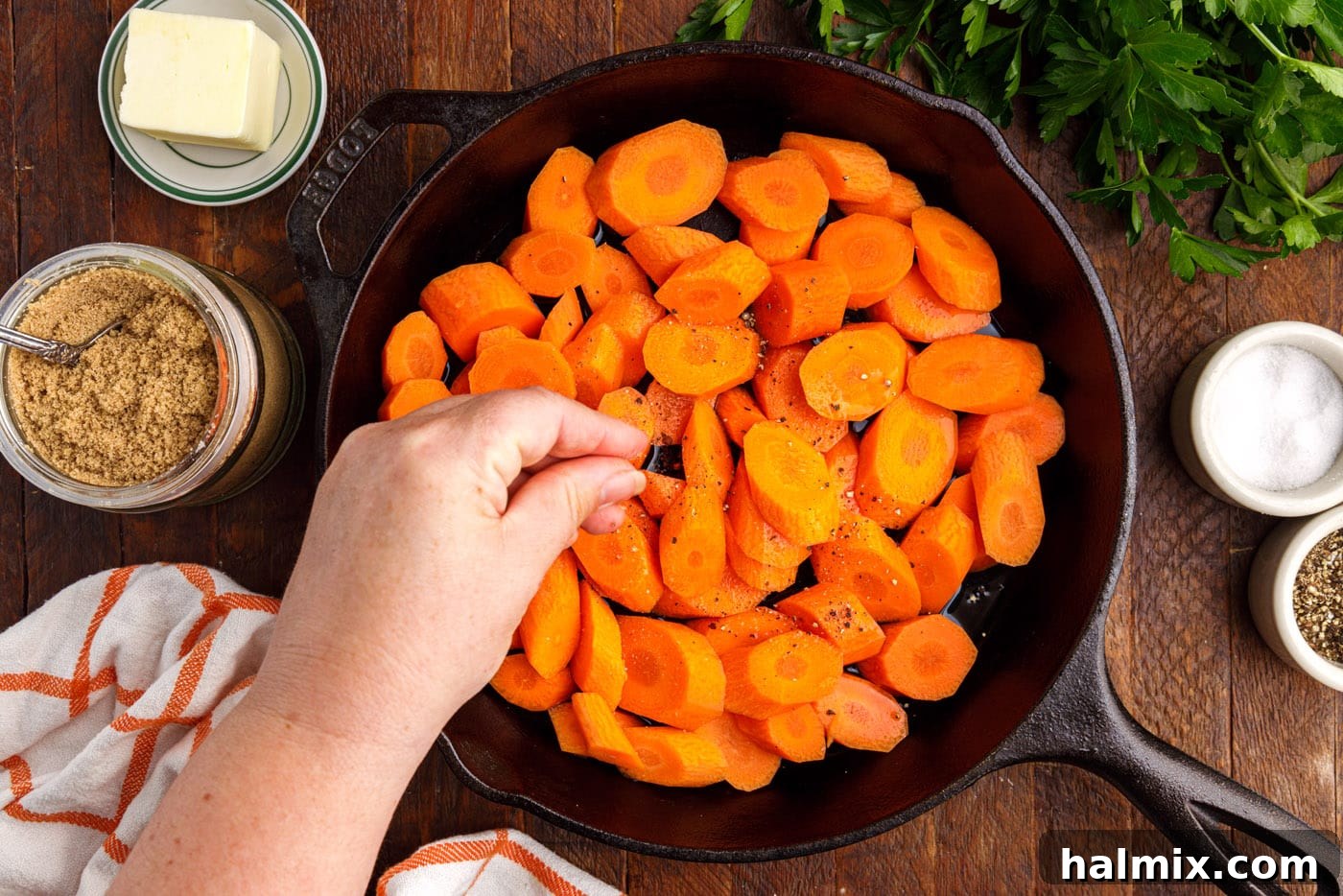
- Prepare and Simmer the Carrots: Begin by placing your peeled and sliced carrots into a large skillet. Add 1/2 cup of water to the skillet. Heat the skillet over medium-high heat until the water comes to a rolling boil. At this point, sprinkle the carrots generously with salt and pepper to season them early. Reduce the heat to medium-low and allow the carrots to simmer, stirring frequently. Continue simmering until the water has completely evaporated from the skillet and the carrots have started to soften. This initial simmering step is vital for ensuring the carrots achieve a tender-crisp texture before the glaze is added, allowing them to cook evenly from the inside out. They should be just tender enough to pierce with a fork, but still hold their shape and offer a slight bite.

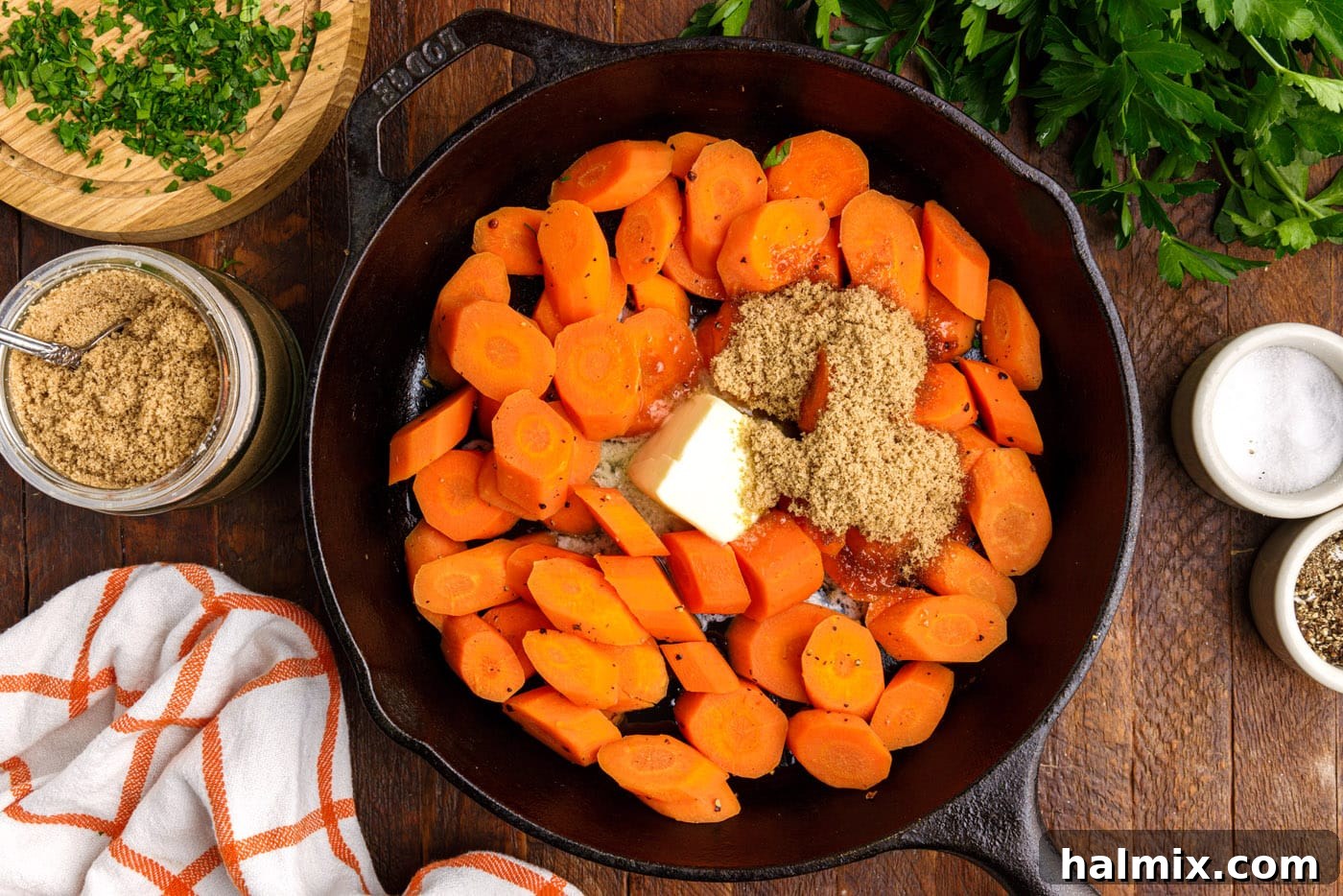
- Create the Sweet Glaze: Once the water has evaporated and the carrots are beginning to soften, it’s time to build the glorious glaze. Add the 4 tablespoons of unsalted butter and 1/4 cup of packed light brown sugar directly into the skillet with the carrots. Stir continuously, ensuring the butter melts completely and the brown sugar dissolves into the butter, creating a smooth, glossy sauce. This process should only take a couple of minutes.
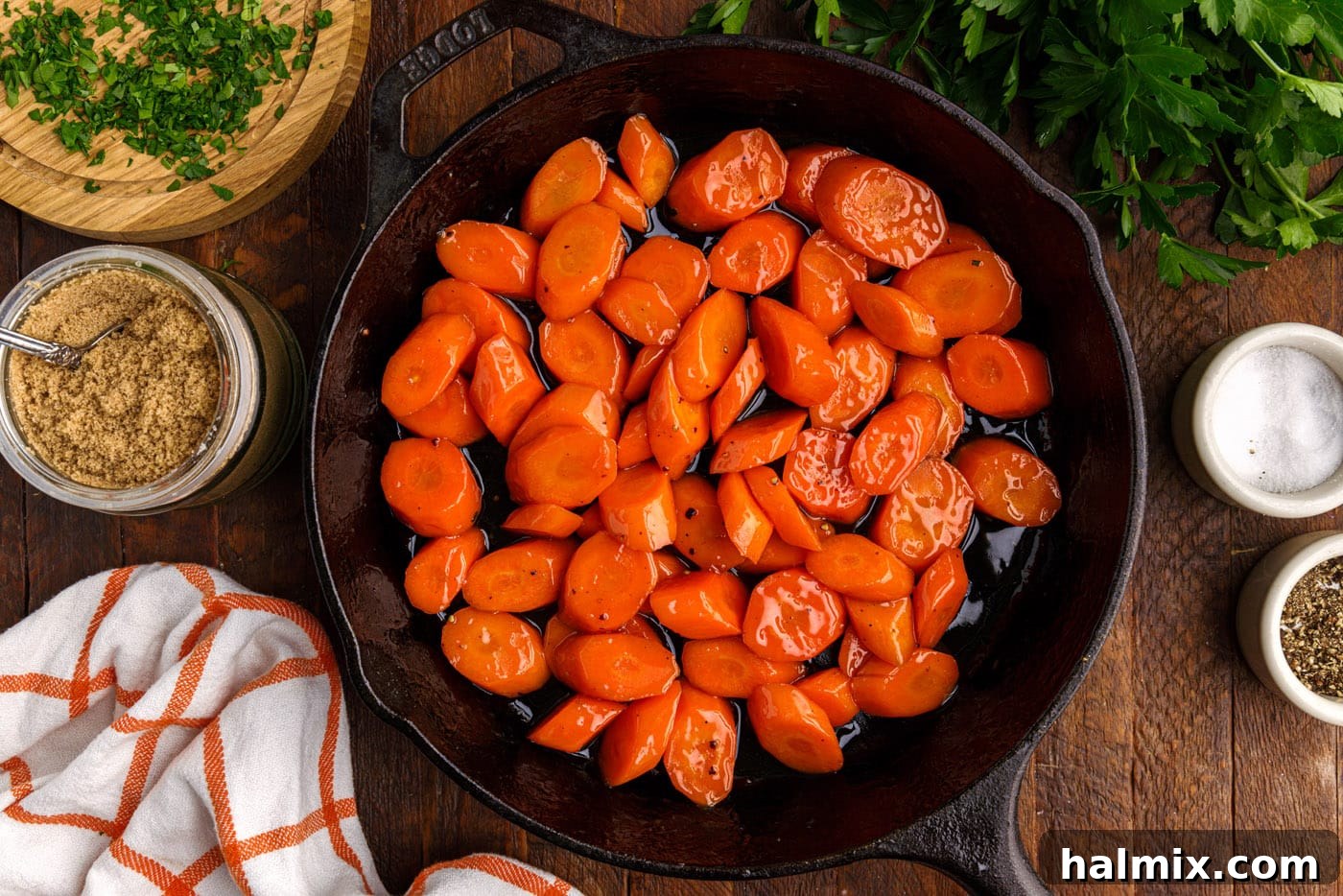
- Caramelize and Thicken: Continue to cook the carrots in the butter and brown sugar mixture for approximately 5 minutes longer. During this time, the carrots will become fully fork-tender, absorbing the flavors of the glaze, and the sauce will reduce and thicken into a beautiful, sticky, and caramelized coating. Stir occasionally to ensure all carrots are evenly coated and prevent any sticking. The glaze should be luscious and clinging to the carrots, not watery.
- Finish and Serve: Remove the skillet from the heat. Taste the carrots and adjust the seasoning with additional salt and pepper if desired. For a final flourish and a touch of fresh color, garnish generously with finely chopped fresh parsley before serving warm.
Frequently Asked Questions & Expert Tips for Perfect Glazed Carrots
How do I store leftover glazed carrots?
Store any leftover brown sugar glazed carrots in an airtight container in the refrigerator. They will keep beautifully for up to 4 to 5 days, making them a great meal prep component.
How do I reheat glazed carrots?
The easiest and quickest way to reheat glazed carrots is in the microwave. Place them in a microwave-safe dish and heat in 30-second intervals, stirring in between, until they are thoroughly heated through. Alternatively, you can reheat them on the stovetop in a skillet over medium-low heat. If they seem a little dry or have lost some of their initial sweetness, you can add a small amount of butter or a dash of honey to the pan while reheating to revive their luscious glaze.
Can I use baby carrots for this recipe?
Absolutely! Baby carrots are a fantastic shortcut if you want to minimize prep work. While the cooking method remains the same, be aware that baby carrots might take a slightly longer time to soften when simmering in water compared to diagonally sliced carrots due to their shape and density. Just keep an eye on them and perform the fork test to check for desired tenderness.
How do I keep my glazed carrots from getting mushy?
Preventing mushy carrots is all about careful monitoring during the initial simmering stage. The key is not to overcook them. Once the water has evaporated, start testing the carrots for tenderness by poking them with a fork. You’re aiming for “fork-tender” but still with a slight firmness, or “al dente,” if you prefer a more tender-crisp texture. Stop the simmering process as soon as they reach your desired consistency. Some people prefer very soft carrots, while others enjoy a bit more bite, so trust your preference!
Can I make glazed carrots ahead of time?
Yes, glazed carrots can certainly be made ahead, making them perfect for holiday meal planning or busy schedules. Prepare them as normal, but be careful not to over-simmer the carrots during the initial cooking stage, as they will continue to soften slightly when reheated. Allow them to cool completely, then transfer them to an airtight container and refrigerate for up to a day in advance. To reheat, add a small amount of butter to a skillet over medium-low heat, add the pre-cooked carrots, and warm them through gently until heated to your liking.
Can I add other spices or flavors to the glaze?
Absolutely! While the classic brown sugar and butter glaze is perfect on its own, you can get creative. A pinch of ground cinnamon, nutmeg, or even a tiny dash of ginger can add a wonderful warm spice note, especially around the holidays. For a subtle hint of heat and complexity, try adding a tiny pinch of cayenne pepper. A splash of fresh orange juice or a bit of orange zest added with the butter can also brighten the flavors beautifully.
What are some good garnishing ideas beyond parsley?
If you want to vary your garnish, consider finely chopped fresh dill or chives for a different herbaceous touch. For added texture and a nutty flavor, a sprinkle of toasted pecans or walnuts can be delightful. A grating of fresh lemon or orange zest just before serving provides a burst of citrusy aroma and cuts through the sweetness.
Perfect Pairings: What to Serve with Glazed Carrots
Brown sugar glazed carrots are incredibly versatile and pair beautifully with a wide array of main courses. Their sweet and savory profile makes them a welcome addition to almost any meal. They are a classic choice for holiday feasts, complementing traditional centerpieces like roast turkey, baked ham, or beef roasts. The sweetness of the carrots cuts through the richness of these meats, creating a harmonious balance of flavors.
Beyond the holidays, these glazed carrots elevate everyday meals. Imagine them alongside a perfectly cooked pork loin, a juicy roasted chicken, or even pan-seared salmon. The caramel notes of the glaze work wonderfully with both poultry and fish, adding a touch of elegance to a simple weeknight dinner. They also pair excellently with other classic comfort food sides such as creamy mashed potatoes, savory green bean casserole, fluffy rice pilaf, or a hearty bread stuffing. Whether you’re planning an elaborate holiday spread or simply want to add a vibrant and flavorful vegetable to your family dinner, these glazed carrots are always a hit. Their delightful sweetness and tender texture ensure they disappear quickly from the table!
More Delicious Side Dish Recipes You’ll Love
- Roasted Asparagus: A simple, healthy, and vibrant green vegetable side.
- Broccoli Casserole: Creamy, cheesy, and utterly comforting, perfect for any gathering.
- Baked Mac and Cheese: The ultimate classic, bubbling with cheesy goodness.
- Twice Baked Potatoes: Rich, creamy, and loaded with flavor, a meal in itself.
- Crispy Roast Potatoes: Perfectly crunchy on the outside, fluffy on the inside.
- Air Fryer Brussels Sprouts: Crispy, flavorful, and incredibly easy to make.
- Lemon Couscous: A light, fresh, and zesty grain side that brightens any dish.
I’m passionate about baking and cooking, and I love sharing my culinary adventures with all of you! To make sure you never miss a new recipe, I offer a convenient newsletter delivered directly to your inbox every time a new post goes live. Simply subscribe and start receiving your free daily recipes – a delicious inspiration for every meal!
Classic Brown Sugar Glazed Carrots
These brown sugar glazed carrots are tender, crisp, and perfectly caramelized after being simmered in a sweet and buttery glaze. An ideal side dish for any occasion!
Ingredients
- 2 lbs carrots, peeled and sliced diagonally to 1⁄4”-1⁄2” thickness
- ½ cup water
- Salt and freshly ground black pepper, to taste
- 4 Tablespoons unsalted butter
- ¼ cup light brown sugar, packed
- Finely chopped fresh parsley (optional, as garnish)
Equipment
- Large skillet
Instructions
- Simmer Carrots: Place the prepared carrots and ½ cup water into a large skillet. Heat over medium-high heat until the water comes to a boil. Sprinkle with salt and pepper. Reduce the heat to medium-low and simmer, stirring often, until the water has completely evaporated and the carrots are beginning to soften (about 10-12 minutes).
- Add Glaze Ingredients: Add the 4 Tablespoons of unsalted butter and ¼ cup of light brown sugar to the skillet with the softened carrots. Stir continuously until the butter has melted and the brown sugar has completely dissolved, forming a smooth glaze.
- Cook to Glaze: Continue cooking for approximately 5 minutes longer. During this time, the carrots should become fully fork-tender, and the sauce will reduce and thicken into a luscious, sticky glaze that evenly coats the carrots.
- Serve: Remove the skillet from the heat. Taste and adjust seasoning with additional salt and pepper if needed. Garnish with finely chopped fresh parsley, if desired, and serve immediately.
Before You Begin & Expert Tips
- I typically use about ½ teaspoon of black pepper and ½ teaspoon of salt during the initial cooking. If you use salted butter, be conservative with added salt.
- For tender-crisp carrots, cook until just soft. If you prefer very soft carrots, add a little more water during the simmering stage and continue cooking until your desired softness is achieved. Remember to drain any excess water before adding the butter and brown sugar for the glaze.
- Store leftovers in an airtight container in the refrigerator for 5-6 days.
Nutrition Information (per serving)
- Calories: 246 cal
- Carbohydrates: 35g
- Protein: 2g
- Fat: 12g
- Saturated Fat: 7g
- Polyunsaturated Fat: 1g
- Monounsaturated Fat: 3g
- Trans Fat: 1g
- Cholesterol: 30mg
- Sodium: 163mg
- Potassium: 747mg
- Fiber: 6g
- Sugar: 24g
- Vitamin A: 38238 IU
- Vitamin C: 13mg
- Calcium: 91mg
- Iron: 1mg
Tried this Recipe? Pin it for Later!
Follow on Pinterest @AmandasCookin or tag #AmandasCookin!
The recipes on this blog are carefully tested using a conventional gas oven and gas stovetop. Please note that cooking appliances can vary, especially with age, and may not distribute heat consistently. Using an inexpensive oven thermometer can help ensure your oven maintains the correct temperature. If you use a toaster oven or countertop oven, be aware that heat distribution may differ from a full-sized conventional oven, potentially requiring adjustments to cooking and baking times. For recipes made with specialized appliances like a pressure cooker, air fryer, or slow cooker, a link to the specific models we use is often provided within the respective recipe. When baking recipes specify measurements by weight, using cups instead may yield different results, and we cannot guarantee success with volumetric measurements in such cases.