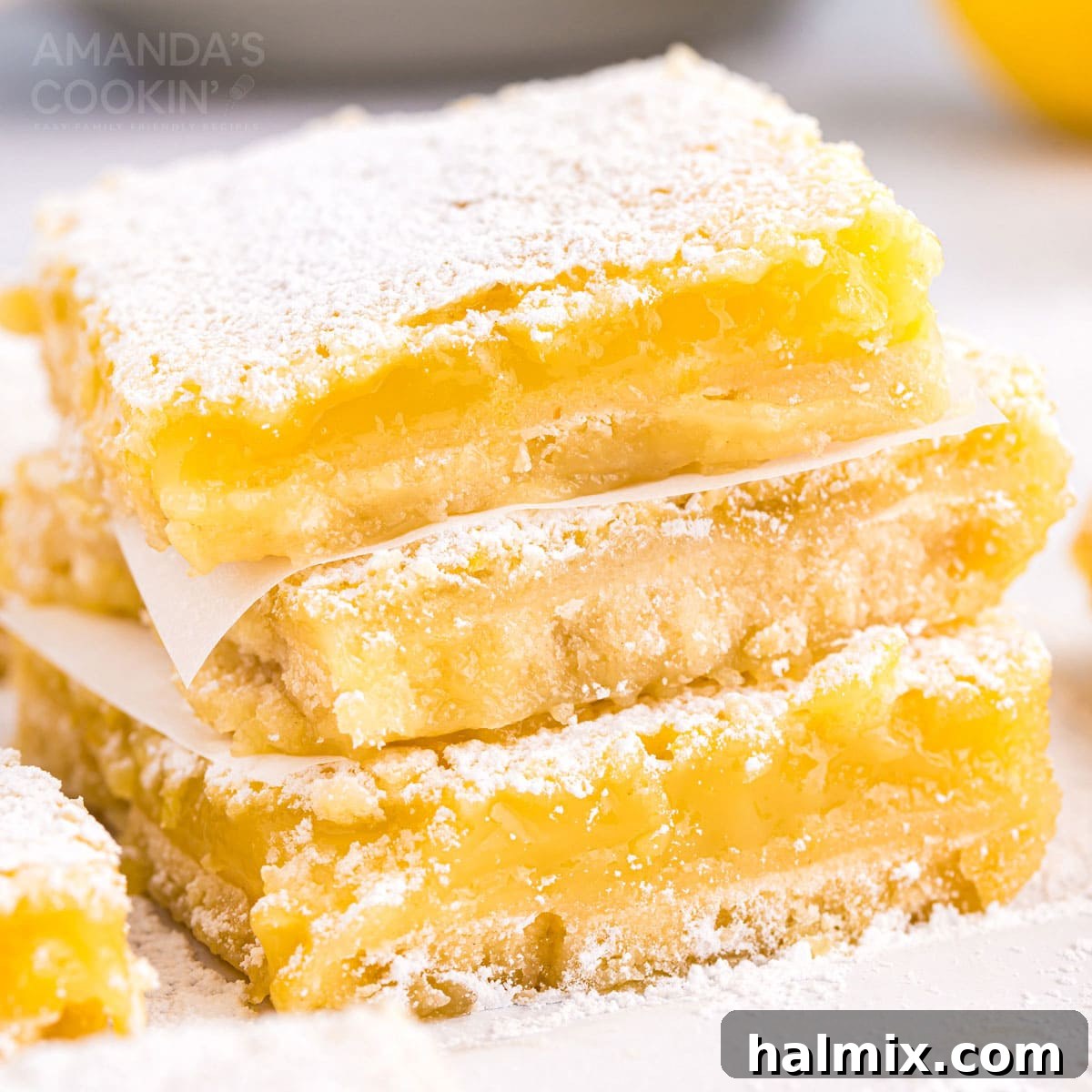
The Ultimate 6-Ingredient Lemon Bars: Your New Go-To Dessert Recipe
Are you on a quest to discover the most exceptional lemon bar recipe known to humankind? Look no further! These delightful lemon bars are not just easy to whip up, but they also boast an incredibly short ingredient list – just six essential items! Each batch turns out perfectly, consistently delivering that irresistible balance of sweet and tart that everyone craves. Be prepared to share this recipe generously, as anyone who takes a single bite will undoubtedly be begging for the secret!
Why This Lemon Bar Recipe Stands Above the Rest
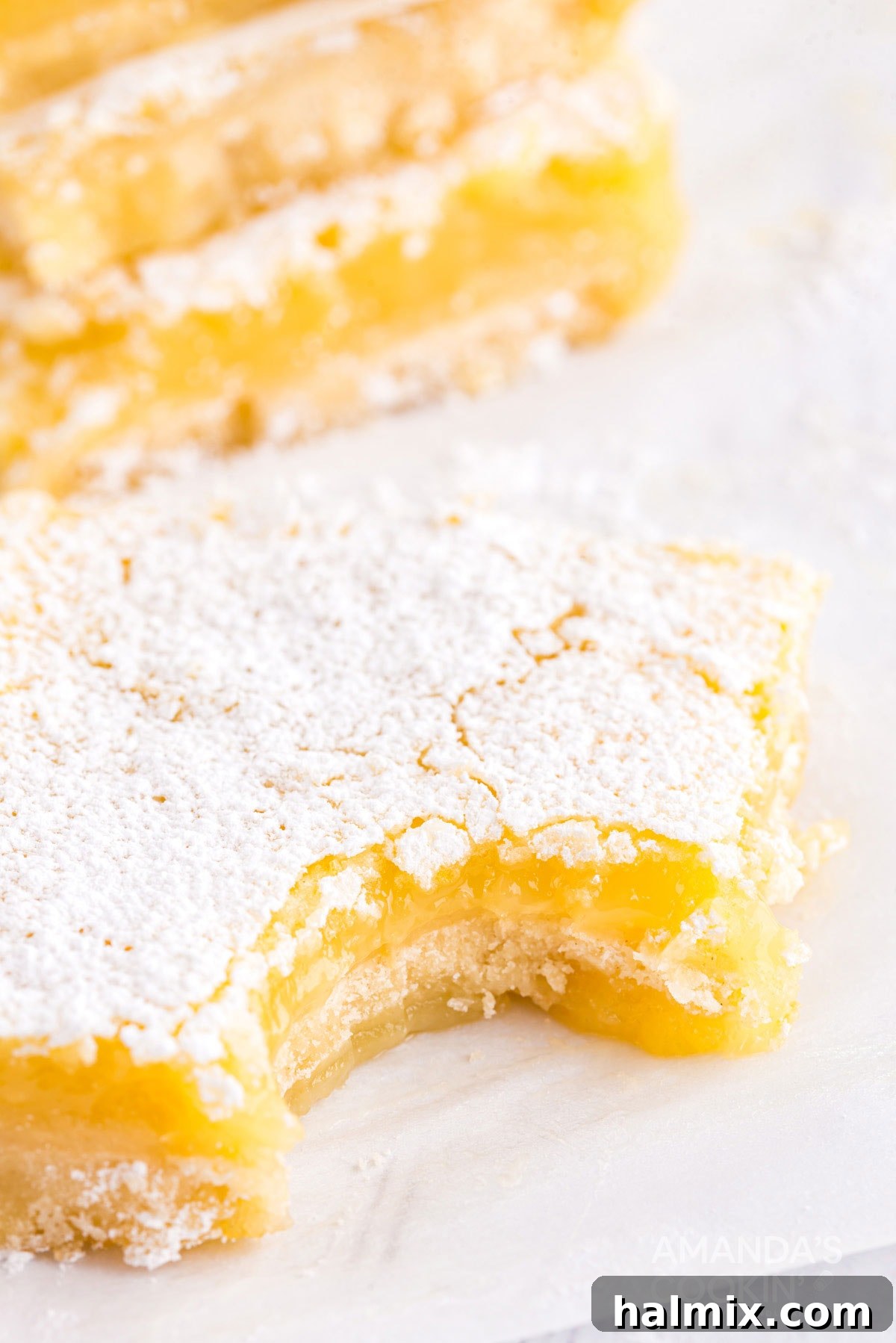
Crafting the perfect lemon bar is an art, and after extensive experimentation with countless methods and ingredient combinations, I confidently present you with what I believe to be the absolute best lemon bar recipe available. This isn’t just another dessert; it’s a meticulously perfected balance of flavors and textures that promises to be a consistent crowd-pleaser. You simply won’t regret dedicating a little time to create these culinary masterpieces.
What makes this recipe truly shine? First and foremost, its sheer simplicity. Requiring only six fundamental ingredients, most of which are likely already staples in your kitchen pantry, it eliminates the need for obscure or hard-to-find items. This minimal ingredient list doesn’t compromise on flavor; instead, it highlights the bright, natural zestiness of fresh lemons, complemented by a buttery, tender crust.
The secret lies in the precise ratio and method, which I’ve fine-tuned to ensure a consistently flawless outcome. You get a gorgeously golden, flaky shortbread crust that provides the perfect counterpoint to the silky-smooth, intensely lemony filling. The filling itself strikes an ideal balance, offering a delightful tang without being overly sour, and just the right amount of sweetness to make every bite a harmonious experience. Whether you’re a seasoned baker or just starting out, this recipe is designed for success, yielding professional-quality lemon bars that are sure to impress.
Craving More Irresistible Dessert Bars? If you adore the convenience and deliciousness of dessert bars, be sure to explore more of my amazing creations! Sink your teeth into my rich and fudgy fudge brownies, or indulge in the ooey-gooey goodness of my delightful S’mores bars. For those who can’t resist the soft, pillowy texture of grocery store Lofthouse cookies, you absolutely must try my recipe for these heavenly frosted sugar cookie bars. And if you’re truly seeking a dessert that goes above and beyond, prepare yourself for the decadent experience of my infamous Slutty Brownies!
Essential Ingredients You Will Need for the Best Lemon Bars
The beauty of these lemon bars lies in their simplicity and the quality of just a few key ingredients. While the list is short, selecting the right items can make all the difference in achieving that ultimate flavor and texture. Here’s a detailed look at what you’ll need and some tips for sourcing the best:
- Fresh Lemon Juice: This is non-negotiable for truly spectacular lemon bars. Bottled lemon juice, while convenient, simply cannot replicate the vibrant, bright, and nuanced flavor of freshly squeezed lemons. To maximize flavor and minimize waste, always zest the lemons first, collecting the aromatic zest, then proceed to juice them. You’ll typically need 2-3 medium-sized lemons to yield the required ½ cup of juice and 2 tablespoons of zest. Choose firm, heavy lemons with smooth, bright yellow skin.
- All-Purpose Flour: Used for both the crust and a small amount in the filling, all-purpose flour provides the structural integrity. For the crust, it contributes to its tender, crumbly texture, while in the filling, it helps create that perfectly set, yet still delicate, consistency.
- Cold Unsalted Butter: The foundation of our incredible shortbread crust. Using cold butter, cubed, is crucial for creating a flaky, tender texture. When pulsed with the flour and sugar, the cold butter creates pockets of steam in the oven, preventing a dense or tough crust. Unsalted butter allows you to control the overall saltiness of the dessert.
- Powdered Sugar (Confectioners’ Sugar): This fine sugar is used in both the crust and as a delicate dusting on top of the finished bars. In the crust, it blends seamlessly to create a tender, melt-in-your-mouth texture. As a topping, it adds a touch of elegance and a subtle extra layer of sweetness, cutting through the tartness of the lemon.
- Granulated Sugar: The primary sweetener for the luscious lemon filling. Its fine crystals dissolve beautifully, creating a smooth and sweet base that perfectly balances the tart lemon juice.
- Large Eggs: Eggs are vital for the filling, acting as a binder and providing richness, structure, and that characteristic custard-like texture. Ensure your eggs are large for consistent results.
- Lemon Zest: The secret weapon for intensifying lemon flavor without adding extra liquid. The oils in the zest carry a powerful aromatic punch. As mentioned, always zest your lemons before juicing them to ensure you capture all that wonderful citrus essence.
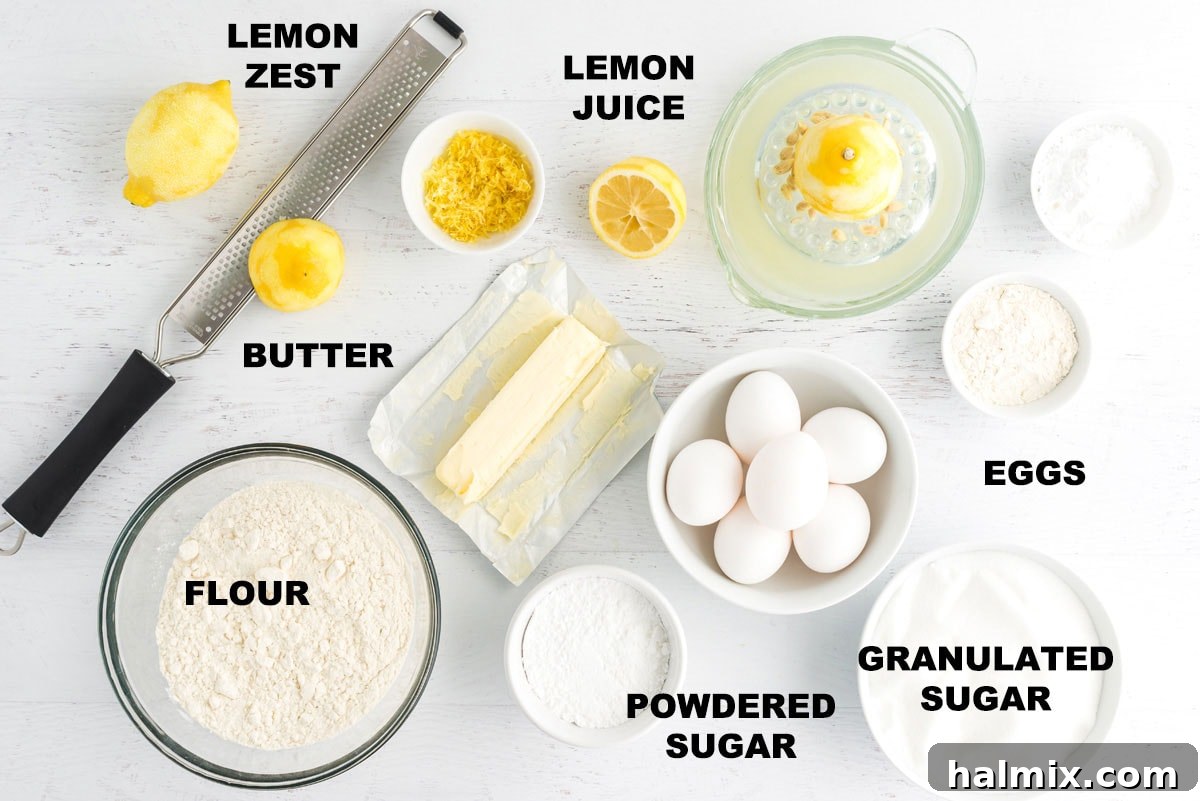
For precise measurements, a complete list of ingredients, and detailed instructions, refer to the printable version of this recipe conveniently located at the end of this comprehensive guide.
How to Make These Irresistible Lemon Bars: A Step-by-Step Guide
Making these lemon bars is a straightforward process, divided into two main components: the buttery shortbread crust and the zesty lemon filling. Each step is designed for ease and efficiency, ensuring a delicious result every time. Follow these detailed instructions, and you’ll soon be enjoying perfectly balanced sweet-tart treats that are sure to become a household favorite.
Crafting the Perfect Shortbread Crust
The foundation of these lemon bars is a simple yet incredibly tender and flavorful shortbread crust. The key to its success lies in minimal handling and using cold butter, which results in a wonderfully flaky texture.
- Begin by preheating your oven to 350°F (175°C). This ensures your oven is at the correct temperature for even baking. Next, line a 13×9 inch baking pan with parchment paper. It’s crucial that the parchment paper extends over the edges of the pan, creating “handles.” These handles will be invaluable later for easily lifting the cooled lemon bars out of the pan, making for clean cuts and presentation.
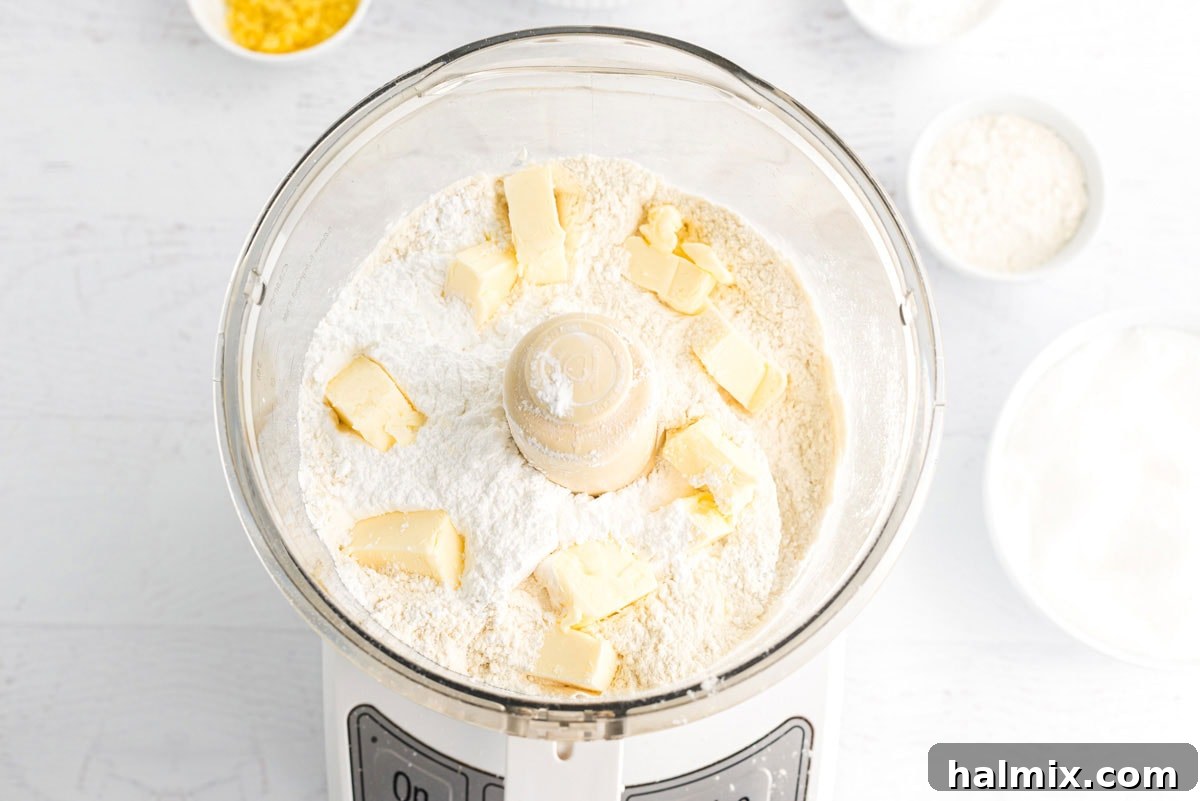
- In the bowl of your food processor, combine the 2 cups of all-purpose flour, ½ cup of powdered sugar, and 1 cup of cold, cubed unsalted butter. Pulse these ingredients together in short bursts. The goal is to incorporate the butter into the dry ingredients without overworking the dough. Continue pulsing until coarse crumbs are formed and the mixture just begins to come together, resembling wet sand. Be careful not to process it into a smooth dough, as this will result in a tough crust.
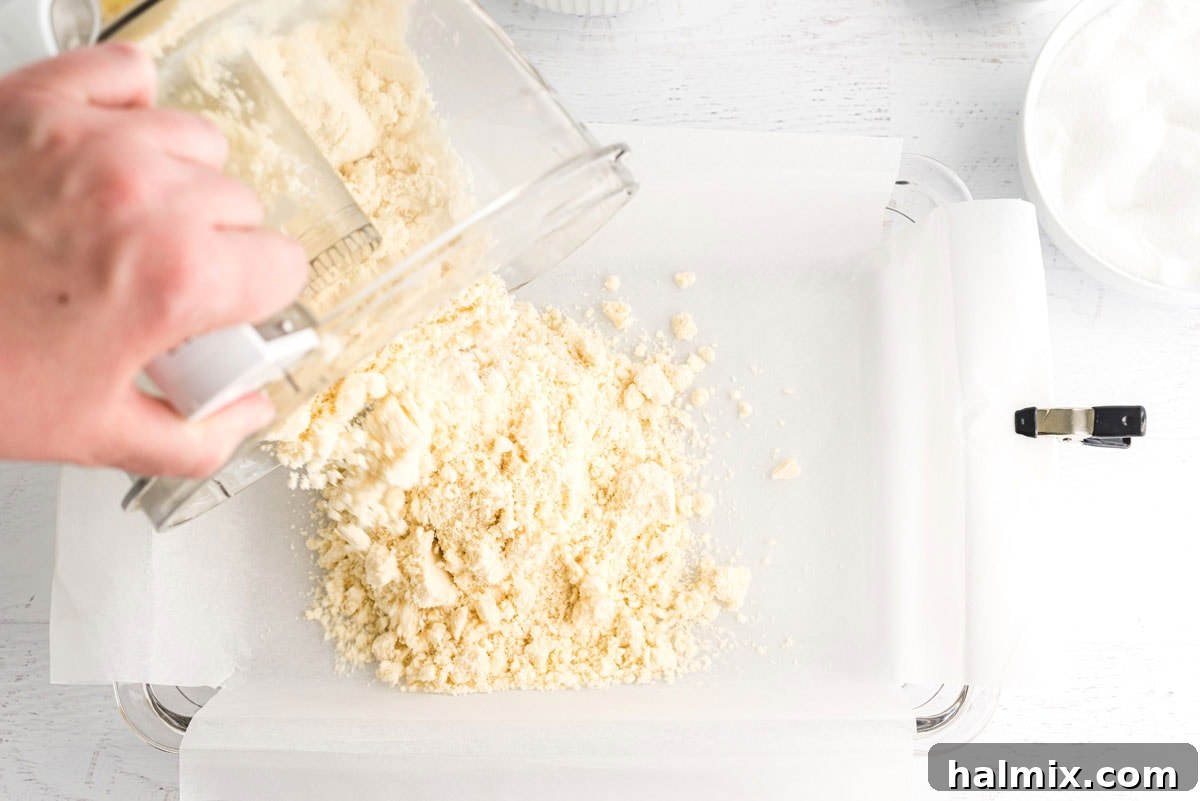
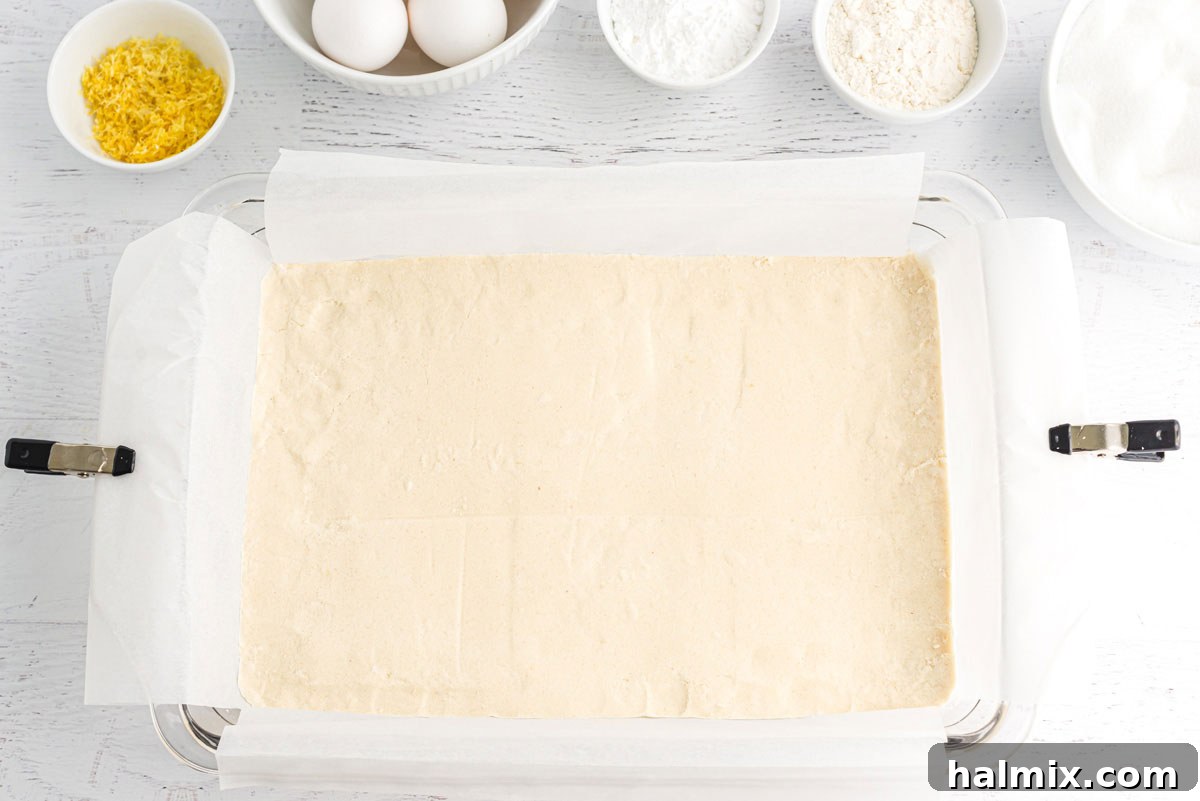
- Carefully dump the crumb mixture into your prepared 13×9 inch pan. Using your hands or the bottom of a flat glass, press the mixture evenly across the bottom of the pan to form a compact crust. Ensure the thickness is consistent to promote even baking.
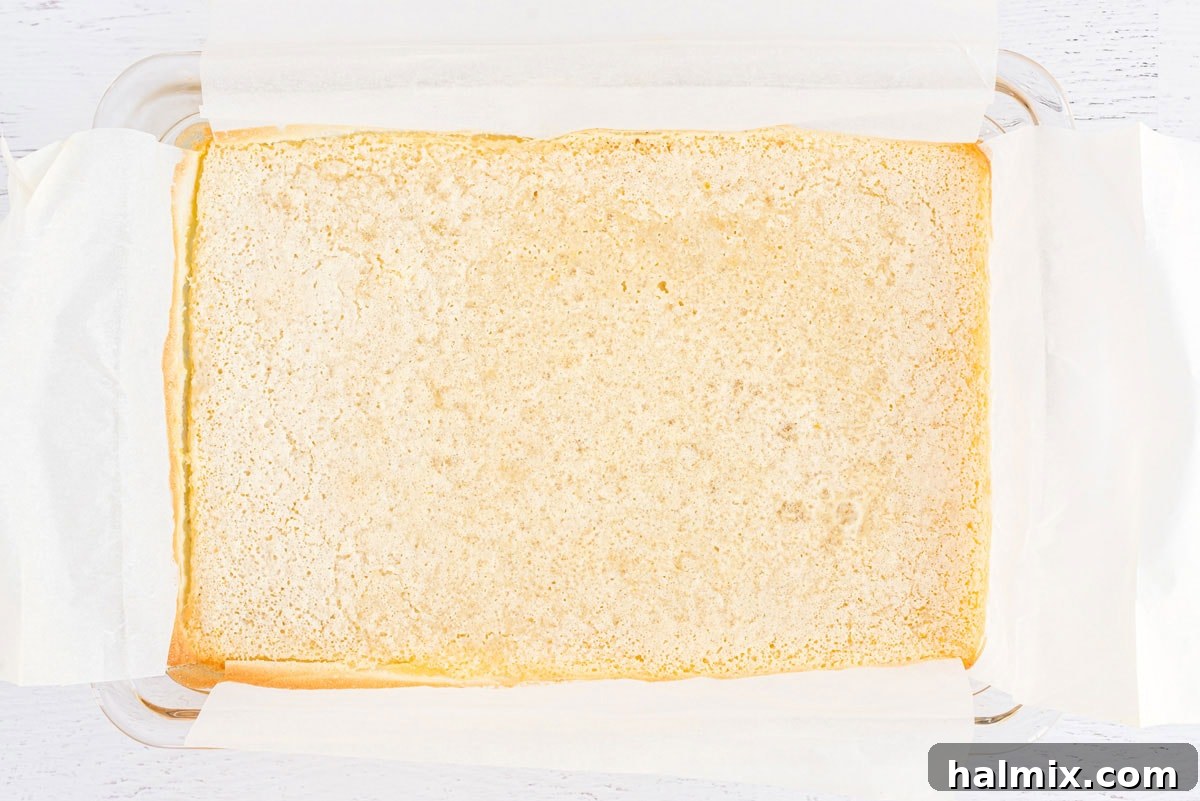
- Bake the crust in the preheated oven for 18-20 minutes, or until it is lightly golden brown around the edges. This pre-baking (or blind baking) step is essential for creating a firm, crisp crust that won’t become soggy once the lemon filling is added. Once baked, remove the pan from the oven and place it on a wire rack to cool slightly while you prepare the filling. The crust should still be warm when the filling is poured over it.
Creating the Bright and Tangy Lemon Filling
The star of these bars is the luscious lemon filling, which is surprisingly simple to make. The key is to blend the ingredients thoroughly until smooth and homogeneous, ensuring a custard-like texture once baked.
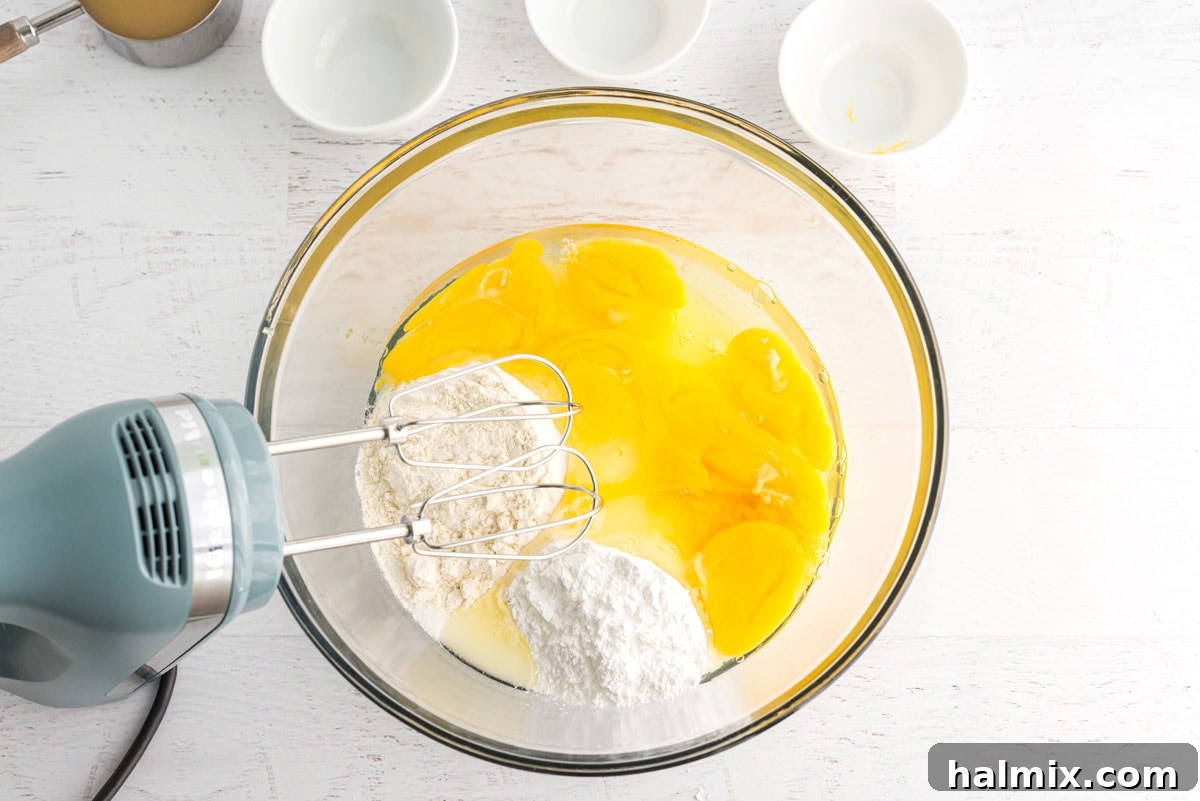
- In a large mixing bowl, using an electric mixer set at medium speed, beat together the 2 cups of granulated sugar, ⅓ cup of all-purpose flour, 6 large eggs, ½ cup of freshly squeezed lemon juice, and 2 tablespoons of fresh lemon zest. Beat these ingredients for about 2-3 minutes, or until they are completely well blended and the mixture appears smooth and slightly frothy. The sugar should be mostly dissolved, and the flour fully incorporated with no lumps.
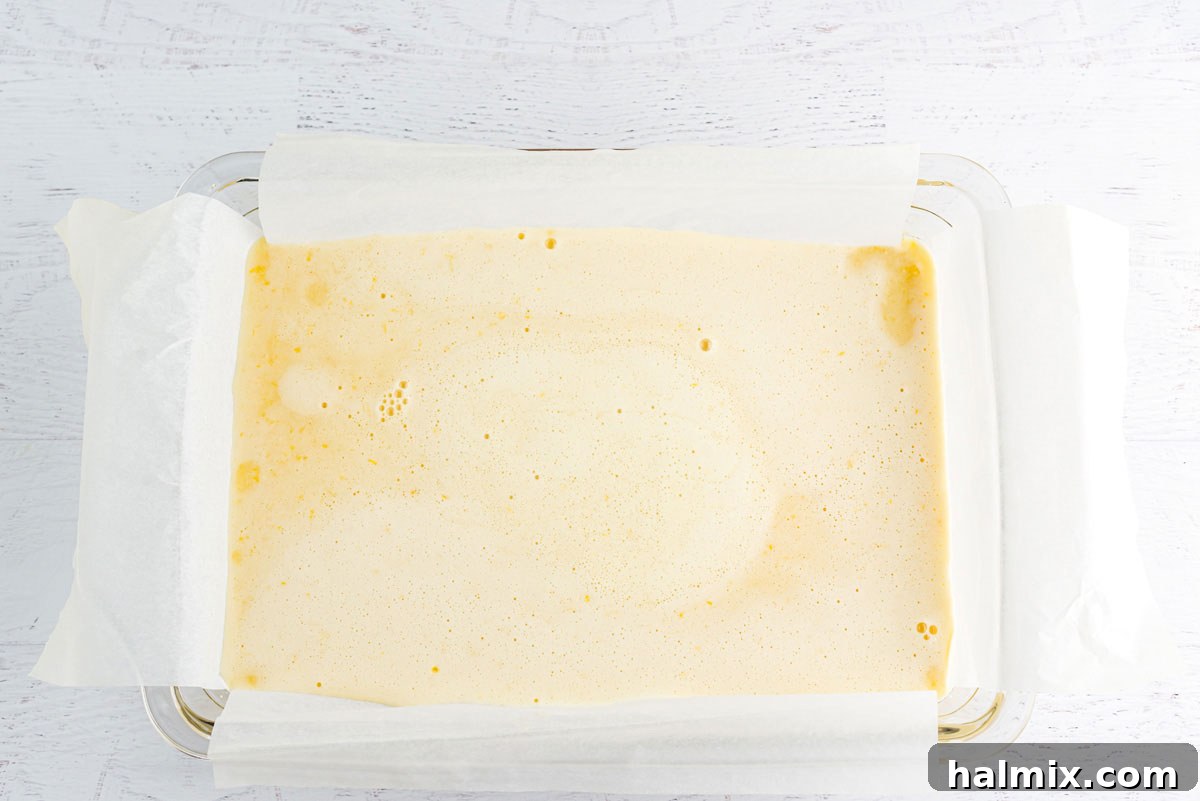
- Carefully pour the lemon mixture evenly over the warm, pre-baked shortbread crust in the pan. The warmth of the crust will help the filling set beautifully. Return the pan to the oven and continue baking for another 18-20 minutes. The lemon filling is done when its center is set (it should only jiggle slightly when gently shaken) and the edges are lightly golden. Avoid overbaking, as this can make the filling rubbery.
- Once baked, remove the pan from the oven and transfer it back to the wire rack. It is absolutely crucial to allow the lemon bars to cool completely at room temperature, which can take approximately 2 hours. Attempting to cut them while warm will result in a messy, unset filling.
- After the bars have completely cooled, refrigerate them for an additional 30-40 minutes. This chilling period is essential for the filling to fully set and firm up, ensuring clean and neat slices.
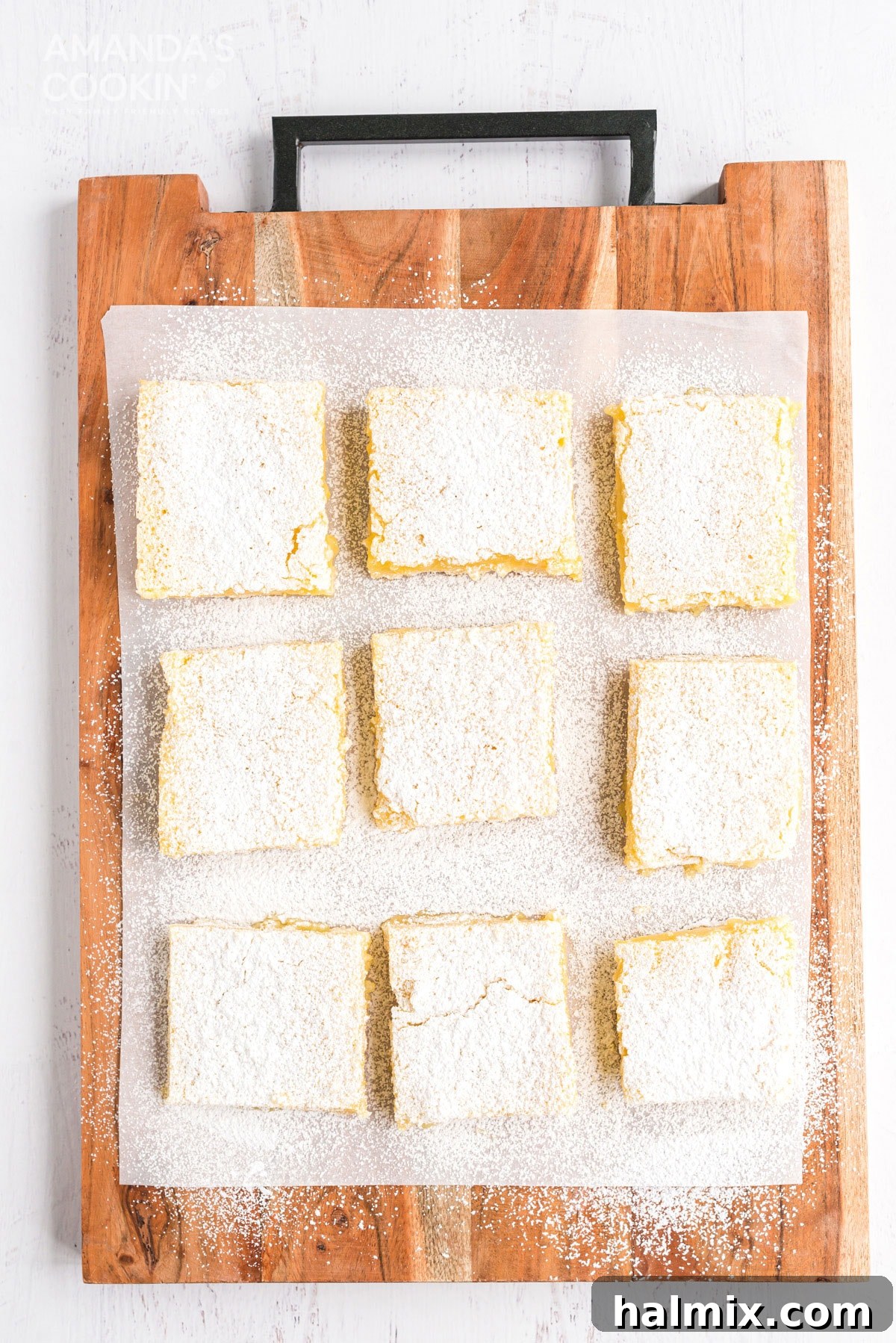
- Remove the chilled bars from the fridge. Using the parchment paper handles that you left over the edges, carefully lift the entire slab of lemon bars out of the pan and place it on a clean cutting board. Sift a generous amount of ¼ cup powdered sugar evenly across the top. This adds a beautiful finishing touch and a whisper of extra sweetness. Finally, cut the slab into approximately 30 bars, each measuring roughly 2 inches by 1.5 inches. For the cleanest cuts, wipe your knife with a warm, damp cloth between each slice.
Expert Tips & Frequently Asked Questions for Perfect Lemon Bars
Unlock the secrets to consistently perfect lemon bars with these expert tips and answers to common questions. These insights will help you master the recipe and troubleshoot any issues, ensuring your bars are always a triumph.
- Achieving Neat Slices: The key to beautifully cut lemon bars is proper chilling. After they have completely cooled to room temperature, place them in the refrigerator for about 30-40 minutes. This short chill time firms up the lemon filling and allows the shortbread crust to solidify slightly, making for clean, precise cuts. Be careful not to chill them for too long (e.g., several hours or overnight) as the butter in the shortbread crust can become excessively solid, making it difficult to cut without crumbling. If this happens, simply let the bars sit at room temperature for 15-20 minutes to soften slightly before cutting.
- Optimal Storage: For the best texture and flavor, store your lemon bars tightly covered with plastic wrap or in an airtight container at room temperature for up to 2-3 days. While they contain a custard-like filling, the high sugar content acts as a preservative. If your kitchen is particularly warm, or for extended storage beyond a few days, refrigerating them is a good option, though the crust may become slightly firmer.
- Food Processor vs. Traditional Method for the Crust: This recipe calls for a food processor for the crust primarily for its speed and efficiency. It quickly cuts the cold butter into the flour and powdered sugar, creating uniform coarse crumbs that lead to a flaky crust. However, if you don’t have a food processor, you can absolutely make the crust the old-fashioned way. Use your fingertips to rub the cold, cubed butter into the flour and sugar until a coarse, sandy mixture forms, or employ two butter knives in a scissor-like motion. Just be mindful not to overwork the dough with the warmth of your hands.
- Freezing Lemon Bars for Later Enjoyment: Yes, these lemon bars freeze beautifully! To do so effectively, first cut the cooled and chilled bars into individual servings. Arrange them in a single layer on a baking sheet lined with waxed paper or parchment paper, ensuring the bars are not touching. Freeze for approximately 2 hours, or until solid. Once frozen, individually wrap each lemon bar tightly in plastic wrap, then place the wrapped bars into a freezer-safe bag or an airtight container. They can be stored in the freezer for up to 2-3 months. To thaw, simply remove a frozen bar, unwrap it immediately, and let it thaw at room temperature on a plate for about 30-60 minutes.
- Ensuring Fresh Lemon Flavor: For the most vibrant flavor, always use fresh lemon juice and zest. The zest contains essential oils that provide a much deeper lemon aroma and taste than juice alone. Zest your lemons before cutting and juicing them.
- Troubleshooting a Runny Filling: If your lemon filling seems too runny after baking, it likely needed a few more minutes in the oven. The filling should jiggle only slightly in the center when gently shaken, similar to a set cheesecake. Make sure your oven temperature is accurate; an inexpensive oven thermometer can be a great investment. Also, ensure your eggs are large, as they provide the necessary setting power.
- Preventing a Dry Crust: A dry or crumbly crust can be a result of overworking the dough, using too little butter, or overbaking. Ensure the butter is cold, and pulse just until coarse crumbs form. The crust should be lightly golden, not deeply brown, after its initial bake.
- Serving Suggestions: These lemon bars are fantastic on their own, but they also pair wonderfully with a dollop of fresh whipped cream, a few fresh berries (raspberries or blueberries are excellent), or a light drizzle of raspberry coulis for an extra touch of elegance.
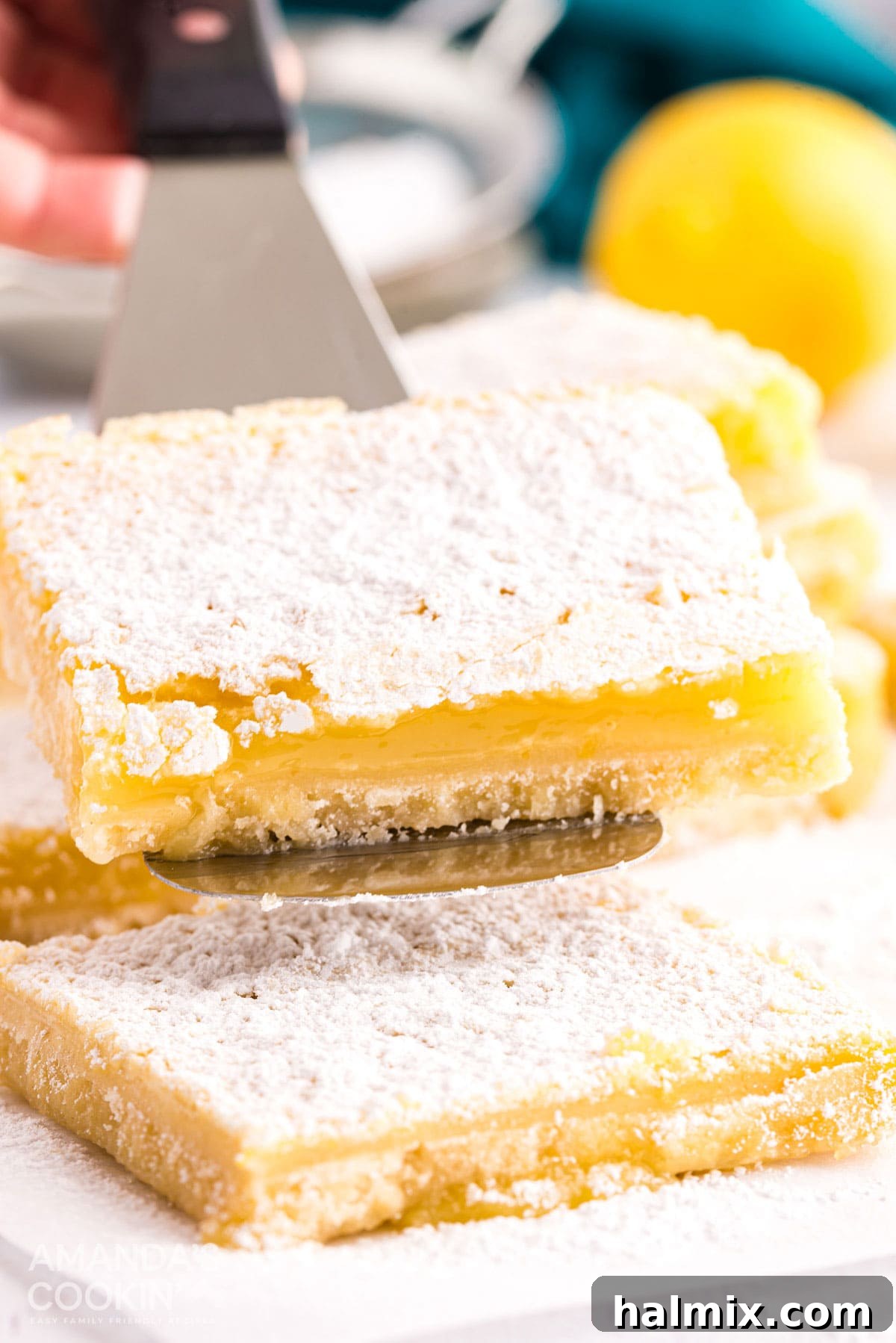
These sweet-tart lemon bar treats are more than just a dessert; they are a ray of sunshine in every bite. Their delightful citrusy punch and satisfying texture make them the ideal take-along for your next potluck, a refreshing addition to a backyard barbecue, or simply a perfect treat to brighten any day. I sincerely hope you and your loved ones cherish them as much as we do!
Explore More Zesty Lemon-Inspired Recipes
If you’ve fallen in love with the vibrant flavor of lemon in these bars, you’ll be thrilled to discover a whole world of other lemon-infused delights. From light and airy desserts to comforting baked goods, these recipes celebrate the versatile and refreshing taste of lemon:
- Lemon Streusel Squares
- Lemon Lush
- Lemon Cream Cheese Pudding Dessert
- Pink Lemonade Cake
- Lemon Blueberry Trifle
- Lemon Zucchini Bread with Blueberries
- Starbucks Lemon Loaf
- Lemon Meringue Pie Bars
- Instant Pot Lemon Curd
- Lemon Cream Cheese Pudding Dessert
I pour my heart into baking and cooking, and I absolutely love sharing my cherished recipes with you! I understand how busy life gets and how easy it is to forget to come back and search for a favorite recipe. That’s why I’ve made it incredibly easy for you to stay updated with my weekly newsletter! You can subscribe for free, and I’ll send a curated collection of delicious, tried-and-true recipes directly to your email inbox every single week. Don’t miss out on your next culinary adventure!
Lemon Bars
IMPORTANT – There are often Frequently Asked Questions within the blog post that you may find helpful. Simply scroll back up to read them!
Print It
Rate It
Course: Desserts
Cuisine: American
Ingredients
Crust
- 2 cups all purpose flour
- 1 cup cold unsalted butter, cubed
- ½ cup powdered sugar
Lemon Filling
- 2 cups granulated sugar
- ⅓ cup all purpose flour
- 6 large eggs
- ½ cup lemon juice freshly squeezed
- 2 tablespoon lemon zest
Topping
- ¼ cup powdered sugar
Things You’ll Need
-
13×9 baking pan
-
Food processor
-
Electric mixer
-
Wire cooling racks
Before You Begin
- These lemon bars will cut neatly if you chill them first. Store in the fridge for about 30-40 minutes. Any longer and the shortbread becomes too solid to get through easily. This is from the butter solidifying. If that happens, leave them at room temperature for 20 minutes or so.
- Store lemon bars tightly covered at room temperature.
- The instructions call for a food processor, simply because it’s easier and faster. You can use your mixer for the filling, and if you prefer, you can cut the butter in the old fashioned way, with your fingers or using two butter knives scissor fashion.
Instructions
-
Preheat oven to 350 F and line a 13×9 baking pan with parchment paper. Be sure that parchment hangs over the edges, you will use it to lift out the bars when they are cool.
Make the Crust
-
In bowl of your food processor, pulse to combine flour, powdered sugar and butter. Process until coarse crumbs are formed, just as the dough begins to come together. Dump crumb mixture into prepared pan and press evenly. Bake for 18-20 minutes, until lightly browned. Remove from oven and allow to cool on wire rack.
Make the Lemon Filling
-
With an electric mixer set at medium speed, beat granulated sugar, flour, eggs, lemon juice, and lemon zest until ingredients are well blended.
-
Pour mixture evenly over warm crust. Return to oven; bake until center is set and edges are golden, about 18-20 minutes. Remove pan to wire rack; cool completely (about 2 hours).
-
When completely cool, refrigerate for about 30 minutes to help set the filling.
-
Remove bars from fridge and lift out of pan using parchment paper handles. Sift some powdered sugar across the top and cut into bars (approximately 2″ x 1.5″, 30 bars).
Nutrition
Calories: 168cal |
Carbohydrates: 24g |
Protein: 2g |
Fat: 7g |
Saturated Fat: 4g |
Cholesterol: 53mg |
Sodium: 15mg |
Potassium: 30mg |
Fiber: 1g |
Sugar: 16g |
Vitamin A: 243IU |
Vitamin C: 2mg |
Calcium: 9mg |
Iron: 1mg
Tried this Recipe? Pin it for Later!
Follow on Pinterest @AmandasCookin or tag #AmandasCookin!
The recipes on this blog are tested with a conventional gas oven and gas stovetop. It’s important to note that some ovens, especially as they age, can cook and bake inconsistently. Using an inexpensive oven thermometer can assure you that your oven is truly heating to the proper temperature. If you use a toaster oven or countertop oven, please keep in mind that they may not distribute heat the same as a conventional full sized oven and you may need to adjust your cooking/baking times. In the case of recipes made with a pressure cooker, air fryer, slow cooker, or other appliance, a link to the appliances we use is listed within each respective recipe. For baking recipes where measurements are given by weight, please note that results may not be the same if cups are used instead, and we can’t guarantee success with that method.
This post originally appeared here on Apr 11, 2013 and has since been updated with new photos and expert tips.