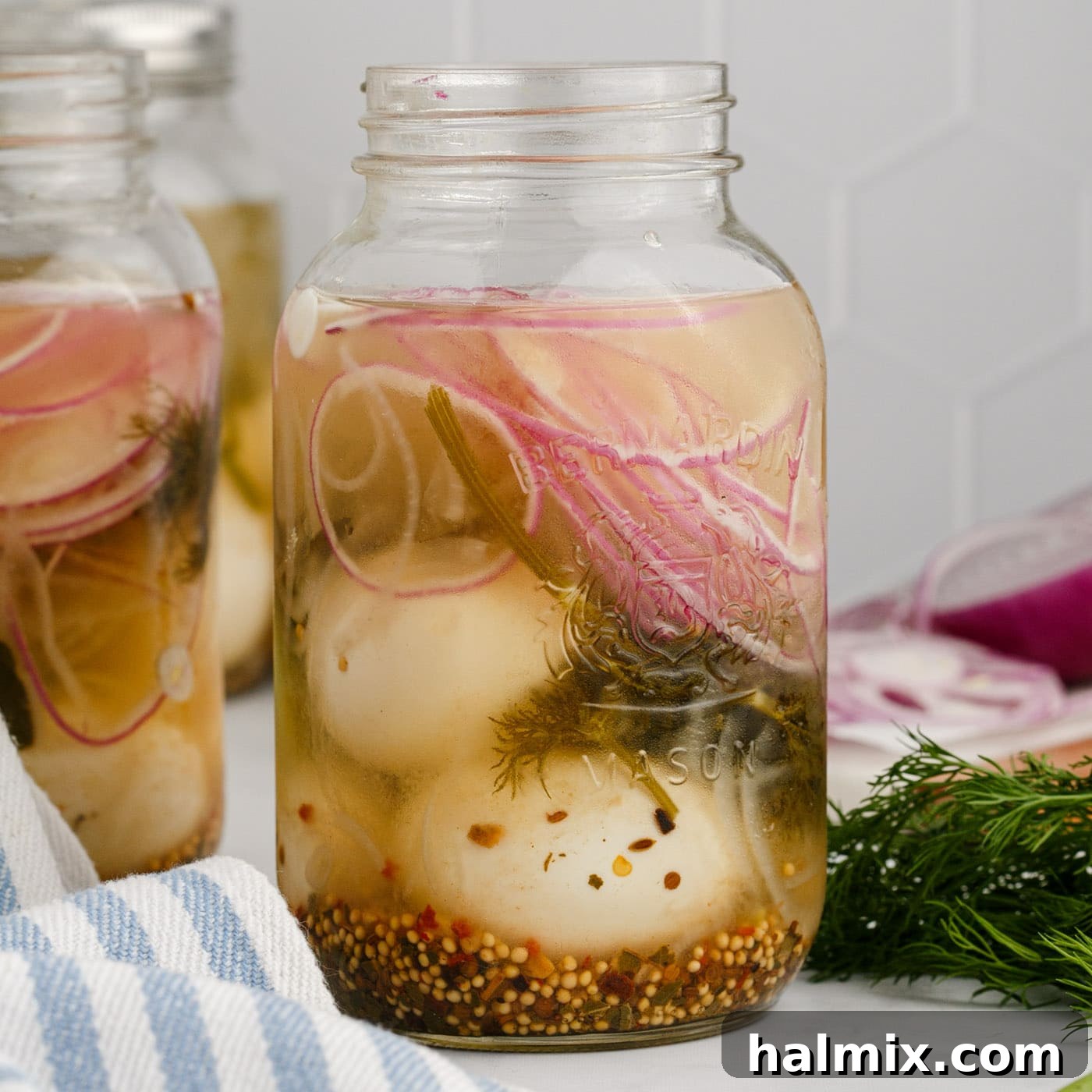
Delight your taste buds with these incredibly flavorful homemade pickled eggs! Soaked in a zesty, aromatic brine crafted from a perfect balance of vinegar, fresh onion, pungent garlic, fragrant dill, earthy bay leaves, and a special blend of pickling spices, these eggs are a truly versatile treat. Whether you’re seeking a satisfying snack, a unique addition to your charcuterie board, or the foundation for an unforgettable batch of deviled eggs, this easy recipe promises a tangy, savory experience that’s simply irresistible.
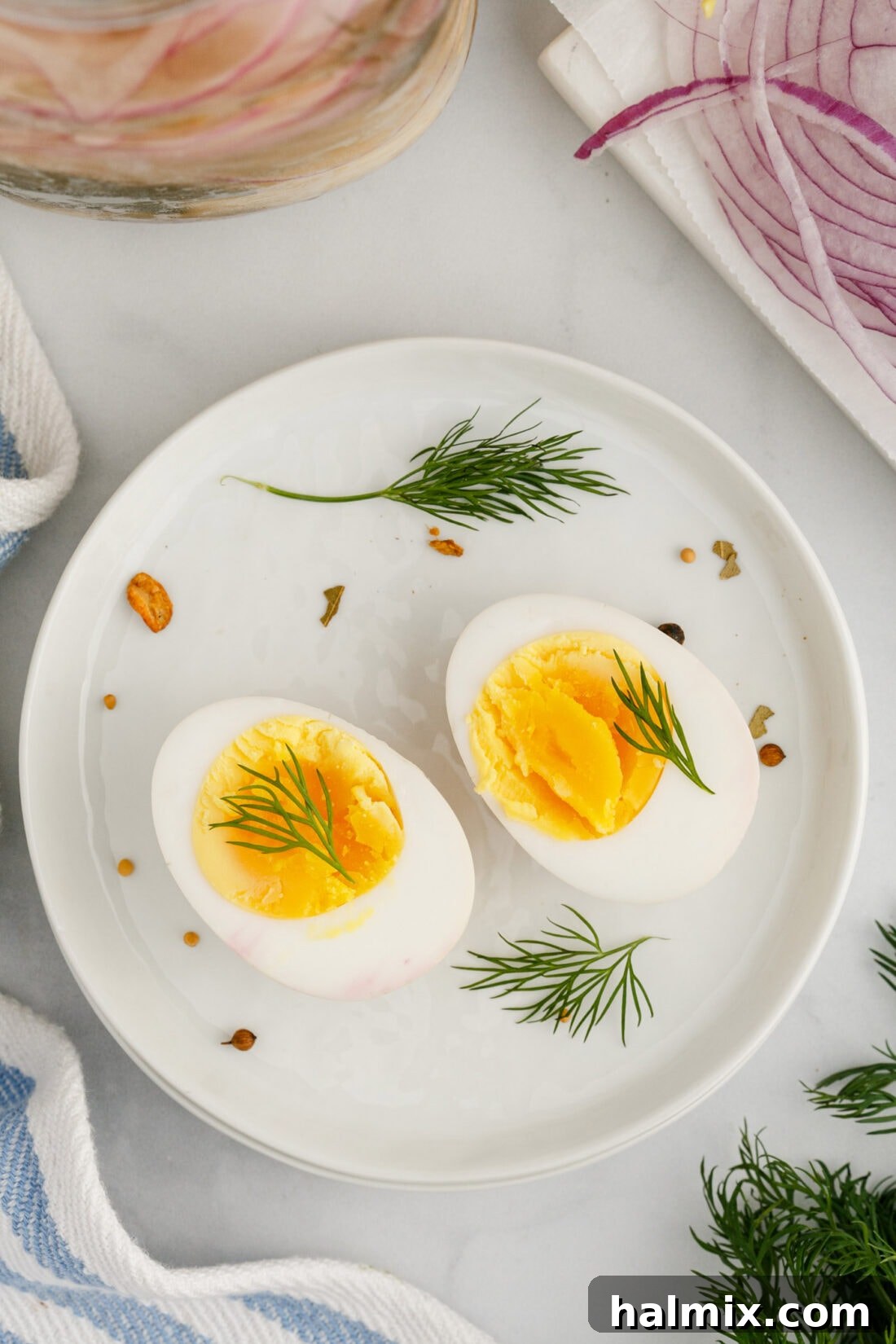
Why This Homemade Pickled Egg Recipe Is a Must-Try
There’s a reason pickled eggs have stood the test of time as a beloved snack and appetizer – their unique flavor profile is simply captivating. This particular recipe elevates the classic by carefully balancing fresh, aromatic ingredients with a robust vinegar brine. Each hard-boiled egg is lovingly snuggled with sliced onion, whole garlic cloves, fresh dill sprigs, and bay leaves, all steeped in a tangy vinegar-based solution as they slowly infuse in the refrigerator. This “snooze” time is crucial, allowing the eggs to absorb every layer of the sweet, salty, and sour flavors that define a truly great pickled egg.
The magic happens as the fresh dill imparts a bright, herbaceous note, the garlic adds a subtle warmth and depth, and the bay leaves contribute a delicate, savory undertone. Combined with the mild bite of the onion and the complex fragrance of pickling spices, the brine transforms ordinary hard-boiled eggs into something extraordinary. Unlike their plain counterparts, pickled eggs offer a delightful contrast of textures and a vibrant taste that makes them surprisingly addictive. This recipe doesn’t just pickle eggs; it crafts an experience, turning a simple ingredient into a gourmet delight that’s perfect for any occasion, from casual snacking to elegant entertaining.
Essential Ingredients for Perfect Pickled Eggs
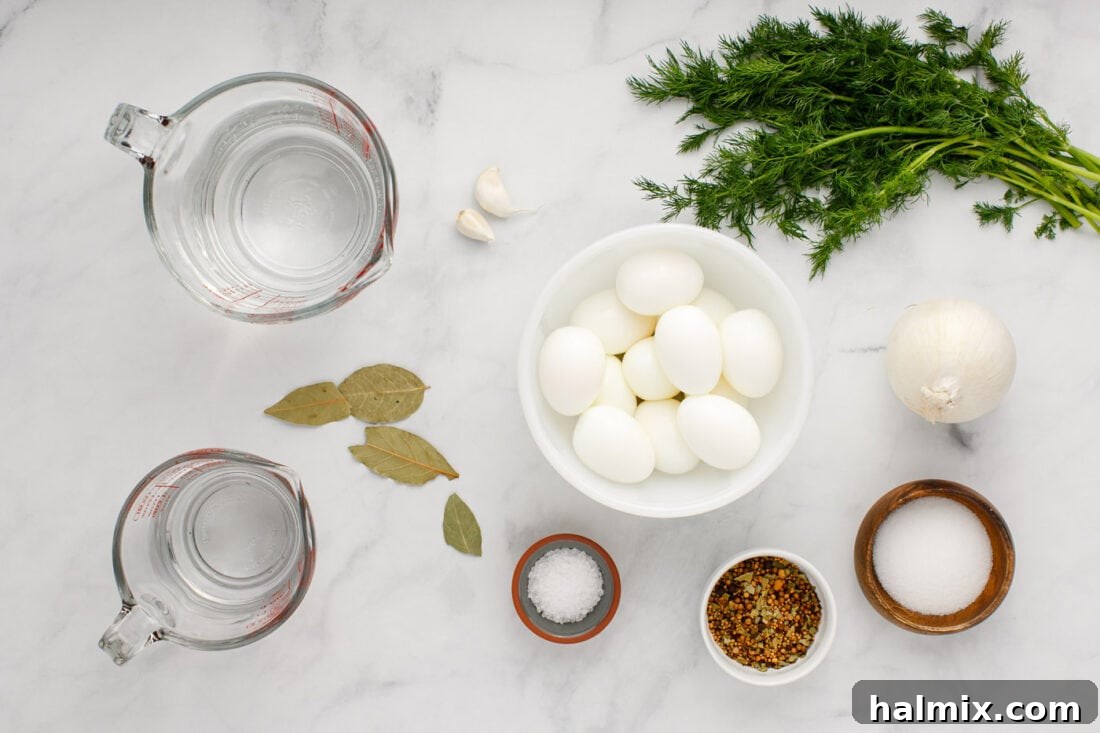
Crafting delicious homemade pickled eggs requires a few simple, high-quality ingredients that work in harmony to create that signature tangy flavor. Below is a comprehensive list of what you’ll need. Ensure your eggs are already hard-boiled and peeled before you begin the pickling process for the best results. For exact measurements and a printable recipe card, please refer to the detailed recipe instructions at the end of this post.
Ingredient Spotlight & Expert Substitution Advice
Understanding each ingredient’s role and exploring substitution options can help you customize your pickled eggs to your personal preference. Here’s a closer look at the key components of this recipe:
BRINE Foundation: Vinegar, Water, Salt, and Sugar
- Vinegar: Our recipe calls for distilled white vinegar, which provides a clean, sharp tang that is characteristic of classic pickled foods. If you prefer a slightly sweeter and mellower brine with a fruity undertone, apple cider vinegar is an excellent substitute. For a more sophisticated flavor profile, white wine vinegar or even rice vinegar can be used, though these might alter the overall taste slightly.
- Water: Used to dilute the vinegar, ensuring the brine isn’t overwhelmingly acidic and allows the other flavors to shine through.
- Coarse Sea Salt: Essential for both flavor and acting as a natural preservative. Coarse sea salt is preferred for its pure taste and texture, but pickling salt or kosher salt can also be used. Avoid iodized table salt, as it can sometimes make the brine cloudy and alter the flavor.
- Granulated White Sugar: This isn’t just for sweetness; sugar plays a crucial role in balancing the sharp acidity of the vinegar. It rounds out the flavors, creating a more harmonious and palatable brine. You can adjust the amount slightly to suit your preference for a sweeter or tangier result.
Aromatic Enhancers: Onion, Garlic, Dill, Bay Leaves, and Pickling Spices
- Onion: Thinly sliced onion adds a gentle, savory crunch and infuses the brine with a delicate sweetness. We’ve successfully tested this recipe with both red onion and white onion. Red onion may impart a beautiful pinkish hue to your brine and eggs after a few days, but this is purely cosmetic and does not affect the quality or taste of the pickled eggs. White onion will offer a milder flavor.
- Garlic: Whole, peeled garlic cloves contribute a robust, savory depth that is indispensable in pickling. For a stronger garlic flavor, you can lightly smash the cloves before adding them.
- Fresh Dill: Fresh dill sprigs are key to the vibrant, herbaceous flavor profile of these pickled eggs. If fresh dill is unavailable, dried dill can be used, but use sparingly as its flavor is more concentrated (about 1 teaspoon of dried dill for every tablespoon of fresh).
- Bay Leaves: These dried leaves add a subtle, almost floral, and slightly peppery background note that enhances the overall complexity of the brine. Adjust the quantity (1-2 depending on size) for your desired intensity.
- Pickling Spices: A pre-mixed blend of pickling spices typically includes mustard seeds, peppercorns, coriander seeds, allspice, and sometimes chili flakes. This blend is crucial for the traditional pickled flavor. If you don’t have a pre-made mix, you can create your own by combining whole spices like mustard seeds, black peppercorns, coriander seeds, and a few allspice berries.
The Star: Eggs
- Hard-Boiled Eggs: The foundation of this recipe! It’s essential to hard-boil and peel your eggs perfectly before beginning the pickling process. For best results, place eggs in a large saucepot and cover with cold water by about an inch. Bring to a rolling boil over high heat. Once boiling, immediately turn off the heat, cover the pot with a lid, and let the eggs sit in the hot water for 10-12 minutes. The exact time depends on your preferred yolk consistency – less time for softer yolks, more for firmer. Immediately transfer the cooked eggs to an ice bath for about 15 minutes to stop the cooking process and make them easier to peel. Alternatively, if you own an air fryer, you can follow an air fryer hard-boiled egg recipe for consistent results and easy peeling. Ensure your eggs are completely cooled and carefully peeled to avoid blemishes before adding them to your jars.
Crafting Your Own Delicious Pickled Eggs: A Step-by-Step Guide
Making homemade pickled eggs is a straightforward process that yields incredibly rewarding results. Follow these detailed steps to ensure perfectly infused, flavorful eggs every time. Remember, patience is key – the longer they sit, the better they taste!
These step-by-step photos and instructions are here to help you visualize how to make this recipe. For a concise, printable version of this recipe, complete with measurements and instructions, please refer to the recipe card at the bottom of this post.
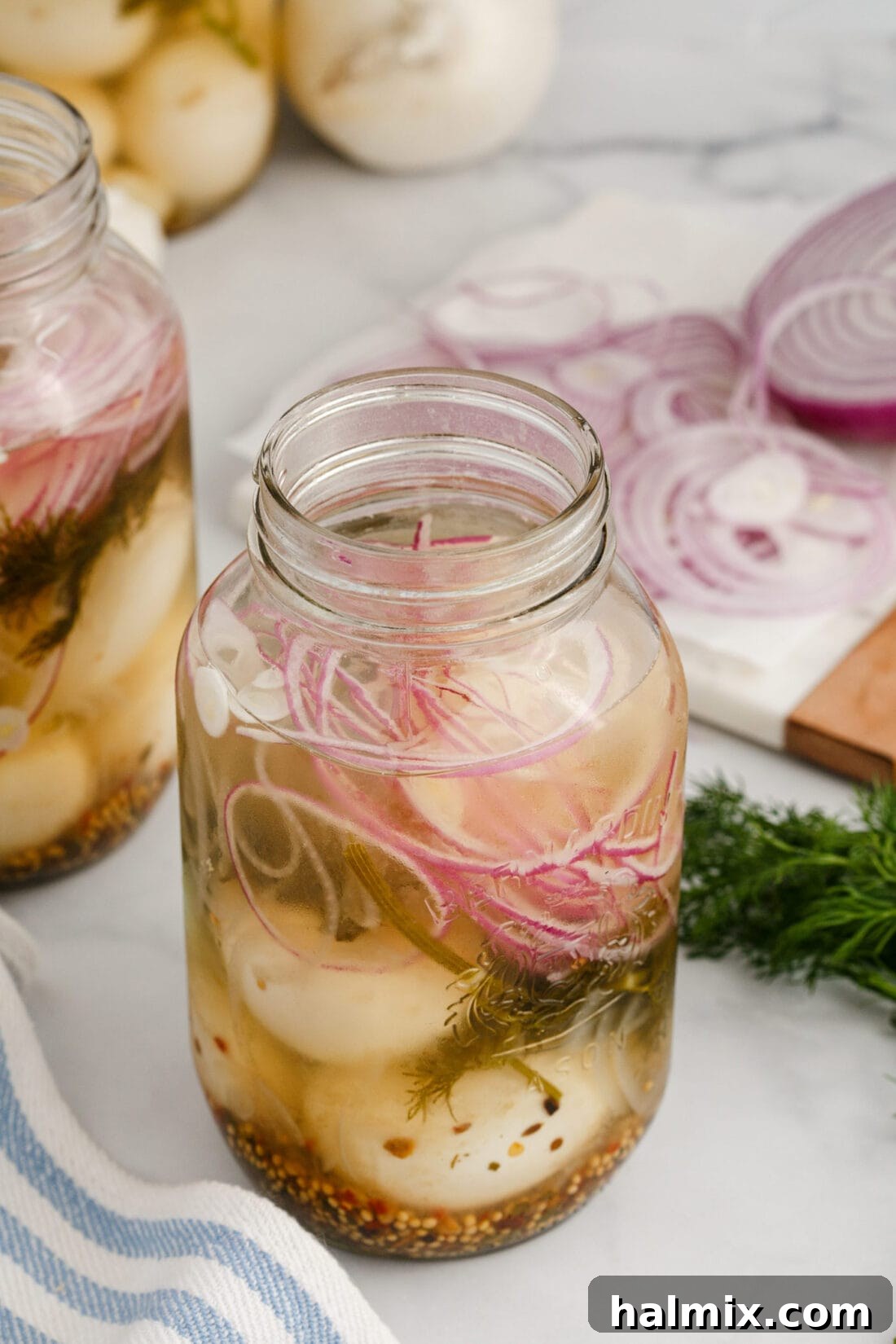
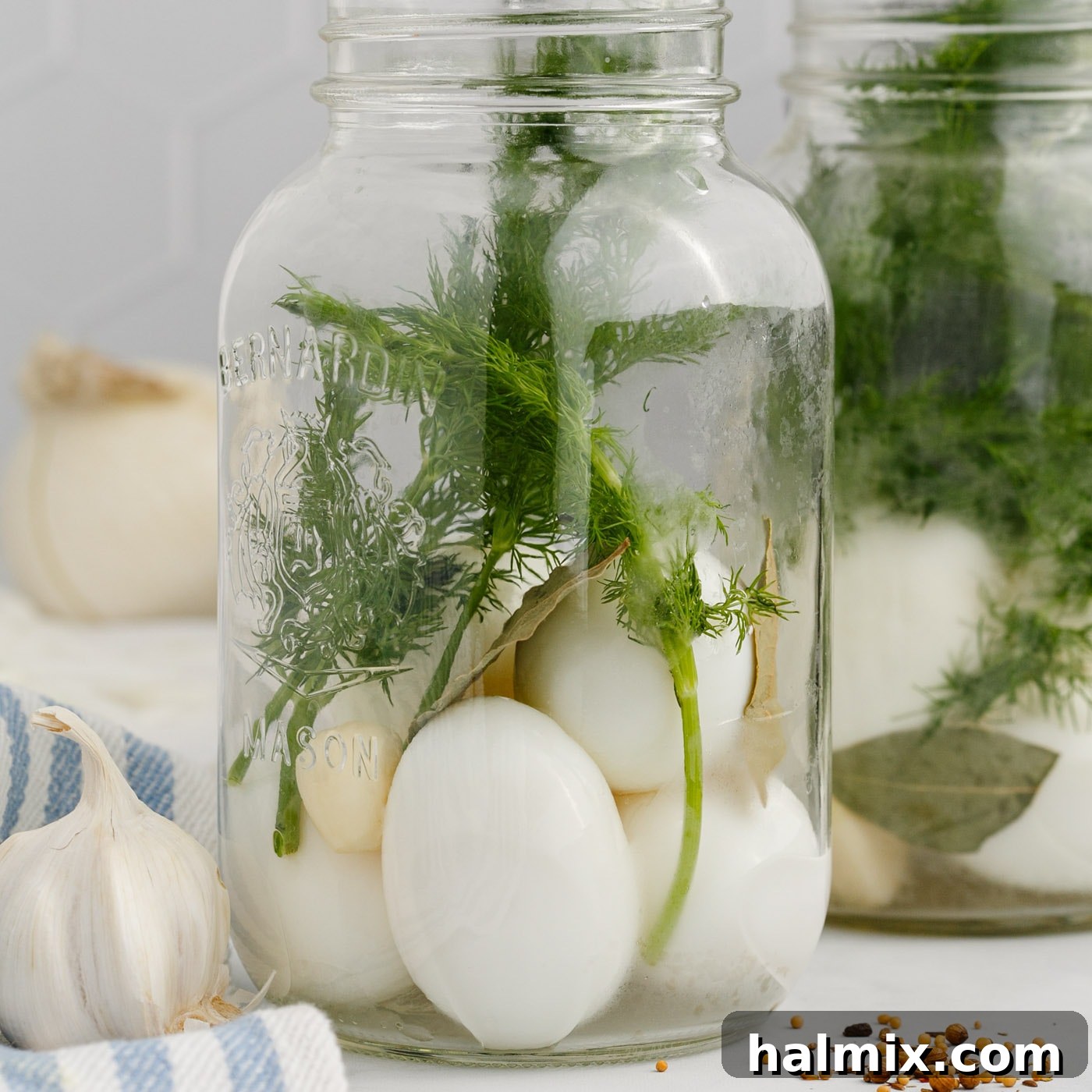
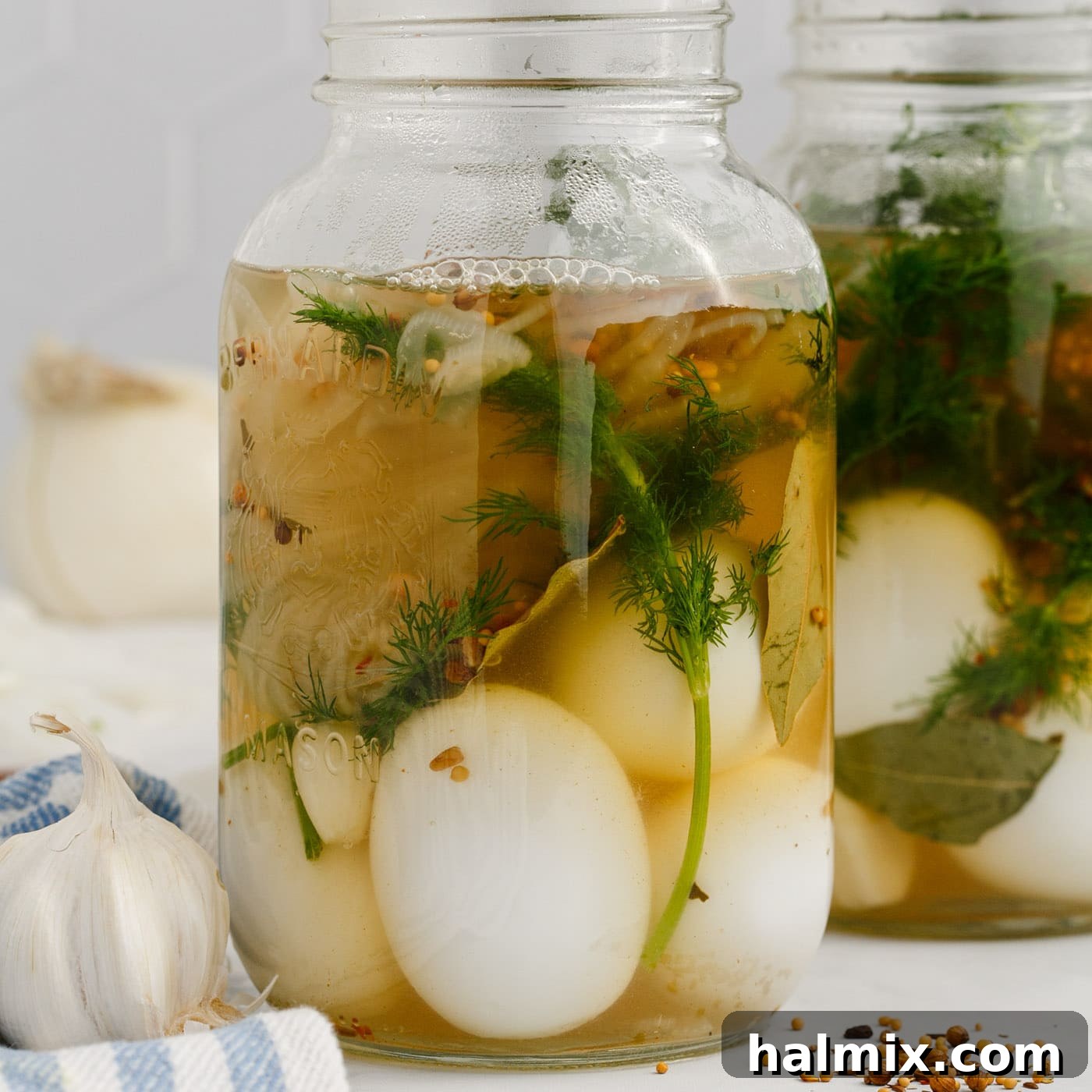
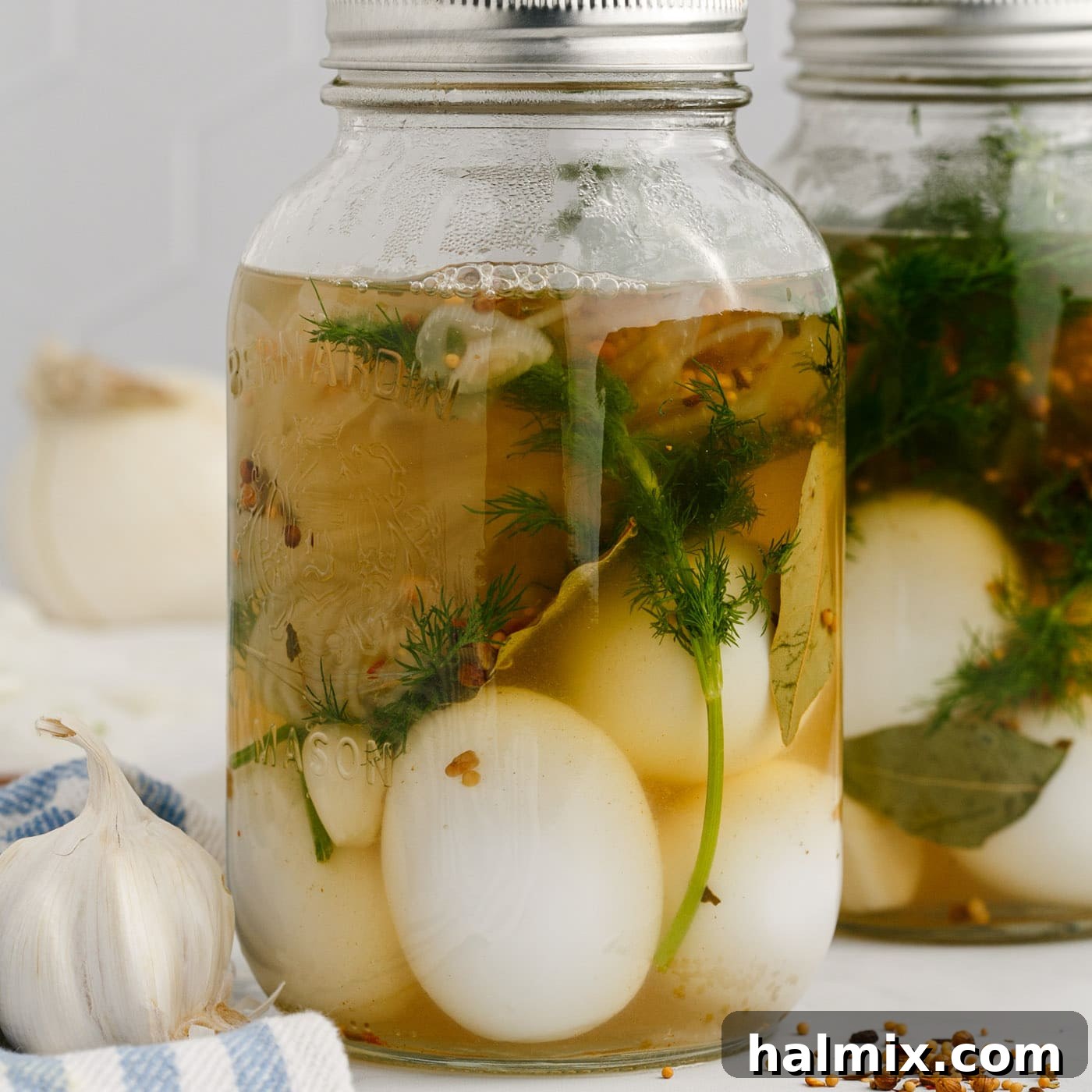
- Prepare Your Jars and Eggs: Begin by preparing your pickling vessels. You will need two 1-liter mason jars (approximately 34 ounces each). Carefully place 6 peeled hard-boiled eggs into each jar. Distribute the fresh aromatics evenly: add 3-4 sprigs of fresh dill, 1 whole peeled garlic clove, and 1-2 bay leaves (adjusting quantity based on their size for optimal flavor) into each jar, nestled alongside the eggs. This arrangement ensures even flavor distribution as the eggs pickle.

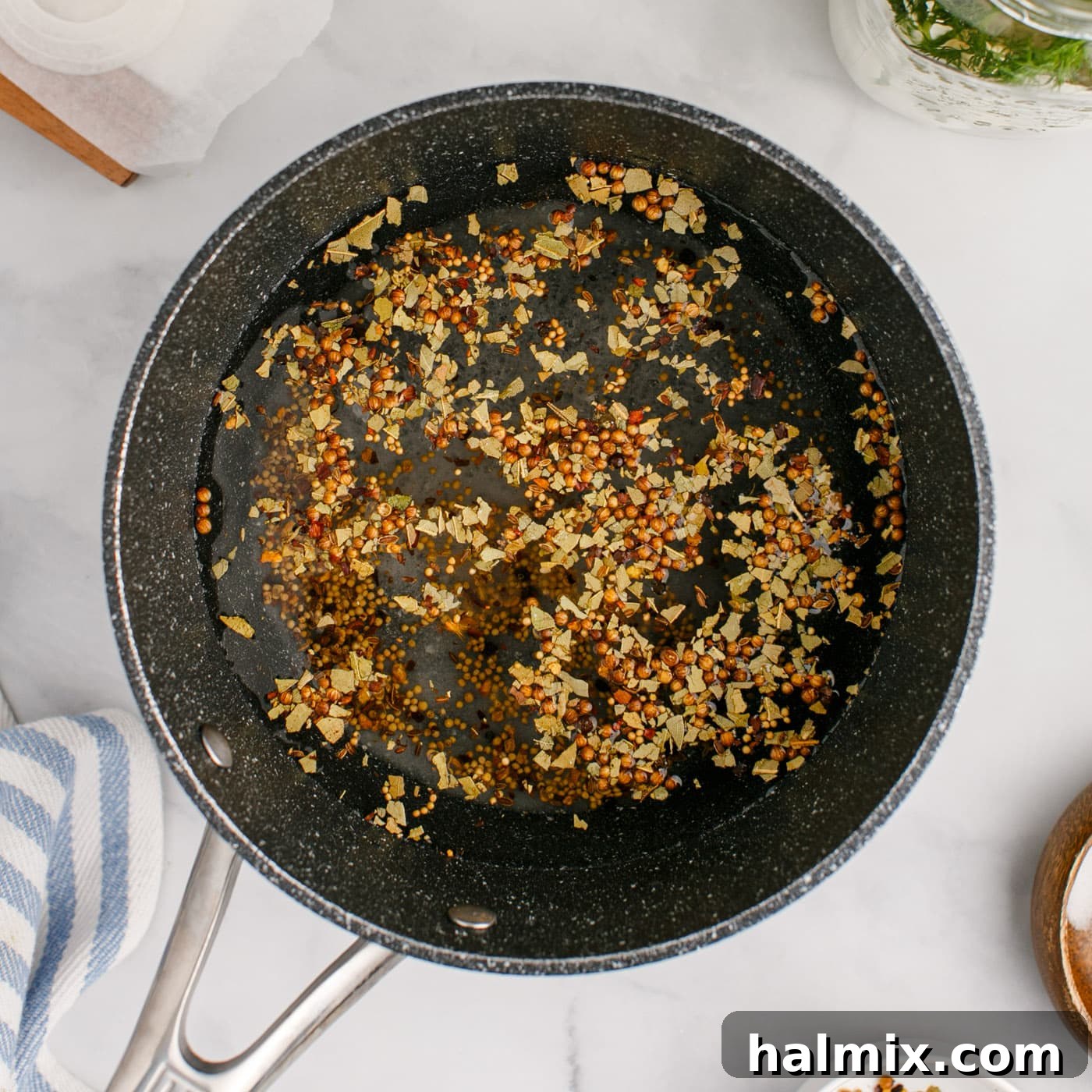
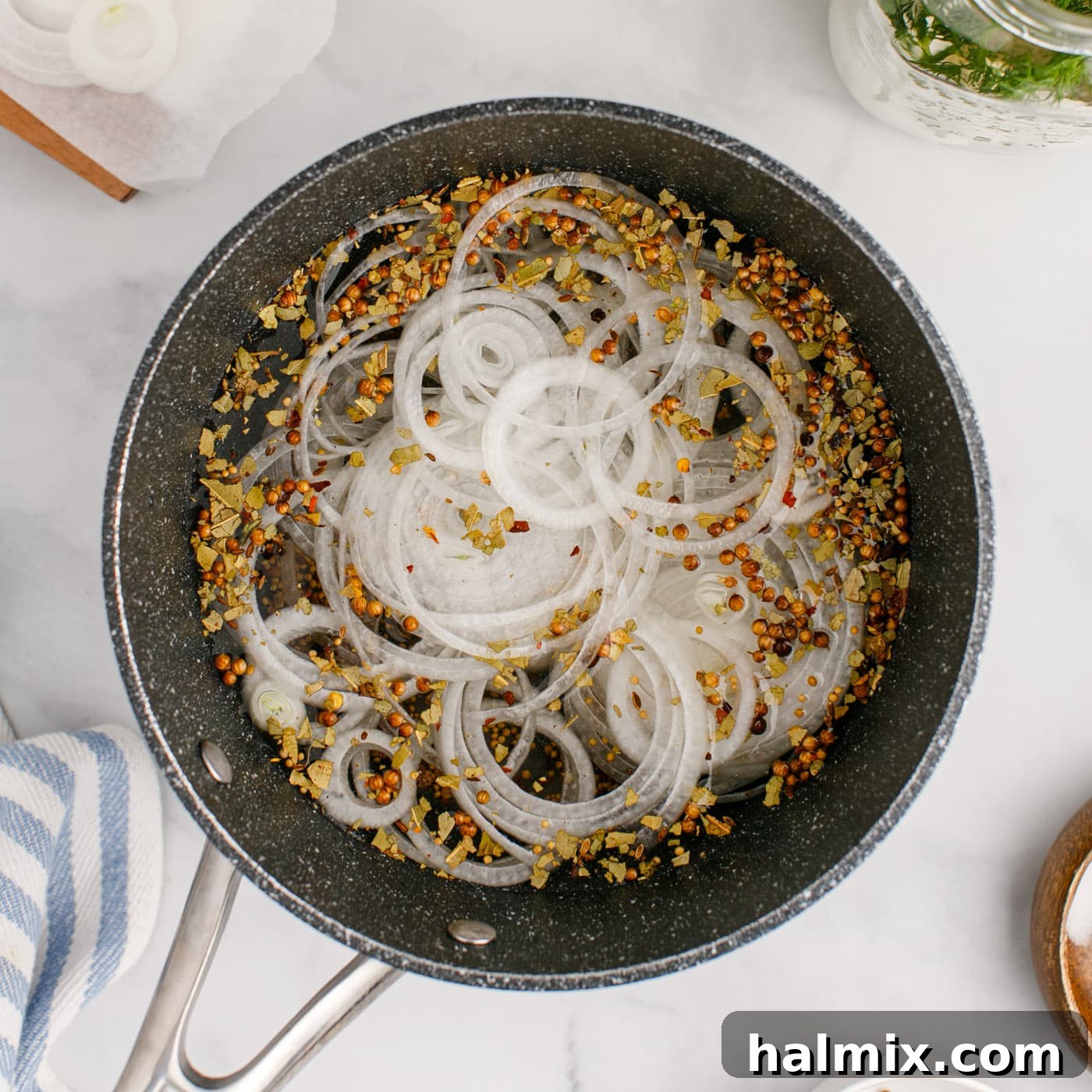
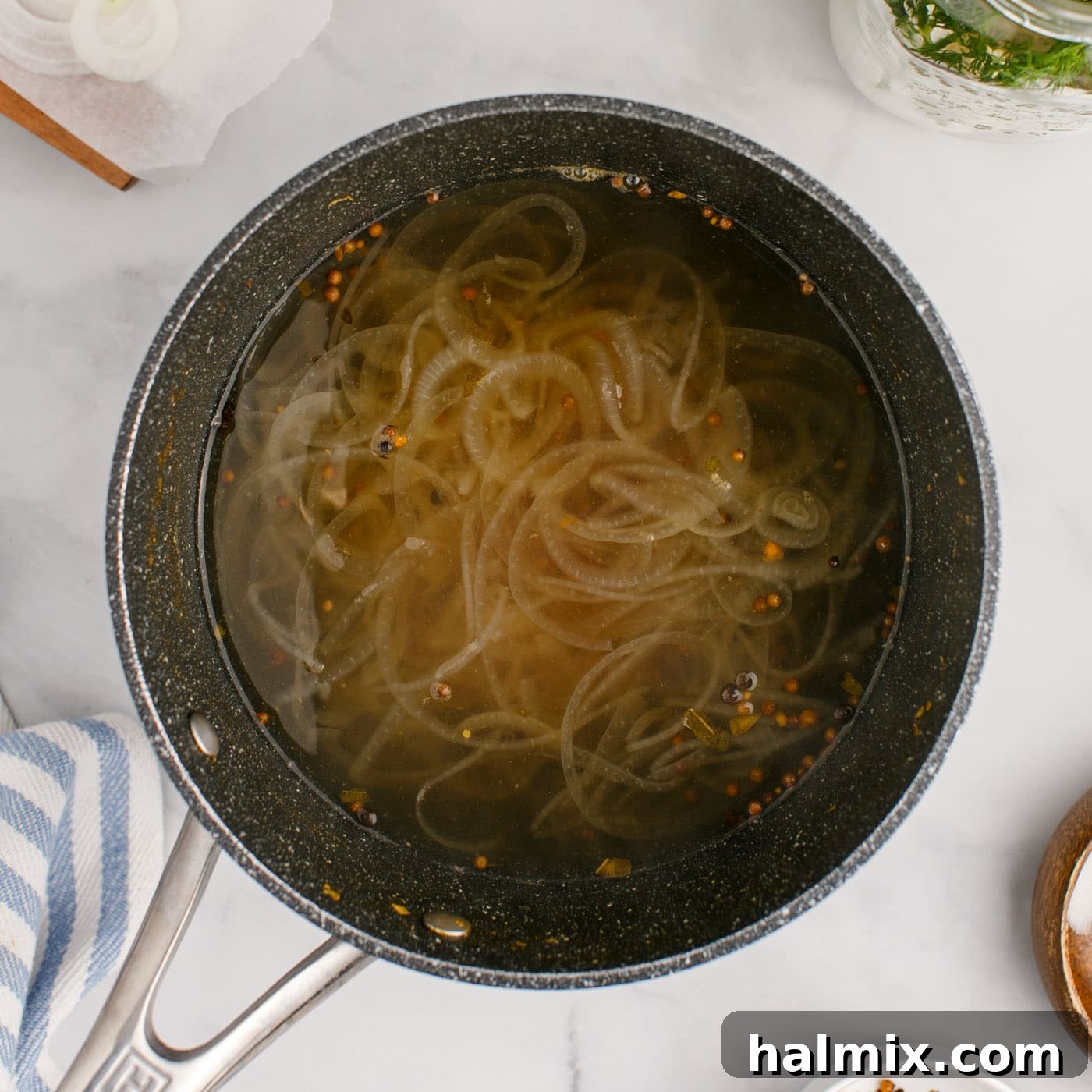
- Craft the Flavorful Brine: In a medium-small saucepan, combine all the ingredients for your brine: distilled white vinegar, water, coarse sea salt, thinly sliced onion, granulated white sugar, and pickling spices. Bring this mixture to a rolling boil over medium-high heat. Once boiling vigorously, reduce the heat to low and allow the brine to simmer gently for about 10 minutes. Simmering allows the spices and onions to release their essential oils and flavors into the vinegar solution, creating a rich and aromatic base for your pickled eggs.
- Combine Eggs with Brine: With utmost care, pour the hot brine evenly into each prepared mason jar, ensuring that all the eggs and aromatics are fully submerged. You might find it helpful to use a spoon to individually divide some of the sliced onions and pickling spices into each jar for a more balanced distribution. Fill the jars almost to the brim, leaving a small headspace.
- Cool and Refrigerate for Flavor Infusion: Secure the lids onto your mason jars. Allow the jars to cool completely at room temperature on your countertop. Once they have reached room temperature, transfer the jars to your refrigerator. For the best, most developed flavor, allow the pickled eggs to rest and infuse for a minimum of 5-7 days before enjoying. While they are safe to eat after 24 hours, the extended chilling time truly allows the eggs to soak up all the wonderful flavors from the brine.
Frequently Asked Questions & Expert Tips for Pickled Eggs
Making homemade pickled eggs is relatively simple, but a few common questions and expert tips can ensure your batch turns out perfectly every time. Here’s what you need to know:
When stored properly in an airtight jar and kept consistently refrigerated, these pickled eggs will maintain their quality and flavor for up to 3 months. It’s crucial to remember that this recipe is for refrigerator-pickled eggs, not canned or shelf-stable pickled eggs. They lack the acidity and processing necessary for long-term pantry storage and, therefore, must always be refrigerated to ensure food safety.
While you can technically enjoy your homemade pickled eggs after just 24 hours of refrigeration, their flavor will be relatively mild at this stage. We highly recommend allowing them to rest in the fridge for at least 5-7 days. This extended chilling period gives the eggs ample time to fully absorb the complex flavors from the brine, resulting in a much richer, more developed taste experience. Patience truly pays off with pickled eggs!
Absolutely! While distilled white vinegar provides a classic, sharp tang, you can experiment with other vinegars to customize the flavor. Apple cider vinegar will yield a slightly sweeter, fruitier, and milder pickled egg. White wine vinegar offers a delicate, sophisticated acidity, while rice vinegar can introduce a subtle, almost Asian-inspired note. Just ensure you use a vinegar with at least 5% acidity for proper preservation and flavor.
A slightly cloudy brine is often normal, especially if you used certain types of onions (like red onion, which can release pigments) or if some egg albumen dissolved. As long as the pickled eggs are stored properly in the refrigerator and there are no signs of mold, a foul smell, or bubbling, they are generally safe to consume. However, if you notice any unusual changes in smell, texture, or visible mold, it’s best to discard the batch to err on the side of caution.
Yes, this recipe is very adaptable to your flavor preferences! Consider adding red pepper flakes for a spicy kick, a few cloves for a warm, aromatic touch, or even a teaspoon of turmeric for a vibrant yellow color and earthy flavor. Fresh herbs like thyme or rosemary can also be interesting additions. Experiment with small batches to find your favorite combination!
Rubbery eggs are usually a result of overcooking them during the hard-boiling process. When eggs are boiled for too long, the proteins in the whites can become tough. Ensure you follow the hard-boiling instructions carefully, allowing them to sit in hot water off the heat for just 10-12 minutes, and then immediately transferring them to an ice bath to halt the cooking. Perfectly cooked hard-boiled eggs will yield tender pickled eggs.
Creative Ways to Enjoy Your Homemade Pickled Eggs
Once your homemade pickled eggs are perfectly infused with their tangy, herby flavor, the possibilities for enjoying them are endless! Beyond simply popping one for a delicious snack, these versatile treats can elevate a variety of dishes and occasions. Here are some inspired serving suggestions:
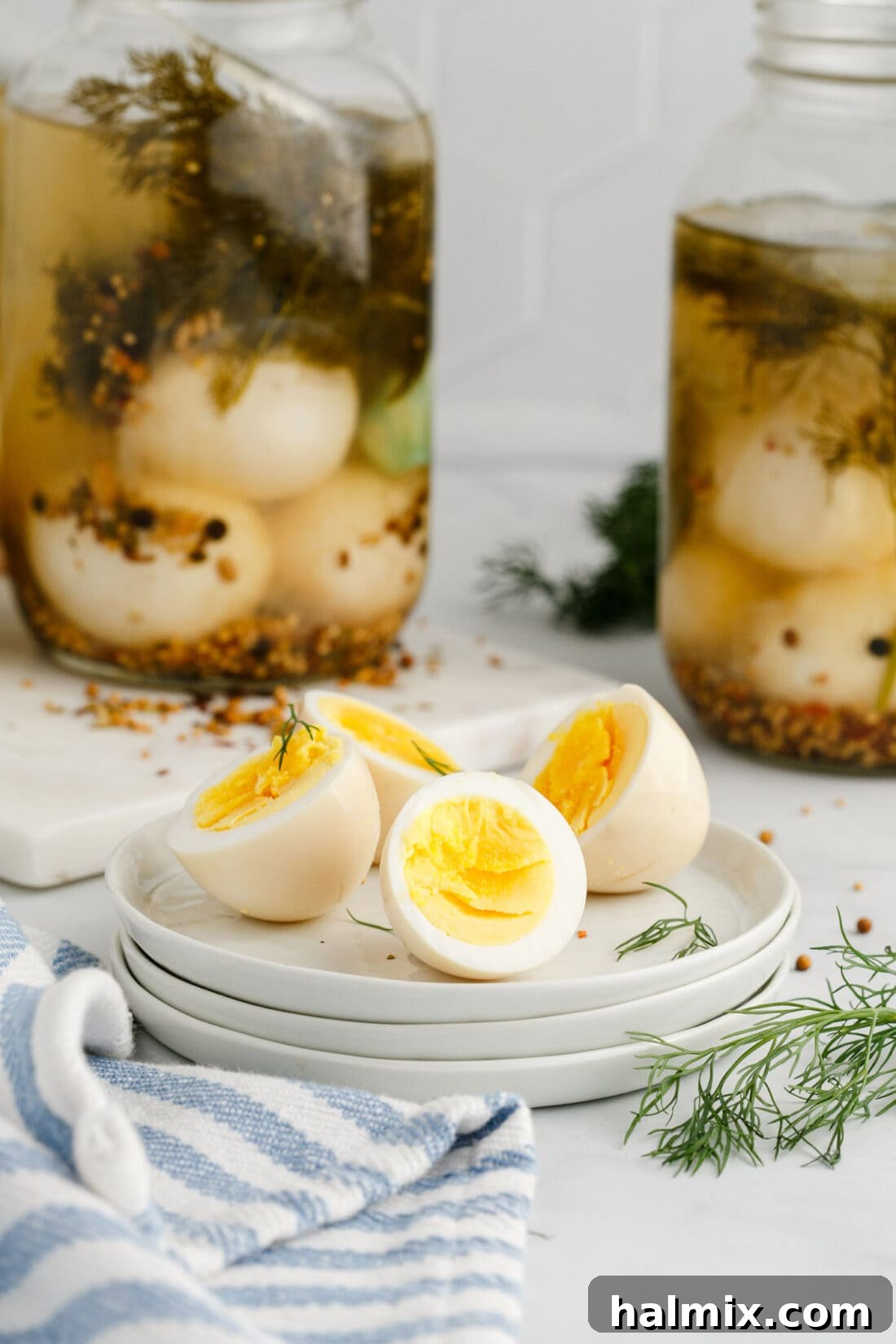
- Classic Snack: The most straightforward way to enjoy them! Slice them in half or quarters for a quick, protein-packed bite anytime.
- Elevated Appetizer: Arrange sliced pickled eggs beautifully on a charcuterie board alongside cheeses, crackers, cured meats, and other pickled vegetables for an impressive spread.
- Deviled Eggs Reinvented: Use pickled eggs as the base for an extra flavorful batch of deviled eggs. The tangy white adds a fantastic depth to the creamy yolk filling.
- Salad Enhancer: Chop or crumble pickled eggs into green salads, potato salads, pasta salads, or even tuna salad for a burst of zesty flavor and added texture.
- Sandwich & Wrap Filler: Slice them and add them to sandwiches, wraps, or even burgers for an unexpected tangy kick. They pair wonderfully with deli meats or roasted vegetables.
- Breakfast or Brunch Side: Serve alongside smoked salmon, avocado toast, or as part of a hearty breakfast platter.
- Garnish for Soups & Stews: A finely diced pickled egg can make a lovely and flavorful garnish for creamy soups or robust stews.
- With Cold Cuts: Pair them with a platter of your favorite cold cuts, cheeses, and crusty bread for a simple yet satisfying meal.
Discover More Tangy Delights
If you’ve enjoyed the delightful tang of these homemade pickled eggs, you’re in for a treat! The world of pickling offers a vibrant array of flavors and textures to explore. Expand your culinary repertoire with these equally delicious and easy pickling recipes:
- Pickled Beets
- Pickled Onions
- Pickled Asparagus
- Homemade Claussen Pickles
I love to bake and cook and share my kitchen experience with all of you! Remembering to come back each day can be tough, that’s why I offer a convenient newsletter every time a new recipe posts. Simply subscribe and start receiving your free daily recipes!
Homemade Pickled Eggs
In this easy homemade pickled eggs recipe, hard-boiled eggs are infused with a delightful tangy and savory flavor from a vinegar-based brine, featuring fresh herbs, aromatic spices, and sliced onion. A perfect refrigerator staple for snacking and entertaining.
Course: Appetizer, Snack
Cuisine: American
Servings: 12 pickled eggs
Prep Time: 15 mins
Cook Time: 5 mins
Chill Time: 5-7 days (for best flavor)
Author: Amanda Davis
Ingredients
- 12 hard-boiled eggs, peeled
- 6-8 sprigs fresh dill
- 2 cloves garlic, whole and peeled
- 2-4 bay leaves (depending on size)
For the Brine:
- 3 cups distilled white vinegar
- 1 ½ cups water
- 1 ½ Tablespoons coarse sea salt
- 1 small-medium onion, thinly sliced (about 1 cup)
- 2 Tablespoons granulated white sugar
- 2 Tablespoons pickling spices
Things You’ll Need
- Two 1-liter mason jars (approximately 34 ounces each)
- Medium-small saucepan
Before You Begin
- For optimal flavor, allow the pickled eggs to rest in the refrigerator for 5-7 days, though they can be enjoyed after 24 hours.
- Ensure eggs are perfectly hard-boiled and completely peeled before beginning. Cook eggs by bringing to a rolling boil, then turning off heat and covering for 10-12 minutes. Transfer immediately to an ice bath for 15 minutes before peeling.
- Distilled white vinegar is recommended, but apple cider vinegar can be substituted for a slightly sweeter brine.
- Both red and white onions work well; red onion may subtly tint the brine without affecting taste or quality.
- The sugar helps to balance the sharpness of the vinegar, creating a harmonious flavor.
- These are refrigerator-pickled eggs and are not shelf-stable. They must be stored in the refrigerator and will last for up to 3 months.
Instructions
- Prepare Jars: Place 6 peeled hard-boiled eggs into each of your two 1-liter mason jars. Distribute 3-4 sprigs of fresh dill, 1 whole peeled garlic clove, and 1-2 bay leaves (depending on size) into each jar alongside the eggs.
- Prepare Brine: In a medium-small saucepan, combine distilled white vinegar, water, coarse sea salt, thinly sliced onion, granulated white sugar, and pickling spices. Bring the mixture to a boil. Once boiling, reduce heat to low and simmer for approximately 10 minutes to allow flavors to meld.
- Pour Brine: Carefully pour the hot brine evenly among the two prepared jars, ensuring all eggs and aromatics are fully submerged. You may use a spoon to help divide the onions and spices evenly.
- Cool and Chill: Secure the lids on the jars and allow them to cool completely to room temperature. Once cooled, transfer the jars to the refrigerator. For the best, most developed flavor, let them chill for 5-7 days before serving.
Nutrition Information (per 1 pickled egg)
Serving Size: 1 pickled egg
- Calories: 100 cal
- Carbohydrates: 3g
- Protein: 6g
- Fat: 5g
- Saturated Fat: 2g
- Polyunsaturated Fat: 1g
- Monounsaturated Fat: 2g
- Cholesterol: 187mg
- Sodium: 259mg
- Potassium: 78mg
- Fiber: 0.2g
- Sugar: 3g
- Vitamin A: 274 IU
- Vitamin C: 1mg
- Calcium: 38mg
- Iron: 1mg
The recipes on this blog are tested with a conventional gas oven and gas stovetop. It’s important to note that some ovens, especially as they age, can cook and bake inconsistently. Using an inexpensive oven thermometer can assure you that your oven is truly heating to the proper temperature. If you use a toaster oven or countertop oven, please keep in mind that they may not distribute heat the same as a conventional full sized oven and you may need to adjust your cooking/baking times. In the case of recipes made with a pressure cooker, air fryer, slow cooker, or other appliance, a link to the appliances we use is listed within each respective recipe. For baking recipes where measurements are given by weight, please note that results may not be the same if cups are used instead, and we can’t guarantee success with that method.