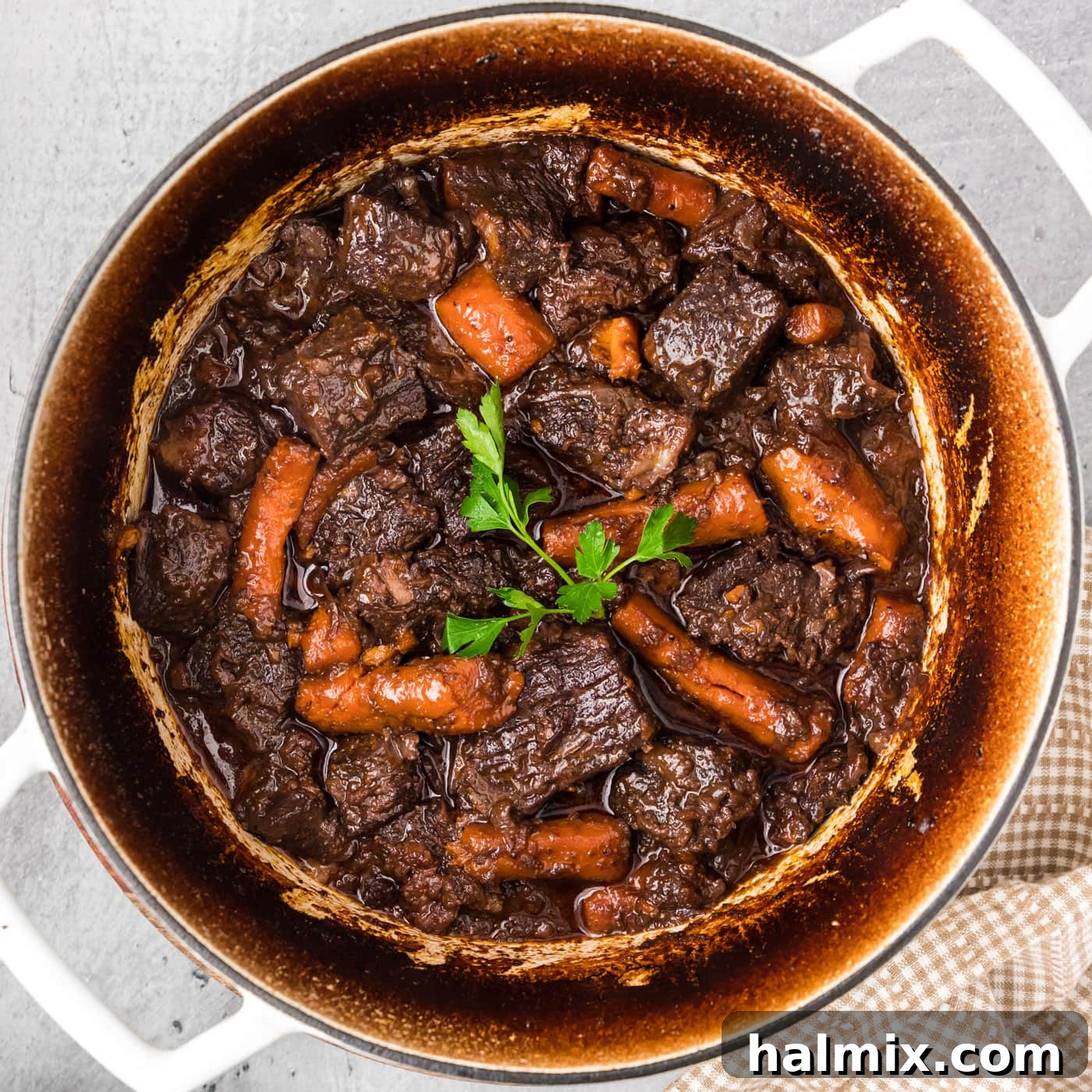
Mastering Melt-in-Your-Mouth Braised Beef in a Dutch Oven
Imagine succulent, fall-apart tender beef, enveloped in a deeply flavorful red wine sauce, accompanied by fork-tender vegetables. This isn’t just a meal; it’s an experience. Our braised beef recipe, slow-roasted in a Dutch oven, transforms an everyday cut of meat into a culinary masterpiece that will impress even the most discerning palates. Each bite is an explosion of rich, savory notes, promising a comforting warmth that only truly slow-cooked dishes can deliver. Get ready to create an unforgettable dish that will become a staple in your home.
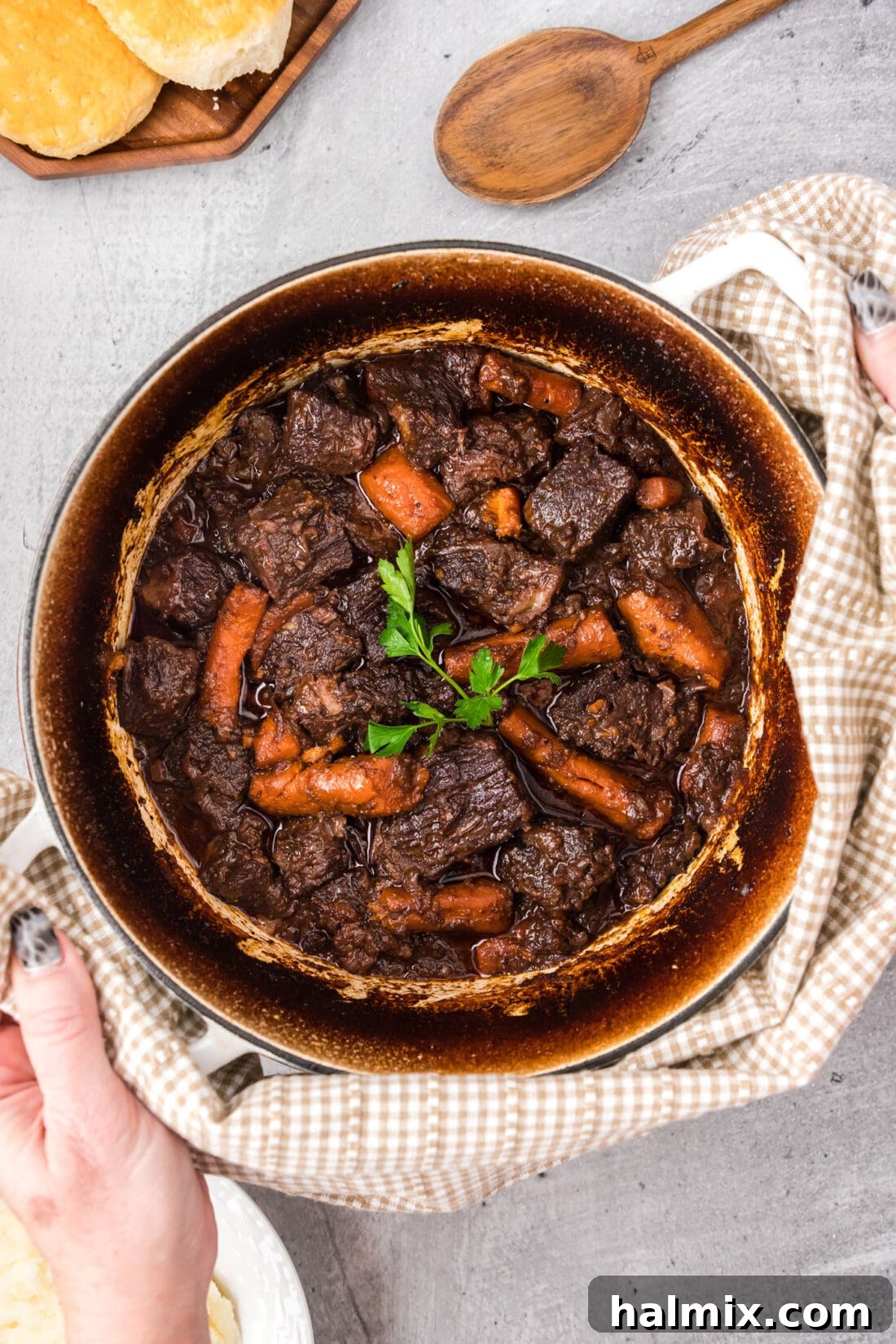
The Art of Braising: Why This Recipe Stands Out
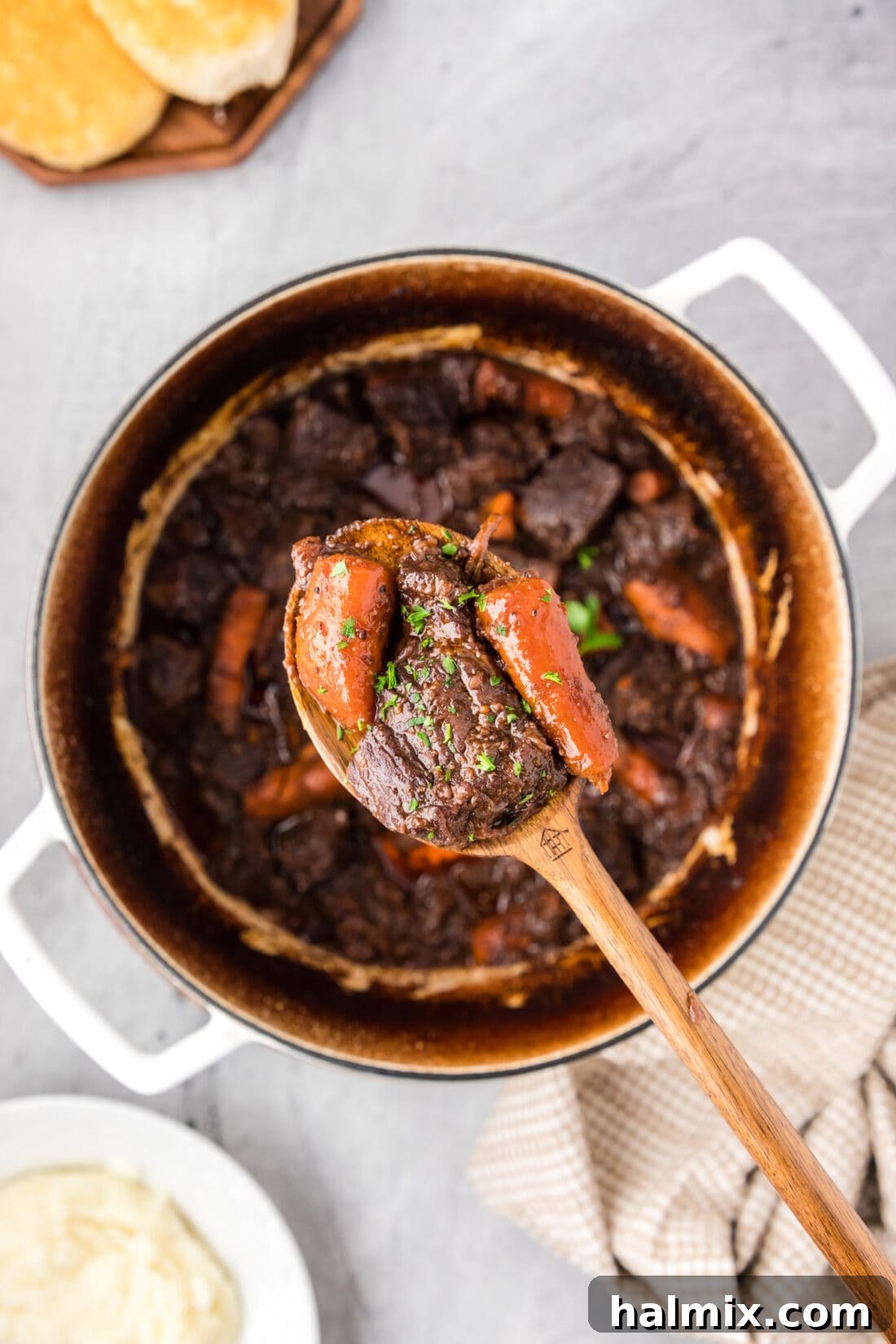
At its heart, this braised beef recipe is a testament to the magic of slow cooking. It brings together robust chuck roast, vibrant carrots, aromatic garlic, and sweet onion, all simmered gently in a luscious blend of chicken stock and dry red wine. The lengthy cooking process allows the tough fibers of the chuck roast to break down, resulting in an incredibly tender, juicy texture that literally melts in your mouth. Furthermore, the ingredients have ample time to meld, creating complex layers of flavor that simply cannot be rushed. This isn’t merely a meal; it’s a celebration of rich, deep, and harmonious tastes, making it the ideal choice for special gatherings, holiday feasts, or simply elevating a regular Sunday dinner.
While a classic pot roast is undeniably delicious and a beloved comfort food, our braised beef recipe takes things a step further. The careful balance of wine, stock, and seasonings, combined with the searing process, builds a more sophisticated flavor profile. It’s an opportunity to experiment with the nuances that a rich red wine sauce can impart, transforming a familiar dish into something truly extraordinary. Whether you’re a seasoned chef or a home cook looking to expand your repertoire, this braised beef offers a rewarding culinary journey, promising exceptional results that speak for themselves.
Essential Ingredients for Unforgettable Braised Beef
Crafting truly remarkable braised beef begins with selecting the right ingredients. Each component plays a vital role in building the robust flavor profile and achieving that desirable melt-in-your-mouth texture. Below, we’ll delve into the key ingredients, offering insights and substitution suggestions to ensure your dish is nothing short of perfect. For precise measurements and step-by-step instructions, refer to the detailed recipe card at the end of this post.
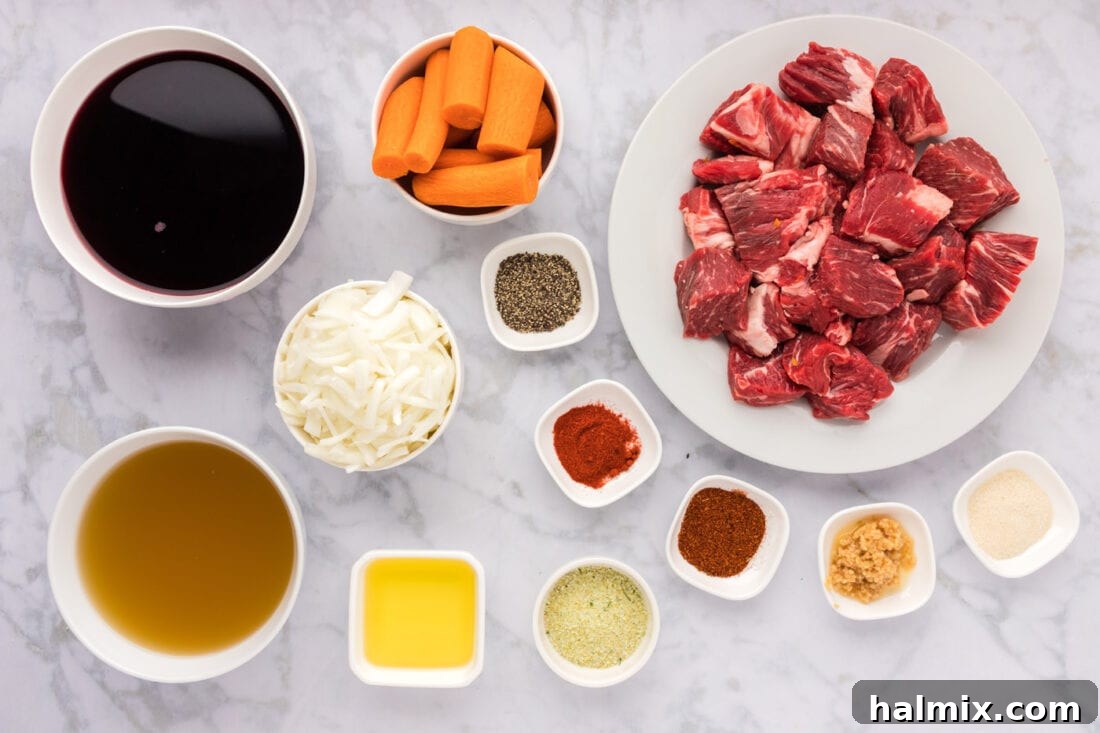
Ingredient Info and Substitution Suggestions
The Beef: Foundation of Flavor and Tenderness
BEEF – To achieve that coveted, perfectly tender meat, we highly recommend using a well-marbled chuck roast. Chuck roast, also known as pot roast or shoulder steak, is sourced from the shoulder of the cow. This cut is rich in connective tissue, primarily collagen, which breaks down during the long, slow braising process, transforming into gelatin. This gelatin is what gives the beef its incredible succulence and adds a luxurious richness to the sauce. Look for roasts with a visible, intricate web of fat marbling throughout; this intramuscular fat contributes significantly to both flavor and tenderness. While chuck roast is our top recommendation for its balance of flavor, texture, and affordability, other suitable cuts for braising include beef short ribs or brisket, though cooking times might vary slightly.
The Liquid Gold: Red Wine and Its Role
WINE – The dry red wine is not just for flavor; it’s a cornerstone of the braising liquid. As it simmers, the alcohol cooks out, leaving behind a concentrated depth of fruity, earthy, and sometimes tannic notes that elevate the entire dish. It also helps in deglazing the pan after searing the beef and aromatics, capturing all those flavorful browned bits. For best results, choose a dry red wine you enjoy drinking, such as a Cabernet Sauvignon, Merlot, or Pinot Noir. Avoid anything too sweet or overly complex, as its flavors might overpower the beef. If you prefer to omit the alcohol, a good quality beef broth or even a non-alcoholic red wine substitute can be used, though you might miss some of the wine’s characteristic depth. Alternatively, substitute with an equal amount of extra chicken stock, perhaps with a splash of balsamic vinegar for a hint of acidity.
Aromatics & Seasonings: The Soul of the Sauce
GARLIC, ONION, CARROTS – These classic mirepoix vegetables form the aromatic foundation of our braised beef. Sautéing them releases their natural sugars, creating a sweet and savory base that adds incredible depth to the sauce. Freshly minced garlic and chopped onion are non-negotiable for their pungent and sweet notes. Carrots, cut into 2-inch pieces, not only add sweetness and color but also become wonderfully tender during braising. Feel free to add other root vegetables like celery or parsnips for extra complexity.
SEASONINGS – Our blend of garlic salt, black pepper, chili powder, onion powder, and smoked paprika is carefully chosen to complement and enhance the beef’s natural flavors without overpowering them. Garlic salt provides a convenient two-in-one punch of saltiness and garlic flavor, while black pepper adds a subtle kick. Chili powder introduces a mild warmth and earthy undertone, and onion powder reinforces the foundational sweetness. Smoked paprika is a secret weapon, imparting a beautiful smoky aroma and a hint of vibrant color. For an even more aromatic experience, consider adding a few sprigs of fresh thyme or rosemary during the braising process.
The Braising Liquid: Creating a Rich Concoction
CHICKEN STOCK – Along with the red wine, chicken stock makes up the primary braising liquid. It adds a savory, umami richness that complements the beef and vegetables. While chicken stock is specified, a high-quality beef stock or even vegetable stock can be used interchangeably, each contributing a slightly different nuance to the final sauce.
OLIVE OIL – Essential for searing the beef and sautéing the aromatics. A good quality olive oil can add a subtle fruity note, but any high-heat cooking oil will work.
How to Make Braised Beef: A Journey to Culinary Excellence
Creating this exquisite braised beef is a rewarding process that transforms simple ingredients into a dish bursting with flavor and tender perfection. These step-by-step photos and detailed instructions are designed to help you visualize each stage of the recipe, ensuring your success. Remember, patience is key when braising; the slow cooking is what unlocks the incredible tenderness and rich flavors.
For a convenient printable version of this recipe, complete with precise measurements and comprehensive instructions, please scroll down to the full recipe card at the bottom of this post.
- Preheat your oven to 360°F (180°C). This ensures that once your Dutch oven goes into the oven, the heat is consistent from the start, allowing for even cooking.
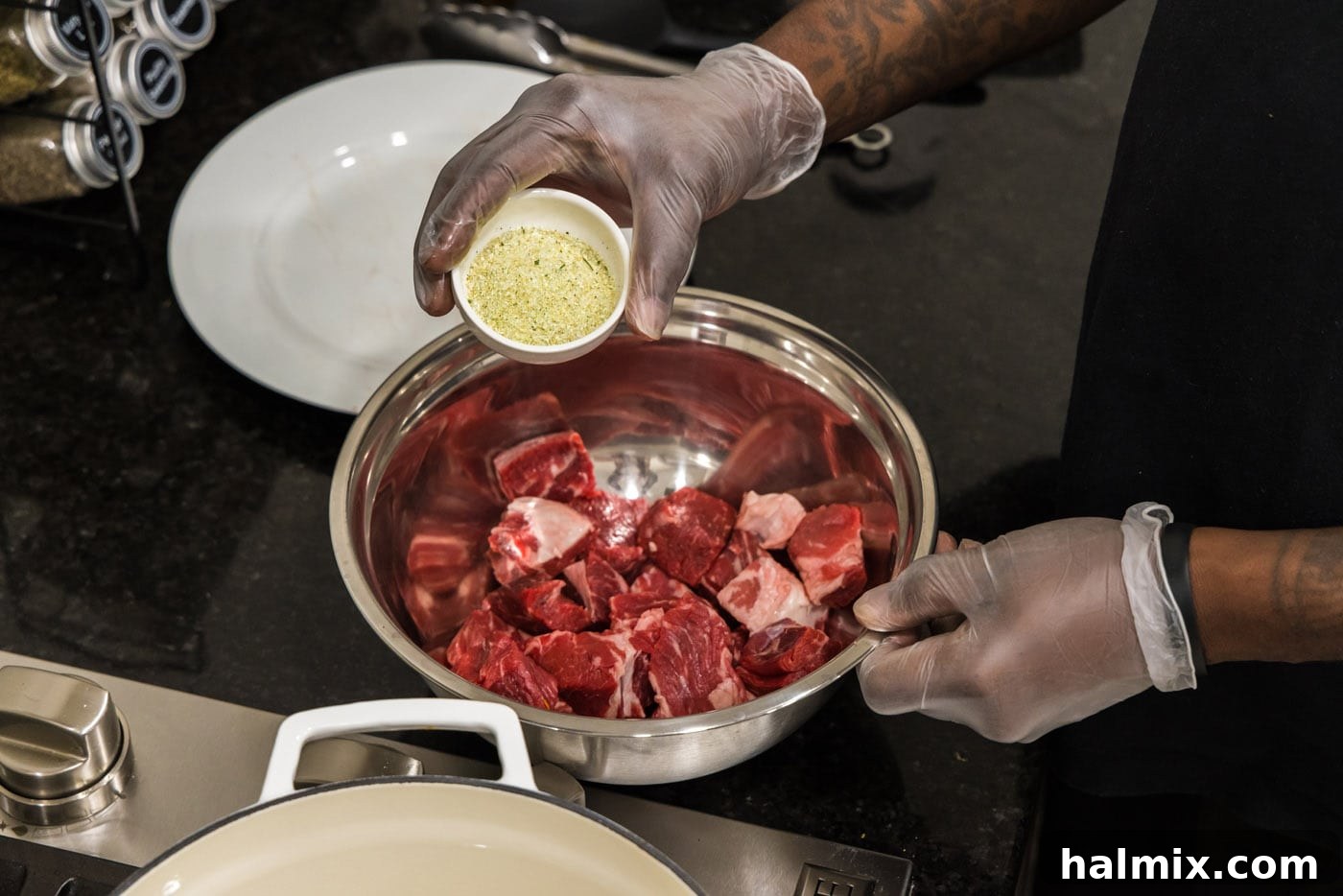
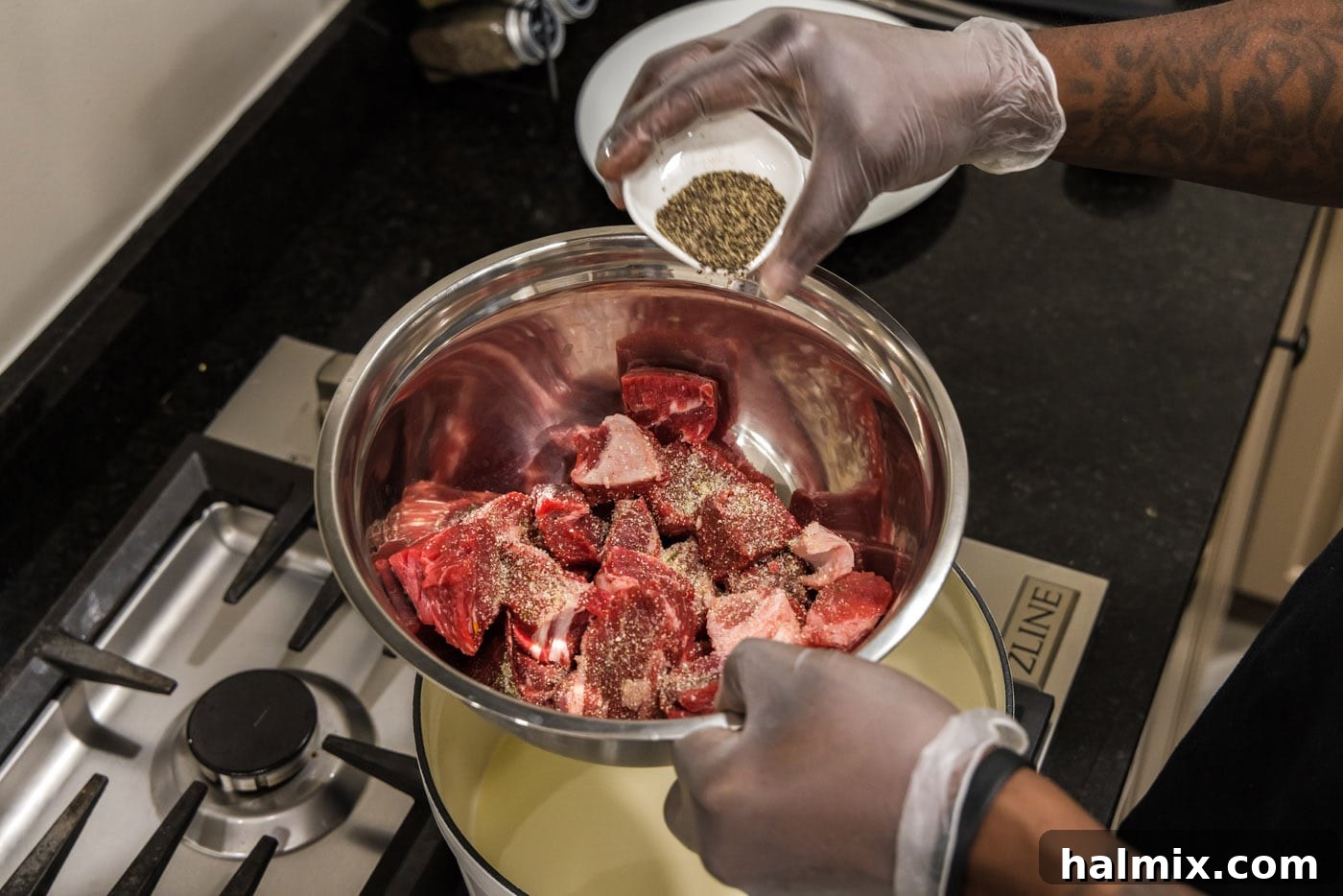
- Season the beef generously. Take 1 tablespoon of the garlic salt and all the black pepper, and sprinkle evenly over the cubed chuck roast. Ensure each piece is well coated, as this initial seasoning sets the foundation for the beef’s flavor. Reserve the remaining garlic salt for later.
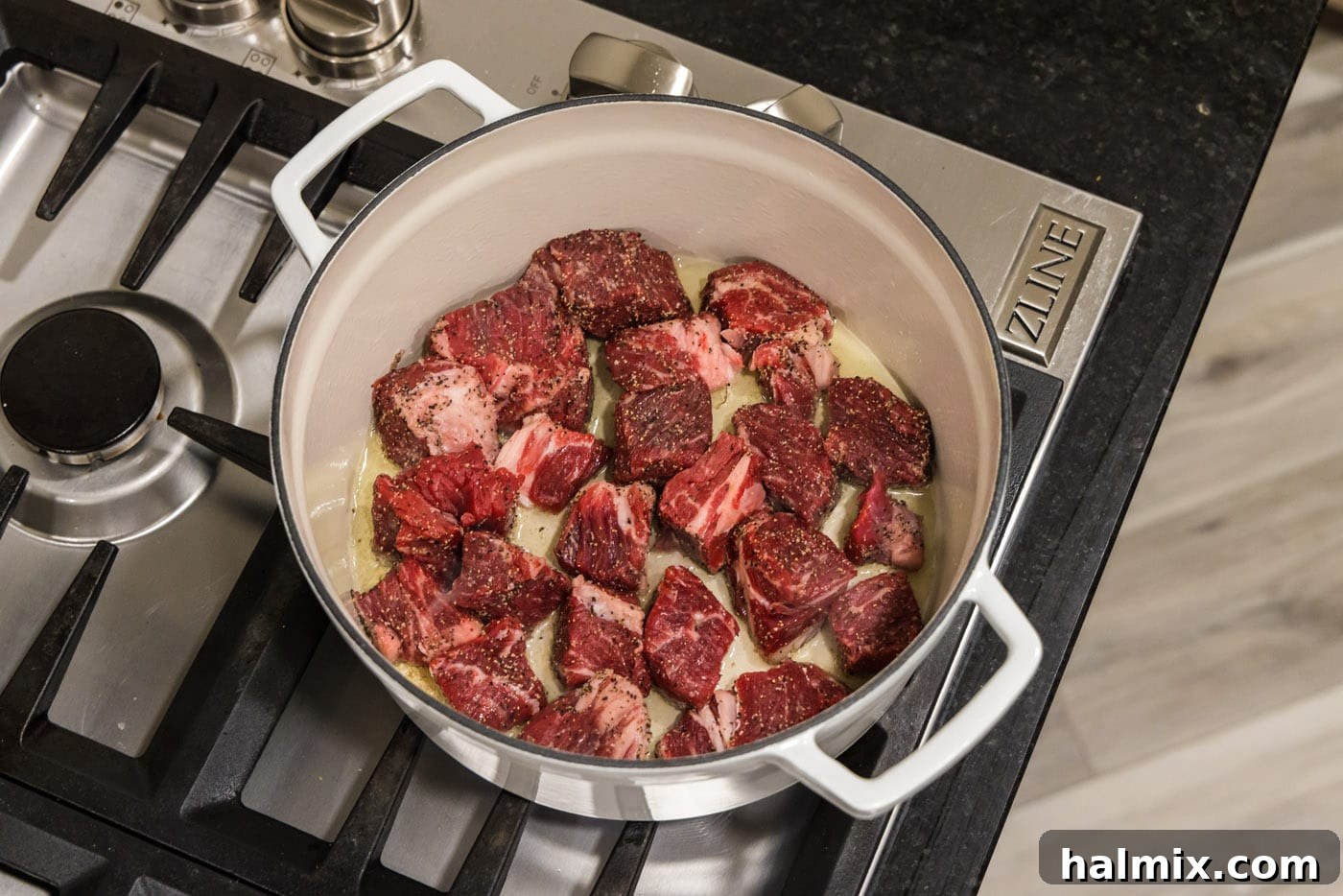
- Heat 3 tablespoons of olive oil in a heavy-bottomed Dutch oven over medium-high heat. A Dutch oven is ideal for this recipe due to its even heat distribution and ability to go from stovetop to oven, making it a true one-pot wonder.
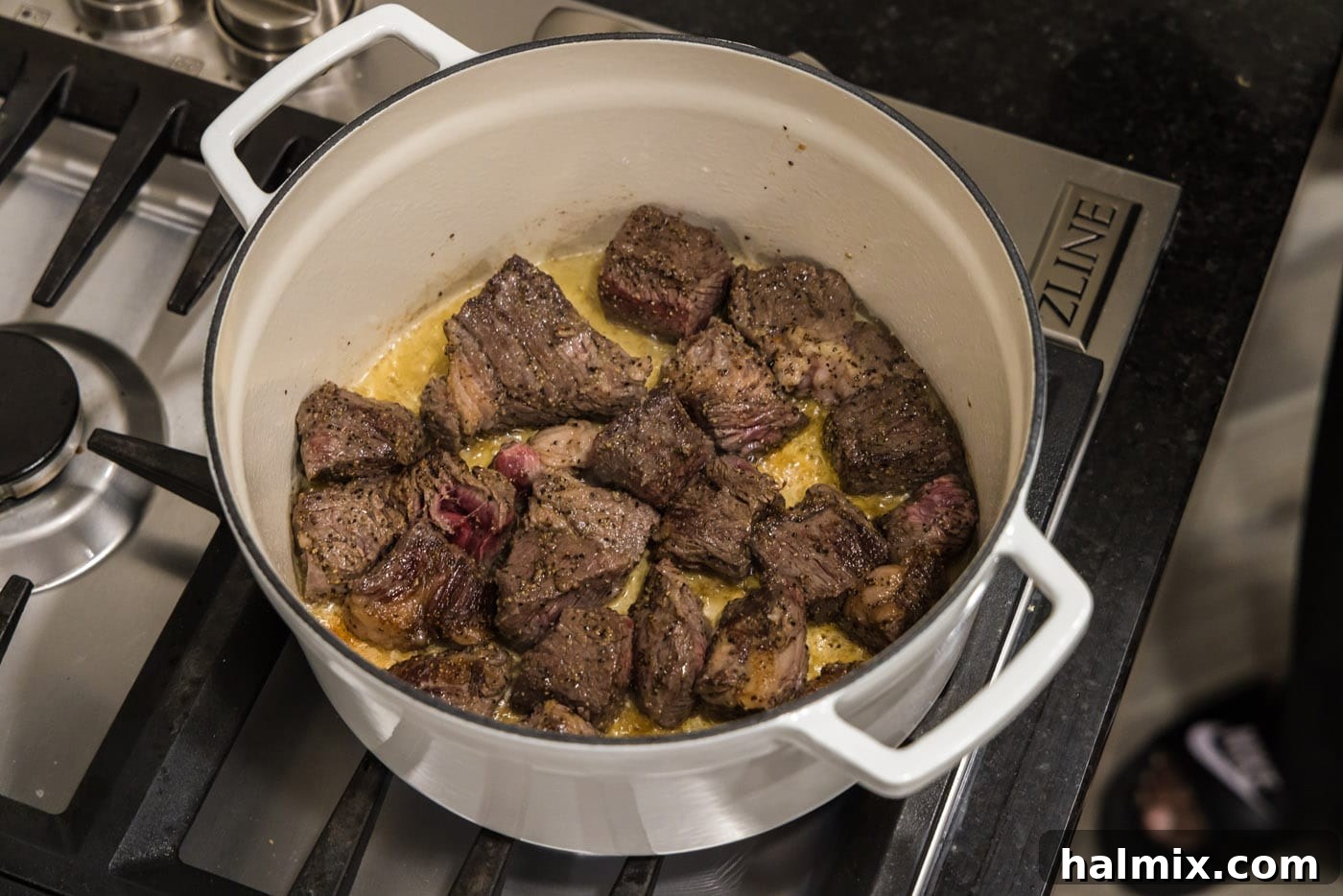
- Once the oil is shimmering and hot, carefully add the seasoned beef cubes to the Dutch oven in a single layer, ensuring not to overcrowd the pan. Sear the beef on all sides until a deep, golden-brown crust forms. This crucial step, known as the Maillard reaction, creates incredible depth of flavor that will enhance the entire dish.
- Remove the seared beef from the pan and set it aside on a clean plate. Don’t worry if there are browned bits (fond) stuck to the bottom of the Dutch oven; these are packed with flavor and will be incorporated into the sauce.
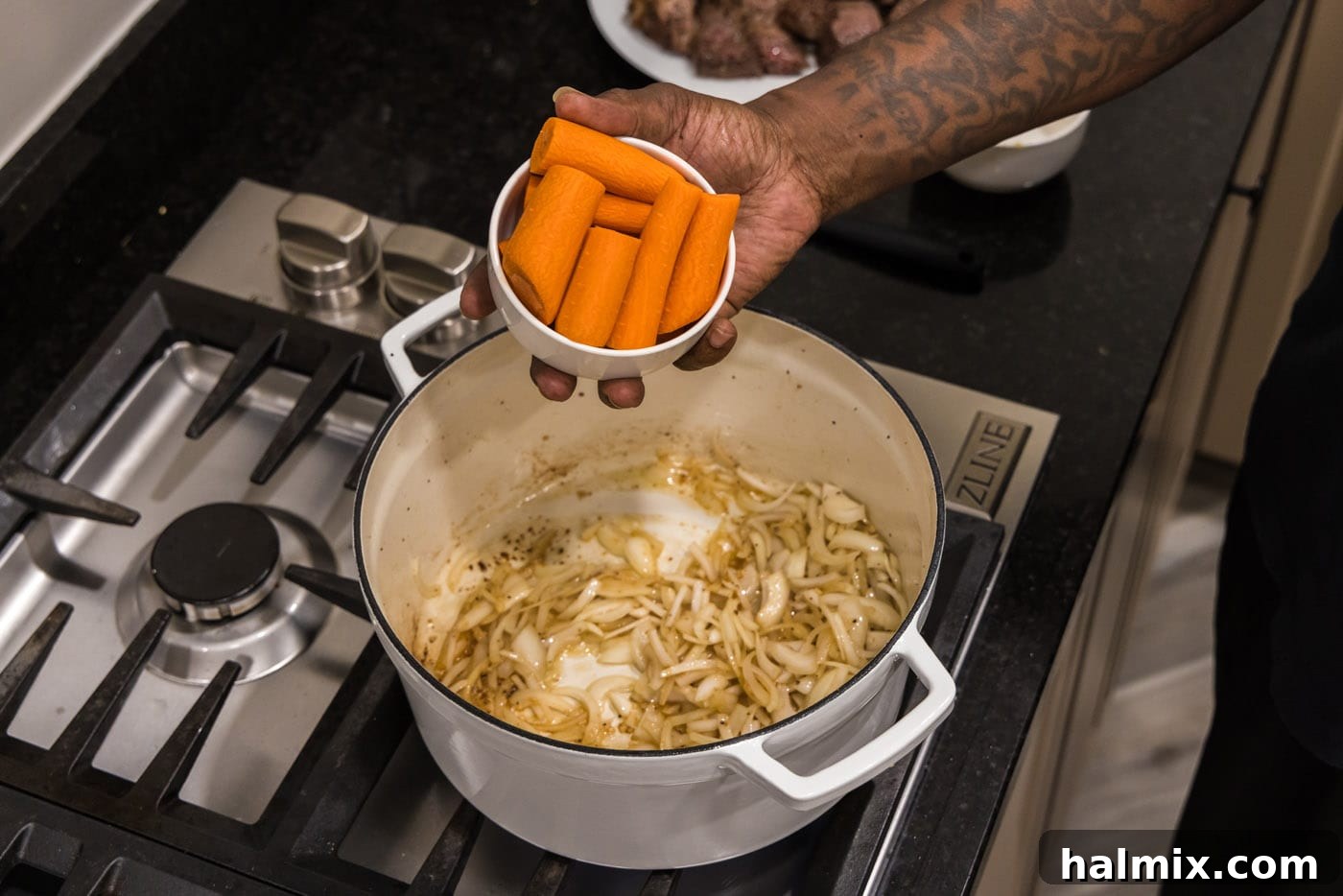
- To the hot oil remaining in the Dutch oven, add the minced garlic, chopped onion, and carrots. Cook these aromatics, stirring occasionally, until the onions become soft and translucent, usually about 5-7 minutes. This softens their flavors and begins to build the aromatic base of your sauce.
- Stir in the chili powder and onion powder. Cook for another minute, stirring continuously, to “bloom” the spices. This gentle heating releases their full fragrance and flavor into the oil.
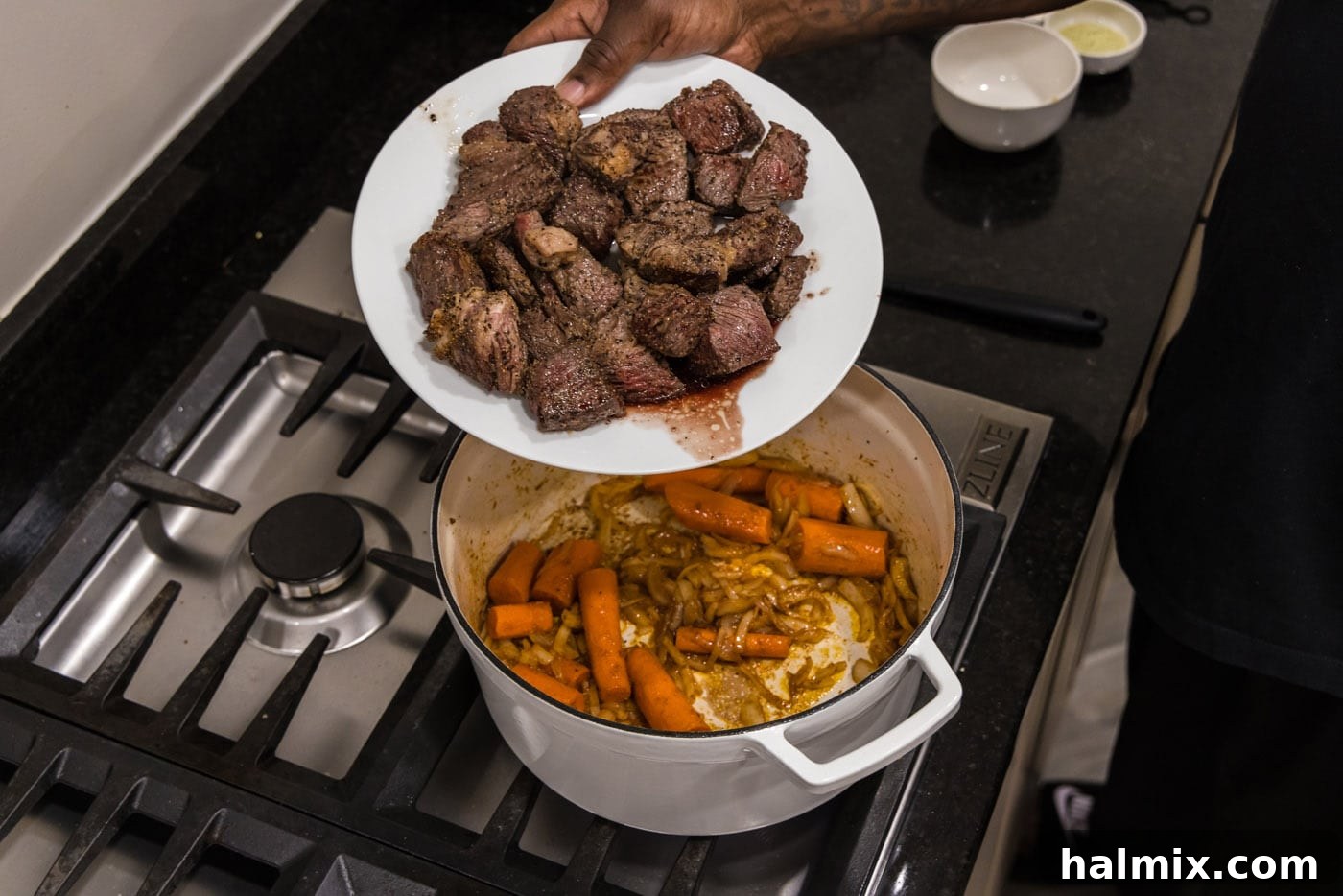
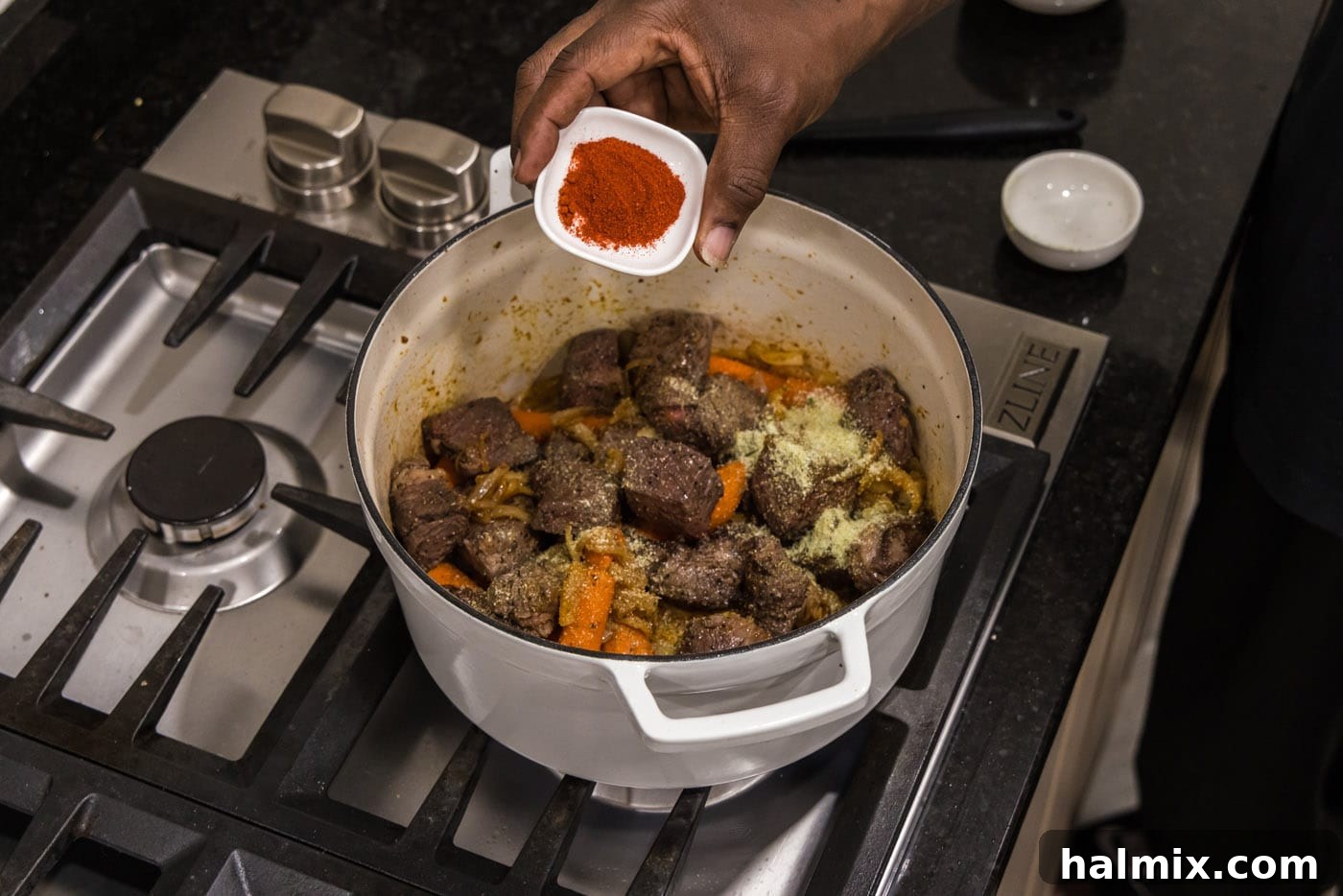
- Return the seared beef to the Dutch oven. Add the remaining garlic salt and the smoked paprika, stirring everything together gently to combine. Ensure the beef is nestled among the softened vegetables and coated with the spices.
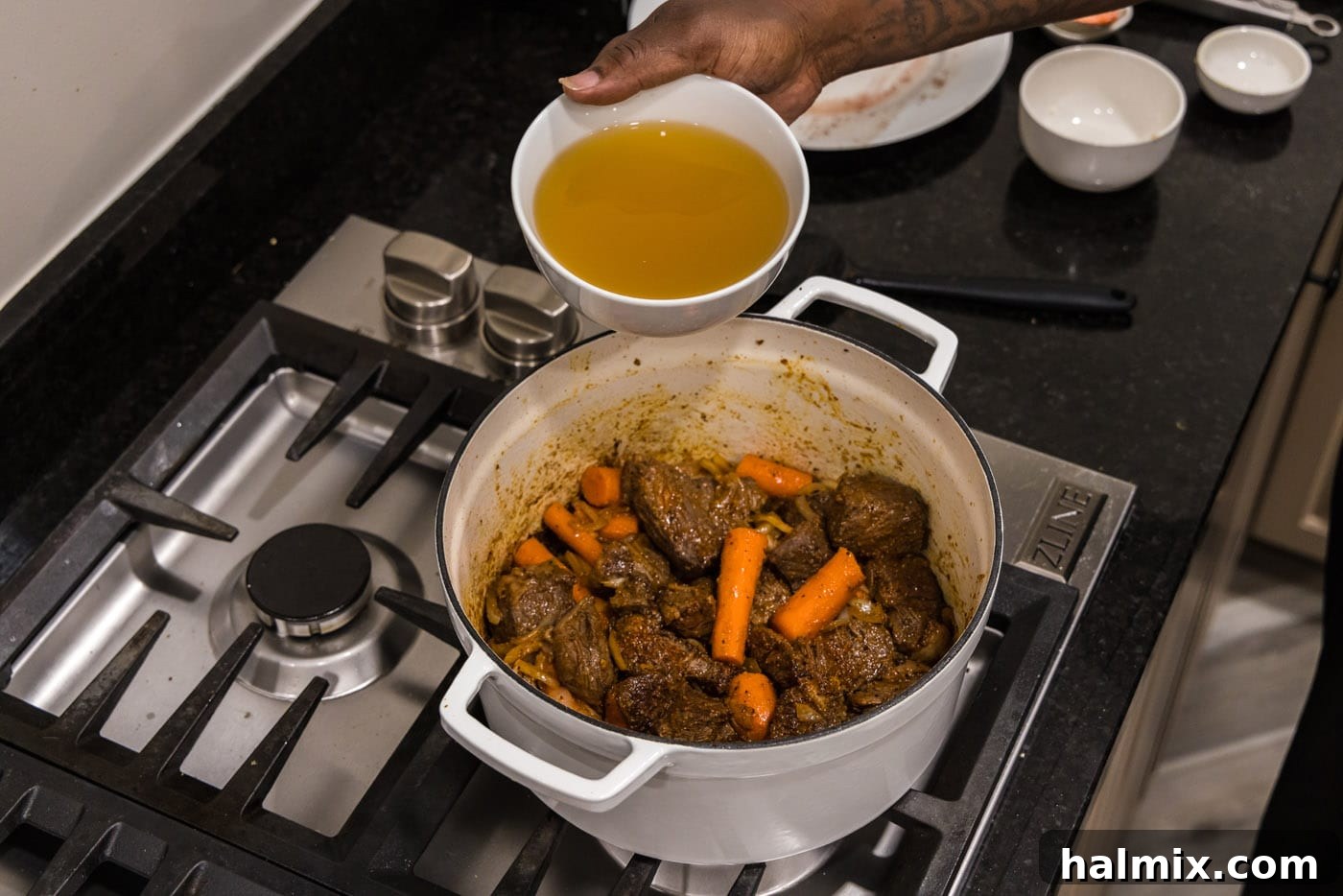
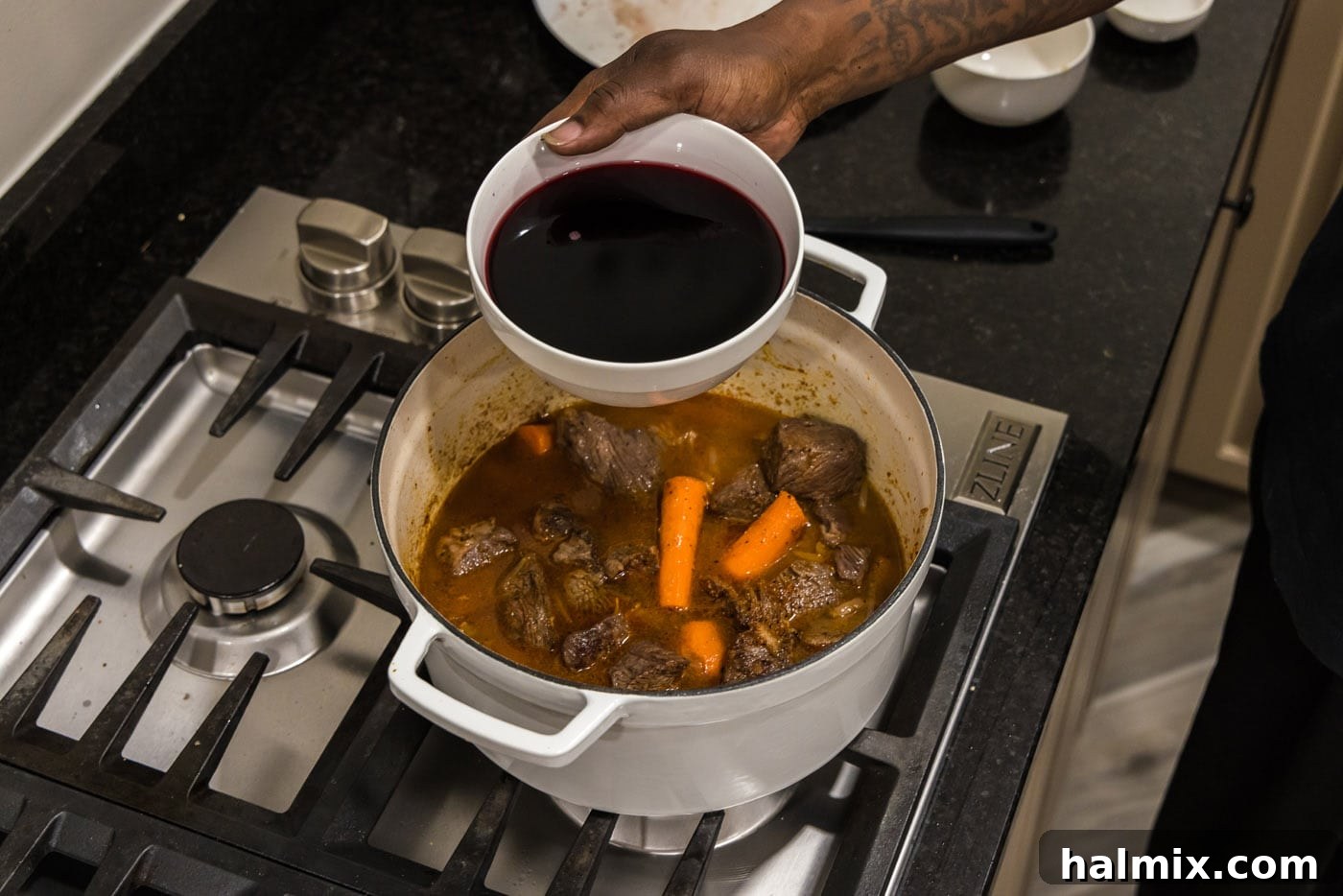
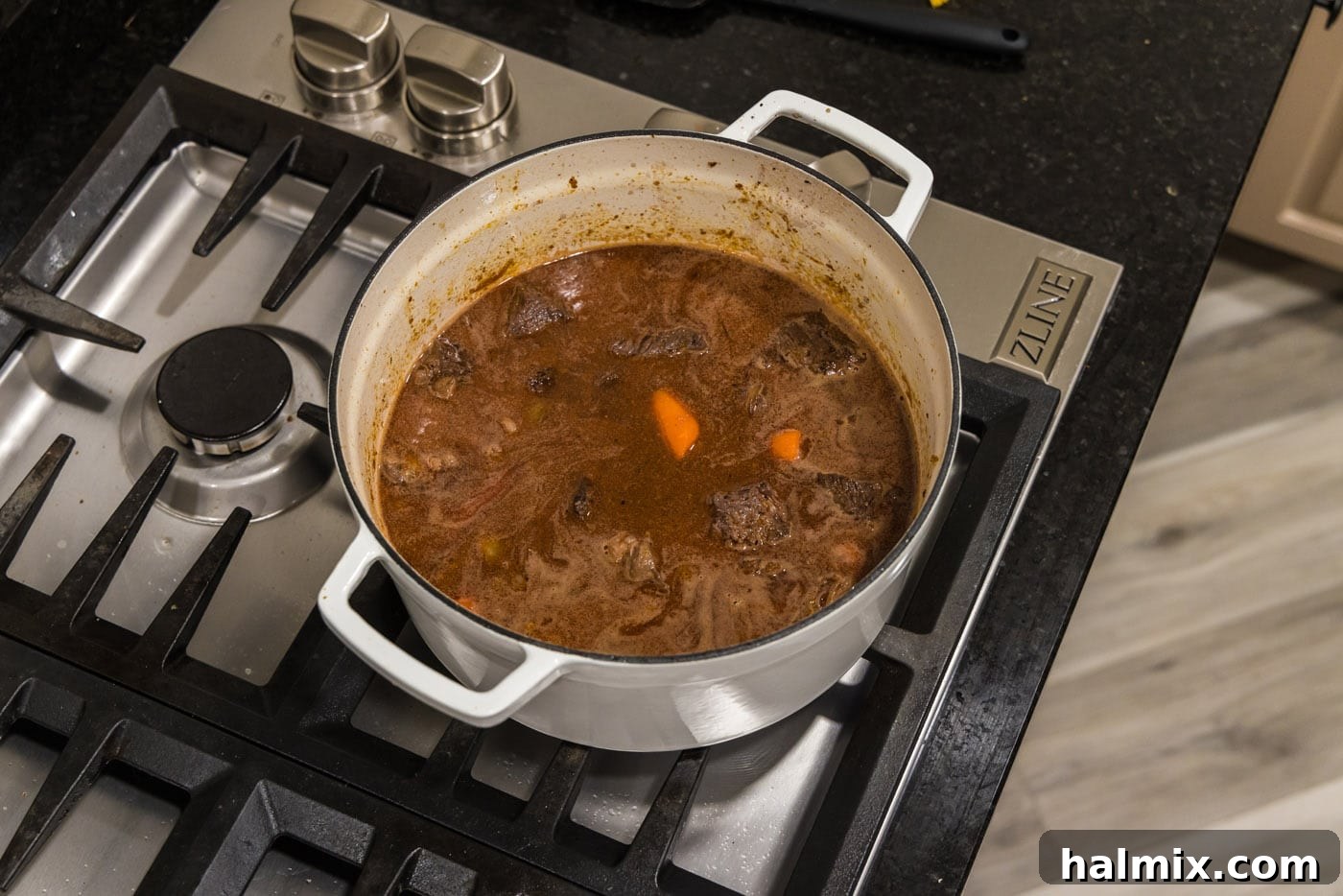
- Pour in the chicken stock and dry red wine. Stir well to combine all the ingredients and scrape up any browned bits from the bottom of the pot with a wooden spoon – this is called deglazing and adds immense flavor to your sauce. Bring the mixture to a gentle boil on the stovetop, then immediately turn off the heat.
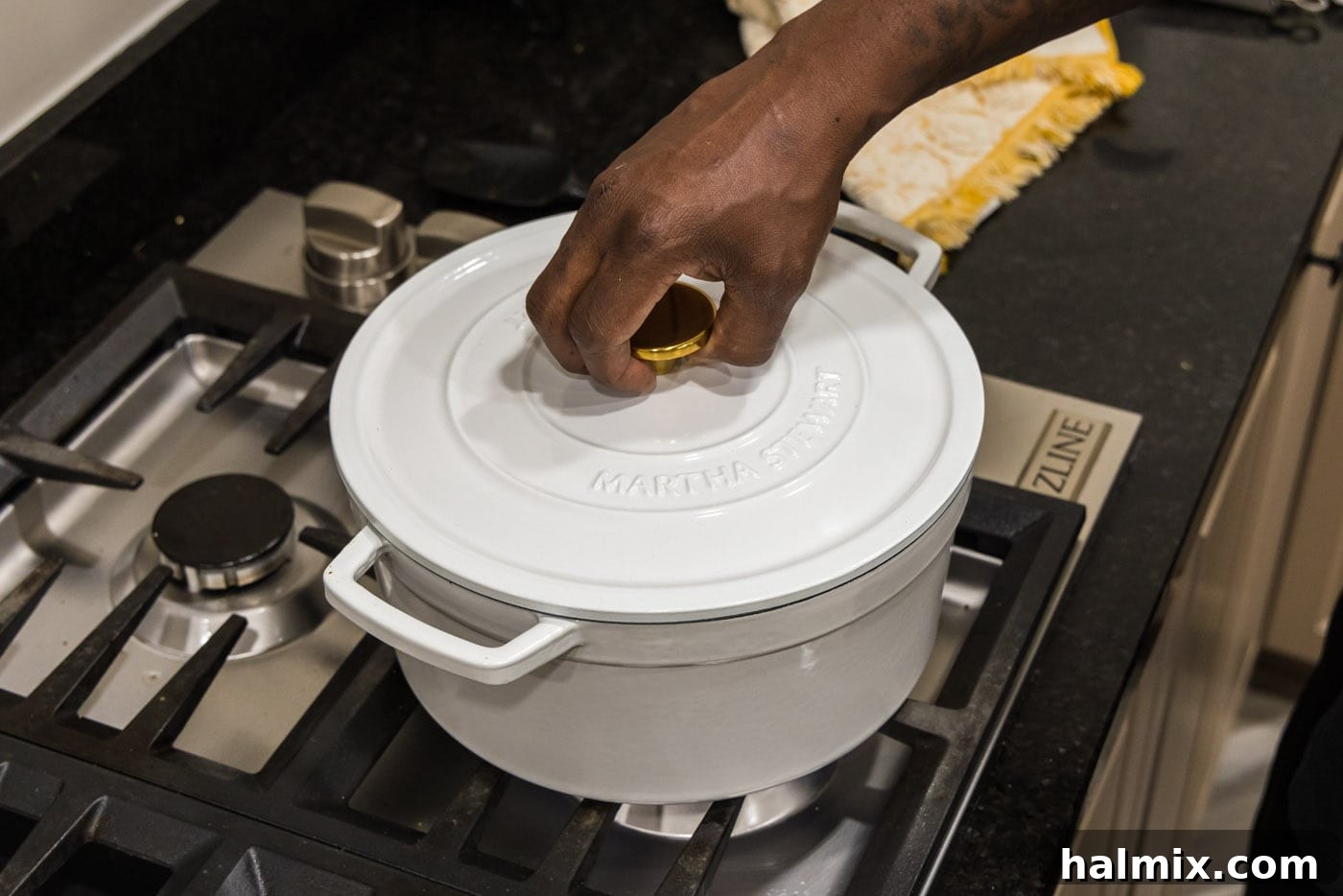
- Place the lid securely on the Dutch oven and transfer it to the preheated oven. Cook, covered, for 2 hours. This slow, moist heat is the magic of braising, tenderizing the beef to perfection and allowing all the flavors to deepen and meld beautifully. After 2 hours, check the tenderness of the beef; it should be fork-tender. If not, continue cooking for another 30-60 minutes until it reaches your desired tenderness.
Frequently Asked Questions & Expert Tips for Braised Beef
How do I store leftover braised beef?
Storing leftover braised beef correctly is key to enjoying it again. Once cooled completely, transfer the braised beef and its sauce to an airtight container. It can be safely stored in the refrigerator for up to 4 days. For longer storage, braised beef freezes exceptionally well. Portion out the cooled beef and sauce into freezer-safe bags or containers and freeze for up to 3 months. To reheat, thaw overnight in the refrigerator (if frozen), then gently warm on the stovetop over medium-low heat until heated through, or microwave in intervals, stirring occasionally.
Can I make braised beef ahead of time?
Absolutely! Braised beef is an ideal dish for preparing in advance, making it a fantastic option for dinner parties or busy weeknights. In fact, many culinary enthusiasts believe that braised dishes taste even better the next day, as the flavors have more time to fully develop and meld. You can cook the entire dish a day or two before you plan to serve it. Allow it to cool completely, then store it in an airtight container in the refrigerator. When you’re ready to serve, simply reheat it gently on the stovetop over low heat, adding a splash of extra stock or wine if the sauce has thickened too much. This makes entertaining stress-free and ensures a deeply flavorful meal.
What kind of meat should you use for braised beef?
When it comes to braised beef, the type of meat you choose significantly impacts the final tenderness and flavor. We consistently recommend using a well-marbled chuck roast for its exceptional results. Chuck roast, an affordable and widely accessible cut from the shoulder, contains a good amount of connective tissue. This tissue, primarily collagen, slowly breaks down during the braising process, transforming into rich gelatin that moistens and tenderizes the meat, leaving you with delicious, succulent hunks of perfectly cooked beef. The marbling (streaks of fat) also contributes moisture and flavor. Other excellent choices for braising include beef short ribs (known for their rich flavor and boniness that adds to the sauce) or beef brisket (another tough cut that becomes incredibly tender with slow cooking). The key is to select a cut that benefits from low and slow cooking.
Can I use a slow cooker or Instant Pot for braised beef?
While this recipe focuses on the Dutch oven method for its deep browning capabilities and even oven cooking, braised beef can certainly be adapted for a slow cooker or Instant Pot. For a slow cooker, follow the searing steps on the stovetop (Step 3-7), then transfer all ingredients to your slow cooker. Cook on low for 6-8 hours or on high for 3-4 hours, until the beef is fork-tender. For an Instant Pot, use the “Sauté” function for searing and cooking aromatics. Then, add liquids, beef, and remaining ingredients. Cook on high pressure for 60-75 minutes for chuck roast, followed by a natural pressure release. Always adjust liquid amounts slightly if using a pressure cooker, as less evaporation occurs.
How can I thicken the braised beef sauce?
The braising liquid naturally reduces and thickens during cooking, especially in an oven with the lid on. However, if you find your sauce is not as thick as you’d like after the beef is tender, you have a few options. One popular method is to remove the beef and vegetables, then simmer the sauce on the stovetop over medium-high heat, allowing it to reduce further until it reaches your desired consistency. Alternatively, you can create a slurry: whisk together 1 tablespoon of cornstarch with 2 tablespoons of cold water, then slowly whisk it into the simmering sauce. Let it cook for a few minutes until it thickens. For a richer sauce, you can also whisk in a pat of cold butter at the very end.
Serving Suggestions for Your Delicious Braised Beef
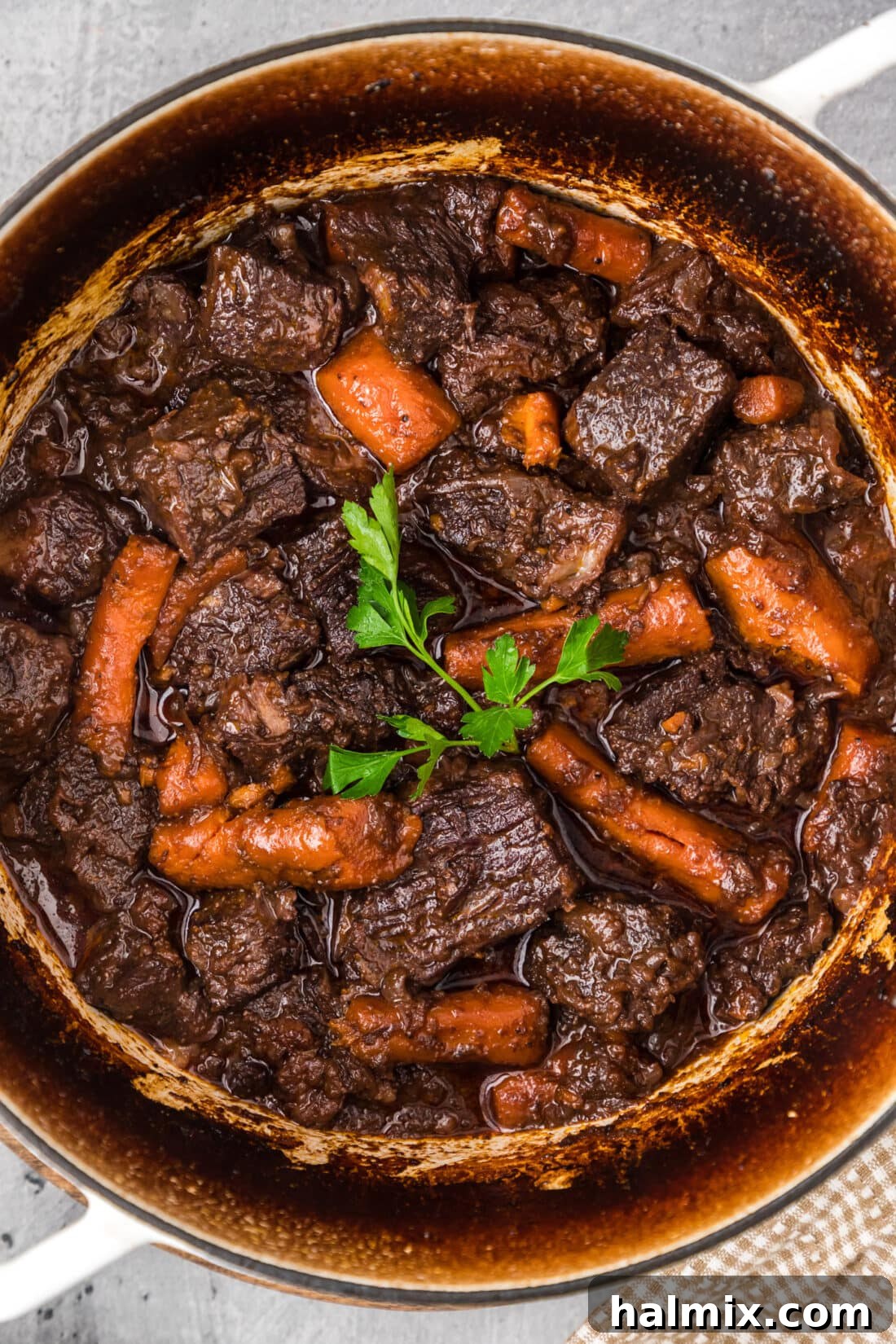
Once your braised beef has reached peak tenderness and its rich aroma fills your kitchen, it’s time to assemble a meal that’s as visually appealing as it is delicious. The traditional way to serve this hearty dish is spooned generously over a bed of creamy mashed potatoes or fluffy white rice. These starches are perfect for soaking up every drop of that exquisite red wine sauce. For an extra touch of indulgence, drizzle additional sauce from the pot directly over the beef and sides.
Beyond the classics, consider pairing your braised beef with other delightful accompaniments. A vibrant green side salad, perhaps with a light vinaigrette, provides a refreshing contrast to the richness of the beef. Crusty bread, like a warm baguette or sourdough, is also an essential companion, ideal for scooping up any remaining sauce. For added vegetables, roasted asparagus, sautéed green beans, or even glazed carrots (beyond those in the braise) would complement the meal beautifully. A sprinkle of fresh parsley or chives before serving adds a pop of color and herbaceous freshness, truly completing this magnificent dish.
Explore More Hearty Chuck Roast Recipes
If you’ve fallen in love with the versatility and tenderness of chuck roast, there’s a whole world of delicious recipes waiting for you to explore. This cut is perfect for slow cooking methods that yield incredibly flavorful and satisfying meals. Here are some other fantastic chuck roast recipes to inspire your next culinary adventure:
- Beef Barbacoa
- Homemade Goulash
- Beef Bourguignon
- Mississippi Pot Roast
- Braised Beef Short Ribs
I love to bake and cook and share my kitchen experience with all of you! Remembering to come back each day can be tough, that’s why I offer a convenient newsletter every time a new recipe posts. Simply subscribe and start receiving your free daily recipes!
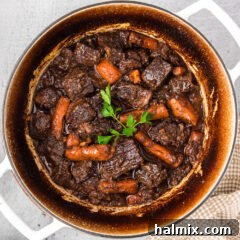
Braised Beef
Carrots, garlic, onion, and plenty of seasonings come together with chuck roast and a mixture of chicken stock and red wine in this gorgeous braised beef recipe.
Rating: 5 out of 5 stars from 7 votes
IMPORTANT – There are often Frequently Asked Questions within the blog post that you may find helpful. Simply scroll back up to read them!
Print Recipe | Pin It | Rate It
Course: Dinner
Cuisine: American
Servings: 5 servings
Total Time: 2 hrs 20 mins
Calories: 561
Author: Amanda Davis
Ingredients
- 2 pounds beef chuck roast, trimmed and cut into cubes
- 2 tablespoons garlic salt, divided
- 1 ½ teaspoons black pepper
- 1 tablespoon minced garlic
- 2 cups chopped onion
- 1 cup carrots, cut into 2-inch pieces
- 1 teaspoon chili powder
- ½ tablespoon onion powder
- ½ tablespoon smoked paprika
- 2 cups chicken stock
- 2 cups dry red wine
- 3 tablespoons olive oil
Things You’ll Need
- Dutch oven (6 quart)
- Vinyl gloves
Before You Begin
- To achieve nicely tender meat we used a well-marbled chuck roast. Look for roasts with a nice amount of fat marbling throughout.
- The red wine adds a ton of flavor to braised beef and the alcohol content cooks out during the process. If you want to omit it, substitute with extra chicken stock.
- Store cooled leftovers in an air-tight container kept in the refrigerator for up to 4 days. Reheat on the stovetop or in the microwave.
Instructions
- Preheat oven to 360 F.
- Season the beef with 1 tablespoon of the garlic salt (reserve the rest) and the black pepper.
- Heat oil in a Dutch oven over medium-high heat.
- Add seasoned beef cubes to the oil, and sear on both sides.
- Remove beef from the pan and set aside.
- To the hot oil in the Dutch oven, add minced garlic, chopped onion, and carrots. Cook until onions are soft, stirring occasionally.
- Add chili powder and onion powder and stir together.
- Add beef, remaining garlic salt and smoked paprika, stir to combine.
- Add chicken stock and red wine, stir to combine. Bring mixture to a gentle boil then turn off heat.
- Place lid on Dutch oven and place in the preheated oven. Cook, covered, for 2 hours.
Nutrition
Serving: 1 serving | Calories: 561cal | Carbohydrates: 16g | Protein: 39g | Fat: 31g | Saturated Fat: 11g | Polyunsaturated Fat: 3g | Monounsaturated Fat: 17g | Trans Fat: 1g | Cholesterol: 128mg | Sodium: 3103mg | Potassium: 924mg | Fiber: 2g | Sugar: 6g | Vitamin A: 4771IU | Vitamin C: 7mg | Calcium: 70mg | Iron: 5mg
Tried this Recipe? Pin it for Later!
Follow on Pinterest @AmandasCookin or tag #AmandasCookin!
The recipes on this blog are tested with a conventional gas oven and gas stovetop. It’s important to note that some ovens, especially as they age, can cook and bake inconsistently. Using an inexpensive oven thermometer can assure you that your oven is truly heating to the proper temperature. If you use a toaster oven or countertop oven, please keep in mind that they may not distribute heat the same as a conventional full sized oven and you may need to adjust your cooking/baking times. In the case of recipes made with a pressure cooker, air fryer, slow cooker, or other appliance, a link to the appliances we use is listed within each respective recipe. For baking recipes where measurements are given by weight, please note that results may not be the same if cups are used instead, and we can’t guarantee success with that method.