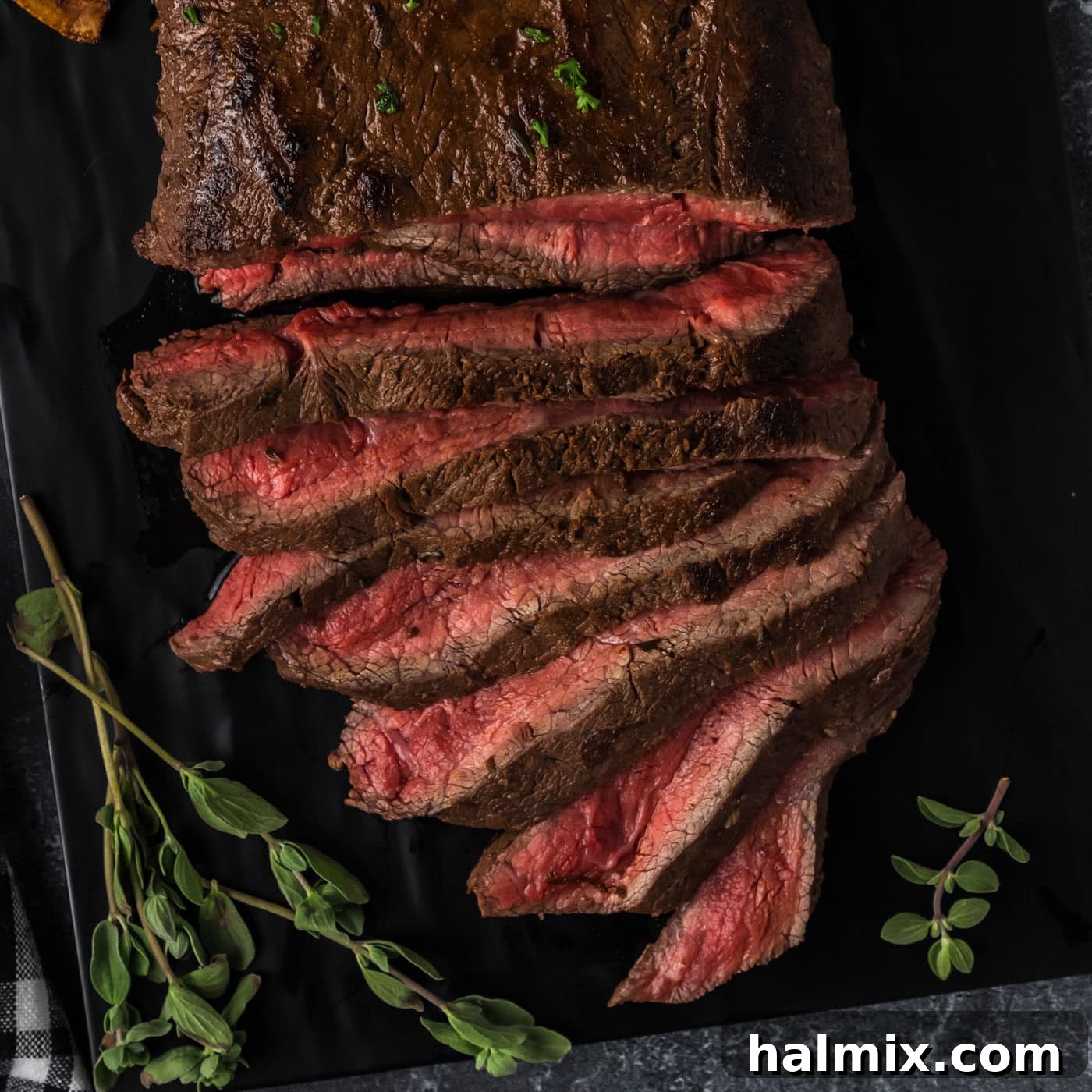
Unlock the secret to a perfectly tender and incredibly flavorful steak dinner with this exceptional Flat Iron Steak recipe. Infused with a rich garlic and rosemary marinade, each bite promises a symphony of tastes. We’ll guide you through achieving a beautiful, crisp sear on the exterior, followed by a gentle finish in the oven to lock in those precious juices, ensuring a succulent interior every time. Forget expensive restaurant meals; this recipe elevates an often-overlooked cut of beef into a gourmet experience that’s surprisingly easy to master at home. Prepare to impress your family and friends with a dish that’s both elegant and deeply satisfying, especially when crowned with a vibrant scoop of fresh chimichurri.
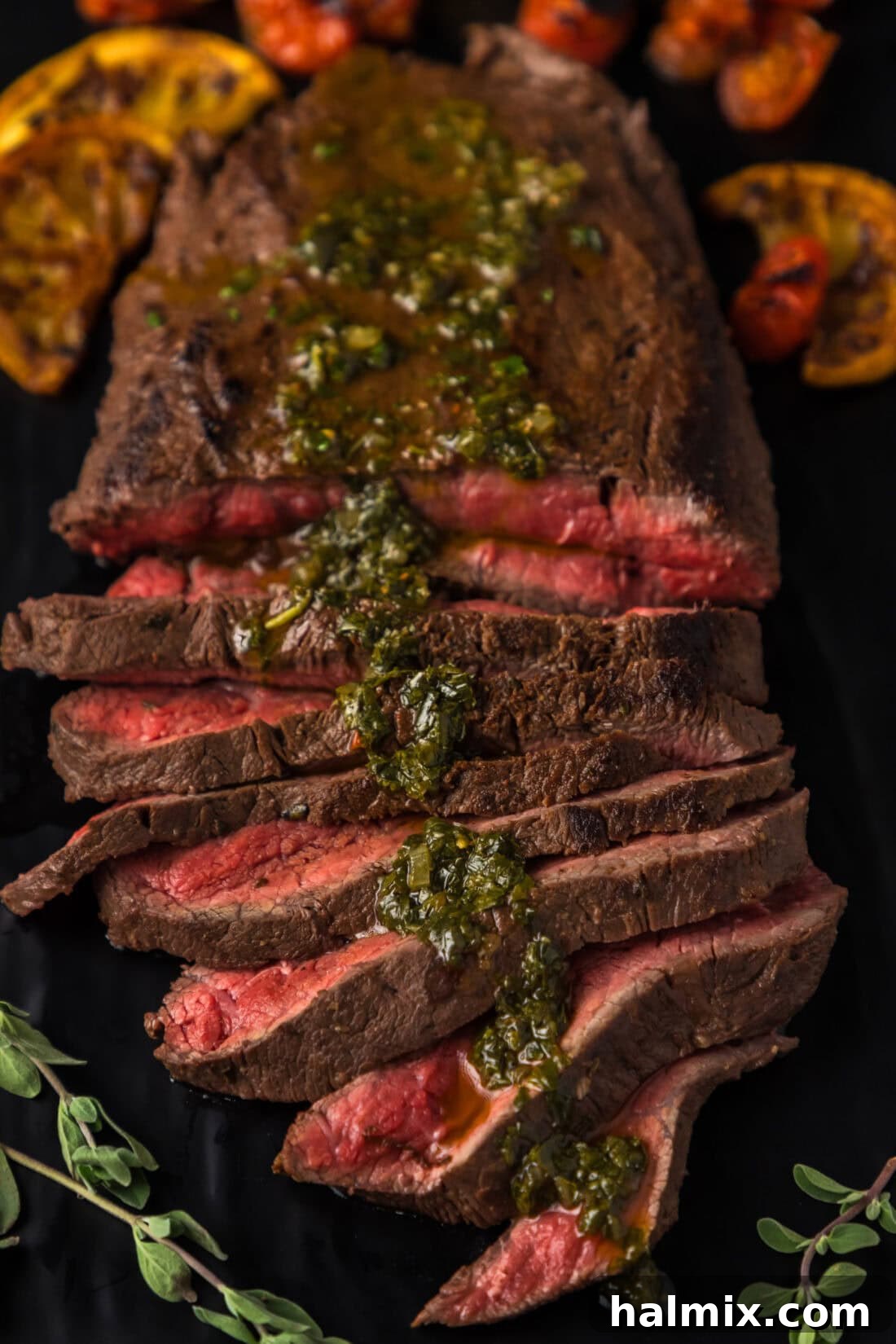
Why This Flat Iron Steak Recipe is a Must-Try
The magic of this recipe lies in its ability to transform a humble and cost-effective cut into a steakhouse-quality meal. Flat iron steak, also known as top blade steak, is celebrated for its incredible flavor profile and surprising tenderness, second only to premium cuts like beef tenderloin and filet mignon. Its rich marbling – those delicate veins of fat running through the muscle – melts during cooking, basting the meat from within and imparting an intense, beefy taste that is truly unparalleled for its price point.
What truly sets this recipe apart is the carefully crafted garlic and rosemary marinade. This vibrant blend of fresh herbs, aromatic garlic, and a hint of red wine works wonders. The acidity from the wine gently breaks down muscle fibers, ensuring maximum tenderness, while infusing the steak with layers of complex, herbaceous flavors. By allowing the steak to soak in this savory bath, you guarantee a deep penetration of flavor that goes beyond the surface, resulting in a juicy, tender, and deeply satisfying steak experience. When cooked to perfection with a quick sear to develop a beautiful crust and a brief finish in the oven, this flat iron steak delivers consistently juicy and impeccably tender results, making it an instant family favorite and a smart choice for any occasion.
Essential Ingredients for Your Flat Iron Steak
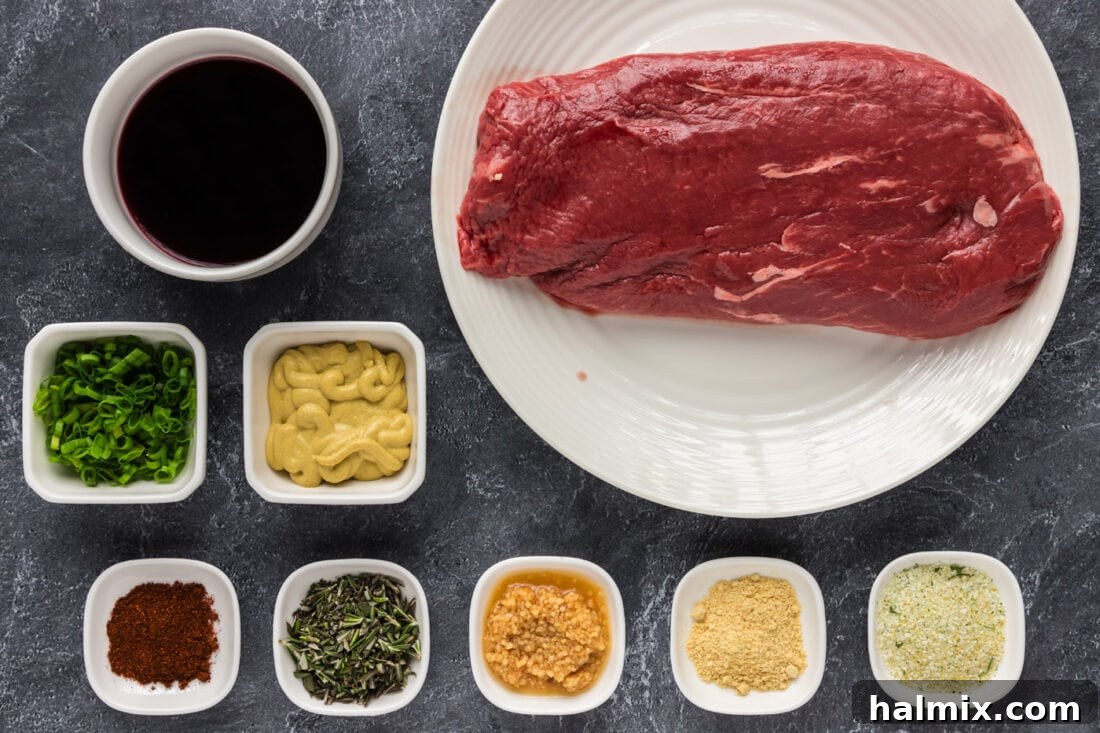
Gathering your ingredients is the first step towards culinary success. For precise measurements and detailed instructions, refer to the printable recipe card located at the conclusion of this post. Here’s a quick overview of what you’ll need to create this magnificent steak dinner:
Ingredient Spotlight & Smart Substitutions
Let’s dive deeper into the key components of this recipe, offering insights and alternative suggestions to ensure your Flat Iron Steak is nothing short of perfection.
The Star: Flat Iron Steak
The flat iron steak, often referred to as a “top blade steak,” is a marvelously tender cut derived from the shoulder or chuck primal of the cow. It’s characterized by its rich marbling and deep, beefy flavor, making it a fantastic value without compromising on taste or texture. When selecting your flat iron steak, look for one that has good, even marbling throughout. A steak between 1 and 1.5 inches thick is ideal for achieving a perfect sear and even cooking in the oven.
Pro Tip for Searing: One crucial step for achieving that desirable golden-brown crust is to thoroughly pat the steak dry with paper towels before cooking. Any excess moisture on the surface will steam the meat instead of searing it, preventing the Maillard reaction (the chemical reaction responsible for that rich color and complex flavor) from occurring.
The Flavor Powerhouse: The Marinade
This robust marinade is the heart and soul of our flat iron steak recipe, contributing immense depth and tenderness. Each ingredient plays a vital role:
- Red Wine: A dry red wine, such as Cabernet Sauvignon or Merlot, is not just for sipping! In this marinade, it acts as a tenderizer due to its acidity, helping to break down tough muscle fibers. Beyond tenderizing, it imparts a sophisticated depth, a subtle sweetness, and a rich, complex flavor that complements the beef beautifully. You don’t need to open a whole bottle just for this recipe; single-serve containers or mini bottles of wine are readily available at most grocery or liquor stores, making it a convenient option. If you prefer to avoid alcohol, you can substitute beef broth or even balsamic vinegar for a similar acidic and flavorful effect, though the flavor profile will be slightly different.
- Minced Garlic: Fresh garlic is non-negotiable for its pungent, aromatic intensity. It’s a classic pairing with steak and forms the backbone of the marinade’s flavor. For best results, use freshly minced garlic rather than garlic powder.
- Fresh Rosemary: The piney, slightly peppery notes of fresh rosemary are a match made in heaven for beef. It infuses the steak with an earthy, fragrant aroma that is incredibly appetizing. If fresh rosemary isn’t available, you can use about half the amount of dried rosemary, but crumble it first to release its oils.
- Dijon Mustard: Dijon mustard adds a tangy, slightly spicy kick and acts as an emulsifier, helping to bind the marinade ingredients together. Its sharp flavor also tenderizes the meat and adds an extra layer of complexity. Whole grain Dijon can also be used for a slightly different texture and milder spice.
- Green Onion (Green Part Only): Green onions contribute a mild, fresh oniony flavor without being overpowering. Using only the green parts adds a bright, herbaceous note that balances the richness of the other ingredients. Chives or finely minced shallots can be used as alternatives if green onions are not on hand.
- Spices and Seasoning (Garlic Salt & Chili Powder): Garlic salt amplifies the garlic flavor while providing essential seasoning. Chili powder adds a subtle warmth and earthy undertone without making the steak overtly spicy. Feel free to adjust the amount of chili powder to your preference or even add a pinch of smoked paprika for extra depth. Dry mustard powder is included for its pungent, slightly bitter notes that enhance the overall savory profile.
Mastering the Art of Flat Iron Steak: Step-by-Step Guide
These step-by-step photos and instructions are designed to help you visualize each stage of making this delicious recipe. For a convenient printable version with exact measurements and detailed instructions, please Jump to Recipe at the bottom of this post.
- Prepare Your Oven: Begin by preheating your oven to 400°F (200°C). This ensures your oven is at the optimal temperature for the final cooking stage once the steak is seared.
- Marinate the Steak: Place the flat iron steak into a gallon-sized zipper plastic bag. In a separate bowl, combine all the marinade ingredients: minced garlic, chopped fresh rosemary, garlic salt, chili powder, dry mustard powder, Dijon mustard, chopped green onion, and dry red wine. Stir thoroughly until all ingredients are well incorporated. Pour this flavorful marinade over the steak in the bag, ensuring the meat is completely coated. Seal the bag, pressing out any excess air.
- Chill and Rest: Allow the steak to marinate in the refrigerator for at least 3 hours, or ideally, overnight for maximum flavor penetration and tenderness. Before cooking, remove the steak from the refrigerator and let it sit at room temperature for approximately one hour. This crucial step helps the steak cook more evenly and prevents it from seizing up when it hits the hot pan. Once at room temperature, remove the steak from the marinade and pat it thoroughly dry with paper towels. A dry surface is key to achieving a perfect sear.
- Sear to Perfection: Heat olive oil in an oven-proof skillet (cast iron works wonderfully here) over medium-high heat until it shimmers and just begins to smoke lightly. Carefully add the dried steak to the hot skillet. Sear on both sides for approximately 3-4 minutes per side, or until a deep, golden-brown crust has formed. Avoid overcrowding the pan, as this can lower the temperature and inhibit a proper sear.
- Finish in the Oven: Immediately transfer the skillet with the seared steak into the preheated 400°F (200°C) oven. Continue to bake for 5-10 minutes. For a medium-rare steak (internal temperature of 130-135°F or 54-57°C), aim for 5-7 minutes. For a medium steak (internal temperature of 135-140°F or 57-60°C), bake for 8-10 minutes. Use a meat thermometer for precise doneness.
- Rest for Juiciness: Once cooked to your desired doneness, remove the skillet from the oven and carefully transfer the steak to a cutting board. Tent it loosely with aluminum foil and allow it to rest for a full 10 minutes. This resting period is critical, as it allows the juices within the steak to redistribute, ensuring a tender and moist result when sliced. Skipping this step will result in the juices running out, leaving you with a dry steak.
Frequently Asked Questions & Expert Tips for Flat Iron Steak
Absolutely! Flat iron steak is an excellent choice for grilling, where it truly shines with a smoky char. To grill, preheat your grill to medium-high heat (aim for 400-450°F or 200-230°C). Once hot, place the marinated and patted-dry steak directly on the grates. Close the lid and cook for 4-5 minutes per side for medium-rare to medium doneness, flipping only once. For a beautiful cross-hatch grill mark, rotate the steak 45 degrees halfway through cooking on each side. Always use a meat thermometer to ensure desired doneness. After grilling, tent the steak with aluminum foil and let it rest for 5-10 minutes before slicing to keep it juicy.
Proper storage is key to preserving the quality of your leftover steak. Once the cooked steak has cooled to room temperature, transfer it to an airtight container. Store it in the refrigerator for up to 3-4 days. For longer storage, you can freeze individual slices or whole pieces in a freezer-safe bag or container for up to 2-3 months. Thaw frozen steak in the refrigerator overnight before reheating.
Reheating steak without drying it out can be a challenge, but a “low and slow” approach in the oven is your best bet. Preheat your oven to 250°F (120°C). Place a wire rack over a baking sheet, then arrange the leftover steak on the rack. The wire rack allows hot air to circulate evenly around the steak, ensuring it reheats gently without steaming. Heat until warmed through, which typically takes about 15-20 minutes, depending on the thickness of your steak. Avoid high heat or microwave reheating, as these methods tend to make steak tough and dry.
The best way to ensure your steak reaches your preferred doneness is by using an instant-read meat thermometer. Insert the thermometer into the thickest part of the steak, avoiding any bones. For rare, aim for 125-130°F (52-54°C). For medium-rare, 130-135°F (54-57°C). Medium is 135-140°F (57-60°C). Remember that the temperature will rise by a few degrees during the resting period (carryover cooking), so remove the steak from the heat a few degrees before your target.
Resting the steak after cooking is arguably the most critical step for a juicy result. As meat cooks, its muscle fibers contract, pushing moisture towards the center. If you cut into the steak immediately, these juices will rush out. Resting allows the fibers to relax and the juices to redistribute throughout the entire cut, ensuring every slice is succulent and flavorful. Don’t skip this vital step!
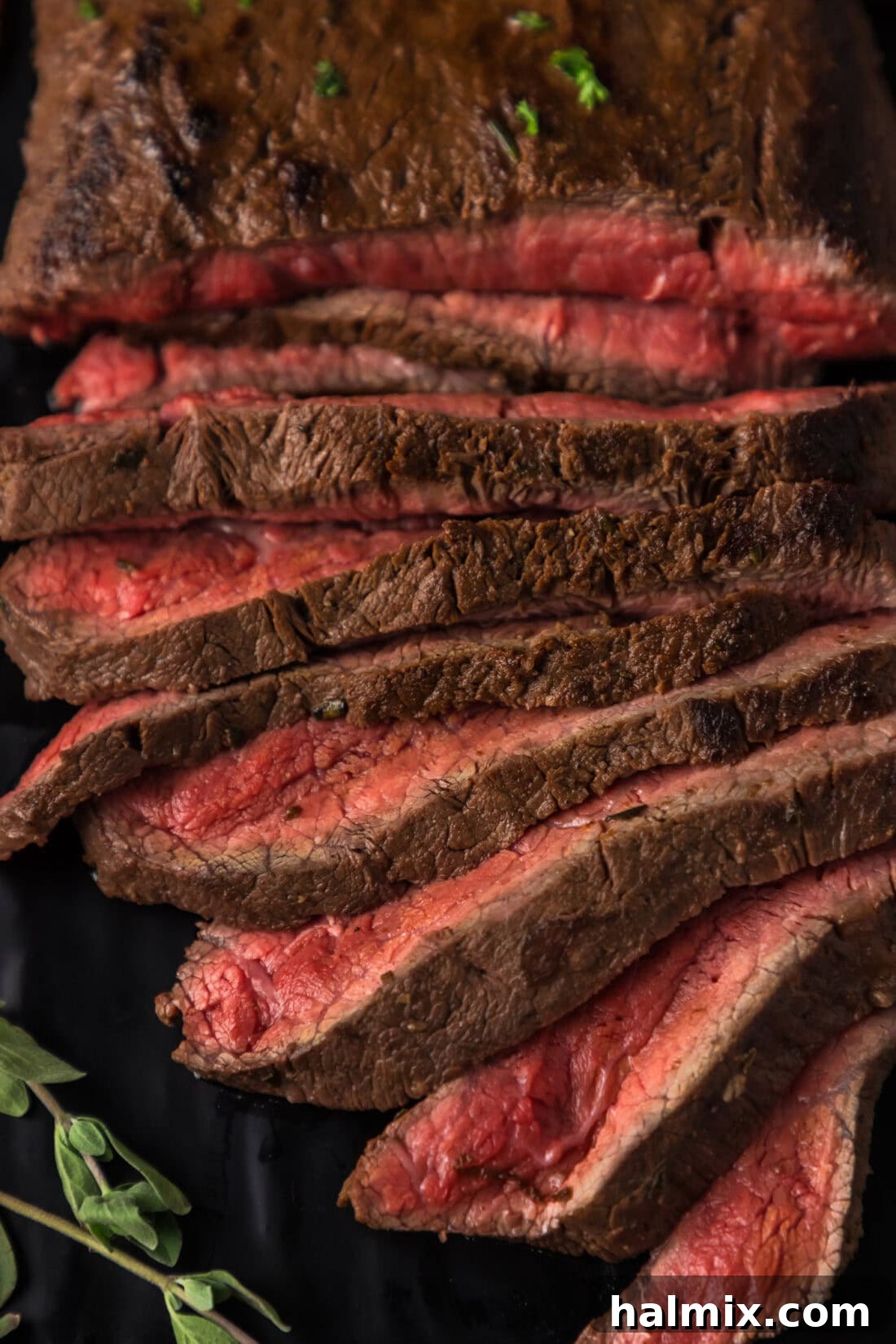
Flat iron steak has a prominent grain. To maximize tenderness, it’s essential to slice the steak against the grain (perpendicular to the direction of the muscle fibers). This shortens the fibers, making each bite easier to chew and more tender. Look for the lines running through the meat and cut across them in thin slices, about ¼-inch thick. This simple technique can make a significant difference in the eating experience.
Elevate Your Meal: Serving Suggestions
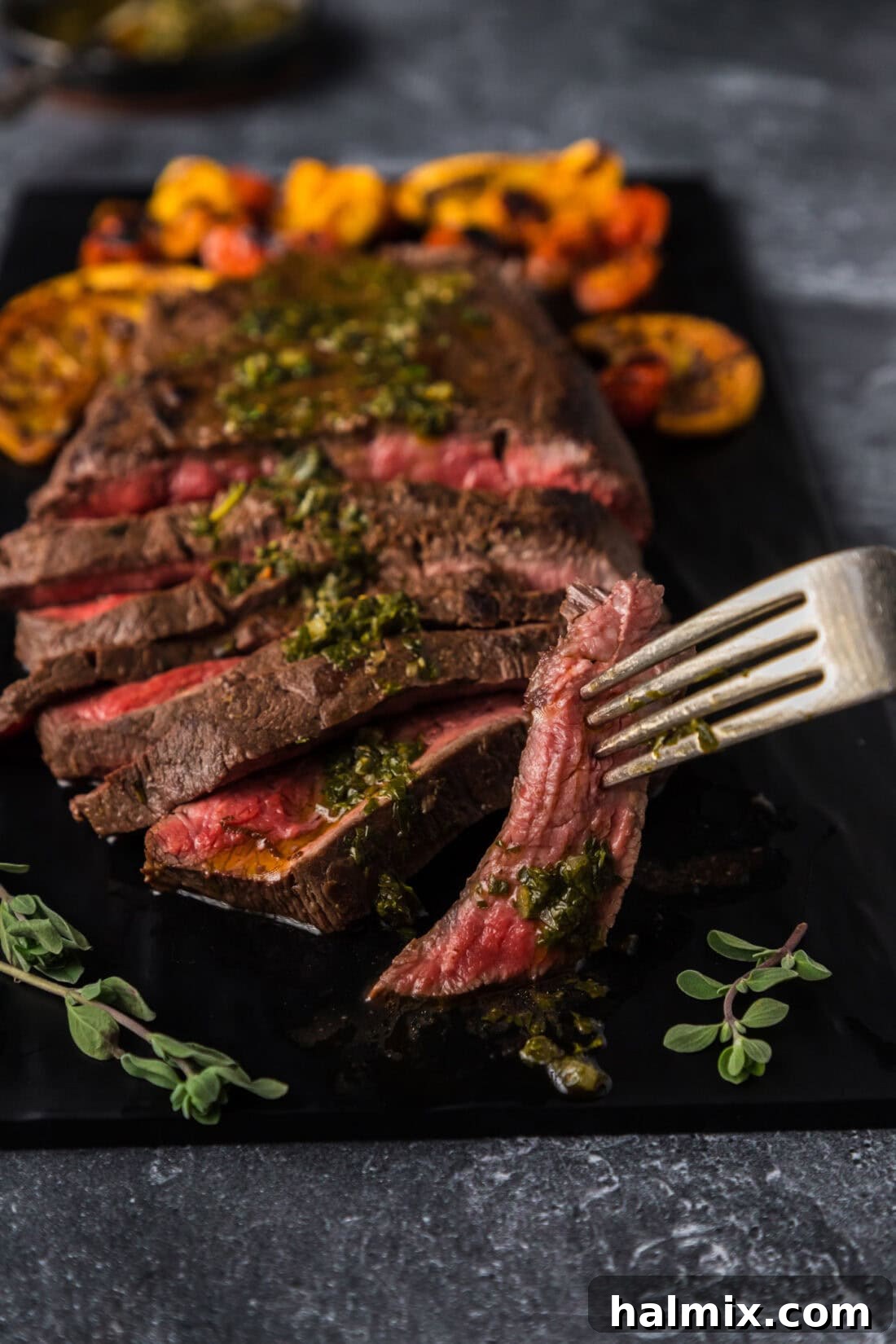
Once your perfectly cooked flat iron steak has rested, carve it against the grain into thin slices. For an explosion of fresh flavor, generously spoon homemade chimichurri sauce over the top. The bright, herbaceous notes of chimichurri perfectly cut through the richness of the beef, creating an unforgettable culinary experience.
To complete your meal, consider pairing this magnificent steak with a variety of complementary sides. Classic choices include roasted potatoes, crispy garlic smashed potatoes, or creamy mashed potatoes. For a lighter touch, serve alongside seasonal roasted vegetables like asparagus, broccoli, green beans, or glazed carrots. A simple leafy green salad with a light vinaigrette also provides a refreshing contrast. If you’re looking for something heartier, garlic butter pasta or a wild rice pilaf would be excellent accompaniments. Don’t forget a good bottle of red wine – perhaps the same varietal you used in your marinade – to enhance the flavors of this exquisite dish. Enjoy!
Explore More Steak Recipes
Craving more delicious steak ideas? Discover additional methods and cuts to satisfy your beef cravings:
- Grilled Steak
- Air Fryer Steak
- Sous Vide Steak
- Smoked Ribeye Steak
I’m passionate about cooking and baking, and I love sharing my culinary adventures with all of you! To make sure you never miss a new recipe, I offer a convenient newsletter. Simply subscribe today and start receiving free daily recipes directly to your inbox!
Garlic Rosemary Flat Iron Steak
IMPORTANT – Don’t forget to check out the Frequently Asked Questions within the blog post for helpful tips and tricks!
Print It
Pin It
Rate It
Save ItSaved!
Ingredients
- 1 ½ pounds flat iron steak
- 2 Tablespoons olive oil for the skillet
Marinade
- 1 Tablespoon minced garlic
- 1 Tablespoon chopped fresh rosemary
- 2 teaspoons garlic salt
- 1 ½ teaspoons chili powder
- 2 teaspoons dry mustard powder
- 3 Tablespoons Dijon mustard
- ¼ cup chopped green onion green part only
- ½ cup dry red wine such as cabernet
Equipment You’ll Need
-
Gallon sized zip top bag
-
Oven-Proof Skillet
-
Instant-read meat thermometer (highly recommended)
Before You Begin
- For convenience and to avoid opening a full bottle, you can purchase single-serve containers or mini bottles of dry red wine from your local grocery or liquor store.
- Flat iron steak, also known as a “top blade steak,” is a wonderfully tender cut of beef from the cow’s shoulder. Achieving a beautiful crust requires patting the meat thoroughly dry with paper towels before searing.
- Always allow your steak to come to room temperature for about an hour before cooking for a more even cook.
Instructions
-
Preheat your oven to 400°F (200°C) to get it ready for finishing the steak.
-
Place the flat iron steak into a gallon-sized zipper plastic bag.
-
In a bowl, combine all the marinade ingredients (minced garlic, chopped fresh rosemary, garlic salt, chili powder, dry mustard powder, Dijon mustard, chopped green onion, and dry red wine) and stir well. Pour this mixture into the bag with the steak.
-
Marinate the steak in the refrigerator for a minimum of 3 hours, or for best results, overnight. About an hour before cooking, remove the steak from the fridge and let it sit at room temperature. Take the steak out of the marinade and pat it thoroughly dry with paper towels.
-
Heat the olive oil in an oven-proof skillet over medium-high heat until it begins to shimmer. Carefully place the steak in the hot skillet and sear for approximately 3-4 minutes per side, creating a rich, brown crust.
-
Transfer the skillet directly to the preheated oven and bake for 5-10 minutes. Cook for 5 minutes for medium-rare (130-135°F / 54-57°C) or up to 10 minutes for medium doneness (135-140°F / 57-60°C). Use an instant-read thermometer for accuracy.
-
Remove the steak to a cutting board, tent it loosely with foil, and allow it to rest for 10 minutes before slicing and serving. This resting period is crucial for a juicy steak.
Expert Tips & FAQs
- Store any cooled leftover steak in an air-tight container in the refrigerator for up to 4 days.
- Reheating steak is best done low and slow in the oven. Preheat to 250°F (120°C). Place steak on a wire rack over a baking sheet to ensure even heat circulation. Heat until warmed through, around 15-20 minutes.
- Always slice flat iron steak against the grain to maximize tenderness.
- Don’t be afraid to adjust the marinade ingredients to your taste. A little extra garlic or a different herb can customize the flavor profile.
Nutrition Information
The recipes on this blog are tested with a conventional gas oven and gas stovetop. It’s important to note that some ovens, especially as they age, can cook and bake inconsistently. Using an inexpensive oven thermometer can assure you that your oven is truly heating to the proper temperature. If you use a toaster oven or countertop oven, please keep in mind that they may not distribute heat the same as a conventional full sized oven and you may need to adjust your cooking/baking times. In the case of recipes made with a pressure cooker, air fryer, slow cooker, or other appliance, a link to the appliances we use is listed within each respective recipe. For baking recipes where measurements are given by weight, please note that results may not be the same if cups are used instead, and we can’t guarantee success with that method.