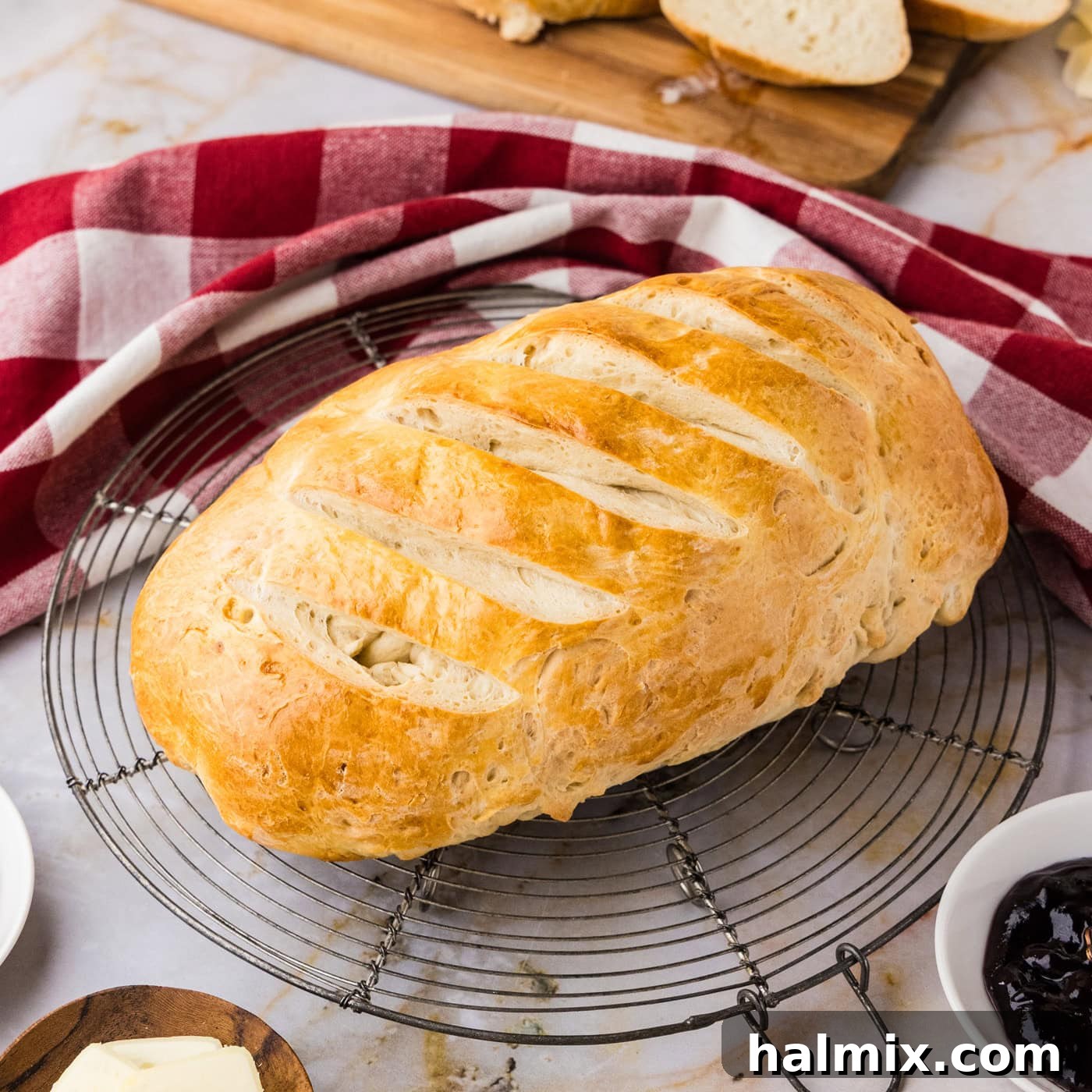
Imagine the comforting aroma of freshly baked bread filling your home, without the hours of waiting that traditional recipes demand. This extraordinary one-hour bread recipe delivers just that: a beautiful golden-brown loaf with a soft, tender crumb, requiring absolutely no long proofing times. In a mere 60 minutes, from start to finish, you can transform simple ingredients into a truly delightful homemade bread.
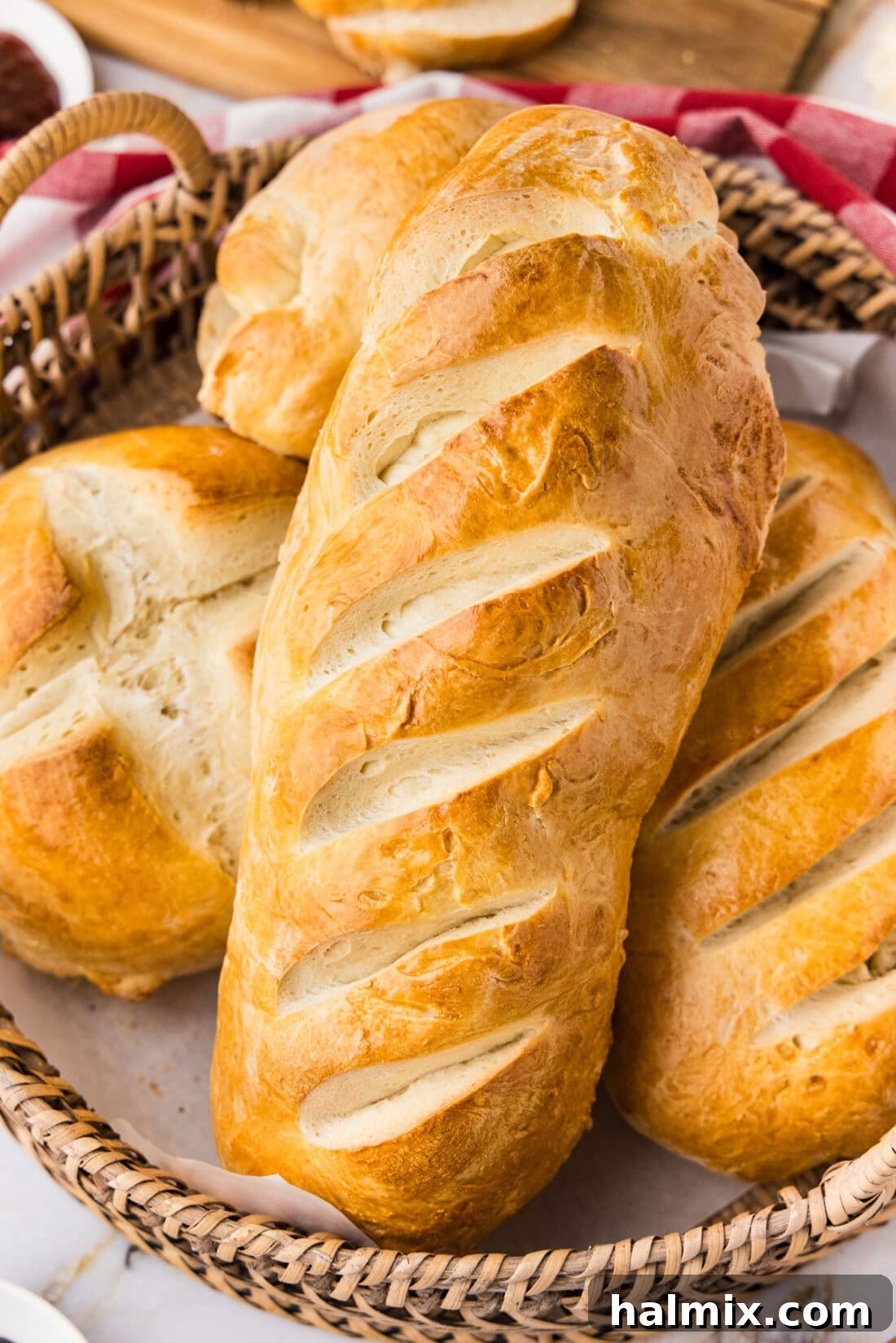
The Magic Behind This Fast & Easy Homemade Bread
For many aspiring bakers, the thought of making homemade bread can be incredibly intimidating. The lengthy process often involves multiple kneading sessions, several hours of rising (proofing), precise measurements, and a seemingly endless list of dos and don’ts. It’s enough to deter even the most enthusiastic home cooks. But what if we told you there’s a revolutionary recipe that cuts through all that complexity, making fresh, delicious bread accessible to everyone?
This One Hour Bread recipe is a game-changer, especially for beginners or anyone with a busy schedule. It truly lives up to its name, promising a delightful loaf from start to finish in just 60 minutes. The secret lies in a streamlined process and the clever use of specific ingredients. There’s no need for the traditional long proofing periods often associated with yeast breads. Instead, this recipe incorporates a quick 25-minute rise, allowing you to enjoy warm, homemade bread without the extensive planning usually required.
The result? Two gorgeous, golden-brown loaves with an irresistible aroma that will undoubtedly have your family flocking to the kitchen. The bread boasts a wonderfully soft interior and a delicately crisp crust that’s just as divine as its scent suggests. You have the flexibility to shape these loaves into classic rectangular loaves or charming circular boules, adding a touch of personal flair to your baking. Furthermore, this recipe keeps on giving; any leftover slices can be repurposed into delicious homemade croutons, ensuring not a single crumb goes to waste. It’s a testament to how simple and rewarding baking can be.
Essential Ingredients for Your One Hour Bread
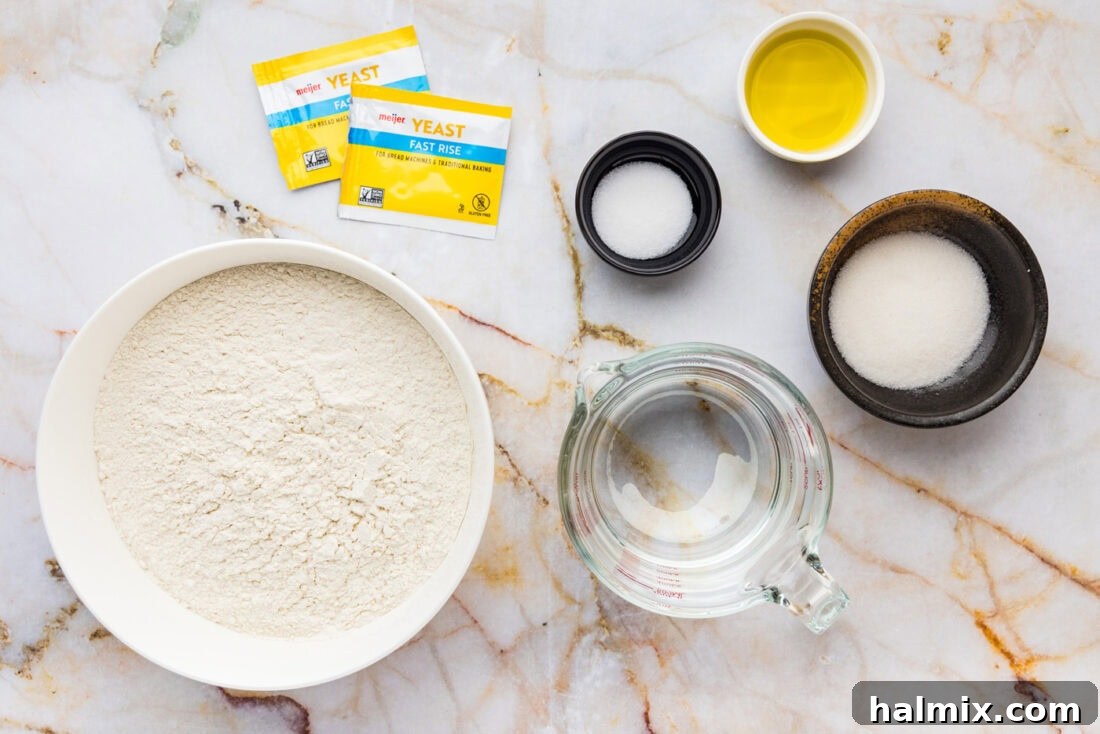
Crafting this incredible bread requires only a handful of common pantry staples. While the process is quick, the quality of your ingredients plays a role in the final flavor and texture. For precise measurements and a comprehensive list, please refer to the printable recipe card available at the conclusion of this article. But first, let’s dive into some key components and why they are essential to achieving the perfect one-hour loaf.
Ingredient Insights & Smart Substitution Strategies
Understanding your ingredients is key to successful baking, especially when working with a rapid recipe like this. Here’s a detailed look at what you’ll need and how to make smart substitutions if necessary.
FLOUR: For the best results, we recommend using bread flour. This type of flour has a higher protein content, which translates to stronger gluten development. Stronger gluten creates a more elastic dough, leading to a chewier texture and a better rise in your final loaf. However, if bread flour isn’t readily available, don’t fret! All-purpose flour can absolutely be used as a suitable substitute. While the bread might be slightly less chewy and have a marginally smaller rise, it will still yield a delicious homemade loaf. The goal here is accessibility and speed, and all-purpose flour certainly helps achieve that.
YEAST: The true hero of this one-hour bread recipe is rapid rise yeast, also known as instant yeast. These two types of yeast are designed to activate quickly and can be mixed directly into your dry ingredients without the traditional step of proofing them in warm water first. This direct mixing is crucial for accelerating the bread-making process. While there are subtle differences in how rapid rise and instant yeast behave, they are interchangeable in this recipe at a 1:1 ratio. Rapid yeast, in particular, is engineered for extra-fast action, making it ideal for our 60-minute timeline. In fact, attempting to pre-proof rapid yeast can sometimes weaken its effectiveness, so stick to mixing it directly with the flour, sugar, and salt. We’ve successfully made this bread using both instant and rapid rise yeast, consistently achieving excellent results.
DOUGH CONSISTENCY: As you mix this recipe, you’ll notice it forms a rather stiff dough. This is completely normal and expected! Don’t be alarmed if the dough balls up in your stand mixer and requires occasional pushing back down with a spatula or your hands during the dough hook phase. This stiffness is what helps create the structure of the bread without needing extensive rising time. If you’re concerned your mixer might struggle with a stiff dough, or if you prefer a more hands-on approach, you can certainly knead the dough by hand on a lightly floured or oiled surface. The key is to achieve a smooth, elastic consistency.
EGG WASH: The egg wash, a simple whisked egg brushed over the top of your loaves before baking, is an optional but highly recommended step. Its purpose is purely aesthetic: it contributes to that beautiful, deep golden-brown crust and a lovely glossy finish, making your homemade bread look as professional as it tastes. If you prefer to skip it, your bread will still be delicious, just perhaps a shade lighter in color.
WATER TEMPERATURE: Pay close attention to the water temperature. Using VERY warm water, ideally between 100-110°F (38-43°C), is crucial for activating the rapid rise yeast quickly without killing it. Water that is too hot will destroy the yeast, while water that is too cool will slow down the activation process, extending your “one hour” timeline. A quick check with a kitchen thermometer ensures you hit the sweet spot.
SALT & SUGAR: These aren’t just for flavor. Sugar acts as food for the yeast, helping it activate and produce carbon dioxide, which makes the bread rise. Salt, while essential for flavor, also helps control yeast activity, preventing it from working too fast and giving the gluten structure time to develop properly. Always measure these carefully.
How to Make Quick & Delicious One Hour Bread
These step-by-step photos and detailed instructions are designed to guide you through the process, helping you visualize each stage of making this incredible bread. For a printable version of this recipe, complete with precise measurements and comprehensive instructions, simply navigate to the recipe card at the bottom of this post.
- **Combine Dry Ingredients:** Begin by adding all your dry ingredients—bread flour, granulated sugar, table salt, and rapid rise yeast—into the bowl of your stand mixer. Using the paddle attachment, give them a quick stir for about 30 seconds to ensure everything is well combined and evenly distributed. This preliminary mix helps the yeast disperse throughout the flour, ensuring a consistent rise.
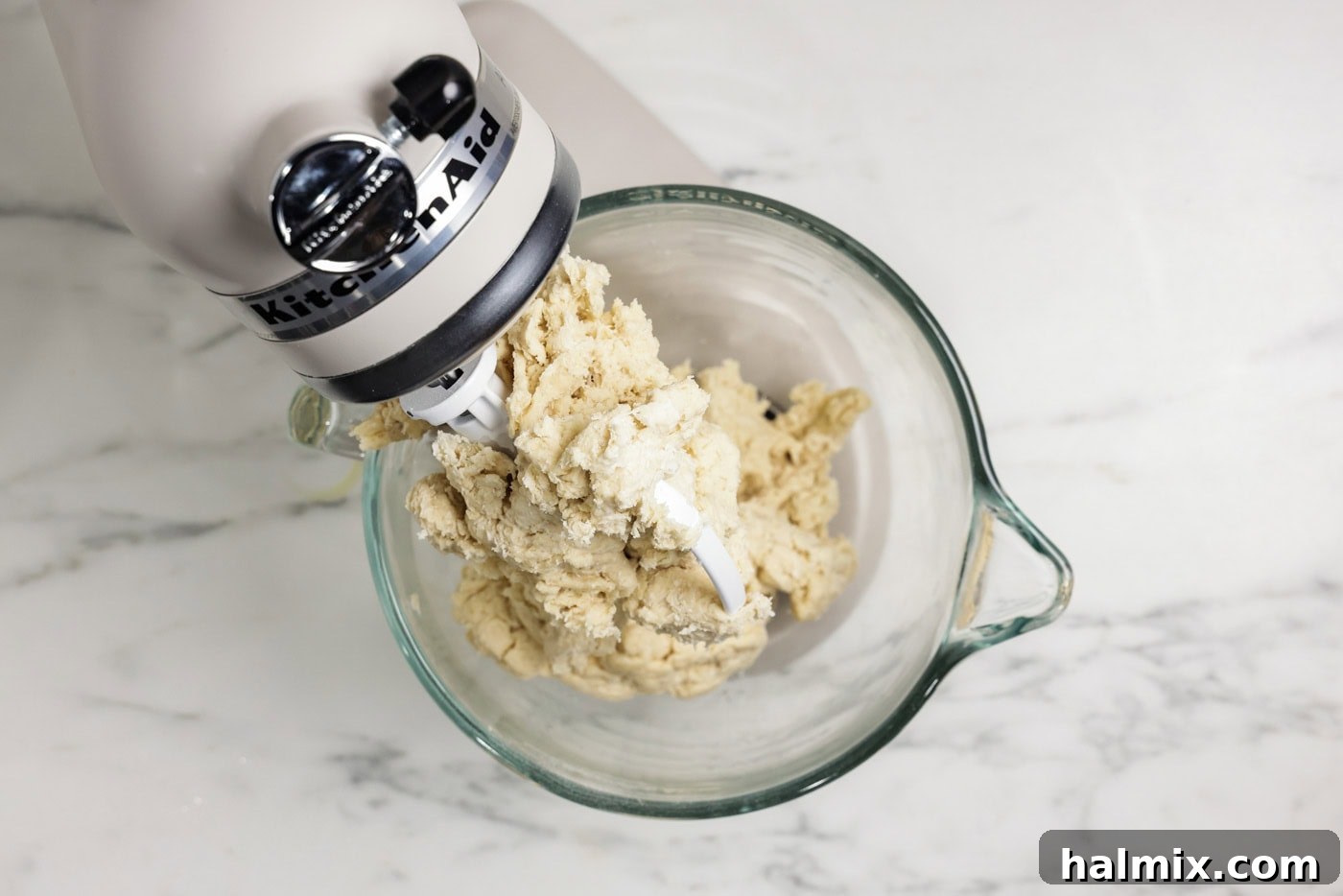
- **Add Wet Ingredients & Initial Mix:** Now, pour in the olive oil and the measured VERY warm water (100-110°F). Mix these wet ingredients with the dry using the paddle attachment for exactly 1 minute. After this initial minute, pause your mixer and check the consistency of the dough. It should be a little sticky and quite stiff, but not so sticky that it clings stubbornly to your fingers when touched. If it’s too dry, add water a teaspoon at a time; if too wet, add a tablespoon of flour.

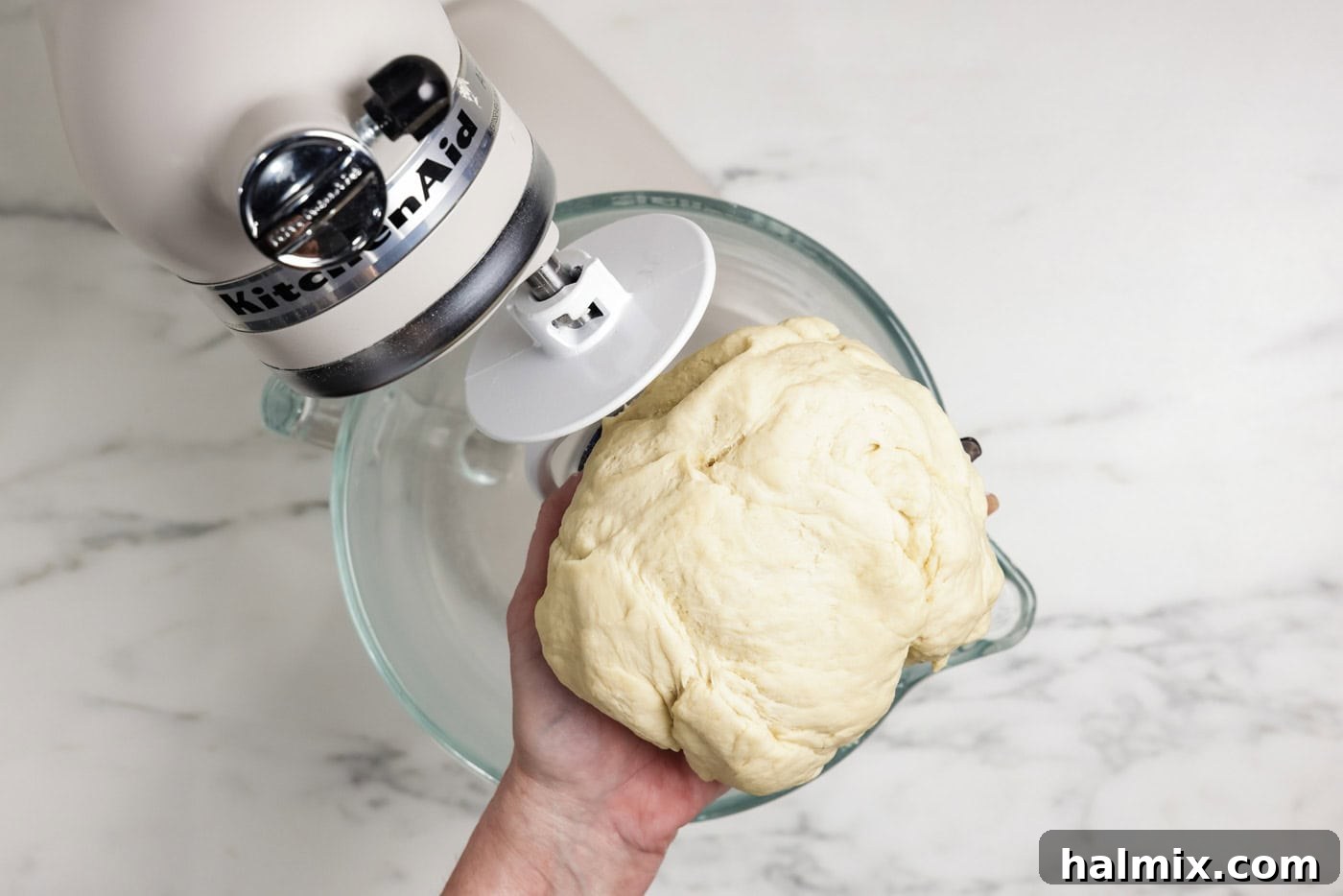
- **Knead with Dough Hook:** Switch out the paddle attachment for the dough hook. Set your mixer to a low speed and mix for 5 minutes. During this kneading process, the dough will be stiff and might try to climb the hook or ball up. Don’t hesitate to stop the mixer occasionally and use a spatula to push the dough back down towards the bottom of the bowl, ensuring it gets thoroughly kneaded. This mechanical kneading is vital for developing the gluten structure quickly.
- **Prepare Baking Sheets:** While the dough is kneading, or immediately after, prepare your baking sheets. Lightly spray two baking sheets with cooking spray and set them aside. This prevents the loaves from sticking and ensures easy transfer after baking.
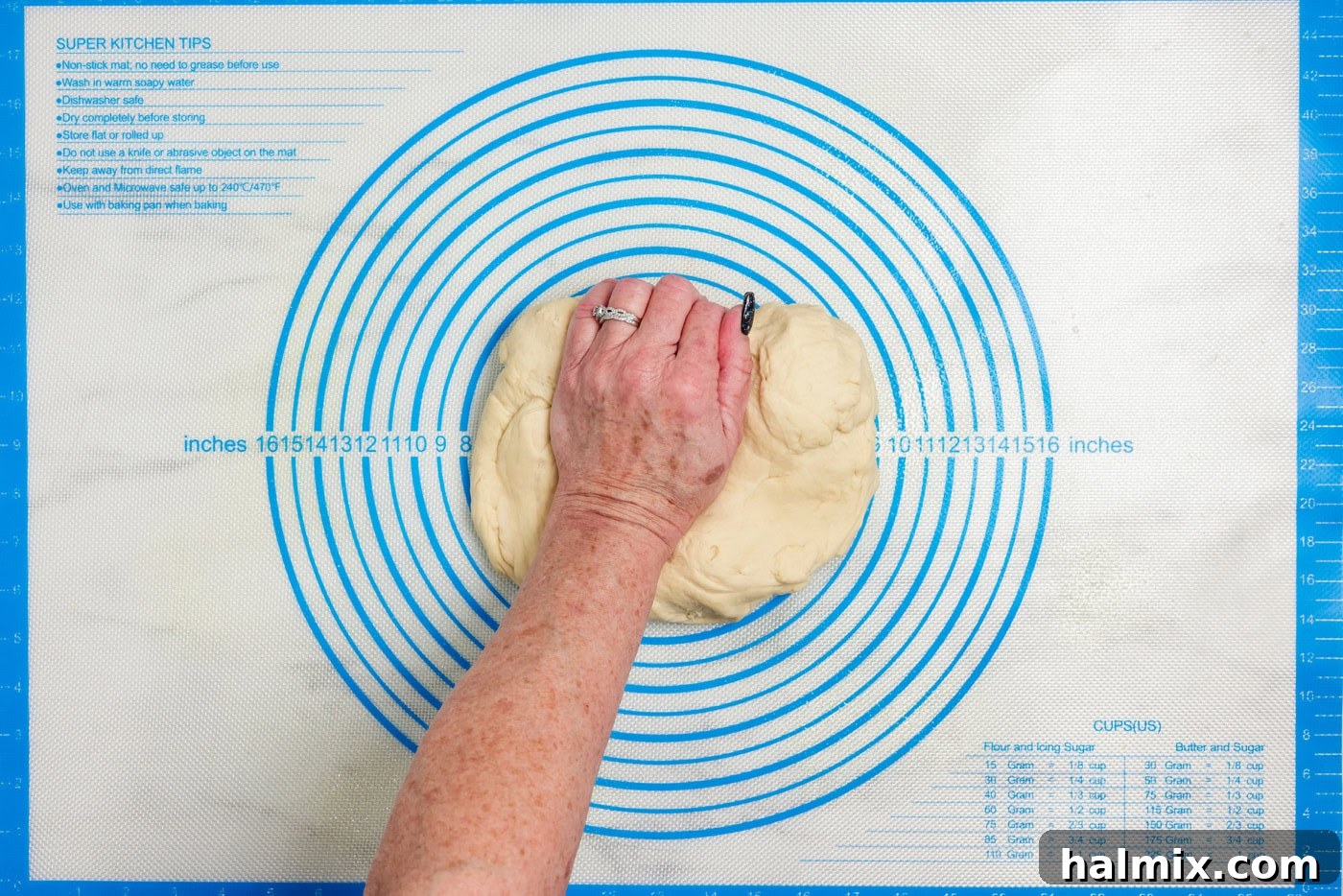
- **Brief Hand Kneading:** Lightly spray your clean kneading surface (a countertop or large cutting board) with cooking spray. Turn the dough out onto this prepared surface. Briefly knead the dough by hand, just for a few turns, until it achieves a smooth, even consistency. This quick manual knead helps to bring the dough together and perfect its texture before shaping.
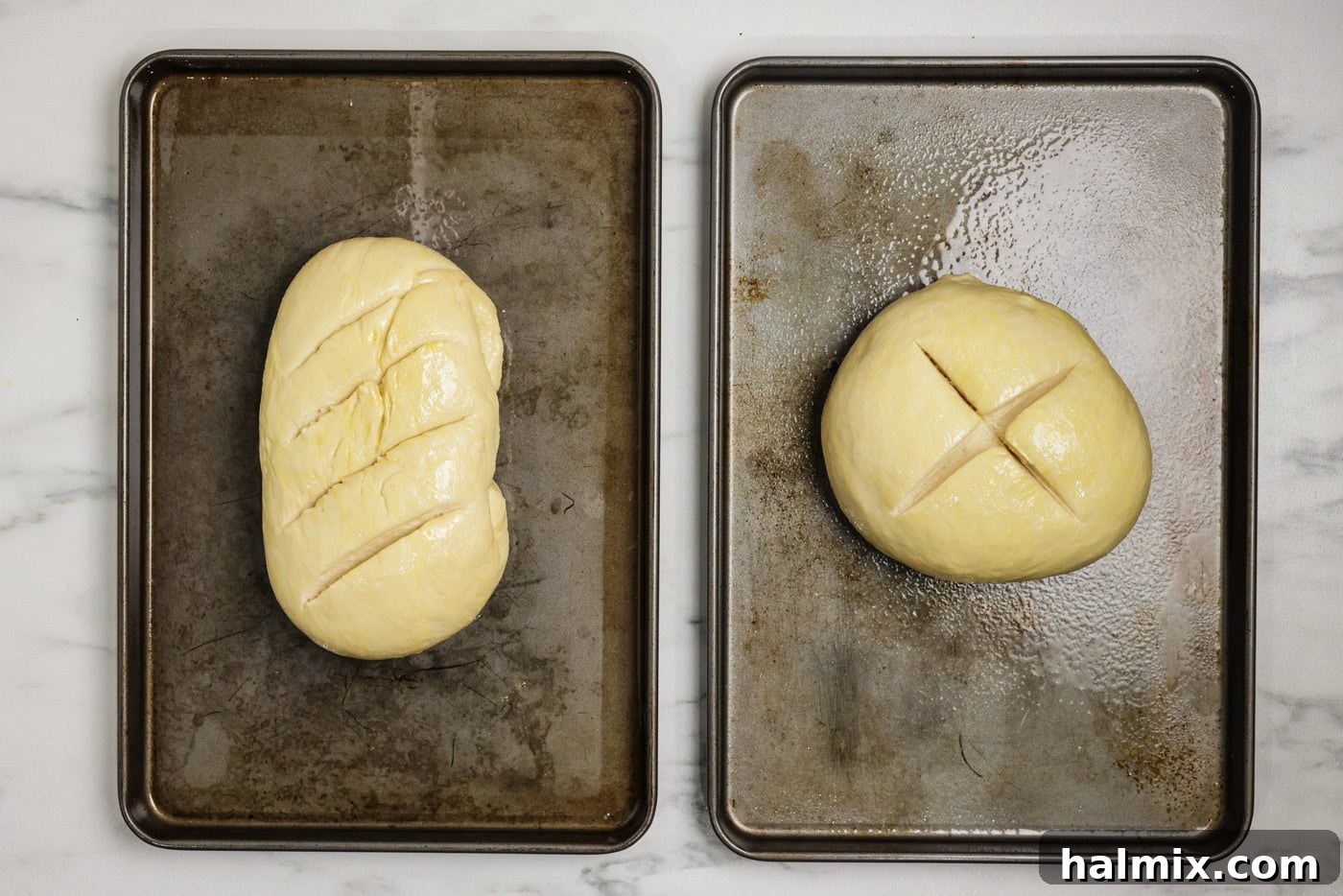
- **Shape & Rise:** Divide the dough into two equal pieces. Form each piece into your desired loaf shape – traditional rectangular loaves, round boules, or even smaller rolls. Place each shaped loaf onto a separate prepared baking sheet. We recommend baking one loaf per sheet to allow ample space for rising and even heat circulation. Cover both loaves loosely with a large, clean dish towel and let them rise in a warm spot for exactly 25 minutes. This is your rapid rise!
- **Preheat Oven:** Approximately 10-15 minutes into the dough’s rise time, preheat your oven to 350°F (175°C). This ensures the oven is at the correct temperature when your loaves are ready to bake.
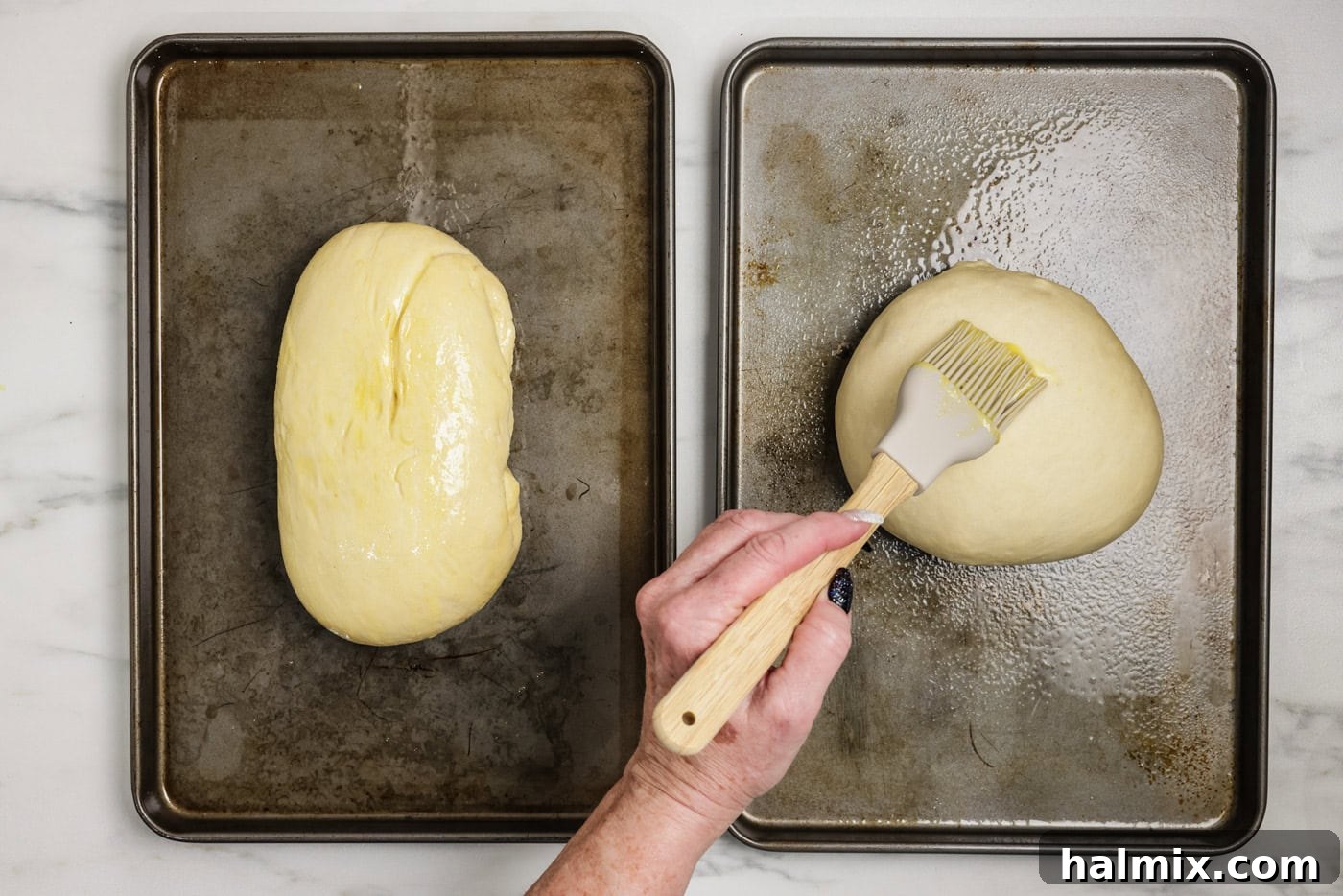
- **Apply Egg Wash (Optional):** Once the loaves have completed their 25-minute rise, whisk the large egg in a small bowl to create an egg wash. Gently brush the top surface of each loaf with this egg mixture. Be careful not to press down too hard, as this can deflate the delicate risen dough. The egg wash will contribute to a beautiful golden-brown color and a lovely sheen on the crust.
- **Score & Bake:** Using a very sharp knife, make several slashes across the top of each loaf. You can lightly spray your knife with cooking spray beforehand to prevent the dough from dragging. Aim for cuts about 1/4-inch deep, made at a 30-degree angle. These slashes, known as scoring, help control the expansion of the bread in the oven, creating beautiful patterns and preventing uncontrolled bursting. Place the baking sheets in the preheated oven and bake for 25 minutes, or until the loaves are beautifully golden brown and sound hollow when tapped on the bottom.
- **Cooling:** Once baked, immediately transfer the hot loaves from the baking sheets to a wire rack. Allow them to cool completely, or at least until they are warm enough to handle comfortably. Cooling on a wire rack ensures air circulation around the entire loaf, preventing the bottom from becoming soggy from trapped steam.
Frequently Asked Questions & Expert Tips for Perfect Bread
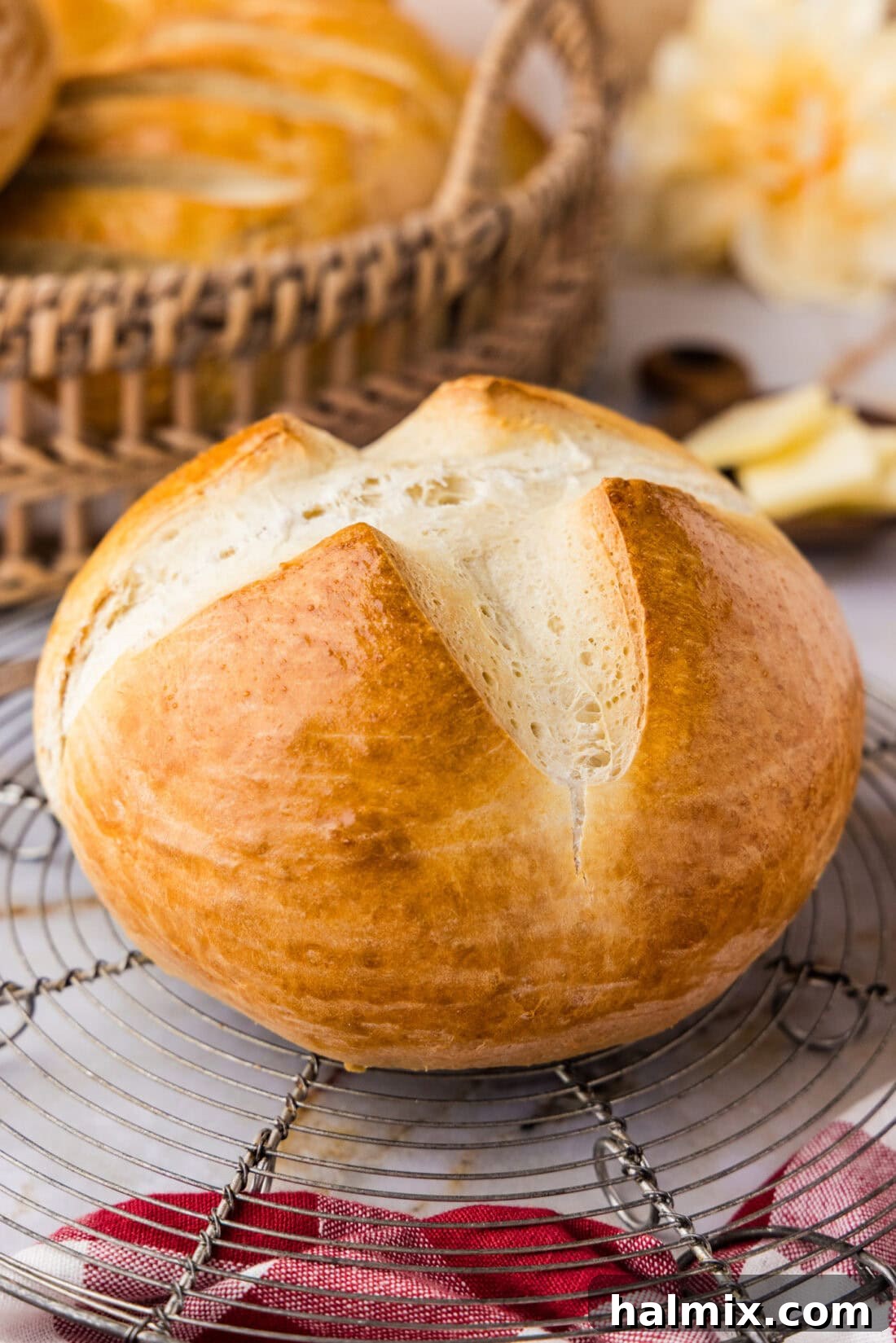
Making slits in bread dough, a technique known as scoring or slashing, serves several important purposes in baking. Primarily, scoring helps control how the loaf expands, or “springs,” in the oven. As the bread bakes, gases inside the dough rapidly expand. Without controlled slits, these gases might burst through the weakest point of the crust unpredictably, leading to an uneven or unattractive appearance. Scoring provides planned escape routes for these rising gases, allowing the bread to expand beautifully and symmetrically. Additionally, scoring influences the final crust texture and the internal crumb structure, and it helps the bread bake more evenly by allowing heat to penetrate more uniformly. Always score your bread just before it goes into the oven, using a very sharp knife or a bread lame for clean, precise cuts.
Proper storage is crucial for preserving the freshness of homemade bread, which lacks the preservatives found in store-bought loaves. For short-term storage (up to 3-5 days at room temperature), store your bread with the cut side down to minimize exposure to air. A bread box is an excellent option as it creates an ideal environment. Alternatively, you can place the loaf in a paper bag, which helps absorb any excess moisture and keeps the crust from softening too much. For an extra layer of protection against staleness, especially in drier climates, place the paper-bagged bread inside a larger plastic bag, squeezing out as much air as possible before sealing. This combination helps maintain a good balance of moisture. Large zip-top bags also work well; simply ensure all excess air is squeezed out before sealing. Avoid refrigerating bread, as it tends to accelerate the staling process.
Absolutely, this one-hour bread freezes beautifully, making it perfect for meal prep or ensuring you always have fresh bread on hand! Once your loaf (or loaves) has fully cooled to room temperature, wrap it tightly in aluminum foil. Then, place the foil-wrapped loaf inside a large zip-top freezer bag, removing as much air as possible before sealing. This double layer of protection helps prevent freezer burn. You can freeze whole loaves for up to 3 months. If you prefer, slice the cooled bread into individual portions before wrapping. For maximum convenience, we recommend wrapping each individual slice in foil before placing them all into a zip-top bag. This way, you can easily grab and thaw only the amount you need. To thaw a whole loaf, simply leave it wrapped in foil at room temperature for a couple of hours. Individual slices can be toasted straight from frozen if preferred, or thawed (still wrapped in foil) at room temperature. Thawing the bread while it’s still wrapped in foil helps prevent condensation from forming on the bread’s surface, which can make it soggy.
Inconsistent oven temperatures are a common problem that can significantly impact baking results, especially for recipes like bread where precise heat is important for proper rise and crust development. Many ovens, particularly older models, can run hotter or cooler than their display indicates. An inexpensive oven thermometer is an essential tool for any baker. Simply place it inside your oven and monitor it to see if your oven is truly heating to the target temperature. Adjust your oven’s setting accordingly (e.g., if it reads 25°F low, set it 25°F higher). This simple step can make a big difference in ensuring consistently perfectly baked bread.
Delightful Ways to Serve Your One Hour Bread
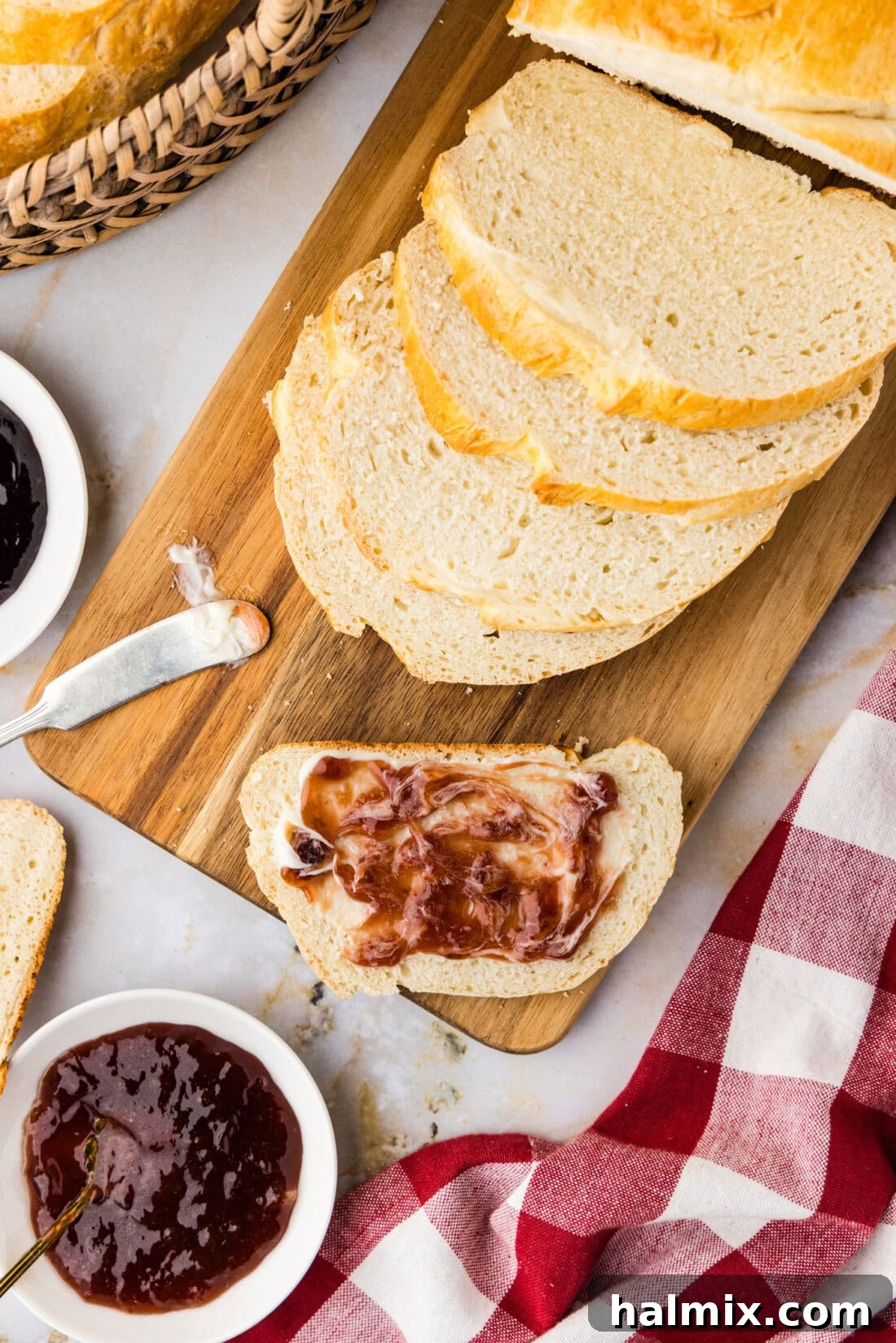
There’s nothing quite like the taste of warm, freshly baked bread. This quick and easy one-hour bread is incredibly versatile and pairs wonderfully with a myriad of accompaniments. For a simple yet utterly satisfying experience, serve it warm with a generous smear of butter, allowing it to melt into the soft, porous interior. Alternatively, elevate your breakfast or brunch by slathering slices with your favorite fruit jam, jelly, or even a dollop of honey or cream cheese. The subtle sweetness of the bread complements these toppings beautifully.
Beyond breakfast, this bread serves as an excellent foundation for a variety of meals. Its sturdy yet soft texture makes it perfect for crafting incredible sandwiches, whether you’re loading it with deli meats, cheese, or fresh vegetables. Toast leftover slices for a quick snack, or transform them into savory garlic bread or crostini for an appetizer. As previously mentioned, remember to save any leftover (or slightly stale) pieces of bread to make homemade croutons – a truly delicious way to ensure no part of this wonderful bread goes to waste. It’s a testament to the fact that even the simplest ingredients, when baked with care, can bring so much joy to your table.
While it’s undeniably convenient to grab a loaf from the grocery store, the unparalleled satisfaction and superior taste of homemade bread are unmatched. I vividly recall the first time my youngest daughter, accustomed to store-bought bread, tried a slice of this homemade loaf. Her eyes lit up as she exclaimed, “This was yummy! Can I have more later?” That genuine reaction perfectly encapsulates the magic of this recipe. It’s surprisingly easy, incredibly delicious, and I genuinely hope you and your family fall in love with it as much as we have!
Discover More Irresistible Homemade Bread Recipes
If you’ve enjoyed the simplicity and deliciousness of our One Hour Bread and are eager to explore further into the rewarding world of homemade baking, we have a curated selection of other fantastic bread recipes for you to try:
- Artisan Dutch Oven Bread
- Flavorful Rosemary Garlic Bread
- Classic Homemade Italian Bread
- Wholesome Homemade Multigrain Bread
I absolutely love baking and cooking, and sharing my kitchen adventures and tested recipes with all of you brings me immense joy! Keeping up with new recipes daily can be tricky, which is why I offer a convenient newsletter delivered straight to your inbox every time a fresh recipe posts. Simply subscribe here and start receiving your free daily recipes to inspire your next culinary creation!
One Hour Bread
IMPORTANT – Scroll up to the blog post for helpful Frequently Asked Questions and Expert Tips!
Print It
Pin It
Rate It
Breads
American
18
servings (2 loaves total)
1 hour
159
Amanda Davis
Ingredients
- 24 ounces white bread flour (680g, or approximately 5 1/4 cups)
- 3 Tablespoons granulated sugar
- 1 ½ teaspoons table salt
- .50 ounce rapid rise yeast (2 packets, 14g)
- 1 ½ Tablespoons olive oil
- 14 ounces VERY warm water (100-110°F / 38-43°C, or 1 3/4 cups)
- 1 large egg (for egg wash, optional)
- cooking spray (such as vegetable, canola, or olive oil spray)
Things You’ll Need
-
Stand mixer (with paddle attachment and dough hook)
-
Baking sheets
-
Basting brush
-
Sharp knife or bread lame
Before You Begin: Key Considerations
- This recipe is designed to yield 2 standard loaves of bread, which typically translates to about 16-20 slices, depending on how you shape and slice them.
- While bread flour is recommended for optimal chewiness and rise due to its higher protein content, all-purpose flour is a perfectly acceptable substitute and will still produce a delicious loaf.
- The success of this rapid recipe hinges on using rapid rise or instant yeast. Both are suitable and can be used interchangeably at a 1:1 ratio. Remember, these types of yeast are designed to be mixed directly with dry ingredients, so avoid pre-proofing them in water.
- Expect a stiff dough. It’s normal for the dough to gather and ball up around the dough hook in your mixer. You may need to pause and push it down occasionally. If you prefer, or if your mixer isn’t heavy-duty, you can easily knead the dough by hand.
- Ensure your water temperature is between 100-110°F (38-43°C). This temperature is crucial for quickly activating the rapid rise yeast without hindering its performance.
Instructions
-
In the bowl of your stand mixer, combine the white bread flour, granulated sugar, table salt, and rapid rise yeast. Mix these dry ingredients with the paddle attachment for about 30 seconds to ensure they are well distributed. Then, add the olive oil and the VERY warm water. Mix for 1 minute with the paddle attachment. Check the dough’s consistency; it should be somewhat sticky and stiff, but manageable.24 ounces white bread flour, 3 Tablespoons granulated sugar, 1 1/2 teaspoons table salt, .50 ounce rapid rise yeast, 1 1/2 Tablespoons olive oil, 14 ounces VERY warm water
-
Swap the paddle attachment for the dough hook. Mix the dough on a low speed for 5 minutes. The dough will be stiff; occasionally stop the mixer to push the dough back down from the sides of the bowl or off the dough hook, ensuring it’s thoroughly kneaded.
-
Lightly spray two baking sheets with cooking spray and set them aside, ready for your loaves.
-
Spray your kneading surface (countertop or board) with cooking spray. Turn the dough out onto this surface. Knead the dough briefly, just for a few turns, until it is smooth and uniform in consistency. This quick step helps to refine the dough’s texture.
-
Divide the dough into 2 equal pieces. Shape each piece into your desired loaf shape. Place the formed loaves onto the prepared baking sheets (one loaf per sheet). Cover them loosely with a large dish towel and let them rise in a warm spot for 25 minutes.
-
During the dough’s rising time, preheat your oven to 350°F (175°C) to ensure it’s ready when the loaves are.
-
Once the loaves have finished rising, whisk the large egg in a small bowl to create an egg wash. Gently brush the top surface of each loaf with the egg wash. This is optional but adds a beautiful golden sheen to the crust.1 large egg
-
Using a sharp knife (lightly sprayed with cooking spray if needed to prevent dragging), make several shallow slashes (about 1/4-inch deep) on the top of each loaf at a 30-degree angle. Bake the loaves for 25 minutes, or until they achieve a beautiful golden-brown color.
-
Immediately transfer the baked loaves to a wire rack to cool completely. This prevents condensation and keeps the crust crisp.
Expert Tips & FAQs
- **Storing Your Homemade Bread:** To keep your bread fresh for up to 5 days at room temperature, store it with the cut side down in a bread box. Alternatively, place it in a paper bag to absorb excess moisture, then cover the paper bag with a plastic bag to prevent it from going stale. A large zip-top bag, with as much air squeezed out as possible, also works wonders. Avoid refrigeration as it can accelerate staling.
- **Freezing for Later Enjoyment:** This bread freezes exceptionally well! Once completely cooled, wrap each loaf tightly in foil, then place it inside a large zip-top freezer bag, removing all excess air. Freeze for up to 3 months. For easy portioning, you can slice the bread before freezing and wrap each slice individually in foil for grab-and-go convenience. To thaw a whole loaf, simply leave it wrapped at room temperature for a couple of hours. Individual slices can be toasted directly from frozen or thawed (still wrapped) at room temperature. Keeping the foil on during thawing helps prevent condensation from making the bread soggy.
Nutrition Information
Approximate nutritional values per serving (1 slice, based on 18 servings per 2 loaves):
- Calories: 159 cal
- Carbohydrates: 30g
- Protein: 5g
- Fat: 2g
- Saturated Fat: 0.3g
- Polyunsaturated Fat: 0.4g
- Monounsaturated Fat: 1g
- Trans Fat: 0.001g
- Cholesterol: 5mg
- Sodium: 197mg
- Potassium: 47mg
- Fiber: 1g
- Sugar: 2g
- Vitamin A: 8 IU
- Vitamin C: 0.002mg
- Calcium: 7mg
- Iron: 0.4mg
Please note that these are approximate values and may vary based on exact ingredient brands and preparation methods.
Tried this Recipe? Pin it for Later!
Follow on Pinterest @AmandasCookin or tag #AmandasCookin!
The recipes on this blog are carefully tested using a conventional gas oven and gas stovetop. It’s important to remember that all ovens, especially as they age, can exhibit variations in cooking and baking consistency. We highly recommend using an inexpensive oven thermometer to verify that your oven is consistently heating to the proper temperature. If you utilize a toaster oven or countertop oven, please be aware that heat distribution might differ from a full-sized conventional oven, potentially requiring adjustments to your cooking or baking times. For recipes prepared with appliances like pressure cookers, air fryers, or slow cookers, a link to the specific models we use is typically provided within each recipe. Additionally, for baking recipes where measurements are given by weight, please note that substituting with cup measurements may not yield identical results, and we cannot guarantee success with that method.
This post was originally published here on December 11, 2009, and has since been extensively updated with new photos, enhanced instructions, and valuable expert tips to improve your baking experience.