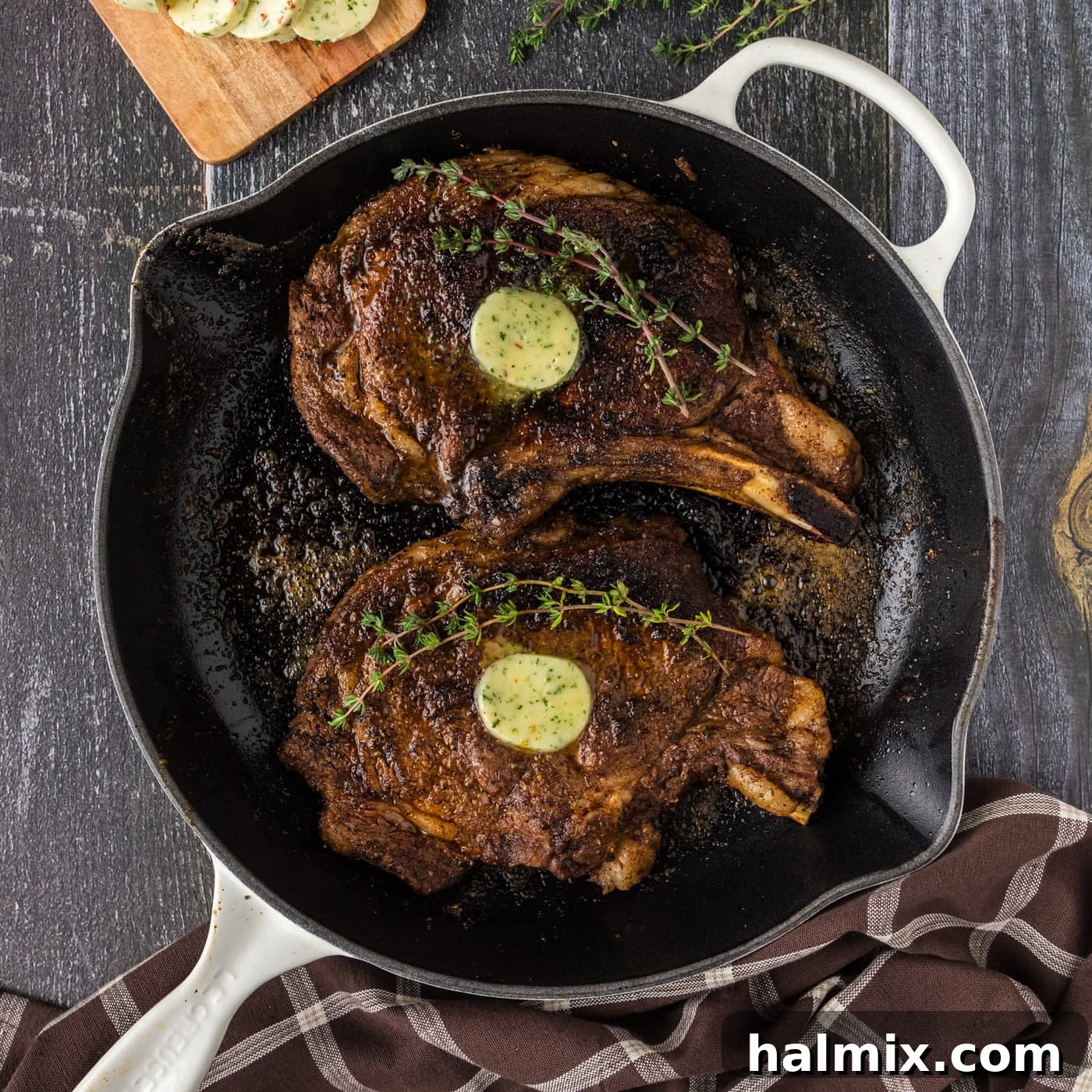
Unlock the secrets to crafting a perfectly seared, tender, and incredibly juicy bone-in ribeye steak right in your own kitchen. Forget crowded steakhouses and exorbitant prices – with our foolproof method, you can achieve restaurant-quality results in less than 25 minutes, from start to finish. This comprehensive guide will walk you through every step, from selecting the finest cuts to mastering the pan-sear and oven-finish technique, ensuring a culinary masterpiece every time. Get ready to impress your family and friends with a succulent ribeye that’s bursting with flavor, seasoned to perfection, and topped with a luscious pat of melting butter.
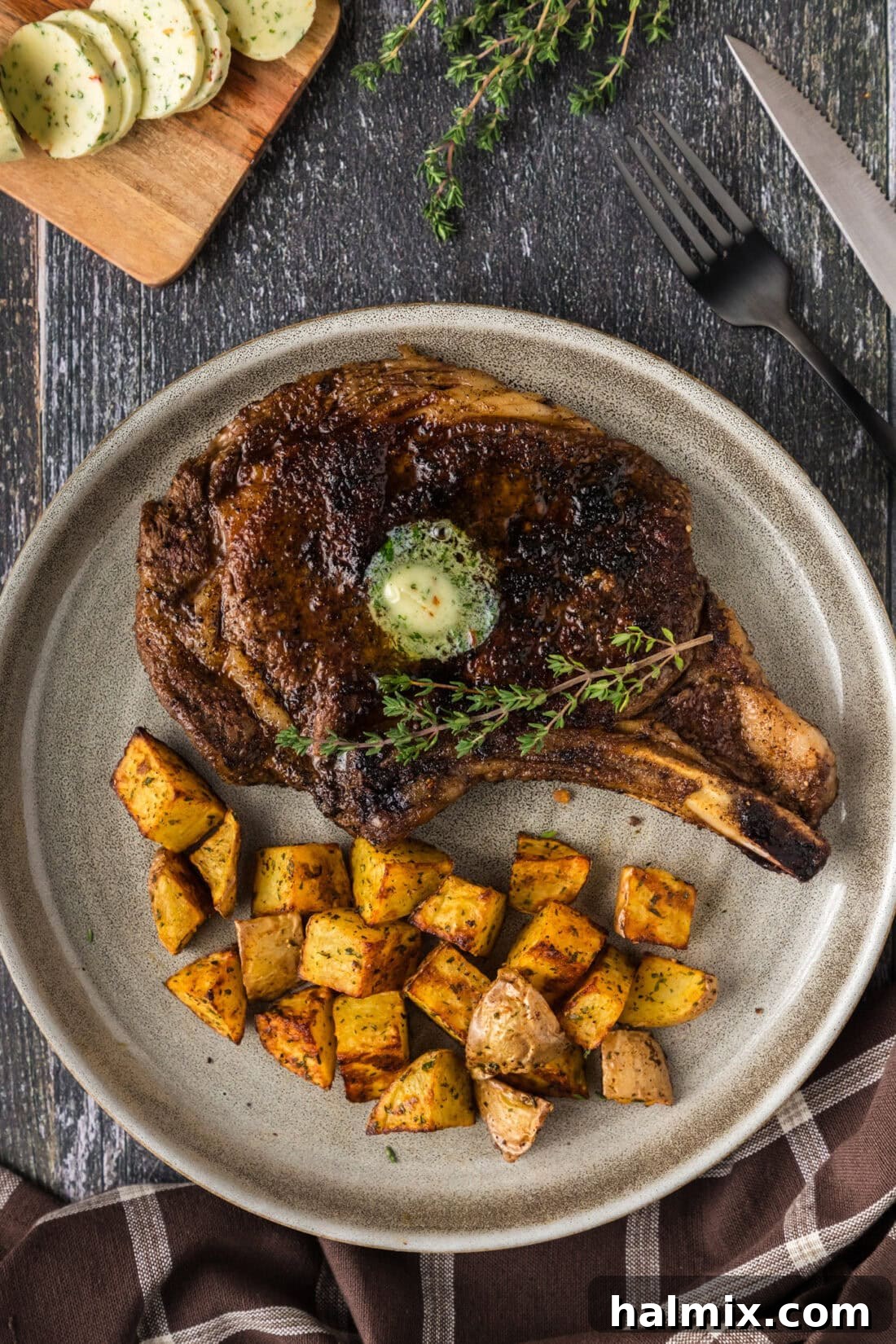
Why This Recipe Guarantees the Perfect Ribeye Steak
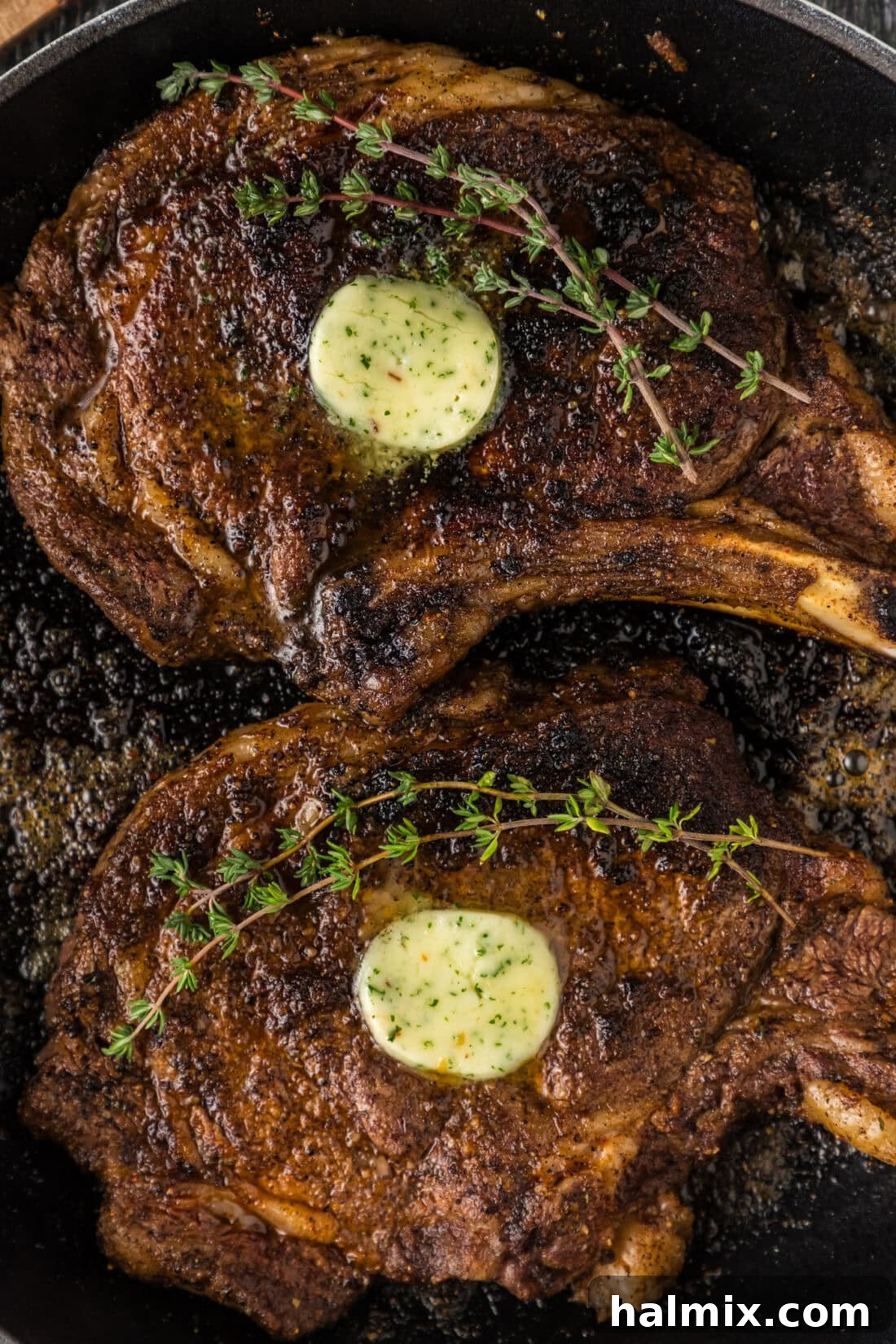
Craving a rich, flavorful steak that rivals your favorite steakhouse? Look no further. This recipe isn’t just about cooking a bone-in ribeye; it’s about mastering a technique that consistently delivers perfectly juicy, incredibly tender results. We simplify the process, showing you how a few simple ingredients—a robust seasoning rub, a touch of butter, and under 25 minutes of your time—can transform a beautiful cut of beef into an unforgettable meal. Say goodbye to dry, overcooked steaks and hello to a golden-brown crust and a melt-in-your-mouth interior.
The bone-in ribeye is often hailed as a king among steaks, and for good reason. While many methods exist for preparing this magnificent cut – from smoked ribeye for deep, earthy flavors, to a classic cast iron ribeye for an unparalleled crust, or even advanced techniques like reverse searing for edge-to-edge perfection – our method focuses on simplicity and efficiency without compromising on taste or texture. The presence of the bone in this particular cut isn’t just for show; it acts as a natural insulator, slowing down the cooking process slightly and helping to maintain a more consistent internal temperature. This results in a steak that’s remarkably tender and exceptionally juicy, retaining more moisture and flavor as it cooks. It’s the secret weapon for achieving that ideal succulence everyone desires in a truly great steak.
Essential Ingredients for Your Bone-In Ribeye Steak
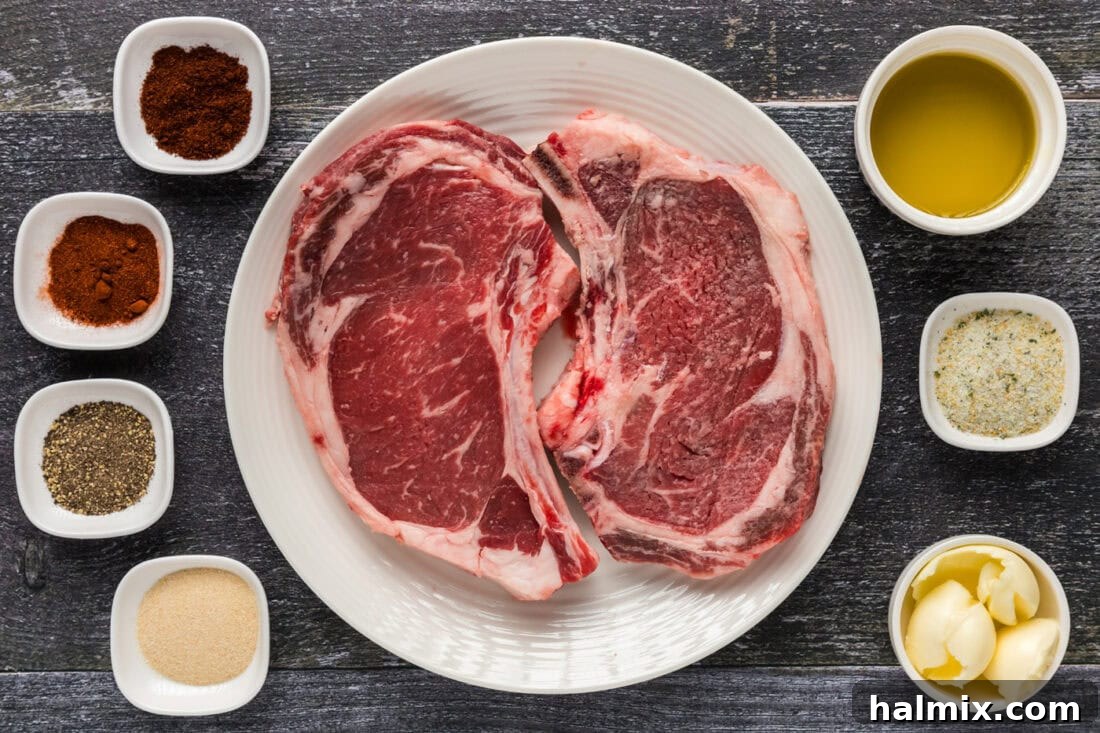
Crafting the perfect bone-in ribeye requires a careful selection of fresh, high-quality ingredients. While the full, printable recipe with precise measurements and detailed instructions is available at the end of this post, here’s a breakdown of what you’ll need to create this phenomenal steak experience at home. Each component plays a crucial role in developing the rich flavors and tender texture that define a truly great ribeye.
Ingredient Spotlight & Expert Substitutions
Understanding each ingredient not only helps in preparation but also empowers you to make informed substitutions and adjustments for your perfect steak.
BEEF: The Star of the Show
For this mouthwatering recipe, you’ll need approximately 2 ½ pounds of bone-in ribeye steak, ideally cut to about 1 inch thick each. We highly recommend opting for USDA Prime or Choice grade ribeye steaks. These grades signify superior marbling, which is the intramuscular fat that renders during cooking, infusing the meat with incredible flavor and keeping it exceptionally tender and juicy. When selecting your steaks, look for a vibrant red color and consistent marbling throughout. If you choose a thicker cut, remember to adjust your cooking time and always rely on an instant-read thermometer to gauge doneness accurately. While this method is designed for bone-in ribeye, it can also be adapted for boneless cuts. Just be mindful that boneless steaks tend to cook faster, so closer monitoring of the internal temperature is essential to prevent overcooking.
BUTTER: The Finishing Touch for Richness
A generous pat of butter is key to achieving that rich, savory finish and beautiful crust. Unsalted butter is our preferred choice as it allows you to control the overall sodium content of your dish, letting the natural flavors of the beef and seasonings shine. However, if you’re looking to add an extra layer of complexity, feel free to experiment with flavored butters. Garlic herb butter, truffle butter, or even a smoked paprika butter can elevate your ribeye to new culinary heights. Regardless of your choice, the butter will melt into the steak, creating an irresistible aroma and a decadent sheen.
SEASONING: Crafting the Flavorful Rub
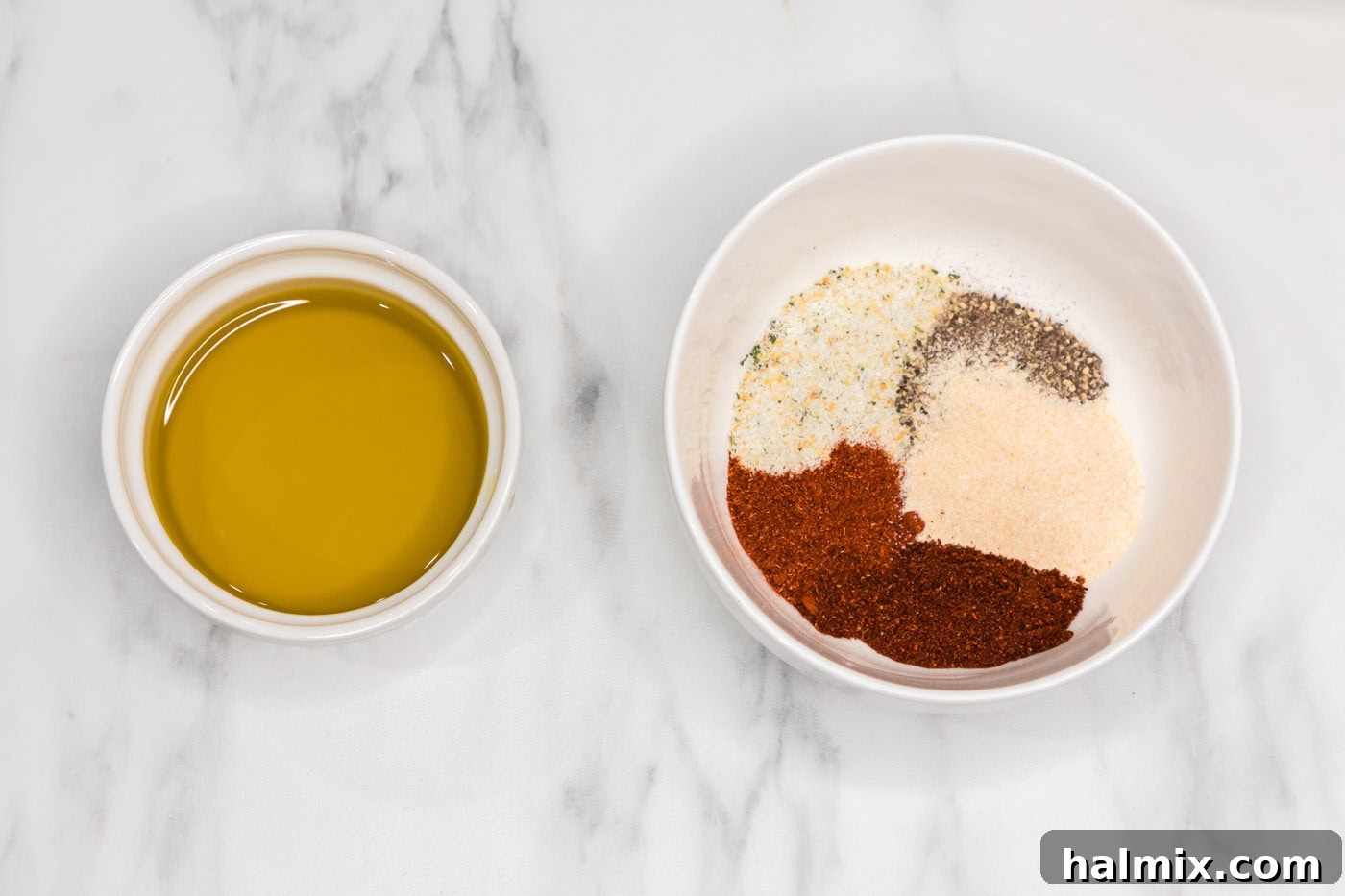
Our recommended seasoning blend combines paprika, chili powder, onion powder, garlic salt, and freshly cracked black pepper, all bound together with a touch of olive oil to create a flavorful rub that adheres beautifully to the steak. This combination offers a balance of smoky, earthy, and aromatic notes that complement the rich beef flavor without overpowering it. The olive oil also assists in achieving that coveted crispy crust during searing. Feel free to customize this rub to your preference. You can adjust the ratios of spices, add a pinch of cayenne for heat, a dash of dried oregano, or even incorporate a good quality store-bought steak seasoning blend for convenience. The goal is to create a robust layer of flavor that penetrates the meat as it cooks.
Mastering the Art of Cooking Bone-In Ribeye: A Step-by-Step Guide
These step-by-step photos and detailed instructions are designed to help you visualize each stage of making this incredible bone-in ribeye. For the full printable recipe, complete with precise measurements and a condensed instruction list, please Jump to Recipe at the bottom of this post.
- Prepare Your Oven: Begin by preheating your oven to 350°F (175°C). This ensures it’s perfectly ready to finish your steaks after searing, allowing for even cooking and a juicy interior.
- Craft Your Flavorful Rub: In a small bowl, combine half of the olive oil with the paprika, chili powder, garlic salt, and black pepper. Stir these ingredients thoroughly until they form a cohesive, aromatic paste. This blend is the heart of your steak’s flavor profile.

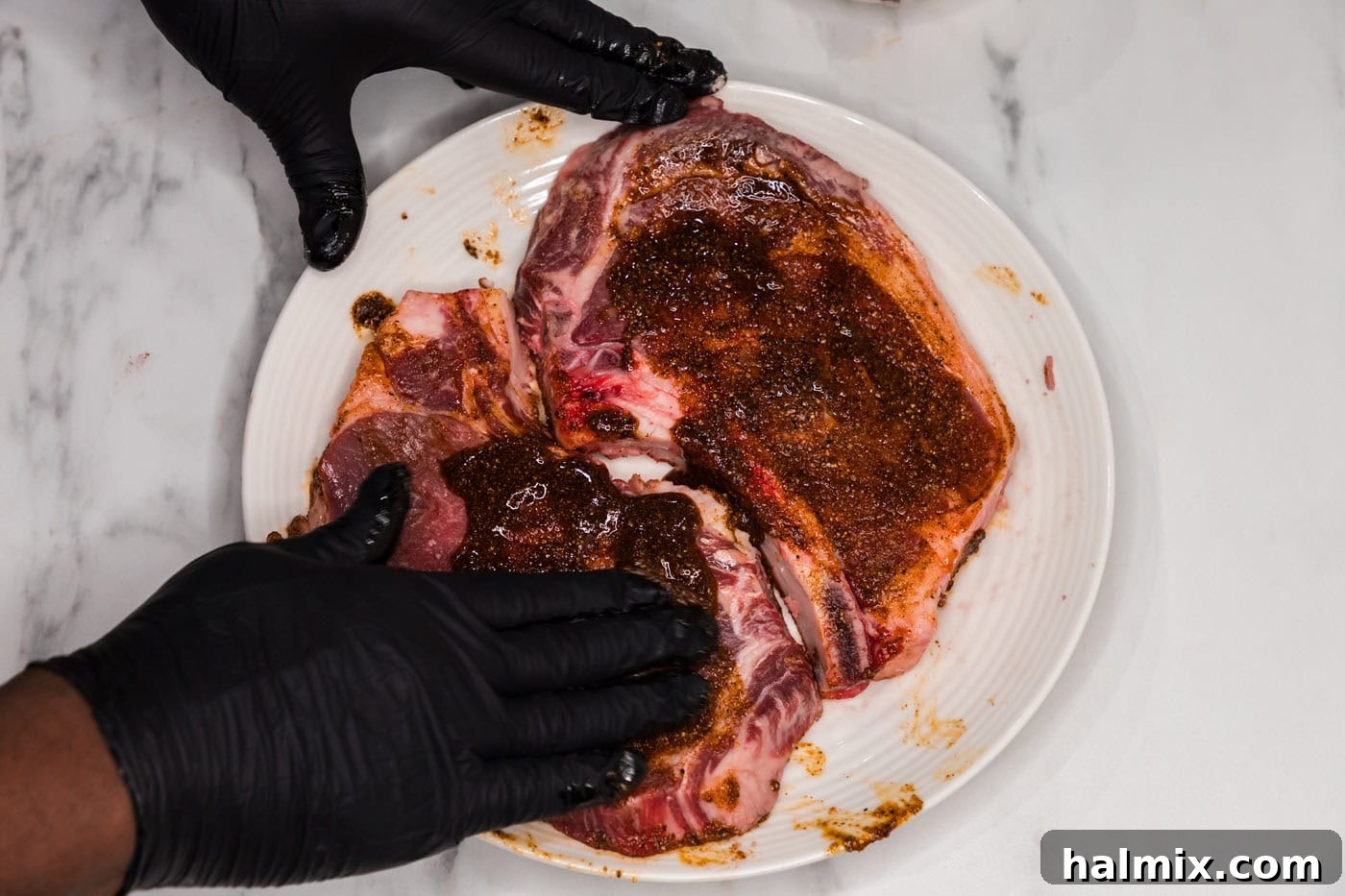
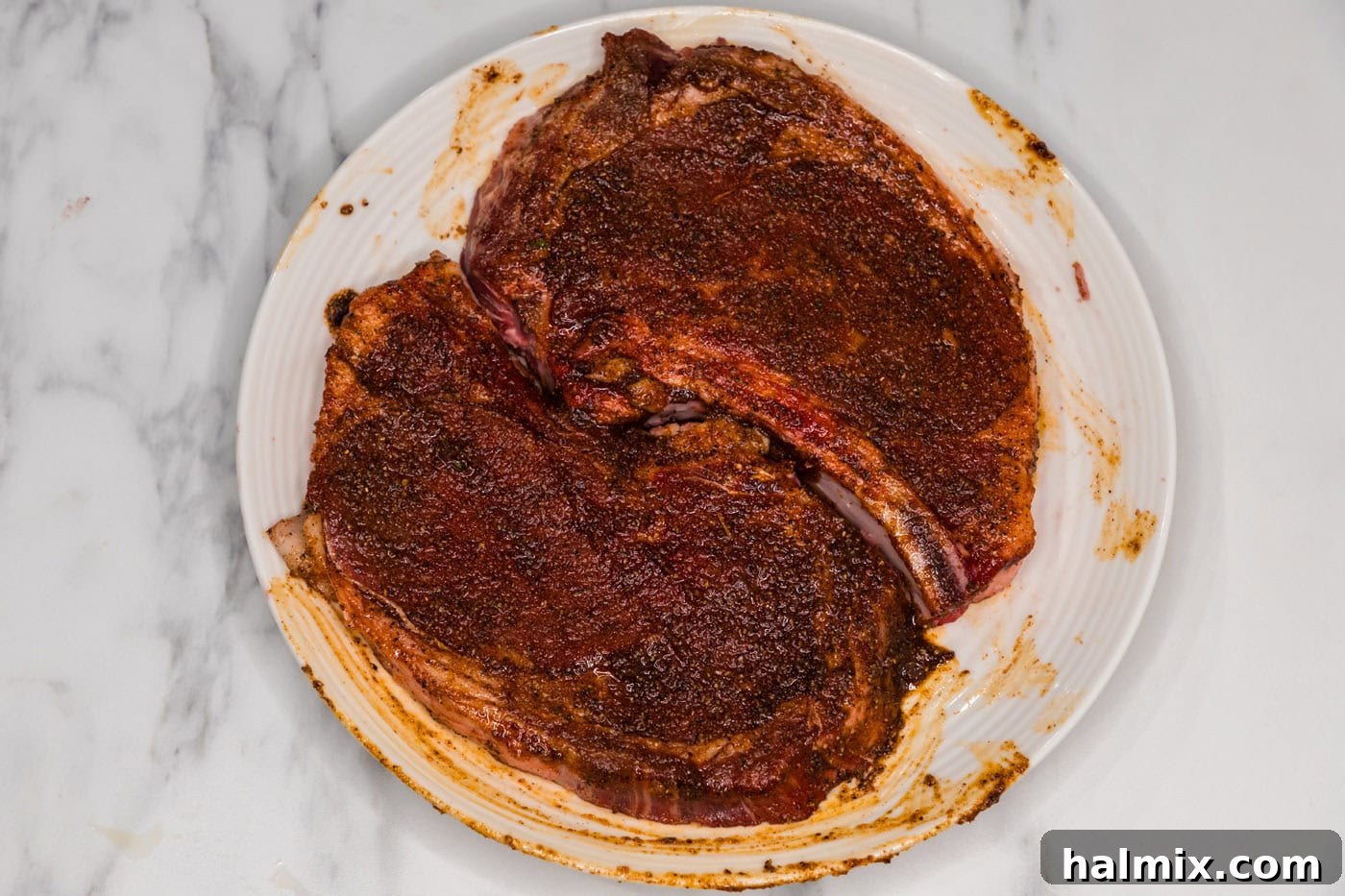
- Season the Steaks Liberally: Take your time to generously rub the spice mixture all over both sides of each bone-in ribeye steak. Ensure every surface is coated evenly, pressing the rub into the meat to maximize flavor absorption and help create that beautiful crust.
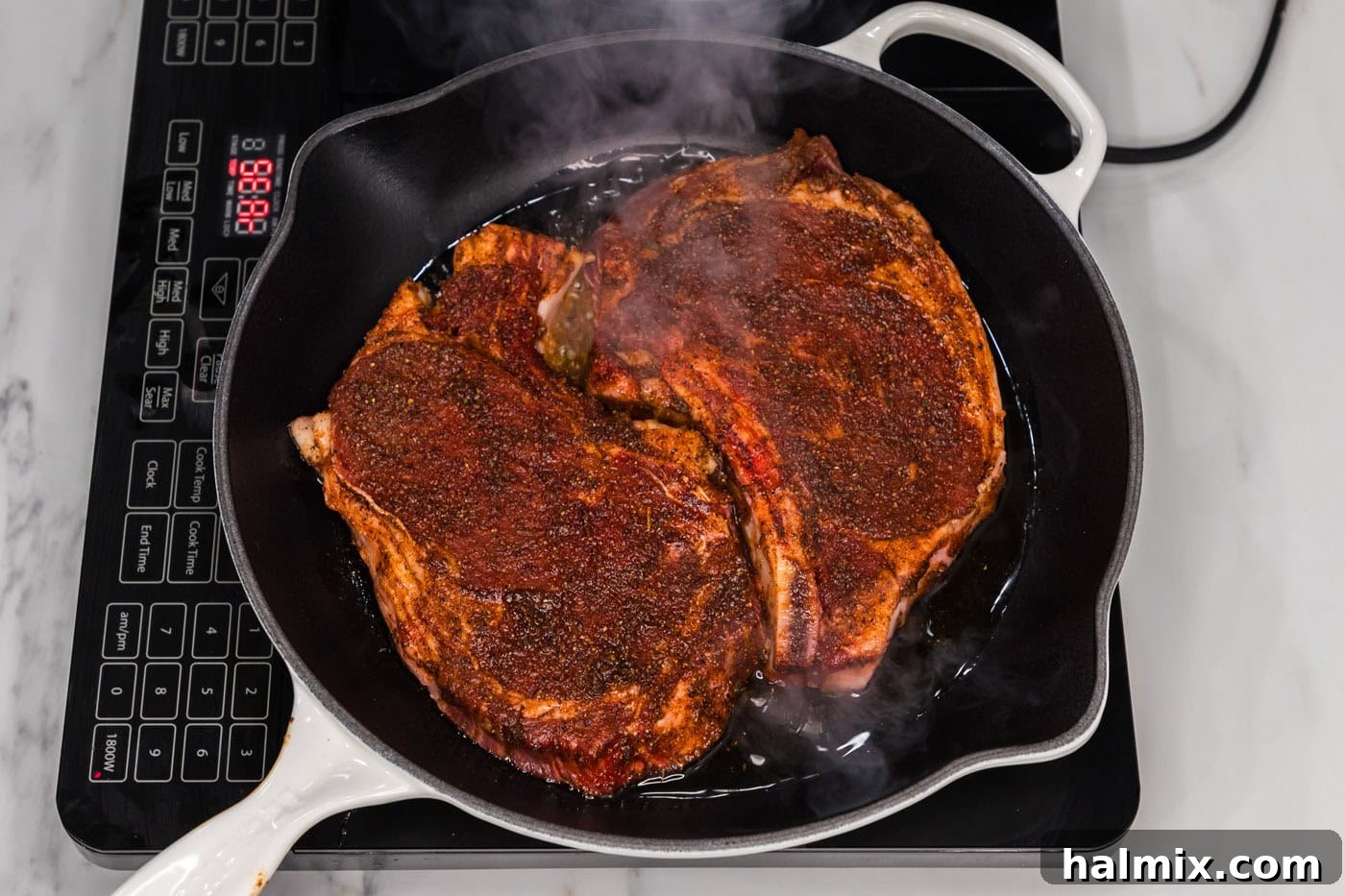
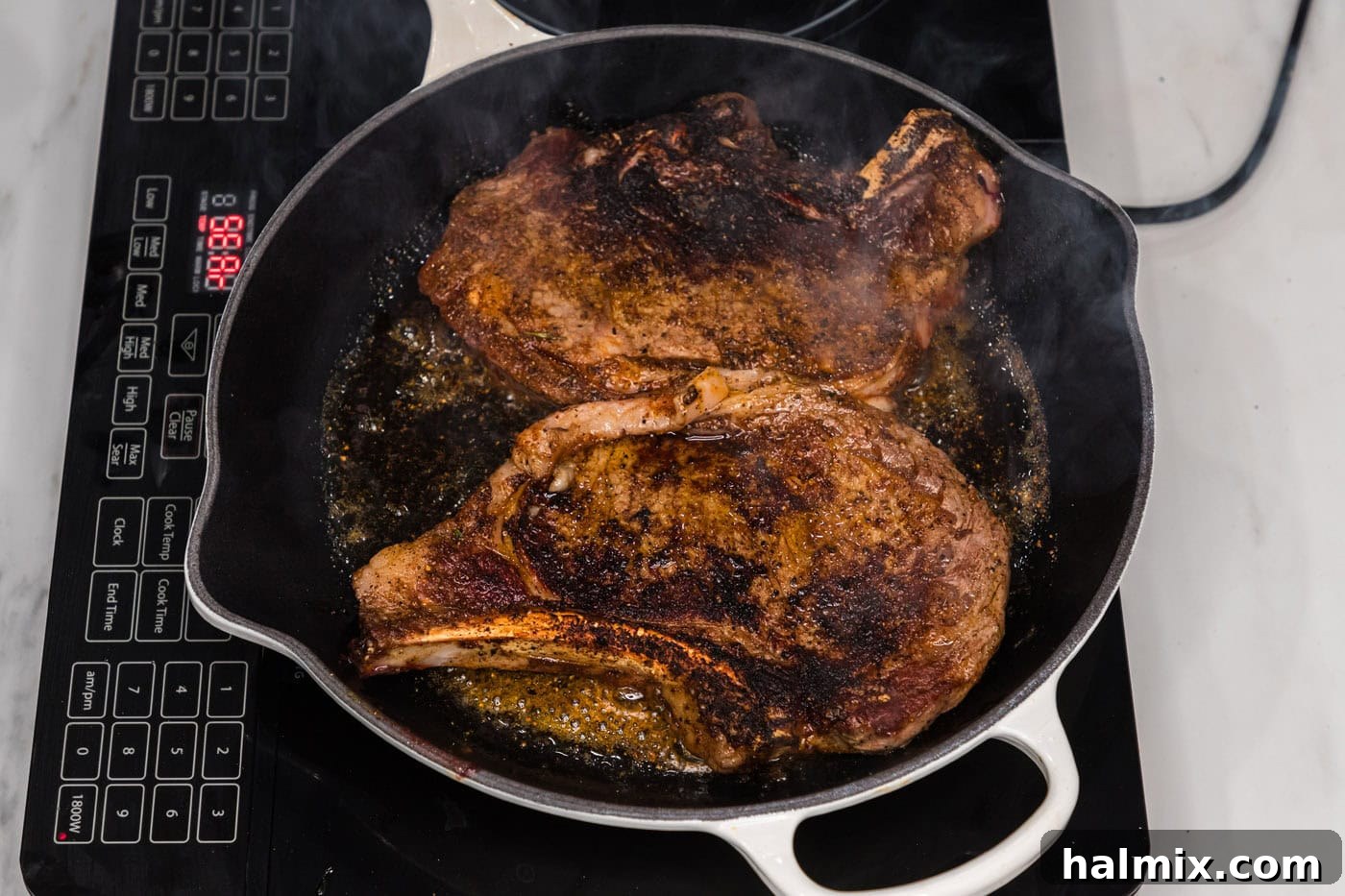
- Achieve the Perfect Sear: Heat the remaining olive oil in a heavy-bottomed skillet (cast iron works best) over high heat until it just begins to shimmer and lightly smoke. Carefully add both seasoned steaks to the hot skillet. Sear intensely on both sides for 2-3 minutes per side, creating a deep, brown, and flavorful crust through the Maillard reaction. This high-heat searing locks in juices and builds incredible texture.
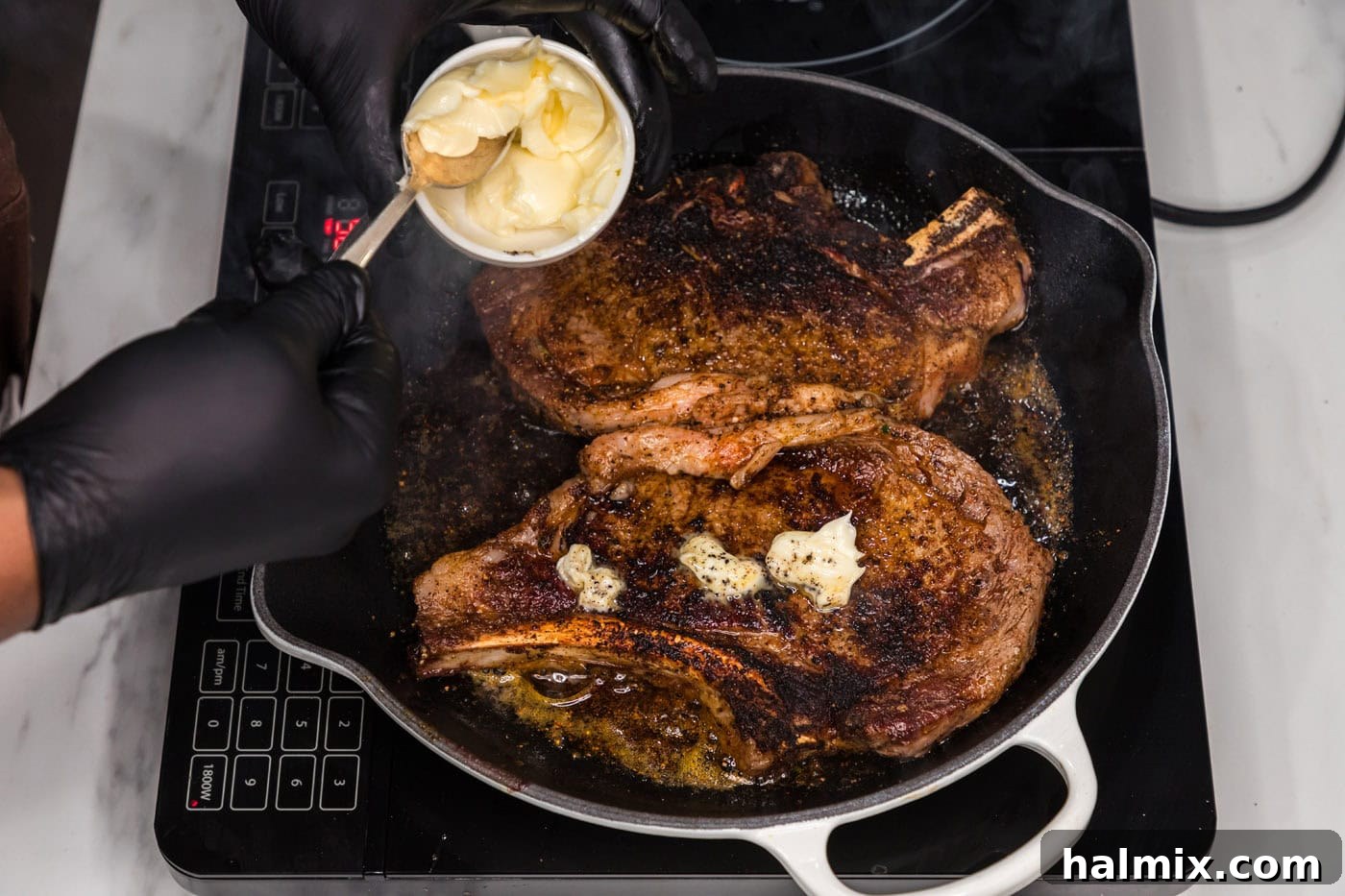
- Infuse with Butter: Reduce the heat to medium. Add half of the unsalted butter evenly over the top of both seared steaks. Once it begins to melt, flip the steaks and spread the remaining butter over the other side. You can also tilt the pan and baste the steaks with the melted butter for even more flavor.
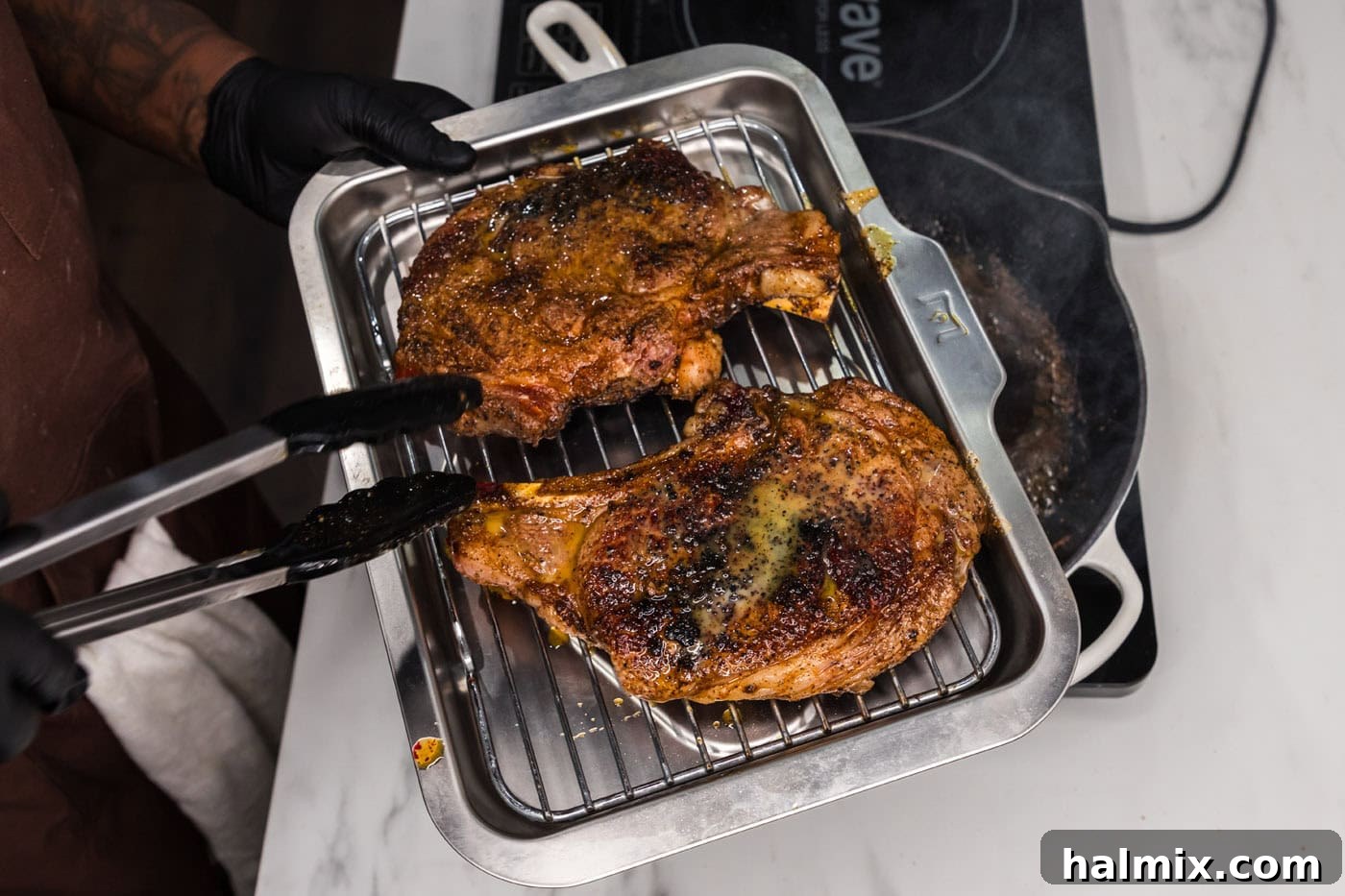
- Finish in the Oven: Transfer the entire skillet to your preheated oven. (If your skillet isn’t oven-safe, carefully move the steaks to a wire rack set over a baking sheet.) Cook for approximately 5 minutes. This oven finish allows the internal temperature to rise gently and evenly without burning the crust. The exact time will depend on your desired level of doneness and steak thickness, so use a meat thermometer.
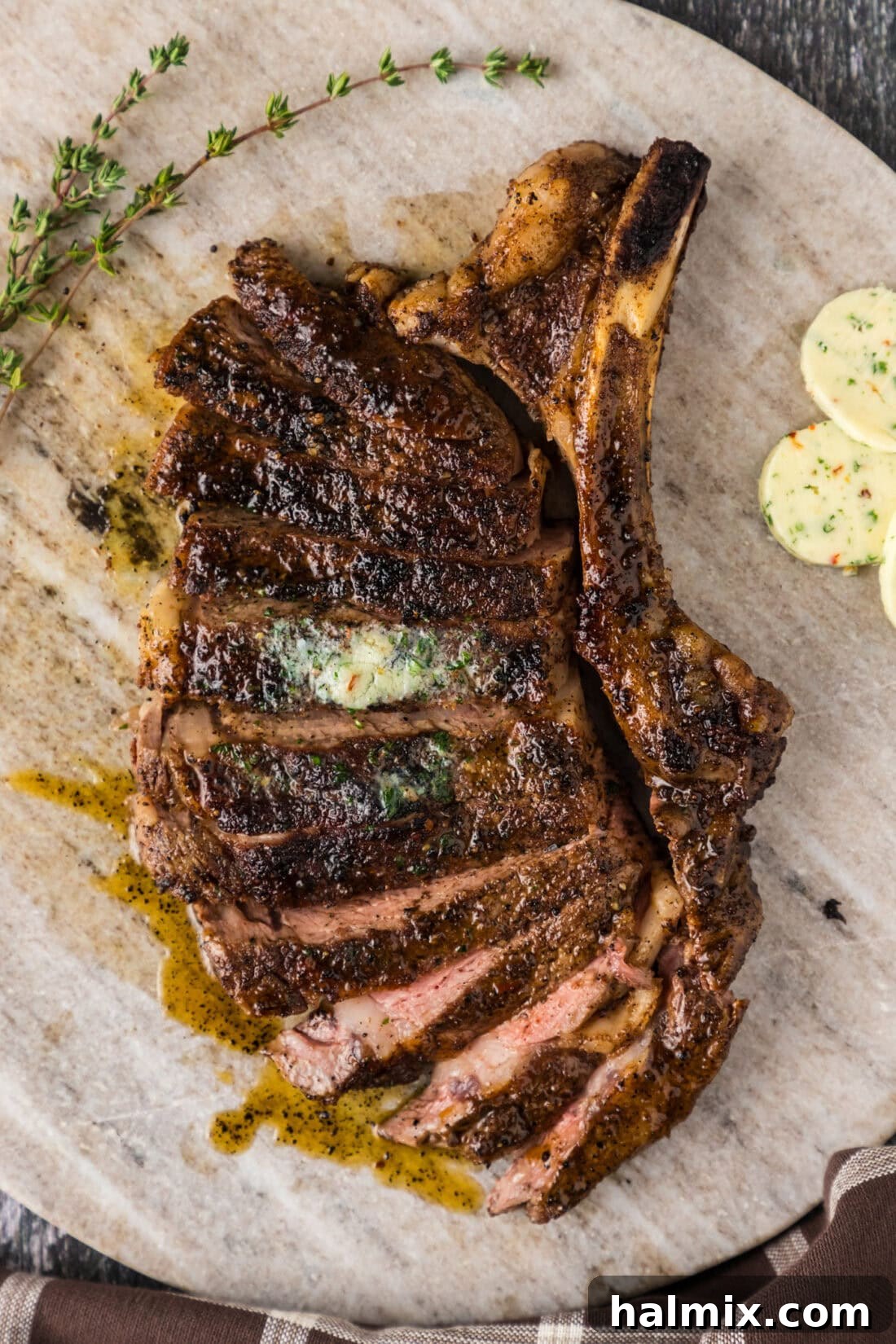
- Rest for Perfection: Once cooked to your desired doneness, remove the steaks from the oven and transfer them to a clean cutting board. Tent them loosely with foil and allow them to rest for a full 5 minutes. This crucial step allows the juices, which have been pushed to the center by the heat, to redistribute throughout the meat, ensuring every bite is incredibly tender and juicy. Do not skip the rest! After resting, slice and serve immediately.
Frequently Asked Questions & Expert Tips for Steak Success
Achieving steakhouse-quality ribeye at home is easier than you think with a few key pieces of knowledge. Here are answers to common questions and invaluable tips to elevate your cooking game.
Cooking steak to perfection is all about temperature control. Use an instant-read thermometer inserted into the thickest part of the steak, avoiding the bone, to accurately measure doneness. Remember that the steak’s temperature will continue to rise by 5-10 degrees Fahrenheit as it rests, so pull it off the heat slightly before your target temperature.
Rare: 125-130°F (52-54°C) – Cool red center.
Medium-Rare: 130-135°F (54-57°C) – Warm red center.
Medium: 140-145°F (60-63°C) – Warm pink center.
Medium Well: 150-155°F (66-68°C) – Slightly pink center.
Well Done: 160°F+ (71°C+) – Little to no pink.
Reheating steak can be tricky, but it’s entirely possible to preserve its juiciness. The key is low and slow heat. Preheat your oven to a low 250°F (120°C). While the oven preheats, let your steak rest on the counter to come closer to room temperature. Place the ribeye on a wire rack set over a baking sheet, then warm it in the oven for about 15-20 minutes, or until it’s warmed through to your liking. Avoid high heat, as this will quickly dry out the steak and make it tough. A quick sear in a hot pan right before serving can also revive the crust if desired.
Absolutely! While this recipe highlights bone-in ribeye for its moisture-retaining qualities, you can certainly use a boneless ribeye steak. Just be aware that boneless cuts typically cook faster than their bone-in counterparts. This means you’ll need to pay extra attention to the internal temperature and potentially reduce your cooking times, especially during the oven-finishing stage, to ensure you don’t overcook it.
Elevate Your Meal: Delicious Serving Suggestions for Ribeye
A perfectly cooked bone-in ribeye deserves equally delicious accompaniments to create a truly memorable meal. Whether you prefer classic sides or something a little more adventurous, here are some fantastic suggestions to complement the rich flavors of your steak:
- Potato Perfection: Mashed potatoes (creamy and garlic-infused), crispy roasted potatoes (seasoned with rosemary and garlic), or even a rich potato gratin make ideal partners.
- Vegetable Medley: Fresh, vibrant vegetables add color and balance. Consider tender green beans with toasted almonds, honey-glazed carrots, steamed or roasted broccoli with a squeeze of lemon, or elegant sautéed asparagus with Parmesan.
- Grains & Pasta: A fluffy bed of seasoned rice, a creamy risotto, or a simple pasta tossed in olive oil and herbs can absorb the delicious pan juices from the steak.
- Freshness Factor: A crisp, fresh dinner salad with a light vinaigrette is always a welcome addition, providing a refreshing contrast to the richness of the beef.
- Sauces: While the butter basting makes this steak incredibly flavorful on its own, you could also serve it with a classic béarnaise sauce, a vibrant chimichurri, or a simple pan sauce made with red wine and shallots.
Don’t forget a good glass of red wine, such as a Cabernet Sauvignon or a Merlot, to truly complete the steakhouse experience at home!
Explore More Steak Recipes to Master
If you’ve enjoyed mastering this bone-in ribeye, you’ll love exploring other ways to prepare delicious steak. Expand your culinary repertoire with these fantastic steak recipes, each offering a unique cooking method and flavor profile:
- Air Fryer Steak: For a quick, convenient, and surprisingly tender steak with minimal fuss.
- Cast Iron Ribeye: Perfect for achieving an incredibly crispy, flavorful crust using just a skillet.
- Smoked Ribeye Steak: Infuse your ribeye with deep, smoky flavors for an unforgettable outdoor cooking experience.
- Reverse Sear Ribeye: A technique beloved by chefs for its evenly cooked interior and perfect crust, ideal for thicker cuts.
Passionate about cooking and baking? I love sharing my kitchen adventures and recipes with you! To ensure you never miss a new dish, I offer a convenient newsletter delivered straight to your inbox every time a fresh recipe is posted. Simply subscribe today and start receiving your free daily recipes!
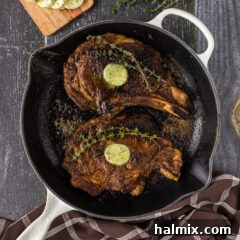
Bone-In Ribeye Steak
IMPORTANT – There are often Frequently Asked Questions within the blog post that you may find helpful. Simply scroll back up to read them!
Print It
Pin It
Rate It
Save It
Ingredients
- 2 ½ pounds bone-in ribeye steak (2 steaks)
- ¼ cup olive oil (divided)
- 2 teaspoons paprika
- 2 teaspoons chili powder
- 2 teaspoons onion powder
- ½ Tablespoon garlic salt
- 2 teaspoons black pepper
- 3 Tablespoons unsalted butter
Equipment You’ll Need
-
Large heavy-bottomed skillet
-
Tongs
-
Wire cooling rack
-
Baking sheet
Important Notes & Prep Tips
- Steak Selection: For optimal results, use 2 ½ pounds of bone-in ribeye steak, each about 1 inch thick. USDA Prime or Choice grades are highly recommended for their superior marbling and tenderness. For thicker cuts, adjust cooking times and always use a meat thermometer. This method can also be used for boneless ribeye, but note that it will cook faster.
- Butter Choice: Unsalted butter is preferred for better sodium control, but feel free to use flavored butters to add an extra dimension of taste to your steak.
Cooking Instructions
-
Preheat oven to 350°F (175°C).
-
In a small bowl, combine half of the olive oil, paprika, chili powder, garlic salt, and black pepper. Stir well to form a rub.
-
Rub the spice mixture generously all over both sides of both ribeye steaks.
-
Heat the remaining olive oil in a heavy-bottomed skillet over high heat until shimmering. Add both steaks and sear for 2-3 minutes per side, developing a rich brown crust.
-
Reduce heat to medium. Add half of the butter evenly over both steaks. Flip steaks and spread remaining butter on the other side.
-
Transfer the skillet to the preheated oven (or place steaks on a wire rack over a baking sheet if your skillet is not oven-safe) and cook for 5 minutes, or until desired internal temperature is reached.
-
Transfer steaks to a cutting board, tent loosely with foil, and let rest for 5 minutes before slicing and serving.
Expert Tips & FAQs
- Serving Size Note: This recipe yields 4 servings from 2 steaks. USDA recommends 3-4 oz of steak per person, and our nutrition calculation reflects these numbers.
- Reheating Ribeye: To reheat ribeye steak while maintaining its juiciness, use a low oven temperature. Preheat to 250°F (120°C). Allow the steak to rest on the counter as the oven heats. Place the steak on a wire rack over a baking sheet and reheat for approximately 20 minutes, or until thoroughly warmed. Low heat helps prevent moisture loss.
- Steak Doneness Chart: Always use an instant-read thermometer for accuracy. Insert it into the thickest part of the beef, avoiding the bone. Remember, the steak’s temperature will rise 5-10 degrees while resting under foil.
Rare: 125°F (52°C)Medium-Rare: 130-135°F (54-57°C)
Medium: 140-145°F (60-63°C)
Medium Well: 150-155°F (66-68°C)
Nutrition Information
The recipes on this blog are tested with a conventional gas oven and gas stovetop. It’s important to note that some ovens, especially as they age, can cook and bake inconsistently. Using an inexpensive oven thermometer can assure you that your oven is truly heating to the proper temperature. If you use a toaster oven or countertop oven, please keep in mind that they may not distribute heat the same as a conventional full sized oven and you may need to adjust your cooking/baking times. In the case of recipes made with a pressure cooker, air fryer, slow cooker, or other appliance, a link to the appliances we use is listed within each respective recipe. For baking recipes where measurements are given by weight, please note that results may not be the same if cups are used instead, and we can’t guarantee success with that method.