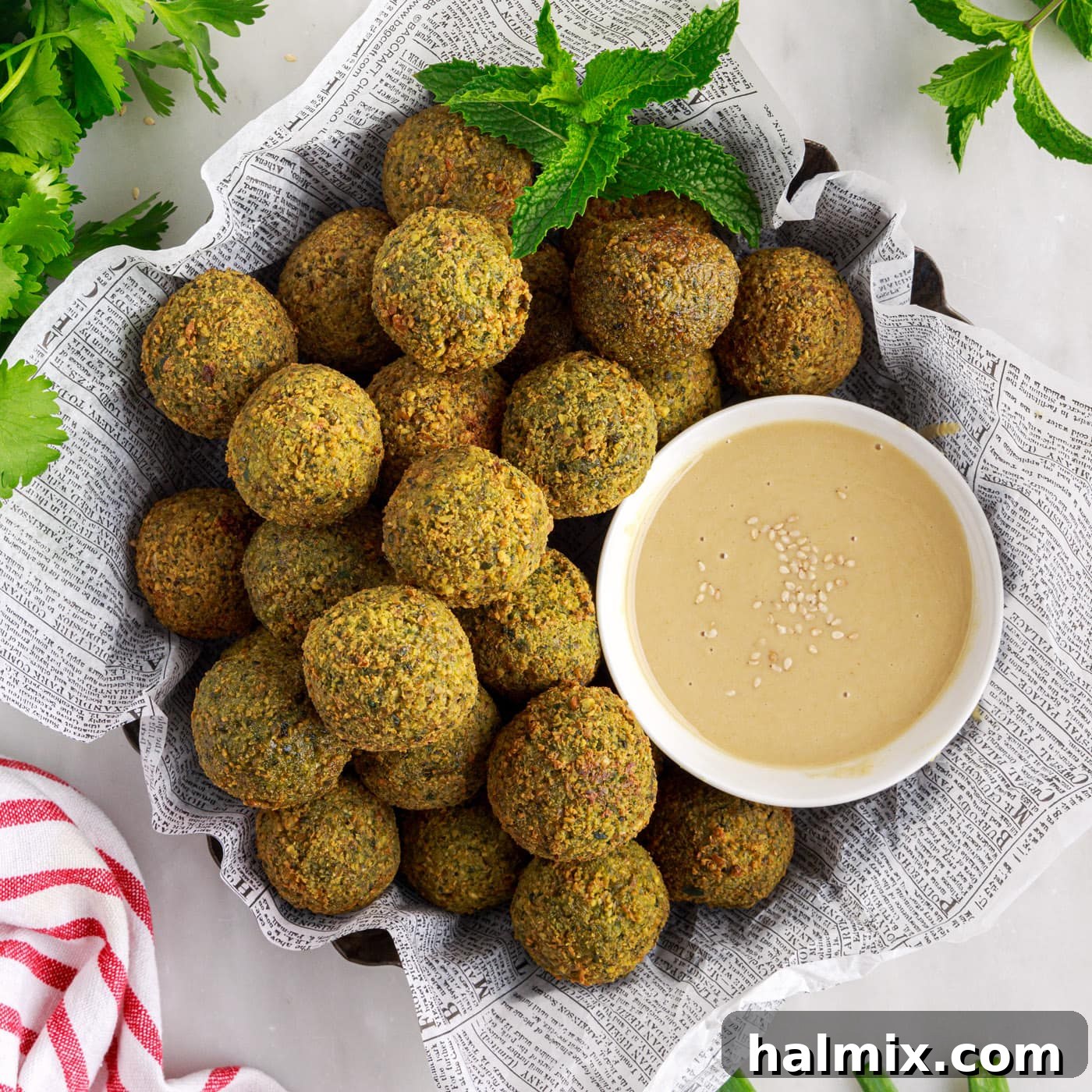
Embark on a culinary journey to the heart of the Middle East with this exquisite falafel recipe, promising a delight that’s irresistibly crispy on the outside and remarkably tender, soft, and fluffy on the inside. Crafted with a blend of fresh herbs, wholesome garbanzo beans (chickpeas), and a symphony of aromatic spices, these golden-brown patties are shaped into perfect balls and pan-fried to perfection, offering an authentic taste experience that’s truly unforgettable. Whether you’re a seasoned chef or a home cook eager to explore global flavors, this guide will walk you through creating falafel that will impress every palate and elevate your homemade meal repertoire.
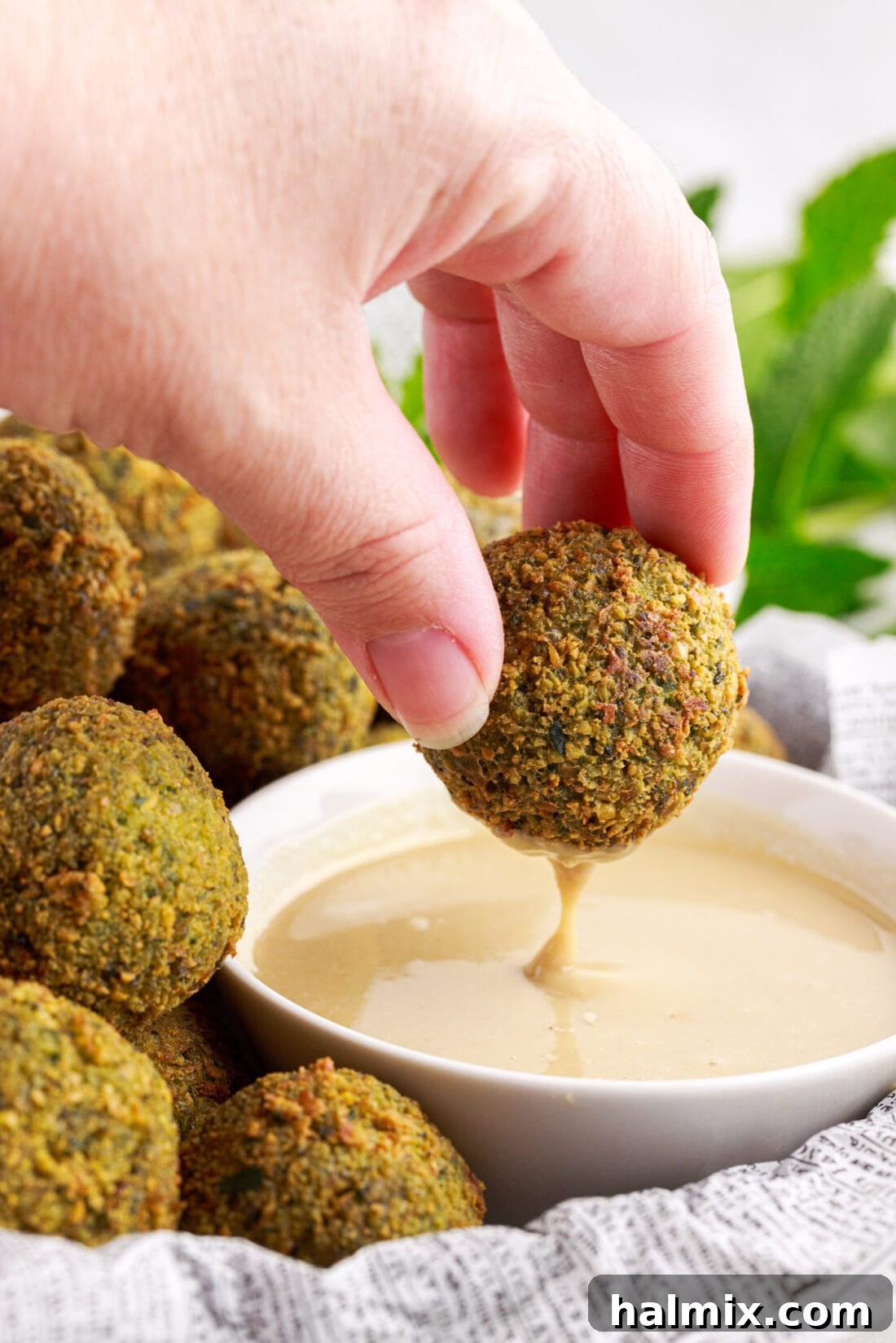
Why This Falafel Recipe Stands Out
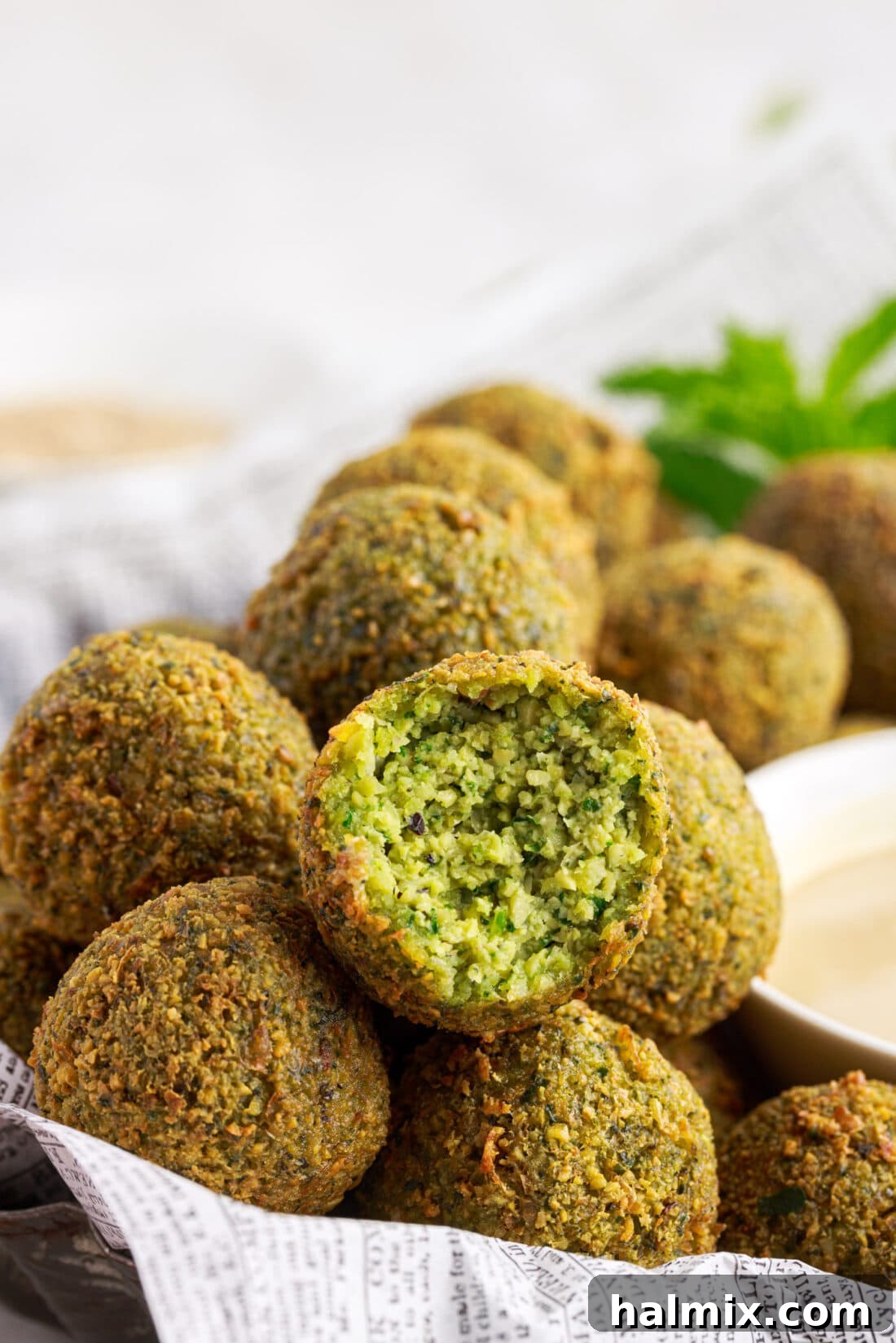
Falafel, a beloved staple of Middle Eastern cuisine, is typically crafted from ground chickpeas (also known as garbanzo beans) or fava beans, infused with a generous assortment of vibrant fresh herbs and exotic spices. This meticulous blend is what bestows upon them their signature rich green interior and deeply earthy, aromatic flavor. Once prepared, they are expertly fried to achieve a beautiful crisp, golden-brown exterior that encases a wonderfully tender and soft core. More than just a dish, falafel holds significant cultural importance, enjoyed widely across the Middle East for breakfast, lunch, dinner, or as a delectable fried snack. Its versatility and satisfying texture make it a popular choice for vegetarians and vegans alike, offering a hearty and flavorful alternative to meat-based dishes.
Beyond its incredible taste, falafel, thanks to its primary ingredient—chickpeas—is a powerhouse of nutrition. Chickpeas are not only packed with essential nutrients but are also an excellent source of plant-based protein and dietary fiber, contributing to a feeling of fullness and aiding digestive health. Their versatility extends far beyond falafel; they can be transformed into creamy hummus and velvety baba ganoush, add substance to a hearty vegetable soup, or serve as a foundational ingredient in diverse meals ranging from aromatic curries and vibrant salads to countless other vegan and vegetarian-friendly culinary creations. This recipe is particularly effective because it leverages the unique properties of dried chickpeas, ensures optimal flavor with a fresh herb medley, and uses a crucial ingredient—baking powder—to achieve that coveted fluffy interior, setting it apart from denser, less flavorful versions.
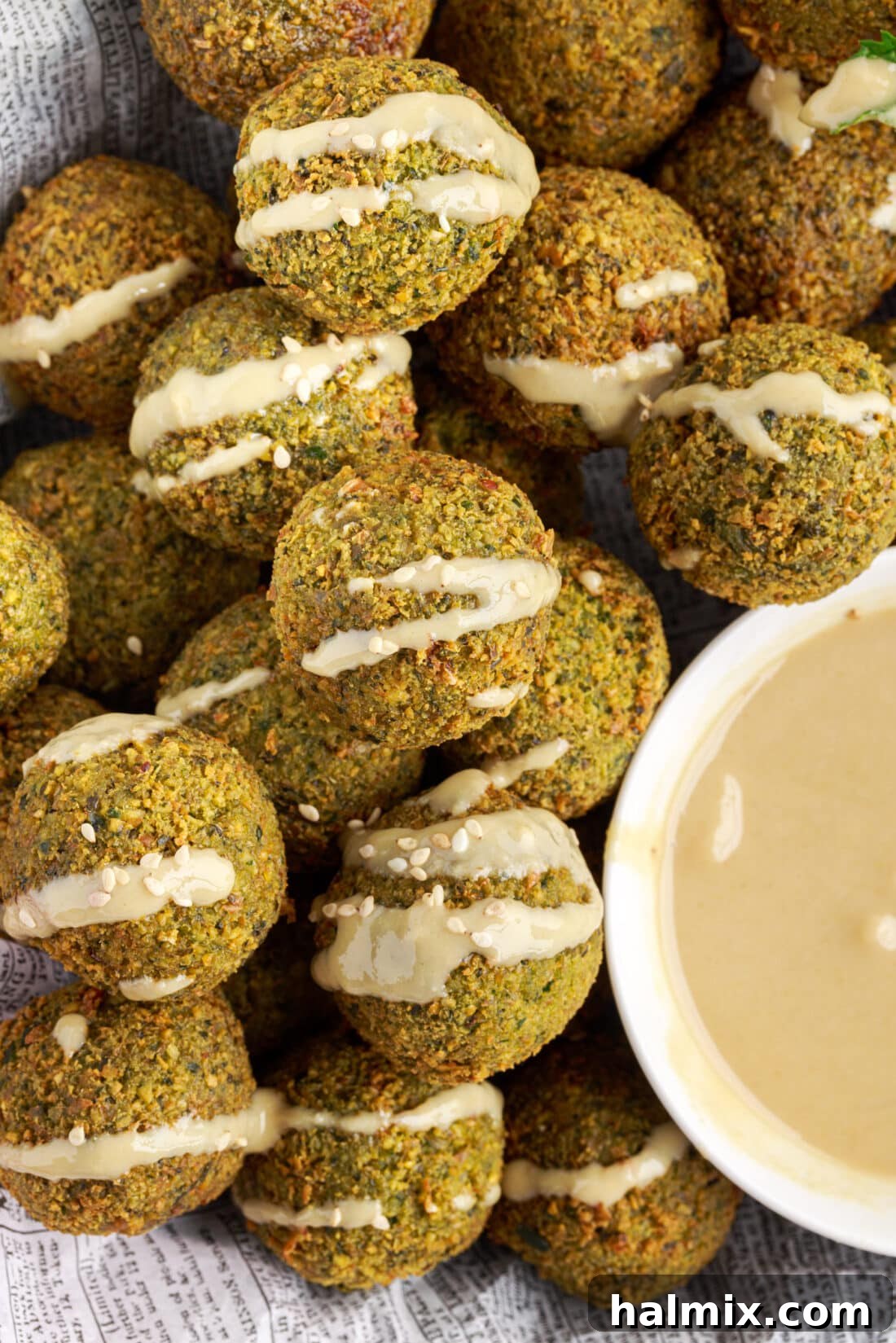
Essential Ingredients for Perfect Homemade Falafel
Creating truly authentic and delicious falafel begins with selecting the right ingredients. Below is a comprehensive list of what you’ll need, along with insights into their role in achieving that signature taste and texture. For precise measurements and step-by-step instructions, please refer to the detailed recipe card at the end of this post.
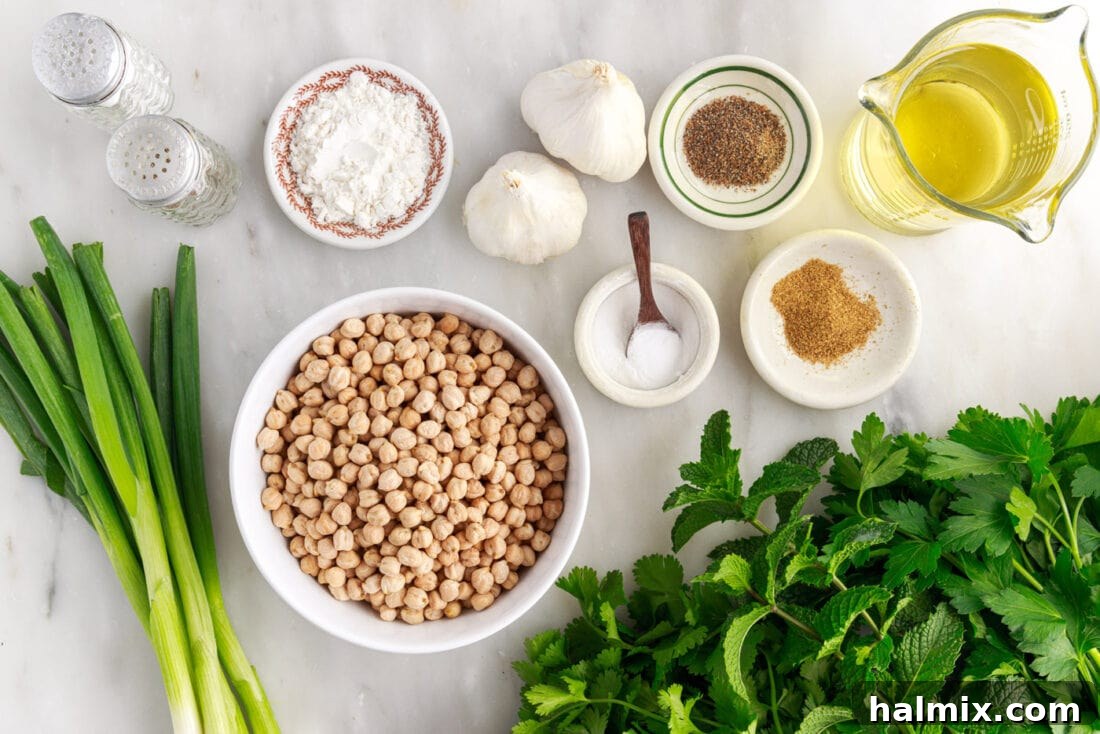
Detailed Ingredient Insights & Smart Substitutions
CHICKPEAS: The Foundation of Flavor and Texture
Also widely known as garbanzo beans, chickpeas are the star of any authentic falafel recipe. It is absolutely crucial to use dried chickpeas for this recipe, not canned ones. Canned chickpeas are pre-cooked and far too soft, which will result in a mushy falafel mixture that won’t bind properly into balls and will likely disintegrate when fried. The firm, starchy texture of dried, soaked chickpeas is essential for achieving that characteristic crispy exterior and light, fluffy interior. The soaking process for 18-24 hours might seem lengthy, but it’s a non-negotiable step that rehydrates the beans and prepares them perfectly for blending, ensuring your falafel holds its shape and develops the ideal consistency. Trust us, this patience is genuinely rewarded with superior falafel.
FRESH HERBS: The Heart of Falafel’s Vibrant Color and Aroma
The iconic rich green hue and profoundly earthy, fresh flavor of falafel come directly from a generous medley of fresh parsley, mint, and cilantro. These herbs are not just for color; they infuse the falafel with an unparalleled aromatic depth that is fundamental to its Middle Eastern identity. While this combination is classic, feel free to adjust the proportions to suit your palate. Some variations might incorporate fresh dill for a different aromatic note or slightly reduce the mint if you prefer a less pronounced freshness. Always use fresh herbs, as dried herbs simply cannot replicate the vibrant flavor and moisture content needed for truly exceptional falafel.
SPICES: A Symphony of Middle Eastern Flavors
Beyond the fresh herbs, a selection of ground spices elevates the falafel’s flavor profile. Cumin and coriander are almost always present, lending a warm, earthy foundation. Ground cardamom adds a unique, slightly sweet, and aromatic complexity that truly distinguishes this recipe. For those who appreciate a kick, a pinch of cayenne pepper or finely minced fresh serrano chile peppers can introduce a delightful warmth without overwhelming the other flavors. Experiment with adding a touch of sumac for a tangy zest or a hint of allspice for deeper warmth, but always balance them to complement, not overpower, the fresh herbs.
BAKING POWDER: The Secret to a Light and Fluffy Interior
Do not, under any circumstances, skip the baking powder! This seemingly small addition is a game-changer for falafel texture. It acts as a leavening agent, creating tiny air pockets within the mixture as it fries. This is the key to transforming what could be overly dense and heavy falafel into the wonderfully supple, soft, and fluffy bites we all crave. Without baking powder, your falafel might turn out compact and hard, missing that delightful contrast between the crisp exterior and tender inside. It ensures a lighter, more enjoyable eating experience.
FLOUR: The Essential Binder
A small amount of all-purpose flour helps bind the falafel mixture together, ensuring the balls hold their shape during frying. If you’re looking for a gluten-free option, chickpea flour (besan) is an excellent substitute that will also enhance the chickpea flavor while maintaining the necessary binding properties. Whichever flour you choose, it’s crucial for the structural integrity of your falafel.
Crafting Your Own Crispy Falafel: A Step-by-Step Guide
These detailed step-by-step photos and instructions are designed to help you visualize each stage of making this incredible falafel recipe. For a convenient printable version, complete with precise measurements and comprehensive instructions, simply scroll down to the full recipe card at the bottom of this page.
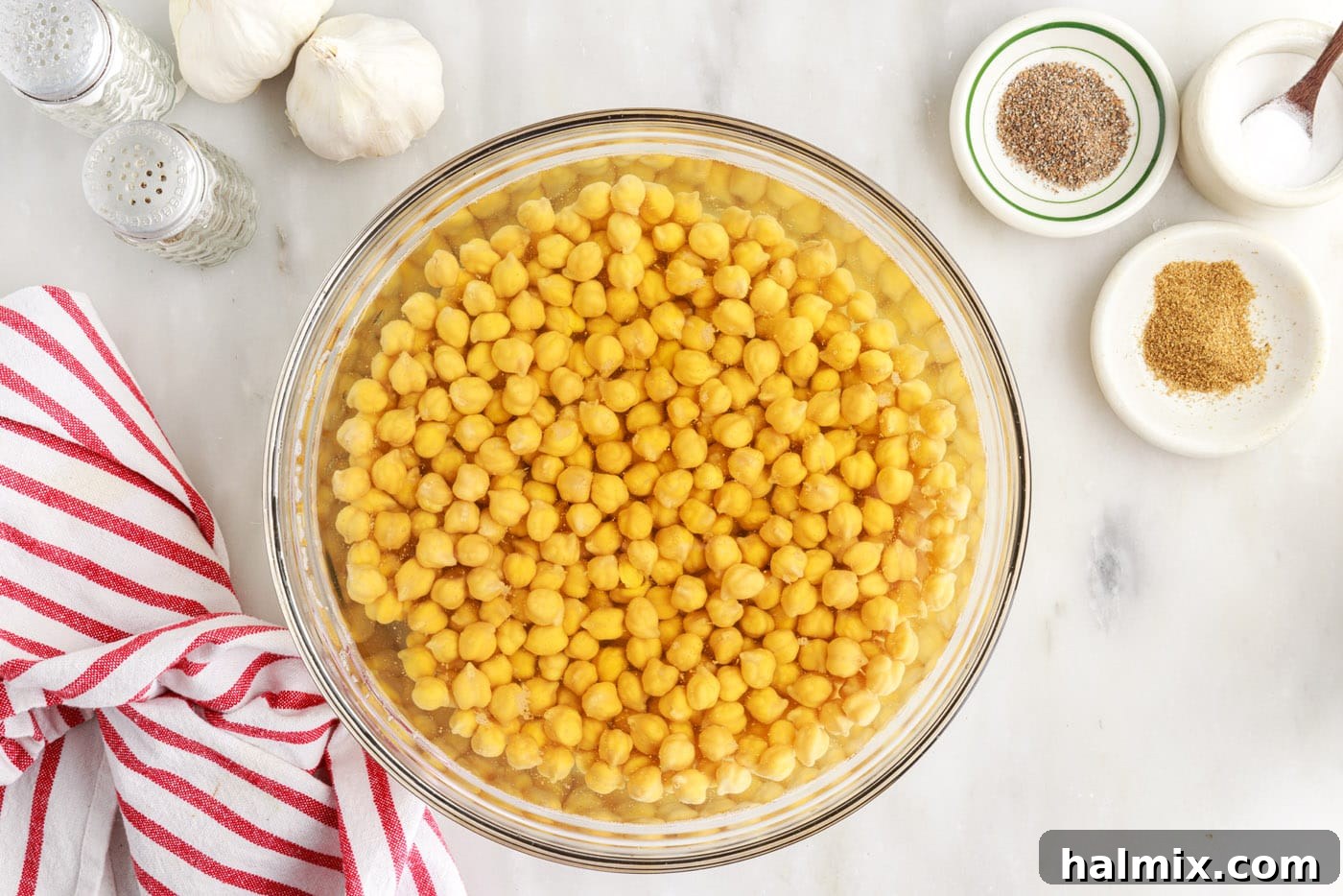
- Prepare the Chickpeas: Begin by measuring your dry garbanzo beans into a large bowl. Cover them generously with cold water, ensuring the water level is about 3-4 inches above the beans. This ample water allows for proper rehydration. Let the beans soak for a minimum of 18 hours, ideally up to 24 hours. You’ll notice they triple in size, becoming plump and ready for the next step. This crucial soaking process is what prevents a dry, crumbly falafel texture and ensures a smooth blend.

- Process the Mixture: Once soaked, thoroughly drain and rinse the garbanzo beans under cold water. Transfer these rehydrated chickpeas to a robust food processor.
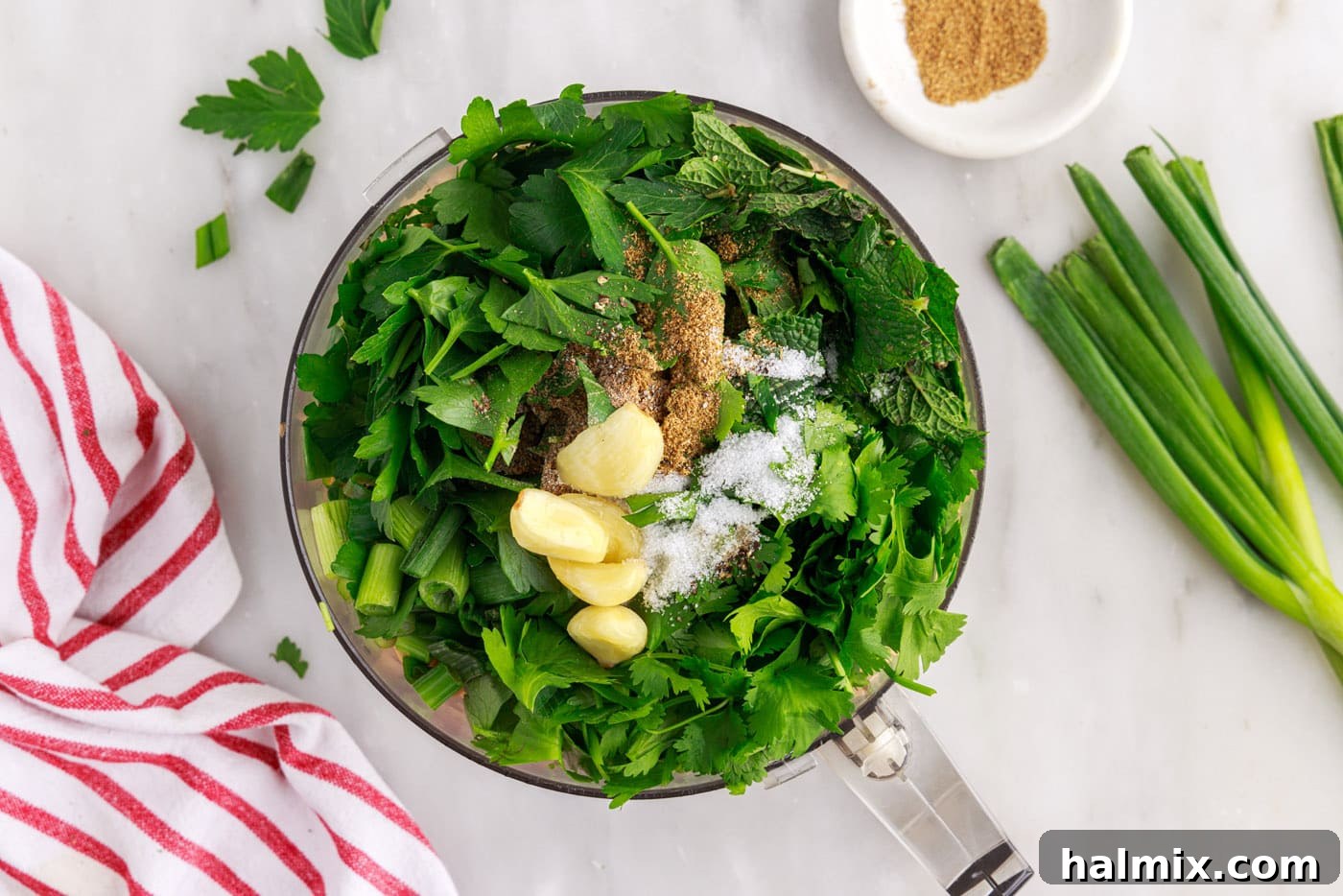
- Add Aromatics and Spices: To the food processor, add the vibrant fresh cilantro, mint, and parsley. Then, introduce your aromatic spices: ground cardamom, ground coriander, salt, black pepper, and the garlic cloves. These ingredients are key to the falafel’s signature flavor and color.
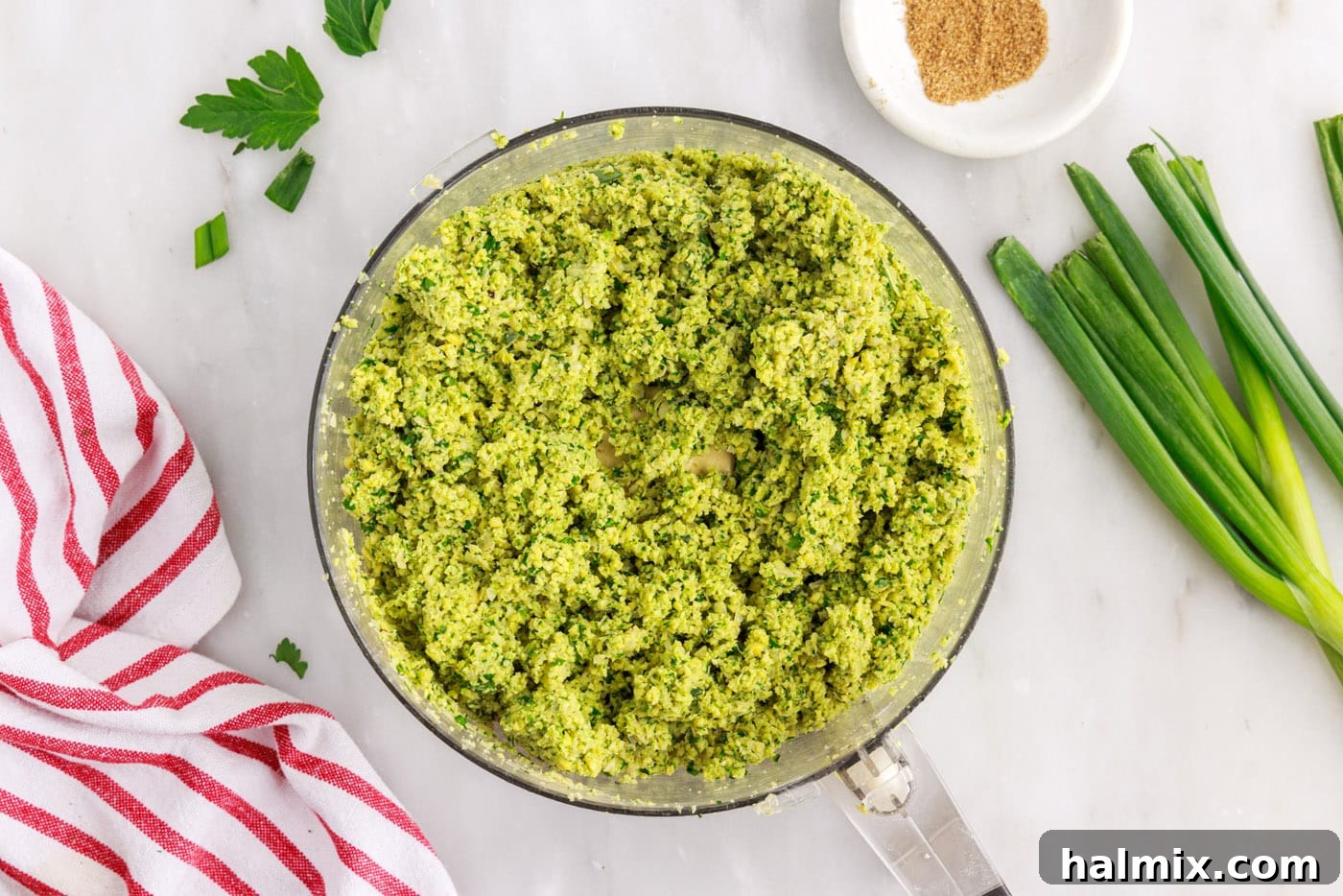
- Achieve the Right Texture: Using the pulse function on your food processor, chop the mixture until it resembles a coarse sand. The goal is to break down the chickpeas and herbs into small, uniform pieces, but it’s vital not to puree it into a paste. The mixture should be fine enough that it clumps together when squeezed in the palm of your hand, yet still retain some texture. If your food processor is too small to handle all ingredients at once, divide the mixture into two batches for initial chopping, then combine them to ensure an even consistency. Over-processing will lead to a dense falafel.
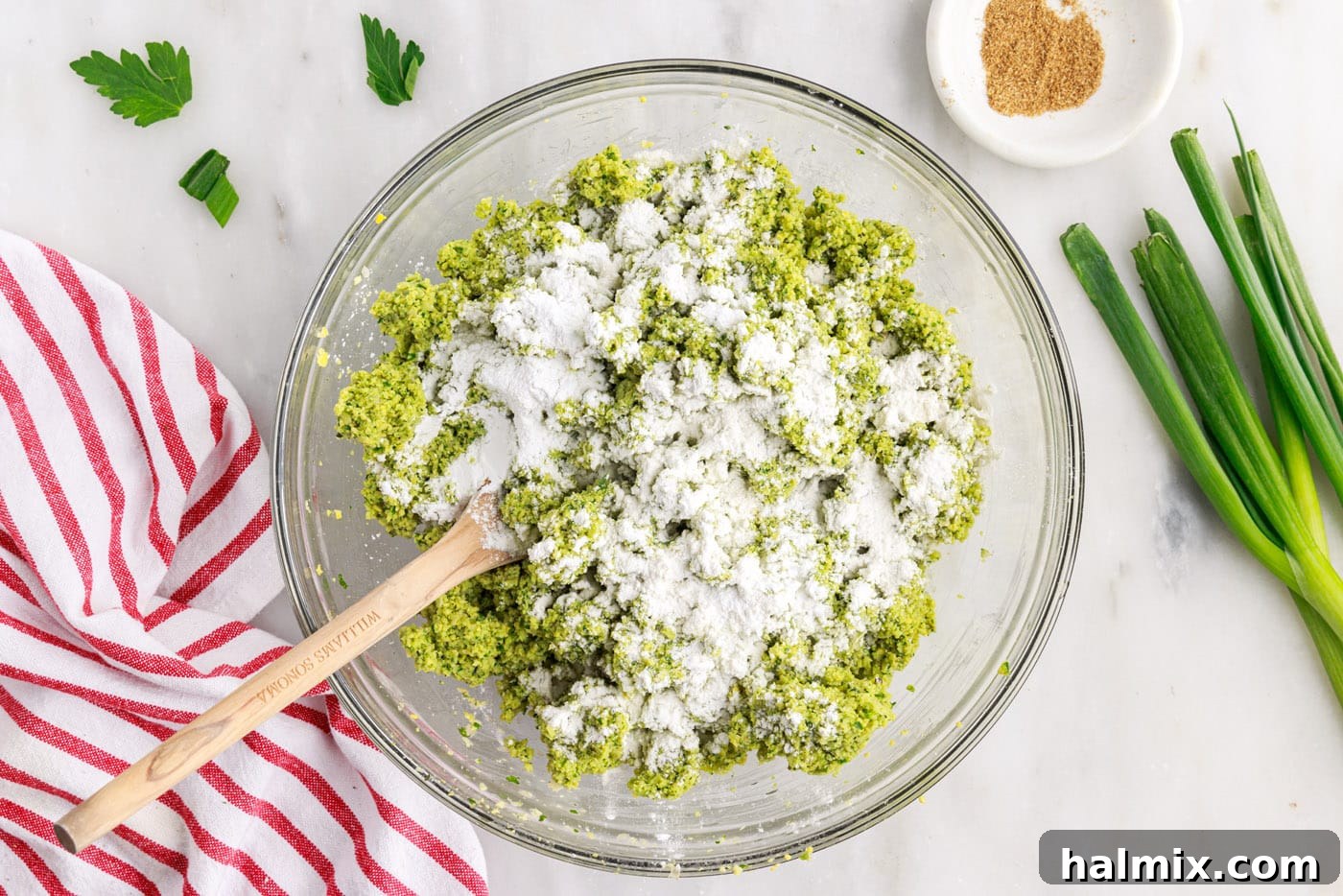
- Incorporate Dry Ingredients: Transfer the finely chopped mixture from the food processor to a large mixing bowl. Sprinkle the flour (all-purpose or chickpea flour for gluten-free) and the baking powder evenly over the mixture. Stir everything together thoroughly until all ingredients are well combined. The flour acts as a binder, and the baking powder is crucial for a light interior.
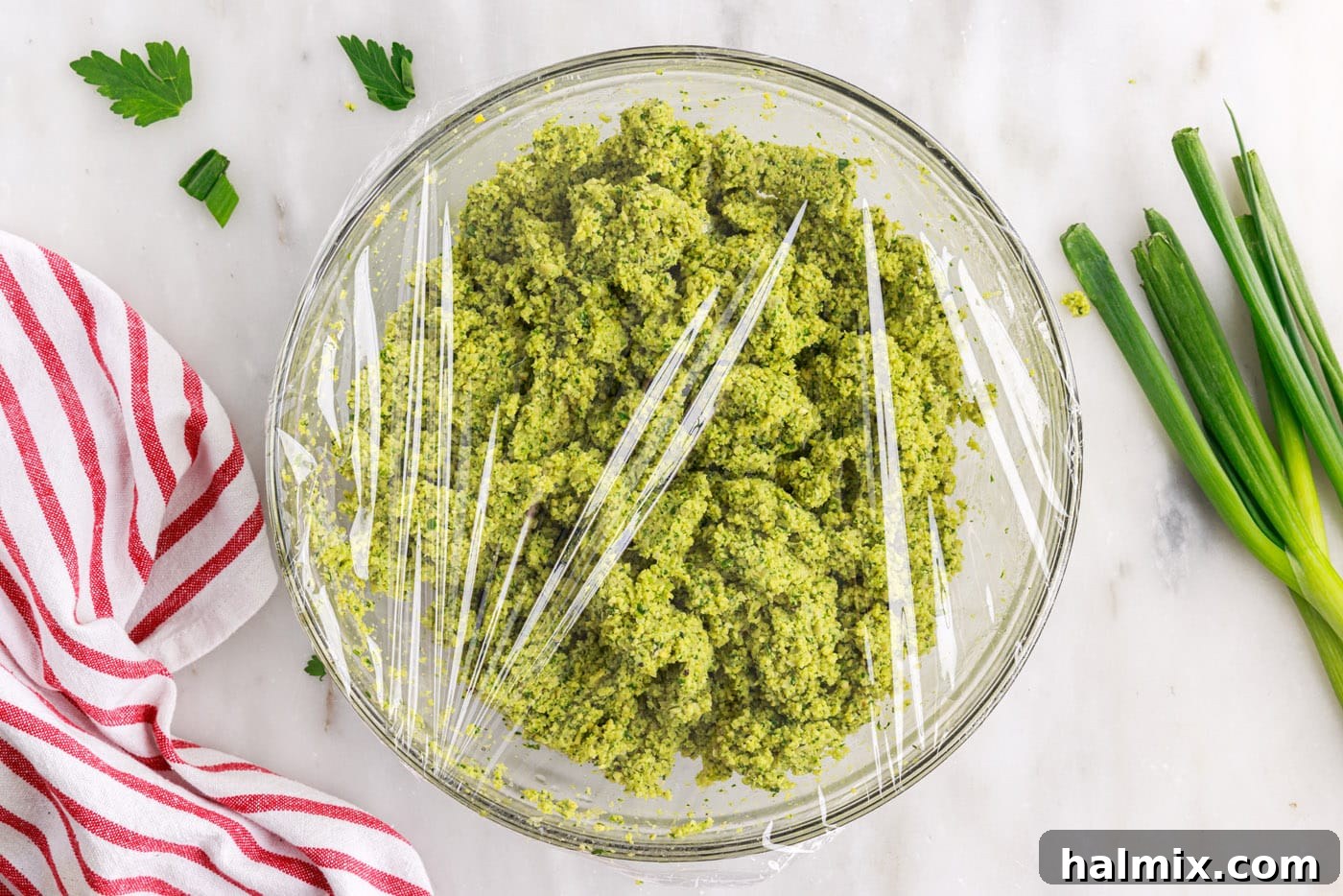
- Chill for Stability: Cover the bowl tightly with plastic wrap and refrigerate the falafel mixture for at least 1 hour. This chilling period is important as it allows the ingredients to moisten further and meld, making the mixture firmer and easier to handle. It also helps the falafel balls hold their shape better when being formed and during frying, preventing them from crumbling.
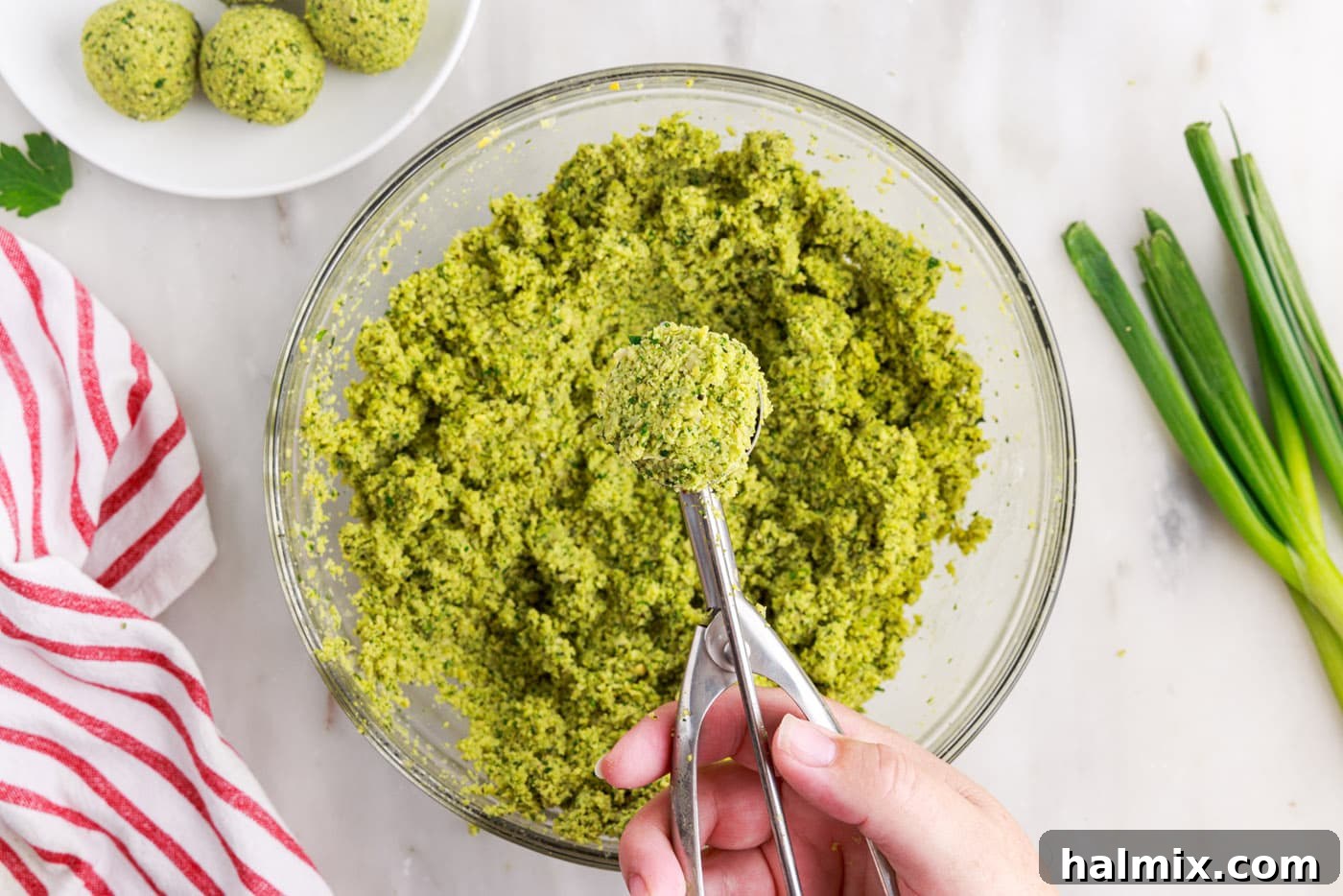
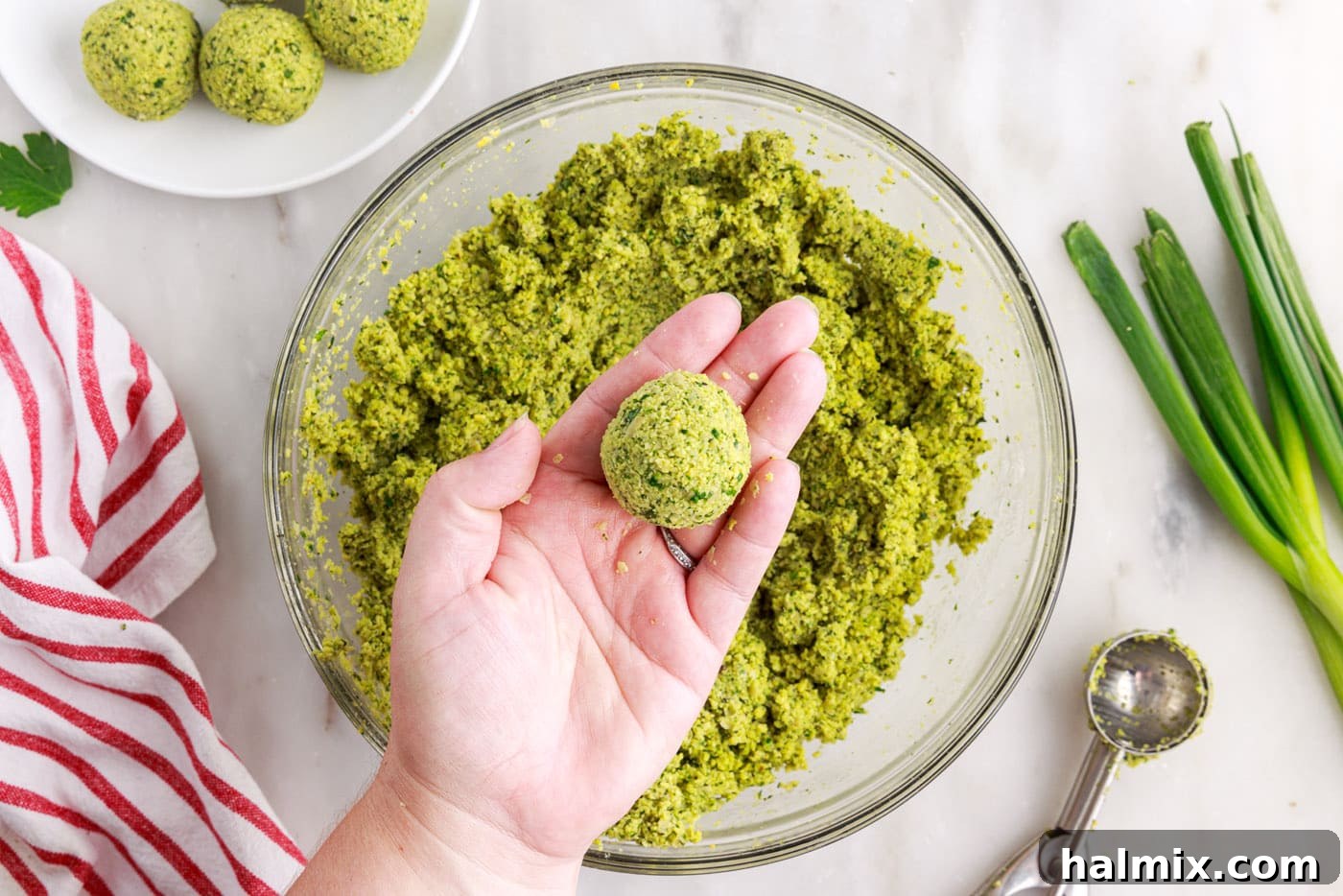
- Form the Falafel Balls: Once chilled, use a 1 1⁄2 tablespoon cookie scoop to portion out uniform amounts of the mixture. Gently roll and press each portion in the palm of your hand to form smooth, compact balls. Consistency in size ensures even cooking.
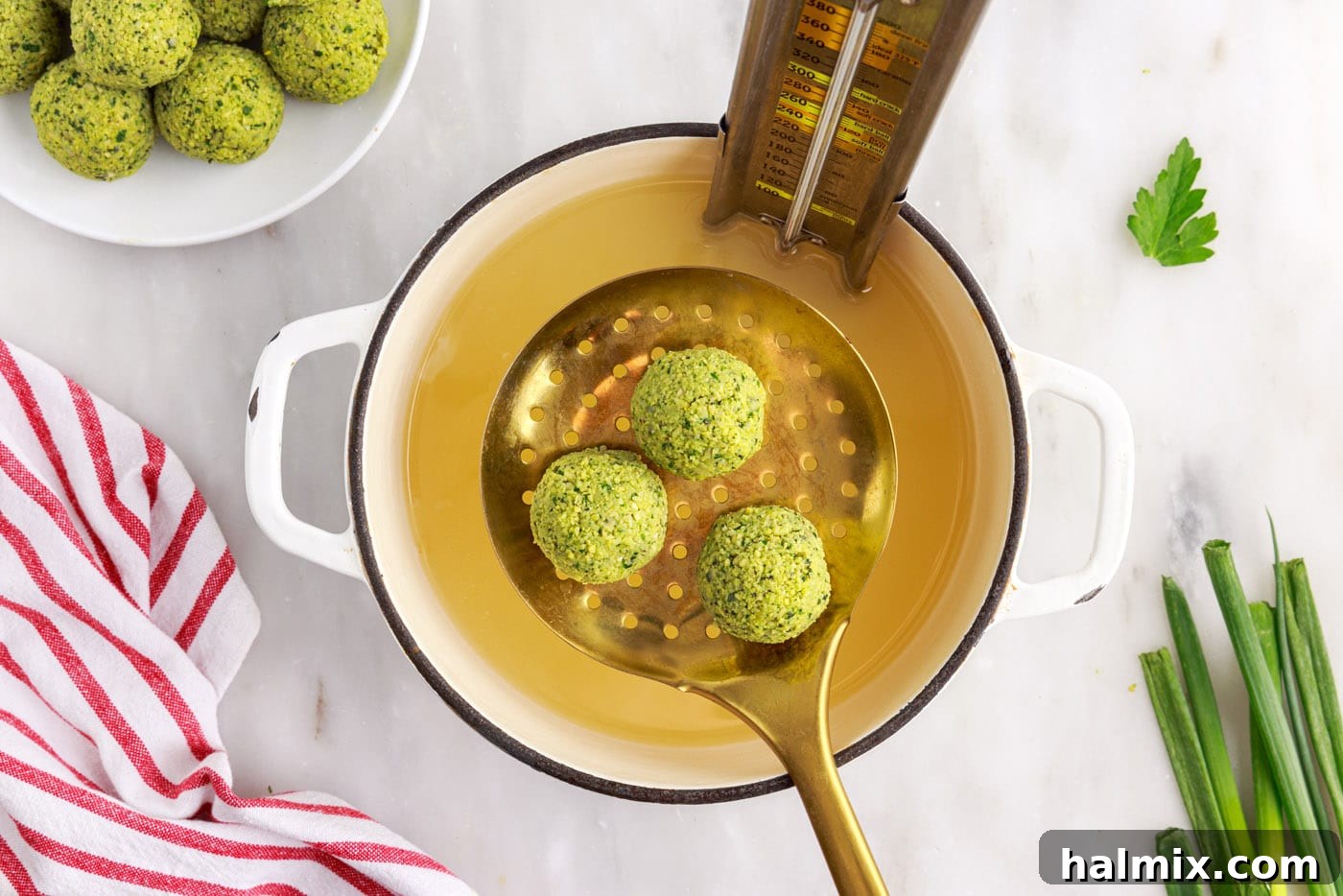
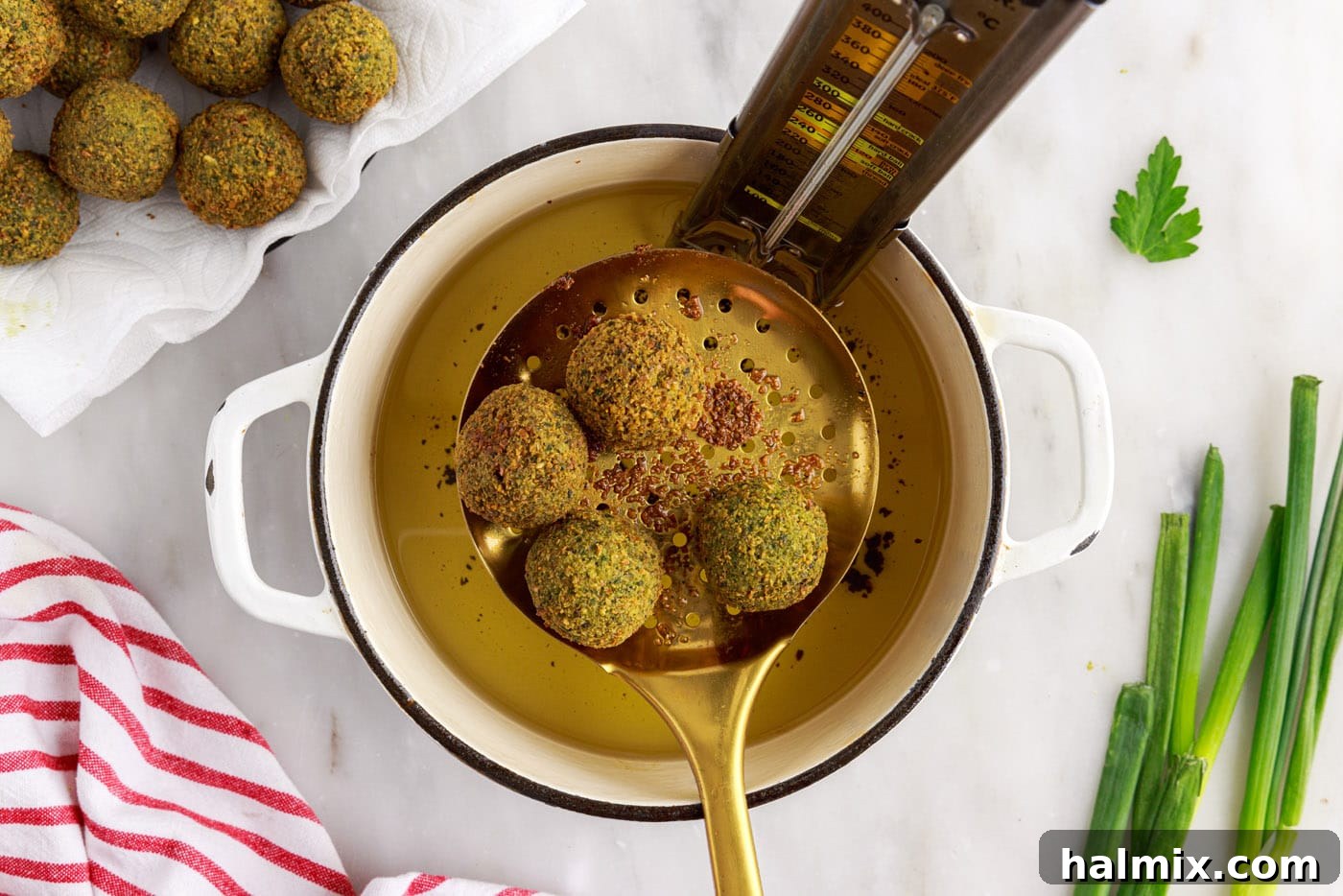
- Heat the Frying Oil: In a deep pot, such as a sturdy Dutch oven (which is ideal for deep frying), heat at least 4 inches of vegetable oil. Attach a thermometer to the pot to accurately monitor the oil temperature. Heat the oil until it reaches a steady 350°F (175°C). Once hot, adjust your burner’s temperature as needed to maintain this consistent heat throughout the entire frying process. Maintaining the correct oil temperature is crucial for crispy, non-greasy falafel.
- Fry to Golden Perfection: Carefully lower a few falafel balls at a time into the hot oil. Avoid overcrowding the pot, as this can drop the oil temperature and lead to soggy falafel. As they fry, gently roll them around with a slotted spoon to ensure they cook evenly and develop a beautiful golden-brown color on all sides. This typically takes about 2-3 minutes. Once perfectly crisp and golden, use the slotted spoon or a skimmer to remove them from the oil. Transfer the fried falafel to a plate lined with paper towels to absorb any excess oil, ensuring they remain wonderfully crisp.
- Serve Warm: Serve your freshly fried falafel warm, traditionally accompanied by a creamy tahini sauce or your favorite dipping sauce.
Frequently Asked Questions & Expert Tips for Falafel Success
Absolutely! You can prepare the falafel mixture 1-2 days in advance. To maintain its freshness and consistency, cover the mixture tightly with plastic wrap or transfer it to an airtight container and store it in the refrigerator. Just before you’re ready to fry, simply form the mixture into balls. This is a great way to save time on busy cooking days.
Yes, freezing uncooked falafel is an excellent way to have them ready for future cravings. After forming the balls, arrange them in a single layer on a large baking sheet that fits into your freezer. Flash freeze them until they are mostly solid (this prevents them from sticking together). Once firm, transfer the frozen falafel balls to a large freezer-safe zip-top bag or an airtight container. They can be stored in the freezer for up to 5 months. When ready to cook, fry them directly from frozen, adding a minute or two to the cooking time.
You can certainly freeze cooked falafel, though the texture might change slightly upon reheating. Allow the freshly fried falafel to cool completely to room temperature. Then, place them in a freezer-safe zip-top bag or an airtight container. They will keep well in the freezer for up to 3 months. For best results when reheating, use an oven or air fryer to help restore some of their crispiness.
Store any leftover cooked falafel in an airtight container in the refrigerator for 4-5 days. While they are at their absolute best when enjoyed piping hot and crispy straight out of the fryer, they can be reheated gently. For optimal crispness, consider reheating them in a toaster oven, air fryer, or a conventional oven rather than a microwave, which can make them soft.
While traditionally deep-fried for maximum crispiness, falafel can also be baked or air-fried for a healthier alternative. To bake, preheat your oven to 400°F (200°C). Lightly brush the falafel balls with oil and bake for 20-25 minutes, flipping halfway through, until golden brown. For air frying, preheat your air fryer to 375°F (190°C), lightly spray the falafel with oil, and cook for 15-20 minutes, shaking the basket periodically, until crispy and cooked through. Be aware that the texture might be slightly less crispy than deep-fried, but they will still be delicious.
The secret lies in two key steps: first, using dried chickpeas that have been properly soaked (never canned) to achieve the right texture when blended. Second, and equally important, is the addition of baking powder. Baking powder creates a chemical reaction during frying, producing tiny air bubbles that result in a light, airy, and fluffy interior, preventing the falafel from becoming dense or hard.
Delightful Serving Suggestions for Your Homemade Falafel
Freshly fried falafel are incredibly versatile and can be enjoyed in a myriad of ways. The most classic pairing is with a creamy, tangy tahini sauce, either drizzled generously over the top or served as a dipping accompaniment. For a satisfying meal, tuck them into warm pita pockets or wrap them in soft flatbreads with fresh lettuce, tomatoes, cucumbers, and a drizzle of homemade hummus or a spicy shatta. They also make excellent additions to vibrant salad bowls, adding a protein-rich crunch. For a lighter, healthier option, snugly nestle them inside crisp lettuce leaves. Or simply enjoy them as a delightful finger food appetizer, perfect for sharing at gatherings or as a quick, flavorful snack.
Explore More Delicious Chickpea Recipes
If you love the versatility and nutritional benefits of chickpeas, you’re in for a treat! Discover more ways to incorporate this incredible legume into your diet with these other fantastic recipes:
- Classic Homemade Hummus
- Effortless Mix and Match Meal Prep
- Wholesome Chickpea Gyro Lunch Boxes
- Refreshing Sweet Corn and Chickpea Salad
- Comforting Crockpot Creamy Cauliflower Soup
I find immense joy in cooking and sharing my kitchen adventures with all of you! To ensure you never miss out on a new recipe, I offer a convenient newsletter. Simply subscribe today and start receiving free daily recipes delivered straight to your inbox!
Authentic Homemade Falafel
This authentic falafel recipe delivers perfectly crispy exteriors and wonderfully fluffy interiors. Made with fresh chickpeas, fragrant herbs, and a special blend of Middle Eastern spices, it’s a healthy and delicious vegetarian staple perfect for any meal.
IMPORTANT – Many helpful Frequently Asked Questions are provided earlier in this post. Please scroll up to read them for additional tips!
Pin It
Course: Appetizer, Dinner, Snack
Cuisine: Middle Eastern
Yields: 35 balls
Prep Time: 18 hours 20 minutes (includes soaking)
Cook Time: 3 minutes
Total Time: 18 hours 23 minutes
Calories: 44 kcal per ball
Author: Amanda Davis
Ingredients
Things You’ll Need
Before You Begin: Important Notes for Success
- This recipe typically yields approximately 30-36 falafel balls, depending on their size.
- When first dropped into the hot oil, falafel may sink and potentially stick to the bottom of the pot. Gently lift them with a slotted spoon and roll them around initially to ensure even cooking and prevent sticking.
- Maintaining the correct oil temperature (350°F / 175°C) is paramount. If the oil is too cool, falafel will absorb excess oil and become greasy. If it’s too hot, the exterior will burn before the interior is properly cooked, resulting in a raw center.
- Store leftover falafel in an airtight container in the refrigerator for up to 4-5 days. While best enjoyed fresh and crispy, reheating in an oven or air fryer can help restore some crispiness.
- Crucial: Always use dried chickpeas that have been soaked for 18-24 hours. Canned chickpeas are pre-cooked and too soft, leading to a runny mixture that won’t form correctly or hold up during frying. The soaking process is essential for the ideal falafel texture.
Instructions
- Soak Chickpeas: Measure 2 cups of dried garbanzo beans into a large bowl. Cover them with cold water, ensuring the water is 3-4 inches above the beans. Allow them to soak for 18-24 hours until they have tripled in size and are plump.
- Rinse and Process: Drain and thoroughly rinse the soaked garbanzo beans. Transfer them to a food processor.
- Add Herbs and Spices: Add the cilantro, mint, parsley, ground cardamom, ground coriander, salt, black pepper, and garlic cloves to the food processor with the chickpeas.
- Chop to Coarse Texture: Pulse the mixture until it forms a coarse, sand-like texture. Do not over-process into a smooth paste; it should clump together when squeezed. If necessary, process in two batches and combine to ensure even chopping.
- Mix with Dry Binders: Transfer the mixture to a large bowl. Sprinkle the flour (all-purpose or chickpea) and baking powder over it. Stir well to combine thoroughly.
- Chill the Mixture: Cover the bowl with plastic wrap and refrigerate for at least 1 hour. This helps the mixture firm up and hold its shape better during forming and frying.
- Form Falafel Balls: Using a 1 1⁄2 tablespoon cookie scoop, portion out the mixture. Gently roll each portion in your hands to form smooth, uniform balls.
- Heat Frying Oil: Heat at least 4 inches of vegetable oil in a deep pot (a Dutch oven works best) to 350°F (175°C). Use a thermometer to monitor and maintain this temperature throughout frying.
- Fry Falafel: Carefully drop a few falafel balls into the hot oil at a time, avoiding overcrowding. Roll them gently to ensure even cooking. Fry for 2-3 minutes, or until golden brown and crispy.
- Drain and Serve: Remove fried falafel with a slotted spoon and place them on paper towels to drain excess oil. Serve warm, ideally with tahini sauce.
Nutrition Information (Approximate per 1 falafel ball)
Serving: 1 ball |
Calories: 44 cal |
Carbohydrates: 8g |
Protein: 2g |
Fat: 1g |
Saturated Fat: 0.1g |
Polyunsaturated Fat: 0.3g |
Monounsaturated Fat: 0.2g |
Sodium: 70mg |
Potassium: 125mg |
Fiber: 2g |
Sugar: 1g |
Vitamin A: 138IU |
Vitamin C: 2mg |
Calcium: 21mg |
Iron: 1mg
Tried this Recipe? Pin it for Later!
Follow on Pinterest @AmandasCookin or tag #AmandasCookin!
The recipes on this blog are carefully tested using conventional gas ovens and stovetops. Please note that oven performance can vary, especially with older models, so using an inexpensive oven thermometer can help ensure accuracy. If using a toaster oven, countertop oven, pressure cooker, air fryer, or slow cooker, cooking times may need adjustment due to differences in heat distribution. For baking recipes where measurements are provided by weight, using volume measurements (cups) may lead to different results, and success cannot be guaranteed with such substitutions.