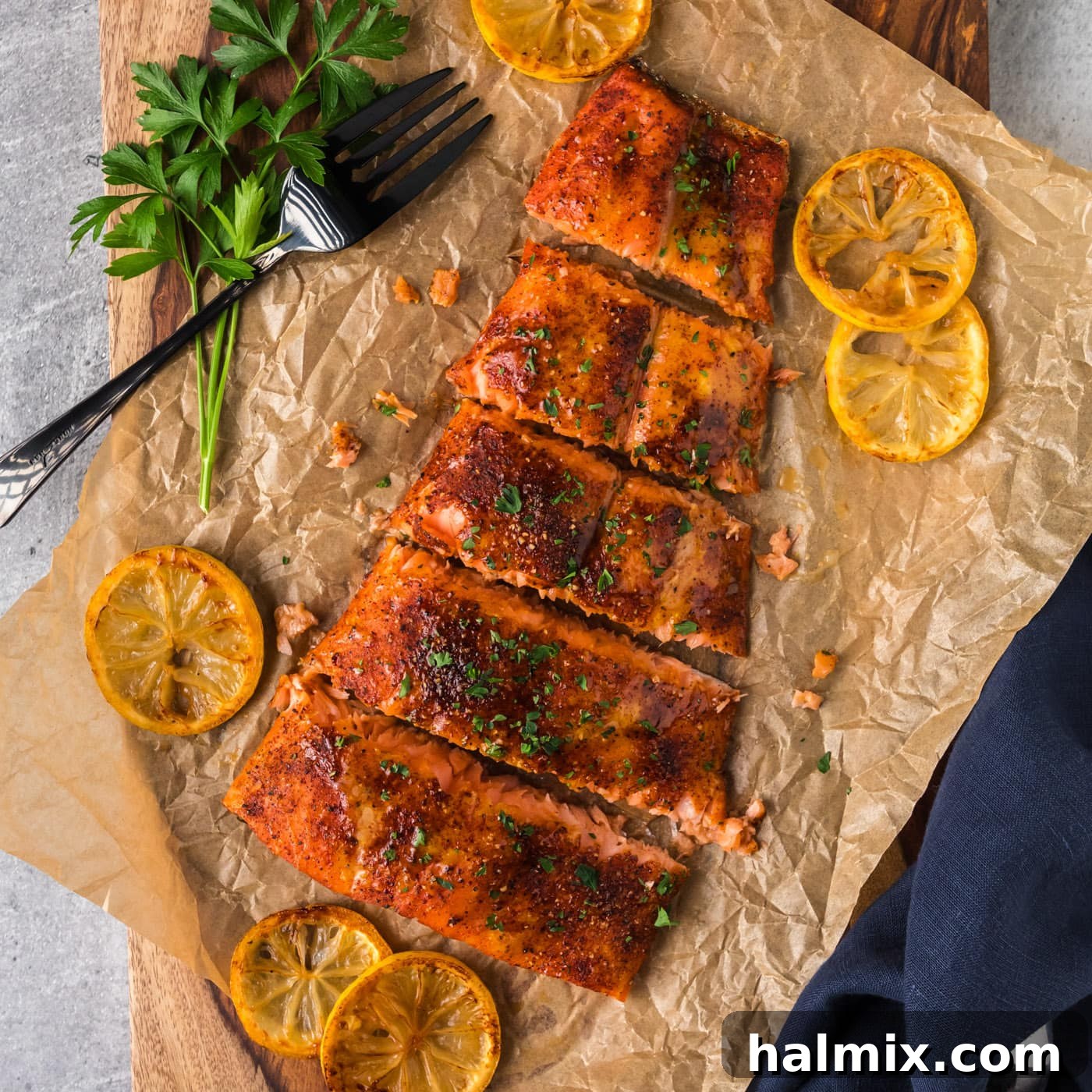
Prepare to elevate your culinary skills with this incredibly delicate and wonderfully crusted smoked salmon recipe. Each bite promises a flaky, tender texture paired with an explosion of rich, smoky flavor that will leave your taste buds yearning for more. Whether you’re a seasoned pitmaster or new to the world of smoking, this guide is designed to help you achieve salmon perfection with ease.
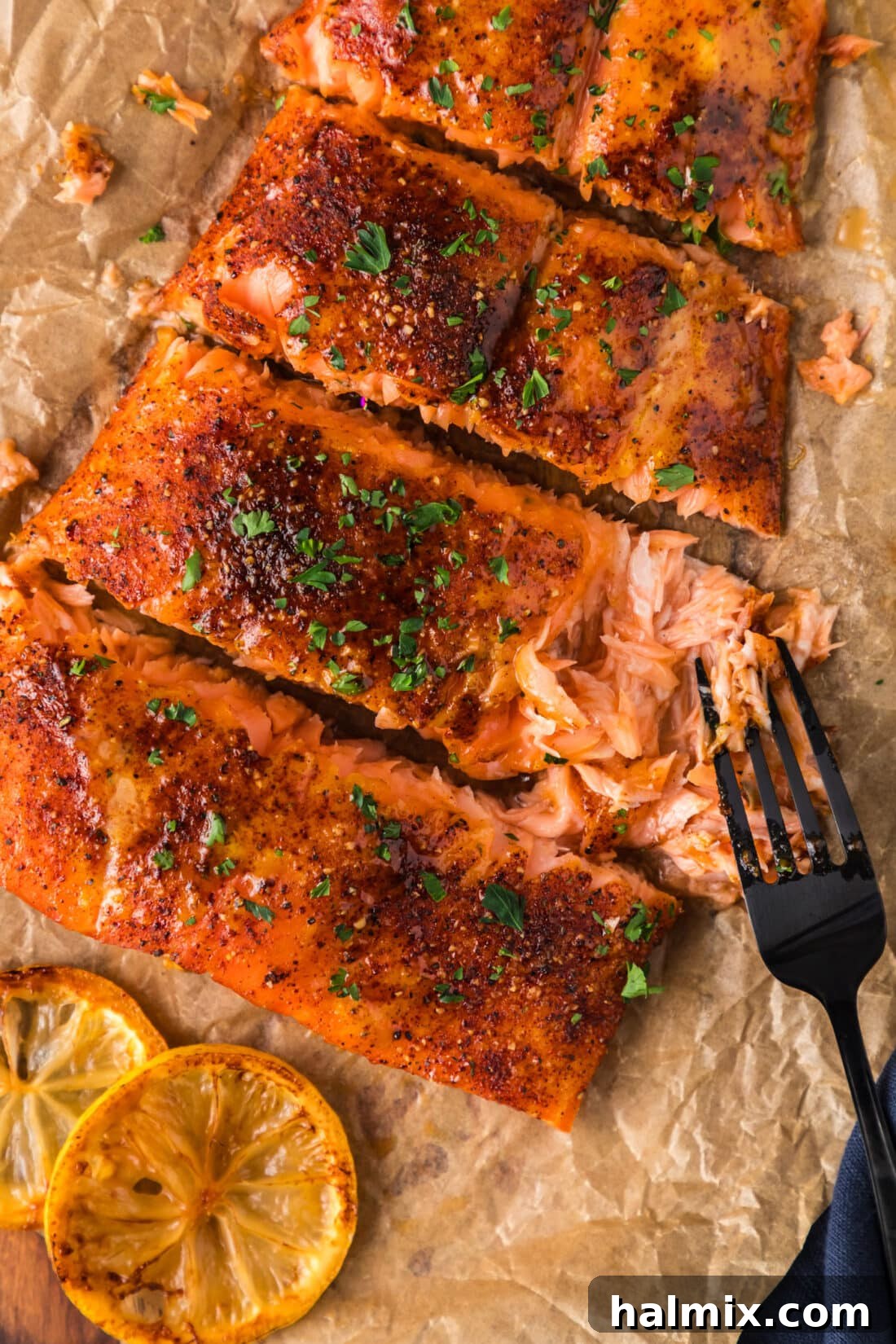
Why This Smoked Salmon Recipe Is a Must-Try
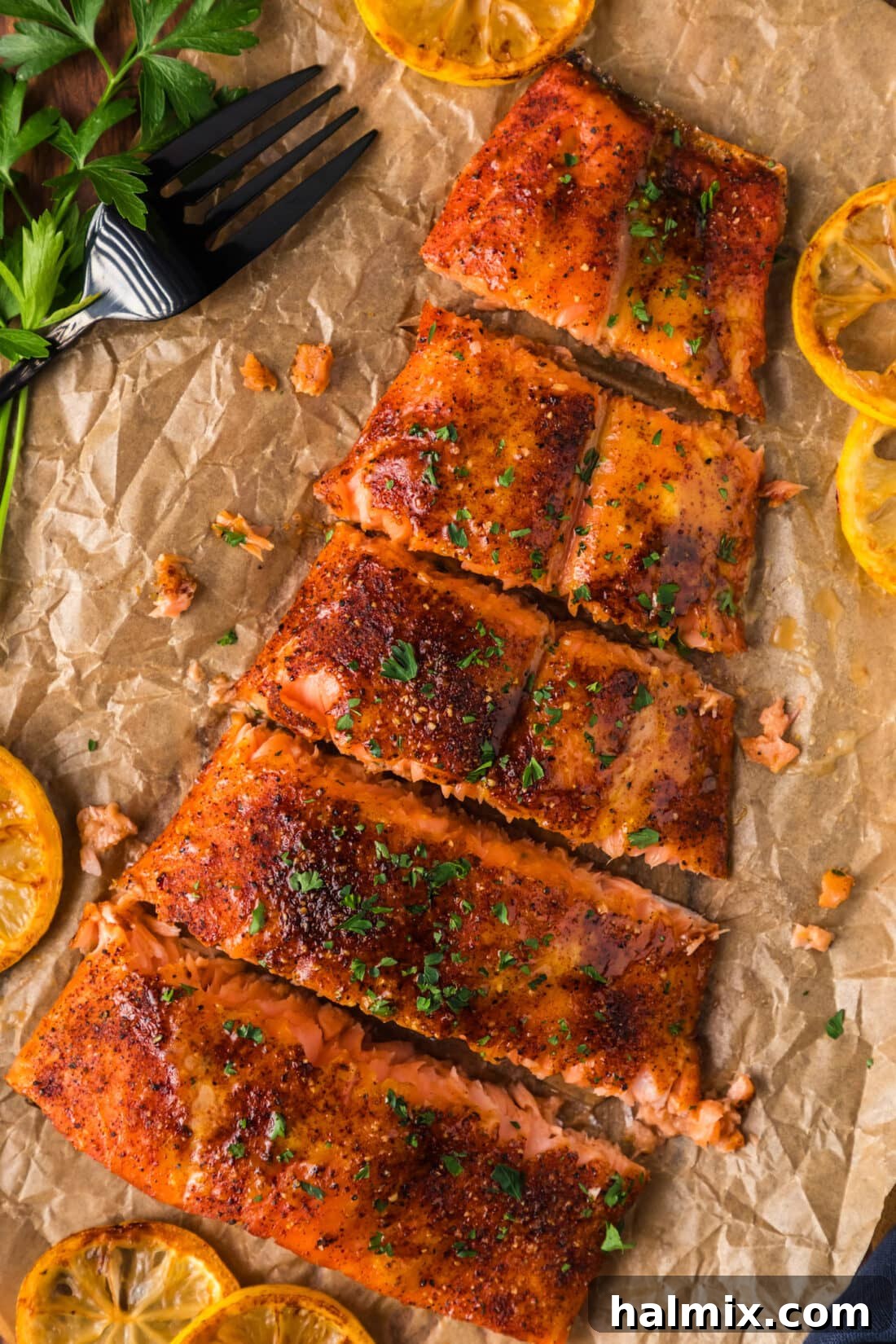
Smoking salmon is a timeless cooking method that infuses this beloved fish with an irresistible depth of flavor and a wonderfully moist or flaky texture. What truly sets this recipe apart is its incredible simplicity and adaptability. You don’t need a gourmet kitchen or years of experience to produce restaurant-quality results right in your backyard. The process is remarkably straightforward, making it an excellent choice for any home cook looking to impress.
Beyond its ease, this smoked salmon recipe is a canvas for your culinary creativity. The foundational flavors are fantastic on their own, but you can effortlessly switch up the spices, seasonings, and herbs to craft a version that perfectly suits your palate. From sweet and spicy to herby and zesty, the possibilities are endless. This versatility ensures that you can enjoy a fresh take on smoked salmon every time, keeping your meals exciting and delicious.
Furthermore, smoked salmon is not just a delightful main course; it’s also a fantastic ingredient for future meals. If you’re fortunate enough to have any leftovers – and we promise you’ll want to make extra – they present the perfect opportunity to whip up innovative dishes like a creamy smoked salmon dip, a vibrant salad topping, or even a gourmet sandwich filling. This recipe isn’t just about making one amazing meal; it’s about opening up a world of flavorful possibilities.
Essential Ingredients for Your Smoked Salmon
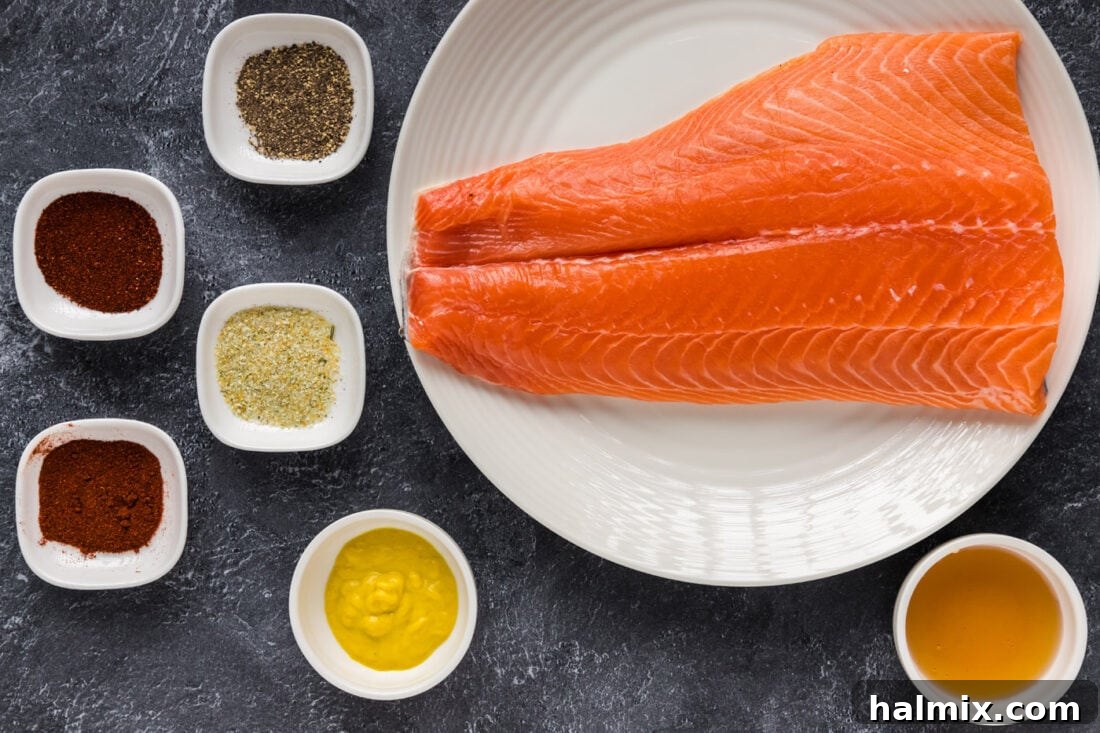
Crafting exceptional smoked salmon begins with quality ingredients. This recipe calls for a handful of common items that, when combined, create a truly memorable flavor profile. Below, you’ll find a detailed list of what you’ll need. For precise measurements and step-by-step instructions, please refer to the printable recipe card located further down this page.
Ingredient Spotlight: Choosing and Customizing
Selecting the Perfect Salmon
The foundation of any great salmon dish is, of course, the salmon itself. When you’re at the grocery store or fish market, look for salmon fillets with a vibrant, bright orangey-red color. The flesh should appear firm and moist, not dry or dull. A good indicator of freshness is when the flesh springs back immediately after you gently touch it. Ideally, opt for wild-caught salmon, such as Sockeye or King salmon, for superior flavor and texture, though responsibly farmed Atlantic salmon can also yield excellent results. For smoking, it’s generally best to keep the skin on, as it helps the fillet hold its shape, keeps the fish moist, and makes it easier to handle on the smoker grates.
Crafting Your Signature Seasoning and Rub
Our recipe utilizes a delightful combination of wet and dry rubs to build layers of flavor. The wet rub, a simple blend of **mustard** and **honey**, serves multiple purposes: it acts as an adhesive for the dry rub, locks in moisture, and introduces a subtle tang and sweetness that perfectly complements the rich salmon. While classic yellow mustard is recommended for its mild flavor, feel free to experiment. Dijon mustard offers a sharper, more sophisticated note, while spicy brown mustard can add an exciting kick. Adjust the honey to your preference for sweetness.
Following the wet rub, we apply a dry seasoning mix featuring **chili powder**, **paprika**, **garlic salt**, and **black pepper**. This blend creates a savory, slightly smoky crust that enhances the natural richness of the salmon without overpowering it. Chili powder provides a warm earthiness, paprika adds color and a subtle sweetness, garlic salt offers a foundational savory punch, and black pepper delivers a gentle heat. The beauty of this recipe lies in its flexibility; you are encouraged to adjust these seasonings to your liking. Consider adding a pinch of smoked paprika for an extra layer of smoky flavor, a dash of onion powder for more depth, or a hint of cayenne for those who prefer a spicier profile. For a different twist, a pre-made blend like Cajun seasoning or lemon pepper would also be absolutely delicious.
Step-by-Step Guide: How to Make Smoked Salmon
These detailed step-by-step photos and instructions are provided to help you visualize each stage of making this incredibly delicious smoked salmon. For a printable version of this recipe, complete with precise measurements and comprehensive instructions, simply scroll down to the recipe card at the bottom of this post.
- Preheat your smoker to a consistent 200°F (93°C). Achieving and maintaining this low temperature is crucial for slow smoking, which results in that coveted tender, flaky texture.
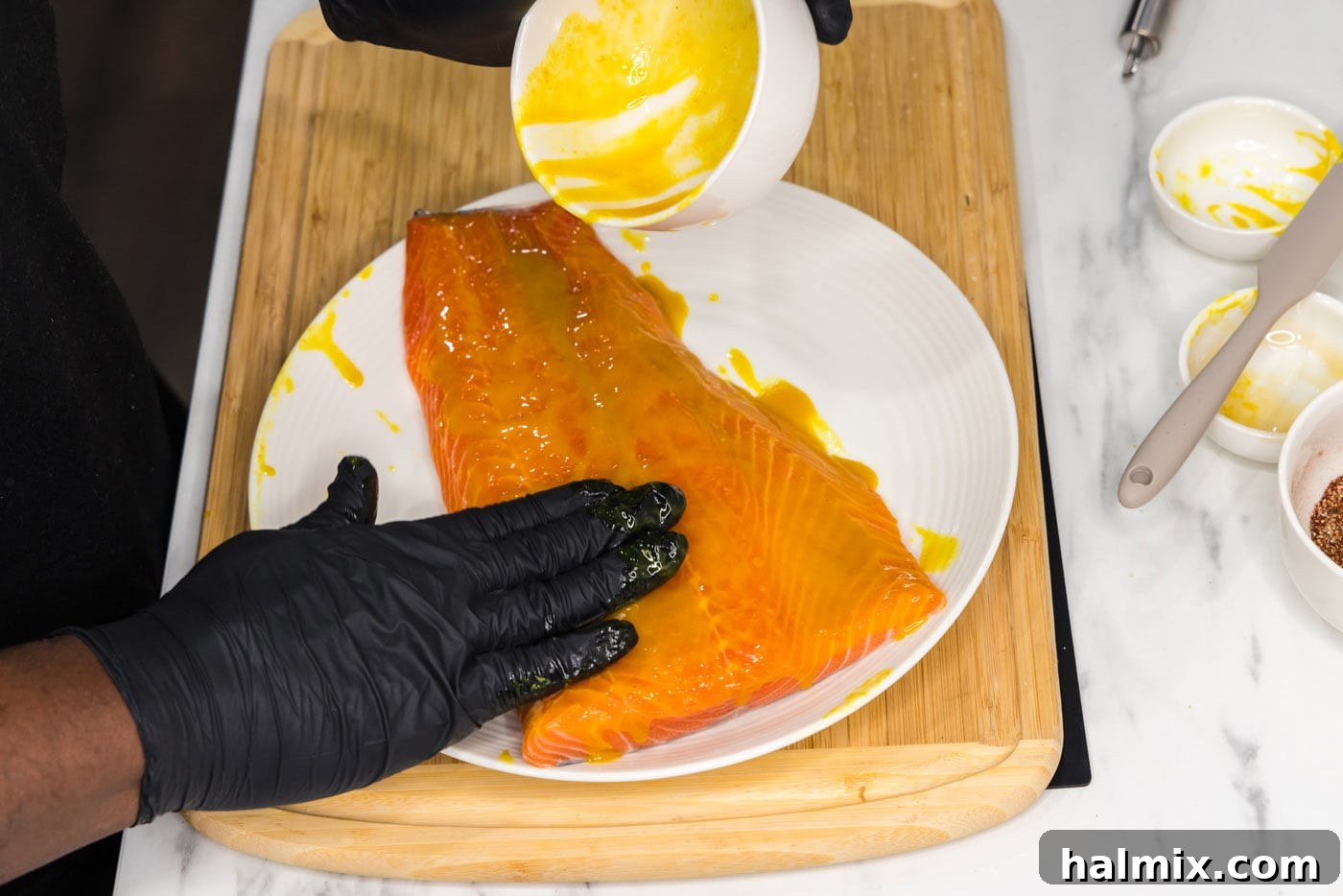
PRO TIP: Before starting, ensure your smoker has an ample supply of pellets or wood chips. Running out mid-cook can halt the smoking process, leading to an unevenly cooked or poorly flavored meal. For salmon, mild fruitwoods like apple or cherry, or a classic like alder, are excellent choices, providing a delicate smoke flavor that complements the fish beautifully. - In a small bowl, thoroughly combine the yellow mustard and honey until smooth. This creates your flavorful wet rub. Generously rub or brush this mixture evenly over the top and sides of each salmon fillet. There’s no need to coat the skin side, as it will be placed directly on the grates. This sticky base not only adds flavor but also helps the dry rub adhere perfectly.

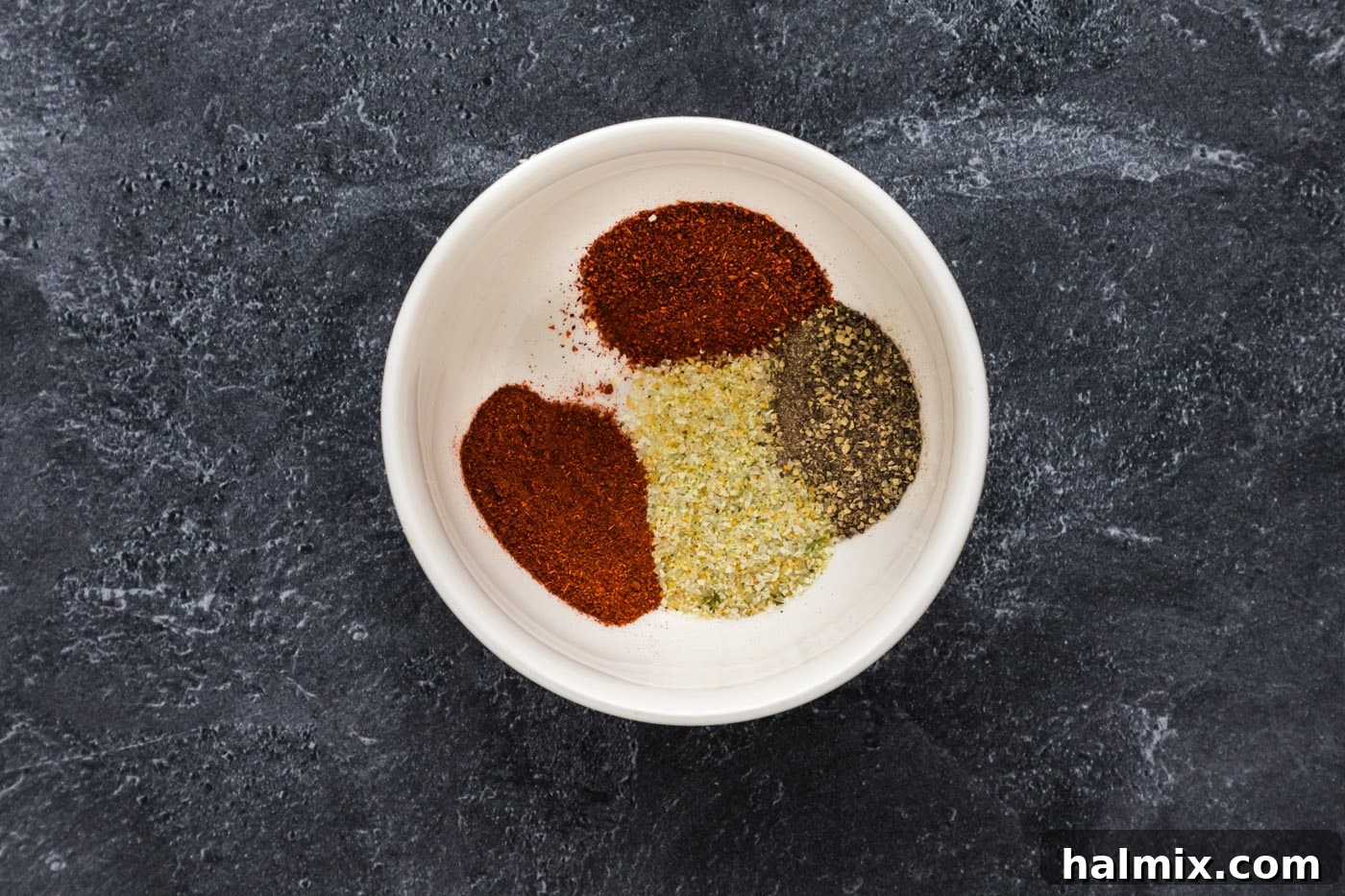
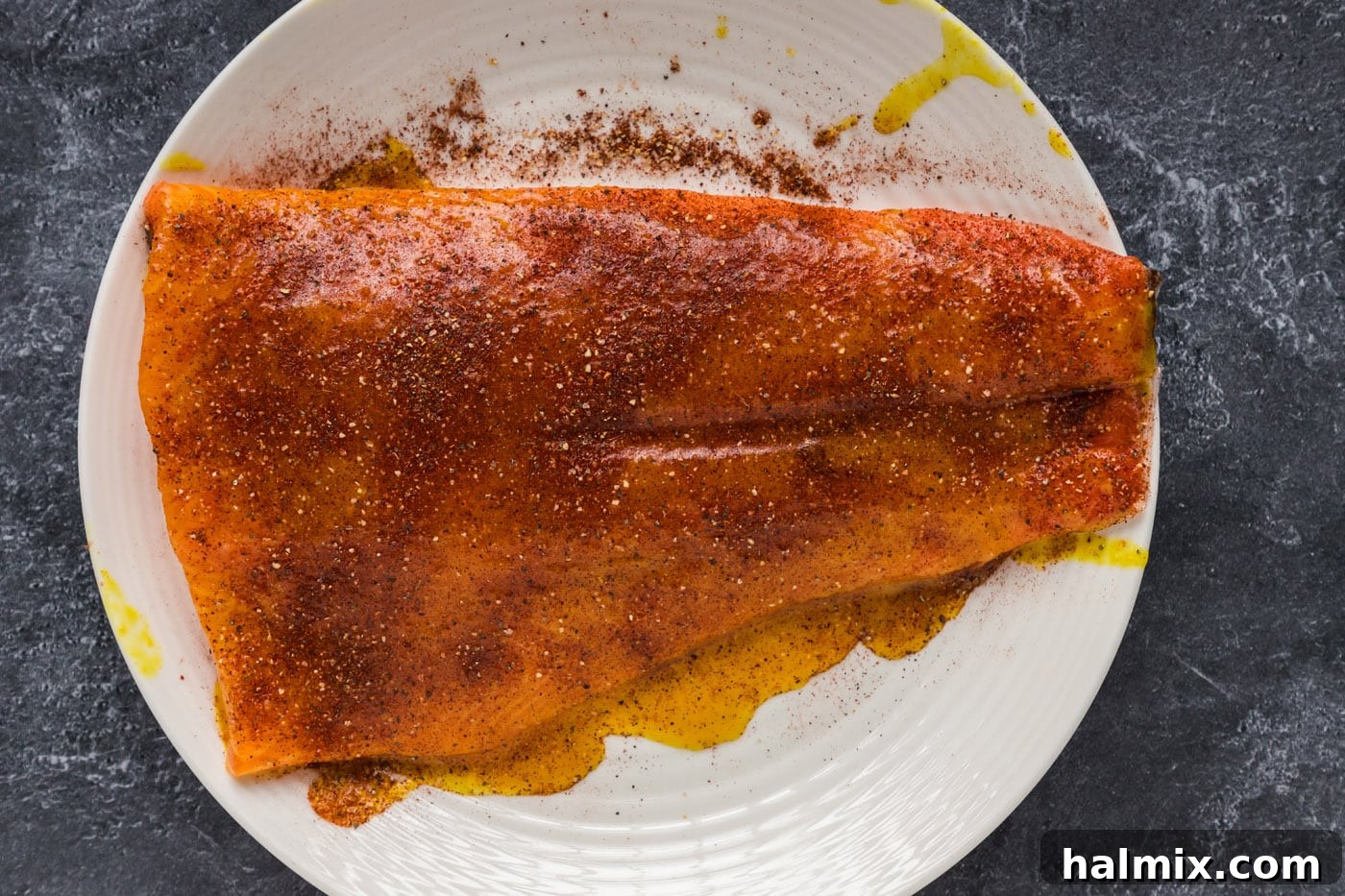
- In a separate small bowl, combine the chili powder, paprika, garlic salt, and black pepper. Mix these dry spices well. Then, evenly sprinkle this vibrant seasoning mixture over the honey-mustard coated salmon fillets. Gently pat it down to ensure it sticks, creating a beautiful crust that will intensify as it smokes.
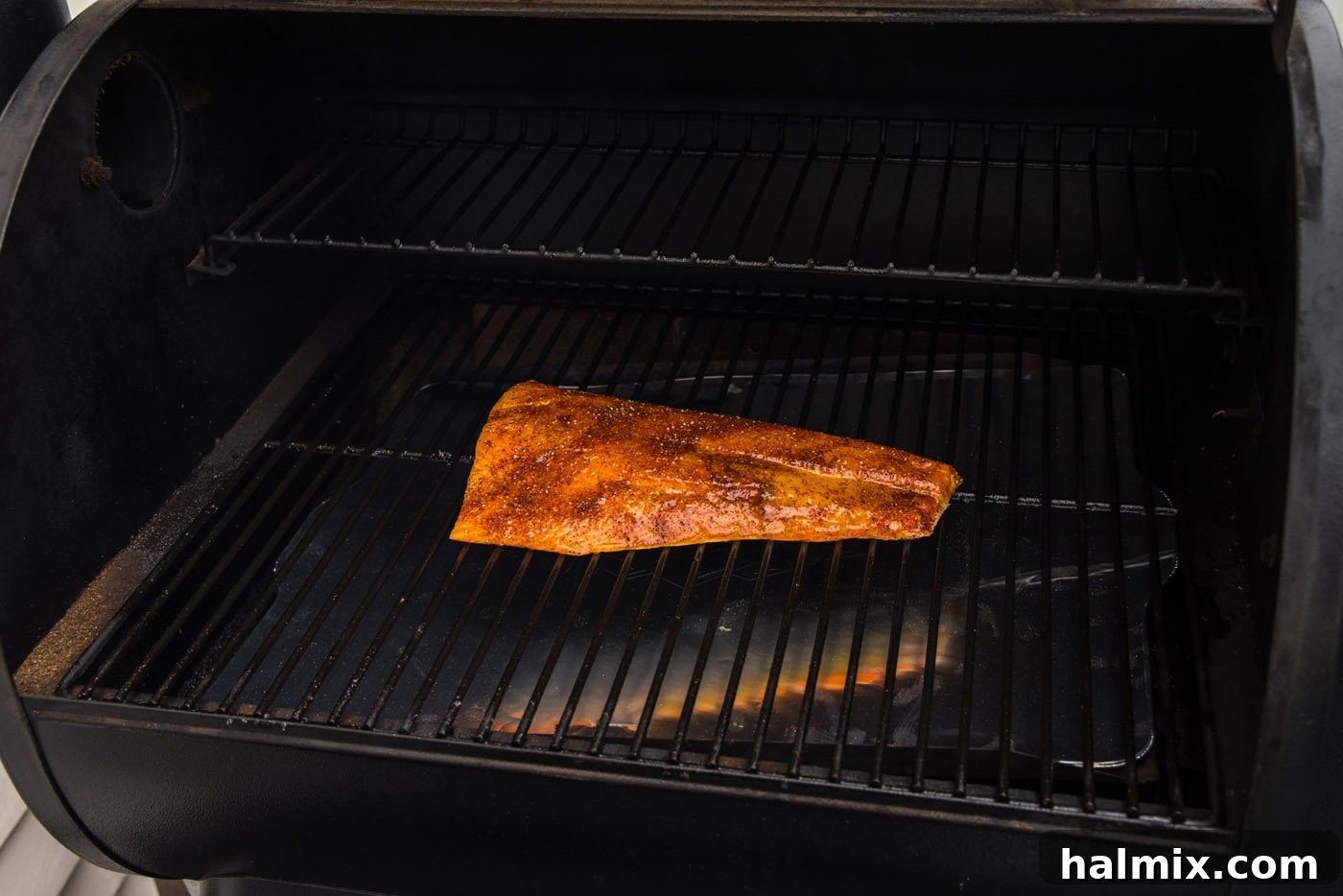
- Carefully place the seasoned salmon fillets onto the preheated smoker grates, ensuring the skin side is down. This protects the delicate flesh from direct heat and helps prevent sticking. Leave a little space between each fillet for even smoke circulation.
- Close the smoker lid and allow the salmon to cook undisturbed for 90 to 120 minutes. The cooking time will vary slightly depending on the thickness of your fillets and your desired texture.
CHEF’S INSIGHT: If you prefer your smoked salmon to be very moist and tender with a slightly softer flake, aim for the shorter end of the cooking time, around 90 minutes. For a flakier, firmer texture that easily pulls apart, extend the cooking to the full 120 minutes. The internal temperature should reach 145°F (63°C) for food safety. Using a reliable probe thermometer inserted into the thickest part of the fish is the most accurate way to ensure perfect doneness. - Once cooked to your preference, carefully remove the smoked salmon from the smoker to a clean wooden cutting board or platter. Allow it to rest for at least 10 minutes before serving. This resting period is crucial as it allows the juices to redistribute throughout the fish, ensuring maximum flavor and moisture in every bite.
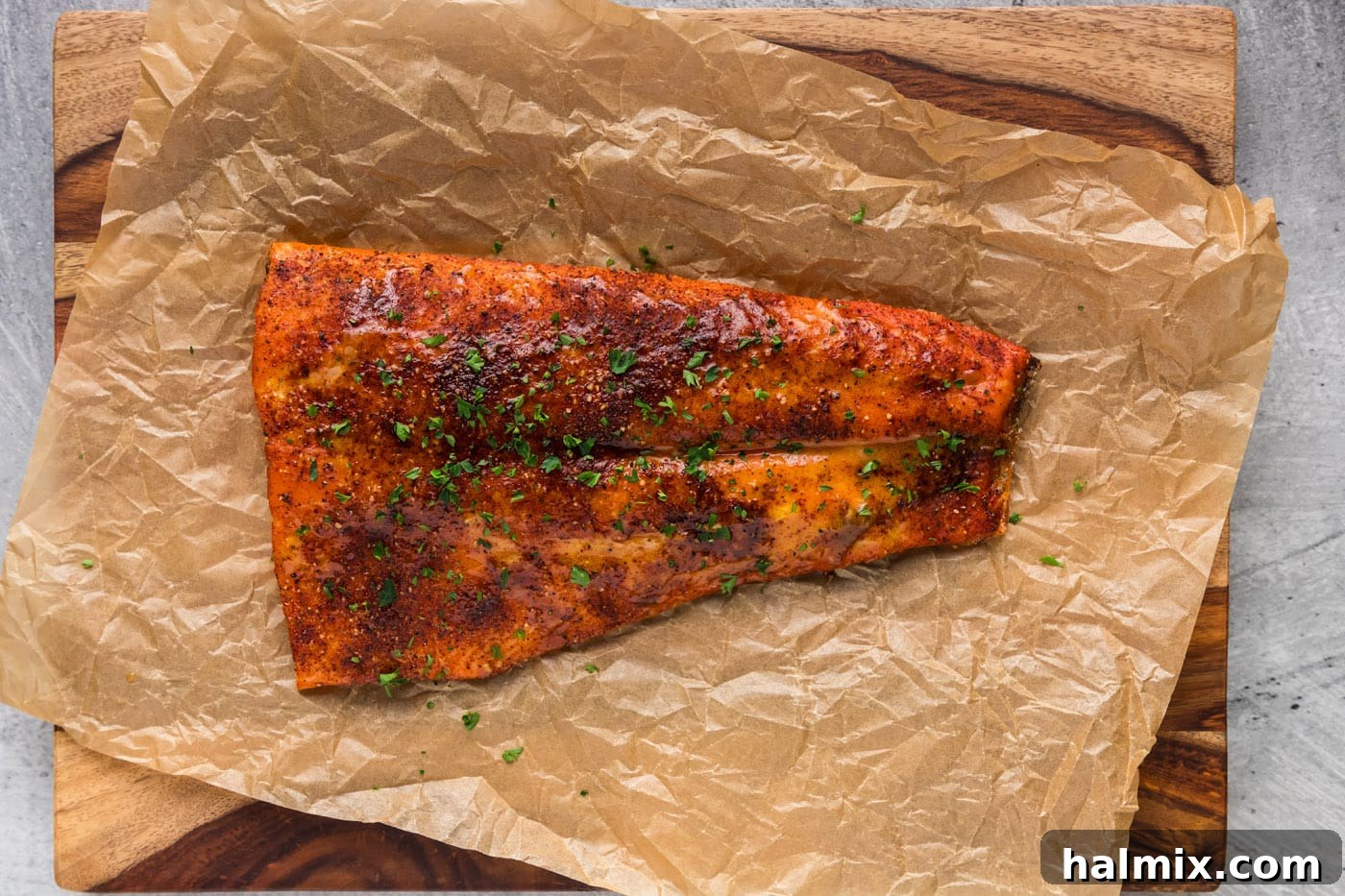
Frequently Asked Questions & Expert Tips for Smoking Salmon
Common Questions
- How do you store leftover smoked salmon?
Leftover smoked salmon is a treasure! To maintain its freshness and flavor, store it in an airtight container in the refrigerator. It will keep beautifully for up to one week.
- Can you freeze smoked salmon?
Absolutely, smoked salmon freezes exceptionally well! For optimal preservation, first ensure the salmon has cooled completely. Then, wrap it tightly in plastic wrap, removing as much air as possible (a food sealer works even better if you have one!). Follow this with a layer of heavy-duty aluminum foil. Properly wrapped, smoked salmon can be stored in the freezer for up to 3 months. Thaw it in the refrigerator overnight before enjoying.
- What kind of wood chips or pellets are best for smoking salmon?
For salmon, lighter, fruitier woods are generally preferred to complement its delicate flavor without overpowering it. Popular choices include alder (a classic for salmon), apple, cherry, or pecan. Avoid strong woods like mesquite or hickory unless you prefer a very intense smoky flavor.
- How do I know when my smoked salmon is perfectly cooked?
The most accurate way to check for doneness is by using an instant-read meat thermometer. Insert it into the thickest part of the fillet. Salmon is safely cooked when it reaches an internal temperature of 145°F (63°C). Visually, the flesh should be opaque and easily flake with a fork.
- Should I remove the skin before or after smoking?
It’s generally recommended to leave the skin on during the smoking process. The skin acts as a protective layer, helping the fish retain moisture and preventing it from sticking to the grates. Once smoked, the skin can be easily peeled off before serving, or some enjoy eating it for its crispy texture.
Expert Tips for Success
- Consistency is Key: Maintaining a steady smoker temperature is vital for even cooking and smoke penetration. Avoid opening the smoker lid too frequently, as this causes temperature fluctuations.
- Brining for Moisture and Flavor: While not included in this quick recipe, a short brine (30-60 minutes in a salt and sugar solution) can add extra moisture and flavor to your salmon, and contribute to a more pronounced pellicle (a sticky surface layer that helps smoke adhere).
- Don’t Overcook: Salmon cooks relatively quickly, even at low temperatures. Overcooked salmon will be dry and tough. Trust your thermometer for perfect results.
- Experiment with Rubs: Don’t be afraid to try different spice combinations. Dried dill, lemon zest, brown sugar, or even a touch of maple syrup can add unique dimensions to your smoked salmon.
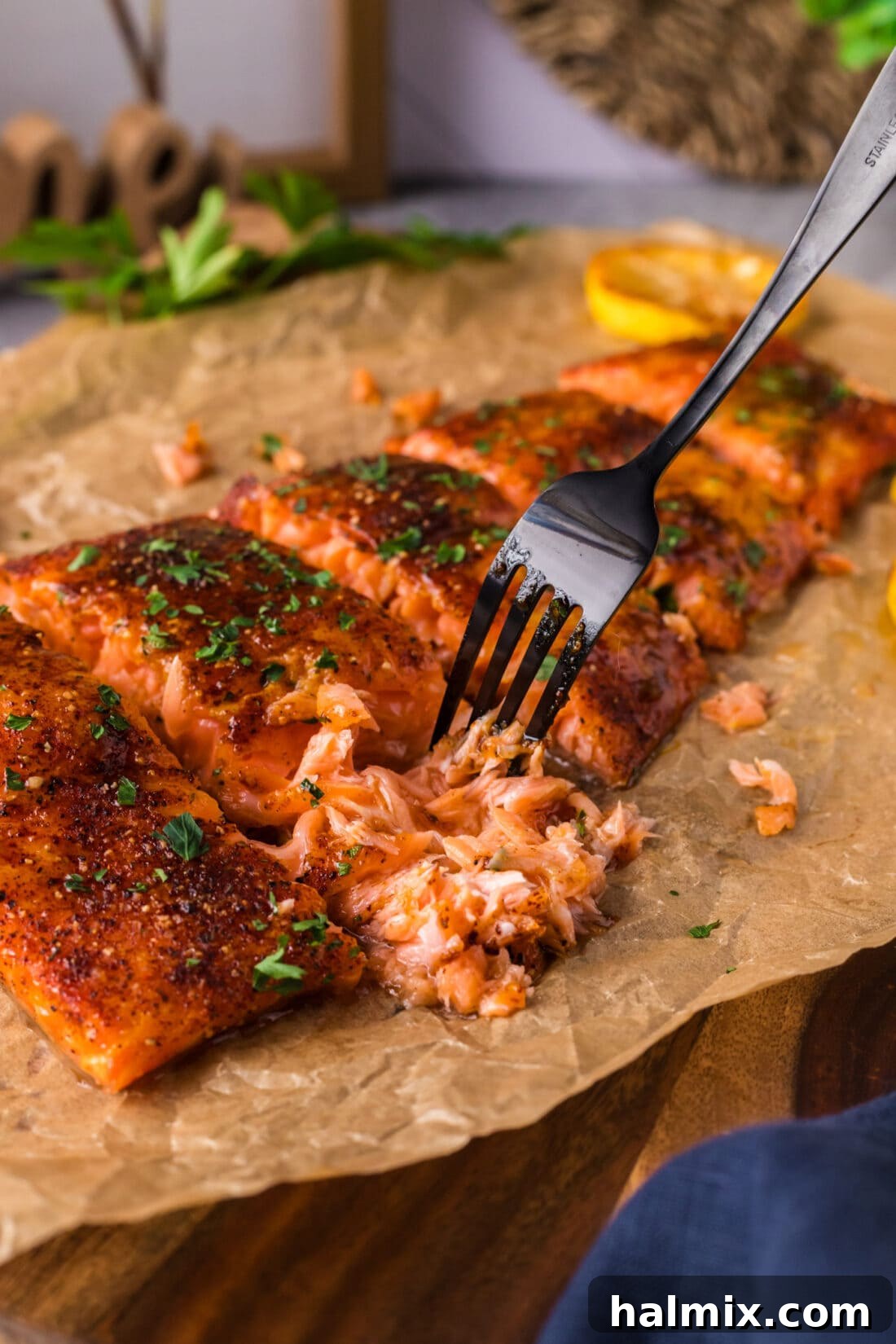
Creative Serving Ideas for Smoked Salmon
The versatility of smoked salmon means the options for serving are truly endless, limited only by your imagination! Here are some delightful ways to enjoy your freshly smoked masterpiece:
- Breakfast & Brunch: Flake it into scrambled eggs or an omelet, serve it alongside toasted bagels with cream cheese and capers, or use it to create an elegant smoked salmon eggs benedict.
- Light Lunches: Toss flaked smoked salmon into a fresh garden salad with a light vinaigrette, or layer it into sandwiches and wraps with cream cheese, cucumbers, and fresh dill.
- Appetizers & Snacks: Transform it into our fantastic smoked salmon dip, serve on crackers with a dollop of créme fraîche, or create elegant canapés with cucumber slices and a sprinkle of fresh chives.
- Dinner Delights: As a main course, serve it simply with a squeeze of fresh lemon and a side of roasted or grilled vegetables like asparagus or broccoli. Chunk it and serve it wrapped in warm taco shells with your favorite fixings, or mix it into pasta with a creamy lemon sauce.
There’s truly no right or wrong way to savor the rich flavors of homemade smoked salmon. Let its delicious versatility inspire your next meal!
Expand Your Smoker Repertoire
Loved smoking salmon? There’s a whole world of delicious possibilities waiting for you on your smoker! Explore these other fantastic recipes that harness the power of low and slow cooking:
- Smoked Trout: Another delicate fish that takes beautifully to smoke.
- Smoked Beef Ribs: For a hearty, fall-off-the-bone meal.
- Smoked Queso Dip: An appetizer that will be the hit of any gathering.
- Smoked Ribeye Steak: Achieve perfect tenderness and incredible flavor.
- Smoked Chicken Quarters: Juicy, flavorful chicken every time.
I absolutely adore cooking and baking, and it brings me so much joy to share my kitchen adventures with all of you! Remembering to check back for new recipes daily can be tricky, which is why I offer a convenient newsletter delivered straight to your inbox every time a new recipe posts. Simply subscribe here and start receiving your free daily recipes – never miss a delicious update!
Smoked Salmon
This smoked salmon recipe delivers irresistibly smoky, flaky, and tender fillets that are surprisingly easy to prepare at home. Perfect for a delicious meal or versatile leftovers.
Rated 5 out of 5 stars from 6 votes
IMPORTANT – There are often Frequently Asked Questions and Expert Tips within the blog post that you may find helpful. Simply scroll back up to read them!
Print Recipe |
Pin Recipe |
Rate It
Course: Dinner
Cuisine: American
Servings: 4 servings
Total Time: 2 hours 20 mins
Calories: 281
Author: Amanda Davis
Ingredients
- 1 ½ pounds fresh salmon fillets
- 2 Tablespoons yellow mustard
- 2 Tablespoons honey
- 1 teaspoon chili powder
- 1 teaspoon paprika
- 1 teaspoon garlic salt
- ½ teaspoon black pepper
Things You’ll Need
- Smoker
- Small bowls for mixing
- Basting brush (optional)
- Meat thermometer (recommended)
Before You Begin
- When choosing salmon at the grocery store, look for a bright orangey-red color. The flesh should be firm and spring back when gently touched, indicating freshness.
- Ensure your smoker is clean and properly maintained for the best flavor.
Instructions
- Preheat your smoker to a steady 200°F (93°C). Make sure to check your fuel (pellets or wood chips) to ensure you have enough for the entire smoking process.
- In a small bowl, combine the yellow mustard and honey. Mix well until you have a smooth paste. Generously rub or brush this mixture over the top and sides of the salmon fillets. You can leave the skin side uncoated.
- In another small bowl, whisk together the chili powder, paprika, garlic salt, and black pepper. Evenly sprinkle this dry rub over the honey-mustard coated salmon, gently pressing to adhere the spices.
- Carefully place the seasoned salmon fillets onto the smoker grates, ensuring the skin side is facing down. Leave a little space between each fillet for optimal smoke circulation.
- Close the smoker and cook the salmon for 90 to 120 minutes. Use a meat thermometer to check the internal temperature, aiming for 145°F (63°C). Cook for 90 minutes for moister results, or up to 120 minutes for a flakier texture.
- Once cooked, remove the salmon to a wooden cutting board or platter. Allow it to rest for 10 minutes before flaking or slicing and serving. This resting period helps the juices redistribute, ensuring a tender and flavorful fish.
Expert Tips & FAQs
- Leftover smoked salmon can be stored in an airtight container in the refrigerator for up to one week.
- To freeze, wrap cooled salmon tightly in plastic wrap, then in a layer of aluminum foil. It can be frozen for up to 3 months. Thaw in the refrigerator before use.
- For best smoke flavor, use fruitwoods like apple or cherry, or traditional alder wood.
- Don’t overcrowd your smoker; allow adequate space for smoke to circulate around each fillet.
Nutrition Information
Serving: 1 serving (1 filet) | Calories: 281cal | Carbohydrates: 10g | Protein: 34g | Fat: 11g | Saturated Fat: 2g | Polyunsaturated Fat: 4g | Monounsaturated Fat: 4g | Cholesterol: 94mg | Sodium: 748mg | Potassium: 875mg | Fiber: 1g | Sugar: 9g | Vitamin A: 469IU | Vitamin C: 0.1mg | Calcium: 30mg | Iron: 2mg
Tried this Recipe? Pin it for Later!
Follow on Pinterest @AmandasCookin or tag #AmandasCookin!
The recipes on this blog are tested with a conventional gas oven and gas stovetop. It’s important to note that some ovens, especially as they age, can cook and bake inconsistently. Using an inexpensive oven thermometer can assure you that your oven is truly heating to the proper temperature. If you use a toaster oven or countertop oven, please keep in mind that they may not distribute heat the same as a conventional full sized oven and you may need to adjust your cooking/baking times. In the case of recipes made with a pressure cooker, air fryer, slow cooker, or other appliance, a link to the appliances we use is listed within each respective recipe. For baking recipes where measurements are given by weight, please note that results may not be the same if cups are used instead, and we can’t guarantee success with that method.