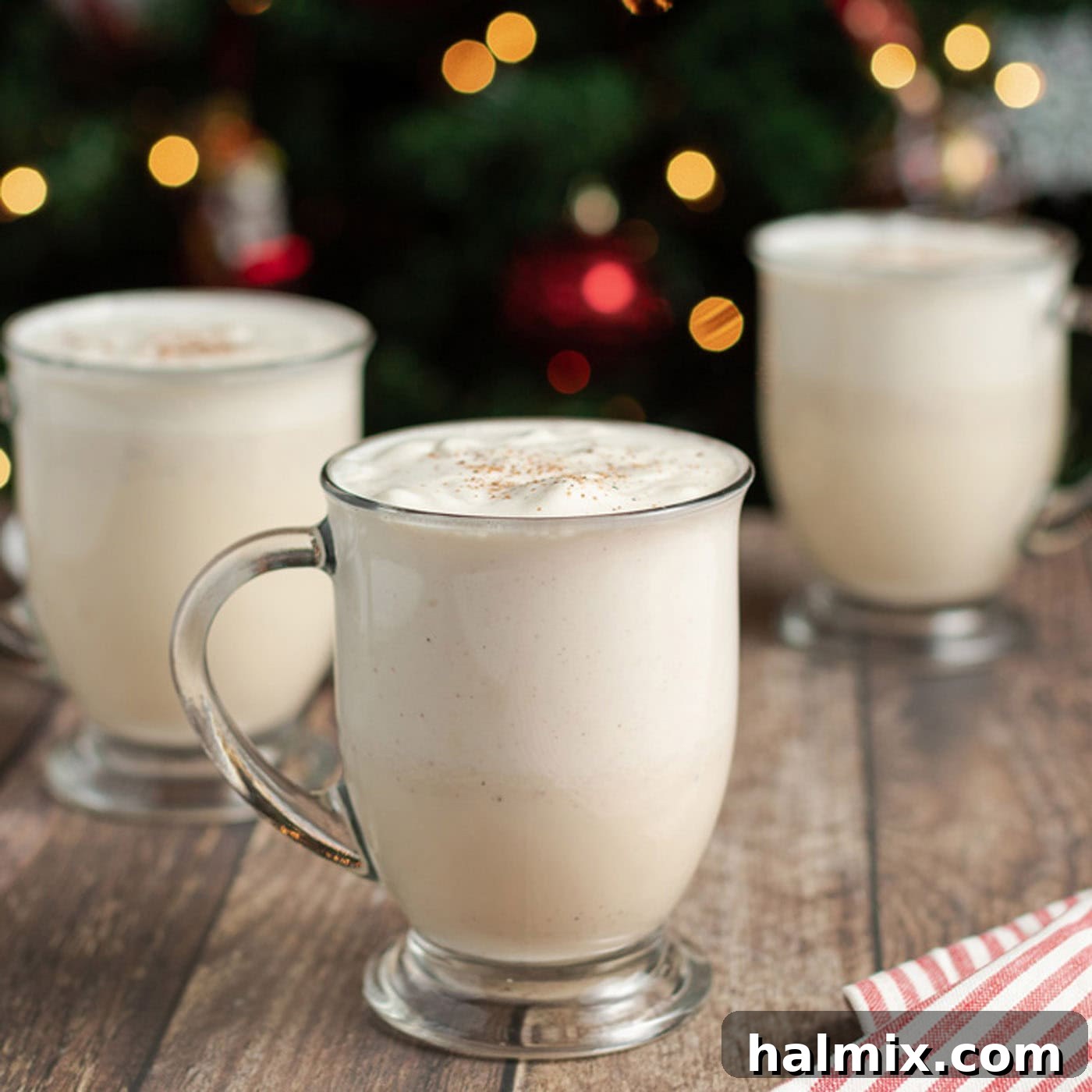
Creamy Homemade Eggnog: The Ultimate Holiday Drink Recipe
There’s nothing quite like a glass of rich, creamy homemade eggnog to truly embrace the spirit of the holiday season. Forget the store-bought varieties; making your own from scratch is an incredibly rewarding experience that yields a superior flavor and texture. This recipe guides you through creating a luscious, perfectly spiced eggnog with warm nutmeg, promising a festive treat that’s easier to achieve than you might imagine. While it does require a little foresight for proper chilling, the result is well worth the wait.
Why This Homemade Eggnog Recipe Is a Holiday Must-Make
For many, homemade eggnog isn’t just a drink; it’s a cherished Christmas tradition, a symbol of warmth and celebration. This particular recipe stands out because it delivers an unparalleled taste and velvety texture that commercial eggnogs simply cannot match. It’s a delightful blend of simplicity and indulgence, proving that a little effort in the kitchen can elevate your holiday experience dramatically.
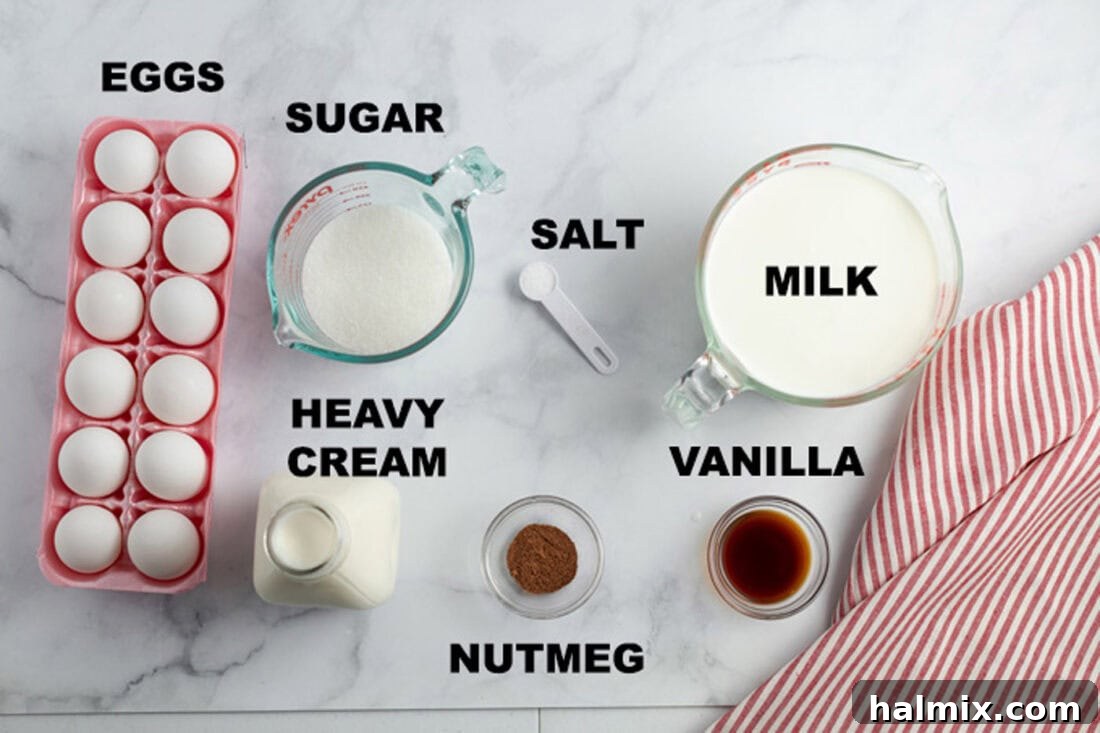
What makes this recipe truly special? Firstly, it transforms basic kitchen staples—eggs, sugar, salt, milk, nutmeg, vanilla, and heavy whipping cream—into a luxurious beverage. The careful cooking process ensures a perfectly thickened, safe, and utterly delicious concoction. Unlike traditional raw-egg eggnog, this recipe gently cooks the mixture, eliminating any concerns about food-borne illnesses while still achieving that classic, custardy richness.
This cooked eggnog recipe is ideal for everyone, including children, making it a perfect addition to any family gathering. For adults looking to add a spirited touch to their festivities, this creamy base serves as an excellent foundation for a homemade eggnog cocktail, allowing for personalized alcoholic variations that are sure to impress.
Essential Ingredients for Your Creamy Eggnog
Crafting the perfect batch of homemade eggnog begins with selecting fresh, high-quality ingredients. Each component plays a crucial role in achieving the desired taste and consistency of this beloved holiday beverage. While the full recipe card with precise measurements is available at the end of this article, here’s a look at the core ingredients you’ll need to gather:
Detailed Ingredient Information and Expert Tips for Substitutions
Understanding each ingredient’s role is key to perfecting your homemade eggnog. Here’s a deeper dive into the components that make this holiday classic so irresistible:
- EGGS: The Custard Base
Eggs are the very foundation of eggnog, lending it its characteristic rich flavor and custardy thickness. Crucially, this is *not* a raw egg eggnog recipe. We prioritize safety and ensure deliciousness by gently cooking the egg mixture in a saucepan until it reaches a safe temperature of 165°F (74°C). This careful cooking process eliminates any concerns about food-borne illnesses while developing that desirable velvety texture. Do not compromise on the number of eggs, as they are essential for achieving the perfect consistency. - SUGAR: Sweetness and Structure
Granulated sugar provides the necessary sweetness to balance the richness of the dairy and eggs. It also contributes to the smooth texture by dissolving into the mixture. You can adjust the amount of sugar slightly to suit your preference, but remember that eggnog is traditionally a sweet treat. For a slightly different flavor profile, you could experiment with a small amount of brown sugar, but this may alter the color. - SALT: Flavor Enhancer
Just a hint of salt is crucial. It doesn’t make the eggnog salty but rather enhances all the other flavors, making the sweetness brighter and the spices more pronounced. Don’t skip this tiny but mighty ingredient! - MILK: The Liquid Foundation
Whole milk is recommended for the creamiest result, providing a rich backdrop for the other ingredients. You’ll use a portion of the milk in the initial cooking phase and the remainder to thin and cool the mixture later. While you can use lower-fat milk, it will result in a less decadent and thinner eggnog. For a dairy-free option, coconut milk or almond milk can be used, but be aware that the flavor and texture will be significantly different, and it may not thicken as much. - NUTMEG: The Signature Spice
Freshly grated nutmeg is non-negotiable for authentic, aromatic eggnog. Pre-ground nutmeg loses its potency quickly, so investing in whole nutmeg and a small grater will dramatically improve your eggnog experience. The warm, slightly sweet, and pungent notes of nutmeg are what truly define eggnog’s holiday character. While nutmeg is the star, you can also experiment with a pinch of cinnamon or a tiny dash of ground cloves for added complexity, but do so sparingly to avoid overpowering the nutmeg. - VANILLA: Aromatic Depth
Pure vanilla extract adds a lovely depth and warmth to the eggnog, complementing the nutmeg beautifully. Opt for high-quality pure vanilla extract over imitation vanilla for the best flavor. Vanilla bean paste or the seeds from a vanilla bean can also be used for an even more intense vanilla aroma and tiny flecks of vanilla throughout. - HEAVY WHIPPING CREAM: The Ultimate Creaminess
This is where the “creamy” in “creamy homemade eggnog” truly comes from! Whipped heavy cream is folded into the cooled eggnog, adding a luxurious lightness and unparalleled richness. Ensure your cream is very cold before whipping for optimal volume. Do not substitute with half-and-half or light cream if you want that signature decadent mouthfeel.
Step-by-Step Guide: Crafting Your Own Homemade Eggnog
Making homemade eggnog is a rewarding process that brings a wonderful aroma to your kitchen. These detailed steps will guide you through creating a perfectly creamy and spiced holiday beverage. Remember that patience is key, especially during the cooking and chilling phases.
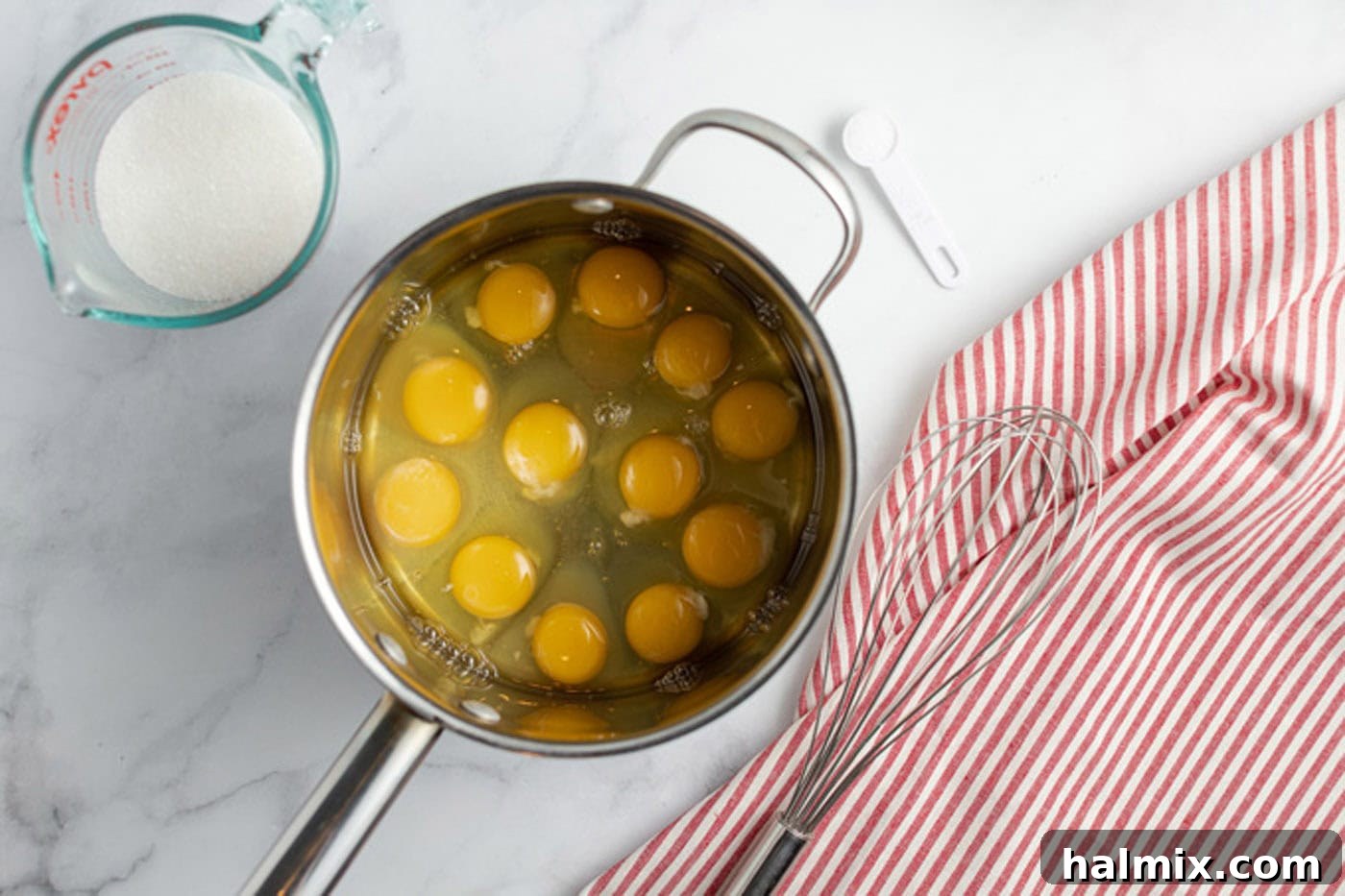
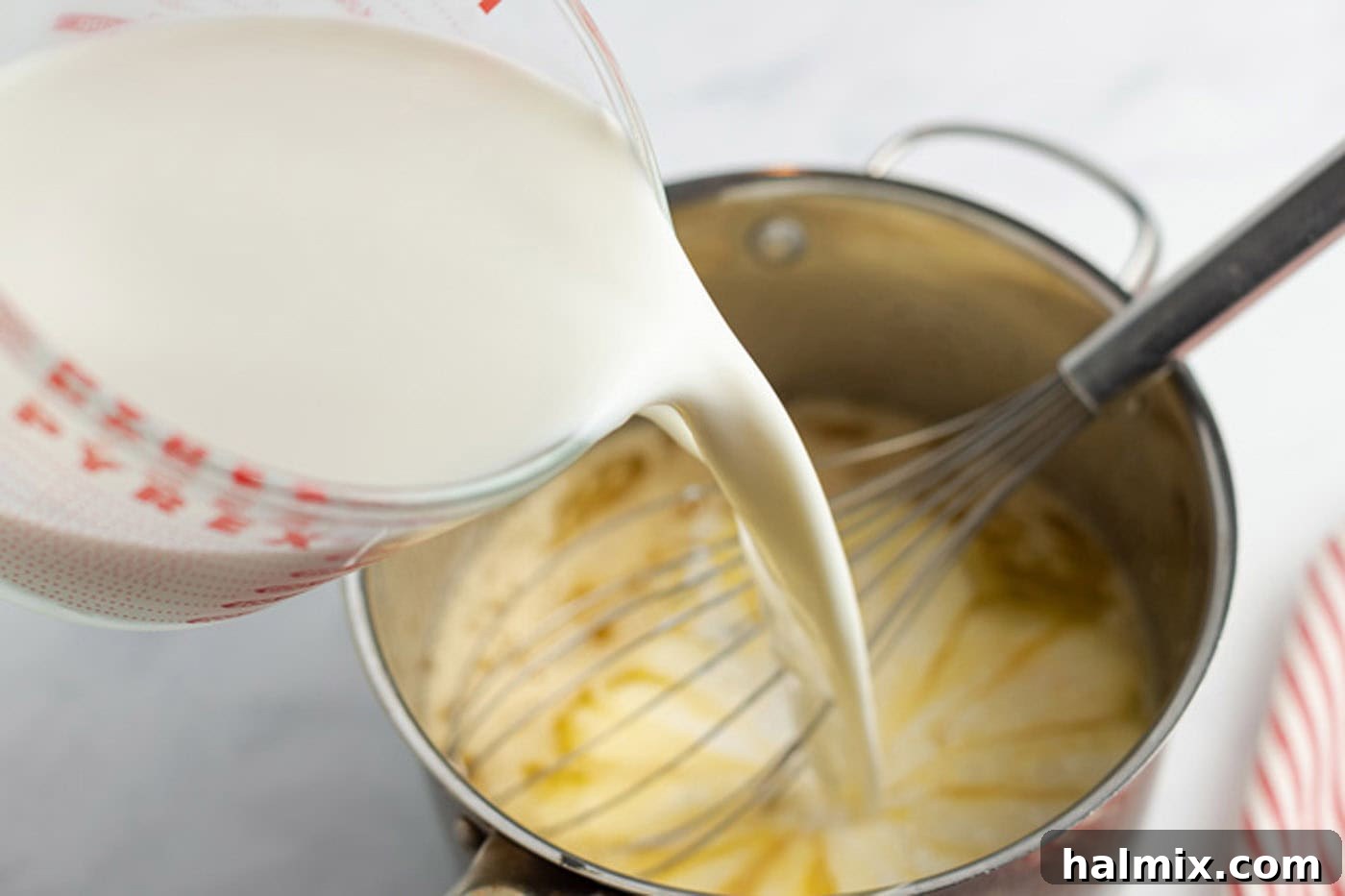
- Prepare the Base: In a sturdy, heavy-bottomed saucepan, whisk together the eggs, sugar, and salt until well combined and slightly pale. Gradually, and continuously whisking, pour in 4 cups of the milk. This gradual addition helps temper the eggs, preventing them from scrambling.
- Cook to Perfection: Place the saucepan over low heat. Cook and stir the mixture frequently. It’s crucial to maintain low heat to prevent the eggs from cooking too quickly or scorching the milk at the bottom of the pan. Continue cooking until the mixture thickens slightly and reaches a temperature of 165°F (74°C) on a reliable kitchen thermometer. This process can take approximately 30-35 minutes, so don’t rush it. **Absolutely do not allow the mixture to boil**, as this can curdle the eggs. Once the correct temperature is reached, immediately transfer the cooked custard base into a large, clean bowl to stop the cooking process.
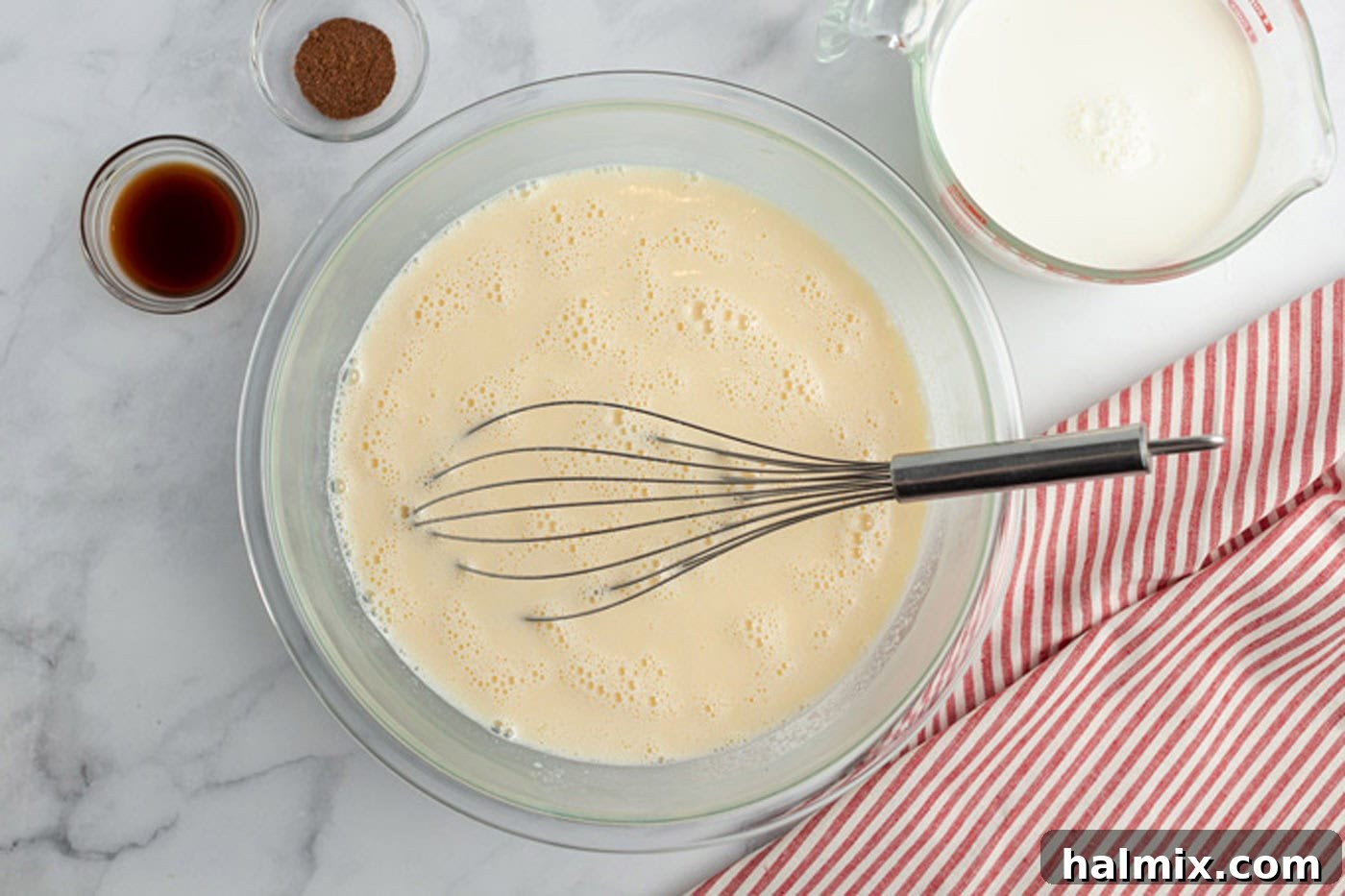
- Infuse Flavors: Stir in the vanilla extract, the generous amount of nutmeg, and the remaining milk into the warm custard base.
- Rapid Cooling: To cool the mixture down quickly and prevent further cooking, place the bowl into a larger ice-water bath. Stir the eggnog constantly until it becomes cool to the touch. This step is vital for achieving a smooth texture. If, despite your best efforts, the mixture appears slightly separated or grainy, a quick pulse in a blender or food processor can smooth it out beautifully.
- Chill Thoroughly: Once cooled, cover the bowl tightly and refrigerate the eggnog until it is thoroughly chilled. This typically takes about 3-4 hours, but chilling overnight is even better for optimal flavor development and thickness.
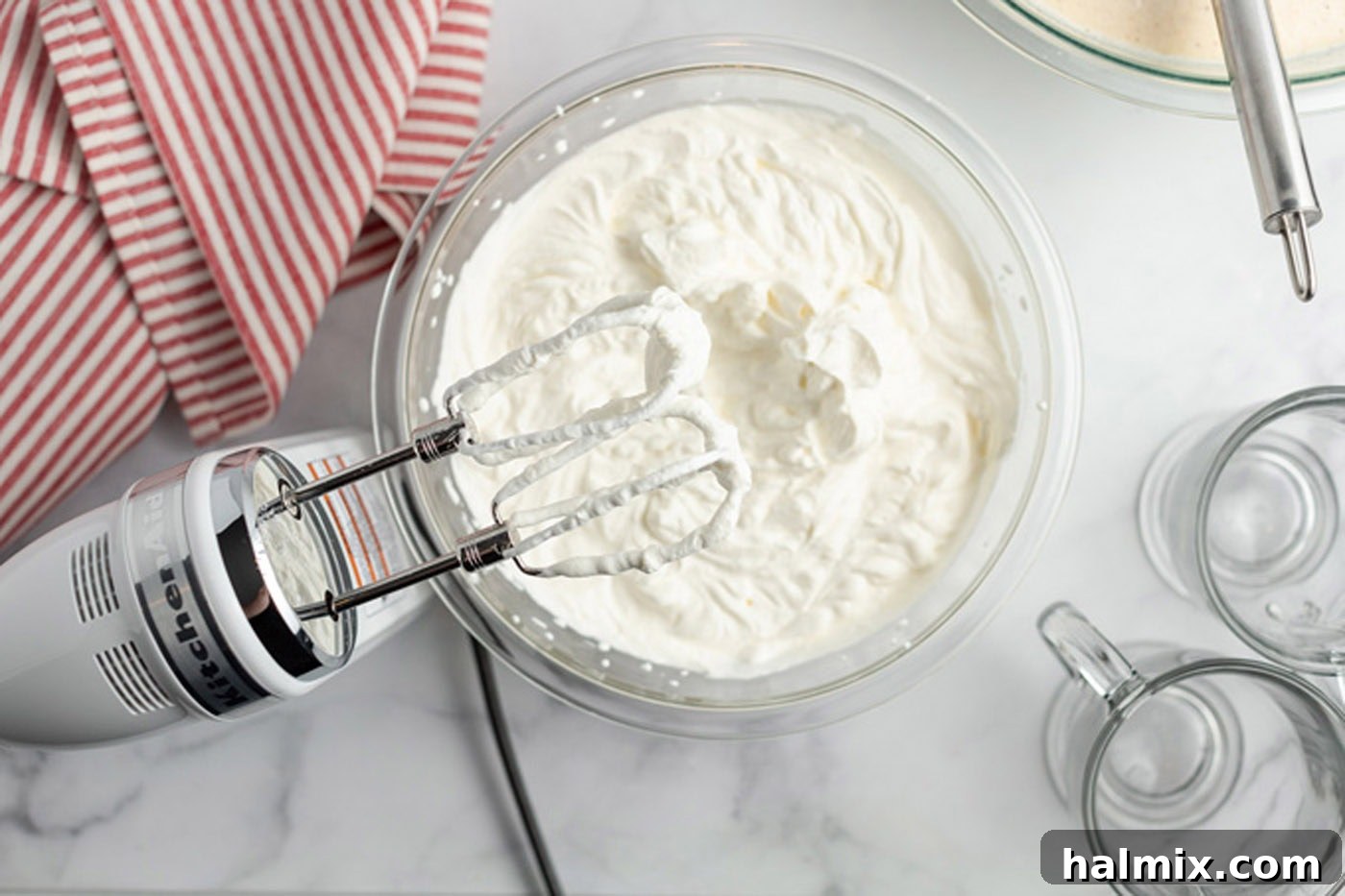
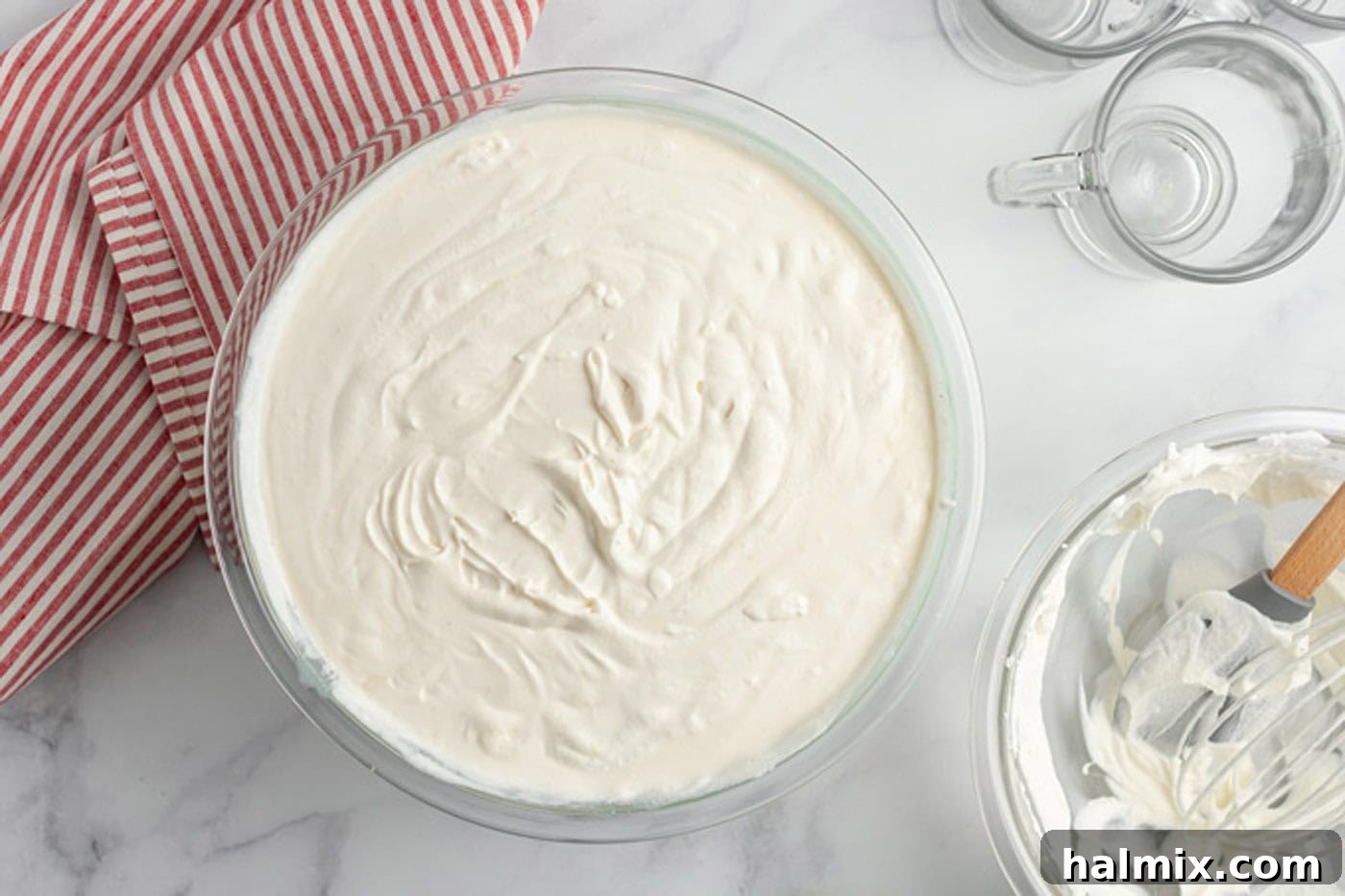
- Prepare for Serving: Just before serving, take out your cold heavy whipping cream. Using a stand mixer or a hand mixer, beat the heavy cream until soft peaks form. Be careful not to over-whip, as it can turn grainy.
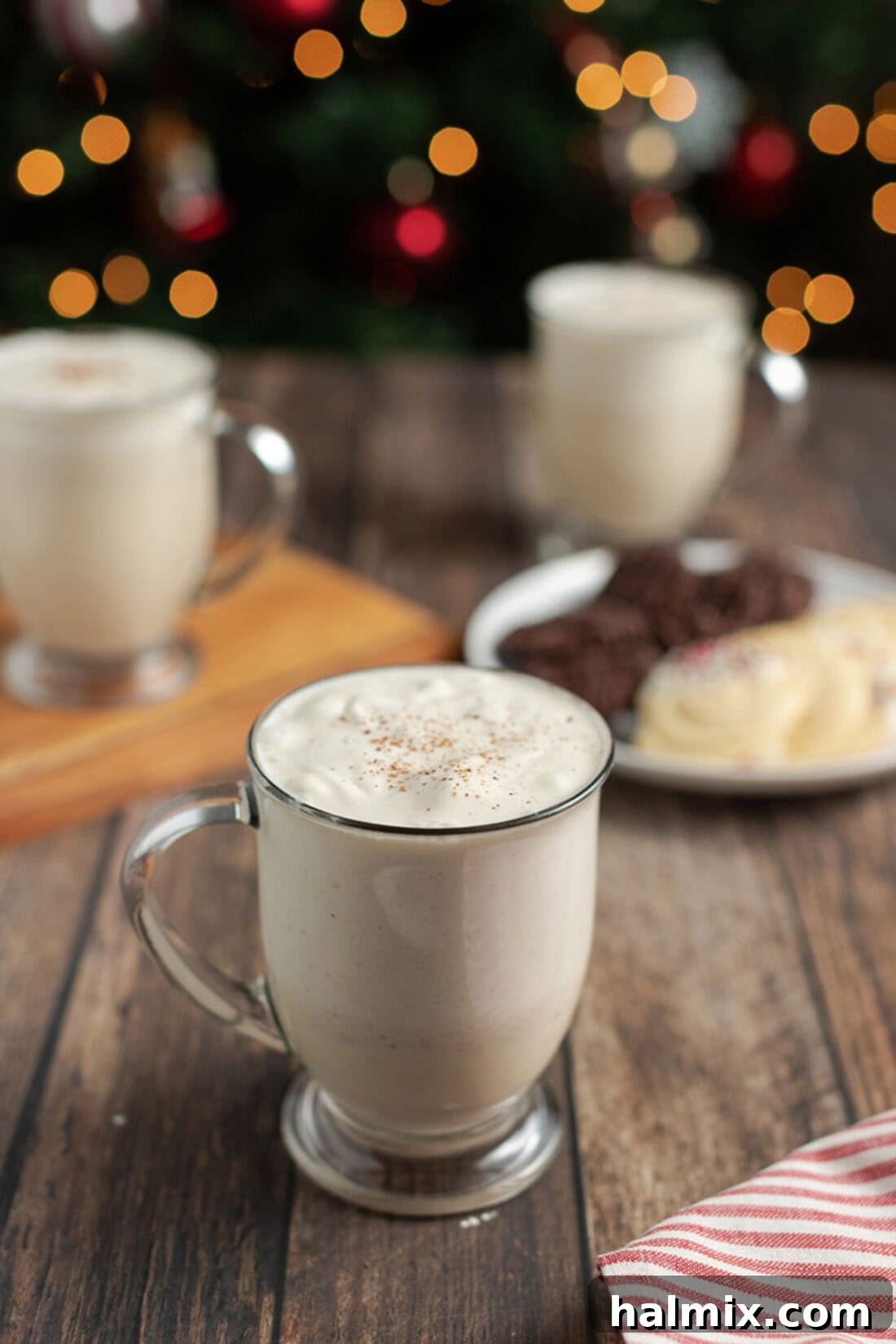
- Combine and Garnish: Gently whisk the freshly whipped cream into the chilled eggnog mixture. This adds incredible lightness and extra creaminess. Pour into your favorite mugs or glasses. If desired, sprinkle each serving with an additional dash of freshly grated nutmeg just before offering.
Frequently Asked Questions & Expert Tips for Perfect Eggnog
Mastering homemade eggnog involves a few key considerations and techniques. Here are some common questions and expert tips to ensure your holiday drink is a success:
Historically, many eggnog recipes did feature raw eggs. However, for food safety reasons, this recipe cooks the egg and milk mixture to a safe internal temperature of 165°F (74°C). This process eliminates any risk of food-borne illnesses, making it safe for everyone to enjoy while still achieving that rich, authentic eggnog flavor and texture.
Once prepared and chilled, store your homemade eggnog in a clean, airtight container or jar in the refrigerator. It will stay fresh and delicious for up to 6 days. Remember to stir it well before serving, as some separation may occur over time.
Absolutely! Homemade eggnog freezes beautifully. Pour it into an airtight container or a freezer-safe jar, leaving about an inch of headspace at the top to allow for expansion during freezing. You can store it in the freezer for up to 6 months. To enjoy, simply thaw the frozen eggnog in the refrigerator overnight. Give it a good whisk before serving.
Expert Tips for the Best Homemade Eggnog:
- Use a Reliable Thermometer: A candy thermometer or an instant-read kitchen thermometer is indispensable. Reaching precisely 165°F (74°C) is crucial for both safety and achieving the correct texture without overcooking.
- Low and Slow is Key: When cooking the egg and milk mixture, keep the heat consistently low. Patience here prevents the milk from scorching and the eggs from scrambling, which can ruin the smooth consistency of your eggnog.
- Prevent Scorching: Stir frequently, especially scraping the bottom of the saucepan, to prevent the milk solids from sticking and burning. This ensures a clean, pure flavor.
- Chill Time is Essential: Do not underestimate the importance of the chilling period. At least 3-4 hours are necessary for the eggnog to thicken properly and for the flavors to meld and deepen. Chilling overnight yields an even better result.
- Smooth Out Any Lumps: If, after cooking and cooling, your eggnog has a slightly grainy texture or appears separated, don’t despair! A quick whirl in a blender or food processor will smooth it out perfectly, restoring its luxurious consistency.
- Freshly Grated Nutmeg: This tip is worth repeating. The difference in flavor between pre-ground and freshly grated nutmeg is profound and can truly elevate your eggnog from good to extraordinary.
The Rich History and Traditions of Eggnog
Eggnog isn’t just a delicious holiday drink; it boasts a fascinating history rooted in medieval European traditions. Its origins can be traced back to a medieval British drink called “posset,” a hot, milky, ale-like beverage often sweetened and spiced. Over centuries, as dairy and alcohol became more widely available, particularly in the British colonies of North America, posset evolved into the rich, creamy, and distinctively spiced eggnog we know today.
The term “eggnog” itself is thought to come from “egg-and-grog,” grog being a common term for a drink made with rum. Alternatively, “nog” might refer to a small, wooden mug used to serve drinks. By the 17th century, eggnog became a popular drink among the European aristocracy, evolving into a creamy concoction made with expensive ingredients like eggs, milk, and sherry or brandy, signifying wealth and prosperity.
When eggnog made its way to America, it quickly adapted to local ingredients. Rum, which was more readily available than sherry or brandy in the colonies, became the spirit of choice, especially in the Caribbean and Southern states. Early American eggnog was a hearty drink, often served at harvest celebrations and, eventually, Christmas and New Year’s gatherings. It symbolized good cheer, hospitality, and celebration, a tradition that continues to thrive in homes across the world.
Today, whether served with or without alcohol, eggnog remains an iconic part of holiday festivities, a sweet and warming reminder of centuries of tradition and communal celebration.
Delightful Serving Suggestions for Your Homemade Eggnog
Homemade eggnog is a versatile holiday treat that can be enjoyed in many ways. Here are some suggestions to make your serving experience even more festive:
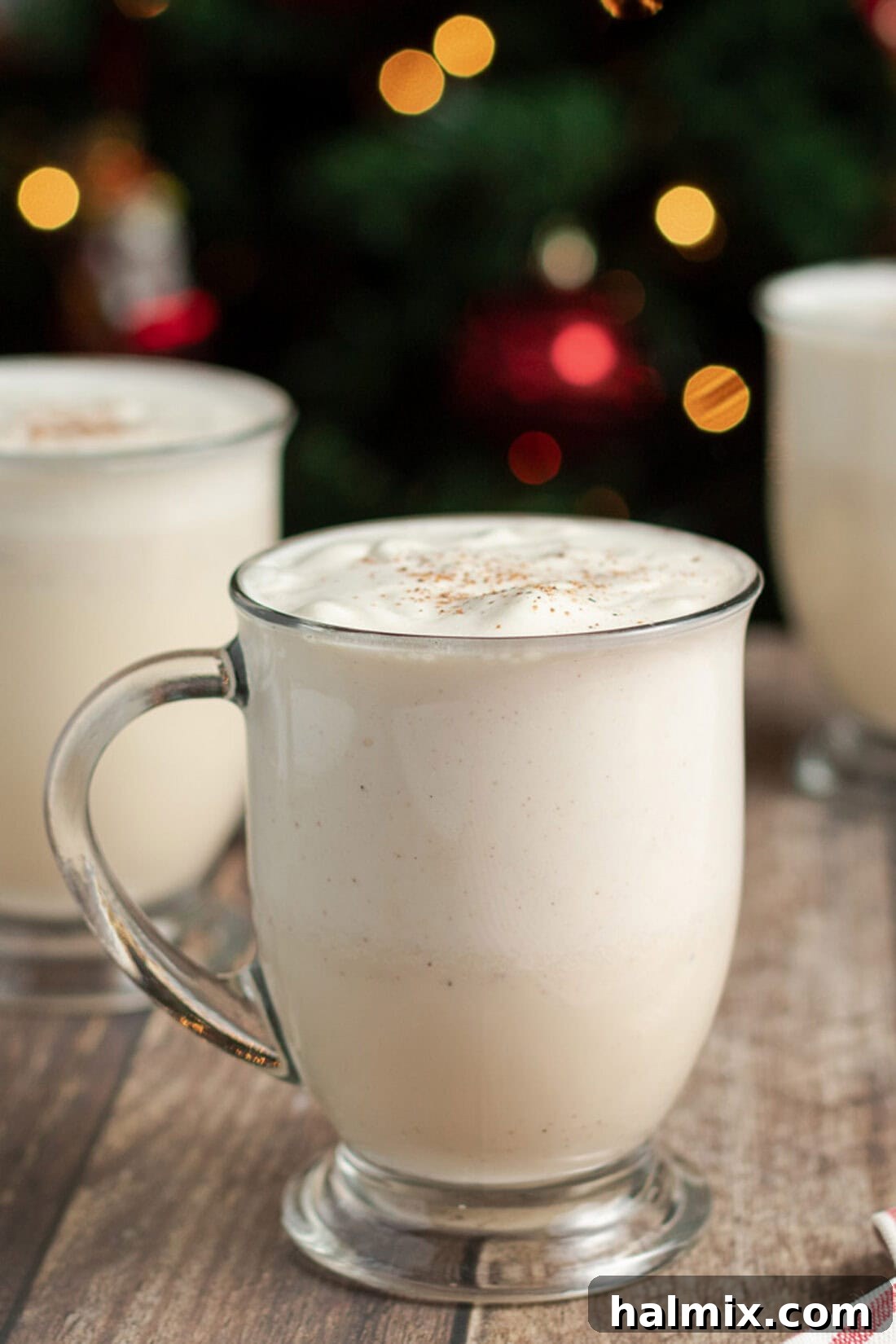
- Classic Presentation: Serve your creamy eggnog chilled in elegant glasses or festive mugs. A sprinkle of freshly grated nutmeg on top is the traditional and most recommended garnish, adding an extra layer of aroma and visual appeal.
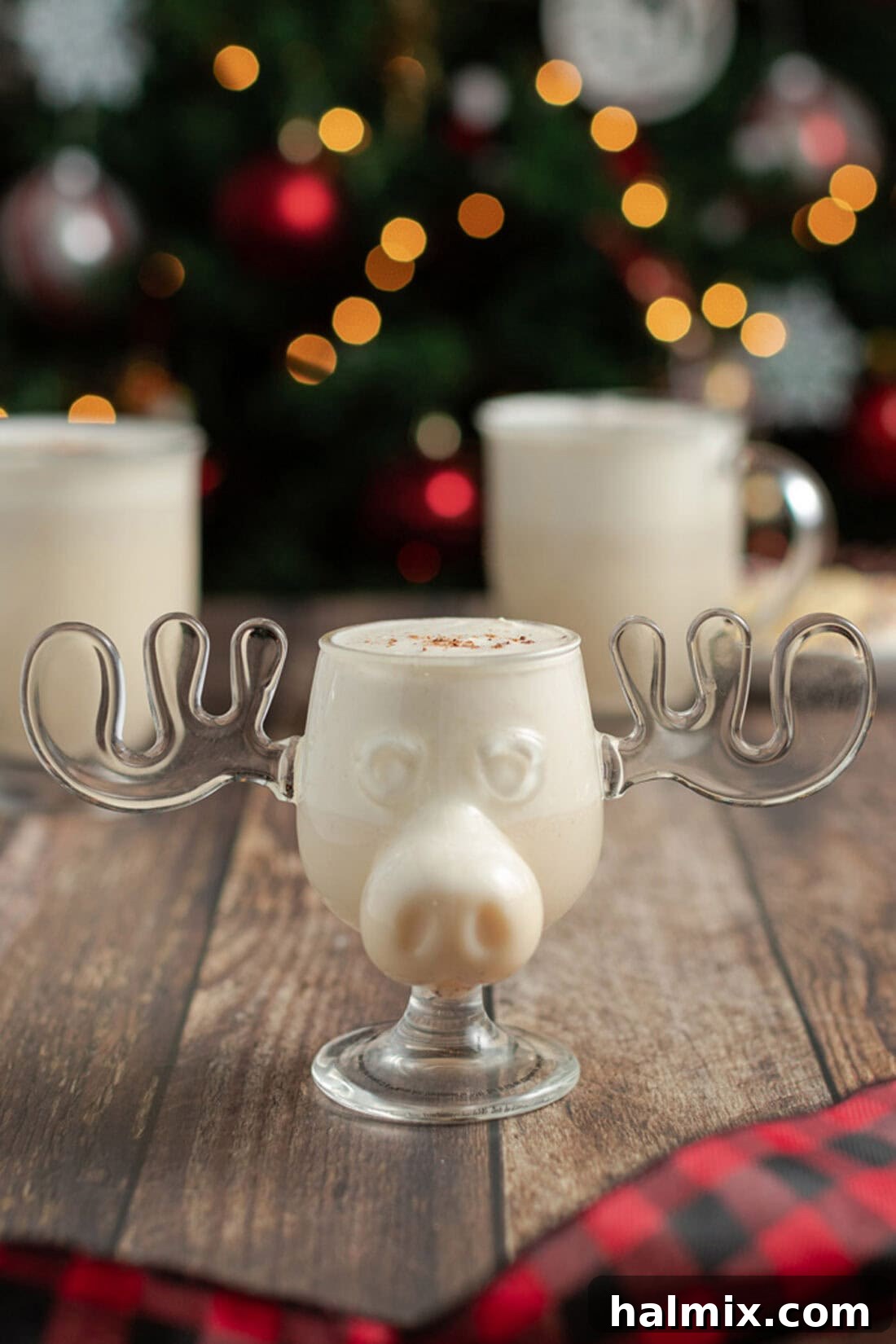
- Festive Mugs: For an extra touch of holiday cheer, consider serving your eggnog in novelty mugs, such as moose mugs, which are a fun nod to holiday classics.
- Pair with Cookies: Eggnog pairs wonderfully with a wide array of Christmas cookies. Think gingerbread, shortbread, sugar cookies, or even richer chocolate varieties.
- Adult Version: If you’re serving adults, offer a bottle of rum, brandy, or bourbon on the side for those who wish to spike their eggnog. This allows guests to customize their drink to their preferred strength and spirit.
- In Desserts: Don’t limit eggnog to just a drink! It can be incorporated into various holiday desserts, such as eggnog cheesecakes, custards, or even as a flavoring for whipped cream to top pies and cakes.
More Irresistible Holiday Recipes to Explore
Once you’ve mastered this creamy homemade eggnog, you might be inspired to try other festive treats. Here are some more beloved holiday recipes to sweeten your season:
- Classic Gingerbread Cookies
- Delicious Spiked Cherries
- Homemade Chocolate Turtles
- Rich Crockpot Hot Chocolate
- Addictive Saltine Toffee (often called Christmas Crack)
- Cozy Hot Buttered Rum
- Vibrant Hot Cranberry Punch
I’m passionate about baking and cooking, and I love sharing my culinary adventures with you! To make sure you never miss a new recipe, I offer a convenient newsletter delivered right to your inbox. Simply subscribe here and start receiving your free daily recipes, perfect for expanding your repertoire and adding joy to your kitchen!
Homemade Eggnog
IMPORTANT – Please refer to the Frequently Asked Questions and Expert Tips section within the blog post for helpful advice.
Beverages
American
12
servings
3 hrs
40 mins
461
Amanda Davis
Ingredients
- 12 large eggs
- 1 ¼ cups sugar
- ½ teaspoon salt
- 7 cups milk (separated)
- 1 ½ teaspoons nutmeg (plus additional for garnish)
- 2 Tablespoons vanilla extract
- 3 cups heavy whipping cream
Equipment You’ll Need
-
Heavy saucepan
-
Whisk
-
Mixing bowls
-
Glass mugs
-
Candy thermometer
Before You Begin
- Be sure to use a candy thermometer or other reliable kitchen thermometer to ensure you reach the precise temperature of 165°F.
- Keep a close eye on the eggnog mixture as it cooks, stirring frequently. You want to avoid scorching the milk, which can impart an unpleasant flavor.
- Plan your time carefully. This delicious eggnog requires a minimum of 3-4 hours of chilling time to develop its full flavor and thick consistency, with overnight chilling being ideal.
Instructions
-
In a heavy saucepan, whisk together the eggs, sugar, and salt until well combined. Gradually add 4 cups of the milk, whisking continuously. Cook over low heat, stirring frequently, until the temperature reaches 165°F (74°C). This process typically takes 30-35 minutes. Do not allow the mixture to boil. Immediately transfer the hot mixture to a large bowl.
-
Stir in the vanilla extract, nutmeg, and the remaining 3 cups of milk.
-
To cool quickly, place the bowl in a larger ice-water bath and stir until the milk mixture is cool. If the mixture appears to have separated slightly, you can process it in a blender or food processor until smooth.
-
Cover the bowl and refrigerate until thoroughly cold, which usually takes about 3-4 hours.
-
Just before serving, beat the heavy cream in a separate bowl until soft peaks form. Gently whisk the whipped cream into the cooled eggnog mixture. For garnish, sprinkle with additional nutmeg before serving.
Nutrition
|
Calories: 461cal
|
Carbohydrates: 30g
|
Protein: 13g
|
Fat: 32g
|
Saturated Fat: 18g
|
Cholesterol: 307mg
|
Sodium: 262mg
|
Potassium: 314mg
|
Fiber: 1g
|
Sugar: 29g
|
Vitamin A: 1411IU
|
Vitamin C: 1mg
|
Calcium: 231mg
|
Iron: 1mg
Tried this Recipe? Pin it for Later!
Follow on Pinterest @AmandasCookin or tag #AmandasCookin!
The recipes on this blog are tested with a conventional gas oven and gas stovetop. It’s important to note that some ovens, especially as they age, can cook and bake inconsistently. Using an inexpensive oven thermometer can assure you that your oven is truly heating to the proper temperature. If you use a toaster oven or countertop oven, please keep in mind that they may not distribute heat the same as a conventional full-sized oven, and you may need to adjust your cooking/baking times. In the case of recipes made with a pressure cooker, air fryer, slow cooker, or other appliance, a link to the appliances we use is listed within each respective recipe. For baking recipes where measurements are given by weight, please note that results may not be the same if cups are used instead, and we can’t guarantee success with that method.
This post was originally published here on December 18, 2019, and has been updated for improved clarity and SEO.