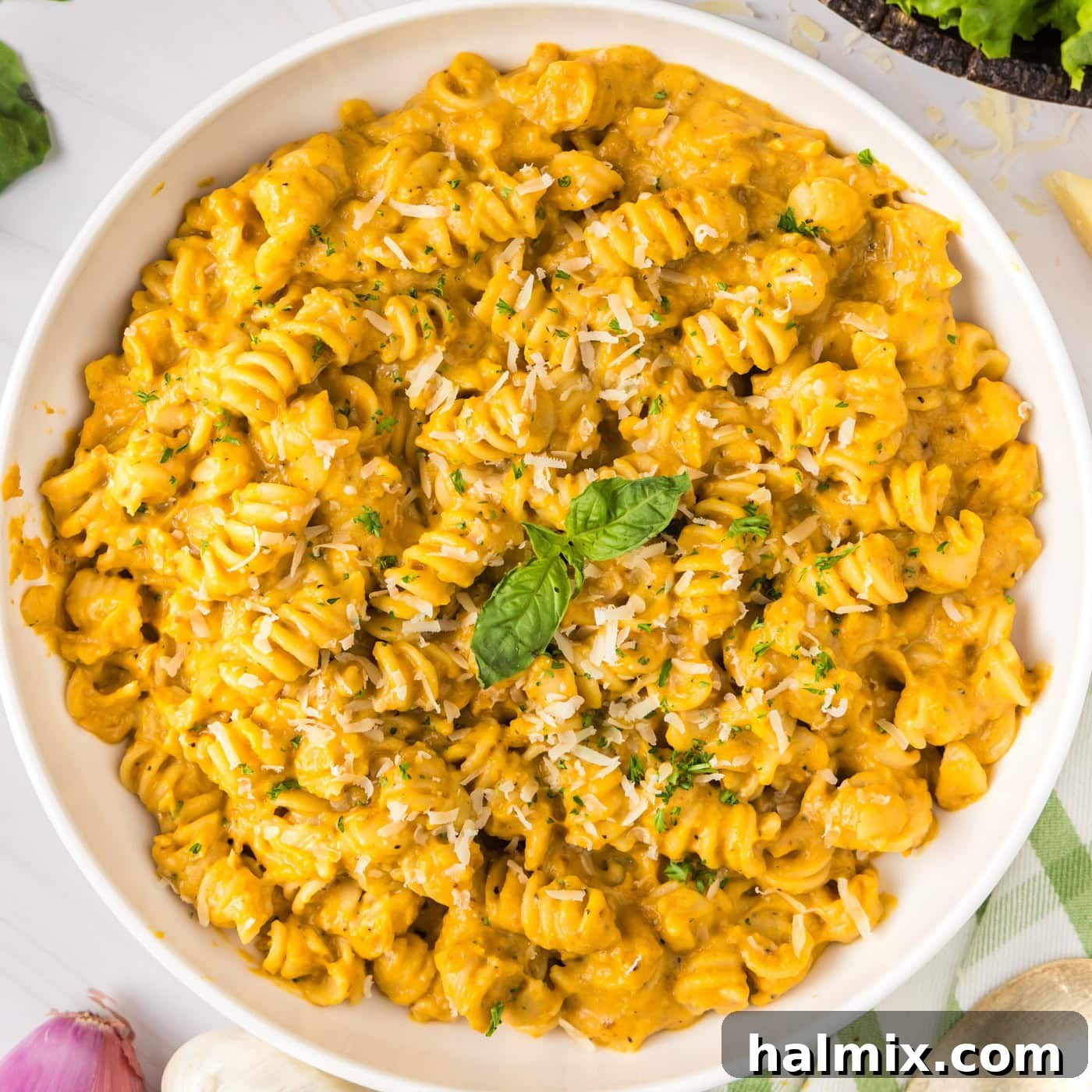
Creamy Roasted Butternut Squash Pasta: Your Ultimate Fall Comfort Dish
Indulge in the rich, comforting flavors of our Creamy Roasted Butternut Squash Pasta, a dish that effortlessly blends sweet, nutty, and savory notes into every bite. This isn’t just another pasta recipe; it’s a culinary experience designed to warm your soul and delight your palate. Imagine silky-smooth butternut squash sauce, infused with the aromatic depth of roasted garlic and the subtle sweetness of caramelized shallots, clinging perfectly to every strand of pasta. It’s a truly irresistible meal that embodies the essence of autumn in a single bowl.
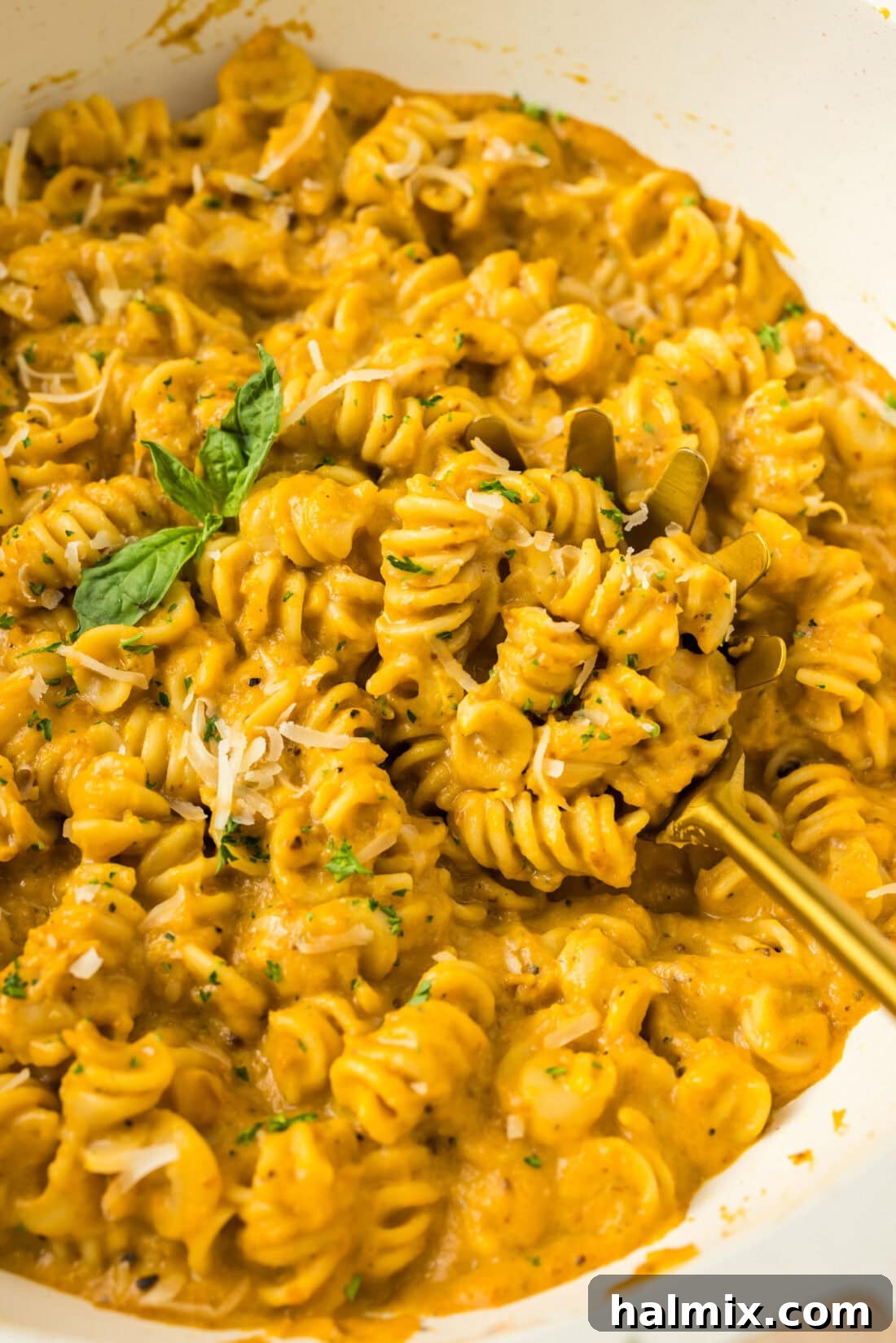
Why You’ll Fall in Love with This Butternut Squash Pasta Recipe
This Butternut Squash Pasta recipe isn’t just easy to make; it’s a masterpiece of flavor and texture that truly works its magic. Here’s why it deserves a spot in your recipe rotation:
- Naturally Creamy Perfection: Butternut squash, when roasted, transforms into a velvety, naturally sweet, and incredibly creamy base. This eliminates the need for excessive heavy cream or butter, allowing the vibrant flavors of the squash to shine through while keeping the dish wholesome and rich.
- Depth of Roasted Flavor: The secret lies in roasting the butternut squash, garlic, and shallots. This process caramelizes their natural sugars, intensifying their sweetness and imparting a deep, complex, savory aroma that a simple boiled squash sauce could never achieve. The roasted garlic, in particular, adds a mellow, nutty undertone that is simply divine.
- Seasonal Delight: As the leaves turn and the air grows crisp, butternut squash reaches its peak season. This recipe celebrates autumn’s bounty, bringing a taste of the harvest directly to your dinner table. It’s the quintessential cozy meal for chilly evenings.
- Nutrient-Rich Comfort: Beyond its incredible taste, butternut squash is packed with vitamins A and C, fiber, and antioxidants, making this pasta dish not only delicious but also a nourishing choice. It’s a wholesome way to enjoy a comforting meal.
- Effortlessly Elegant: Despite its gourmet taste, this recipe is surprisingly straightforward to prepare. With minimal fuss, you can create a restaurant-quality meal that will impress guests or simply provide a comforting treat for yourself and your family.
- Pasta That Holds the Sauce: We recommend using rotini pasta, whose corkscrew shape is perfectly designed to capture and hold every drop of the luscious sauce, ensuring a flavorful bite every time.
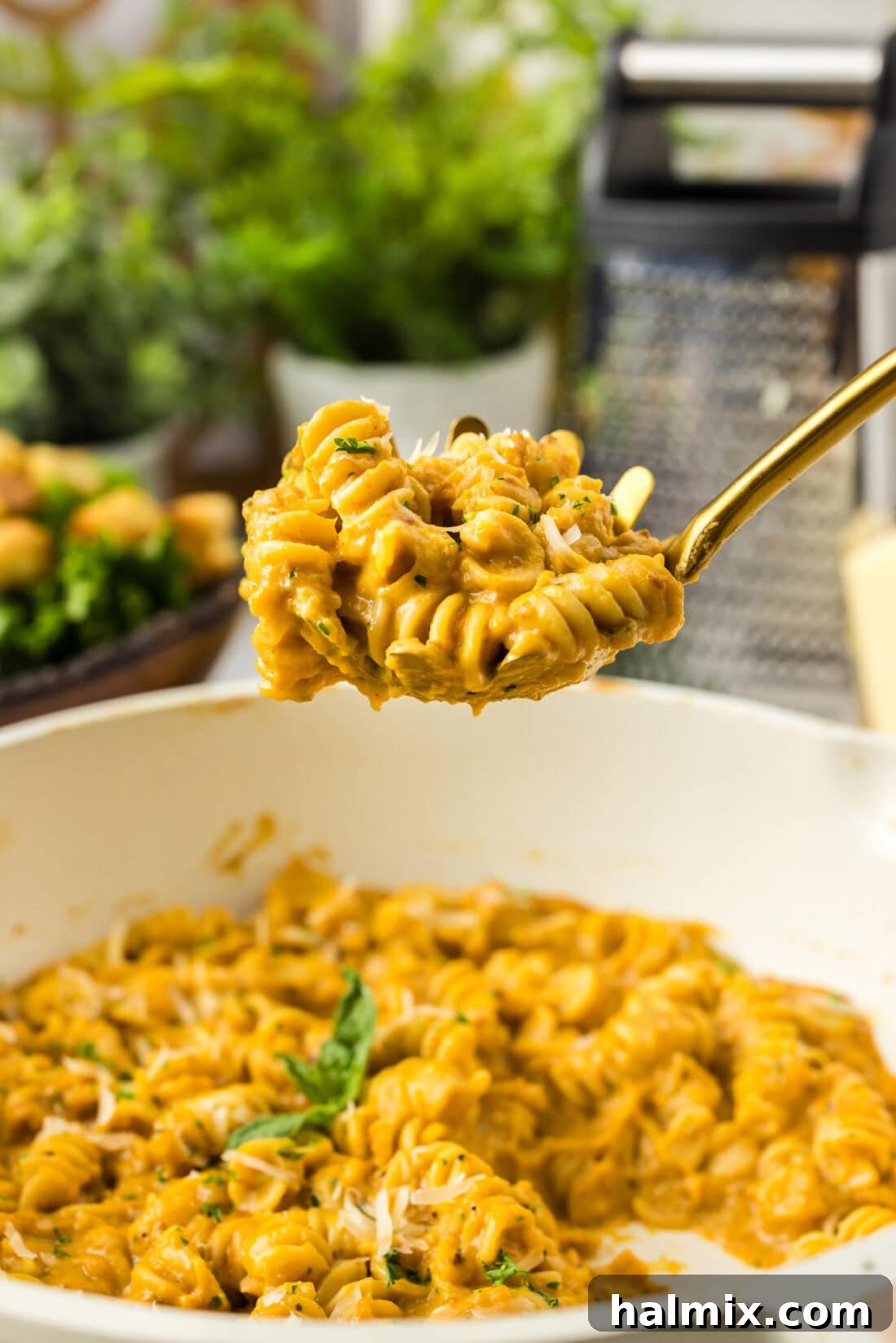
Essential Ingredients for a Flavorful Butternut Squash Pasta
Crafting this incredible pasta dish begins with selecting high-quality ingredients. While the full list of precise measurements can be found in the printable recipe card below, here’s a closer look at the key components and why they matter:
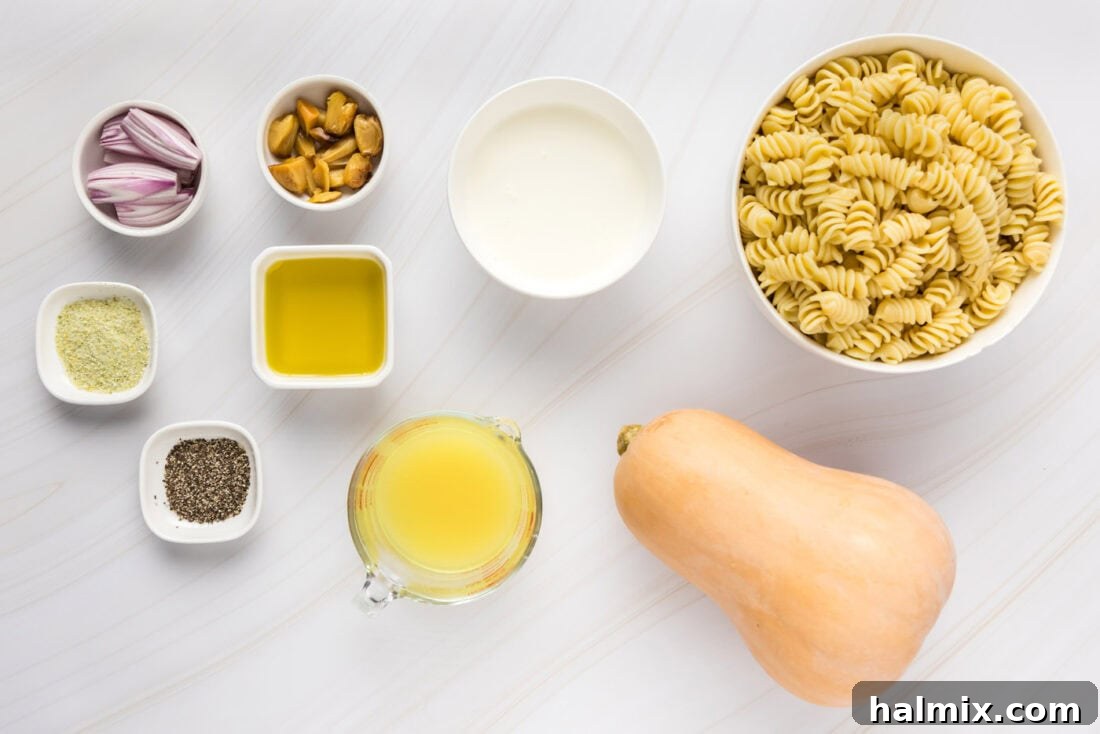
Butternut Squash: The Star of the Show
You’ll need approximately 2 pounds of butternut squash for this recipe. When selecting your squash, look for one with a smooth, firm, and creamy-tan skin, free from any soft spots, bruises, or deep gashes. A well-chosen squash will have a consistent color and feel dense for its size. Butternut squash provides not only the signature flavor and color but also its inherent creaminess, which becomes incredibly luscious once roasted.
Roasted Garlic and Shallots: The Aromatic Foundation
The roasted garlic and shallots are crucial for developing the deep, savory undertones of this sauce. We highly recommend using homemade roasted garlic for the best flavor, as its sweet, mellow notes are incomparable to raw garlic. If you’re short on time, 3 tablespoons of good quality jarred roasted garlic can be used. Shallots, milder and sweeter than onions, caramelize beautifully during roasting, adding a sophisticated depth to the sauce without overwhelming the squash.
Choosing Your Pasta: The Perfect Vehicle
While ultimately you can use your favorite pasta shape, we find that rotini pasta is exceptional for this dish. Its spiral grooves are perfect for “hugging” the creamy butternut squash sauce, ensuring that every forkful is coated in flavor. Other excellent choices include cavatappi, orecchiette, or even a wide, flat pasta like pappardelle, which also provides ample surface area for the sauce to cling to. Consider what textures you enjoy most and don’t be afraid to experiment!
Broth and Dairy: Enhancing Creaminess and Flavor
Chicken broth forms the liquid base of the sauce, helping to blend the roasted vegetables into a smooth consistency while adding a savory richness. For a vegetarian option, vegetable broth works beautifully. Half-and-half is added to achieve that luxurious, silky finish. You can adjust the amount to reach your desired consistency, or opt for milk or even a splash of pasta water if you’re looking for a lighter touch or watching calories.
Crafting Your Creamy Butternut Squash Pasta: A Step-by-Step Guide
Follow these detailed instructions to create your own mouthwatering Butternut Squash Pasta. Visual aids (images) are included below to guide you through each stage. For a convenient printable version with precise measurements and full instructions, please refer to the recipe card at the end of this post.
- Prepare Your Oven: Begin by preheating your oven to 425°F (220°C). This ensures the oven is at the optimal temperature for roasting, allowing the squash and shallots to caramelize beautifully.
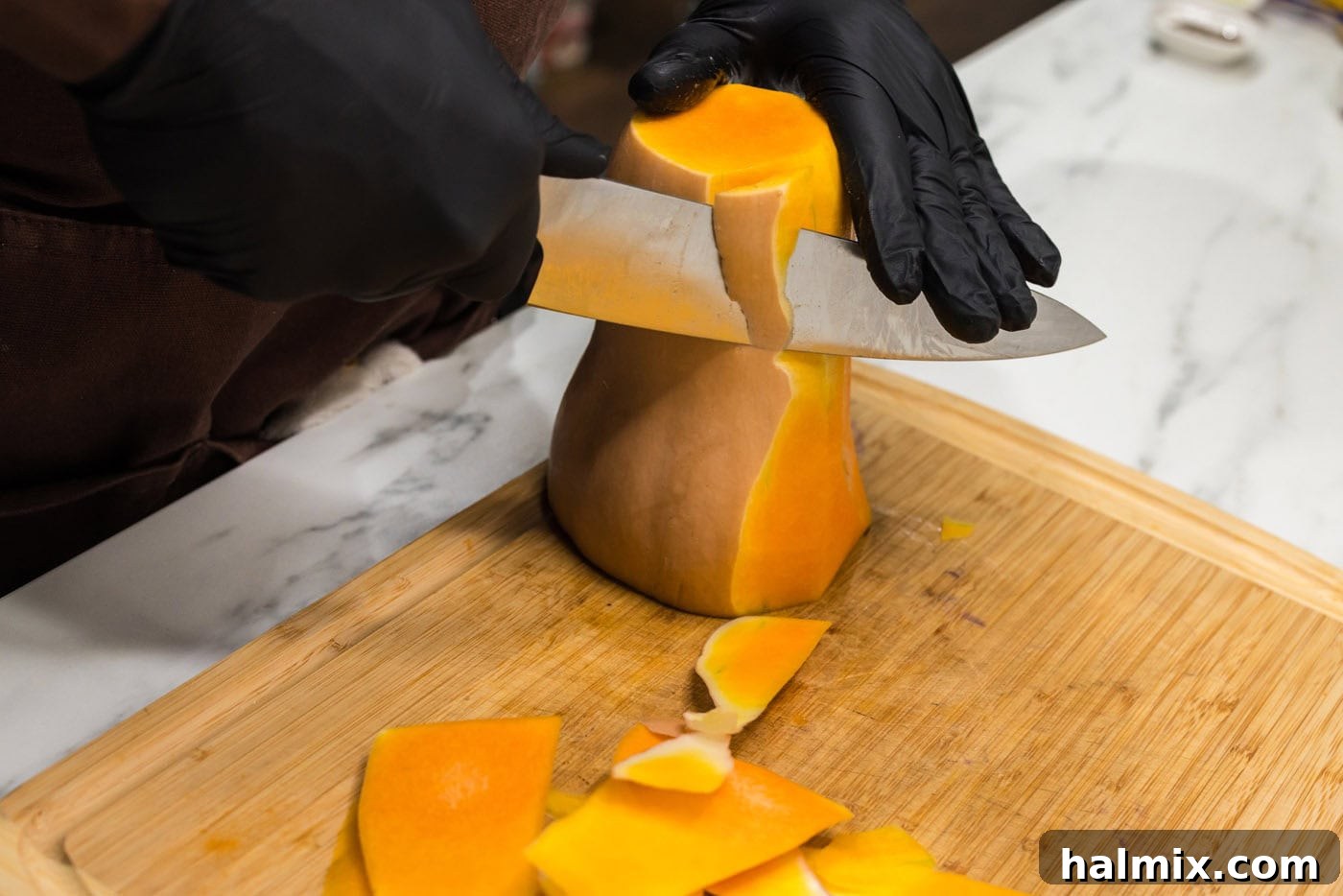
- Peel the Butternut Squash: Carefully slice off both ends of the butternut squash. To peel, stand the squash upright on its flat bottom on a sturdy cutting board. Using a sharp chef’s knife or a vegetable peeler, carefully run it down the sides to remove the tough outer skin.
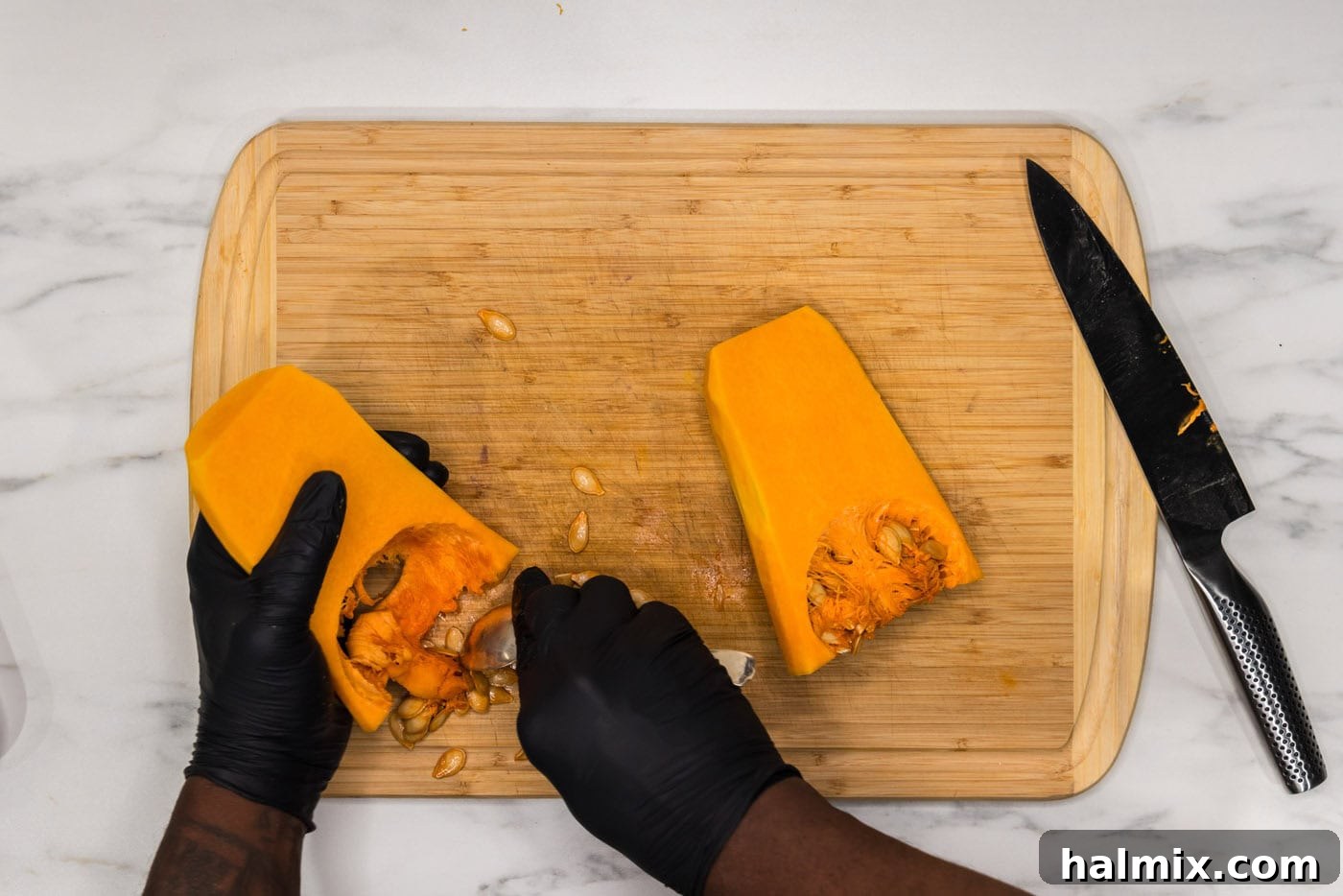
- Seed and Cube the Squash: Once peeled, cut the squash in half lengthwise. Scoop out the seeds and fibrous strands from the cavity using a spoon. Then, cut the squash flesh into uniform 2-inch cubes. Transfer these cubes to a large mixing bowl.
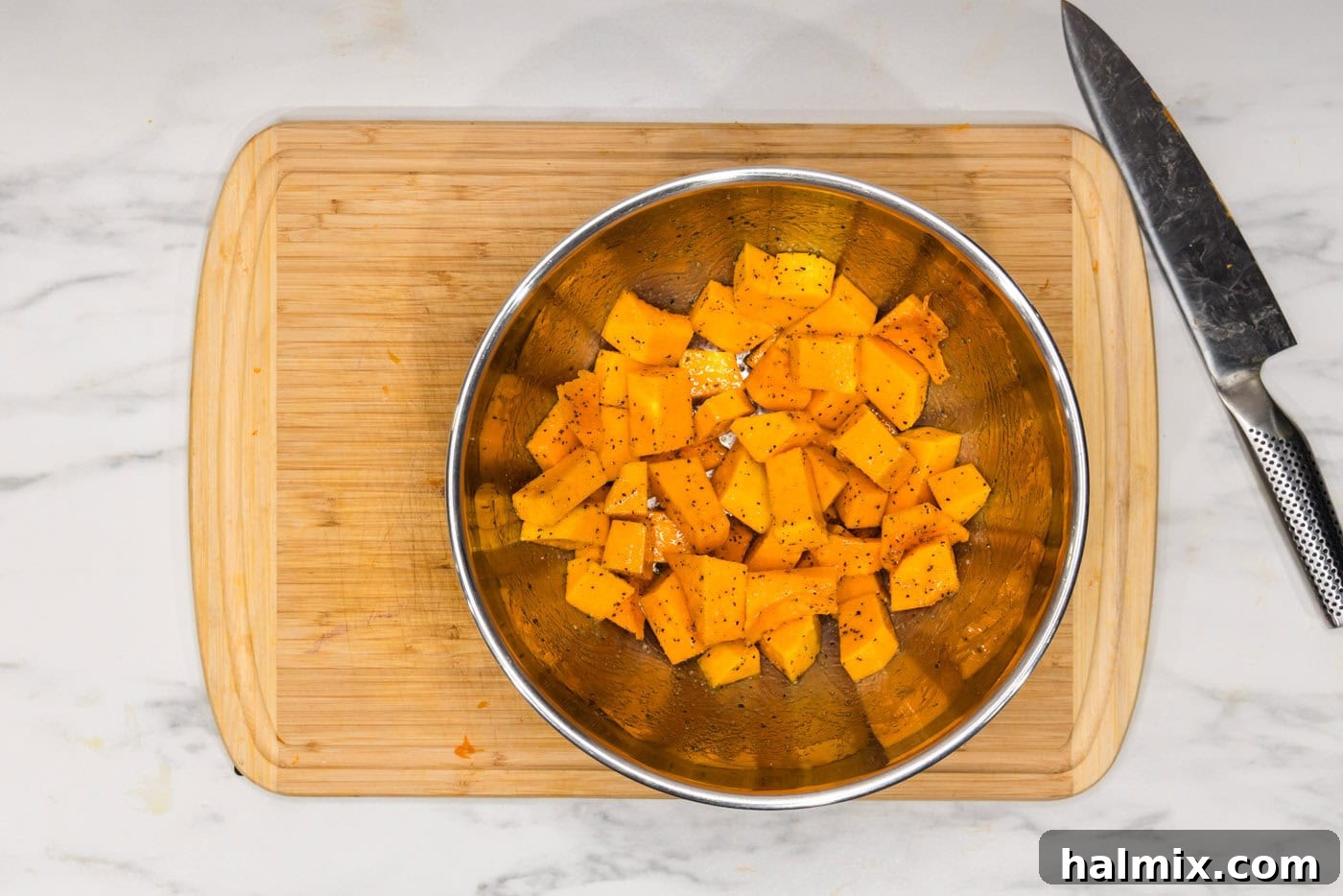
- Season the Squash: Drizzle 3 tablespoons of olive oil over the butternut squash cubes. Toss thoroughly to ensure all pieces are lightly coated. Season generously with garlic salt and black pepper, then toss again to evenly distribute the seasonings.
- Prepare for Roasting: Spread the seasoned butternut squash cubes in a single layer on a baking sheet. Set this aside temporarily.
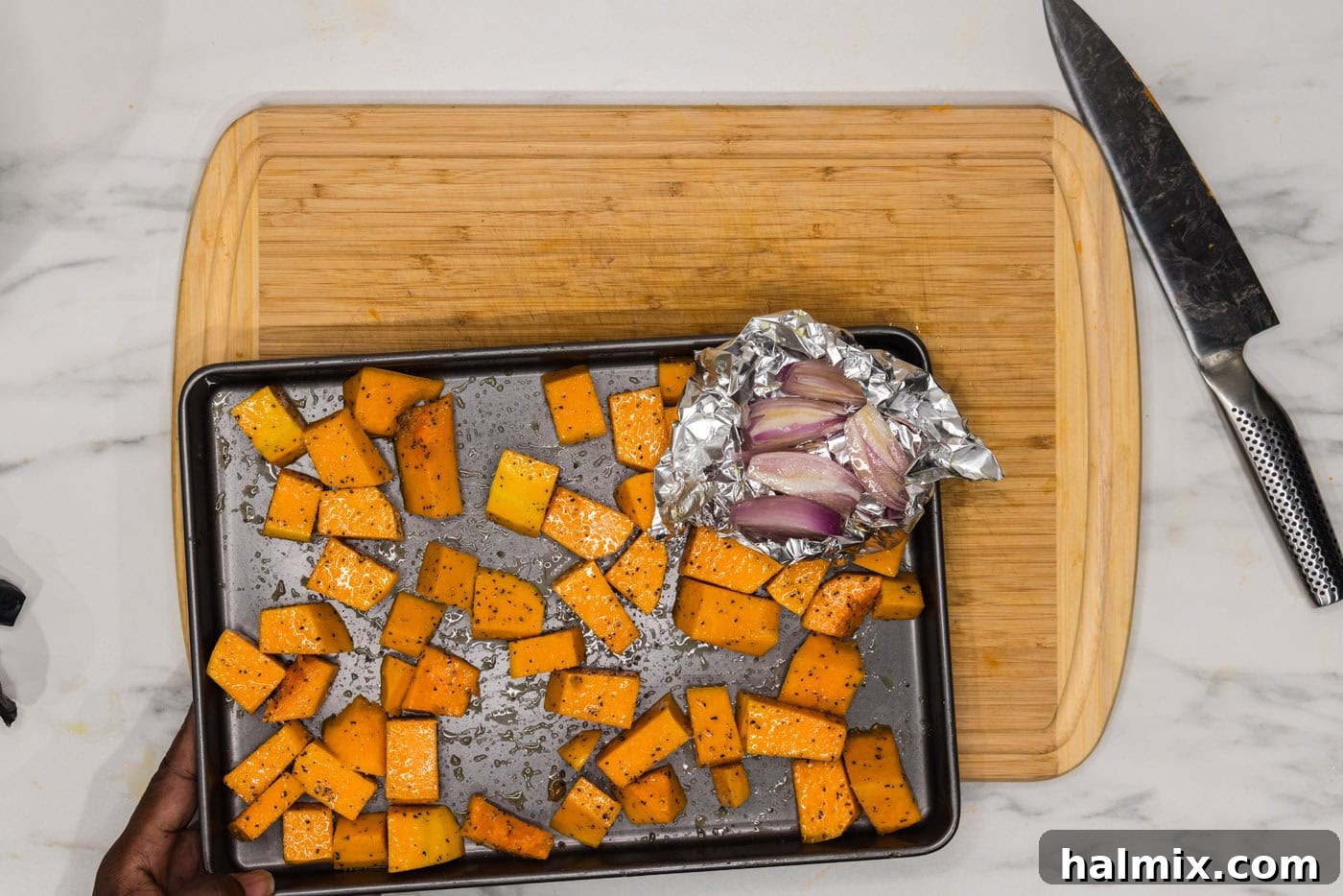
- Prepare the Shallots: Place your medium shallot in a small mixing bowl. Pour the remaining olive oil over the shallot. Create a small bowl or packet from aluminum foil and transfer the shallots into it. This helps them steam slightly and caramelize without burning.
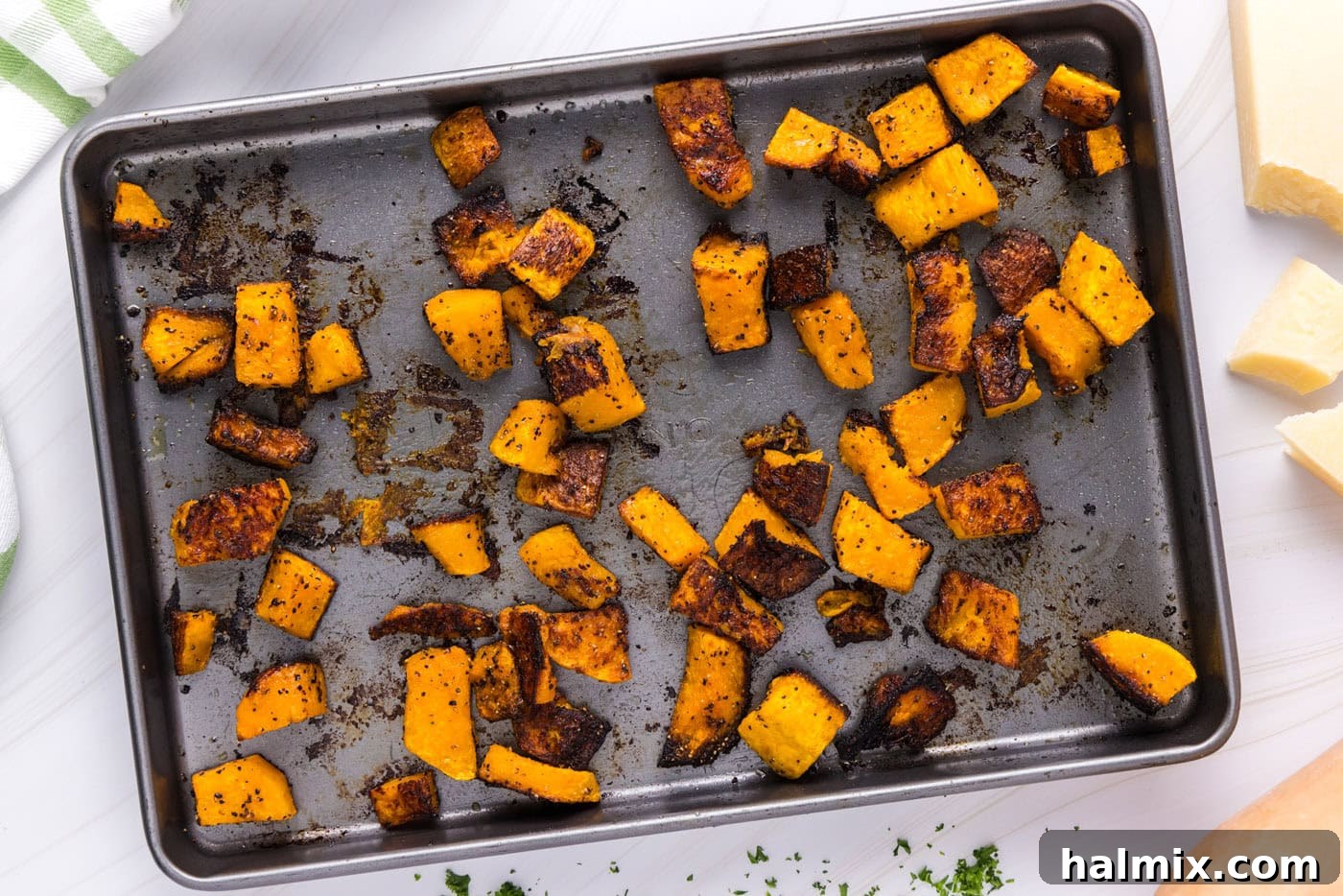
- Roast to Perfection: Place the foil packet of shallots on the same baking sheet as the butternut squash. Transfer the baking sheet to your preheated oven and roast for 30-35 minutes, or until the squash is tender and slightly caramelized at the edges, and the shallots are soft and fragrant.
- Cool Before Blending: Once roasted, remove the baking sheet from the oven. Allow the squash and shallots to cool for approximately 10 minutes. This makes them easier and safer to handle for the next step.
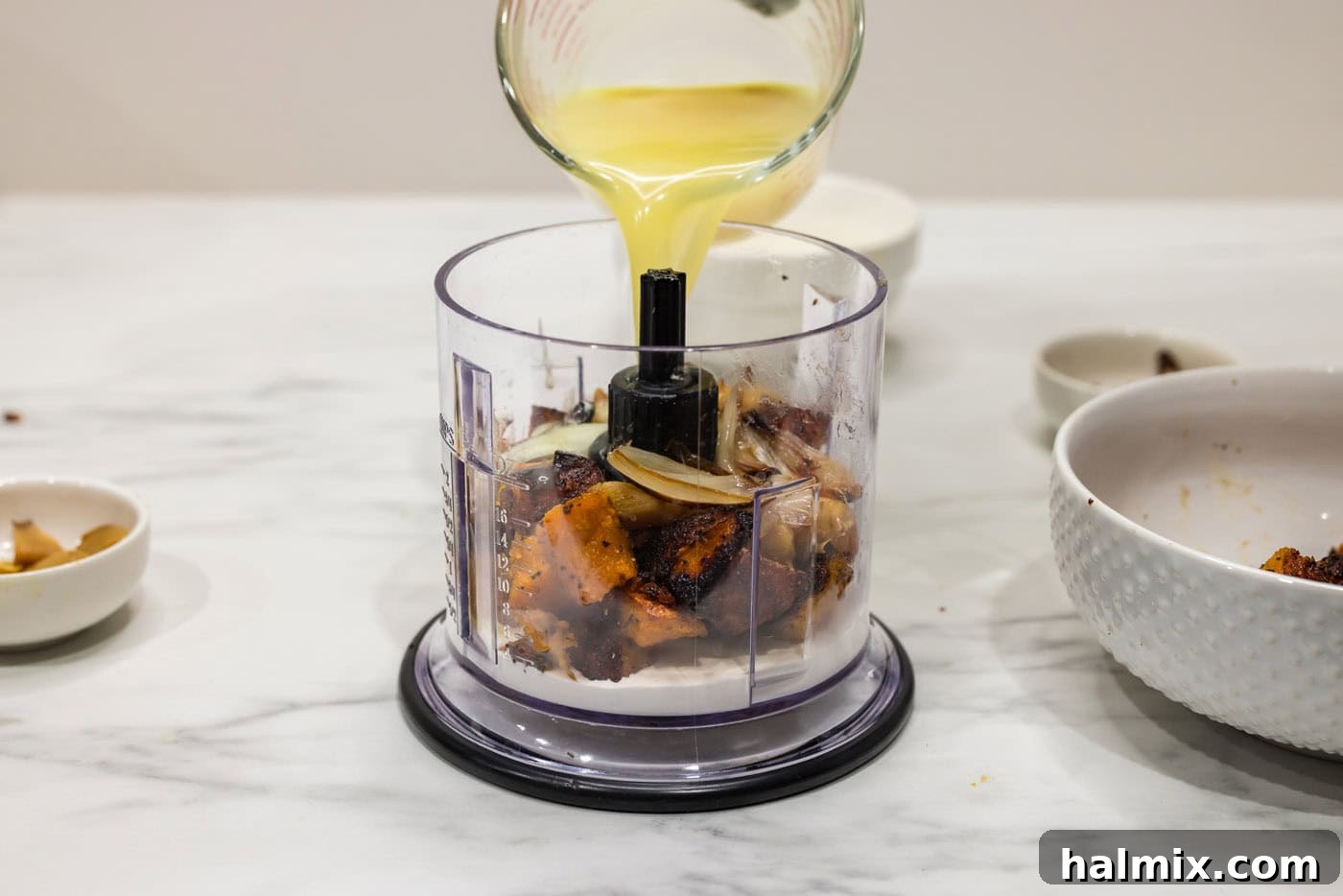
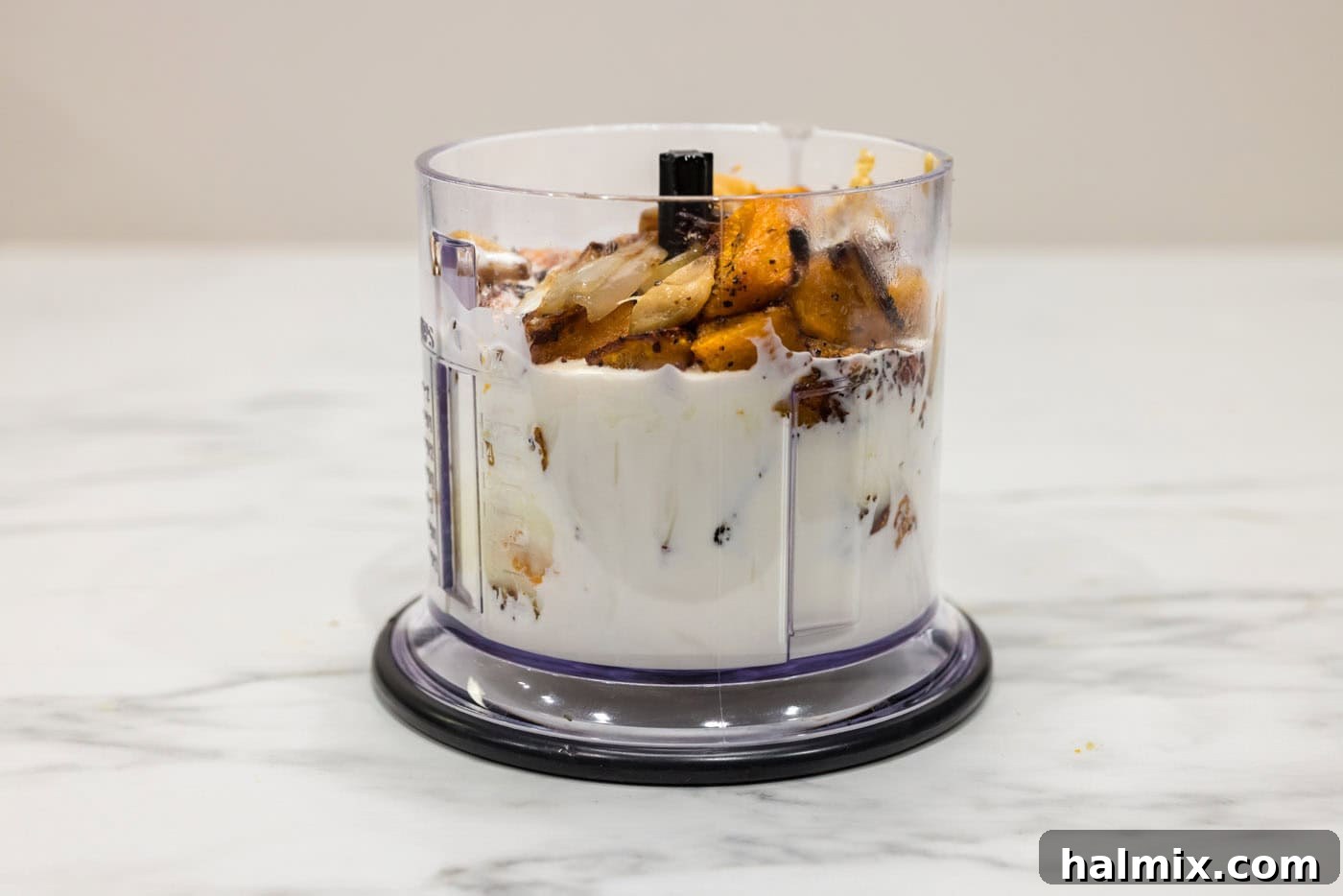
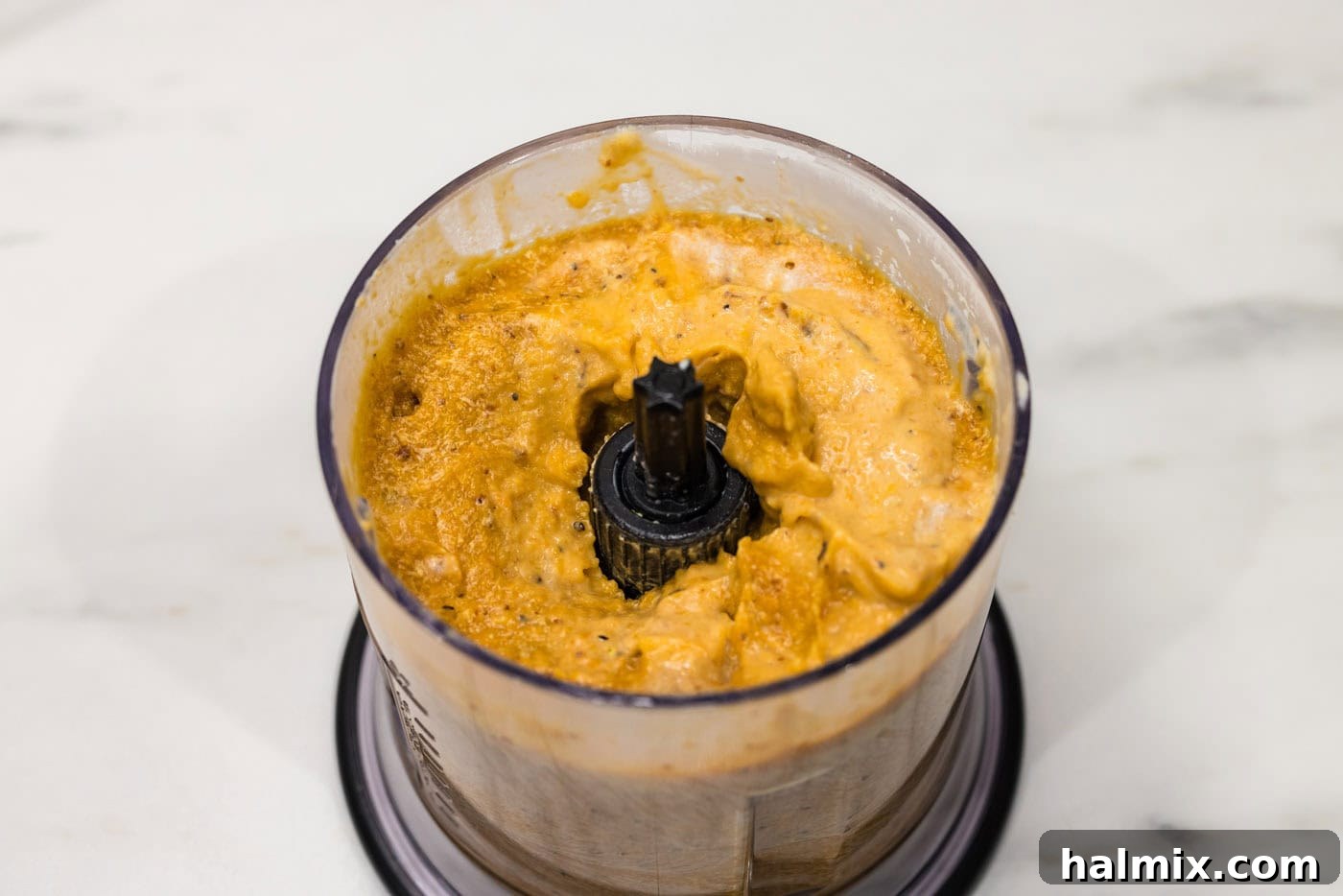
- Create the Creamy Sauce: Carefully transfer the cooled roasted squash, shallots, the bulb of roasted garlic (or 1/4 cup of jarred roasted garlic), chicken broth, and half of the half-and-half (1/4 cup) into a mini food chopper or a blender. Blend until the mixture is completely smooth and free of lumps. The resulting sauce will be wonderfully thick and rich.
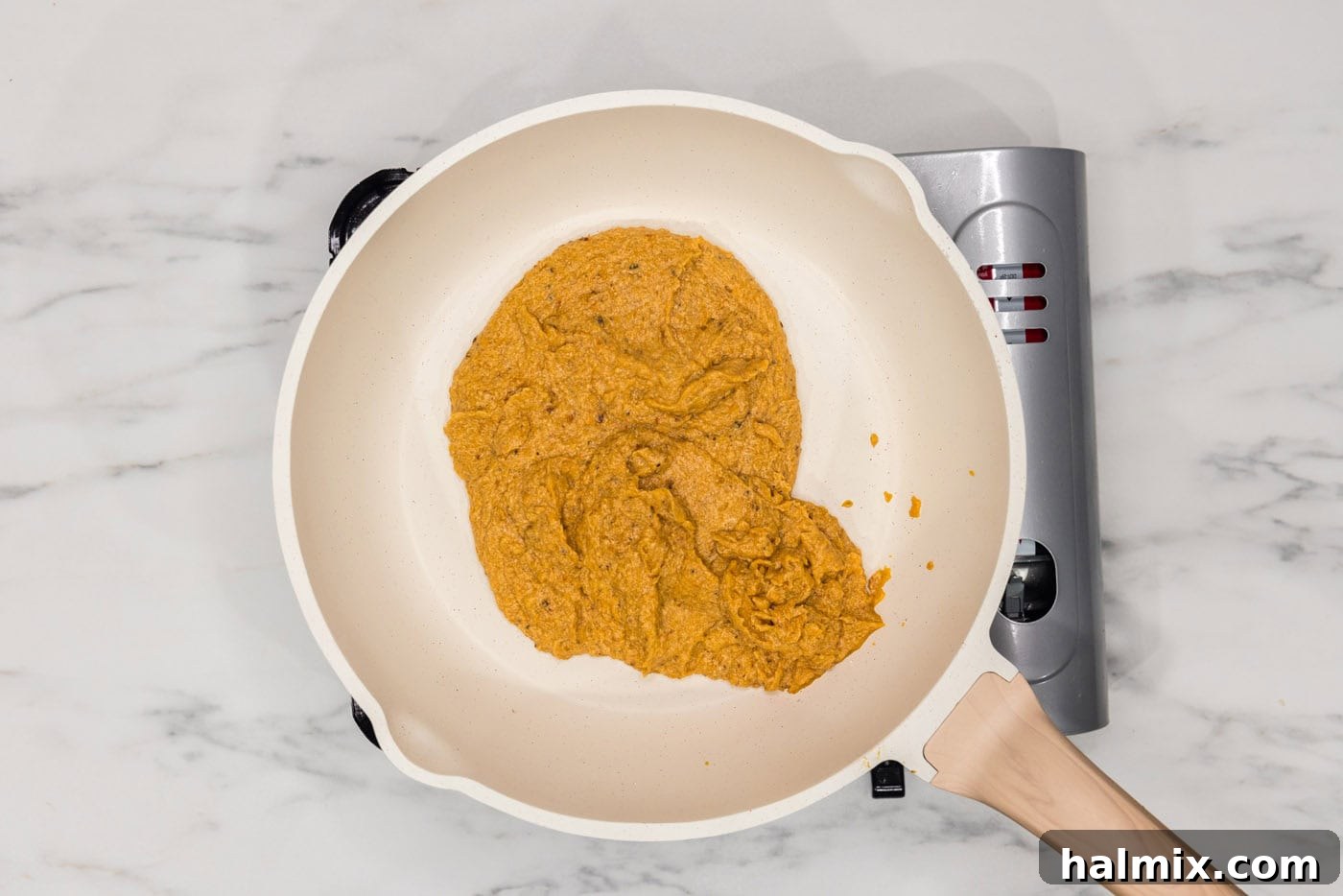
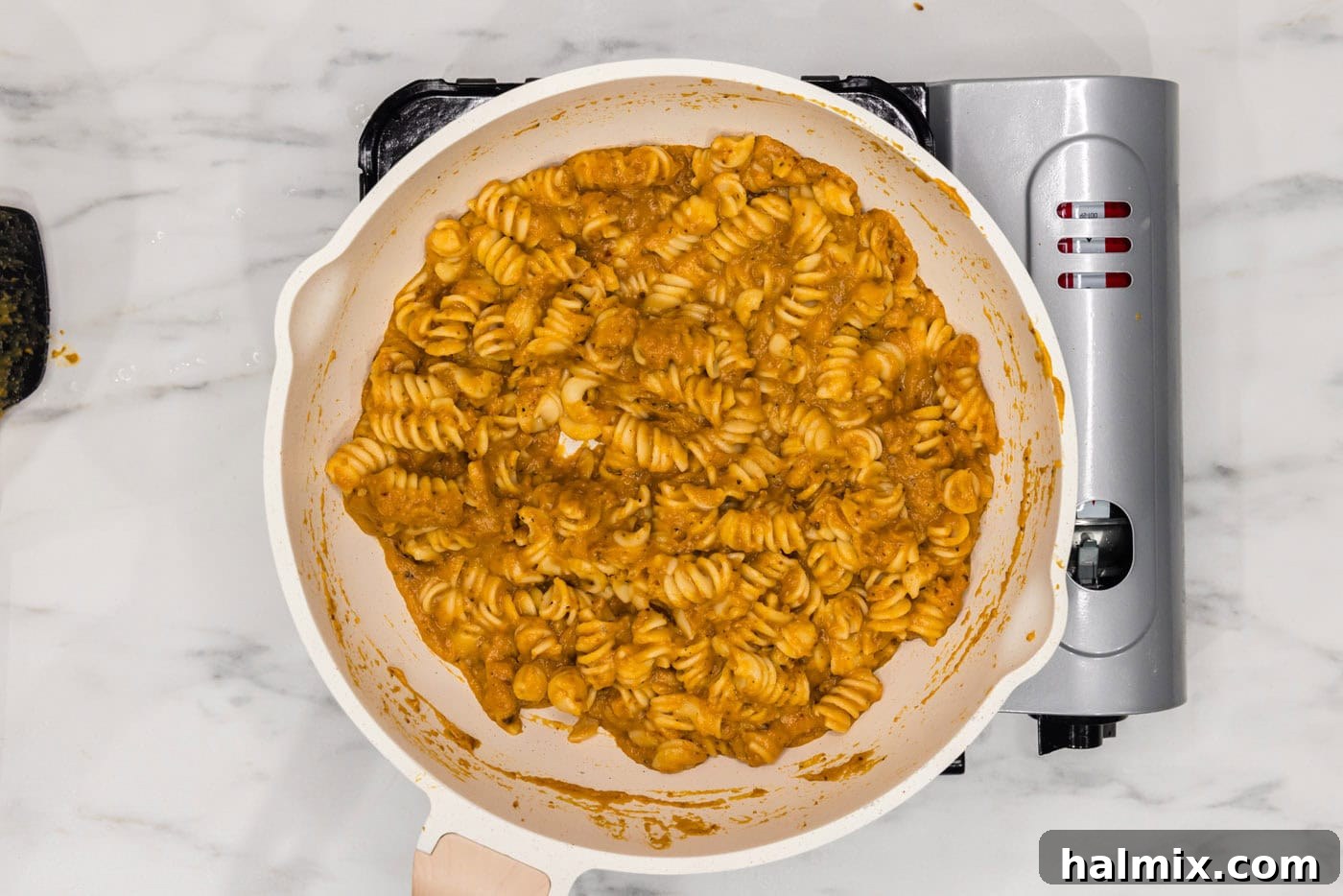
- Combine with Pasta: Pour the smooth butternut squash sauce into a large, deep-sided skillet. Warm the sauce over medium heat for 3-4 minutes, stirring occasionally, until it’s gently simmering. Add your freshly cooked al dente pasta to the skillet.
- Adjust Consistency (Optional): If the sauce is too thick for your preference, you can gradually add the remaining half-and-half (or a splash of milk or even reserved pasta water) until you achieve your desired creaminess. Stir well to incorporate.
Frequently Asked Questions & Expert Tips for Butternut Squash Pasta
How do I store leftover butternut squash pasta?
Store any leftover butternut squash pasta in an airtight container in the refrigerator for up to 4 days. When reheating, gently warm it in a skillet over medium-low heat until it’s heated through. As pasta tends to absorb sauce while it sits, you might find the leftovers a bit dry. To remoisten, add a splash of water, chicken broth, or a bit more half-and-half during reheating until it reaches your preferred consistency. Stir frequently to prevent sticking.
What can I add to this pasta to customize it?
This recipe is wonderfully versatile! To add protein, consider tossing in some cooked, sliced chicken breast, sautéed shrimp, crumbled Italian sausage, or even crispy bacon bits. For extra vegetables, fresh spinach, kale, sautéed mushrooms, peas, or roasted asparagus spears would all pair beautifully. You can also elevate the flavor with a pinch of nutmeg, a dash of red pepper flakes for a subtle kick, or a squeeze of fresh lemon juice at the end to brighten the sauce.
Can I make the butternut squash sauce ahead of time?
Absolutely! The butternut squash sauce can be made entirely in advance. Prepare the sauce as directed through step 9, allowing it to cool completely before transferring it to an airtight container. Store it in the refrigerator for up to 3-4 days. When you’re ready to serve, simply warm the sauce in a skillet, adding a little broth or half-and-half to thin it if necessary, then toss with freshly cooked pasta. This makes weeknight dinners incredibly quick!
How can I make this recipe vegetarian or vegan?
Making this pasta vegetarian is as simple as swapping chicken broth for vegetable broth. To make it completely vegan, replace the half-and-half with a plant-based cream alternative such as full-fat coconut milk (for a slightly tropical hint) or unsweetened, unflavored cashew cream. Ensure your pasta is egg-free, and you’ll have a delicious vegan butternut squash pasta.
Perfect Pairings: What to Serve with Your Butternut Squash Pasta
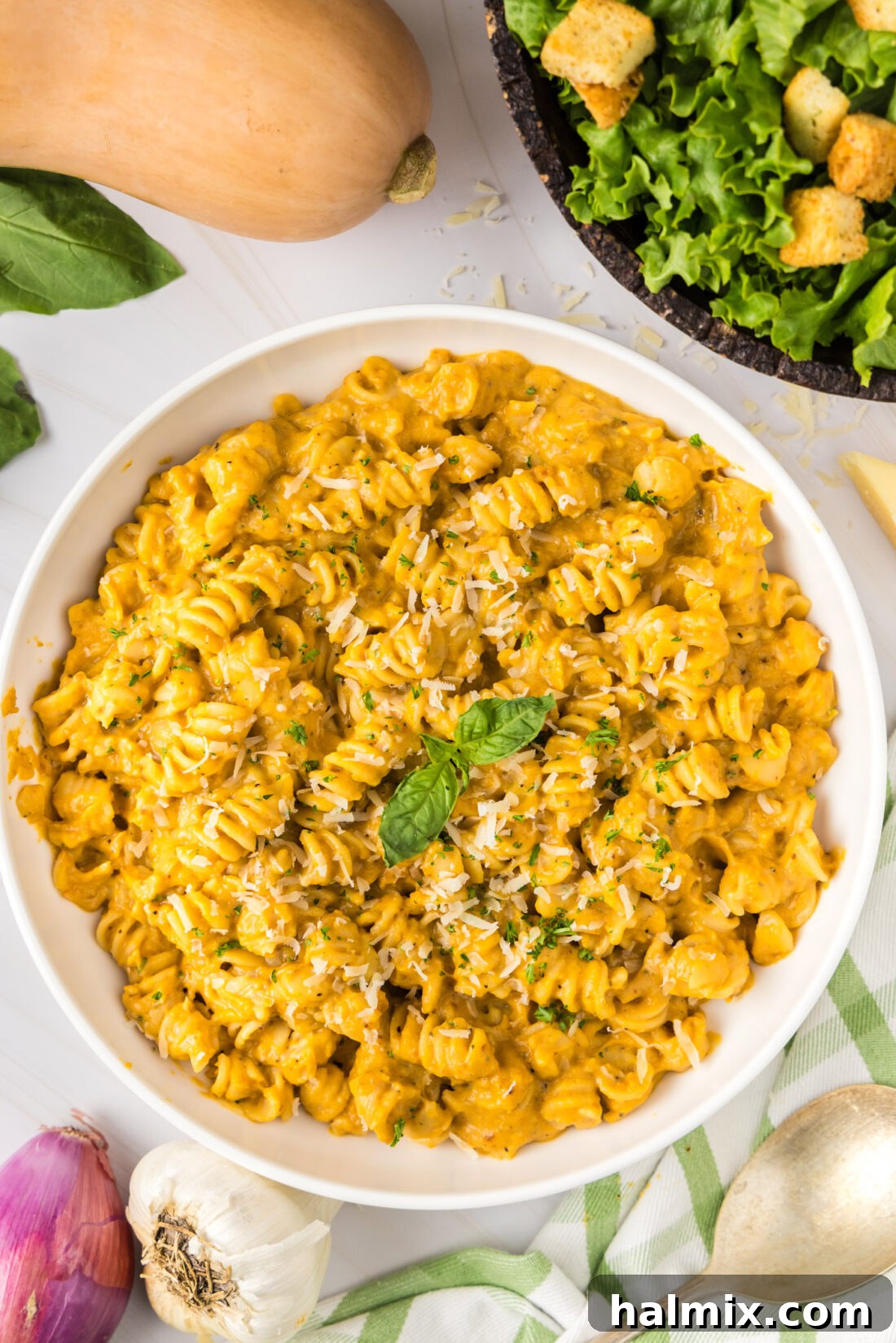
While our Butternut Squash Pasta is hearty and satisfying enough to be a standalone meal, pairing it with a simple side can elevate the dining experience. For a classic touch, a warm, crusty loaf of artisanal bread is perfect for soaking up every last bit of that delectable sauce. If you’re looking for something lighter, a fresh, crisp green salad with a bright vinaigrette offers a refreshing contrast. Alternatively, complement the flavors by serving it alongside some simply roasted vegetables like broccoli, Brussels sprouts, or green beans. Don’t forget a final flourish: a generous sprinkle of freshly shredded or grated Parmesan cheese (or a vegan alternative) right before serving truly completes the dish.
Explore More Butternut Squash Delights
Butternut squash is an incredibly versatile ingredient, lending its sweet, creamy goodness to a variety of dishes. If you love this pasta, be sure to explore some of our other favorite butternut squash recipes:
- Butternut Squash Mac and Cheese
- Slow Cooker Butternut Squash Soup
- Crockpot Butternut Squash Oatmeal
- Butternut Squash Pasta with Cheesy Cream Sauce
- Butternut Squash Pasta Sauce
I love to bake and cook and share my kitchen experience with all of you! Remembering to come back each day can be tough, that’s why I offer a convenient newsletter every time a new recipe posts. Simply subscribe and start receiving your free daily recipes!
Butternut Squash Pasta
A creamy butternut squash sauce tossed with noodles makes a nutrient-rich, cozy pasta dish just in time for the chilly months!
Course: Dinner | Cuisine: American
Servings: 5 servings | Prep time: 20 mins | Cook time: 35 mins | Total Time: 55 mins
Calories: 302 kcal | Author: Amanda Davis
Ingredients
- 2 pounds butternut squash
- 1 medium shallot
- 4 Tablespoons olive oil, divided
- 1 teaspoon garlic salt
- ½ teaspoon black pepper
- 1 bulb roasted garlic (or 3 tablespoons jarred roasted garlic)
- ½ cup chicken broth (or vegetable broth for vegetarian)
- ½ cup half and half, divided (or milk/broth for lighter sauce)
- 4 ounces rotini pasta, cooked al dente (about 3 cups cooked)
Equipment
- Chef’s knife
- Baking sheet
- Mini food chopper (or blender)
- Large deep-sided skillet
Instructions
- Preheat oven to 425°F (220°C).
- Slice both ends off the butternut squash. Peel the outer skin by standing the squash on its flat bottom and running a knife or peeler down the sides.
- Cut the squash in half lengthwise and remove the seeds. Cut squash into 2-inch cubes and place in a large mixing bowl.
- Add 3 tablespoons of the olive oil and toss with the cubes. Sprinkle with garlic salt and black pepper and toss to distribute seasoning.
- Move squash to a baking sheet and set aside.
- Add shallots to a small mixing bowl and pour in the remaining olive oil. Form a bowl out of aluminum foil and add the shallots to it.
- Place the foil bowl of shallots on the baking sheet with the squash and roast in the preheated oven for 30-35 minutes, or until tender and caramelized.
- Remove from oven and allow to cool for 10 minutes.
- Add squash, shallots, roasted garlic, chicken broth, and ¼ cup of the half-and-half to a mini food chopper or blender. Blend until smooth. The mixture will be fairly thick.
- Add the butternut squash mixture to a large deep-sided skillet. Warm over medium heat for 3-4 minutes, then add the cooked pasta.
- You can use the remaining ¼ cup of half-and-half (or milk or broth) to loosen the sauce to your desired consistency.
Nutrition Information (per 1 serving – approximately 1 cup)
Calories: 302 kcal | Carbohydrates: 40g | Protein: 6g | Fat: 15g | Saturated Fat: 3g | Polyunsaturated Fat: 2g | Monounsaturated Fat: 9g | Cholesterol: 9mg | Sodium: 577mg | Potassium: 746mg | Fiber: 5g | Sugar: 6g | Vitamin A: 19374 IU | Vitamin C: 39mg | Calcium: 122mg | Iron: 2mg
The recipes on this blog are carefully tested using a conventional gas oven and gas stovetop. Please note that cooking times can vary depending on your specific appliance, especially with older ovens which may heat inconsistently. We recommend using an inexpensive oven thermometer to ensure your oven maintains the correct temperature. If using a toaster oven, countertop oven, pressure cooker, air fryer, or other specialized appliance, adjustments to cooking or baking times may be necessary. For baking recipes where ingredients are measured by weight, we advise sticking to those measurements for best results, as cup measurements may yield different outcomes and we cannot guarantee success with alternative methods.