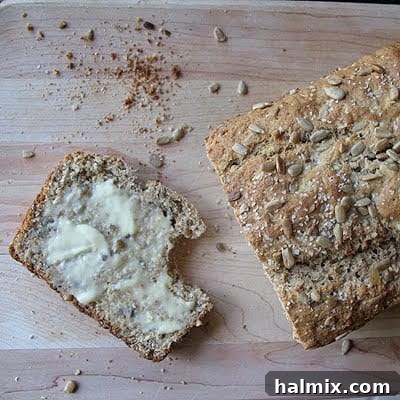
Wholesome Sunflower Whole Wheat Quick Bread: Your New Favorite No-Yeast Loaf
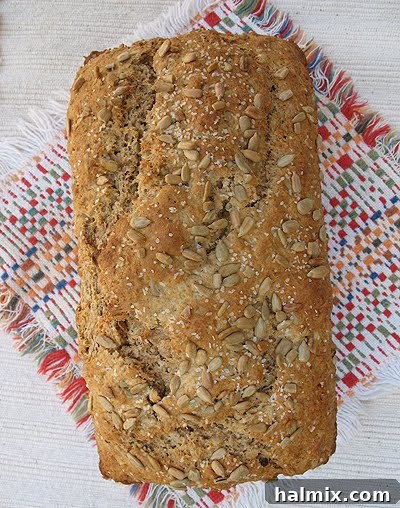
There’s nothing quite like the comforting aroma of freshly baked bread wafting through your kitchen, especially when it’s as delightfully wholesome and straightforward to make as this Sunflower Whole Wheat Quick Bread. This robust loaf is generously studded with sunflower seeds, both inside its tender crumb and atop its golden crust, delivering a satisfying crunch and nutty flavor with every bite. Crafted with a thoughtful blend of whole wheat flour and the added nutrition of wheat germ, it transforms into a healthy and undeniably tasty treat. While it’s certainly wonderful enjoyed warm with a smear of butter, its full depth of flavor and ideal texture truly shine once it has cooled completely.
Why This Sunflower Quick Bread Will Become a Staple in Your Home
This quick bread isn’t just another recipe; it’s an invitation to embrace simple, homemade goodness without the usual fuss associated with bread making. Forget about demanding yeast, multiple proofs, or hours of waiting. This ‘quick’ bread lives up to its name, requiring minimal preparation and baking to perfection in just over an hour. It’s the ideal solution for those busy mornings, unexpected guests, or simply when you’re craving the unparalleled comfort of homemade baked goods without the time commitment. Its balanced flavor profile and wholesome ingredients make it a truly versatile addition to any meal, any time of day.
A Harmonious Blend of Nutty Flavors and Subtle Sweetness
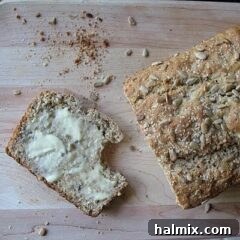
The distinctive charm of this Sunflower Whole Wheat Quick Bread lies in its beautifully nuanced flavor profile. The foundation of whole wheat flour provides a rich, earthy base, which is elegantly complemented by the deep, wholesome notes of wheat germ. A careful touch of both granulated and light brown sugar introduces a gentle sweetness, preventing the bread from leaning too savory without ever crossing into dessert territory. However, the true stars of this loaf are the sunflower seeds. They imbue the bread with a delightful, savory nuttiness and contribute a wonderful textural contrast, ensuring an engaging bite every time. Whether you prefer it warm, with the butter melting into its soft interior, or fully cooled for a firmer, more sliceable texture, this bread promises a truly satisfying culinary experience.
Unmatched Versatility for Every Occasion
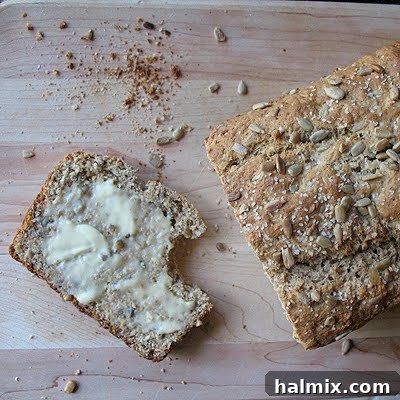
One of the most compelling attributes of this quick bread is its extraordinary adaptability. Its perfectly balanced flavor makes it suitable for an impressive array of culinary pairings, catering to both sweet and savory cravings throughout the day:
- For a Wholesome Breakfast: Elevate your morning routine by spreading a warm slice with your favorite fruit jam, marmalade, or a dollop of honey. A drizzle of pure maple syrup or a generous smear of almond or cashew butter can transform it into a truly decadent yet healthy start to your day.
- Elegant Savory Snacks & Lunches: Take your midday meal or snack to the next level. This bread makes a fantastic canvas for cream cheese and fresh chives, a slice of sharp cheddar cheese, or even a thin layer of creamy avocado. It serves as an excellent foundation for gourmet open-faced sandwiches or a hearty accompaniment to a comforting bowl of soup or a fresh green salad.
- Anytime Indulgence: Enjoy a plain slice as a guilt-free pick-me-up or lightly toast it for an extra crisp exterior. The substantial nature of the whole wheat and sunflower seeds makes it surprisingly filling and satisfying, perfect for curbing hunger between meals.
The Wholesome Powerhouse of Ingredients
This recipe is celebrated not only for its incredible flavor but also for its foundation of genuinely wholesome ingredients, each contributing to its nutritional richness and distinct character:
- Whole Wheat Flour: As the primary flour, it provides a wealth of dietary fiber, essential B vitamins, and various minerals. This not only enhances the bread’s nutritional profile compared to recipes made solely with refined flours but also imparts a deeper, more complex flavor and a satisfying texture.
- Wheat Germ: A true nutritional marvel, wheat germ is the embryo of the wheat kernel, packed with a powerhouse of nutrients. It’s an excellent source of vitamin E, folic acid, phosphorus, thiamine, zinc, and magnesium. Incorporating it into this bread adds a subtle, pleasant nutty flavor and contributes significantly to the loaf’s moist and tender crumb.
- Sunflower Seeds: These delightful little seeds are more than just a textural highlight; they are nutritional gems. Rich in healthy monounsaturated and polyunsaturated fats, protein, and dietary fiber, sunflower seeds also provide significant amounts of vitamin E, selenium, and magnesium. Their distinctive, mild flavor and satisfying crunch make every bite a delight.
- Buttermilk: Beyond its role as a liquid, buttermilk is crucial for the bread’s structure and tenderness. Its inherent acidity reacts with the baking soda, a key leavening agent in quick breads, producing carbon dioxide bubbles that help the loaf rise beautifully and achieve a wonderfully moist texture.
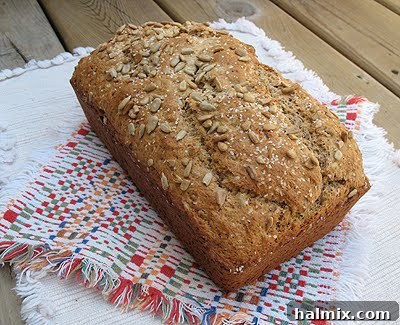
Effortless Baking: Mastering the Quick Bread Technique
One of the most compelling aspects of this Sunflower Whole Wheat Quick Bread is its remarkable simplicity. Whether you are a novice baker or a seasoned pro seeking a reliable, impressive recipe with minimal fuss, this bread is your answer. The entire process is broken down into just a few straightforward steps, making it incredibly accessible:
- **Combine Dry Ingredients:** In a large mixing bowl, the various flours, wheat germ, sugars, salt, baking powder, and baking soda are thoroughly whisked together. Then, the vibrant sunflower seeds are stirred in, ensuring an even distribution throughout the mix.
- **Prepare Wet Ingredients:** In a separate, smaller bowl, the buttermilk, eggs, and melted butter are gently combined. This ensures all wet components are uniform before being introduced to the dry mix.
- **Mix and Bake:** The wet mixture is then carefully poured into the dry ingredients. A gentle stirring motion is all that’s needed until the ingredients are just combined. The resulting batter, thick and delightfully sticky—reminiscent of a robust cooked oatmeal that’s just begging for a splash of milk—is spooned into a prepared loaf pan and baked to golden perfection. That’s truly all there is to it!
This straightforward, no-knead, and no-rise method guarantees a foolproof baking experience. You’ll spend less time in the kitchen and more time savoring the delicious, homemade results.
Expert Tips for Baking Your Best Loaf
While this recipe is incredibly forgiving and designed for ease, a few key tips can elevate your Sunflower Whole Wheat Quick Bread from good to absolutely phenomenal, ensuring consistent success every time:
- Precision in Measuring Flours: This is paramount in baking. To avoid a dry or dense loaf, use the “spoon and level” method for flours: spoon the flour into your measuring cup until it’s overflowing, then use a straight edge (like the back of a knife) to level off the excess. Never scoop flour directly from the bag, as this compacts it, leading to too much flour.
- Avoid Overmixing the Batter: Once the wet and dry ingredients are combined, stir only until no streaks of dry flour remain. Overmixing develops the gluten in the flour excessively, which can result in a tough, chewy, or rubbery bread. A few small lumps in the batter are perfectly acceptable and often indicative of a tender crumb.
- Embrace Room Temperature Ingredients: For optimal emulsification and a smoother, more uniform batter, ensure your eggs and buttermilk are at room temperature. This allows them to integrate more readily with the other ingredients, contributing to a superior texture in the finished loaf.
- Confirm Doneness Accurately: The loaf should be beautifully golden brown on the outside. To truly confirm it’s baked through, insert a wooden skewer or toothpick into the center of the bread; it should come out clean, with no wet batter attached. Additionally, a gentle tap on the top or bottom of the loaf should produce a hollow sound. Keep in mind that oven temperatures can vary significantly, so relying solely on the clock might not be sufficient. In my conventional oven, 55 minutes typically yields a perfect result, but your timing might differ slightly.
- Patience for Cooling: It’s incredibly tempting to slice into a warm loaf, but for the best texture and to prevent crumbling, it’s best to allow the bread to cool completely on a wire rack. This period allows the internal structure of the bread to set fully, making it easier to slice cleanly and allowing the flavors to deepen and meld beautifully.
Frequently Asked Questions (FAQ) About Quick Breads
Here are answers to some common questions you might have about baking this Sunflower Whole Wheat Quick Bread:
Q: What exactly defines a “quick bread” and why is it called that?
A: Quick bread is a category of baked goods that relies on chemical leavening agents—such as baking powder and baking soda—to achieve its rise, rather than yeast. This crucial difference means quick breads do not require any fermentation or rising time, which is traditionally needed for yeast-leavened doughs. Hence, they can be prepared and baked much faster than conventional breads, earning them the “quick” designation. This makes them incredibly convenient for busy schedules or when you desire fresh bread without the long wait.
Q: Can I modify the types of flour used in this recipe?
A: Altering the flour types can significantly impact the final texture, density, and crumb structure of any quick bread. For the most reliable and delicious results, we strongly recommend adhering to the specified ratio of whole wheat and unbleached all-purpose flour. If you absolutely need to make a substitution, replacing the whole wheat flour with a different type of whole wheat flour (e.g., white whole wheat flour) on a 1:1 basis is generally acceptable, but drastic changes to entirely different flour types (like gluten-free alternatives) without a tested recipe could lead to unpredictable outcomes. Always proceed with caution when experimenting with flour substitutions.
Q: I don’t have buttermilk. Is there an easy substitute I can use?
A: Absolutely! If buttermilk isn’t readily available, you can effortlessly create a homemade substitute. For the 1 ½ cups of buttermilk required in this recipe, simply pour 1 ½ tablespoons of fresh white vinegar or lemon juice into a liquid measuring cup. Then, fill the remainder of the cup up to the 1 ½ cup line with regular milk (any fat percentage will work). Stir it lightly and let the mixture sit undisturbed for 5 to 10 minutes. During this time, the milk will begin to curdle slightly, mimicking the acidity and thickening properties of true buttermilk, and it will work perfectly in this recipe.
Q: What is the best way to store this quick bread to maintain its freshness?
A: To keep your Sunflower Whole Wheat Quick Bread fresh and delicious for as long as possible, ensure it has cooled completely to room temperature before storing. Once cool, wrap the entire loaf tightly in plastic wrap or aluminum foil. It can then be stored at room temperature for up to 3 to 4 days. For extended storage, slicing the bread first allows you to freeze individual slices for up to 2 to 3 months. When ready to enjoy, simply thaw the frozen slices at room temperature or toast them directly for a warm treat.
Q: Can I add other seeds, nuts, or even dried fruits to this recipe?
A: Yes, this quick bread recipe is wonderfully adaptable to your preferences! Feel free to get creative and experiment with various additions. Pumpkin seeds, chopped walnuts, pecans, slivered almonds, or even a sprinkle of flax seeds could introduce different textures and flavor nuances. If you enjoy a hint of fruitiness, consider adding a handful of dried cranberries, chopped apricots, or golden raisins. Just be mindful of the overall quantity of mix-ins; try to maintain a similar total volume to avoid overwhelming the batter or affecting its baking structure.
Q: My quick bread turned out dry and crumbly. What could have gone wrong?
A: A dry or crumbly quick bread is a common issue that typically stems from a few key factors. The most frequent culprits include overmixing the batter, which over-develops the gluten and leads to a tough texture; using too much flour, often due to improper measuring techniques (such as scooping directly from the bag instead of spooning and leveling); or overbaking the loaf. To prevent this, ensure you are measuring your flour accurately, mixing the batter only until the ingredients are just combined, and checking for doneness at the earliest recommended bake time to avoid excessive moisture loss.
A Recipe Worth Sharing (and Cherishing!)
This truly delightful recipe, which I serendipitously discovered in a library book—a testament to the hidden gems waiting to be found!—has quickly ascended to a cherished permanent spot in my personal recipe collection. Its remarkable ease of preparation, coupled with its irresistibly delicious flavor and the wholesome goodness of its ingredients, makes it an unequivocal go-to for virtually any occasion. Whether you’re seeking a hearty and nutritious breakfast, a satisfying and flavorful snack to energize your day, or a unique and comforting accompaniment to your dinner table, this Sunflower Whole Wheat Quick Bread is guaranteed to impress everyone who tries it. I wholeheartedly encourage you to give this recipe a try; I have no doubt that you, too, will find yourself baking it again and again!
Adapted from Tate’s Bake Shop Cookbook
Sunflower Whole Wheat Quick Bread
IMPORTANT – There are often Frequently Asked Questions within the blog post that you may find helpful. Simply scroll back up to read them!
Print It
Pin It
Rate It
Amanda Davis
Ingredients
- 2 cups whole wheat flour
- 1 ½ cups unbleached all purpose flour
- ½ cup wheat germ
- ¼ cup sugar
- ¼ cup packed light brown sugar
- 1 teaspoon salt
- 4 teaspoons baking powder
- 1 teaspoon baking soda
- 1 cup roasted sunflower seeds plus a handful extra for top of bread
- 1 ½ cups buttermilk
- 2 large eggs
- 4 tablespoons salted butter melted
- coarse salt for sprinkling
Instructions
-
Preheat your oven to 375 F (190 C). Prepare a 9×5 inch loaf pan by generously spraying it with cooking spray. For even easier removal of the baked loaf, you may also choose to line the pan with parchment paper, allowing an overhang on the long sides to create convenient ‘handles’. Place the prepared loaf pan onto a baking sheet; this not only makes it easier to transfer in and out of the oven but also catches any potential drips. Set aside.
-
In a large mixing bowl, combine the dry ingredients: the whole wheat flour, unbleached all-purpose flour, wheat germ, granulated sugar, packed light brown sugar, salt, baking powder, and baking soda. Use a whisk to thoroughly stir these ingredients together, ensuring they are well combined and there are no lumps. Once the dry mixture is uniform, stir in 1 cup of the roasted sunflower seeds, distributing them evenly throughout the flour mixture.
-
In a separate, smaller bowl, combine the wet ingredients: the buttermilk, large eggs, and the melted salted butter. Whisk these ingredients together just until they are fully combined and smooth. Now, pour this liquid buttermilk mixture into the bowl containing the dry flour mixture. Stir gently with a spoon or spatula until the ingredients are just combined. It is crucial not to overmix the batter; a few small lumps are perfectly normal and preferred. The consistency of the batter will be quite thick and sticky, much like cooked oatmeal that needs a splash of milk.
-
Carefully spoon the thick batter into your prepared 9×5 inch loaf pan, spreading it evenly with a spatula if needed. Generously sprinkle the remaining handful of sunflower seeds and a pinch of coarse salt over the top of the bread. Place the baking sheet with the loaf pan into the preheated oven. Bake for approximately 50 to 60 minutes, or until the loaf is beautifully browned on top and a wooden skewer or toothpick inserted into the center of the bread comes out clean. When gently tapped on the top or bottom, the loaf should also emit a hollow sound, which indicates it is thoroughly cooked through. (Please note that in my oven, 55 minutes typically yielded the perfect result, but baking times can vary slightly.)
-
Once baked, remove the loaf from the oven and allow it to cool in the pan on a wire rack for about 10 minutes. This crucial resting period allows the bread to set and firm up, preventing it from crumbling when removed. After 10 minutes, carefully remove the bread from the pan and transfer it directly to the wire rack to cool completely before slicing. While delicious when slightly warm, the texture, crumb, and flavors develop best once the loaf has fully cooled.
Tried this Recipe? Pin it for Later!
Follow on Pinterest @AmandasCookin or tag #AmandasCookin!
The recipes on this blog are tested with a conventional gas oven and gas stovetop. It’s important to note that some ovens, especially as they age, can cook and bake inconsistently. Using an inexpensive oven thermometer can assure you that your oven is truly heating to the proper temperature. If you use a toaster oven or countertop oven, please keep in mind that they may not distribute heat the same as a conventional full sized oven and you may need to adjust your cooking/baking times. In the case of recipes made with a pressure cooker, air fryer, slow cooker, or other appliance, a link to the appliances we use is listed within each respective recipe. For baking recipes where measurements are given by weight, please note that results may not be the same if cups are used instead, and we can’t guarantee success with that method.