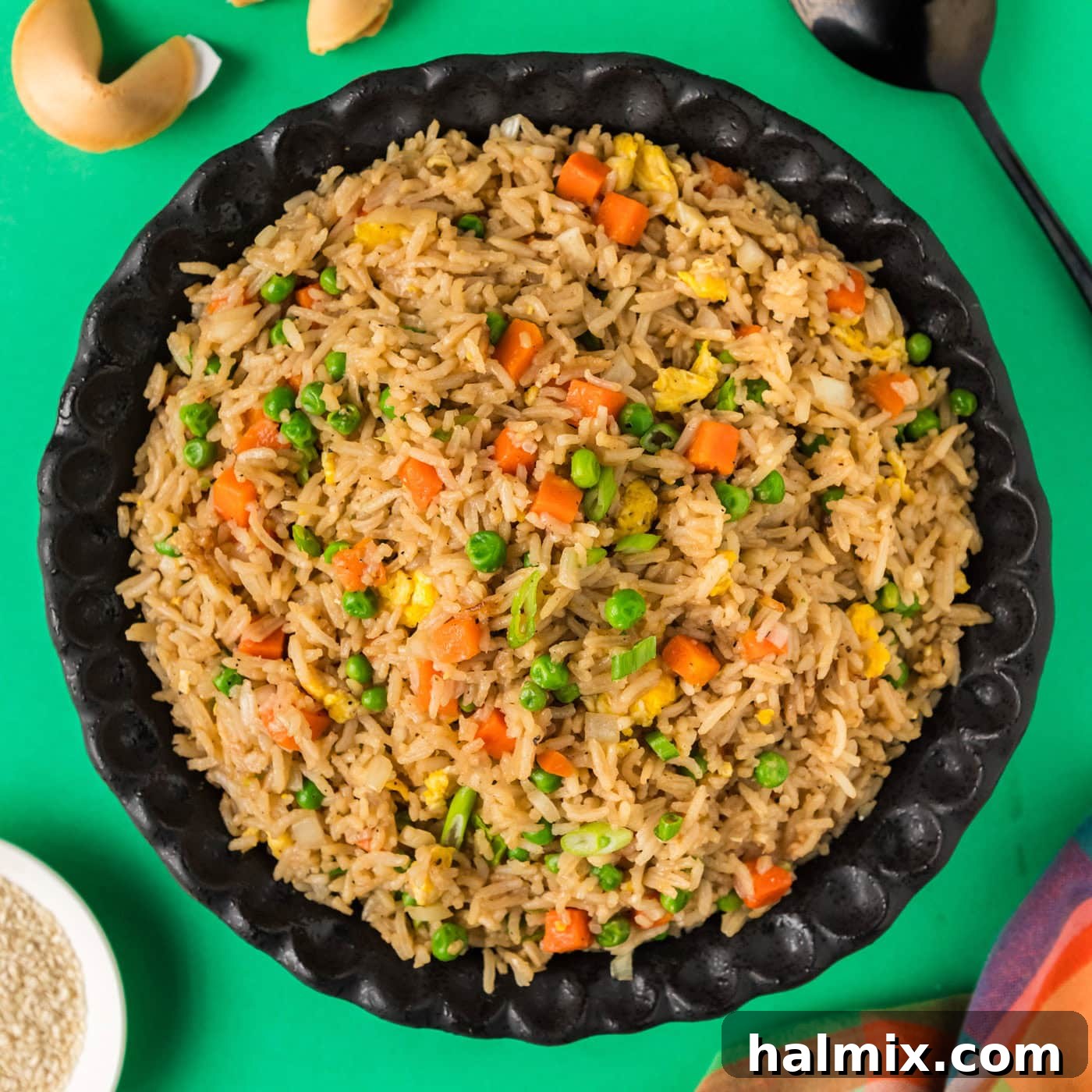
Easy Fried Rice Recipe: Transform Leftovers into a Flavorful Feast in 30 Minutes
Unleash the magic of your kitchen by transforming everyday leftover rice into an extraordinary meal with this easy fried rice recipe! In just 30 minutes, you can whip up a flavorful, customizable dish that’s perfect for busy weeknights or a satisfying weekend treat. Whether you’re a seasoned home cook or new to the culinary world, this recipe provides a solid foundation, allowing you to personalize it with your favorite ingredients. Get ready to enjoy perfectly seasoned, fluffy fried rice that tastes even better than takeout!
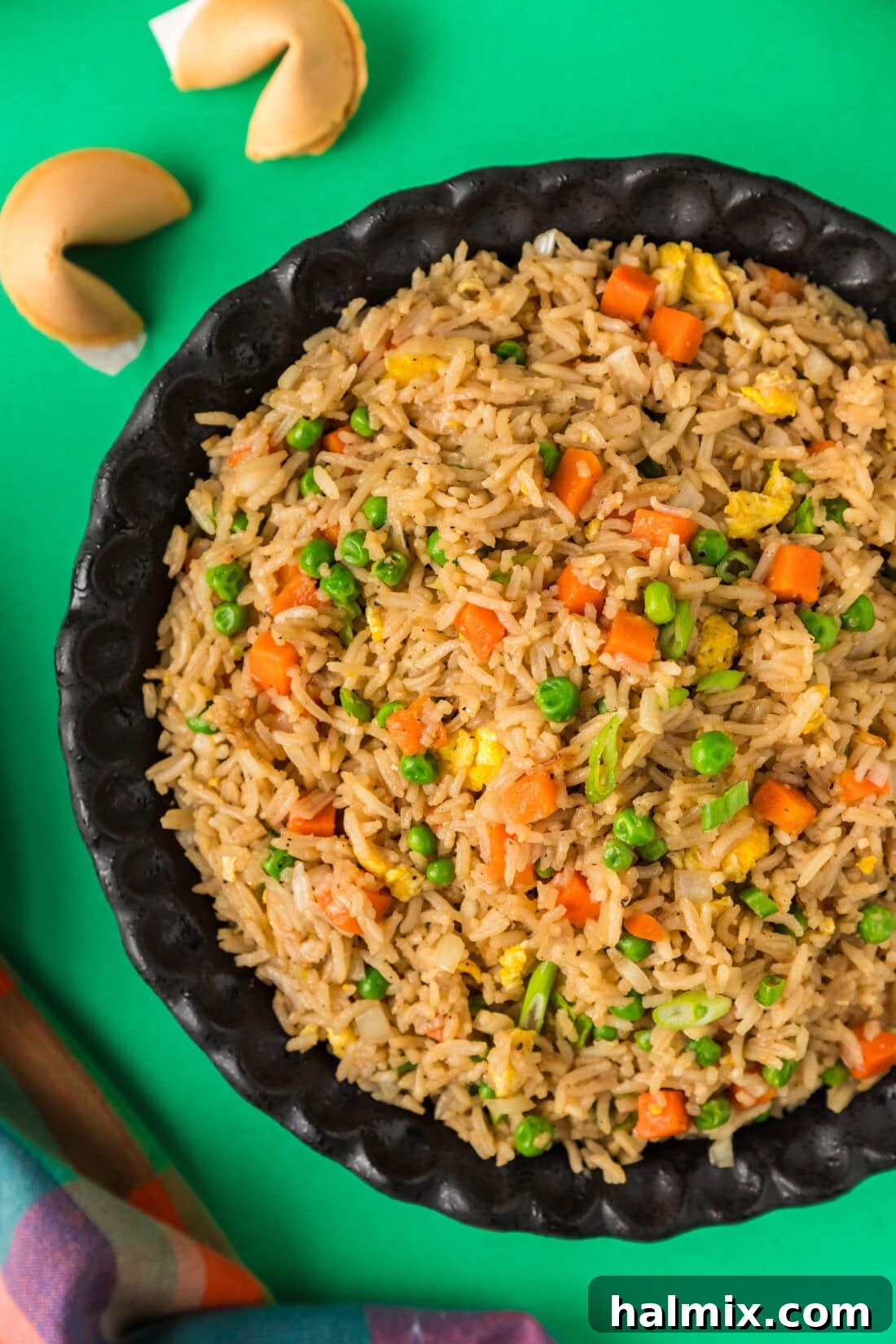
Why This Easy Fried Rice Recipe is a Must-Try
There’s something incredibly satisfying about a steaming plate of fried rice, studded with vibrant peas, carrots, fluffy scrambled eggs, and bursting with umami flavors. It’s more than just a side dish; it’s a versatile culinary creation that can effortlessly stand alone as a main course, especially when you load it up with extra protein. Craving seafood? Our shrimp fried rice recipe is a fantastic choice. Prefer meat? Dive into pork fried rice. For those who love their greens, a classic vegetable fried rice offers hearty goodness.
This particular recipe isn’t just easy; it’s a masterclass in flexibility. We’re providing you with the essential techniques and core ingredients to build the perfect fried rice base. From there, the possibilities are endless. Adjust it to your dietary needs, incorporate seasonal vegetables, or experiment with different sauces. Our goal is to equip you with the fundamental knowledge to confidently customize your fried rice to suit any palate or occasion.
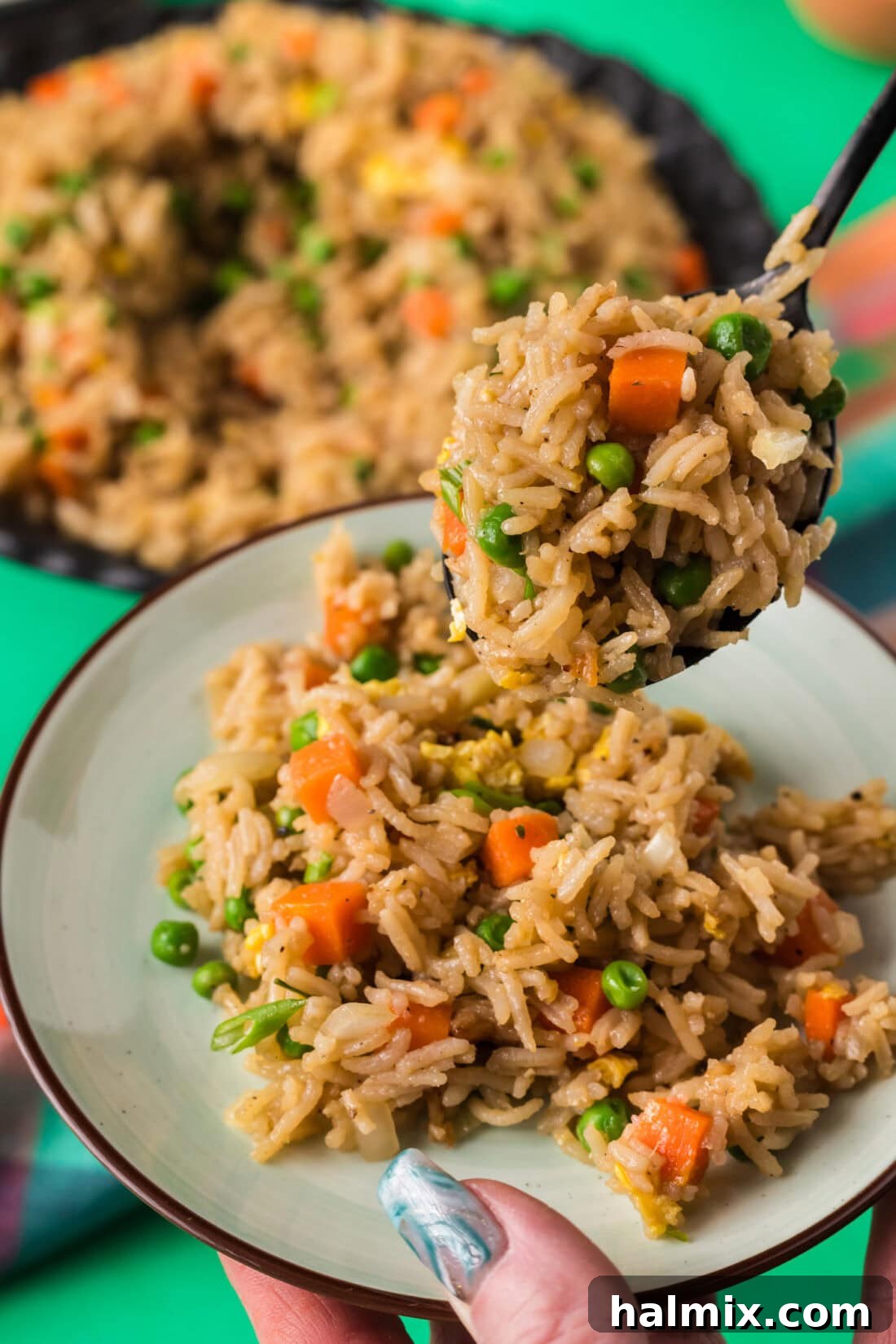
Essential Ingredients for Your Perfect Homemade Fried Rice
Crafting delicious fried rice begins with selecting the right ingredients. Below, you’ll find a comprehensive list of what you’ll need, along with helpful tips and substitution suggestions to make this recipe truly your own. For precise measurements and step-by-step instructions, scroll down to the printable recipe card at the end of this post.
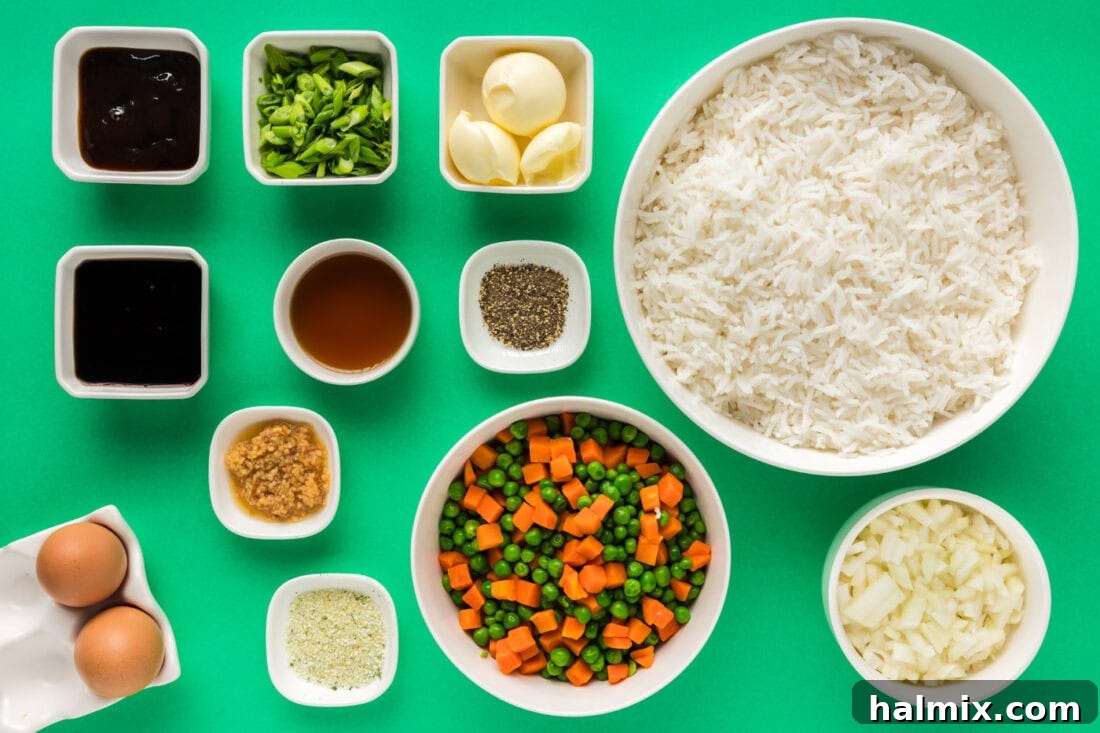
Ingredient Information and Smart Substitution Suggestions
The Rice: The Foundation of Flavor and Texture
The secret to truly great fried rice lies in using leftover chilled rice. This is paramount for achieving that desirable loose, non-clumpy texture. As cooked rice cools, its starch molecules recrystallize (a process known as retrogradation), making the grains firm and less prone to sticking together when stir-fried. If you don’t have leftover rice, don’t fret! You can cook about 2.5 cups of raw white rice (yielding roughly 8 cups cooked) specifically for this recipe. However, it’s crucial to let freshly cooked rice chill thoroughly in the refrigerator for at least a few hours, or ideally overnight, before frying. Attempting to fry warm, freshly cooked rice will almost certainly result in a mushy, undesirable texture.
Recommended Rice Types: Long-grain white rice, such as Jasmine or Basmati, works exceptionally well due to its lower starch content and ability to stay separate. Medium-grain or even short-grain rice can also be used, but ensure it’s well-chilled.
The Vegetables: A Burst of Color and Nutrients
Our classic combination includes diced onion, frozen peas, and carrots. These staples provide a sweet, earthy crunch and vibrant color. Frozen vegetables are incredibly convenient, saving you prep time without sacrificing flavor or nutrition. If using fresh peas and carrots, ensure you sauté them until tender-crisp before adding them to the rice.
Expand Your Veggie Palette: Don’t hesitate to incorporate your favorite stir-fry vegetables! Excellent additions include:
- Diced bell peppers (any color)
- Broccoli florets or chopped broccoli stems
- Mushrooms (sliced shiitake or cremini)
- Corn kernels (fresh or frozen)
- Green beans (trimmed and chopped)
- Baby corn or water chestnuts for extra texture
- Cabbage (shredded) or bok choy (chopped)
Remember to cut all vegetables into similar, small pieces for even cooking, and sauté harder vegetables first until they reach your desired tenderness.
The Aromatics: Building the Flavor Base
Minced garlic and fresh onions are the aromatic backbone of this dish. They release an incredible fragrance and foundational savory notes when sautéed.
The Eggs: Creamy Texture and Protein
Large eggs provide a creamy texture and a boost of protein. Scrambling them separately ensures they cook evenly and can be mixed in perfectly at the end.
The Fats: For Sautéing and Richness
Olive oil is used for sautéing the vegetables and aromatics. Butter adds a rich, decadent flavor when scrambling the eggs and stir-frying the rice. For an authentic Asian flavor, consider using peanut oil or canola oil for sautéing.
The Sauces and Seasonings: The Heart of Umami
- Oyster Sauce: This is a non-negotiable for authentic, restaurant-quality fried rice. It provides a deep, savory, slightly sweet umami flavor. If you’re vegetarian or vegan, look for a mushroom-based “vegetarian oyster sauce.”
- Soy Sauce: A classic for saltiness and umami. Use regular or low-sodium soy sauce based on your preference. Tamari is a great gluten-free alternative.
- Toasted Sesame Oil: Added at the very end, this oil delivers a distinctive nutty aroma and flavor that ties all the ingredients together beautifully. Do not use it for high-heat cooking, as its flavor can become bitter.
- Garlic Salt and Black Pepper: Simple seasonings that enhance the overall flavor profile. Adjust to taste.
Optional Add-ins for Enhanced Flavor and Protein:
This recipe provides a delicious base, but feel free to add cooked protein for a more substantial meal:
- Diced chicken (rotisserie chicken works wonderfully for speed)
- Cooked shrimp
- Leftover cooked pork or beef
- Tofu (pressed, cubed, and pan-fried until crispy)
- Edamame (shelled, frozen)
Mastering the Art of Homemade Fried Rice: Step-by-Step Guide
Making delicious fried rice at home is simpler than you think! Follow these detailed steps to achieve a perfectly seasoned and textured dish. For a printable version of the full recipe with exact measurements, simply scroll down to the recipe card below.
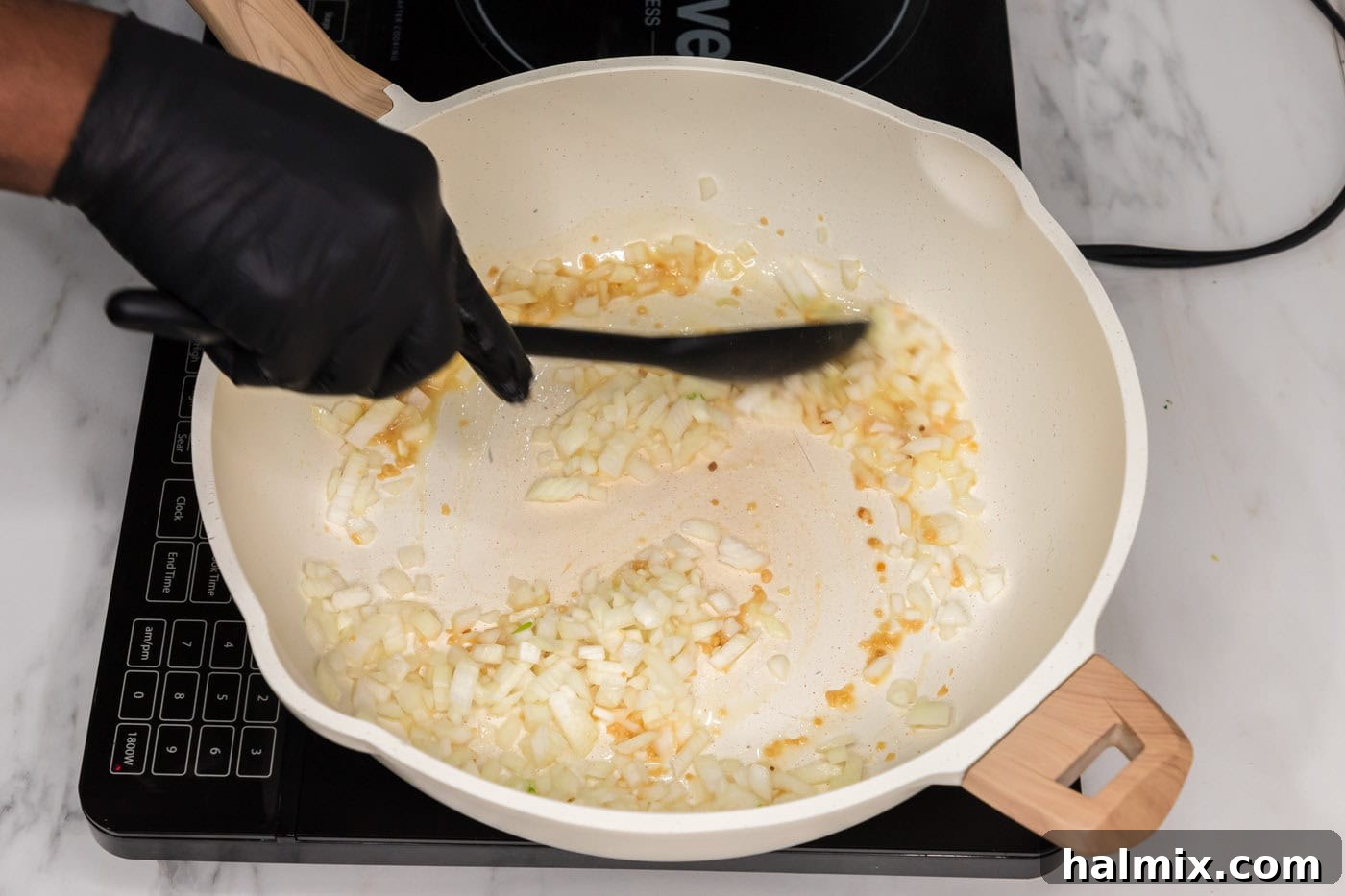
- Prepare Your Skillet and Aromatics: Begin by heating a large skillet or wok over medium-high heat. Add the olive oil and allow it to shimmer. Once hot, add the minced garlic and sauté for approximately one minute until fragrant. Be careful not to burn the garlic, as this can make it bitter.
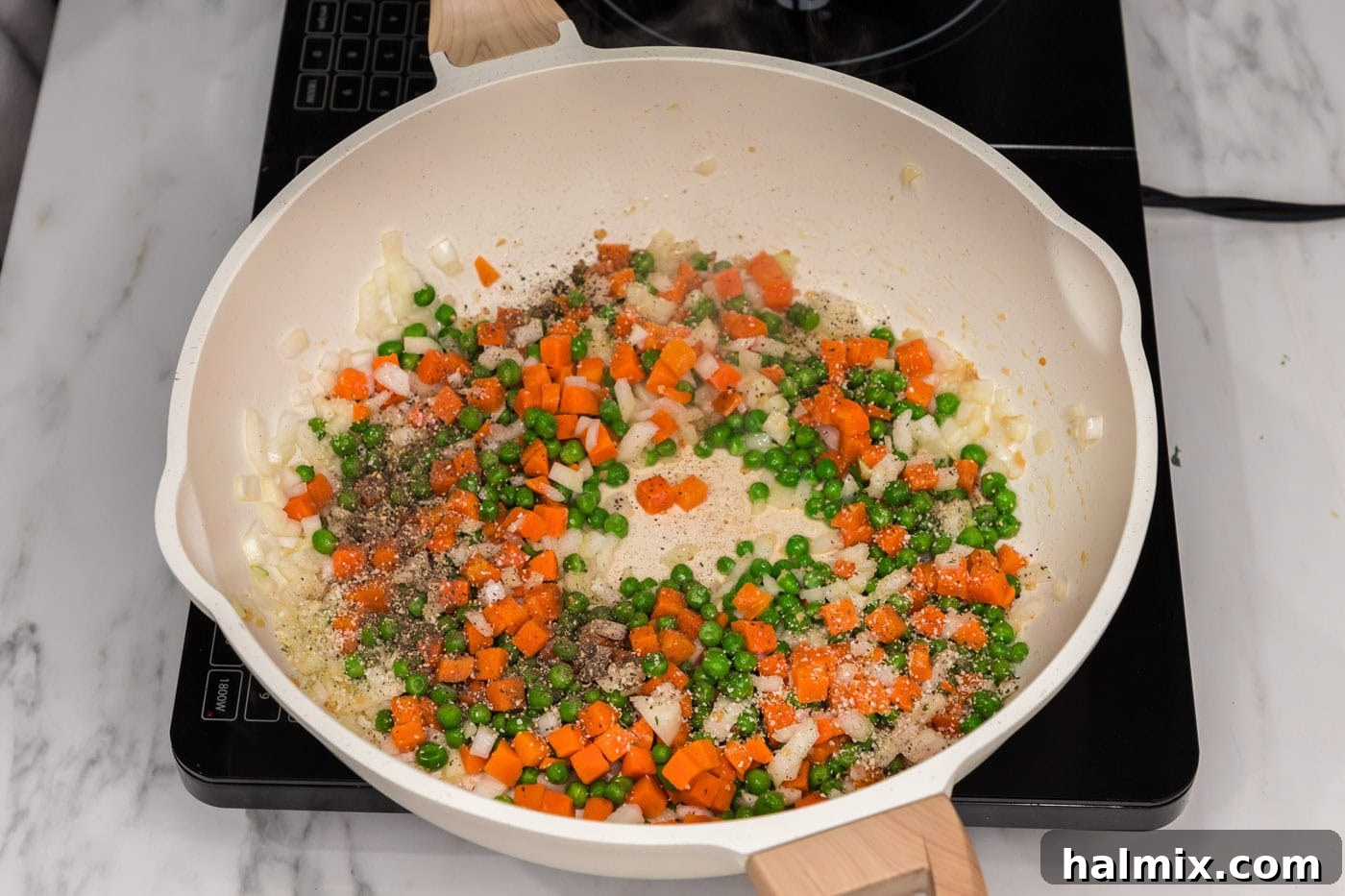
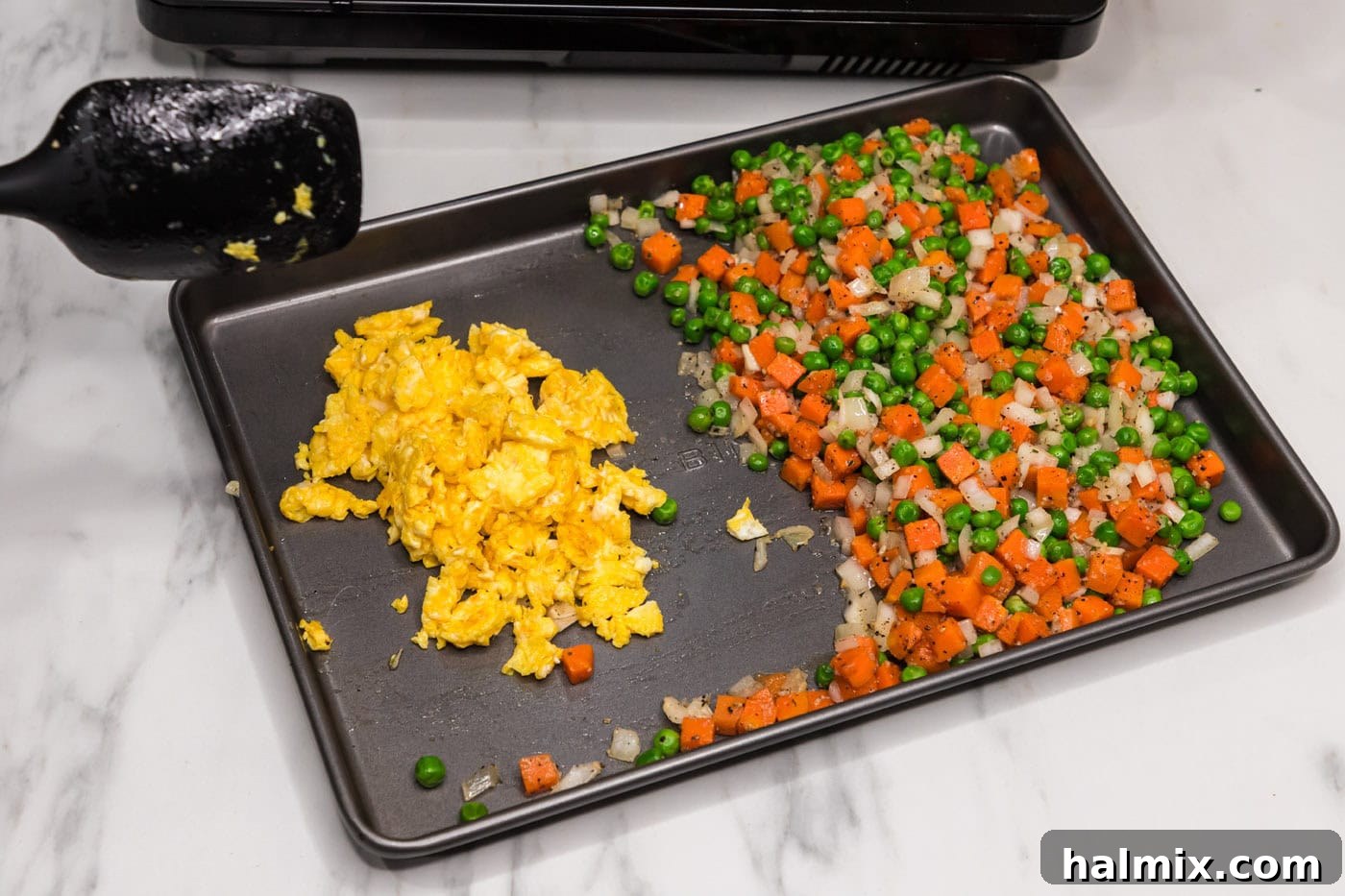
- Sauté the Vegetables: Add the diced onions, frozen peas, and carrots to the skillet. Season with garlic salt and black pepper. Cook for 3-4 minutes, stirring occasionally, until the vegetables are tender-crisp. Transfer the cooked vegetables to a plate or a separate pan and set aside. This ensures they don’t overcook while you prepare the eggs and rice.

Fragrant garlic and onions sizzling in the pan. Colorful vegetables joining the aromatics. - Prepare the Eggs: In a small bowl, lightly beat the two large eggs with a fork until the yolks and whites are fully combined.
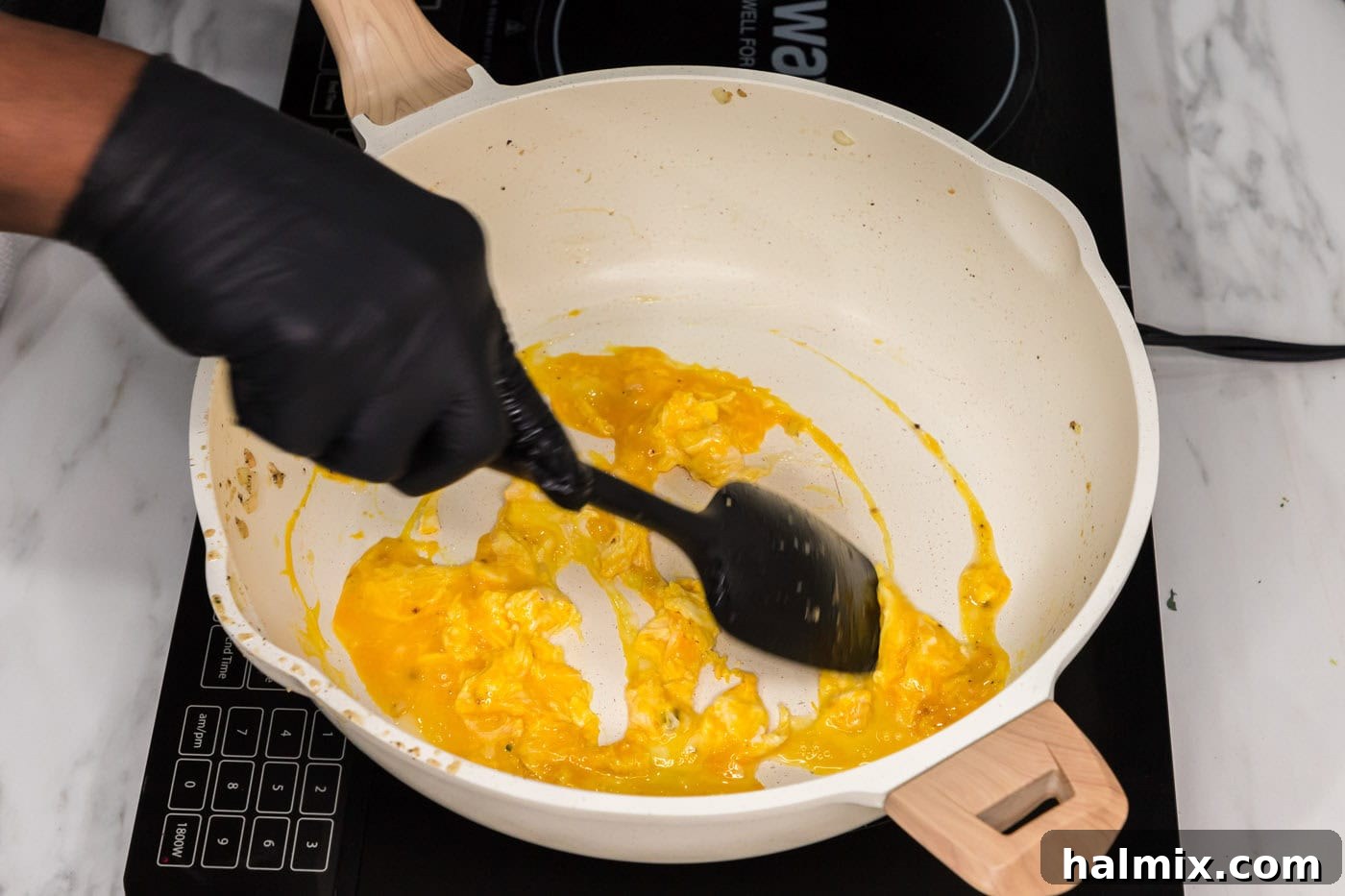
- Scramble the Eggs: Return the now-empty skillet to the stove (there’s no need to wash it). Melt the butter over medium-high heat. Pour in the beaten eggs and stir them regularly with a rubber spatula, breaking them into small curds, until they are fully scrambled and cooked through. Once cooked, remove the scrambled eggs to the same plate or pan as the vegetables.
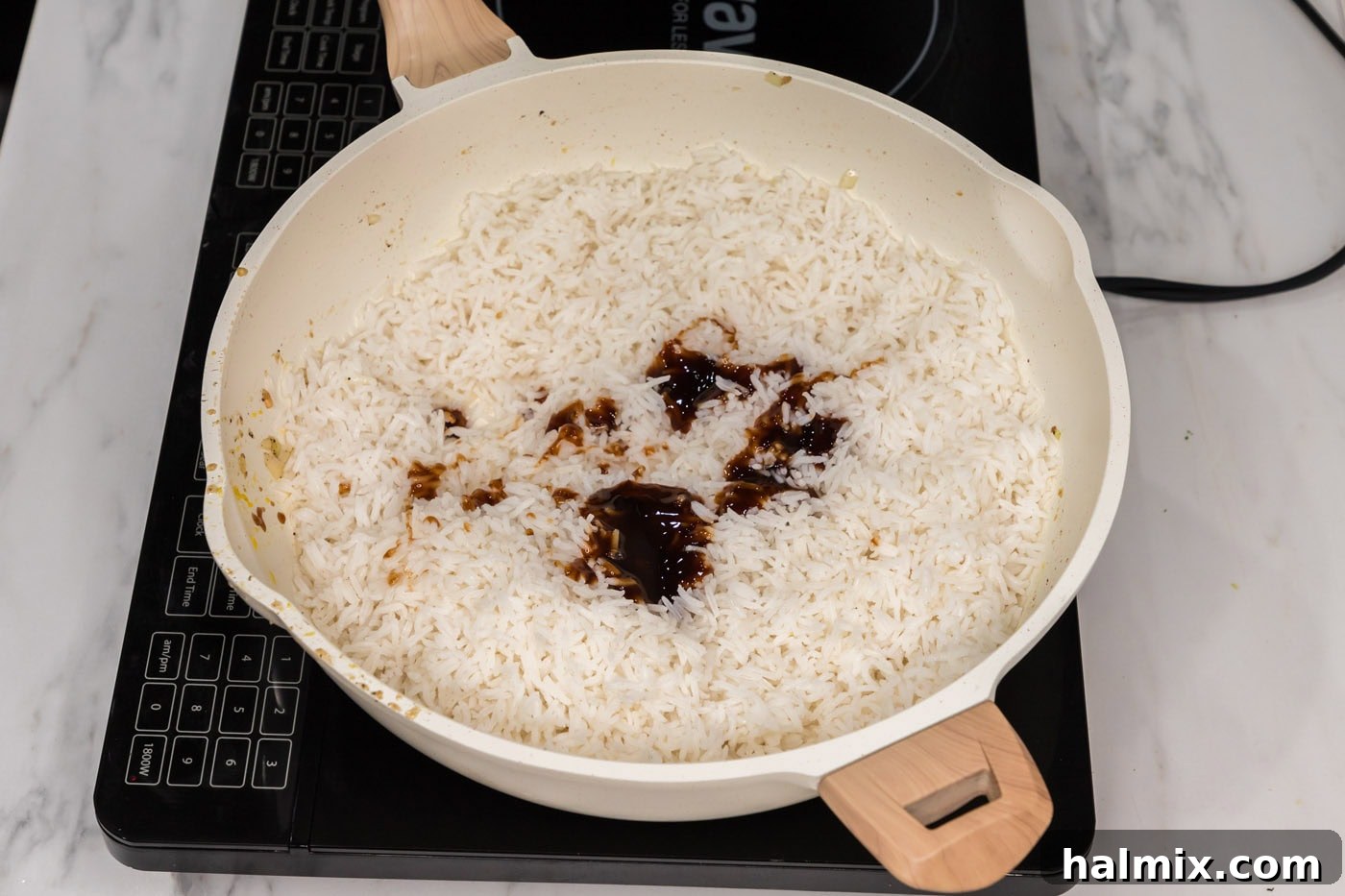
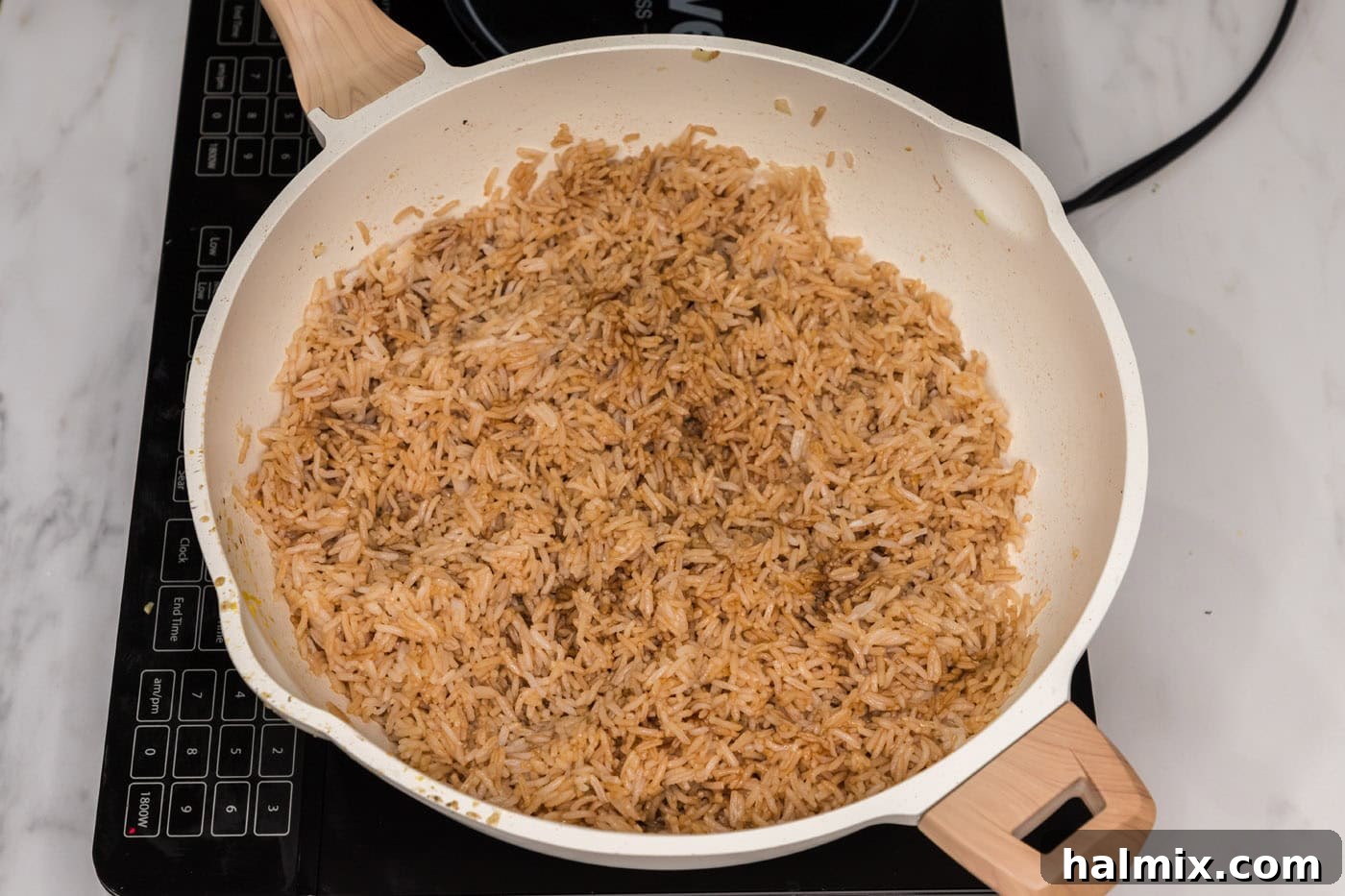
Eggs being scrambled to a perfect fluffy texture. Cooked eggs and vegetables, set aside. - Stir-Fry the Rice and Add Sauces: Return the empty skillet to the stove (still no need to wash it, as the residual flavors add depth). Add the cooked, chilled rice, oyster sauce, and soy sauce. Stir thoroughly to ensure the rice is evenly coated with the sauces. Work quickly and keep the heat up to prevent the rice from clumping.
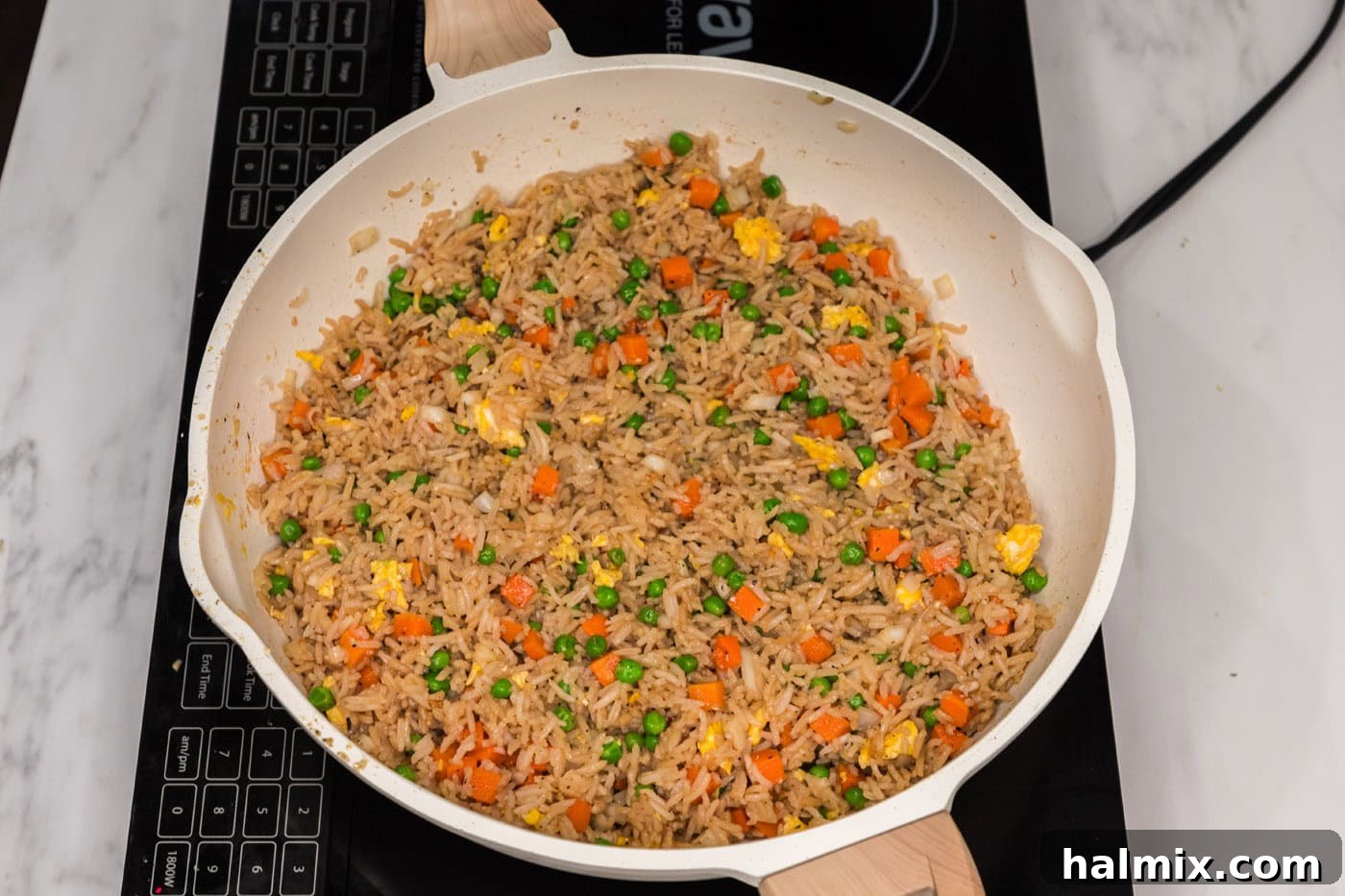
Sauces poured over the chilled rice. Rice absorbing the delicious flavors. - Combine All Ingredients: Add the sautéed vegetable mixture and the scrambled eggs back into the skillet with the rice. Stir everything together well, ensuring all components are evenly distributed and heated through.
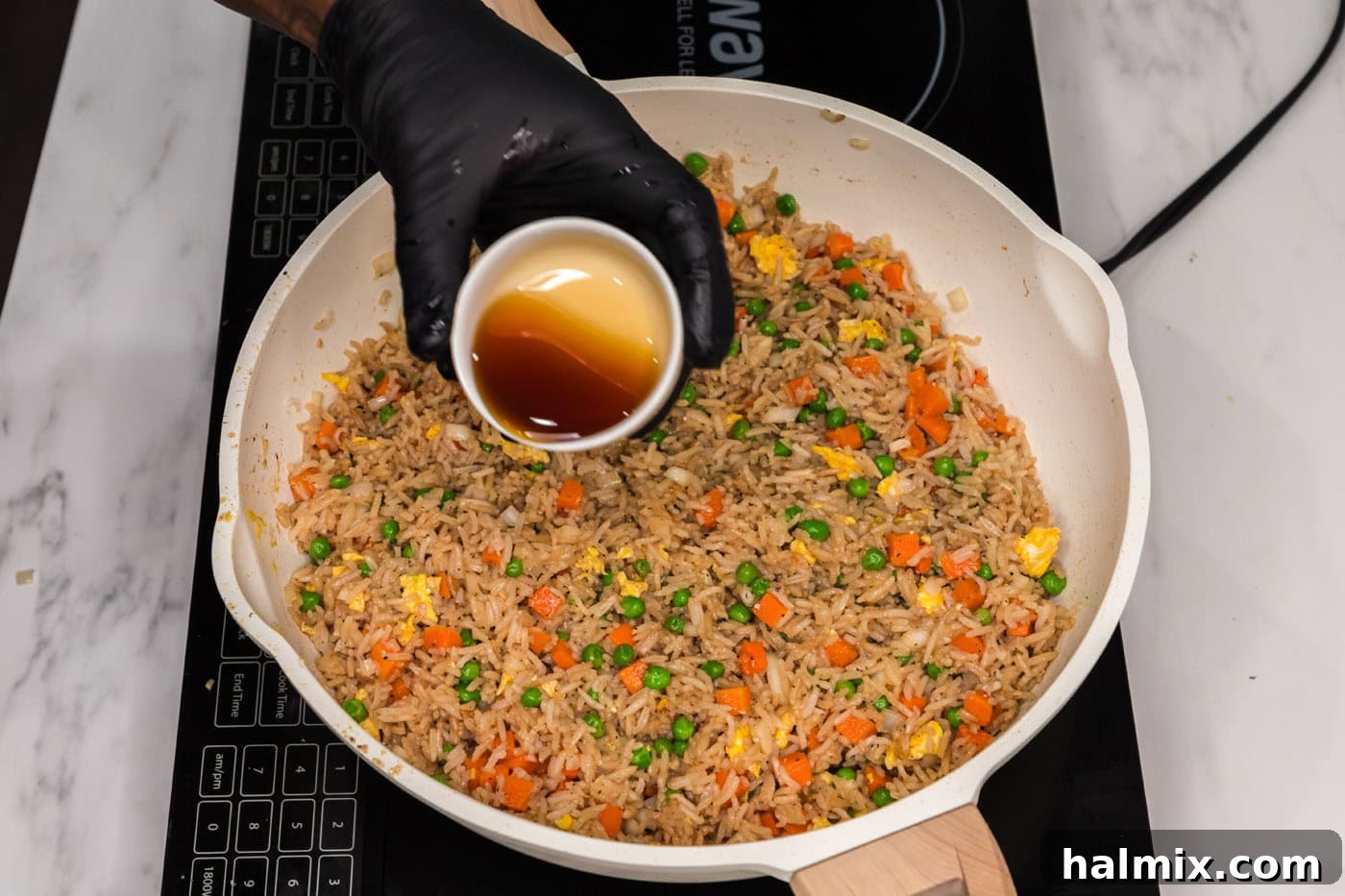
All ingredients united in the skillet. - Finish with Sesame Oil: Drizzle the toasted sesame oil over the fried rice and stir well one last time. This step adds a crucial aromatic finish that defines classic fried rice.
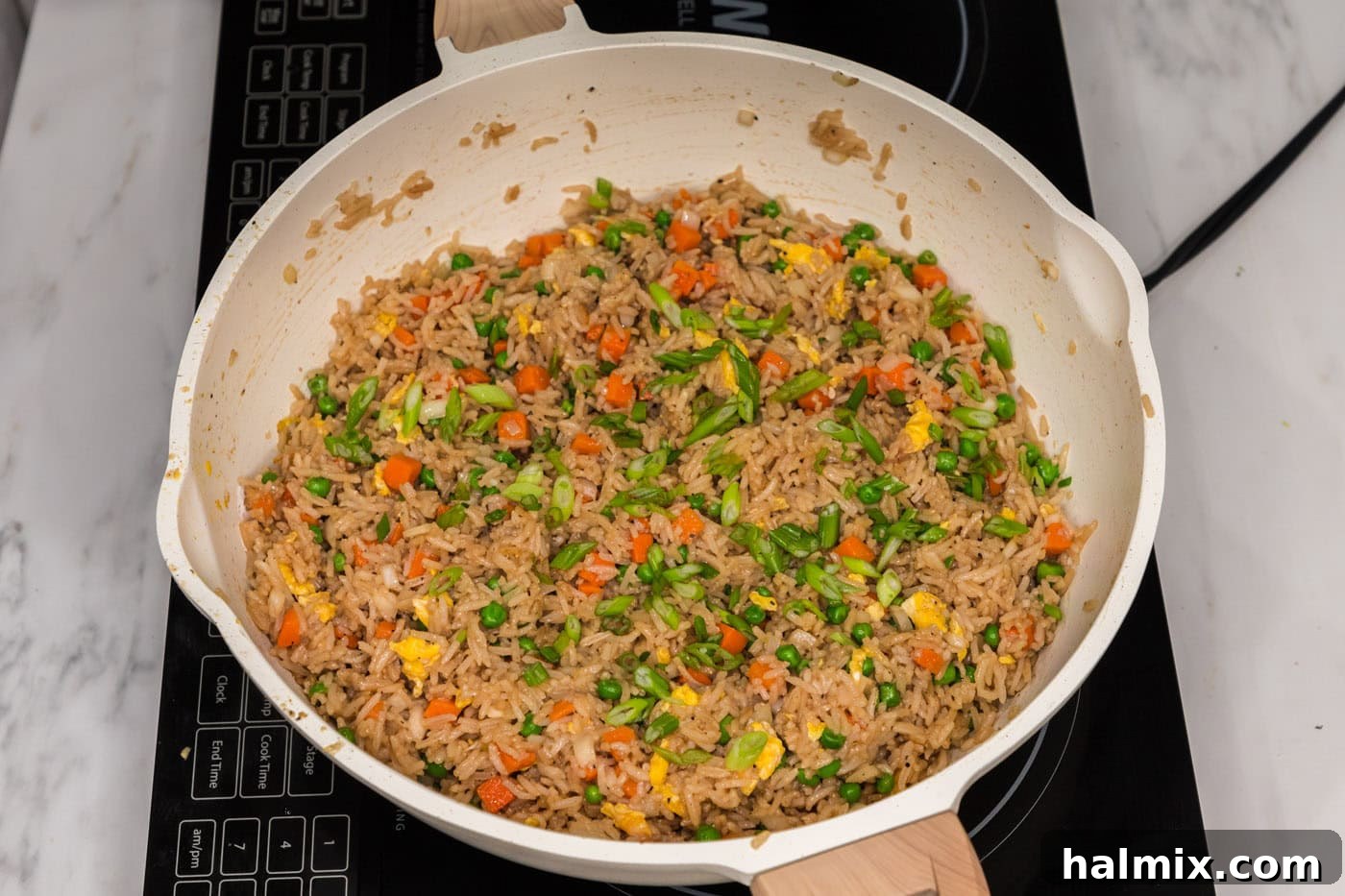
The final touch: aromatic sesame oil. - Garnish and Serve: If desired, garnish your homemade fried rice with freshly sliced green onions for an extra layer of flavor and a pop of color. Serve immediately and enjoy your delicious creation!
Fresh green onions add a vibrant finish.
Frequently Asked Questions & Expert Tips for Fried Rice Success
- Why is using chilled rice so important for fried rice?
- Using chilled, day-old rice is the absolute key to achieving non-clumpy, perfectly fried rice. When cooked rice is chilled, it undergoes a process called retrogradation, where the starch molecules recrystallize. This makes the individual grains firmer and less sticky, preventing them from clumping together and becoming mushy when they hit the hot pan. Fresh, warm rice still has too much moisture and soft starch, which will steam rather than fry, resulting in a soggy texture.
- Can I make fried rice with freshly cooked rice?
- While it’s highly recommended to use chilled leftover rice, you can use freshly cooked rice if you don’t have any. The trick is to cool it down as quickly and thoroughly as possible. Spread the hot rice thinly on a baking sheet or large plate, then place it in the refrigerator (or even the freezer for about 15-20 minutes) until it’s completely cold and firm to the touch. This rapid cooling mimics the effect of day-old rice.
- What’s the best type of pan to use for fried rice?
- A large wok is ideal for making fried rice because its sloped sides allow for easy tossing and even heat distribution. If you don’t have a wok, a large, heavy-bottomed skillet or a cast-iron pan will work perfectly. The key is to use a pan that can get very hot and has enough surface area to avoid overcrowding, which can lead to steaming instead of frying.
- How do I prevent my fried rice from becoming greasy?
- To avoid greasy fried rice, use the recommended amount of oil and ensure your pan is very hot before adding ingredients. High heat allows the rice and vegetables to fry quickly and develop a slightly crispy texture without absorbing excess oil. Also, avoid adding too much sauce at once; build up the flavor gradually.
- Can I make this recipe vegetarian or vegan?
- Absolutely! For a vegetarian version, simply omit any meat additions and ensure your oyster sauce is a mushroom-based vegetarian oyster sauce. For a vegan version, in addition to the vegetarian oyster sauce, replace the butter with a plant-based oil (like sesame oil or peanut oil) and omit the eggs. You can add extra vegetables or pan-fried tofu for more protein.
- How do you store leftovers, and how long do they last?
- Store any leftover fried rice in an airtight container in the refrigerator for up to 3 days. For best quality and safety, cool the rice quickly after cooking. When reheating, you can warm it in a skillet over medium heat, breaking up any clumps, or in the microwave. Adding a splash of water or a few drops of oil can help remoisten the rice and prevent it from drying out.
Serving Suggestions to Complement Your Fried Rice
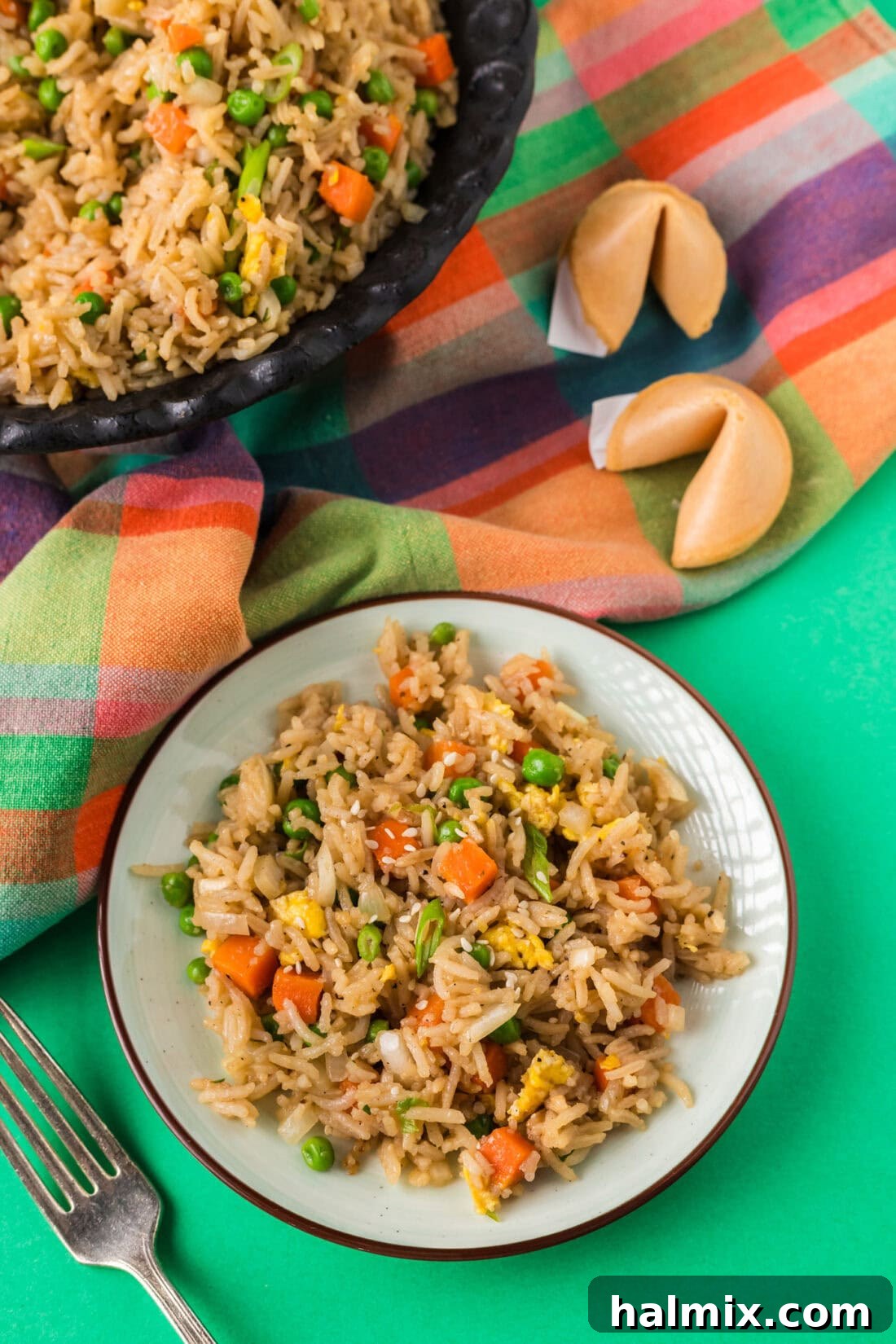
Fried rice is a complete meal on its own, but it also makes an excellent side dish for a wide array of Asian-inspired main courses. Pair it with savory beef and broccoli, sweet and sour pork, crispy chicken teriyaki, flavorful tofu stir-fries, or succulent garlic shrimp. To elevate your fried rice experience, consider drizzling with extra soy sauce, a touch of spicy sriracha for a kick, or even a dollop of sweet duck sauce. A final garnish of freshly sliced green onions not only adds a burst of color but also a fresh, mild onion flavor that perfectly complements the rich flavors of the dish.
Explore More Delicious Fried Rice Recipes
Once you’ve mastered this basic recipe, you might be inspired to try other variations:
- Shrimp Fried Rice: A seafood lover’s delight, packed with tender shrimp.
- Chicken Fried Rice: A perennial favorite, easy to make with leftover chicken.
- Pineapple Fried Rice: A unique and tropical twist, often served in a pineapple half.
- Korean Fried Rice: A spicy and flavorful version with distinct Korean ingredients.
I love sharing my kitchen adventures and recipes with all of you! To make sure you never miss a new dish, I offer a convenient newsletter delivered straight to your inbox every time a new recipe posts. Simply subscribe today and start receiving your free daily recipes, designed to inspire and delight your taste buds!
Classic Homemade Fried Rice
This recipe provides the perfect base for a delicious plate of fried rice. Featuring tender peas, carrots, and onions, along with the rich umami of soy and oyster sauces, it’s a flavorful, satisfying meal that comes together quickly.
IMPORTANT: For additional helpful information, frequently asked questions, and expert tips, please scroll up and read the full blog post!
Print Recipe |
Pin Recipe |
Rate This Recipe
Course: Dinner, Side Dish
Cuisine: American, Chinese
Servings: 4 servings (approx. 9 cups total)
Prep Time: 15 mins
Cook Time: 20 mins
Total Time: 35 mins
Calories: 621 kcal per serving
Author: Amanda Davis
Ingredients
Main Ingredients
- 1 Tablespoon olive oil
- 1 Tablespoon minced garlic
- ½ cup diced onions
- 1 cup frozen peas and carrots
- 2 teaspoons garlic salt
- 1 teaspoon black pepper
- 2 large eggs
- 2 Tablespoons butter
- 8 cups cooked white rice (chilled, preferably day-old)
- 3 Tablespoons oyster sauce
- ¼ cup soy sauce
- 1 ½ Tablespoons toasted sesame oil
Garnish
- Sliced green onions (optional)
Things You’ll Need
- Large skillet or wok
Before You Begin: Key Tips for Success
- The secret to excellent fried rice is using leftover, chilled rice. If you don’t have any, cook about 1 ½ cups of raw white rice to yield roughly 4 cups cooked. Then, spread it thinly on a tray and chill it thoroughly in the refrigerator for a few hours until firm before use. Warm, freshly cooked rice tends to clump and become mushy when fried.
- This recipe yields approximately 9 cups of fried rice, which is about 4-5 generous servings.
Instructions
- Heat 1 Tablespoon of olive oil in a large skillet or wok over medium-high heat until shimmering. Add 1 Tablespoon of minced garlic and sauté for one minute until fragrant.
- Add ½ cup diced onions, 1 cup frozen peas and carrots, 2 teaspoons garlic salt, and 1 teaspoon black pepper. Cook for 3-4 minutes, stirring occasionally, or until the vegetables are tender. Remove the cooked vegetables to a plate or pan and set aside.
- In a small bowl, beat the 2 large eggs with a fork.
- Return the empty skillet to the stove (no need to wash it). Melt 2 Tablespoons of butter over medium-high heat.
- Add the beaten eggs to the skillet and stir regularly with a rubber spatula until the eggs are scrambled and cooked through. Remove the scrambled eggs to the same plate or pan with the vegetables.
- Return the empty skillet to the stove. Add the 8 cups of cooked white rice, 3 Tablespoons of oyster sauce, and ¼ cup of soy sauce. Stir thoroughly to combine all ingredients and ensure the rice is evenly coated.
- Add the reserved vegetable mixture and the scrambled eggs back into the skillet with the rice. Stir well to integrate all components.
- Drizzle 1 ½ Tablespoons of toasted sesame oil over the fried rice and stir thoroughly to distribute its aromatic flavor.
- Garnish with sliced green onions, if desired, and serve your delicious homemade fried rice immediately.
Nutrition Information
Serving: 1 serving (2 cups) | Calories: 621 kcal | Carbohydrates: 98g | Protein: 15g | Fat: 18g | Saturated Fat: 6g | Polyunsaturated Fat: 4g | Monounsaturated Fat: 7g | Trans Fat: 0.2g | Cholesterol: 108mg | Sodium: 2218mg | Potassium: 322mg | Fiber: 3g | Sugar: 1g | Vitamin A: 3637IU | Vitamin C: 6mg | Calcium: 77mg | Iron: 2mg
Tried this Recipe? Pin it for Later!
Follow on Pinterest @AmandasCookin or tag #AmandasCookin!
The recipes on this blog are meticulously tested with a conventional gas oven and gas stovetop. Please note that cooking appliances, especially as they age, can sometimes cook and bake inconsistently. We recommend using an inexpensive oven thermometer to ensure your oven is truly heating to the proper temperature for optimal results. If you opt for a toaster oven or countertop oven, be aware that their heat distribution may differ from a full-sized conventional oven, potentially requiring adjustments to your cooking or baking times. For recipes prepared with a pressure cooker, air fryer, slow cooker, or other specialized appliances, a link to the specific models we use is provided within each respective recipe. When it comes to baking recipes where measurements are given by weight, please understand that using volume measurements (cups) instead may yield different results, and we cannot guarantee success with alternative measurement methods.