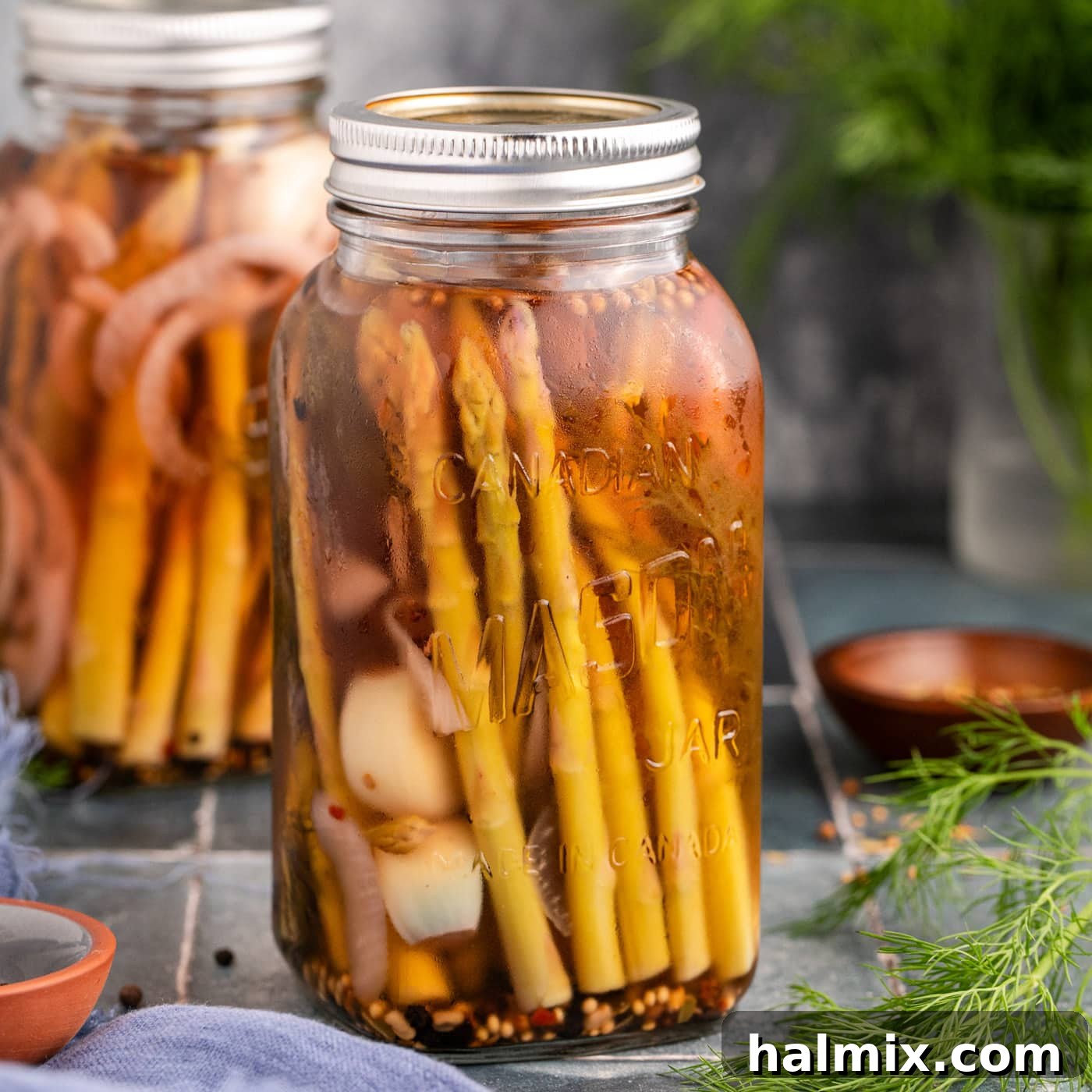
Delight your taste buds with this incredibly easy quick pickled asparagus recipe, a game-changer for anyone seeking vibrant flavor without the fuss of traditional canning. Ready in a mere 10 minutes of active preparation, these crisp, tangy spears are bursting with aromatic fresh dill, sharp red onion, pungent garlic, fragrant pickling spices, and a hint of peppery warmth. Forget lengthy preservation methods; this refrigerator pickling technique delivers irresistible results perfect for spontaneous snacking or elevating any meal.
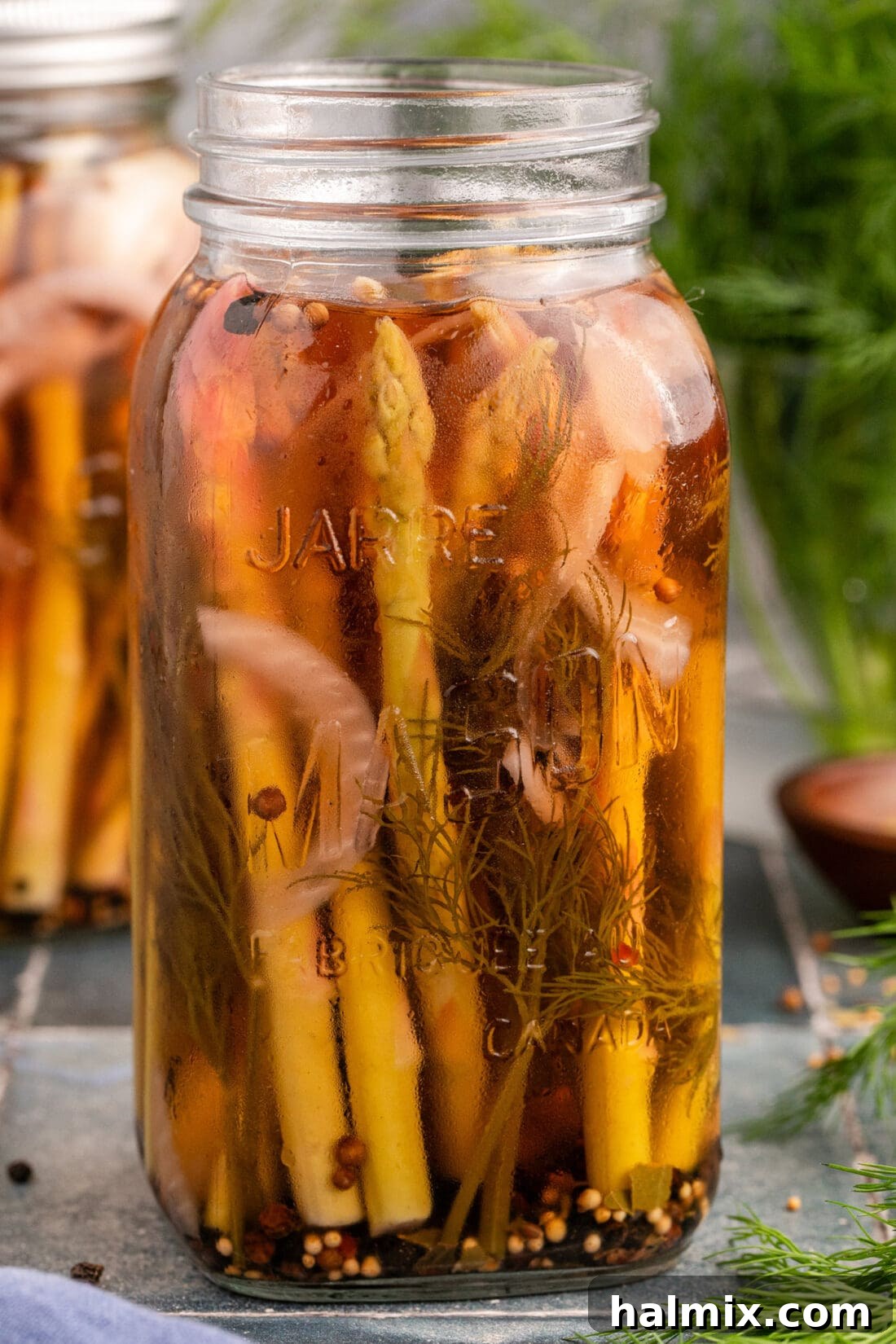
Why This Quick Pickled Asparagus Recipe is a Must-Try
In today’s fast-paced world, finding recipes that are both simple to execute and packed with flavor can feel like a culinary quest. This quick pickled asparagus recipe checks all the boxes, offering a solution that skips the intimidating canning process entirely. Making refrigerator pickled asparagus is not just easy; it’s a convenient and safe way to enjoy the bright, acidic crunch of pickled vegetables.
Unlike traditional canning, which requires specific equipment and precise sterilization to ensure long-term shelf stability, our quick pickling method relies on refrigeration to preserve the asparagus. This means less time in the kitchen, fewer specialized tools, and more time enjoying your delicious creations. The beauty of this approach is its speed – you can have a batch of flavorful pickled asparagus ready for the fridge in about 10 minutes. This method isn’t just for asparagus; it’s a versatile technique we’ve successfully applied to a variety of vegetables, from zesty red onions to earthy pickled beets, proving its adaptability and reliability. The most challenging part, truly, is exercising patience while the asparagus spears soak up all the incredible flavors of the brine in your refrigerator, transforming into a tangy, tender-crisp delight.
Beyond its simplicity, this recipe shines for its adaptability. Quick pickled asparagus makes an outstanding crunchy snack straight from the jar, a sophisticated addition to a charcuterie board, or a bright accent to salads and sandwiches. It’s a fantastic way to extend the life of fresh asparagus, allowing you to savor its seasonal goodness for longer. The combination of fresh herbs, aromatic spices, and a perfectly balanced vinegar brine creates a complex flavor profile that is both refreshing and deeply satisfying, proving that quick pickling doesn’t compromise on taste.
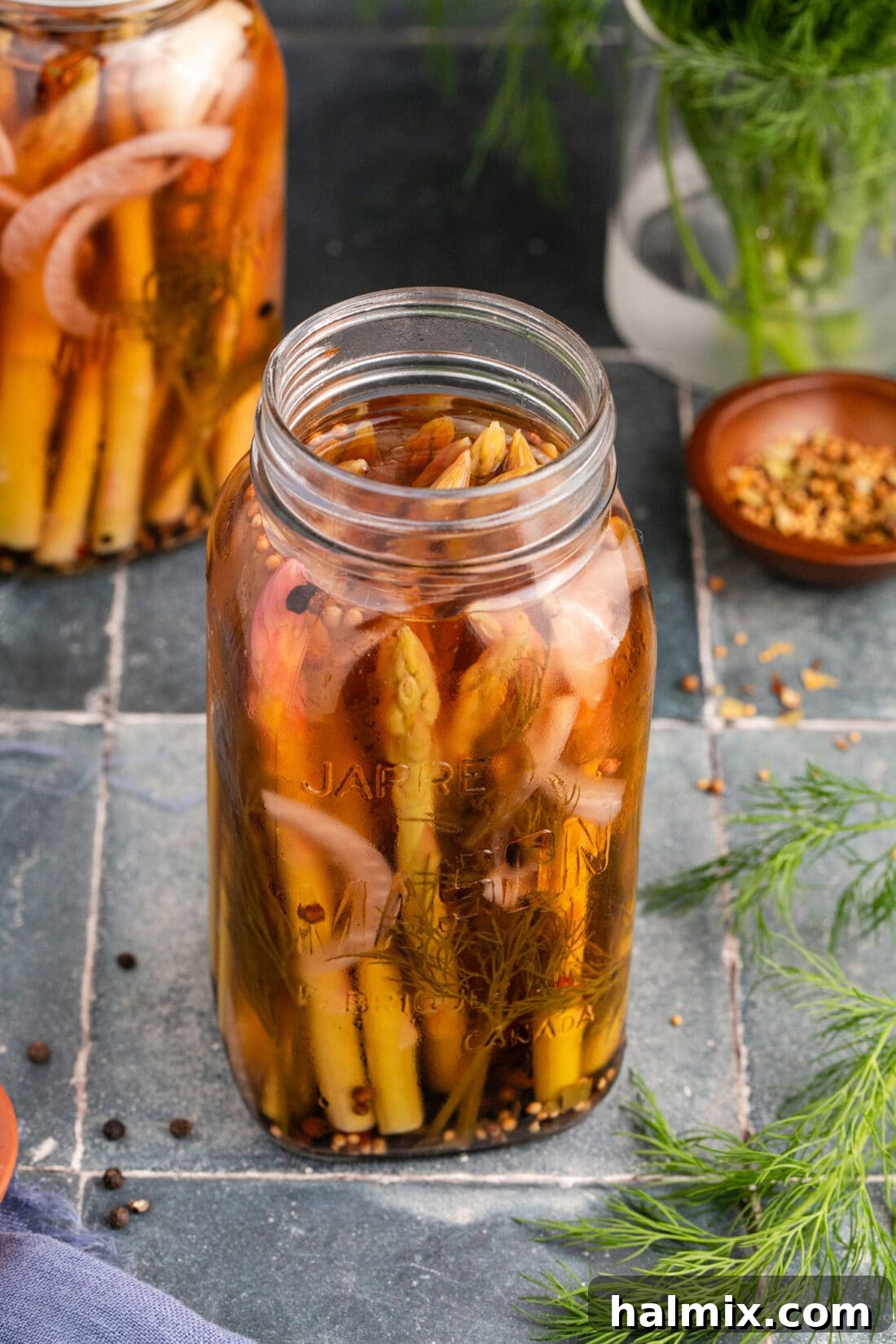
Essential Ingredients for Flavorful Pickled Asparagus
Crafting the perfect batch of quick pickled asparagus begins with selecting high-quality ingredients and understanding how each contributes to the final irresistible flavor. Below, we delve into the core components you’ll need, along with helpful insights and substitution suggestions to customize your pickling adventure.
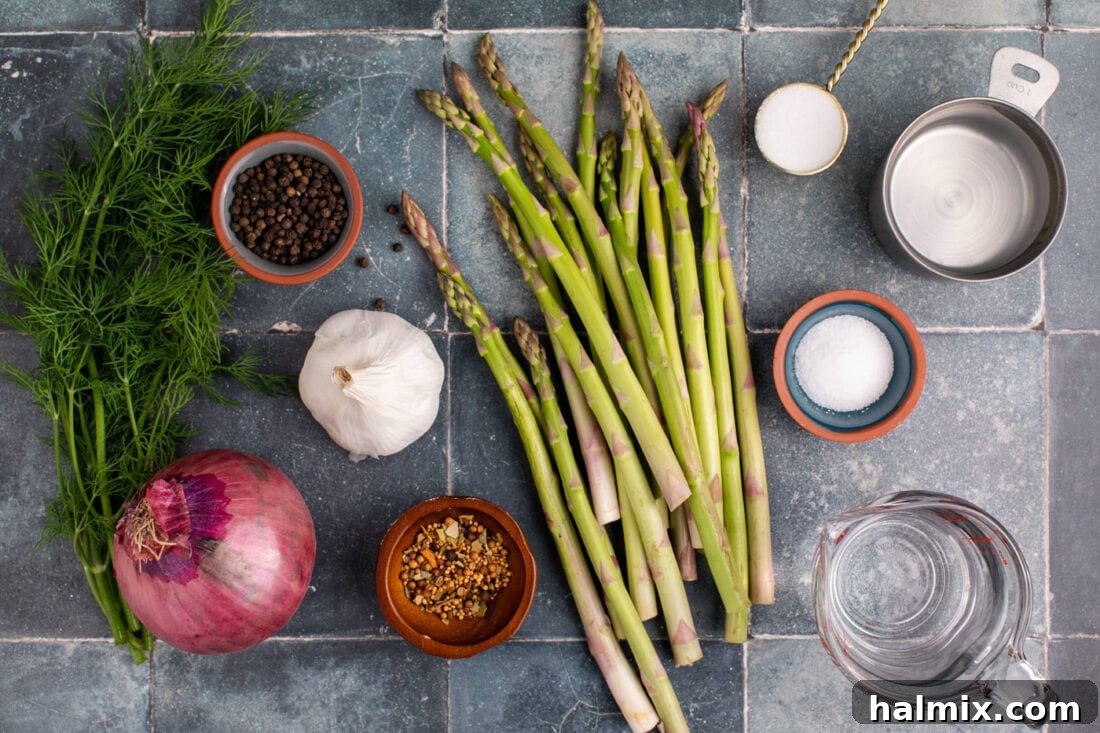
Ingredient Spotlight and Expert Substitutions
- Asparagus: For this recipe, you’ll need two bundles of medium-thickness asparagus, totaling approximately 650 grams (about 1.5 pounds). This amount perfectly fills two 16-ounce mason jars, yielding a generous batch of pickled goodness. When selecting asparagus, look for firm, bright green spears with tightly closed tips, indicating freshness. Before pickling, trim the tough, woody ends. A simple trick is to gently bend a spear until it naturally snaps, showing you where the tender part begins. Then, use this as a guide to cut the remaining spears to fit neatly into your mason jars.
- Vinegar: Our recipe calls for distilled white vinegar, which provides a clean, sharp tang that allows the other flavors to truly shine. If you prefer a slightly milder, sweeter undertone, you can substitute with apple cider vinegar. This will impart a subtle fruity note to the brine, adding another layer of complexity to your pickled asparagus. Ensure your vinegar has at least 5% acidity for proper pickling.
- Fresh Dill: The vibrant, herbaceous flavor of fresh dill is quintessential to classic pickled vegetables. It provides a unique aroma and taste that is both refreshing and comforting. While dried dill can be used in a pinch, fresh dill sprigs are highly recommended for the best flavor and visual appeal in your jars.
- Red Onion: We’ve experimented with both red and white onions in this recipe, and both yield excellent results. Red onion adds a beautiful pop of color and a slightly sweeter, milder onion flavor. Be aware that the red onion may gently tint your brine with a delicate pink hue after a few days in the refrigerator, but this is completely natural and will not affect the quality or taste of your pickled asparagus. Finely sliced red onion integrates beautifully into the jars, infusing the brine with its sweet-savory essence.
- Garlic: Whole garlic cloves are a must for adding a robust, aromatic depth to the brine. We recommend using fresh garlic and peeling the cloves before adding them to the jars. They will soften slightly in the hot brine and release their characteristic flavor, complementing the other spices beautifully.
- Peppercorns and Pickling Spices: This combination is the secret to a well-rounded and complex pickle flavor. Whole black peppercorns provide a subtle, earthy heat, while a good quality pickling spice blend (often containing mustard seeds, coriander, allspice, bay leaves, and sometimes chili flakes) layers in traditional pickling aromas. These spices infuse the brine with warmth and complexity, making each bite more interesting.
- Granulated Sugar: Sugar plays a crucial role in balancing the sharpness of the vinegar, preventing the pickles from being overly acidic. It doesn’t make the pickles sweet, but rather harmonizes the flavors, creating a more palatable and enjoyable experience. Adjust the amount slightly to your personal preference, keeping in mind its role in flavor balance.
- Sea Salt: High-quality sea salt is essential for proper pickling. Avoid iodized table salt, as the anti-caking agents and iodine can sometimes make the brine cloudy and alter the flavor. Sea salt contributes to the preservation process and, of course, enhances the overall taste.
- Water: Filtered water is recommended for creating the brine. It dilutes the vinegar to the correct acidity level and helps dissolve the sugar and salt.
- Optional Kick: For those who love a bit of heat, a pinch or two of red pepper flakes added to each jar will transform your quick pickled asparagus into a spicy sensation! This is a simple addition that can dramatically alter the flavor profile to suit your adventurous palate.
Step-by-Step Guide: How to Make Quick Pickled Asparagus
These detailed step-by-step photos and instructions are provided to help you visualize each stage of making this incredibly simple recipe. You’ll find the complete printable version of this recipe, including exact measurements and instructions, further down on this page.
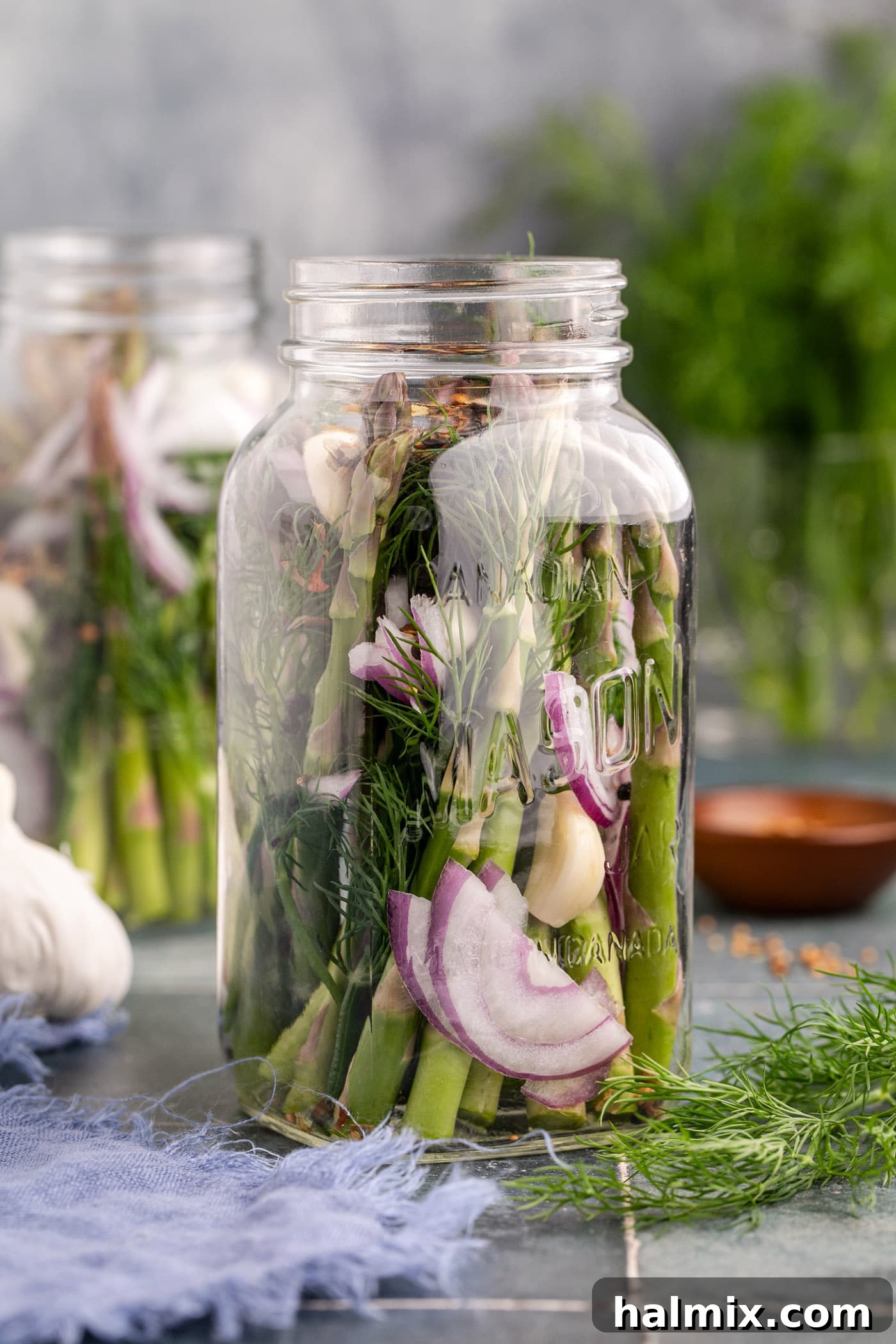
- Prepare the Asparagus: Begin by thoroughly washing your asparagus spears under cold running water. Next, trim the asparagus to ensure they fit vertically into two standard 16-ounce mason jars. A good rule of thumb is to snap off the woody ends (they’ll naturally break at the tender point), then cut the remaining spears to a uniform length. Divide the trimmed asparagus equally between the two clean mason jars.
- Layer in the Aromatics: Into each of the two jars, evenly distribute the fresh dill sprigs, thinly sliced red onion, whole garlic cloves, peppercorns, and pickling spices. Layering these aromatics first ensures they are well distributed and can infuse the asparagus and brine with maximum flavor. Don’t be shy; pack them in snugly around the asparagus.

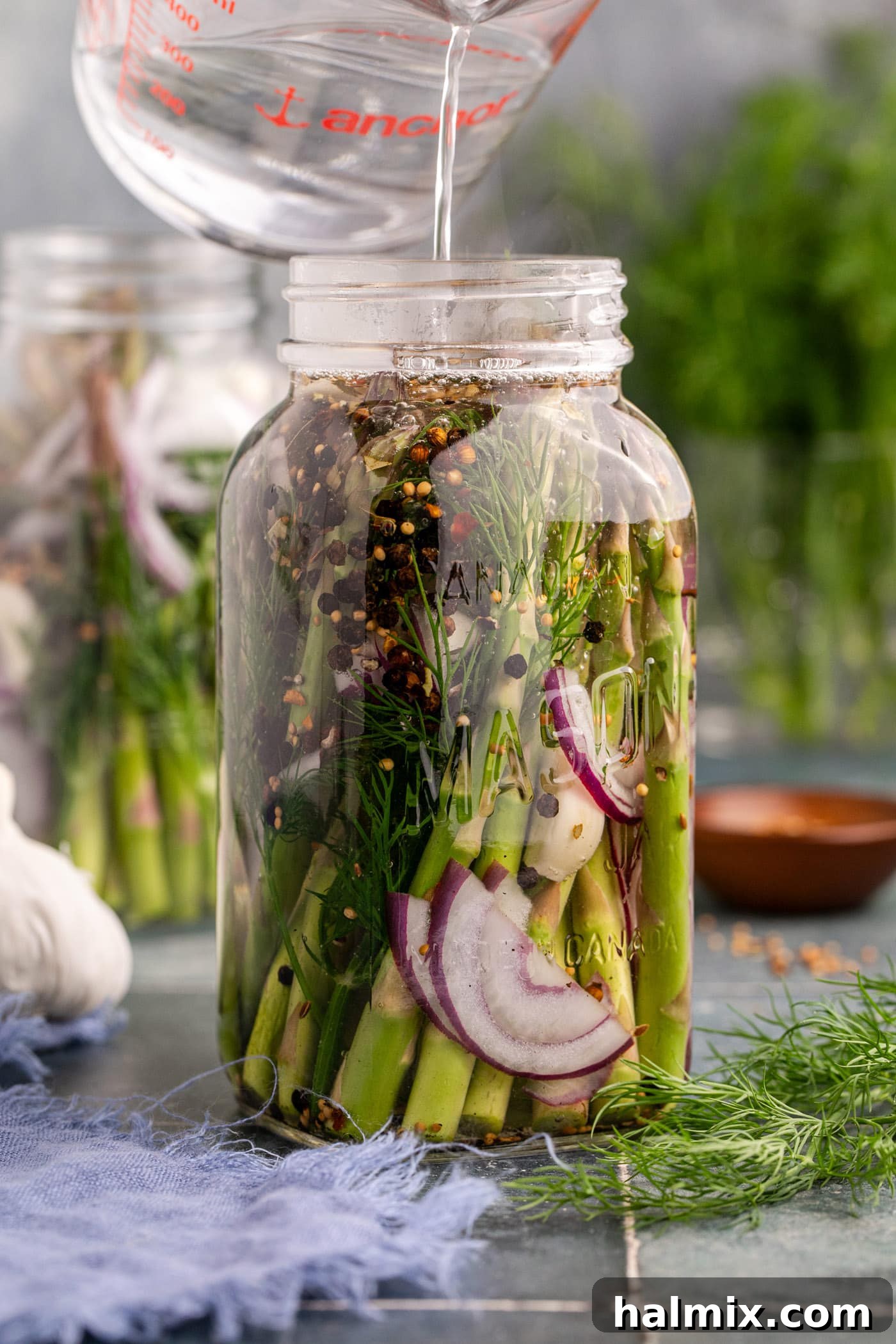
- Craft the Brine: In a small saucepan, combine the distilled white vinegar, water, granulated sugar, and sea salt. Place the saucepan over high heat and bring the mixture to a rolling boil. Stir continuously until both the sugar and salt are completely dissolved into the liquid. This ensures a perfectly seasoned and balanced brine. Once dissolved, carefully remove the saucepan from the heat.
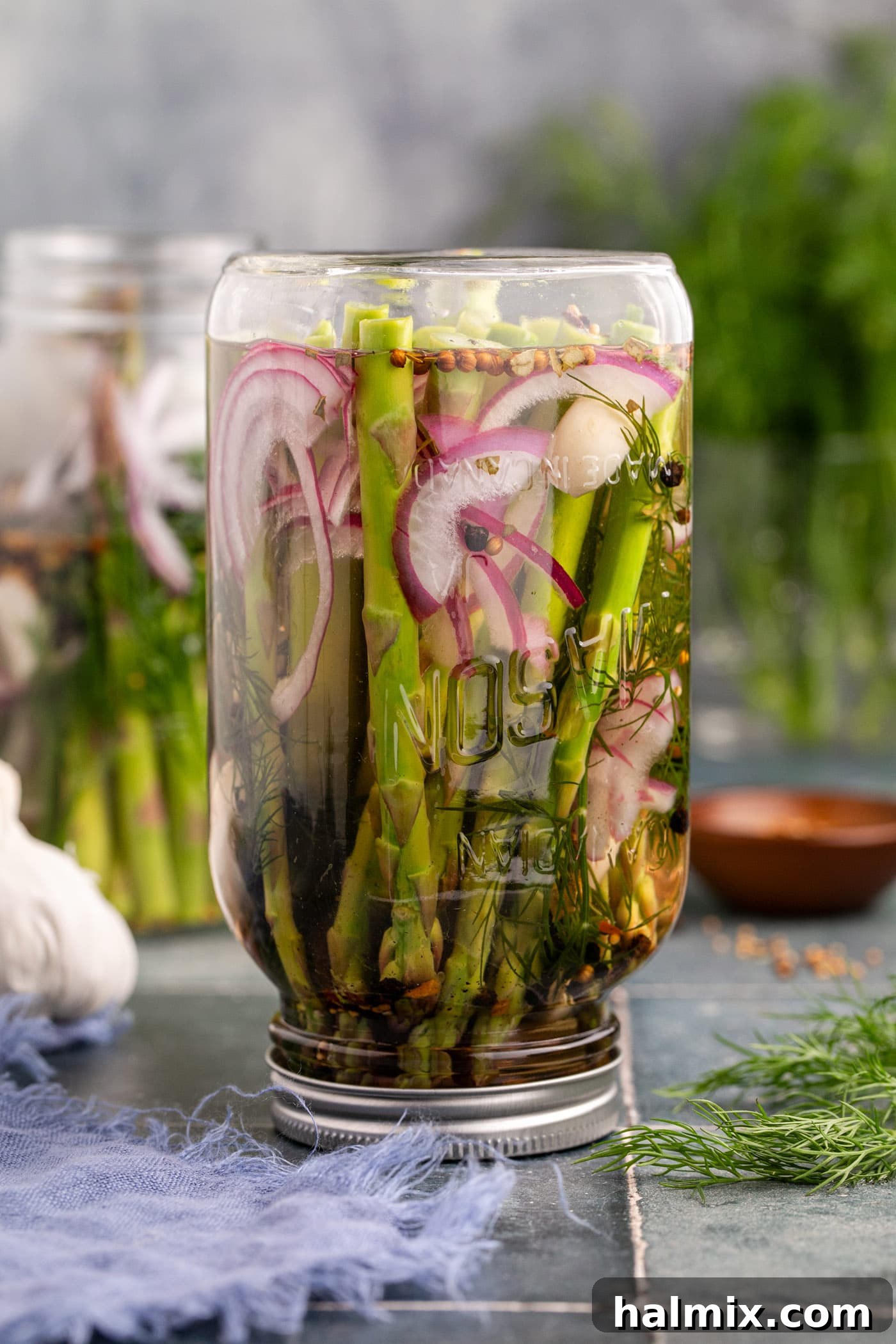
- Pour and Seal: Carefully pour the hot brine evenly over the asparagus and aromatics in both mason jars, ensuring that all the asparagus spears are fully submerged. It’s crucial for the spears to be completely covered by the brine to ensure proper pickling and safety. If, for any reason, your brine doesn’t quite reach the top, simply boil a small amount of extra water and top off the jars until the asparagus is fully immersed. Immediately place the lids securely onto the jars to create a seal as they cool. For best results, gently flip the sealed jars upside-down for a few minutes while they cool. This helps distribute the hot brine and assists in creating a vacuum seal. Once the jars have cooled down to room temperature, place them into the refrigerator overnight. For the most profound and delicious flavor development, allow them to sit and pickle for 3-5 days before enjoying.
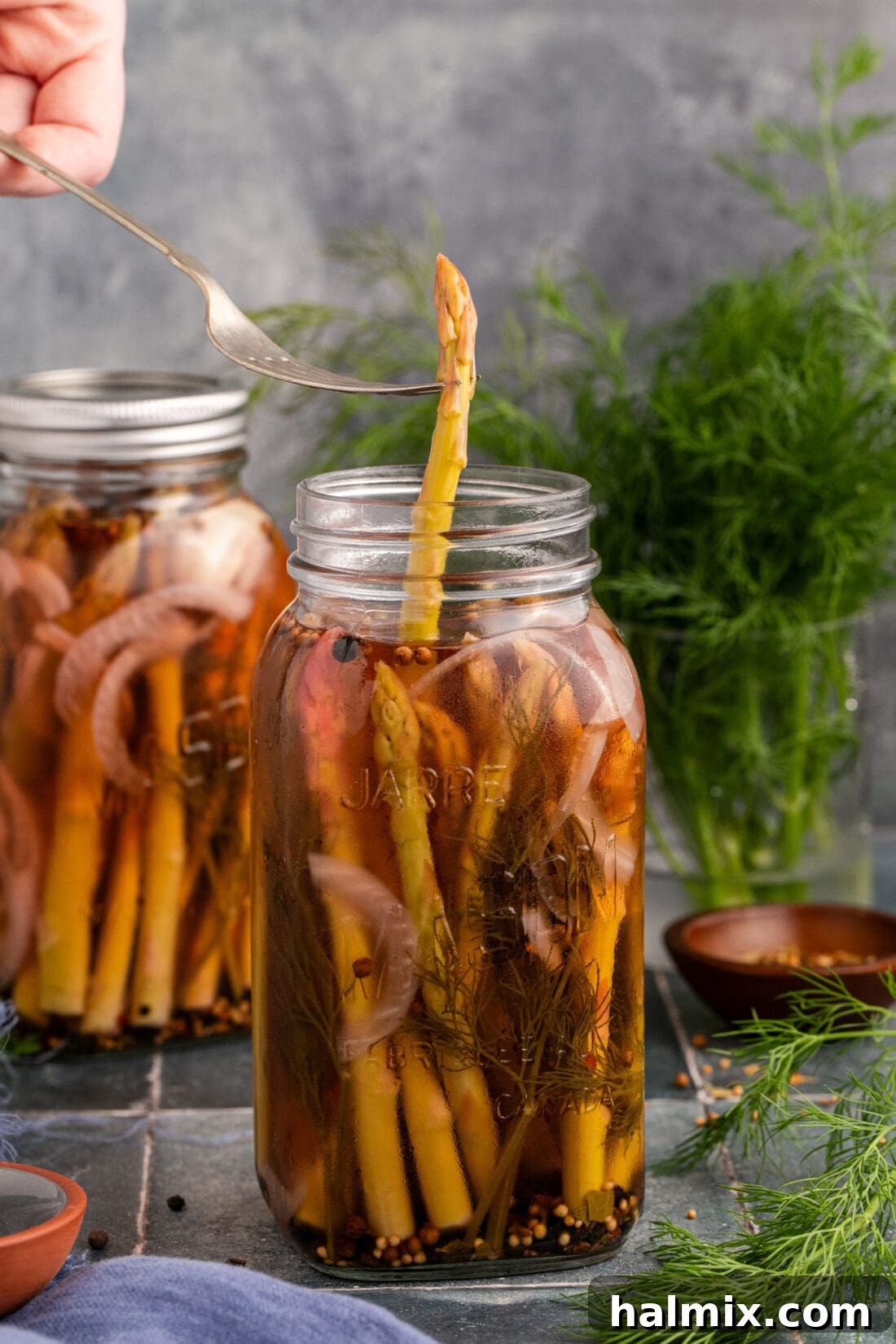
- Enjoy and Store: Once opened, your quick pickled asparagus should be consumed within 2 weeks for optimal freshness and flavor. Always store them in an airtight jar in the refrigerator.
Frequently Asked Questions & Expert Tips for Perfect Pickled Asparagus
Since this is a refrigerator pickled asparagus recipe and not a traditional canning recipe, proper storage in the refrigerator is essential. Store your quick pickled asparagus in an airtight jar, always kept in the fridge, where it will remain fresh and delicious for up to 2 weeks after opening. Unopened, they can last longer, but peak flavor is within the first couple of weeks.
No, you do not need to blanch the asparagus for this particular recipe, making it even quicker! While blanching is often used in traditional pickling to help vegetables absorb the brine and maintain their vibrant color, our method bypasses this step. We pour a hot vinegar brine directly over the raw asparagus spears in the jars. This hot brine effectively tenderizes the asparagus and helps open its pores, allowing it to soak up the flavorful pickling liquid on its own. It’s a clever shortcut that saves time without sacrificing texture or taste.
It’s crucial that all asparagus spears are submerged in the brine for proper pickling and food safety. If you find your brine level is too low after pouring, simply boil a small amount of extra water and carefully top off each jar until the asparagus is completely covered. This ensures consistent pickling and prevents any exposed asparagus from spoiling.
Yes, while distilled white vinegar provides a classic, crisp flavor, you can certainly experiment. Apple cider vinegar will lend a slightly sweeter, fruitier note. Rice vinegar can offer a milder, slightly less acidic profile. Just ensure your chosen vinegar has at least 5% acidity for safe and effective pickling.
While technically edible after an overnight soak, the flavors truly deepen and meld after 3-5 days in the refrigerator. Patience is rewarded with a more complex, well-balanced pickled flavor. Consider making a batch several days before you plan to serve them for optimal results.
Unleash the Flavor: Creative Serving Suggestions for Pickled Asparagus
Once you’ve mastered the art of making quick pickled asparagus, the real fun begins: finding creative ways to enjoy its vibrant, tangy crunch! These spears are incredibly versatile and can elevate a wide array of dishes. Here are some fantastic serving suggestions to inspire you:
- Simply Snack It: The most straightforward (and often most satisfying) way to enjoy pickled asparagus is straight from the jar. It makes a wonderfully refreshing, low-calorie, and satisfyingly crunchy snack, perfect for warding off those midday cravings.
- Charcuterie Board Superstar: Elevate any charcuterie or cheese board with the addition of quick pickled asparagus. Its bright acidity cuts through the richness of cheeses and cured meats, providing a delightful textural and flavor contrast. They are a natural fit for Bloody Mary Charcuterie Boards, adding both color and zest.
- Cocktail Garnish: Move beyond the traditional olive! Pickled asparagus makes an excellent and sophisticated garnish for cocktails, especially a classic Bloody Mary or a dirty martini. Their savory, briny flavor perfectly complements the drink.
- Salad Enhancer: Chop them up and toss them into your favorite green salads, potato salads, pasta salads, or grain bowls. The tangy bite adds a fantastic zing and textural interest that transforms an ordinary salad into something extraordinary.
- Sandwiches and Wraps: Add a few spears to your next sandwich, sub, or wrap. They bring a burst of flavor and a lovely crunch that can balance richer fillings.
- Side Dish with a Kick: Serve them alongside grilled meats, roasted chicken, or fish for a bright and zesty accompaniment. They provide a refreshing contrast to heartier main courses.
- Egg Dishes: Finely dice pickled asparagus and fold it into omelets, scrambled eggs, or frittatas for a tangy twist. They also make a delicious topping for deviled eggs.
- Grain Bowls and Buddha Bowls: Introduce a burst of briny flavor to your healthy grain or Buddha bowls. The sharp taste complements roasted vegetables, proteins, and grains beautifully.
- DIY Dressings and Marinades: Don’t discard the leftover brine! It’s packed with flavor and can be used as a base for salad dressings, a marinade for chicken or fish, or even a flavorful liquid for cooking rice.
There truly is no wrong way to eat quick pickled asparagus. Its versatility means it can become a staple in your refrigerator, ready to add a gourmet touch to countless meals and snacks.
Expand Your Palate: More Pickled Delights to Explore
If you’ve fallen in love with the ease and flavor of quick pickling, you’re in for a treat! The world of pickled vegetables (and more!) is vast and incredibly rewarding. Once you’ve mastered pickled asparagus, consider exploring these other fantastic pickling recipes that bring a similar vibrant tang to your table:
- Pickled Eggs: A classic snack, perfect for protein-packed bites.
- Pickled Beets: Earthy and sweet, these vibrant pickles add color and flavor to any plate.
- Pickled Onions: A staple for tacos, salads, and sandwiches, offering a delightful pop of flavor.
- Homemade Claussen Pickles: Recreate the crisp, garlicky flavor of your favorite deli pickles right at home.
These recipes offer different textures and flavors but follow similar simple principles, making them accessible for home cooks looking to expand their culinary repertoire.
I love to bake and cook and share my kitchen experience with all of you! Remembering to come back each day can be tough, that’s why I offer a convenient newsletter every time a new recipe posts. Simply subscribe and start receiving your free daily recipes!
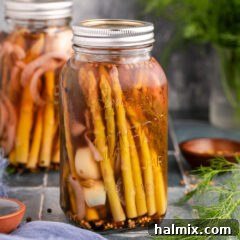
Quick Pickled Asparagus
IMPORTANT – There are often Frequently Asked Questions within the blog post that you may find helpful. Simply scroll back up to read them!
Print It
Pin It
Rate It
Course:
Snack
Cuisine:
American
10
serving (makes two 16 ounce jars)
8 hours
10 minutes
16
Amanda Davis
Ingredients
- 2 bundles medium asparagus (650 grams total or close to 1.5 pounds)
- 12 sprigs fresh dill
- 1 small red onion (finely sliced)
- 8 cloves garlic
- 2 Tablespoons peppercorns
- 2 teaspoons pickling spices
- 2 ¾ cup distilled white vinegar
- 2 ¾ cup water
- 1 Tablespoon granulated sugar
- 2 teaspoons sea salt
Things You’ll Need
-
2 16 ounce mason jars
-
Saucepan
Before You Begin
- We used distilled white vinegar. You can substitute with apple cider vinegar if desired; this will add a little more sweetness to the brine.
- You will need two bunches of asparagus, around 325 grams each, for this recipe, which will yield two 16-ounce jars of pickled asparagus. Trim the asparagus to fit your mason jars.
- We have tested this recipe with both red onion and white onion; both work well. The red onion may tint the color of your brine after sitting for a few days in the refrigerator, but it will not affect the quality or taste.
- The sugar called for helps counteract the sharpness of the vinegar, balancing the flavors.
- For spicy pickled asparagus, add some red pepper flakes to the jars!
Instructions
-
Wash and cut the asparagus to fit into two 16-ounce mason jars and divide equally, vertically.
-
Over the two jars, divide the sprigs of dill, red onion, garlic, peppercorns, and pickling spices.
-
In a small saucepan, add the vinegar, water, sugar, and sea salt and bring to a boil over high heat. Stir until the sugar and salt are dissolved, then pour evenly into each jar.
TIP – You should be able to fully cover the asparagus with the brine. If you boiled it down too far or need more liquid, boil a bit more water and fill the jars to cover.
-
Carefully place lids on the jars to seal, and flip them upside-down for a few minutes to cool and help create a vacuum seal. Once cool to room temperature, place the jars in the fridge overnight (for best flavor, allow them to sit for 3-5 days).
Expert Tips & FAQs
- The nutrition facts provided are approximate and will vary depending on the exact quantity and type of products you use.
- Quick pickled asparagus should always be stored in an airtight jar and kept refrigerated for up to 2 weeks after opening for optimal freshness.
- For an extra pop of flavor, try adding a few sprigs of fresh rosemary or thyme to your jars along with the dill.
- Ensure your asparagus spears are tightly packed but not crushed in the jars to maximize contact with the brine.
Nutrition Information
Serving:
1
serving (3 spears)
|
Calories:
16
cal
|
Carbohydrates:
3
g
|
Protein:
0.4
g
|
Fat:
0.1
g
|
Saturated Fat:
0.04
g
|
Polyunsaturated Fat:
0.03
g
|
Monounsaturated Fat:
0.02
g
|
Sodium:
237
mg
|
Potassium:
52
mg
|
Fiber:
1
g
|
Sugar:
1
g
|
Vitamin A:
32
IU
|
Vitamin C:
1
mg
|
Calcium:
18
mg
|
Iron:
0.3
mg
Tried this Recipe? Pin it for Later!
Follow on Pinterest @AmandasCookin or tag #AmandasCookin!
The recipes on this blog are tested with a conventional gas oven and gas stovetop. It’s important to note that some ovens, especially as they age, can cook and bake inconsistently. Using an inexpensive oven thermometer can assure you that your oven is truly heating to the proper temperature. If you use a toaster oven or countertop oven, please keep in mind that they may not distribute heat the same as a conventional full sized oven and you may need to adjust your cooking/baking times. In the case of recipes made with a pressure cooker, air fryer, slow cooker, or other appliance, a link to the appliances we use is listed within each respective recipe. For baking recipes where measurements are given by weight, please note that results may not be the same if cups are used instead, and we can’t guarantee success with that method.