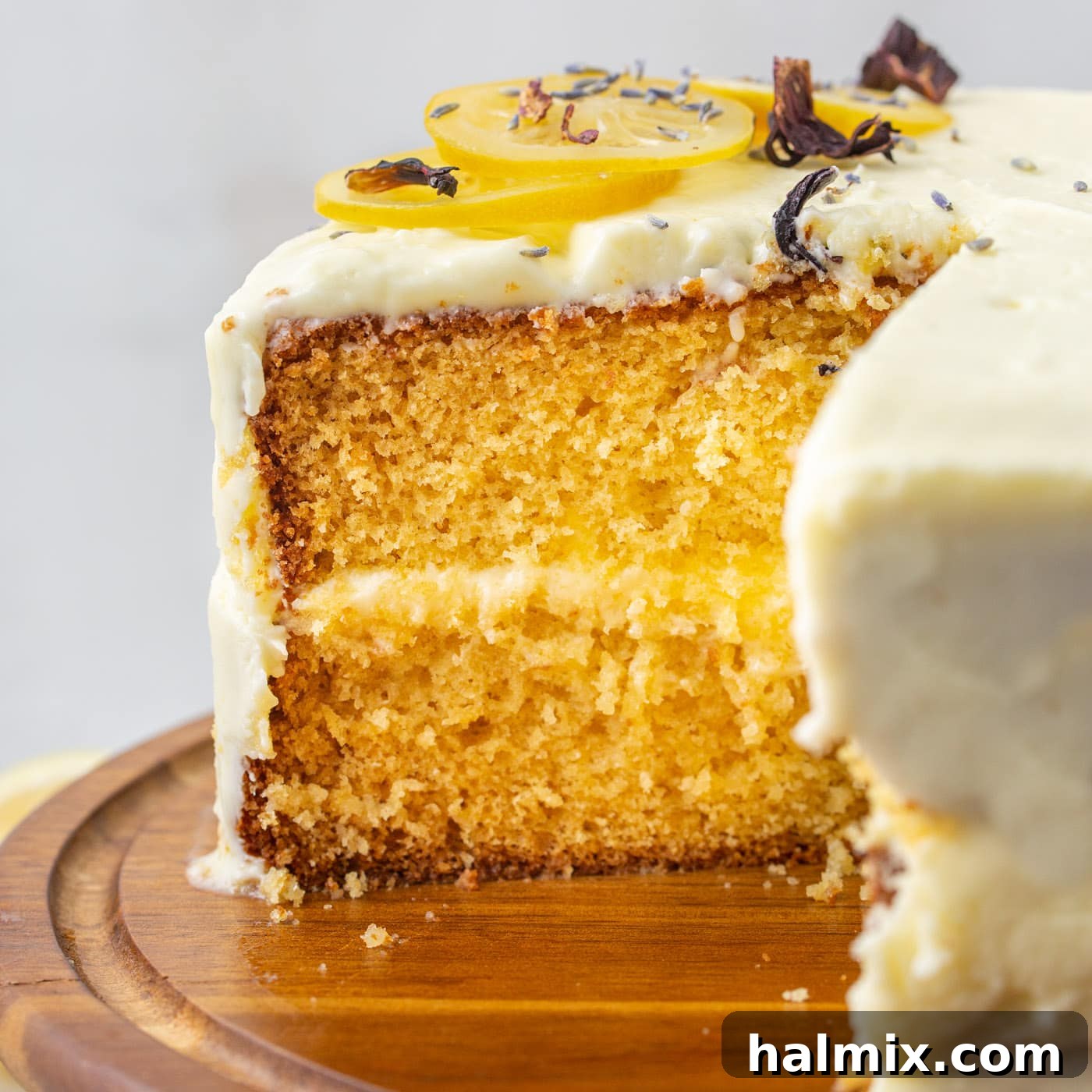
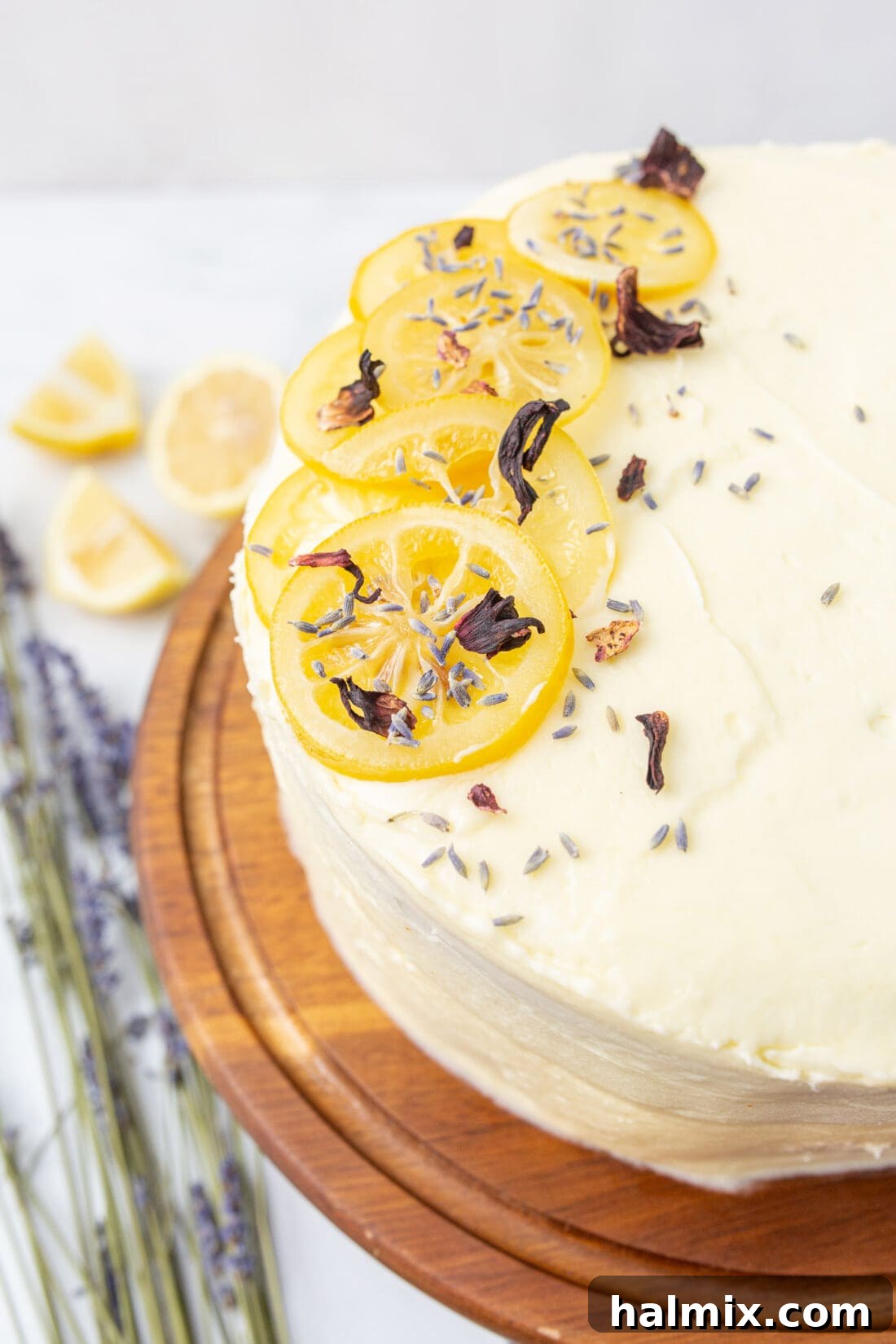
Welcome to the ultimate guide for creating a show-stopping dessert that will captivate your guests and tantalize their taste buds: the perfect tiered lemon cake. This exquisite creation is more than just a cake; it’s a refreshing culinary experience, crowned with a rich, yet airy, lemon buttercream frosting and adorned with delicate candied lemon slices. It stands as a testament to the bright and invigorating flavors of citrus, making it an ideal centerpiece for spring celebrations, joyous summer gatherings, or any occasion that calls for a touch of elegance and a burst of zesty delight. Prepare to impress with every slice of this gorgeously constructed and lusciously flavored cake.
Why This Lemon Cake Recipe Is a Must-Try
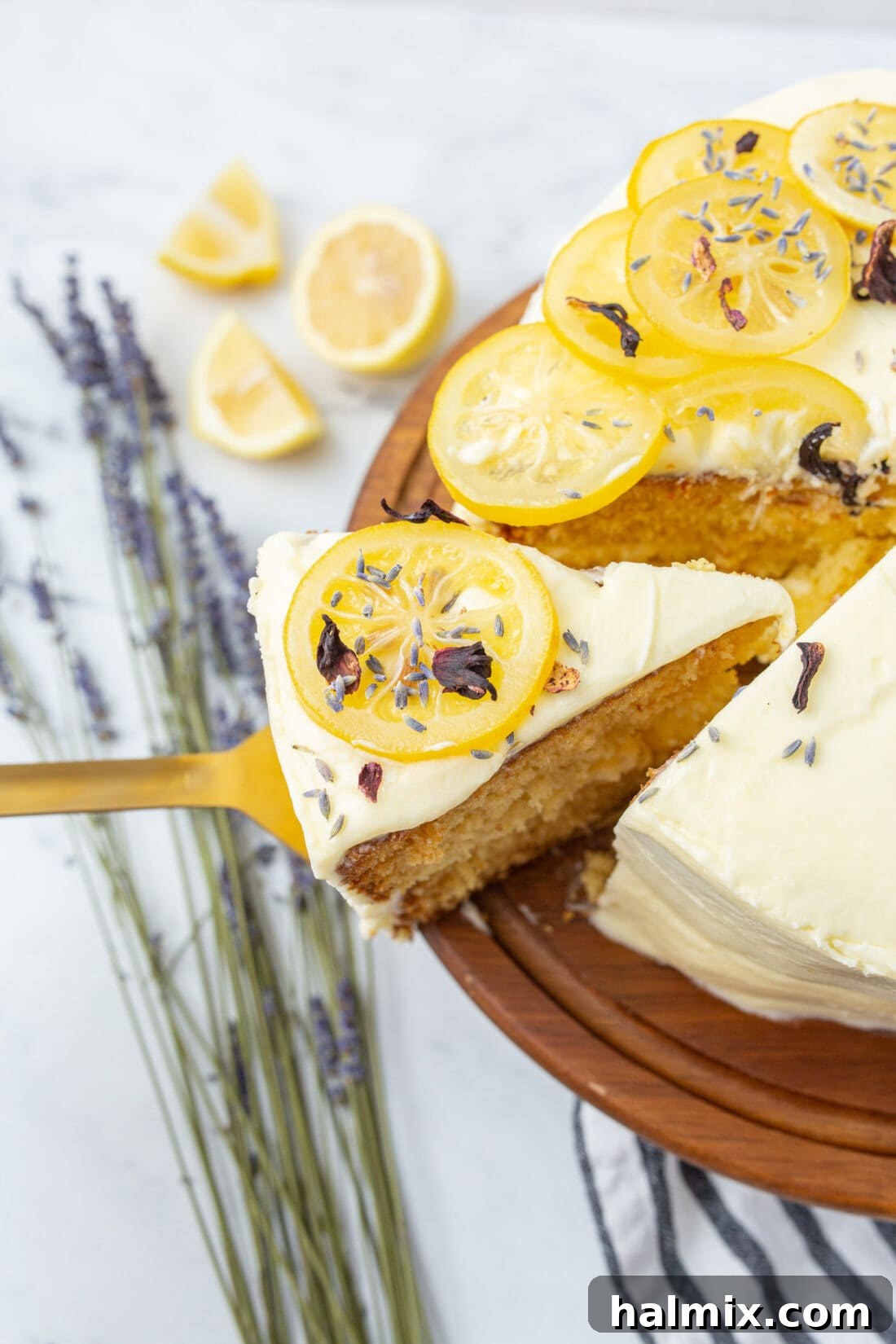
If your goal is to bake a truly memorable dessert that not only looks incredible but tastes even better, then you’ve discovered your new go-to recipe. This exceptional lemon cake features two towering tiers of wonderfully moist, citrus-infused yellow cake. Each layer is generously blanketed and stacked with a light, incredibly fluffy, and intensely lemon-flavored buttercream frosting. What truly sets this recipe apart is its harmonious balance of vibrant lemon zest and sweetness, creating a dessert that feels both decadent and remarkably refreshing. Unlike some heavy cakes, this one maintains a delightful lightness, making it perfect for enjoying after any meal.
The beauty of this cake lies not just in its presentation but in its perfectly balanced flavor profile. Every bite delivers a bright, zesty tang from the fresh lemons, expertly complemented by the rich sweetness of the cake and frosting. For an extra layer of citrusy delight, consider adding a thin, luscious layer of homemade lemon curd between the cake layers. This optional addition enhances the lemon experience, creating a burst of intense flavor that elevates the entire cake. In fact, for those who adore a powerful lemon punch, you could even substitute the buttercream between the layers entirely with the vibrant lemon curd for a truly tart and tantalizing treat. This recipe is designed to be a true show-stopper, a dessert that will earn you rave reviews and requests for the recipe time and again.
Essential Ingredients for Your Perfect Lemon Cake
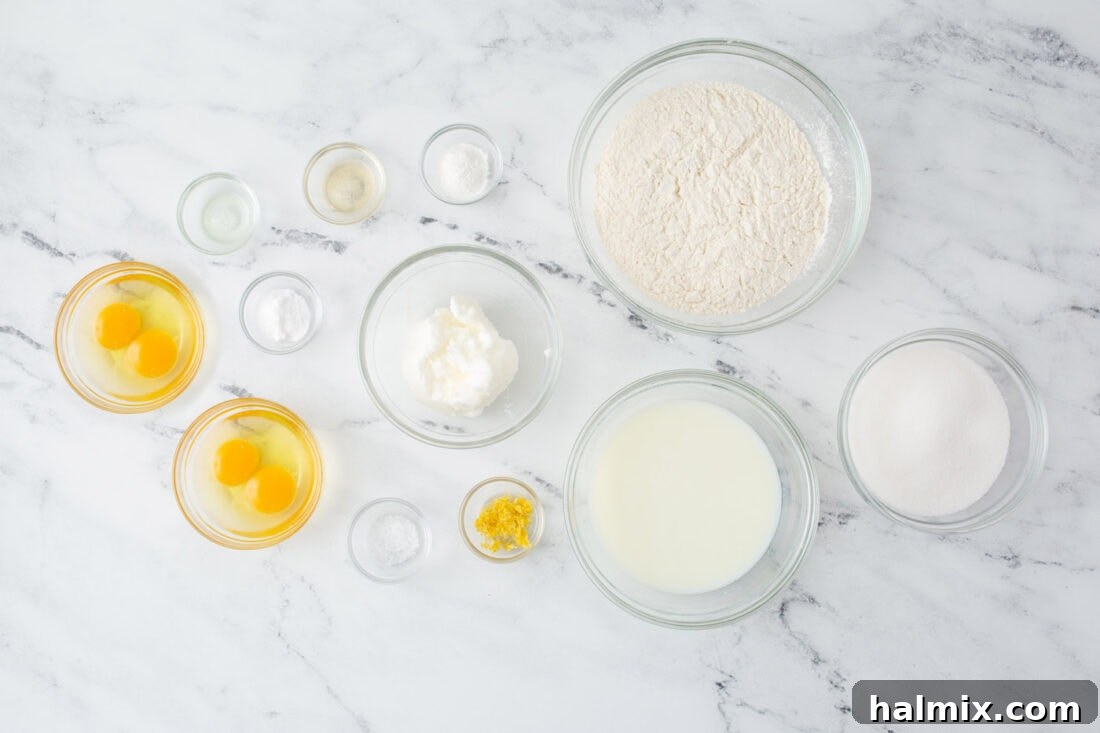
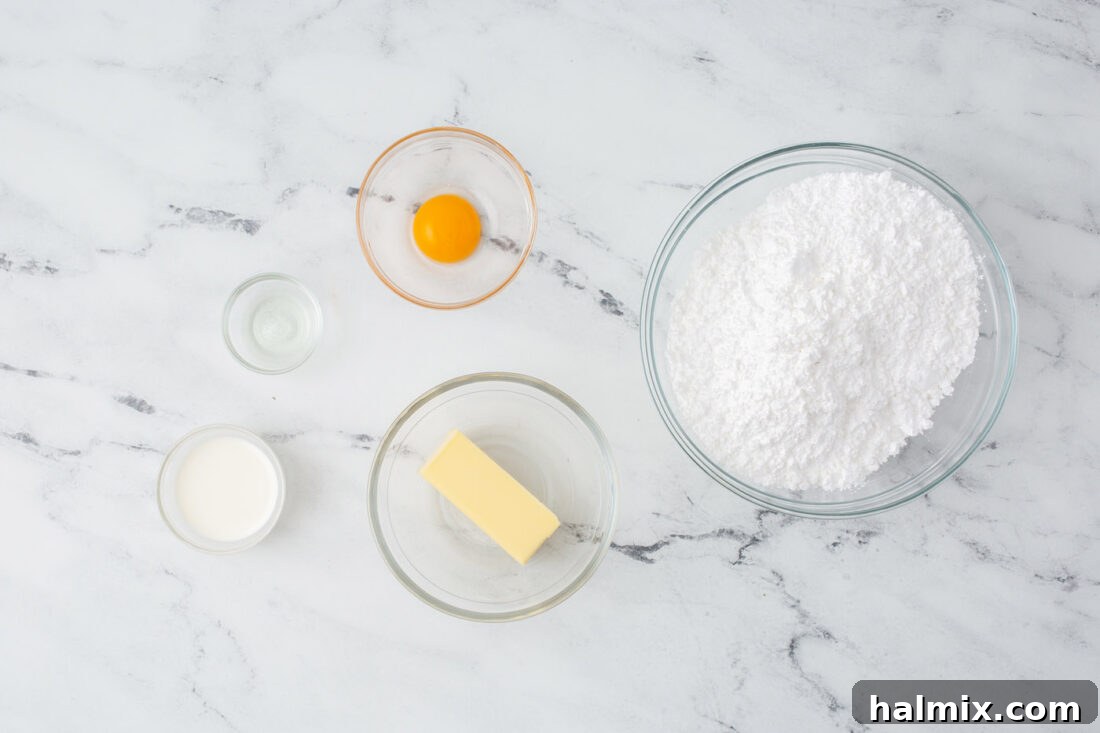
Crafting this exquisite tiered lemon cake requires a selection of fresh, high-quality ingredients, all carefully chosen to ensure the best possible flavor and texture. From the foundational elements of the cake itself to the creamy lemon buttercream and the delicate candied garnishes, each component plays a vital role. You’ll find a complete list of all necessary measurements and detailed instructions in the printable recipe card towards the end of this article. Gather your ingredients and prepare to embark on a delightful baking journey!
Detailed Ingredient Information and Smart Substitutions
Understanding your ingredients is key to successful baking. Here’s a closer look at what you’ll need for this lemon cake and how you can adapt the recipe to your preferences or what you have on hand:
For the Cake: The core of this recipe relies on a few crucial elements. You can replace the lemon extract with 2 tablespoons of freshly squeezed lemon juice for a more natural citrus flavor, though the extract often provides a more concentrated essence. Alternatively, if you’re not a fan of lemon or want to try a different flavor profile, almond extract makes a wonderful substitute, lending a delicate, nutty aroma. The use of shortening in this recipe is not arbitrary; it is crucial for achieving a cake that stands tall with a beautiful structure while remaining incredibly light, soft, and perfectly tender. Shortening contributes to a finer crumb and helps the cake maintain its shape, a desirable quality for a tiered dessert. Buttermilk, another key ingredient, reacts with the leavening agents to create a moist, tender crumb and adds a subtle tang that complements the lemon beautifully. If you don’t have buttermilk, you can easily make your own by adding 1 tablespoon of lemon juice or white vinegar to a measuring cup and filling the rest with regular milk until it reaches 1 cup. Let it sit for 5-10 minutes until it slightly curdles before using.
For the Frosting: This luscious buttercream frosting is designed to be light yet rich, with a prominent lemon flavor. It calls for 1 teaspoon of lemon extract, which provides a bright and pure lemon taste. However, if you prefer a classic flavor or want to use this buttercream for other desserts, you can simply substitute the lemon extract with vanilla extract to create a delicious vanilla buttercream. Ensure your butter for the frosting is at room temperature for the best creaming consistency, leading to a smooth, airy frosting. The powdered sugar should be sifted to prevent lumps, ensuring a silky-smooth texture.
Candied Lemon Slices: These aren’t just a garnish; they add another layer of texture and flavor. The process of candying lemons also yields a flavorful lemon syrup, which is a fantastic bonus. Consider making extra candied slices, as they’re delightful on their own or as a garnish for other desserts and drinks.
Step-by-Step Guide: Crafting Your Delicious Lemon Cake
These detailed step-by-step photos and instructions are here to visually guide you through the process of making this incredible lemon cake. For a concise, printable version of this recipe, complete with precise measurements and full instructions, please refer to the recipe card at the bottom of this post.
- Prepare Your Baking Pans: Begin by preheating your oven to 350°F (175°C). Take two 8-inch round cake pans and thoroughly grease and flour them. This crucial step ensures your cakes release easily after baking, preventing any sticking. Once prepared, set them aside.
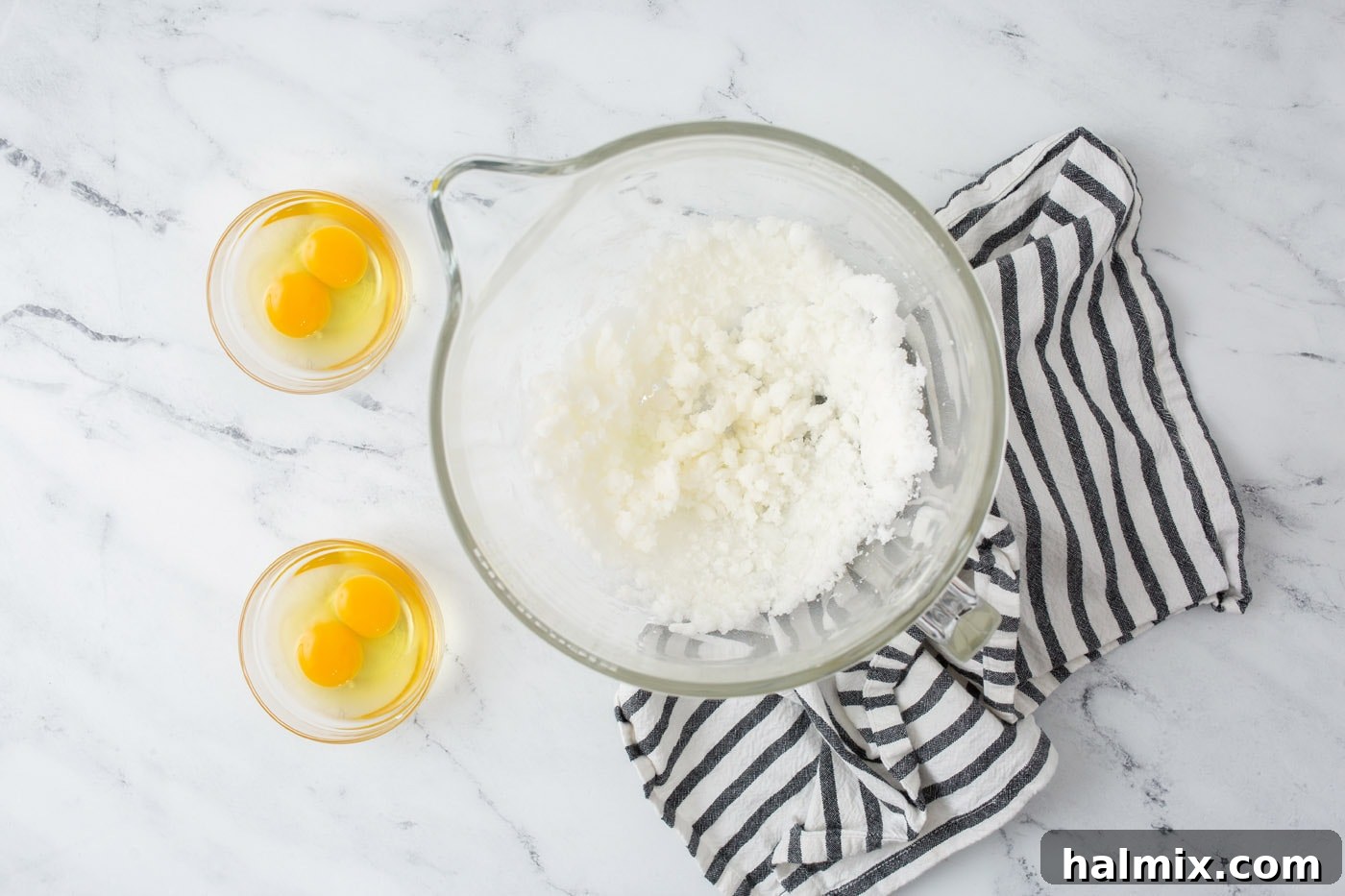
- Cream Shortening and Sugar: In the bowl of a stand mixer fitted with the whisk attachment, combine the shortening and granulated sugar. Cream these two ingredients together on medium-high speed until the mixture is light, fluffy, and pale in color. This process incorporates air, contributing to the cake’s tender texture.
- Add Flavor and Eggs: Incorporate the vanilla extract, lemon extract, and lemon zest into the creamed mixture and mix until just combined. Then, add the eggs one at a time, ensuring each egg is fully incorporated before adding the next. Remember to scrape down the sides of the bowl with a spatula as needed to ensure all ingredients are evenly mixed.

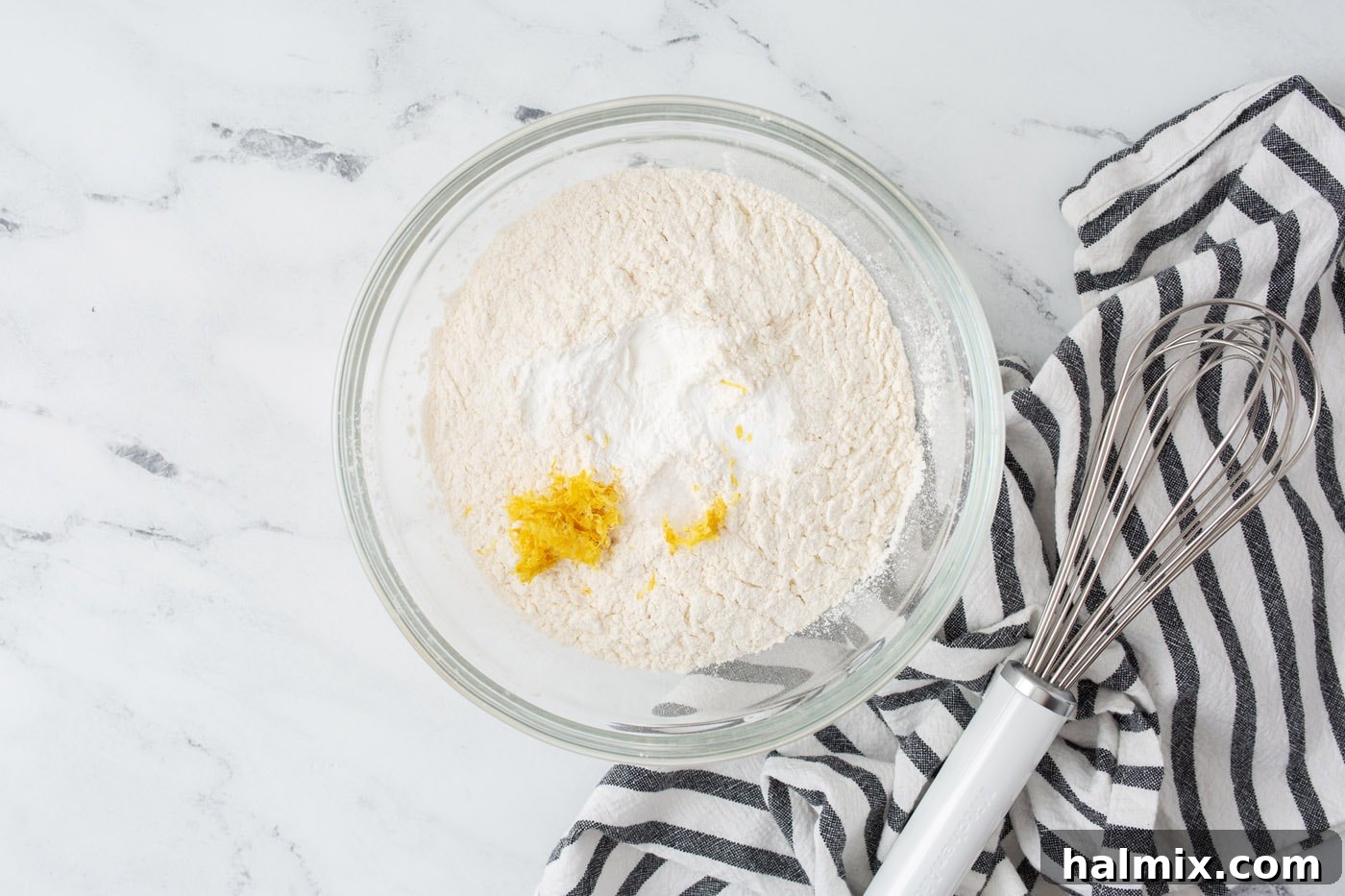
- Combine Dry Ingredients: In a separate, medium-sized bowl, whisk together the cake flour, baking powder, baking soda, and salt. Whisk well to ensure all leavening agents and salt are evenly distributed throughout the flour. This prevents pockets of unmixed ingredients in your cake.
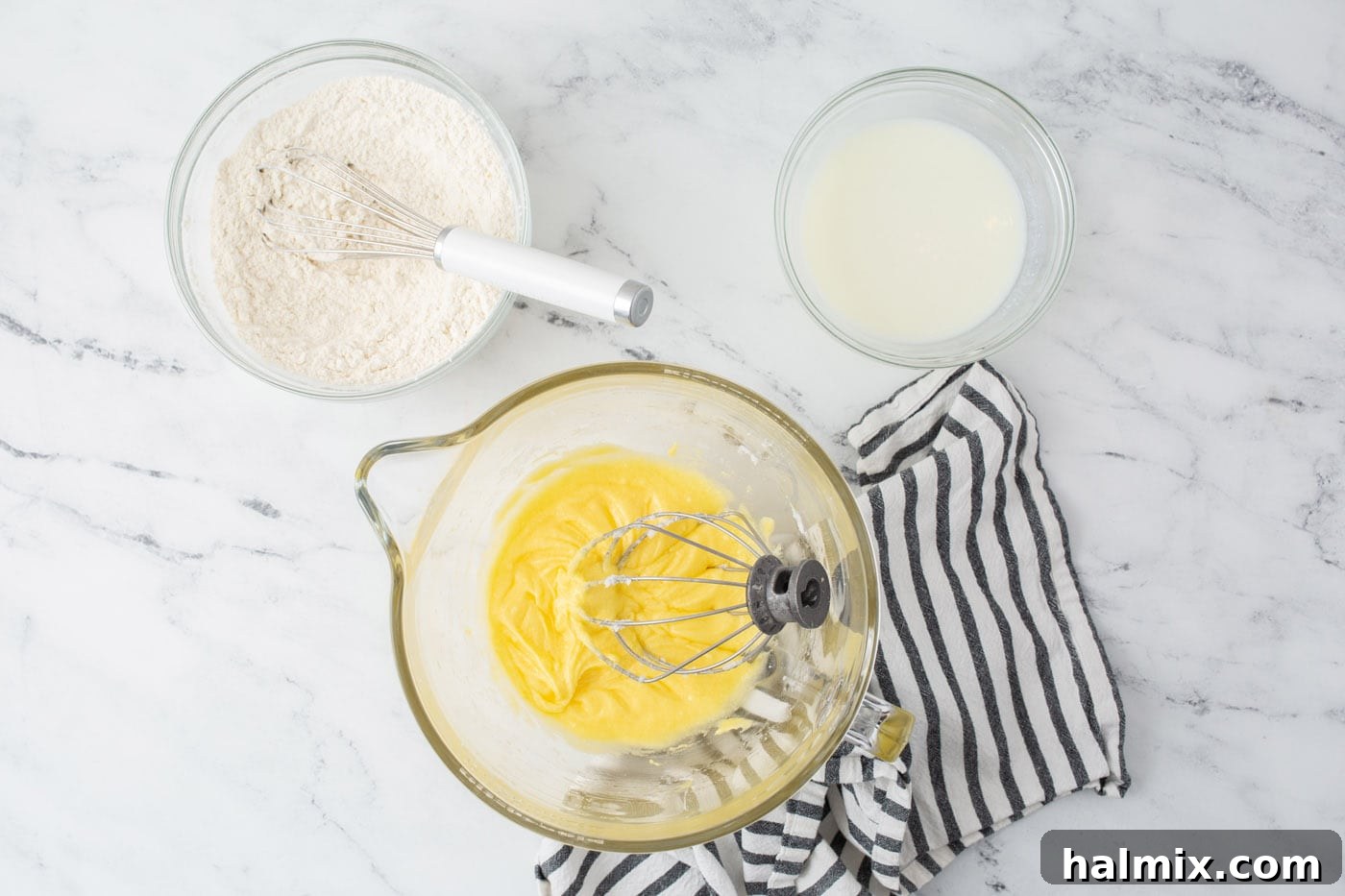
- Alternate Wet and Dry Ingredients: With the stand mixer on low speed, gradually add the flour mixture to the wet ingredients in three additions, alternating with two additions of buttermilk. Begin and end with the flour mixture. This method helps to create a tender crumb and prevents overmixing the batter. After each addition, mix until just combined, and don’t forget to scrape down the sides of the bowl to ensure a uniform batter.
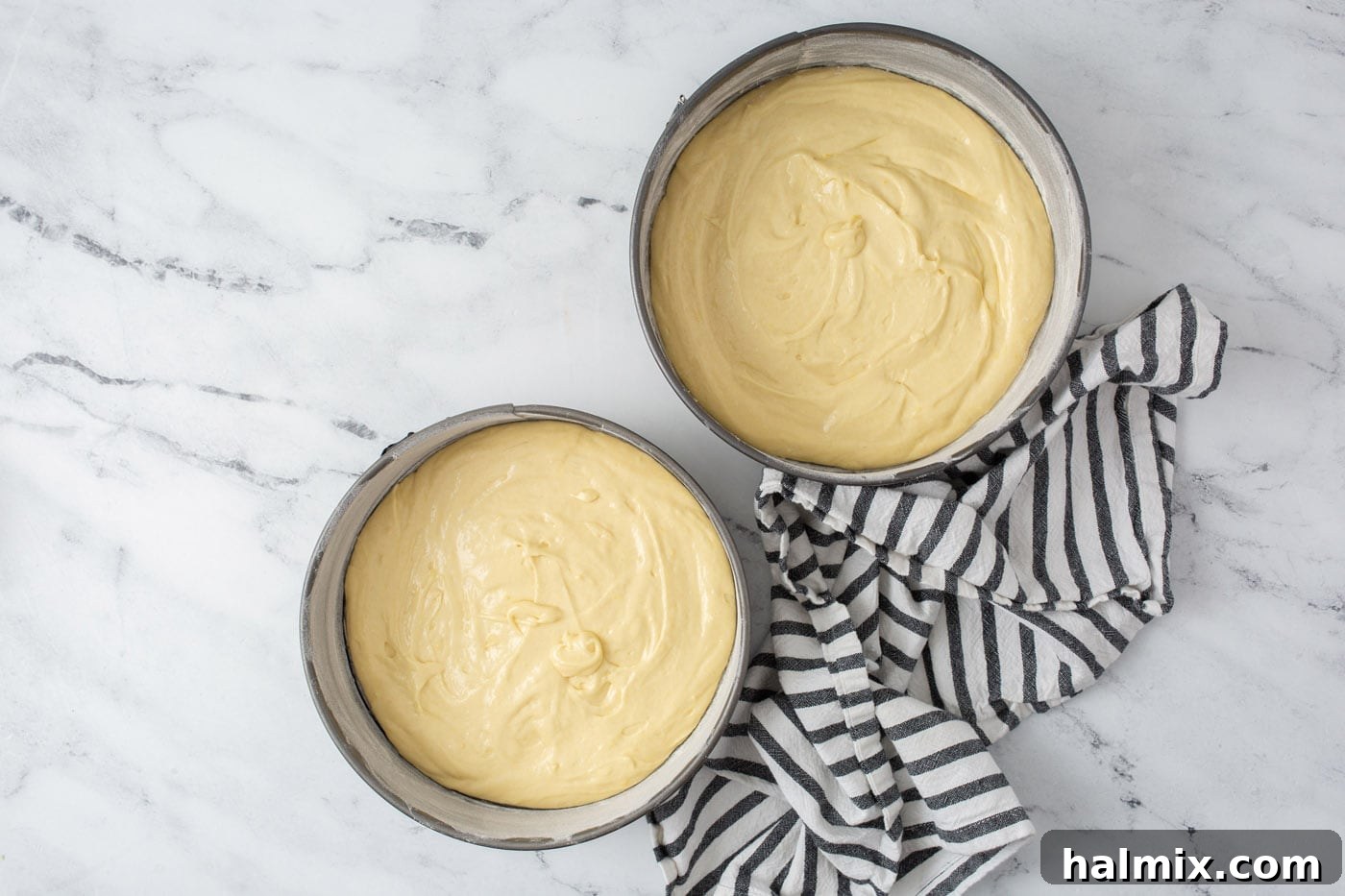
- Bake the Cakes: Divide the prepared cake batter evenly between your two greased and floured 8 inch round cake pans. Place them in the preheated oven and bake for approximately 45 minutes. The cakes are done when the tops are golden brown, and a wooden skewer inserted into the center comes out clean, and the center no longer wiggles when gently shaken.
- Cool the Cake Layers: Once baked, remove the cakes from the oven and let them cool in their pans for about 10 minutes. This allows the cakes to firm up slightly, making them easier to handle. After 10 minutes, carefully invert the cakes onto wire cooling racks to cool completely at room temperature. Ensure they are fully cooled before frosting to prevent the frosting from melting.
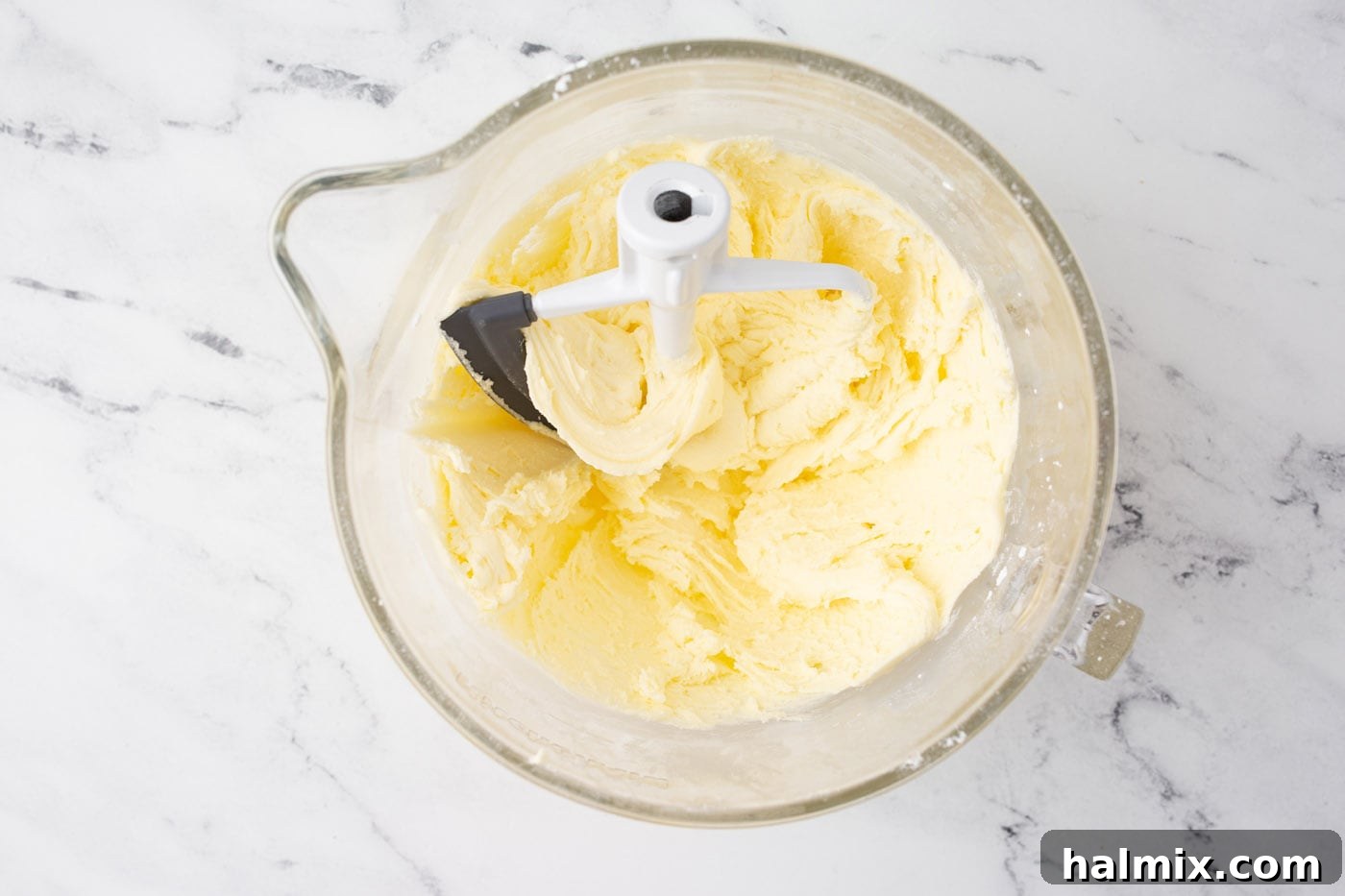
- Prepare the Lemon Buttercream Frosting (Part 1): While your cake layers are cooling, begin preparing the frosting. In a clean stand mixer bowl fitted with the paddle attachment, cream the softened butter with half of the powdered sugar until light and fluffy. This step creates the foundational richness and airy texture of your buttercream.
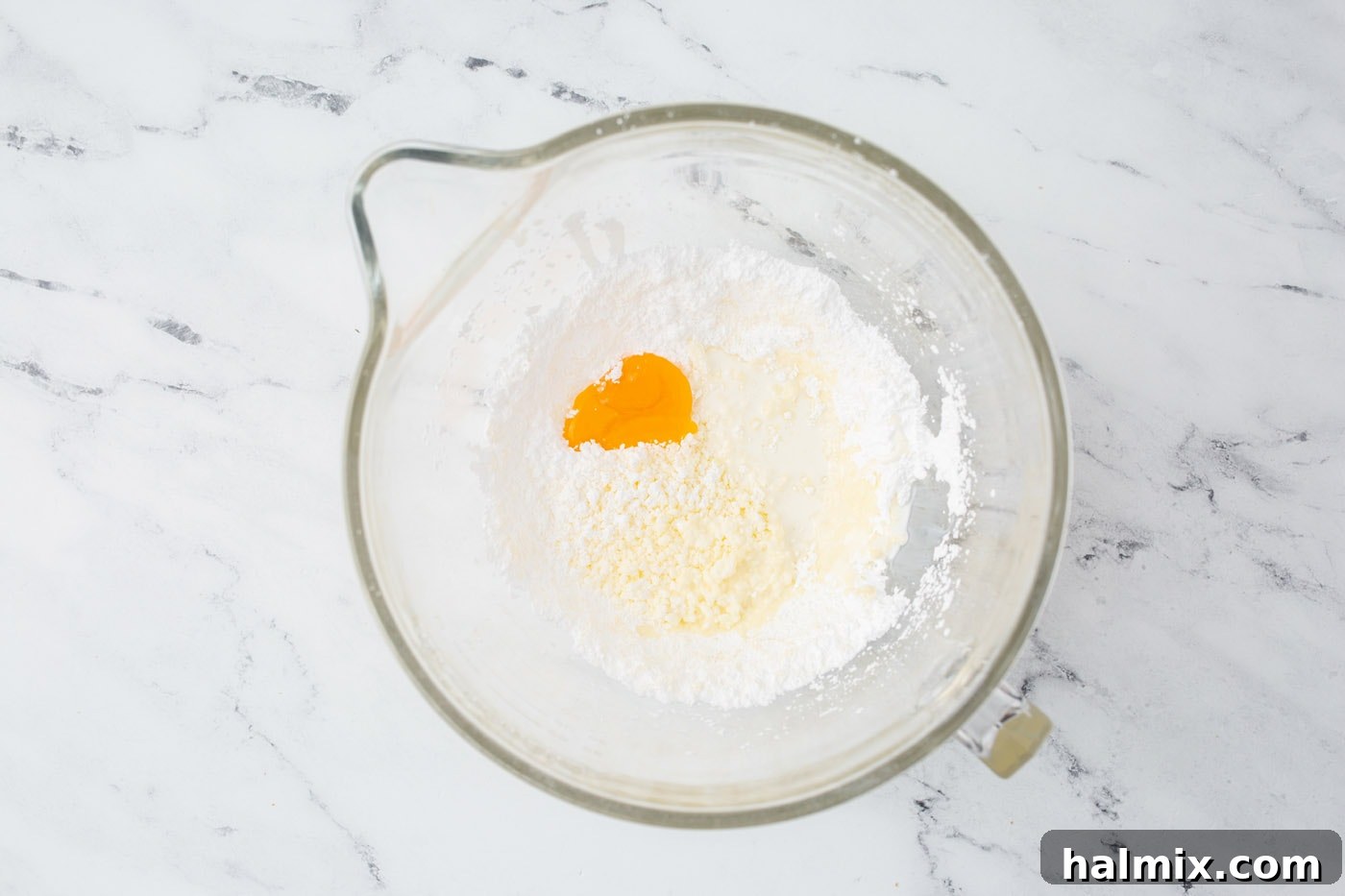
- Prepare the Lemon Buttercream Frosting (Part 2): Add the remaining powdered sugar, the egg yolk, and lemon extract to the mixer bowl. Begin by adding 1/4 cup of cream or milk, then mix on low speed. Gradually add additional cream or milk, 1 tablespoon at a time, until the frosting reaches your desired consistency. It should be easily spreadable but hold its shape well, not as thin as whipped cream.
- Make Candied Lemon Slices: For the beautiful candied lemon garnish, combine sugar and water in a small saucepot. Bring the mixture to a boil, then reduce the heat to a simmer. Add thin slices of lemon to the syrup and let them simmer gently for about 5 to 10 minutes, or until the rinds become translucent and tender.
- Cool Candied Lemons and Syrup: Carefully remove the softened lemon slices from the pot and arrange them on a piece of parchment paper to cool and dry slightly. Set the remaining lemon syrup aside and allow it to cool completely. This syrup is a fantastic bonus!
- Prepare Cakes for Frosting: Once your cake layers have cooled completely to room temperature, use a serrated knife to carefully trim any domed tops, if necessary, to create flat, even layers. This ensures a stable and beautiful tiered cake.
EXPERT TIP: The lemon syrup created during the candying process is too good to waste! Once cooled, brush this flavorful syrup onto the top of each cake layer before applying the buttercream. This not only adds an extra layer of lemon flavor and moisture but also acts as a “crumb coat” by sealing in any loose crumbs, making it easier to achieve a smooth, pristine frosting finish without crumbs getting into your buttercream.
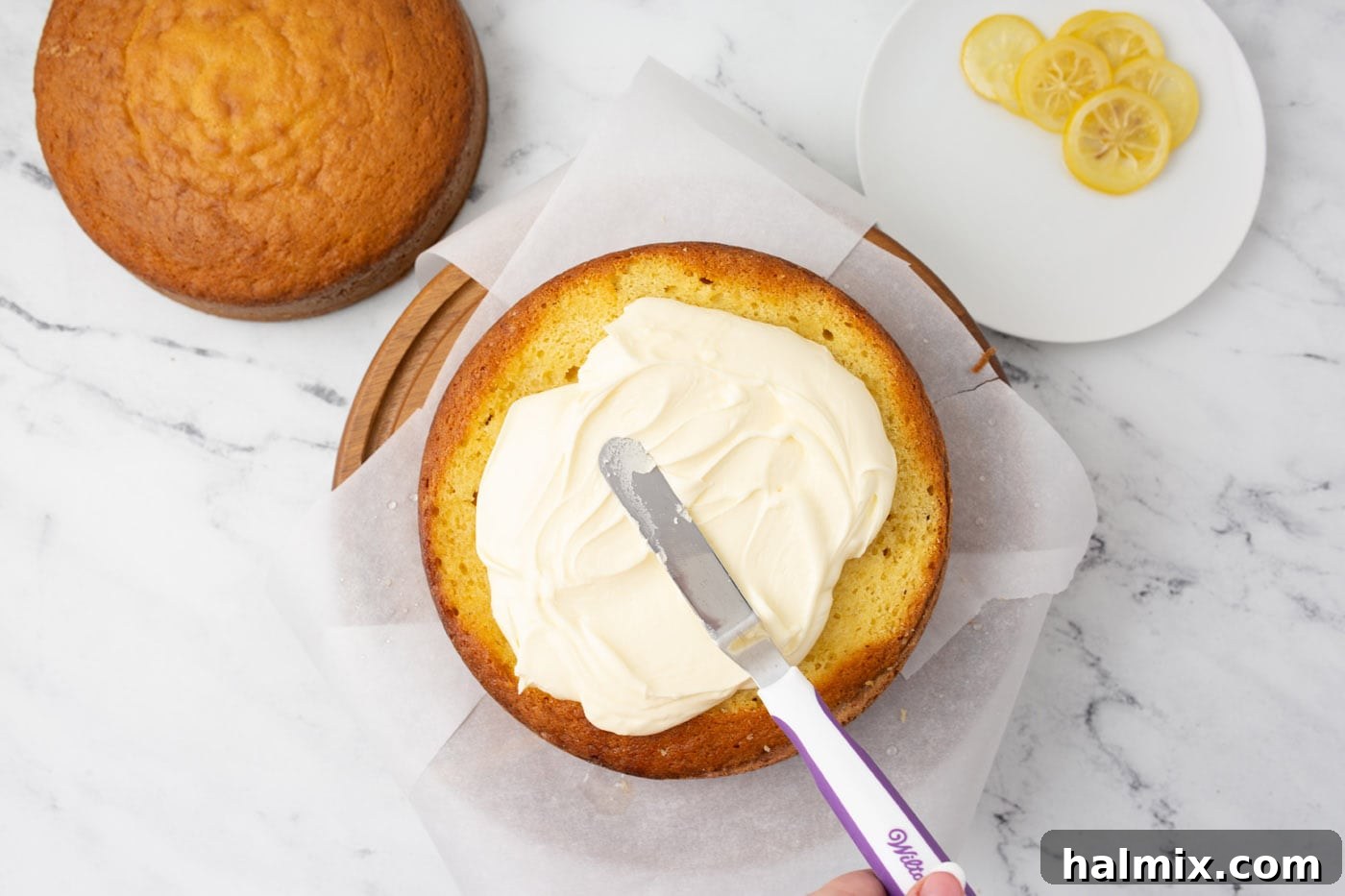
- Assemble and Frost the Cake: Place one trimmed cake layer flat on your serving plate or cake stand. Generously spread a layer of your lemon buttercream frosting over the top. Carefully place the second cake layer on top. Using an icing spatula, apply the remaining frosting to the top and sides of the entire cake, smoothing it out for a professional finish. Finally, arrange your cooled candied lemon slices and any other desired additional toppings (like fresh lemon zest or edible flowers) artfully on top of the cake.
Frequently Asked Questions & Expert Tips for Lemon Cake Success
To ensure your lemon cake baking experience is as smooth and delightful as possible, here are answers to some common questions and a few extra expert tips:
How do I store this cake and how long does it last?
Proper storage is essential to maintain the freshness and moisture of your beautiful lemon cake. I highly recommend using a dedicated cake container; these are incredibly convenient for keeping your cake sealed and fresh without disturbing its delicate frosting. Store the cake at room temperature in an airtight container for 3-4 days. While it can also be stored in the refrigerator for up to 6 days, please note that chilling the cake may cause it to lose some of its desirable moisture and tenderness. If refrigerated, allow it to come to room temperature for about 30-60 minutes before serving for the best flavor and texture.
Can I freeze this lemon cake?
Absolutely, this lemon cake freezes exceptionally well, making it a great option for preparing ahead or enjoying leftovers. To freeze, first flash freeze the assembled and frosted cake for about an hour, or until the buttercream frosting is firm to the touch. This prevents the frosting from sticking to the wrapping. Once firm, remove the cake from the freezer and wrap it tightly twice with plastic wrap, followed by a layer of aluminum foil. This double-layer protection helps prevent freezer burn. Stored this way, your lemon cake can be kept in the freezer for up to 3 months. When you’re ready to enjoy it, thaw the cake in the refrigerator overnight, then bring it to room temperature before serving.
Can I make lemon cake ahead of time?
Yes, this lemon cake is an excellent candidate for advance preparation, which can significantly reduce stress on the day of your event. You can bake the cake layers a day or two ahead of time. Once baked and completely cooled, wrap each cake layer individually and tightly in plastic wrap to prevent them from drying out, and store them at room temperature. The lemon buttercream frosting can also be prepared 1-2 days in advance. Store the prepared frosting in an airtight container in the refrigerator. On the day of assembly, remove the frosting from the refrigerator about 30 minutes to an hour before you plan to use it, allowing it to soften slightly. Give it a good stir with a spatula or briefly re-whip it in the stand mixer on low speed to restore its smooth, spreadable consistency before frosting your cake layers.
Elegant Serving Suggestions for Your Lemon Cake
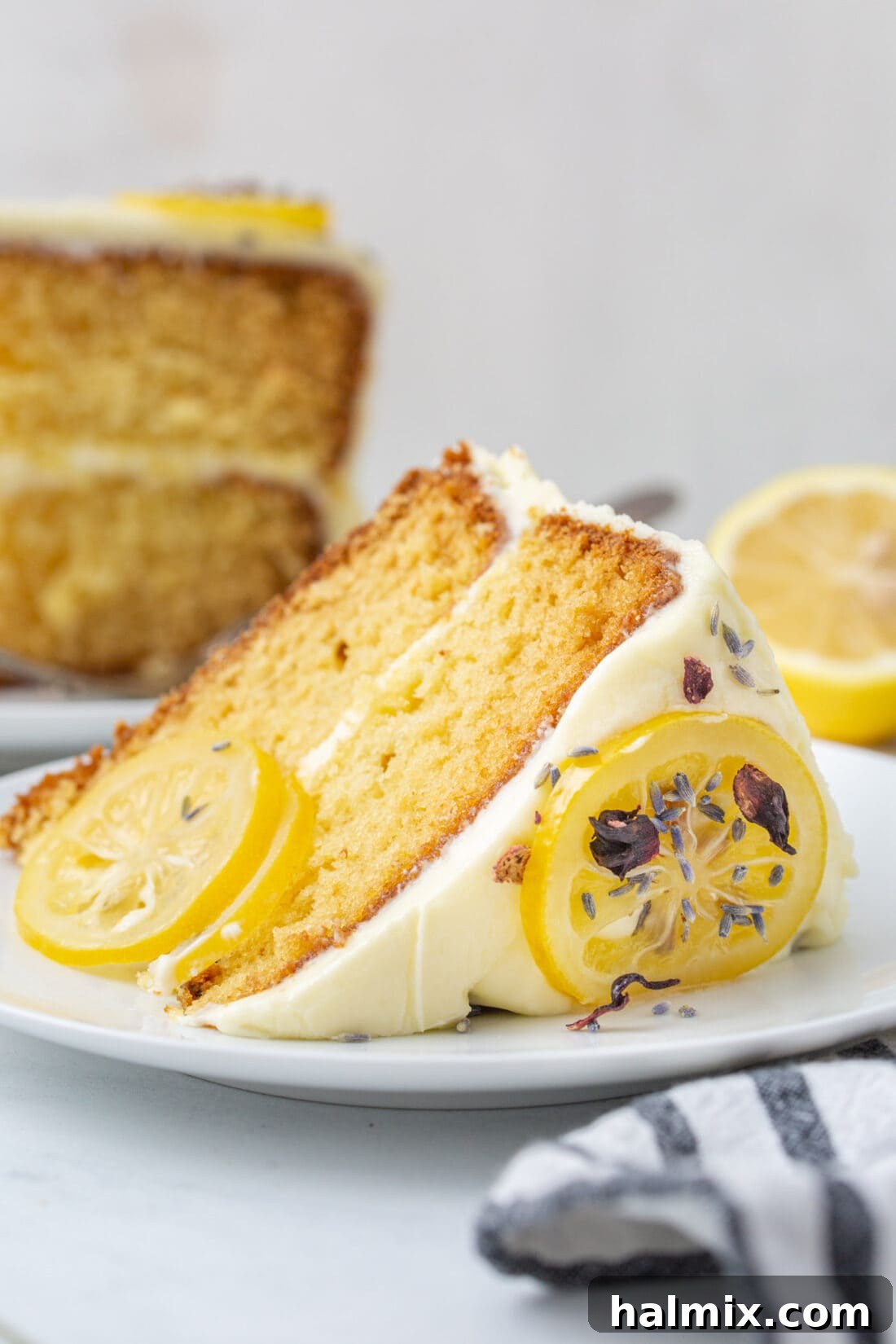
This vibrant lemon cake is a natural showstopper, and its serving presentation can elevate it even further. Beyond the beautiful candied lemon slices, consider a delicate sprinkle of edible lavender buds for a subtle floral note that pairs wonderfully with lemon, or a few colorful edible flowers for an added touch of charm. This delightful dessert is incredibly versatile, making it a superb choice for a variety of occasions: it’s perfect for the freshness of Easter brunches, a bright highlight for birthday celebrations, an elegant centerpiece for bridal or baby showers, or simply as a refreshing accompaniment to a comforting cup of coffee or a soothing tea. Its balanced flavors make it a crowd-pleaser for any gathering.
Explore More Zesty Lemon Recipes
If you’re a true lemon lover, there’s a world of bright and zesty desserts waiting for you! Here are some more of our favorite lemon-infused recipes:
- Lemon Bars with Sweet Sour Cream Topping
- Lemon Lush
- Lemon Icebox Cake
- Lemon Streusel Squares
- Lemon Meringue Pie Bars
- Instant Pot Lemon Curd Cheesecake
- Lemon Baked Donuts
We are passionate about baking and cooking, and love sharing our culinary adventures and tested recipes with you! To make sure you never miss out on new inspirations, we offer a convenient newsletter delivered straight to your inbox every time a fresh recipe is posted. Simply subscribe today and start receiving your free daily recipes, bringing delicious new ideas to your kitchen!

Lemon Cake
IMPORTANT – You may find helpful Frequently Asked Questions and Expert Tips within the blog post above. Scroll back up to read them for additional insights!
Dessert
American
14 servings
2 hrs 5 mins
789
Amanda Davis
Ingredients
Lemon Cake
- 1 cup shortening
- 2 cups granulated sugar
- 1 tsp vanilla extract
- 1 tsp lemon extract (or 2 Tbsp fresh lemon juice)
- zest of 1-2 lemons
- 4 eggs
- 4 cups cake flour
- 3 tsp baking powder
- 2 ½ tsp baking soda
- 1 tsp salt
- 2 cups buttermilk
Lemon Buttercream Frosting
- ⅓ cup butter (at room temperature)
- 32 oz powdered sugar
- 1 egg yolk
- 1 tsp lemon extract
- ½ cup cream or milk
Candied Lemon Slices
- 1 cup sugar
- 1 cup water
- slices of 1 lemon
Things You’ll Need
- 2 8-inch round cake pans
- Stand mixer
Before You Begin
- You can use regular or springform pans.
- When making the frosting, start with 1/4 cup of cream or milk and add 1 Tablespoon at a time until the desired consistency is reached.
Instructions
- Preheat the oven to 350F. Grease and flour two 8 inch round cake pans and set aside.
- In a bowl of a stand mixer, use the whisk attachment to cream the shortening and sugar together.
- Add extracts and zest then mix to combine. Add eggs one at a time until completely mixed in, scraping the sides as needed.
- In a separate bowl, combine the flour, baking powder, baking soda, and salt. Whisk to combine.
- Add the flour mixture to the stand mixer in thirds, adding also the buttermilk in two portions between each 1/3 of flour mixture. Start and end with the addition of flour. Again, scrape the sides of the bowl as needed.
- Pour into prepared cake pans. Bake at 350F for 45 minutes. Tops will become browned and the center should not wiggle.
- Remove from the oven and allow to cool for 10 minutes before removing the cakes from the pans. Cool completely at room temperature on wire cooling racks.
- While the cakes are cooling, cream the butter and half of the powdered sugar in a stand mixer with the paddle attachment for the frosting.
- Add the remaining ingredients, starting with 1/4 cup of cream or milk and adding 1 Tablespoon at a time until the desired consistency is met. The frosting should be easily spreadable but not the consistency of whipped cream.
- For the candied lemons, add the sugar and water to a small sauce pot. Bring to a boil and add slices of lemon.
- Simmer for about 5 to 10 minutes. Remove the lemon slices and set on a piece of parchment paper until you’re ready to decorate the cake. Set the remaining lemon syrup aside and allow it to cool.
- Once the cakes are cooled to at least room temperature, trim them as needed. TIP – Making the candied lemons also creates a lemon syrup. Optionally, use this syrup to spread on the cake before topping with buttercream; this will help reduce the amount of crumbs that will get into the frosting.
- Lay one cake flat, top with frosting, then add the second layer of cake. Frost the top and sides of the cake with an icing spatula until completely covered. Add candied lemon slices and any additional toppings desired.
Nutrition
Calories: 789cal |
Carbohydrates: 136g |
Protein: 7g |
Fat: 25g |
Saturated Fat: 10g |
Polyunsaturated Fat: 5g |
Monounsaturated Fat: 9g |
Trans Fat: 2g |
Cholesterol: 88mg |
Sodium: 462mg |
Potassium: 198mg |
Fiber: 1g |
Sugar: 108g |
Vitamin A: 404IU |
Vitamin C: 1mg |
Calcium: 99mg |
Iron: 1mg
Tried this Recipe? Pin it for Later!
Follow on Pinterest @AmandasCookin or tag #AmandasCookin!
The recipes on this blog are tested with a conventional gas oven and gas stovetop. It’s important to note that some ovens, especially as they age, can cook and bake inconsistently. Using an inexpensive oven thermometer can assure you that your oven is truly heating to the proper temperature. If you use a toaster oven or countertop oven, please keep in mind that they may not distribute heat the same as a conventional full sized oven and you may need to adjust your cooking/baking times. In the case of recipes made with a pressure cooker, air fryer, slow cooker, or other appliance, a link to the appliances we use is listed within each respective recipe. For baking recipes where measurements are given by weight, please note that results may not be the same if cups are used instead, and we can’t guarantee success with that method.